Seven people died following multiple failures by Karen Booth who continues to work for the NHS.


Seven people died following multiple failures by Karen Booth who continues to work for the NHS.
BBC Morning Live’s Dr Oscar Duke shares his advice on how to identify whether you have cold, flu or Covid and how to look after yourself.
Karen Booth carried out operations she wasn’t skilled enough to perform, an investigation found.
Paloma Shemirani died after refusing chemotherapy despite a diagnosis of non-Hodgkin lymphoma.
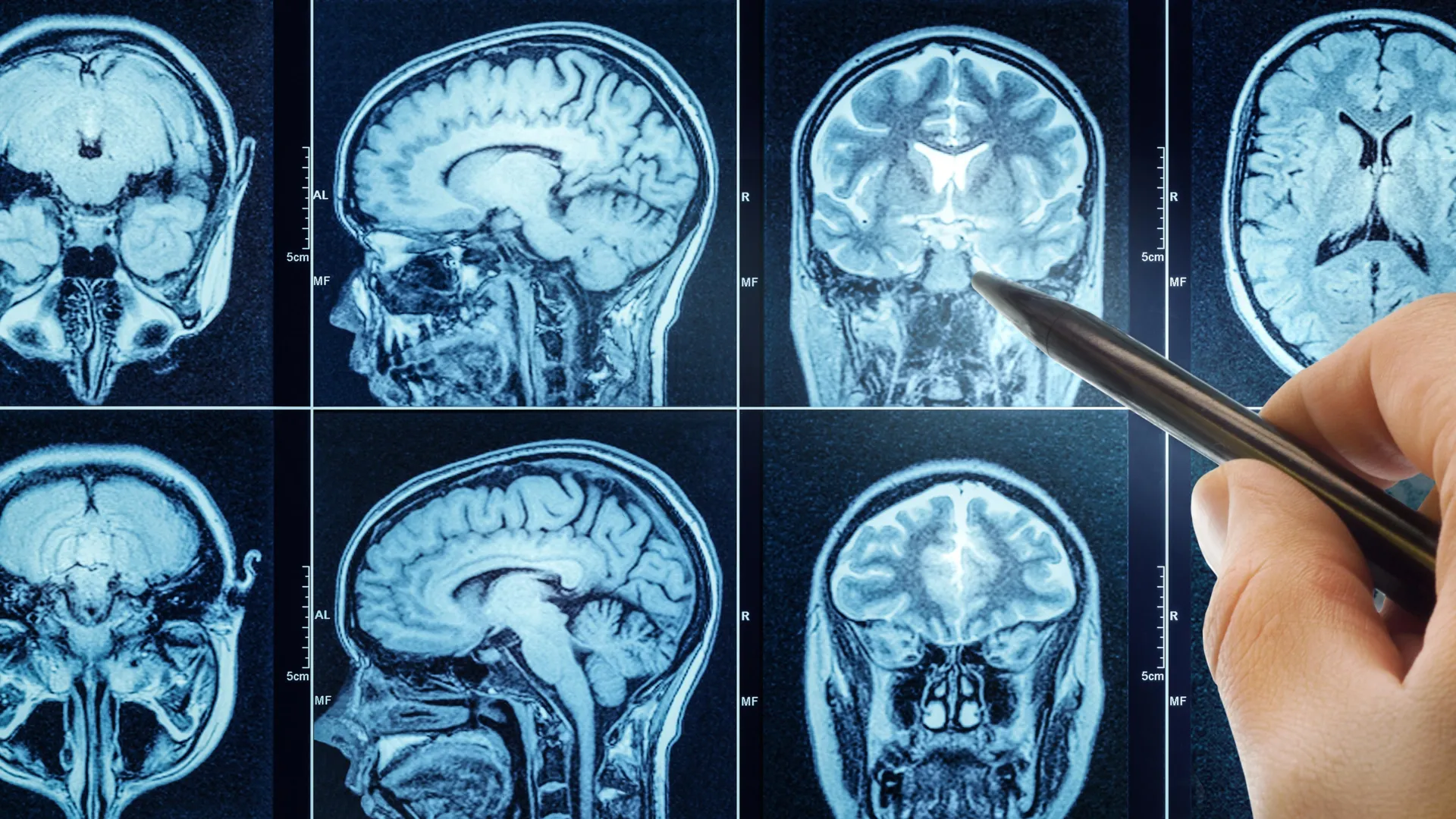
People who sleep poorly are more likely than others to have brains that appear older than they actually are. This is according to a comprehensive brain imaging study from Karolinska Institutet, published in the journal eBioMedicine. Increased inflammation in the body may partly explain the association.
Poor sleep has been linked to dementia, but it is unclear whether unhealthy sleep habits contribute to the development of dementia or whether they are rather early symptoms of the disease. In a new study, researchers at Karolinska Institutet have investigated the link between sleep characteristics and how old the brain appears in relation to its chronological age.
The study includes 27,500 middle-aged and older people from the UK Biobank who underwent magnetic resonance imaging (MRI) of the brain. Using machine learning, the researchers estimated the biological age of the brain based on over a thousand brain MRI phenotypes.
Low-grade inflammation
The participants’ sleep quality was scored based on five self-reported factors: chronotype (being a morning/evening person), sleep duration, insomnia, snoring, and daytime sleepiness. They were then divided into three groups: healthy (≥4 points), intermediate (2-3 points), or poor (≤1 point) sleep.
“The gap between brain age and chronological age widened by about six months for every 1-point decrease in healthy sleep score,” explains Abigail Dove, researcher at the Department of Neurobiology, Care Sciences and Society, Karolinska Institutet, who led the study. “People with poor sleep had brains that appeared on average one year older than their actual age.”
To understand how poor sleep can affect the brain, the researchers also examined levels of low-grade inflammation in the body. They found that inflammation could explain just over ten per cent of the link between poor sleep and older brain age.
“Our findings provide evidence that poor sleep may contribute to accelerated brain aging and point to inflammation as one of the underlying mechanisms,” says Abigail Dove. “Since sleep is modifiable, it may be possible to prevent accelerated brain aging and perhaps even cognitive decline through healthier sleep.”
Several possible explanations
Other possible mechanisms that could explain the association are negative effects on the brain’s waste clearance system, which is active mainly during sleep, or that poor sleep affects cardiovascular health, which in turn can have a negative impact on the brain.
Participants in the UK Biobank are healthier than the general UK population, which could limit the generalisability of the findings. Another limitation of the study is that the results are based on self-reported sleep.
The study was conducted in collaboration with researchers from the Swedish School of Sport and Health Sciences, and Tianjin Medical University and Sichuan University in China, among others. It was funded by the Alzheimer’s Foundation, the Dementia Foundation, the Swedish Research Council, the Loo and Hans Osterman Foundation for Medical Research, and the Knowledge Foundation. The researchers report no conflicts of interest.
From October, most pharmacies in Wales can treat women under 64 who have urinary tract infections.
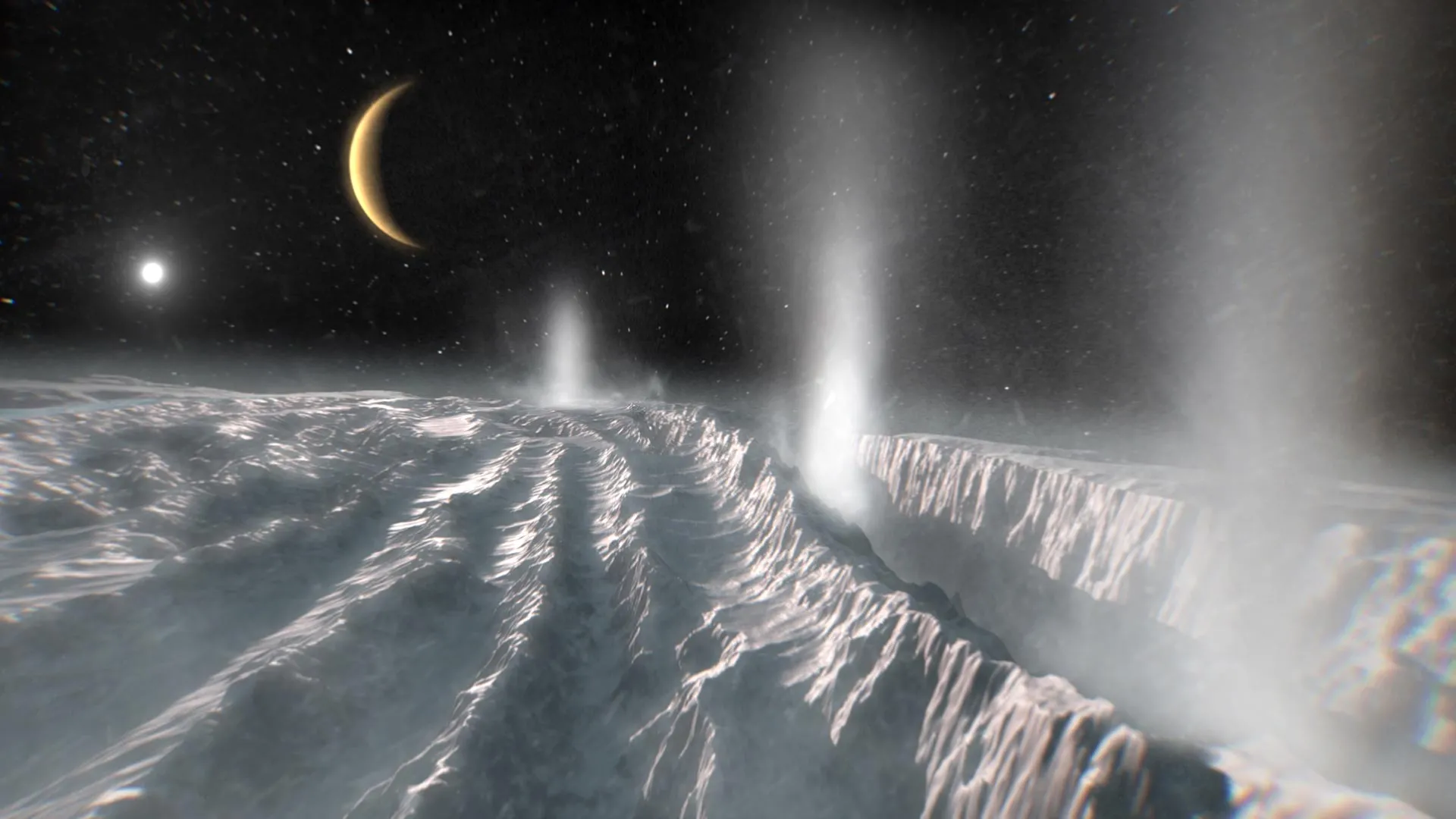
Scientists digging through data collected by the Cassini spacecraft have found new complex organic molecules spewing from Saturn’s moon Enceladus. This is a clear sign that complex chemical reactions are taking place within its underground ocean. Some of these reactions could be part of chains that lead to even more complex, potentially biologically relevant molecules.
Published on October 1 in Nature Astronomy, this discovery further strengthens the case for a dedicated European Space Agency (ESA) mission to orbit and land on Enceladus.
In 2005, Cassini found the first evidence that Enceladus has a hidden ocean beneath its icy surface. Jets of water burst from cracks close to the moon’s south pole, shooting ice grains into space. Smaller than grains of sand, some of the tiny pieces of ice fall back onto the moon’s surface, whilst others escape and form a ring around Saturn that traces Enceladus’s orbit.
Lead author Nozair Khawaja explains what we already knew: “Cassini was detecting samples from Enceladus all the time as it flew through Saturn’s E ring. We had already found many organic molecules in these ice grains, including precursors for amino acids.
The ice grains in the ring can be hundreds of years old. As they have aged, they may have been ‘weathered’ and therefore altered by intense space radiation. Scientists wanted to investigate fresh grains ejected much more recently to get a better idea of what exactly is going on in Enceladus’s ocean.
Fortunately, we already had the data. Back in 2008, Cassini flew straight through the icy spray. Pristine grains ejected only minutes before hit the spacecraft’s Cosmic Dust Analyzer (CDA) instrument at about 18 km/s. These were not only the freshest ice grains Cassini had ever detected, but also the fastest.
The speed mattered. Nozair explains why:
“The ice grains contain not just frozen water, but also other molecules, including organics. At lower impact speeds, the ice shatters, and the signal from clusters of water molecules can hide the signal from certain organic molecules. But when the ice grains hit CDA fast, water molecules don’t cluster, and we have a chance to see these previously hidden signals.”
It took years to build up knowledge from previous flybys and then apply it to decipher this data. But now, Nozair’s team has revealed what kind of molecules were present inside the fresh ice grains.
They saw that certain organic molecules that had already been found distributed in the E ring were also present in the fresh ice grains. This confirms that they are created within Enceladus’s ocean.
They also found totally new molecules that had never been seen before in ice grains from Enceladus. For the chemists reading, the newly detected molecular fragments included aliphatic, (hetero)cyclic ester/alkenes, ethers/ethyl and, tentatively, nitrogen- and oxygen-bearing compounds.
On Earth, these same molecules are involved in the chains of chemical reactions that ultimately lead to the more complex molecules that are essential for life.
“There are many possible pathways from the organic molecules we found in the Cassini data to potentially biologically relevant compounds, which enhances the likelihood that the moon is habitable,” says Nozair.
“There is much more in the data that we are currently exploring, so we are looking forward to finding out more in the near future.”
Co-author Frank Postberg adds: “These molecules we found in the freshly ejected material prove that the complex organic molecules Cassini detected in Saturn’s E ring are not just a product of long exposure to space, but are readily available in Enceladus’s ocean.”
Nicolas Altobelli, ESA Cassini project scientist adds: “It’s fantastic to see new discoveries emerging from Cassini data almost two decades after it was collected. It really showcases the long-term impact of our space missions. I look forward to comparing data from Cassini with data from ESA’s other missions to visit the icy moons of Saturn and Jupiter.”
Returning to Enceladus
Discoveries from Cassini are valuable for planning a future ESA mission dedicated to Enceladus. Studies for this ambitious mission have already begun. The plan is to fly through the jets and even land on the moon’s south polar terrain to collect samples.
A team of scientists and engineers is already considering the selection of modern scientific instruments that the spacecraft would carry. This latest result made using CDA will help guide that decision.
Enceladus ticks all the boxes to be a habitable environment that could support life: the presence of liquid water, a source of energy, a specific set of chemical elements and complex organic molecules. A mission that takes measurements directly from the moon’s surface, seeking out signs of life, would offer Europe a front seat in Solar System science.
“Even not finding life on Enceladus would be a huge discovery, because it raises serious questions about why life is not present in such an environment when the right conditions are there,” says Nozair.
Jonathan Jones says he was given chemotherapy tablets for 16 years, contrary to NHS guidelines.
The charity-run centre in Hull will help women with the condition that can cause extreme pain.
A teenager has told the Covid-19 inquiry she often feels “left out” after missing so much school.
