Health24.com | 5 facts and myths you should know about dagga

The Constitutional Court has officially ruled that the personal use of dagga is not a criminal offence and Deputy Chief Justice Zondo said that the right to privacy is not confined to a home or private dwelling.

News24 reported that Zondo said, “It will not be a criminal offence for an adult person to use or be in possession of cannabis in a private space.”

He added that the judgement, however, did not specify how many grams of cannabis a person is allowed to use or have in private.

Throughout the years, the medical benefits and risks of using dagga have been heavily debated. Still uncertain about which stance to take? Make your own, informed decision by educating yourself with these recent articles:

1. Does mom’s dagga end up in breast milk?

If a breastfeeding mom smokes marijuana, does it end up in breast milk? And if so, does the small amount affect the baby? While the levels of ingestion might be low, medical experts were concerned about the possible effects it could have on an infant. 

pregnant woman smoking dagga

2. Dagga vs alcohol – which is worse?

People are on both sides of the fence when it comes to the legalisation of marijuana for private use – but if you are against dagga and drink alcohol, could you be worse off? What are the health risks of both? 

Men drinking at bar

3. Legalised dagga may lead to more road accidents

South Africans may now be in possession of dagga for private use. We are all aware of the impact of alcohol on road safety – could the same be said for dagga?

man smoking a joint while driving

4. Dagga may lead to smart kids making dumb choices

Dagga for private use will obviously mean responsible use. This article clamps down on the risks dagga may have on younger users. 

Teenager taking marijuana from man's hand

5. 2 common dagga myths busted

Will the legalisation of dagga make us more responsible towards it or cause a bigger problem? Could it possibly reduce the number of adults addicted to opioid pain killers? 

beautiful girl smoking a joint in Amsterdam

What are your feelings towards dagga being decriminalised? Share your thoughts and advice by emailing healthnews@health24.com and we may publish your comments. Should you wish to remain anonymous, please let us know.

Image credit: iStock

Share Button

Health24.com | Why more Americans are kicking the smoking habit

More and more Americans are putting out their cigarettes – for good.

The overall cigarette smoking rate among US adults has hit an all-time low, according to the US Centers for Disease Control and Prevention. Preliminary data from the National Health Interview Survey showed that smoking rates declined from 15.5% in 2016 to 13.9% in 2017.

In South Africa the number of smokers has also been declining for a while; this country was in fact one of the first developing countries to impose a 50% excise tax on the price of cigarettes in 1994 and banned tobacco advertising in 2001.

In a recent Health24 survey on tobacco use and related issues, many participants reveal that they quit because they wanted a healthier lifestyle – even those with a high level of dependence on nicotine products.

Glamorous portrayal

“Cigarette smoking among adults has been on a downward trajectory for decades,” said Brian King, deputy director for research translation in the CDC’s Office on Smoking and Health. “It’s the lowest percentage we’ve seen since we started monitoring smoking rates in 1965.” Still, the preliminary 2017 data indicates 34 million Americans still smoke, according to King. And an estimated 480 000 Americans die each year due to cigarette smoking and secondhand smoke exposure, according to the latest CDC data.

Anti-smoking laws in South Africa have become stricter, and in the new proposed Control of Tobacco Products and Electronic Delivery Systems Bill people will not be allowed to smoke in cars transporting children and restaurants will no longer be able to reserve space for smokers, to name just a few examples.

Fifty years ago, it seemed impossible to imagine a world where less than 15% of adults smoked. At the time, roughly 42% of American adults lit up, and smoking was a normal part of everyday life. You could smoke at work, in restaurants and bars, and on planes. You could buy cigarettes from vending machines. Tobacco was glamorously portrayed in the movies and on TV and advertised on billboards lining the highways.

That started to change in 1964 when the surgeon general released the first report on smoking and health. The landmark report concluded that smoking causes lung and laryngeal cancer and is a major cause of health conditions such as cardiovascular disease, ushering in policies that would change the tobacco landscape.

But the decline in smoking rates didn’t happen overnight. It took time for anti-smoking campaigns and policies to unfold, said Dr Charlie Shaeffer, a California-based cardiologist who has been active in tobacco control efforts. And quitting the highly addictive products required tools and resources that didn’t yet exist.

Lower influx of new smokers

Both King and Shaeffer credit the combination of cigarette price increases, anti-smoking campaigns, smoke-free laws, and access to cessation programs as powerful levers aided by health advocacy groups. “These interventions really de-normalise tobacco use,” said King.

Higher-priced cigarettes made it more expensive to smoke, especially for teenagers – an age when most smokers first tried smoking. Money raised from taxes funded ads that showed the adverse health impacts of tobacco, sometimes in gruesome detail. And not being able to smoke at work, bars or public places created smoke-free environments, making it easier for people to not smoke. Plus, in 2010, most commercial health insurance plans and Medicaid were required to cover smoking cessation programmes, giving smokers access to the resources and tools they needed to quit.

But real strides in decreasing smoking have come from prevention efforts. Greater education, particularly aimed at children, spread the word about tobacco’s effects, and health warnings on products, beginning in 1965, reiterated that message. “We’re not getting an influx of new smokers on the front end. We’re starting to see the impact of reducing [smoking] initiation among youth and young people in overall smoking rates,” said King.

While lower smoking rates are a major public health success, experts say there’s still work to do.

Share Button

Are drink-driving limits too high?

How are the limits on how much alcohol you can drink set?

Share Button

Making sure you get the right type of calorie

Meet the latest dietary idea being used in the battle against the bulge – the “quality” calorie.

Share Button

Yoghurts (even organic ones) ‘full of sugar’

Public told not to be lulled into thinking yoghurts are as healthy as many assume.

Share Button

First particle tracks seen in prototype for international neutrino experiment

The largest liquid-argon neutrino detector in the world has just recorded its first particle tracks, signaling the start of a new chapter in the story of the international Deep Underground Neutrino Experiment (DUNE).

DUNE’s scientific mission is dedicated to unlocking the mysteries of neutrinos, the most abundant (and most mysterious) matter particles in the universe. Neutrinos are all around us, but we know very little about them. Scientists on the DUNE collaboration think that neutrinos may help answer one of the most pressing questions in physics: why we live in a universe dominated by matter. In other words, why we are here at all.

The enormous ProtoDUNE detector — the size of a three-story house and the shape of a gigantic cube — was built at CERN, the European Laboratory for Particle Physics, as the first of two prototypes for what will be a much, much larger detector for the DUNE project, hosted by the U.S. Department of Energy’s Fermi National Accelerator Laboratory in the United States. When the first DUNE detector modules record data in 2026, they will each be 20 times larger than these prototypes.

It is the first time CERN is investing in infrastructure and detector development for a particle physics project in the United States.

The first ProtoDUNE detector took two years to build and eight weeks to fill with 800 tons of liquid argon, which needs to be kept at temperatures below -184 degrees Celsius (-300 degrees Fahrenheit). The detector records traces of particles in that argon, from both cosmic rays and a beam created at CERN’s accelerator complex. Now that the first tracks have been seen, scientists will operate the detector over the next several months to test the technology in depth.

“Only two years ago we completed the new building at CERN to house two large-scale prototype detectors that form the building blocks for DUNE,” said Marzio Nessi, head of the Neutrino Platform at CERN. “Now we have the first detector taking beautiful data, and the second detector, which uses a different approach to liquid-argon technology, will be online in a few months.”

The technology of the first ProtoDUNE detector will be the same to be used for the first of the DUNE detector modules in the United States, which will be built a mile underground at the Sanford Underground Research Facility in South Dakota. More than 1,000 scientists and engineers from 32 countries spanning five continents — Africa, Asia, Europe, North America and South America — are working on the development, design and construction of the DUNE detectors. The groundbreaking ceremony for the caverns that will house the experiment was held in July of 2017.

“Seeing the first particle tracks is a major success for the entire DUNE collaboration,” said DUNE co-spokesperson Stefan Soldner-Rembold of the University of Manchester, UK. “DUNE is the largest collaboration of scientists working on neutrino research in the world, with the intention of creating a cutting-edge experiment that could change the way we see the universe.”

When neutrinos enter the detectors and smash into the argon nuclei, they produce charged particles. Those particles leave ionization traces in the liquid, which can be seen by sophisticated tracking systems able to create three-dimensional pictures of otherwise invisible subatomic processes. (An animation of how the DUNE and ProtoDUNE detectors work, along with other videos about DUNE, is available here.)

“CERN is proud of the success of the Neutrino Platform and enthusiastic about being a partner in DUNE, together with Institutions and Universities from its Member States and beyond” said Fabiola Gianotti, Director-General of CERN. “These first results from ProtoDUNE are a nice example of what can be achieved when laboratories across the world collaborate. Research with DUNE is complementary to research carried out by the LHC and other experiments at CERN; together they hold great potential to answer some of the outstanding questions in particle physics today.”

DUNE will not only study neutrinos, but their antimatter counterparts as well. Scientists will look for differences in behavior between neutrinos and antineutrinos, which could give us clues as to why the visible universe is dominated by matter. DUNE will also watch for neutrinos produced when a star explodes, which could reveal the formation of neutron stars and black holes, and will investigate whether protons live forever or eventually decay. Observing proton decay would bring us closer to fulfilling Einstein’s dream of a grand unified theory.

“DUNE is the future of neutrino research,” said Fermilab Director Nigel Lockyer. “Fermilab is excited to host an international experiment with such vast potential for new discoveries, and to continue our long partnership with CERN, both on the DUNE project and on the Large Hadron Collider.”

To learn more about the Deep Underground Neutrino Experiment, the Long-Baseline Neutrino Facility that will house the experiment, and the PIP-II particle accelerator project at Fermilab that will power the neutrino beam for the experiment, visit http://www.fnal.gov/dune.

DUNE comprises 175 institutions from 32 countries: Armenia, Brazil, Bulgaria, Canada, Chile, China, Colombia, Czech Republic, Finland, France, Greece, India, Iran, Italy, Japan, Madagascar, Mexico, Netherlands, Paraguay, Peru, Poland, Portugal, Romania, Russia, South Korea, Spain, Sweden, Switzerland, Turkey, Ukraine, United Kingdom, and United States. The DUNE interim design report provides a detailed description of the technologies that will be used for the DUNE detectors. More information is at dunescience.org.

Share Button

Tweaking cells’ gatekeepers could lead to new way to fight cancer

If the cell nucleus is like a bank for DNA, nuclear pores are the security doors around its perimeter. Yet more security doors aren’t necessarily better: some cancer cells contain a dramatic excess of nuclear pores.

Salk Institute researchers reported on September 18, 2018, in the journal Genes & Development that they have devised a way to manipulate numbers of individual nuclear pores — a breakthrough that may one day stop cancerous cells from proliferating out of control.

“Previously, we didn’t have the tools to artificially increase nuclear pores,” says lead author Martin Hetzer, who is also Salk’s vice president and chief science officer. “Our study provides an experimental avenue to ask critical questions: What are the consequences of boosting the number of nuclear pores in a healthy cell to mimic those found in a cancer cell? Does this affect gene activity? Why do cancer cells increase the number of nuclear pores?”

Nuclear pores are essential elements of all cells that provide controlled ways to move cellular material in and out of a nucleus. In organisms ranging from fungi to mammals, individual cells possess these transport channels that mediate a thousand events per second. Individual nuclear pores are fashioned from multiple copies of 30 proteins known as nucleoporins. Hetzer and colleagues looked at the nucleoporin Tpr, which has been implicated in certain cancers.

The team showed, for the first time, that each of the transport channels within a cell is unique, and each cell nucleus possesses a specific number of nuclear pores. Next, the team used molecular methods to remove Tpr to see its effect on the number of nuclear pores, with a surprising result.

“Typically, when you ‘knock down’ or remove some of the proteins that make up the nuclear pore complex, the total number of nuclear pores goes down,” says Asako McCloskey, first author of the paper and a Salk research associate. “Our surprising finding was that when we get rid of the nucleoporin Tpr, nuclear pore numbers went up dramatically.”

“This is the first time that modifying a component within the transport channel has been shown to increase the number of nuclear pores,” adds Hetzer.

This indicates that Tpr plays a role not in transport itself, but in regulating the assembly of nuclear pores. The knowledge could be crucial for future attempts to manipulate numbers of nuclear pores to treat disease. For example, cells with higher metabolic activity — such as stimulated thyroid follicular cells or aggressive tumors — have more nuclear pores per nucleus. Other research has shown that stopping cancer-related “cargo” proteins from being transported through the nuclear pores can lead to dramatic effects in cancer treatment. Targeting nuclear pores could also negate aggressive cancer’s resistance to multiple drugs, as higher numbers of nuclear pores in tumor cells allow them to export chemotherapy out of the nuclei.

Next, the lab will use the new technique to pinpoint the effects of tweaking nuclear pore numbers in a variety of cell types.

The paper’s other author is Arkaitz Ibarra, a scientist at Molecular Stethoscope in San Diego.

The work was funded by the National Institutes of Health, the Helmsley Center for Genomic Medicine, the Nomis Foundation and the Glenn Center for Aging Research.

Story Source:

Materials provided by Salk Institute. Note: Content may be edited for style and length.

Share Button

How slick water and black shale in fracking combine to produce radioactive waste

Radioactivity in fracking wastewater comes from the interaction between a chemical slurry and ancient shale during the hydraulic fracturing process, according to Dartmouth College research.

The study, detailed in twin papers appearing in Chemical Geology, is the first research that characterizes the phenomenon of radium transfer in the widely-used method to extract oil and gas. The findings add to what is already generally known about the mechanisms of radium release and could help the search for solutions to challenges in the fracking industry.

As a result of fracking, the U.S. is already a net exporter of gas and is poised to become a net exporter of oil in the next few years. But the wastewater that is produced contains toxins like barium and radioactive radium. Upon decay, radium releases a cascade of other elements, such as radon, that collectively generate high radioactivity.

“The stuff that comes out when you frack is extremely salty and full of nasties,” said Mukul Sharma, a professor of earth sciences at Dartmouth and head of the research project. “The question is how did the waste become radioactive? This study gives a detailed description of that process.”

During fracking, millions of gallons of water combined with sand and a mixture of chemicals are pumped deep underground at high pressure. The pressurized water breaks apart the shale and forces out natural gas and oil. While the sand prevents the fractures from resealing, a large proportion of the so-called “slick water” that is injected into the ground returns to the surface as highly toxic waste.

In seeking to discover how radium is released at fracking sites, the research team combined sequential and serial extraction experiments to leach radium isotopes from shale drill core samples. For the study, the research team focused on rocks taken from Pennsylvania and New York locations of the Marcellus Shale. The geological feature is one of the major rock formations in the U.S. where fracking is being carried out to extract natural gas.

The first research paper found that radium present in the Marcellus Shale is leached into saline water in just hours to days after contact between rock and water are made. The leachable radium within the rock comes from two distinct sources, clay minerals that transfer highly radioactive radium-228, and an organic phase that serves as the source of the more abundant isotope radium-226.

The second study describes the radium transfer mechanics by combining experimental results and isotope mixing models with direct observations of radium present in wastewaters that have resulted from fracking in the Marcellus Shale.

Taken together, the two papers show that the increasing salinity in water produced during fracking draws radium from the fractured rock. Prior to the Dartmouth study, researchers were uncertain if the radioactive radium came directly from the shale or from naturally-occurring brines present at depth in parts of the Marcellus Shale in Pennsylvania.

“Interaction between water and rock that occurs kilometers below the land surface is very difficult to investigate,” said Joshua Landis, a senior research scientist at Dartmouth and lead author for the research papers. “Our measurements of radium isotopes provide new insights into this problem.”

The research confirms that as wastewater travels through the fracture network and returns to the fracking drill hole, it becomes progressively enriched in salts. The highly-saline composition of the wastewater is responsible for extracting radium from the shale and for bringing it to the surface.

“Radium is sitting on mineral and organic surfaces within the fracking site waiting to be dislodged. When water with the right salinity comes by, it takes it on the radioactivity and transports it,” said Sharma.

The Dartmouth findings come as oil and natural gas production in the U.S. have increased dramatically over the past decade due to fracking. Understanding the mechanics of radium transfer during fracking could help researchers develop strategies to mitigate wastewater production.

“The science is being left behind by the gold rush,” said Sharma. “Getting the science is the first step to fixing the problem.”

An earlier Dartmouth study, found that the metal barium reacts to fracking processes in similar ways. Radium and barium are both part of the same group of alkaline earth metals.

Story Source:

Materials provided by Dartmouth College. Note: Content may be edited for style and length.

Share Button

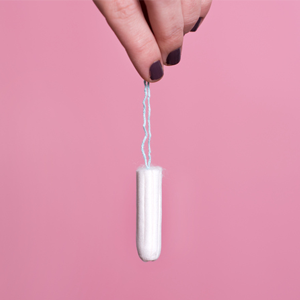
Health24.com | Should you sleep with a tampon in overnight?

Okay, so you passed out cold while reading in bed (a.k.a., watching To All the Boys I’ve Loved Before for the 32nd time on your laptop) – before you even had a chance to remove your tampon.

Pretty harmless, right? Eh… not quite.

The problem, “We know that the longer [a tampon] is in place without being changed, the higher the risk for toxic shock syndrome (TSS) to develop,” says Dr Ha T Nguyen, obstetrician and gynaecologist with McGovern Medical School at UT Health and UT Physicians in Houston.

TSS is a bacterial infection caused by the staph bacteria, Staphylococcus aureus, according to the National Institutes of Health (NIH). Model Lauren Wasser lost both of her legs after contracting TSS when she was 24. And the disease was also responsible for the death of a 16-year-old girl on an overnight school trip last year.

So uh, how long can I actually leave a tampon in?

You shouldn’t leave your tampon in for more than eight hours, according to basically every tampon maker.

Healthcare professionals agree; their consensus is to change your tampon every four to eight hours, says Dr Nguyen.

So, technically, you can sleep with a tampon in – as long as you put it in right before you hit the sheets, get no more than eight hours of sleep, and take it out as soon as you wake up.

Read more: 5 alternatives to pads and tampons you should think about trying

What about those super-absorbent tampons?

You shouldn’t keep a super-absorbent tampon in for any longer, says Dr Obosa Nosayaba Osawe, an obstetrician and gynaecologist at Piedmont Physicians Obstetrics and Gynecology at Piedmont Newnan Hospital in Athens, Georgia.

The main issue here is, when your tampon becomes saturated with blood – even a small amount – and is left in the vagina for longer than eight hours, it becomes a breeding ground for the growth of bacteria associated with TSS.

“If you can wear a tampon for up to eight hours without needing to change it, the absorbency is likely too high, and you’re better off using a smaller tampon and changing it regularly based on your menstrual flow,” says Dr Osawe.

Read more: 5 period symptoms that might signal a serious health problem

Okay, so TSS is the worst that could happen?

Pretty much. But TSS is bad.

Toxic shock syndrome typically comes on fast, with flu-like symptoms, including headaches, high fever and muscle aches, per the NIH – though, left untreated, it can progress rapidly to organ failure, seizures and even death.

The infection also comes with a telltale rash – it’s flat, red, and appears on the palms of hands or soles of feet; if you have any flu-like symptoms, along with a rash, it’s best to get checked out by a doctor, ASAP.

But before you start officially freaking out, know that if you do accidentally leave your tampon in past the eight-hour mark, you’ll probably be fine. Though super-scary, TSS isn’t as big as a threat as it was 20 or 30 years ago, says Dr Nichole Mahnert, obstetrician and gynaecologist at Banner University Medical Center Phoenix.

“This changed especially after the removal of specific materials, like rayon, from some types of tampons,” she says. “Back in 1986, the risk was one in 100 000, and is potentially lower now. And the risk of fatality [from TSS] has also decreased to less than 2%.”

The bottom line: If you decide you absolutely need to sleep with a tampon in, your safest option is to put it in right before bed – and take it out as soon as you wake up, no more than eight hours later. But, if you want to be extra-careful, opt for pads at night.

This article was originally published on www.womenshealthmag.com

Image credit: iStock

Share Button

South Africa’s highest court legalises cannabis use

Pro-marijuana activists cheer following a landmark ruling by the country’s highest court.

Share Button