Fighting the cold virus and other threats, body makes trade-off, says study

A Yale research team has revealed how cells in different parts of the human airway vary in their response to the common cold virus. Their finding, published in Cell Reports, could help solve the mystery of why some people exposed to the cold virus get ill while others don’t, said the researchers.

Rhinovirus is a leading cause of the common cold, asthma attacks, and other respiratory illnesses. When the cold virus enters the nose, cells that line the airways, known as epithelial cells, respond and often clear the virus before it can replicate and trigger symptoms. But in other cases, individuals exposed to the virus get either mildly or seriously ill. A team of researchers, led by Ellen Foxman, set out to determine why.

The research team used epithelial cells from healthy human donors. The cells were derived from either the nasal passages or the lungs. They exposed both cell types, maintained under the same conditions in cell culture, to rhinovirus. To their surprise, the researchers observed a more robust antiviral response in nasal cells.

To investigate further, the researchers triggered the virus surveillance pathway — known as the RIG-I pathway — in both nasal and lung cells. They found that both cell types generated an antiviral response and a defense response against oxidative stress, a form of cell damage induced by viruses and other inhaled irritants such as cigarette smoke or tree pollen. In nasal cells, the antiviral response was stronger, but in bronchial cells, defense against oxidative stress was more pronounced.

In additional experiments, the research team found evidence for a tradeoff: The defense response against oxidative stress shut off antiviral defenses. To probe this further, the team exposed nasal cells to oxidative stress in the form of cigarette smoke, and then to the cold virus, and found that the nasal cells were more susceptible to the virus. “They survive the cigarette smoke but can’t fight the virus as well,” Foxman said. “And the virus grows better.”

This finding points to a delicate balance between the body’s different defense mechanisms, Foxman said. “Your airway lining protects against viruses but also other harmful substances that enter airways. The airway does pretty well if it encounters one stressor at a time. But when there are two different stressors, there’s a tradeoff,” Foxman explained. “What we found is that when your airway is trying to deal with another stress type, it can adapt but the cost is susceptibility to rhinovirus infection.”

The study, she said, shows a mechanistic link between environmental exposures and susceptibility to the common cold, and also may explain why smokers tend to be more susceptible to rhinovirus infection. The researchers hope the finding will lead to the discovery of new strategies to combat respiratory viruses, which cause an estimated 500 million colds and 2 million hospitalizations in the United States per year.

Other Yale authors are Valia T. Mihaylova, Yong Kong, Olga Fedorova, Lokesh Sharma, Charles S. Dela Cruz, Anna Marie Pyle, and Akiko Iwasaki.

This work was supported in part by the National Institutes of Health and the Howard Hughes Medical Institute. A.M.P. has a patent pending for RIG-I stimulation agent SLR-14.

Story Source:

Materials provided by Yale University. Original written by Ziba Kashef. Note: Content may be edited for style and length.

Share Button

Understanding 6th-century barbarian social organization and migration through paleogenomics

Applying a comprehensive analysis of genetic, historical, and archeological factors in two 6th-century barbarian cemeteries, researchers have gleaned new insights into a key era known as the Migration Period that laid the foundation for modern European society. Spanning the 4th to 8th centuries, this epoch followed the decline of the Western Roman Empire and was a time of major socioeconomic and cultural transformation in Europe. However, despite more than a century of scholarly work by historians and archaeologists, much about the period still remains unknown or is hotly debated, as reliable written accounts are lacking.

A paper, published today in Nature Communications, seeks to shed new light on how these communities were formed, how people lived, and how they interacted with the local populations they supposedly came to dominate. The international team of geneticists, historians, and archaeologists led by Professor Patrick Geary of the Institute for Advanced Study and Professor Krishna Veeramah of Stony Brook University in the U.S., Professor Johannes Krause of the Max Planck Institute for the Science of Human History in Jena, Germany, and Professor David Caramelli of the University of Florence in Italy, have for the first time sequenced the genomes of entire ancient cemeteries — one in Hungary and one in Italy.

This research provides the clearest picture yet of the lives and population movements of communities associated with the Longobards, a barbarian people that ruled most of Italy for more than two hundred years after invading from the Roman Province of Pannonia (modern-day Hungary) in 568 C.E. The team’s data from the Hungarian cemetery, Szólád, almost doubles the number of ancient genomes obtained from a single ancient site to date. This in-depth genomic characterization allowed the team to examine the relationship between the genetic background of the community and the archaeological material left behind.

Professor Patrick Geary, of the Institute for Advanced Study, a senior author of the paper said, “Prior to this study, we would not have expected to observe such a strong relationship between genetic background and material culture. This appears to suggest that these particular communities contained a mix of individuals with different genetic backgrounds, that they were aware of these differences, and that it likely influenced their social identity.”

A somewhat surprising result was that in both cemeteries, individuals buried with elaborate grave goods, like swords and shields for the men and beaded necklaces and broaches for the women, tended to have a genetic ancestry associated with modern northern and central Europeans today, while grave goods in individuals with more southern European-looking genomes were much less abundant. The individuals with abundant grave goods also tended to consume more protein rich diets.

“What we have presented in this study is a unique cross-discipline framework for the future,” added Geary, “uniting experts from different disciplines to reinterpret and reconcile historical, genomic, isotopic, and archaeological evidence to enhance our knowledge of the past, compile new information on how populations move, how culture is transmitted, how to better understand identity, and new ways of understanding the complexity, heterogeneity, and malleability of Europe’s population in the past and the present.”

The approach also allowed researchers for the first time to reconstruct comprehensive genealogies of the people who were buried in these cemeteries, finding that family relations spanning multiple generations were likely key to establishing these communities. “It looks like both these cemeteries organized themselves around one or two large groups of biologically related kin, with the vast majority of these individuals being men” said Veeramah. “In addition, these related individuals tended to share the northern/central genetic ancestry associated with rich grave goods.”

The team concluded that it was unusual to see this genetic ancestry type in Hungary and certainly in Italy in the 6th century. “Though we really need more data, our current results are consistent with the idea of barbarians migrating from north of Danube and east of the Rhine, which would suggest we are observing the invasions previously described by the Romans,” said Veeramah. “It is also likely that social organization was based around large high-status male biological kinship groups, and these were key to establishing communities following the migration into Italy.”

Veeramah, Caramelli, Krause, and Geary stressed that these results represented mere snapshots of the period and that more work in other cemeteries in other regions is vital for truly understanding this period. “It could be that we look at some new cemeteries 50 km away or that are 100 years older or younger and find very different patterns of social organization. People are complicated now, and they almost certainly were during the Migration Period,” said Geary. “There are thousands of medieval cemeteries out there for us to look at. This is hopefully just the beginning of our work.”

The international team of 24 scholars joining Geary, Caramelli, Krause, and Veeramah in producing this paper include Carlos Eduardo G. Amorim and Dean Bobo of Stony Brook University; Stefania Vai, Alessandra Modi, and Martina Lari of Università degli Studi di Firenze; Cosimo Posth of the Max Planck Institute for the Science of Human History and University of Tübingen; István Koncz of Eötvös Loránd University; Susanne Hakenbeck of the University of Cambridge; Maria Cristina La Rocca of Università degli Studi di Padova; Balázs Mende of the Hungarian Academy of Sciences; Tivadar Vida of Eötvös Loránd University and the Hungarian Academy of Sciences; Walter Pohl of Österreichische Akadamie der Wissenschaften; Luisella Pejrani Baricco, Elena Bedini, and Caterina Giostra of Università Cattolica del Sacro Cuore; Paolo Francalacci of Università degli Studi di Sassari; Daniel Winger of Universität Rostock; Uta von Freeden of Deutsches Archäologisches Institut; and Silvia Ghirotto and Guido Barbujani of Università degli Studi di Ferrara.

The idea of creating such an interdisciplinary team originated eight years ago in the course of a faculty seminar at the University of California, Los Angeles, supported by a grant from the Andrew W. Mellon Foundation to transform research in the humanities. This work was supported by the National Science Foundation, the Anneliese Maier Research Award of the Alexander von Humboldt Foundation, the Max Planck Society, the German Federal Ministry for Education and Research, the Swedish Riksbankens Jubileumsfond, the Gerard B. Lambert Foundation, and the Italian Ministry for University and Research Department of Excellence Program. Additional funding was provided by the Director’s Office of the Institute for Advanced Study.

Share Button

Blackpool monkeypox case confirmed as second in UK

A patient in Blackpool tested positive for the disease, just days after the first case in Cornwall.

Share Button

Health24.com | Doctors discover new type of multiple sclerosis

A new sub-type of multiple sclerosis (MS) has been identified by researchers, and the discovery changes the understanding of the disease.

MS has long been considered a disease of the brain’s white matter, where immune cells destroy the fatty protective covering (myelin) on nerve cells. The destruction of myelin (demyelination) is linked to nerve cell death that leads to progressive disability in MS patients.

However, the newly identified sub-type of MS – called myelocortical MS (MCMS) – features the loss of neurons but no damage to the brain‘s white matter.

In the study, researchers analysed brain tissue from 100 MS patients who donated their brains after death. The investigators found that 12 of the brains did not have white matter demyelination.

Need for more sensitive MRI scans

While alive, MRI brain scans of those 12 patients were indistinguishable from those with traditional MS, the study authors said. That’s because part of the neurons were swollen in those 12 patients and looked like typical MS lesions caused by white matter myelin loss. Diagnosis of MCMS was only possible after death.

The findings, published online in The Lancet Neurology, show that neuron loss and demyelination can occur independently in MS. This highlights the need for more sensitive MRI scans, according to the researchers.

“This study opens up a new arena in MS research. It is the first to provide pathological evidence that neuronal degeneration can occur without white matter myelin loss in the brains of patients with the disease,” said team leader Bruce Trapp. He is chair of the Lerner Research Institute department of neurosciences at the Cleveland Clinic.

Proper diagnosis

“This information highlights the need for combination therapies to stop disability progression in MS,” Trapp said in a Cleveland Clinic news release.

According to another research team member, Dr Daniel Ontaneda, “The identification of this new MS subtype highlights the need to develop more sensitive strategies for properly diagnosing and understanding the pathology of MCMS.” Ontaneda is clinical director of the brain donation programme at Cleveland Clinic’s Mellen Center for Treatment and Research in MS.

“We are hopeful these findings will lead to new tailored treatment strategies for patients living with different forms of MS,” he added.

Image credit: iStock

Share Button

Health24.com | Why do my nipples hurt?

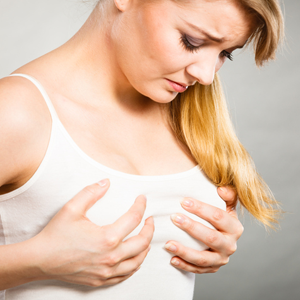
There are two words that, when said together, can make any woman immediately cringe with discomfort: Nipple pain. (You totally did it just now, didn’t you?)

For one, your nipples are super-sensitive (they’re a top erogenous zone, after all) – but there’s pain that feels good and pain that, well, feels like pain.

So, uh, what is going on when your nips actually hurt – and is it something to worry about?

First: Don’t freak out; there are various lifestyle and health changes that could lead to nipple pain, and most can easily be resolved once you figure out the culprit (i.e. throw away that ill-fitting sports bra), but others may come with more alarming symptoms (like nipple discharge, lumps or changes in the colour or texture of your breast skin) that are definitely a sign to see a doctor.

Whatever the case, irritated, painful nipples aren’t something you should have to deal with on the regular. If your nips are feeling super uncomfortable, make an appointment with your gynae – one of these issues might be at the root.

1. You have an infection in your nipples

Yep, your nipples can get infected. “There are large pores and hair follicles around the nipple that can become clogged and infected just like in your underarm or pubic areas,” says Dr Jenna Sassie, an obstetrician/gynaecologist at Women’s Healthcare Associates in Houston.

One possible type of infection, believe it or not, is a yeast infection on your nipple (yes, those yeast infections). These usually occur under the breast where sweat collects, says Sassie, but since yeast thrives in moist, dark environments, women who regularly wear bras made of non-breathable material might be prone to yeast infections on their nipples too.

Thrush is another type of yeast infection that’s passed on to breastfeeding mothers from their babies. Luckily, these infections can be treated with antibiotics – for you, and if you’re breastfeeding, for your baby too.

Nipple piercing can also lead to infection, especially if it’s not done with good technique or cared for meticulously afterwards, says Dr Alyssa Dweck, a gynaecologist in Westchester, New York, and assistant clinical professor of obstetrics and gynaecology at Mount Sinai School of Medicine.

So if you’re considering accessorising your girls, do your research and find a reputable tattoo and piercing parlour.

Read more: 8 nipple symptoms that are totally normal

2. You have ‘jogger’s nipple’

If you work out regularly or are training for a long endurance event like a marathon, experiencing chafing or irritation from clothing such as a sports bra isn’t that uncommon.

Dr Dweck advises wearing a well-fitting, good-quality sports bra and using an anti-chafing balm to prevent irritation.

But you don’t have to be a runner to get “jogger’s nipple” – it can happen in everyday clothes too. “I’ve also had patients wearing poor-fitting lace bras and such who wind up with rashes or sensitivity because it’s rubbing the nipple all day long,” Dr Sassie says.

If that’s the case, it might be worth going through your intimates drawer to figure out if it’s really worth keeping some of those pretty, yet too itchy, bras around.

3. You’re experiencing hormonal changes

One of the first things you want to consider when you first experience breast pain is whether or not you might be pregnant.

“Nipple pain is sometimes the first sign that you are expecting,” says Dr Sassie.

So if you’re not on birth control and are not experiencing any signs of nipple irritation, you wouldn’t be crazy for rushing out to buy a pregnancy test.

Similarly, if you stopped or started a new birth control method or pill, are about to start your period, or are experiencing any major hormonal fluctuations such as perimenopause, you may experience breast and nipple pain as well, says Dr Sassie; which, while a literal pain, is usually nothing to worry about.

Read more: 5 everyday habits that are causing your boobs to sag

4. You’re breastfeeding

A very unfortunate truth: Experiencing pain while breastfeeding is mostly normal, for a number of reasons: your breast pump doesn’t fit well, you have clogged milk ducts, your nipples are cracked or your baby has latching issues.

Nipple creams can often help new moms get some relief in those cases.

But sometimes pain during breastfeeding isn’t normal – like with mastitis, (a.k.a. inflammation of breast tissue). According to the American College of Obstetricians and Gynecologists, symptoms of mastitis include breast tenderness or warmth to the touch, breast swelling, thickening of breast tissue or a breast lump; pain or a burning sensation while breastfeeding or during normal daily activities; and skin redness.

“If you are experiencing pain while breastfeeding and also have a fever or chills or you are generally feeling ill, definitely visit your doctor,” Dr Sassie says.

5. You’re having an allergic reaction

If you’re experiencing itchiness or irritation after using a new fragrance, soap, or lotion, or even laundry detergent or fabric softener, your newfound nipple pain might be the result of an allergic reaction.

If you have made a recent switch – and identified that as the source of your pain – you might be better off going back to your old favourite, or seeking out a fragrance-free or hypoallergenic version.

6. You started or changed a medication

“Some medications can have side effects that cause nipple sensitivity or even discharge from the nipple,” says Dr Sassie “These can be herbal supplements or prescriptions, especially psychiatric drugs.” Check with your doctor if you think that’s the case.

Additionally, if you have already been diagnosed with breast cancer, treatment such as surgery and radiation can cause breast pain as well, says Dr Dweck.

This article was originally published on www.womenshealthmag.com

Image credit: iStock

Share Button

Health24.com | It’s 17 years after 9/11 – and we still don’t understand the damage to hearts

Back when Charlie Wilson was an avid runner, the only flutter he ever felt in his chest came from indigestion.

That changed on September 11. The now-retired New York police sergeant spent nearly every day for the next six months at the World Trade Center. He helped with rescue and cleanup missions, all while breathing in the hazardous dust still settling over lower Manhattan.

Years later, he developed sleep apnoea and asthma. And on October 19, 2011, Wilson received a pacemaker after years of dealing with an irregular heartbeat.

Wilson, 59, is among thousands of first responders, volunteers and New York residents with ailments and diseases linked to 9/11. More than 71 800 first responders and 16,600 survivors currently receive treatment through the World Trade Center Health Program.

Yet, 17 years after the world’s deadliest terrorist attack, research has only started to uncover ways in which the aftermath has literally altered the hearts and minds of those affected.

Respiratory illnesses were among the first widely reported health issues, usually characterised by chronic coughing and wheezing. Acid reflux was another common complaint, along with sleep apnoea and sinus problems that often led to blocked upper airways.

Many of the problems were linked to the fact that the collapse of the twin towers filled the air with numerous carcinogenic particles and chemicals, including asbestos and fiberglass, exposing anyone within reach of the colossal cloud.

A study published last year in the journal Environment International found that New York children exposed to the dust because of where they lived in the wake of 9/11 may be at higher risk for heart disease. Blood tests of teens and young adults who were children when the twin towers fell showed high levels of artery-clogging cholesterol.

Another study published this winter in the journal Circulation: Cardiovascular Quality and Outcomes showed a link between cardiovascular health and post-traumatic stress disorder, a common illness among 9/11 rescuers, volunteers and survivors. The research found that response crew workers who suffered from PTSD had more than double the risk for heart attacks or strokes than those without the disorder.

Dr Alfredo Morabia, the study’s lead author, noted that heart disease is not formally recognised as a World Trade Center-related condition, but substantial research has demonstrated the need for medical insurers to consider the connection as such.

Dr Aaron Pinkhasov, a clinical professor of psychiatry at New York University School of Medicine, said he is not surprised to see research linking PTSD with cardiovascular health.

PTSD affects the part of the brain that responds to fear, and the brain can overreact to even benign situations. This disrupts the immune system and triggers an inflammatory response known to harden arteries. 

On September 11, 2001, when the first plane crashed into the World Trade Center, Wilson immediately headed downtown and began evacuating people from the area.

When the second tower collapsed, “it was like a wave just picked me up, like body surfing,” Wilson recalled. “It picked me up and threw me over the top of (a) van.”

Wilson ended up breaking his back, but continued working until 03:00 the next morning.

In an Injury Epidemiology study last year, people like Wilson who sustained significant injuries on 9/11 were twice as likely to develop heart disease as people who didn’t.

Wilson’s back injuries eventually prompted him to retire from the police department in 2005. Other health problems followed, including the heart flutter that doctors failed to diagnose for years until shortly before he got his pacemaker. The device picked up another heart condition called atrial fibrillation.

His heart problems have not officially been tied to 9/11, he said.

“With all the research they’re doing now, it will happen,” he said. “It’s going to come out eventually, but I don’t know if I’ll be around to see it.”

Image credit: iStock

Share Button

NHS vacancies a ‘national emergency’

Figures show one in 11 NHS posts in England is unfilled.

Share Button

England facing ‘changing health needs’

With people living longer, common ailments are changing and the NHS must quickly adapt, says a report.

Share Button

Special antibodies could lead to HIV vaccine

A small number of people who are infected with HIV-1 produce very special antibodies. These antibodies do not just fight one virus strain, but neutralize almost all known virus strains. Research into developing an HIV vaccine focuses on discovering the factors responsible for the production of such antibodies.

HIV-1 genome influences immune reaction

A Swiss research team led by the University of Zurich (UZH) and University Hospital Zurich (USZ) has been searching for these factors for years. Several have already been identified: For example, the virus load and the diversity of the viruses, the duration of the infection, and the ethnicity of the affected person can all influence the body’s immune response. “In our new study, we were able to identify another factor: The genome of the HI virus,” says Huldrych Günthard, deputy director of the Department of Infectious Diseases and Hospital Epidemiology at USZ.

Antibody response of transmission pairs

The starting point for the researchers was the data and biobanked blood samples of around 4,500 HIV-infected people, recorded in the Swiss HIV Cohort Study and the Zurich Primary HIV Infection Study. In total the researchers found 303 potential transmission pairs — i.e. pairs of patients for whom the similarity of the viruses’ genomic RNA indicated that they were probably infected with the same virus strain. “By comparing the immune response of these pairs of patients, we were able to show that the HI virus itself has an influence on the extent and specificity of the antibody reactions,” explains the study’s first author Roger Kouyos, research group leader at the Department of Infectious Diseases and Hospital Epidemiology at USZ.

Special envelope proteins provide broad protection

Antibodies acting against HIV bind to proteins found on the surface of the virus. These envelope proteins differ according to virus strain and subtype. The researchers therefore examined more closely a patient pair with very similar virus genomes and at the same time very strong activity of broadly neutralizing antibodies. “We discovered that there must be a special envelope protein that causes an efficient defense,” explains Alexandra Trkola, virologist and head of the Institute of Medical Virology at UZH.

Search for an ideal envelope protein continues

In order to be able to develop an effective vaccine against HIV-1, it is necessary to pinpoint the envelope proteins and virus strains that lead to the formation of broadly acting antibodies. It is therefore planned to widen the search. “We have found one candidate. Based on that, we now want to begin developing an immunogen ourselves,” adds Trkola.

Story Source:

Materials provided by University of Zurich. Note: Content may be edited for style and length.

Share Button

Three new species of fish discovered in the extreme depths of the Pacific Ocean

An exploration to one of the deepest places on earth has captured rare footage of what is believed to be three new species of the elusive Snailfish.

Involving a team of 40 scientists from 17 different nations, including Dr Alan Jamieson and Dr Thomas Linley from Newcastle University, UK, the expedition to the Atacama Trench has uncovered a wealth of information about life in one of the deepest places on earth.

Among the new discoveries are what the team believe to be three new species of snailfish.

Temporarily named ‘the pink, the blue and the purple Atacama Snailfish’, the footage shows the fish feeding and interacting in their secret world 7,500 metres below the surface.

These fish are part of the Liparidae family and do not conform to the preconceived stereotypical image of what a deep-sea fish should look like.

Instead of giant teeth and a menacing frame, the fishes that roam in the deepest parts of the ocean are small, translucent, bereft of scales — and highly adept at living where few other organisms can. The snailfish will be featured as part of the Challenger Conference 2018 which kicks off at Newcastle University from today and runs until Friday.

Dr Thomas Linley, from Newcastle University, said:

“There is something about the snailfish (fish of the family Liparidae) that allows them to adapt to living very deep. Beyond the reach of other fish they are free of competitors and predators.

“As the footage clearly shows, there are lots of invertebrate prey down there and the snailfish are the top predator, they seem to be quite active and look very well-fed.

“Their gelatinous structure means they are perfectly adapted to living at extreme pressure and in fact the hardest structures in their bodies are the bones in their inner ear which give them balance and their teeth. Without the extreme pressure and cold to support their bodies they are extremely fragile and melt rapidly when brought to the surface.”

Amazingly, the team did manage to catch one the new species of snailfish which followed its amphipod prey into one of the traps. The single specimen was in very good condition and, following careful preservation, is currently being described by the Newcastle team with the help of colleagues from the United States and the Natural History Museum, London.

Pioneering technology for exploration of the ultra-deep

The Hadal Trenches are one of the last great frontiers in marine science and the deepest places on Earth.

Mostly located around the Pacific rim in areas where tectonic plate collide and plunge, the seafloor reaches depths close to 11,000 metres (~7 miles) in some areas.

The Atacama Trench, a trench almost 6000 km long and more than 8000 m deep, runs along the west coast of South America.

Newcastle University scientists and engineers have been pioneering technology for the exploration of these ultra-deep environments for the last five years and have to date completed nearly 250 deployments of their novel ‘lander’ systems.

Using two full-ocean depth (11,000 m) capable landers equipped with HD cameras and traps the Newcastle team assessed the animals found within the trench.

Designed and developed at Newcastle University, the lander is dropped overboard, and free-falls to the ocean floor where it carries out a variety of monitoring and sampling tasks.

It can take four hours for a trap to sink to the bottom and after waiting an additional 12 to 24 hours, the researchers send an acoustic signal to the trap, which releases weights and the lander rises to the surface with the help of floatation.

This allows the team to catch fish specimens and take video footage of life at the bottom of the ocean.

On this latest expedition to the Atacama Trench in the SE Pacific off the coast of Peru and Chile, the team deployed their baited camera system 27 times from 2537 to the deepest point, Richard’s Deep, at just over 8000 metres.

More than 100 hours of video and 11,468 photographs were taken at the seabed.

As well as the snailfish, the team also filmed some astonishingly rare footage of long-legged isopods, known as Munnopsids, which are about the size of an adult hand.

These crustaceans have small bodies, extraordinarily long legs and swim backwards and upsides down, propelling themselves with paddles on their ventral side — their ‘tummies’ — before righting themselves on the seafloor and spreading their long walking legs out like a spider.

“We don’t know what species of munnopsid these are but it’s incredible to have caught them in action in their natural habitat — especially the flip they do as they switch from swimming to walking mode,” says Dr Linley.

Share Button