Unwell with a bad throat and temperature? You may have one of the new Covid strains circulating this autumn.


Unwell with a bad throat and temperature? You may have one of the new Covid strains circulating this autumn.
The coroner opens the inquests into the deaths of Pauline Brown and Jennifer Fox.
A mum whose 12-week-old baby underwent emergency surgery for a brain tumour calls for better awareness.
The health secretary says “it’s not happening”, as ministers face questions about the prospect of tax rises.

For millennia, astronomers thought Uranus was no more than a distant star. It wasn’t until the late 18th century that Uranus was universally accepted as a planet. To this day, the ringed, blue world subverts scientists’ expectations, but new NASA research helps puzzle out some of the world’s mystique.
For millennia, astronomers thought Uranus was no more than a distant star. It wasn’t until the late 18th century that Uranus was universally accepted as a planet. To this day, the ringed, blue world subverts scientists’ expectations, but new NASA research helps puzzle out some of the world’s mystique.
Uranus is unlike any other planet in our solar system. It spins on its side, which means each pole directly faces the Sun for a continuous 42-year “summer.” Uranus also rotates in the opposite direction of all planets except Venus. Data from NASA’s Voyager 2 Uranus flyby in 1986 also suggested the planet is unusually cold inside, challenging scientists to reconsider fundamental theories of how planets formed and evolved throughout our solar system.
“Since Voyager 2’s flyby, everybody has said Uranus has no internal heat,” said Amy Simon, a planetary scientist at NASA’s Goddard Space Flight Center in Greenbelt, Maryland. “But it’s been really hard to explain why that is, especially when compared with the other giant planets.”
These Uranus projections came from only one up-close measurement of the planet’s emitted heat made by Voyager 2: “Everything hinges on that one data point,” said Simon. “That is part of the problem.”
Now, using an advanced computer modeling technique and revisiting decades of data, Simon and a team of scientists have found that Uranus does in fact generate some heat, as they reported in the Monthly Notices of the Royal Astronomical Society journal.
A planet’s internal heat can be calculated by comparing the amount of energy it receives from the Sun to the amount it of energy it releases into space in the form of reflected light and emitted heat. The solar system’s other giant planets — Saturn, Jupiter, and Neptune — emit more heat than they receive, which means the extra heat is coming from inside, much of it left over from the high-energy processes that formed the planets 4.5 billion years ago. The amount of heat a planet exudes could be an indication of its age: the less heat released relative to the heat absorbed from the Sun, the older the planet is.
Uranus stood out from the other planets because it appeared to give off as much heat as it received, implying it had none of its own. This puzzled scientists. Some hypothesized that perhaps the planet is much older than all the others and has cooled off completely. Others proposed that a giant collision — the same one that may have knocked the planet on its side — blasted out all of Uranus’ heat. But none of these hypotheses satisfied scientists, motivating them to solve Uranus’ cold case.
“We thought, ‘Could it really be that there is no internal heat at Uranus?'” said Patrick Irwin, the paper’s lead author and professor of planetary physics at the University of Oxford in England. “We did many calculations to see how much sunshine is reflected by Uranus and we realized that it is actually more reflective than people had estimated.”
The researchers set out to determine Uranus’ full energy budget: how much energy it receives from the Sun compared to how much it reflects as sunlight and how much it emits as heat. To do this, they needed to estimate the total amount of light reflected from the planet at all angles. “You need to see the light that’s scattered off to the sides, not just coming straight back at you,” Simon said.
To get the most accurate estimate of Uranus’ energy budget yet, Oxford researchers developed a computer model that brought together everything known about Uranus’ atmosphere from decades of observations from ground- and space-based telescopes, including NASA’s Hubble Space Telescope and NASA’s Infrared Telescope Facility in Hawaii. The model included information about the planet’s hazes, clouds, and seasonal changes, all of which affect how sunlight is reflected and how heat escapes.
The researchers found that Uranus releases about 15% more energy than it receives from the Sun, a figure that is similar to another recent estimate from a separate study funded in part by NASA that was published July 14 in Geophysical Research Letters. These studies suggest Uranus it has its own heat, though still far less than its neighbor Neptune, which emits more than twice the energy it receives.
“Now we have to understand what that remnant amount of heat at Uranus means, as well as get better measurements of it,” Simon said.
Unraveling Uranus’ past is useful not only for mapping the timeline of when solar system planets formed and migrated to their current orbits, but it also helps scientists better understand many of the planets discovered outside the solar system, called exoplanets, a majority of which are the same size as Uranus.
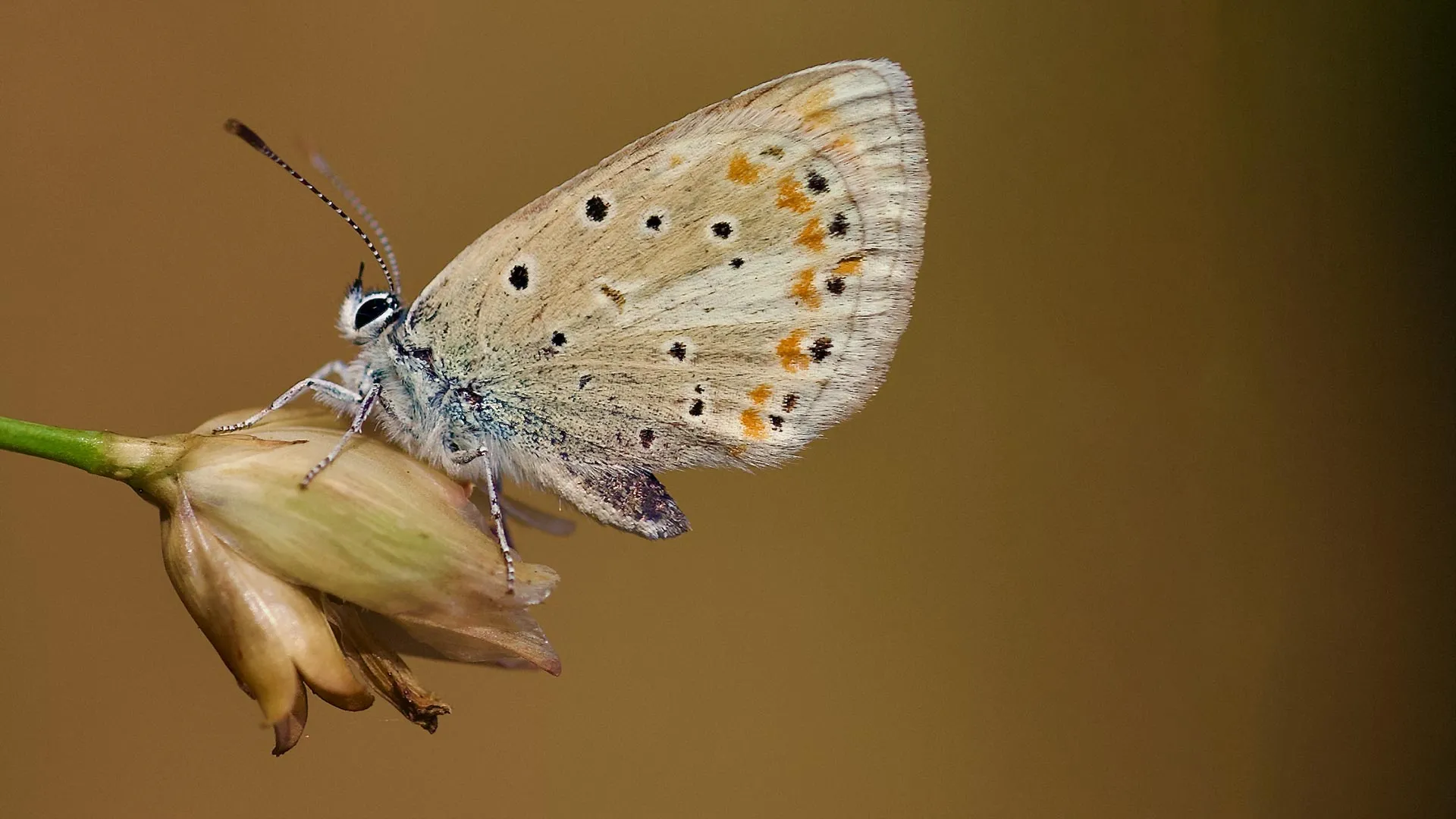
The Atlas blue butterfly, also known as Polyommatus atlantica, has been genetically confirmed as having the highest number of chromosomes out of all multicellular animals in the world.
This insect boasts 229 pairs of chromosomes, while many of its close relatives have only 23 or 24 pairs. Researchers at the Wellcome Sanger Institute and the Institute of Evolutionary Biology (IBE: CSIC-UPF), Barcelona, have revealed that these chromosomes have been broken up over time, instead of duplicated.
The first genomic study of this butterfly, published on September 10 in Current Biology, allows experts to begin to explore the evolutionary reasons behind this extreme number of chromosomes. Chromosome changes are also seen in human cancer cells, and therefore, understanding this process in different species could help inform cancer research.
This is the first time that the Atlas blue butterfly has been sequenced. From this, experts have produced a gold-standard reference genome for this species, allowing researchers to compare this extreme genome to other butterflies and moths to understand more about how species form and change over time.
Evolution and the development of new species happen over millions of years, making it hard to study practically. Instead, experts can use the DNA of a species and compare this to others in the same family to understand which genes and traits have been kept and which have been lost and then make informed guesses as to why.
Having the genetic story of a species also allows us to understand how the next chapter might go. For example, we might be able to understand how a species could respond to the increasing global temperature and if they have any genes or mechanisms that might protect them. This could inform conservation efforts as well as research into producing more resilient crops.
The Atlas blue butterfly is found in the mountain ranges of Morocco and northeast Algeria. While it had been suspected to have the most chromosome pairs in the animal kingdom, this is the first time experts have sequenced the butterfly genome to confirm1. For comparison, a close relative found widely in the UK, the Common blue butterfly, has 24 chromosomes.
Changes in chromosome numbers are thought to contribute to the process of new species forming and help species adapt to their environment. The group to which the Atlas blue butterfly belongs contains many closely related species that evolved over a short period of time.
In this new research, the team found that the chromosomes had been spilt up at points where the DNA is less tightly wound. This means there was roughly the same amount of genetic information, but it was packaged in smaller sections. All of the chromosomes, apart from the sex chromosomes, were cut up, and the researchers estimate that this caused the chromosome number to go from 24 to 229 over roughly three million years — a relatively short amount of time by evolutionary standards.
Usually, it is assumed that this kind of extreme chromosomal change is negative; however, the Atlas blue butterfly has evolved and survived for millions of years. It is only now, due to climate change and human impacts on the environment, such as the destruction of cedar forests and overgrazing, that its populations are under threat.
This research raises multiple questions that can now be addressed in the future. Splitting up the chromosomes could help give greater genetic diversity by allowing more frequent shuffling of genome parts or give other unknown benefits. While this may help butterflies to rapidly adapt, species with many chromosomes may also face challenges due to the extra complexity of this, potentially making them more vulnerable to extinction over time. Further investigations and comparisons with other butterflies could highlight whether any genes have been lost or preserved, giving us more information on the biology of the butterflies, but also a deeper understanding of evolution.
Chromosomal rearrangements also happen in human cancers, and therefore, studying these processes in the Atlas blue butterfly DNA could lead to new developments in human health and highlight possible ways to reduce or stop this phenomenon in cancer cells.
Dr Roger Vila, senior author at the Institute of Evolutionary Biology, said: “Breaking down chromosomes has been seen in other species of butterflies, but not on this level, suggesting that there are important reasons for this process which we can now start to explore. Additionally, as chromosomes hold all the secrets of a species, investigating whether these changes impact a butterfly’s behaviour could help form a full picture of how and why new species occur.”
Dr Charlotte Wright, first author at the Wellcome Sanger Institute, said: “When we set out to start to understand evolution in butterflies, we knew we had to sequence the most extreme, and somewhat mysterious, Atlas blue butterfly. Thanks to Roger Vila, who had previously worked with his colleague to find and identify this elusive butterfly, we were able to sequence this species, highlighting the collaborative nature of science. Being able to see, in detail, how the Atlas blue butterfly chromosomes have been split over time in specific places, we can start to investigate what benefits this might have, how it impacts their ability to adapt to their environment, and whether there are any lessons we can learn from their DNA that might aid conservation in the future.”
Professor Mark Blaxter, senior author at the Wellcome Sanger Institute, said: “Genomes hold the key to how a creature came to be, but also, where it might go in the future. To be able to tell the story of our planet, we must have the story of each species and see where they overlap and interact with each other. It also allows us to apply learnings from one genome to another. For example, rearranging chromosomes is also seen in human cancer cells, and understanding this process in the Atlas blue butterfly could help find ways to limit or stop this in cancer cells in the future.”
This research includes funding from Wellcome. A full acknowledgement list can be found in the publication.
Lawyers say the earplugs were used in operations, including in Afghanistan, from 2003 onwards.

UCLA researchers have uncovered a link between “morning sickness” symptoms and the body’s natural, but complex, inflammatory response to biological and bodily changes during pregnancy.
According to the National Institutes of Health, up to 80% of early-stage pregnant mothers experience some nausea, vomiting and aversions to certain foods and smells. While uncomfortable, these symptoms are not typically a sign that anything is wrong with the health of the mother or the developing fetus, but rather an indication of a delicate balance unique to pregnant women.
“During pregnancy, a mother’s immune system faces a tricky challenge: it has to protect both her and the fetus from infection, but without accidentally attacking the fetus, whose genetic identity is half-foreign because it is half derived from the father. Normally, the immune system attacks anything that seems foreign, so in pregnancy, it has to carefully adjust to keep the fetus safe while still defending against infection,” said UCLA anthropology professor Molly Fox.
Fox is the corresponding author of the study “Of scents and cytokines: How olfactory and food aversions relate to nausea and immunomodulation in early pregnancy,” recently published in the journal Evolution, Medicine and Public Health.
The researchers believe that this delicate balance, which protects mother and fetus, is achieved by a unique mix of inflammatory responses. They function to prevent the mother’s body from rejecting the fetus, alongside adaptive behavioral mechanisms, like nausea, that encourage the mother to avoid foods that are potentially harmful, especially in the first and second trimesters when the fetus is most vulnerable.
“Nausea, vomiting or aversions to foods or smells are not indications that something is going wrong for the mother or the fetus. It’s likely an indication that everything is moving along normally, and a reflection of the body’s healthy and helpful immune response,” said UCLA anthropology professor and paper co-author Daniel Fessler.
Methodology and findings
For the study, the UCLA-led team of anthropologists and epidemiologists collected and analyzed blood samples to measure immune system molecules called cytokines. Cytokines are proteins that send signals to help the body launch a quick defense against sickness and regulate inflammation. Participants also filled out questionnaires that asked about morning sickness-related symptoms and food and smell aversions during the early stages of pregnancy. The participants were 58 Latina women in Southern California who were followed beginning in early pregnancy through the postpartum.
Sixty-four percent of study participants experienced odor or food aversions, primarily to tobacco smoke and meat. Sixty-seven percent reported nausea and 66% experienced vomiting.
The study team measured cytokines that promote inflammation (pro-inflammatory) as well as cytokines that suppress inflammation (anti-inflammatory). They found that women who experienced an aversion to tobacco smoke showed a noticeable shift toward a more inflammatory response. Food aversions, nausea and vomiting were also associated with a more pro-inflammatory immune balance.
Natural selection?
The correlation is consistent with researchers’ theory that these symptoms may be part of an evolutionary adaptation that helps pregnant mothers’ bodies minimize exposure to harmful substances, though the study’s authors caution that the evidence is not definitive and more research is needed.
They emphasized that the study allowed the team to look at both human biological and behavioral responses during pregnancy.
“In many mammals, the fetal compartment has barriers separating it from the mother’s blood supply, where her immune cells are. But in humans, we have a unique setup — fetal cells are bathed in maternal blood. Humans have the most invasive of all placentas, burrowing deep into maternal tissue. So humans need unique strategies to prevent the mother’s immune system from attacking the fetus,” said Fox.
These immunological changes may induce nausea, which in turn encourages food avoidance that might act as an additional layer of protection, according to the researchers
“Nowadays, you will see labels on packages of ground beef or soft cheese that warn pregnant women to be cautious about these products because of the risks of foodborne illness during pregnancy. Aversions to certain odors and foods, and nausea and even vomiting, appear to be evolution’s way of achieving that same objective,” said Fessler.
Practical implications
The researchers, including first author Dayoon Kwon, who just completed her Ph.D. in epidemiology at UCLA (and is now a postdoctoral fellow at Stanford), said that the study could help bolster recognition that nausea and vomiting are normal symptoms with biological underpinnings associated with healthy pregnancies. The study’s results could help in paving the way for common-sense workplace accommodations, such as more efficient deployment of health care benefits and other helpful resources to reduce stigma, excessive absences and lost productivity.
They also encourage other researchers to continue to look into the questions raised by the study, to not only explore the evolutionary questions, but to work toward providing clinicians with non- or low-invasive measures of prognoses.
Funding for this study was provided by the National Institute of Health.
Former Para-athletic world champion Stef Reid says footwear companies are failing amputees.
An undercover BBC team catch a fake doctor, a pharmacist and a nurse supplying Botox illegally without checks.
