Health24.com | Losing loved ones to heart disease moves woman to fight for her health

Three days after Christmas, Yolanda Thompson was at work when she got the call she hoped she would never receive. Her husband, Aaron, had suffered a massive heart attack.

“He was a large man and had already had one heart attack,” she said. “We knew that if he had another, it would probably be the last one.”

She’d been trying to encourage him to eat better and exercise, just as she had set out to do for herself. But the changes came too late.

The heart attack hit while he was driving, just minutes from their home in Wichita, Kansas. “Seeing him in the middle of the street with all the paramedics working on him… that was the worst day of my life,” she said.

Sadly, Aaron’s death was not Yolanda’s first experience losing a loved one to heart disease.

Leading cause of death among women

Almost a decade earlier, in 2008, a fun-filled road trip to Nashville with family ended abruptly with a call from her husband to say that her 34-year-old sister, Alisha, was in the hospital in critical condition.

“He said to leave the car and fly back to Wichita because my sister wasn’t going to make it,” she said. At the hospital, she found her sister unconscious, with tubes everywhere. The doctors gathered the family to update them and to ask a critical question.

Why had Alisha stopped taking her blood pressure medicine?

“That question still haunts us,” Yolanda said. “We didn’t know.” Nine days later, Alisha’s heart stopped, her death caused by heart disease and hypertension. Heart disease is the leading cause of death among women, and hypertension rates are especially high among African-Americans.

Strong and beautiful, no matter what size

These days, Yolanda is taking the lessons she’s learned from that one-two punch of heart-related deaths as motivation to improve her own lifestyle. Her struggle underscores the reality that many Americans face: the need and desire to maintain a healthy weight without the ability to always do so.

As she grieved Alisha’s death, her weight skyrocketed. She was diagnosed with hypertension, diabetes and high cholesterol.

“At one point I thought, ‘Hey, I’m better than this,’ and that’s been my attitude ever since,” she said. “I tell myself that I’m strong and beautiful no matter what size I am,” Yolanda said. 

In 2015, a friend urged Yolanda to apply for the American Heart Association’s BetterU Challenge, a 12-week programme that showed women how to make small changes to their daily lives. It turned out to be just the nudge she needed. 

Getting back on track

Then life got in the way again. Her mother-in-law went through a serious illness and died. That brought on a variety of family issues, which in turn led to less exercise and unhealthy eating. “I kind of let myself take a back seat,” she said.

Then came the death of her husband. But this time, unlike after her sister died, she promised herself to get back on track. Yolanda has returned to healthy eating and losing weight, with her friend Ammons encouraging her to rejoin their workouts at the Y.

“I’m happy to see her eating better again,” said Ammons, who is also Yolanda’s co-worker and neighbour. “After Yolanda started exercising the last time, I saw her joy just come back, she was full of life. I’ve seen her through ups and downs, and I told her, ‘I’m not going to let you get where you were before.'”

Having got into great shape before, Yolanda knows she can do it again.

“Sometimes it’s just overwhelming,” she said. “But I’m really working on getting back to where I was because I want to be around for my daughters and grandson.”

Image credit: iStock 

Share Button

Weight-loss drug lorcaserin found to be safe in new study

Long-term use of the US weight-loss pill is found to be safe for the heart, in a major study finds.

Share Button

Health24.com | 9 high-protein vegetables that will fill you up fast

Popeye is notorious for showing off his massive biceps. His secret? Spinach. But that isn’t your only ticket to the gun show.

According to Rosanne Rust, many vegetables provide you with two grams of protein per cup raw, or per half cup cooked. (So anything with two or more grams per serving can be considered a high-protein vegetable.)

It sounds underwhelming when you compare it to, say, the 31g of protein in a chicken breast. But the smaller amounts of protein in veggies can significantly contribute to your recommended daily intake if you aim for the recommended five to 10 servings a day.

However, there is a catch. “Plant proteins are ‘incomplete’ proteins, meaning they aren’t made up of all the essential amino acids,” Rust says. She says it’s important to make sure to “eat the rainbow” of veggies and grains to ensure you’re getting a variety of amino acids. (Translation: Don’t just eat tons of broccoli and call it a day.)

On your next supermarket run, scan the produce aisle for these lean, green muscle machines.

1. Peas

These literal pea-sized gems pack more than meets the eye. “Peas are loaded with vitamin A, a good source of potassium and fibre, and 4g of protein per half cup,” says Rust. “Steam them and toss them into pasta, rice or salads.”

Per 1/2-cup serving: 246kJ, 0.3g fat (0g saturated), 10g carbs, 4g sugar, 4mg sodium, 4g fibre, 4g protein

Read more: Here’s exactly how much protein you should be eating every day

2. Spinach

Loaded with vitamin C, folic acid and other B vitamins, spinach provides a substantial amount of protein when cooked, says Rust.

Per 1/2-cup serving: 87kJ, 0g fat (0g saturated), 3g carbs, 0g sugar, 63mg sodium, 2g fibre, 3g protein

3. Baked potato

You’ll throw praise-hands emojis up at Mother Nature for this one: A medium-sized baked potato contains 3g of protein, tons of vitamin C, potassium and some filling fibre, says Rust.

Per medium potato: 606kJ, 0g fat (0g saturated), 34g carbs, 3g sugar, 8mg sodium, 2g fibre, 3g protein

bowl of baked potatoes

Read more: 20 high-protein, low-carbohydrate foods everyone should be eating

4. Broccoli

Your parents were onto something when they forced you to eat your broccoli as a kid. Now, you’ll want it all on your own – Rust says this cruciferous veggie isn’t only packed with essential nutrients, fibre and protein, it’s also great for maintaining proper gut health.

Per 1-cup serving: 129kJ, 0.3g fat (0g saturated), 6g carbs, 2g sugar, 30mg sodium, 2g fibre, 3g protein

5. Brussels sprouts

These little green guys used to get a bad rap, but now they’re cropping up on gourmet menus everywhere. Like broccoli, Rust says these cruciferous veggies are a great source of potassium, vitamin A, vitamin K and fibre. Steal her simple sprout tip: Halve them, place them on a baking sheet, drizzle with olive oil, add a pinch of salt and roast them for 25 to 35 minutes at 180 degrees, tossing once halfway through.

Per 1/2-cup serving: 117kJ, 4g fat (0g saturated), 6g carbs, 1g sugar, 16mg sodium, 2g fibre, 2g protein

bowl of brussel sprouts

Read more: 5 weird signs that you need to eat more protein

6. Broccoli rabe

Rust predicts this leafy green with broccoli-like buds (also known as “rapini”) will be the next “it” vegetable, and for good reason: It boasts a surprising amount of protein, vitamin A and vitamin K.

Per 85 g serving: 87kJ, 0g fat (0g saturated), 3g carbs, 1g sugar, 48mg sodium, 2  fibre, 3g protein

7. Corn

While field corn (fed to livestock animals) is considered a grain, the sweet corn we enjoy on the braai doused in butter is considered a vegetable, says Rust. And a surprisingly protein-loaded one, at that.

Per medium ear: 368kJ, 1.4g fat (0g saturated), 19g carbs, 6g sugar, 15mg sodium, 2g fibre, 3g protein

Corn on the cob

Read more: The big protein mistake you’re probably making

8. Portobello mushrooms

This fungi is packed with almost as much protein as an egg. Rust says it’s also high in fibre and loaded with antioxidants. “You can grill, chop and sauté them using olive oil and a drizzle of balsamic vinegar at the end of cooking. You can also add them to a vegetable skewer to boost the protein,” Rust says.

Per 1-cup serving: 146kJ, 1g fat (0g saturated), 5g carbs, 3g sugar, 13mg sodium, 2.7g fibre, 4g protein

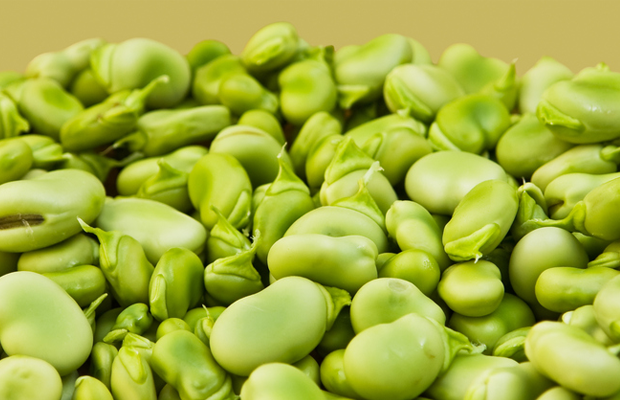
9. Lima beans

The combination of high fibre and high protein make these legumes (in this case, a veggie, too, says Rust) a satiating nutrient-filled powerhouse. To make a healthy homemade dip, Rust says to cook them in boiling water for 10 minutes, drain and cool, then transfer to a food processor, adding a clove of garlic, a tablespoon of lemon juice, two teaspoons of cumin and pinch of salt. Blend until smooth and serve with raw veggies or pita chips.

Per 1/2-cup serving: 439kJ, 0g fat (0g saturated), 20g carbs, 1g sugar, 13mg sodium, 5g fibre, 6g protein

close up of lima beans

This article was originally published onwww.womenshealthmag.com

Image credit: iStock

NEXT ON HEALTH24X

Share Button

Health24.com | Is dried fruit actually good for you?

Dried fruit is the snack du jour – delish, portable and (mostly) healthy. But this sweet treat can be less sunny than it looks. Take note with these tips and tricks from WH advisory board member Keri Glassman.

Dried fruit comes with a lot of fibre… and kilojoules

Like fresh fruit, the dehydrated kind has vitamins that are antioxidants (yay!). But because of the lack of moisture, its contents are much more concentrated. That includes fibre, which, though good for you, can cause cramps and bloat, especially if you don’t typically eat a lot of it.

It also has more sugar, and thus more kilojoules. Even unsweetened fruit (which we recommend) has sugars that aren’t always easy to digest in big amounts. Making matters worse? Sulphites (a common preservative) can cause diarrhoea and headaches in some. Look for sulphite-free.

…But it’s so handy

Done right, noshing on these sweeties can help you avoid less nutritious snacking. If you love chips, try baked or freeze-dried fruit for a nice crunch. Craving gummies? Shop for soft varieties. And PS, a spiced flavour, like chilli-dusted mango, makes it harder to down a whole bag at once.

Eat it the right way

1. Drink water. Fibre helps you poop, but if you’re dehydrated it will also soak up whatever fluid you’ve got left. The result? Constipation. Sipping as you eat can help.

2. Re-portion. Use individual plastic bags or containers to divide fruit into trackable smart servings. That’s two pieces for bigger fruits (apricots, mango and pear slices) – less than the package might tell you! – and two tablespoons for smaller bites (cranberries).

3. Add protein. When you pair your snack with a protein or fat source, like nuts or Greek yoghurt, it becomes more filling, so you’re less likely to go overboard on sugar.

This article was originally published onwww.womenshealthmag.com

Image credit: iStock

NEXT ON HEALTH24X

Share Button

Procrastination – it’s all in the mind

Scans show differences in the brains of those who love to put things offs compared with the “doers”.

Share Button

Genetic analysis of Florida’s invasive pythons reveals a tangled family tree

A new genetic analysis of invasive pythons captured across South Florida finds the big constrictors are closely related to one another. In fact, most of them are genetically related as first or second cousins, according to a study by wildlife genetics experts at the U.S. Geological Survey.

The study also found that at least a few of the snakes in the invasive South Florida population are not 100 percent Burmese pythons. Instead, the genetic evidence shows at least 13 snakes out of about 400 studied are a cross between two separate species: Burmese pythons, which mostly inhabit wetlands, and Indian pythons, which prefer higher ground. The interbreeding between Burmese and Indian pythons probably took place before the animals became established in the South Florida environment, and may have given them greater adaptability in their new habitats.

The South Florida pythons spring from a tangled family tree, with consequences for the species’ future spread that are hard to predict, the USGS scientists said.

“The snakes in South Florida are physically identifiable as Burmese pythons, but genetically, there seems to be a different, more complicated story,” said Margaret Hunter, a USGS research geneticist and lead author on the study published in the journal Ecology and Evolution.

Burmese pythons have been reproducing in the Everglades since the 1980s, and have caused important environmental changes including the decline of small-mammal populations in South Florida.

The researchers analyzed tail tissue from about 400 Burmese pythons captured across a wide area, from southwest Florida and the Big Cypress National Preserve to the Everglades, southeast Miami-Dade County and the Florida Keys, between 2001 and 2012.

The researchers looked at nuclear DNA, which contains genetic material from both parents, to determine how much each animal had in common with others in the population. To express family relationships in statistical terms, they used a common type of calculation known as a relatedness value. For all snakes in the study, the average relatedness value was about midway between first and second cousins. That close kinship means the population as a whole is experiencing inbreeding, the researchers concluded.

When the researchers tested genetic material from a different part of the snakes’ cells-mitochondrial DNA, inherited solely from the mother-they were surprised to find genetic signatures from the Indian python in 13 snakes.

Sometimes interbreeding between related species “can lead to hybrid vigor, that is, the best traits of two species are passed onto their offspring,” Hunter said. “Hybrid vigor can potentially lead to a better ability to adapt to environmental stressors and changes. In an invasive population like the Burmese pythons in South Florida, this could result in a broader or more rapid distribution.”

In the wild, related species typically avoid interbreeding by using different habitats. In their native Asia, Burmese pythons prefer wet habitats, while Indian pythons tend to stick to drier ones. In previous studies, scientists have observed South Florida’s Burmese pythons in both wet and dry habitat types.

“Our ability to detect Burmese pythons in the Greater Everglades has been limited by their effective camouflage and secretive behavior,” said Kristen Hart, a USGS research ecologist and a co-author on the study. “By using genetic tools and techniques and continuing to monitor their movement patterns, we have been able to gain a better understanding of their habitat preferences and resource use. The new information in this study will help scientists and wildlife managers better understand these invasive predators’ capacity to adapt to new environments.”

Story Source:

Materials provided by U.S. Geological Survey. Note: Content may be edited for style and length.

Share Button

Abortion pill can be taken at home in England, under new plan

The change means women will be able to take the second abortion pill at home rather than in a clinic.

Share Button

Health24.com | These brownies are so tasty you’d never guess they’re actually healthy

It’s long been known that chocolate can be good for you. Of course, there’s the rather unscientific “chocolate is made from cocoa which is made from cocoa beans. Beans are good for you so chocolate is good for you…” argument. And then there are various studies that have been conducted; we thank the scientific community for this.

Read more: Eat this sweet treat to boost your brain

In fact, a small experimental study presented at a conference in April, found that dark chocolate can decrease stress and improve mood, memory and immunity. (Spoiler alert: It’s the cocoa that’s so good.)

So what does that mean? Well, chocolate can move from your “no” list to your “go” list. The catch? Your chocolate bar needs to have a high percentage of cacao, usually over 70%. Your favourite off-the-shelf milk chocolate or white chocolate just isn’t going to cut it.

So does this mean we can all enjoy brownies guilt-free? Well no. Adding some dark chocolate to your regular brownie pre-mix isn’t going to do you any good either. It’s packed with sugar. And even if you try to make your own brownies, most recipes call for a worrying amount of sugar anyway.

Read more: 14 sugar-free treats you need in your desk drawer for when those sugar cravings kick in

Google “healthy brownie recipe” and a whole lot of options will come up and trust us, we’ve tried a lot of different recipes. I’ve tried the banana and peanut butter combo, but it just tasted like a banana peanut butter block. And the sweet potato brownies? They’re not bad but they’re not good either and here at MH HQ we don’t do sub-par… especially not when it comes to brownies.

Read more: Blades Of Glory: We tested the best blenders on the market and found a winner

After buying too many butternuts because they were on special at Pick ‘n Pay (we’ve all been there) and failing to eat them, I needed to find a way to use them. This led me to these badass brownies. Roasting the butternut brings out a natural sweetness and the combination of the peanut butter, cocoa powder and coconut milk gives it a rich fudginess that even the best unhealthy brownies struggle to match. Best part? You can make it in a blender.

Butternut blender brownies

Ingredients

  • 1 cup butternut
  • 1/2 cup peanut butter (or any other nut butter)
  • 2/3 cup cocoa powder
  • 1/2 cup coconut milk
  • 1 scoop chocolate protein powder
  • 1/4 cup dark chocolate chips
  • 1/4 cup cranberries (optional)
  • 1/2 cup blueberries (optional)
  • 1/4 cup pumpkin seeds (optional)
  • 1/4 cup granola (optional)

Directions

  • Preheat the oven to 180 degrees and grease a square baking dish.
  • Roast the peeled and chopped butternut with no oil, until soft.
  • Blend the roasted butternut, peanut butter, cocoa powder, coconut milk and protein powder together.
  • If using, mix the optional ingredients into the batter.
  • Spoon the batter into your baking dish and bake for 20 to 25 minutes or until a knife comes out clean.

This article was originally published on www.mh.co.za

Image credit: iStock

NEXT ON HEALTH24X

Share Button

Meet the virtual pooch that could help prevent dog bites

A virtual dog could soon be used as an educational tool to help prevent dog bites, thanks to an innovative project led by the University of Liverpool’s Virtual Engineering Centre (VEC).

In collaboration with Dogs Trust and University of Liverpool animal behaviour researchers, the VEC has created a proof of concept virtual reality (VR) experience in which people can approach and interact with a dog displaying signs of aggression in a safe and controlled way.

The experience aims to help adults and children recognise specific behaviours displayed by dogs, which could potentially lead to an attack or incident if not correctly identified.

6,740 hospital admissions for dog bites and strikes were recorded in the UK in 2013 and University of Liverpool research suggests that the burden of dog bites is considerably larger than those estimated from hospital records.

As part of a desire to better educate children and adults about dog bite prevention, Dogs Trust wanted to explore whether a digital tool could help people identify a range of stress and threat behaviours typically exhibited by dogs, which have the potential to lead to a bite.

In response to this challenge, a team animal behavioural specialists and psychologists from the University worked closely with the VEC to make certain that the body language and detail shown in the virtual environment was both realistic and a truthful reflection of real-world canine behaviour.

As the user approaches the dog, the behaviour and body language of the dog gradually changes, the dog’s behaviour begins to display signs of aggression including licking its lips, lowering of the head and body, front paw lifting, growling, and showing of teeth. These behaviours are referenced from the ‘Canine Ladder of Aggression’ which shows how a dog may behave when it does not want to be approached.

Iain Cant, VEC Visualisation Team Leader said: “This was a really interesting project to work on with a lot of exciting potential for the future.

“The next steps will look to enhance the detail within the immersive environment to ensure the simulation is as realistic as possible. Future developments will also show a wider range of dog behaviours and the dog’s reactions to user behaviour.”

“More broadly the project highlights how immersive experiences can be used by organisations such as Dogs Trust as a valuable educational tool.”

Story Source:

Materials provided by University of Liverpool. Note: Content may be edited for style and length.

Share Button

Health24.com | Exactly what you should eat before a half-marathon

Figuring out what the heck to eat before a half-marathon can feel just as difficult as the running itself. Eat too much, and your stomach cramps or bloats, sending you searching for the nearest bathroom mid-race. But eat too little, and you can say goodbye to any hope of a PR.

“Figuring out a training diet is critical for peak performance,” says Torey Armul, spokesperson for the Academy of Nutrition and Dietetics. “What you eat is the fuel for your working muscles. Eating the right foods keeps you energised, reduces cramping and minimises fatigue during your workout.”

The first rule: Don’t try anything new, says Armul. “Don’t go to the new neighbourhood sushi restaurant for the first time,” she says. “Stick with what you know and what you’ve tolerated well in the past.” You don’t want to introduce a new variable that could mess with your performance.

“For a long race like a half-marathon, it can be helpful to focus beforehand on eating adequate carbohydrates. This helps to ‘top off’ your glucose stores before you toe the line,” says Armul. (And you need glucose to make sure you don’t make like an older phone and lose your charge mid-race.)

But that doesn’t mean just downing a massive bowl of spaghetti, Armul says that can be rough on the digestive system. “Keep your portions reasonable,” she  advises, a.k.a. stick to a regular serving size – like one third cup of rice or a slice or two of whole-wheat bread.

And carbs aren’t the only food you should use to fuel up before a marathon. Skip out on race-day sluggishness and stomachaches with these dietitian-approved meal ideas:

Read more: What you should eat and drink during a race

24 hours before your race…

Breakfast options:

Fruit smoothie with almond butter: The fruit provides a carbohydrate boost that your body can quickly digest for fuel, while the almond butter adds some protein and fats for satiety.

Eggs with toast or sweet potatoes and veggies or fruit: The protein and fat in eggs, paired with carbs and other proteins and fats, will help support you through your run, sans that feeling like you want to collapse (hey, it happens!).

Lunch options:

A whole-wheat sandwich with cold meat, avocado and cheese: Your muscles will want the glucose from whole-wheat bread (or other healthy grains that your body can quickly digest and use for fuel). Pairing it with a protein and a healthy fat means you get more fibre and fat for added staying power.

Green salad with chicken, tomatoes, cheese, nuts and olive oil: The greens are packed with vitamins and minerals to up your stamina, and putting them in a salad with protein, nuts and healthy fats will give you the mix of macronutrients you need to feel strong, even after several hours of activity. Nutritionist Jessica Cording says tomatoes contain lycopene, an antioxidant that fights inflammation and helps the body absorb iron (which you need to help carry oxygen in the blood during a race).

Dinner options:

Salmon with a side of rice or potatoes and veggies: While any meat will give you plenty of protein to support muscle repairing and rebuilding post-race, salmon also offers omega-3 fatty acids, which can help counteract inflammation, Cording says.

Bean-and-lean-meat chilli: If your digestive system can handle it, make some bean-based chili for your pre-marathon dinner. Cording says they’re rich in protein, complex carbs and iron, which will help get oxygen through your blood (and to your muscles!). Just proceed with caution – the last thing you want during a half-marathon is gas and bloating.

The morning of your race…

Breakfast:

Oatmeal topped with almond butter: Almonds, peanuts, cashews – they all contain satisfying amounts of fat and protein that your body digests slowly, therefore keeping you fuller (and energised) for longer. That’s a necessity for a long day of logging miles.

Bananas and berries on top of peanut butter toast: You can get the same energising boost from peanut butter, but on top of whole-wheat toast. The vitamins and minerals in fruits will also help fix cell damage from your 21km of cruising, says Armul.

This article was originally published on www.womenshealthmag.com

Image credit: iStock

NEXT ON HEALTH24X

Share Button