Autism may be the price of human intelligence

A new paper in Molecular Biology and Evolution, published by Oxford University Press, finds that the relatively high rate of Autism-spectrum disorders in humans is likely due to how humans evolved in the past.

About one in 31 (3.2%) children in the United States has been identified with Autism Spectrum Disorder. Globally, the World Health Organization estimates that around one in 100 children have autism. From an evolutionary perspective, many scientist believe that autism and schizophrenia may be unique to humans. It is very rare to find behaviors associated with the disorders in non-human primates. In addition, behaviors associated with those disorders generally involve cognitive traits like speech production and comprehension that are either unique to or much more sophisticated in humans.

With the development of single cell RNA-sequencing, it became possible to define specific cell types across the brain. As investigators published more large-scale datasets, it became clear that the mammalian brain contains a staggering array of neuronal cell types. In addition, large-scale sequencing studies have identified extensive genetic changes in the brain unique to Homo sapiens — genomic elements that did not change much in mammalian evolution in general but evolved rapidly in humans.

While previous investigations found that some cell types have remained more consistent throughout evolution than others, the factors driving these differences in evolutionary rate remain unknown. Researchers here investigated recently published cross-species single-nucleus RNA sequencing datasets from three distinct regions of the mammalian brain. They found that the most abundant type of outer-layer brain neurons, L2/3 IT neurons, evolved exceptionally quickly in the human lineage compared to other apes. Surprisingly, this accelerated evolution was accompanied by dramatic changes in autism-associated genes, which was likely driven by natural selection specific to the human lineage. The researchers here explain that although the results strongly suggest natural selection for Autism Spectrum Disorder-associated genes, the reason why this conferred fitness benefits to human ancestors is unclear.

Answering this is difficult because we do not know what human-specific features of cognition, brain anatomy, and neuronal wiring gave human ancestors a fitness advantage, but the investigators here speculate that many of these genes are associated with developmental delay, so their evolution could have contributed to the slower postnatal brain development in humans compared to chimpanzees. Furthermore, the capacity for speech production and comprehension unique to humans is often affected by autism and schizophrenia.

It’s possible that the rapid evolution of autism-linked genes conferred a fitness advantage by slowing postnatal brain development or increasing the capacity for language; the lengthier brain development time in early childhood was beneficial to human evolution because it led to more complex thinking.

“Our results suggest that some of the same genetic changes that make the human brain unique also made humans more neurodiverse,” said the paper’s lead author, Alexander L. Starr.

Share Button

Collagen: Do you drink it? Inject it? Rub it on your skin? And does it work?

Pills, powders and creams promise to top up natural supplies which decrease as we get older.

Share Button

Cocoa supplements show surprising anti-aging potential

Could cocoa extract supplements rich in cocoa flavanols reduce inflammation and, in turn, prevent age-related chronic diseases? In a new study from the COcoa Supplement and Multivitamin Outcomes Study (COSMOS), investigators from Mass General Brigham and their colleagues looked at changes in five age-related markers of inflammation among participants who received daily cocoa supplements over several years. They found that hsCRP — an inflammatory marker that can signal increased risk of cardiovascular disease — decreased in participants taking the cocoa extract supplement, suggesting its anti-inflammatory potential may help explain its heart-protective effects. Their results are published in Age and Ageing.

Nutritional interventions have become an increasingly attractive solution for slowing inflammatory aging, so called “inflammaging.” Cocoa extract has been shown in previous, smaller studies to reduce inflammatory biomarkers, thanks to flavanols — small, bioactive compounds found not only in the cocoa bean but also berries, grapes, tea, and other plant-based foods. To bridge the gap between these studies and humans, researchers launched the large-scale COSMOS trial, which examines the effects of cocoa extract on cardiovascular disease, and whether inflammaging may explain those effects.

“Our interest in cocoa extract and inflammaging started on the basis of cocoa-related reductions in cardiovascular disease,” said corresponding author Howard Sesso, ScD, MPH, associate director of the Division of Preventive Medicine and associate epidemiologist at Brigham and Women’s Hospital, a founding member of the Mass General Brigham healthcare system. “We also appreciate the important overlap between healthy aging and cardiovascular health, where aging-related inflammation can harden arteries and lead to cardiovascular disease. Because of that, we wanted to see whether multi-year cocoa extract supplementation versus a placebo could modulate inflammaging — and the data suggests it does.”

Between 2014 and 2020, Brigham and Women’s Hospital led the COSMOS trial, a large-scale, randomized, double-blind, placebo-controlled clinical trial with 21,442 participants over 60 years old, finding that cocoa extract supplementation decreased cardiovascular disease mortality by 27%.

In this new study, researchers collected and analyzed blood samples of 598 COSMOS participants to measure several inflammaging biomarkers: three pro-inflammatory proteins (hsCRP, IL-6, and TNF-α), one anti-inflammatory protein (IL-10), and one immune-mediating protein (IFN-γ). Comparing changes in these biomarkers measured at baseline, 1, and 2 years follow-up, hsCRP levels decreased by 8.4% each year compared with placebo, while the other biomarkers remained relatively consistent or increased modestly.

“Interestingly, we also observed an increase in interferon-γ, an immune-related cytokine, which opens new questions for future research,” said senior author Yanbin Dong, MD/PhD, Director of the Georgia Prevention Institute (GPI) and cardiologist/population geneticist at the Medical College of Georgia/Augusta University. “While cocoa extract is not a replacement for a healthy lifestyle, these results are encouraging and highlight its potential role in modulatingi nflammation as we age.

The decrease in hsCRP may help explain the cardio-protective effects seen with cocoa extract supplement in the larger COSMOS trial, where participants experienced a reduction in cardiovascular disease death. Researchers said that changes in the other inflammaging markers, including a small reduction in IL-6 observed in female but not male participants, warrant additional study. The team will continue to evaluate the COSMOS trial to determine whether the cocoa — and multivitamin — regimens can curb more severe inflammaging, as well as other important aging-related health outcomes.

“This study calls for more attention to the advantage of plant-based foods for cardiovascular health, including cocoa products rich in flavanols,” added Sesso. “It reinforces the importance of a diverse, colorful, plant-based diet — especially in the context of inflammation.”

Authorship: In addition to Sesso, Mass General Brigham authors include Sidong Li, Rikuta Hamaya, Allison Clar, Pamela M. Rist, and JoAnn E. Manson. In addition to Dong, Augusta University authors include Haidong Zhu and Ying Huang.

Disclosures: Manson and Sesso received investigator-initiated grants from Mars Edge, a segment of Mars Incorporated dedicated to nutrition research and products, for infrastructure support and donation of COSMOS study pills and packaging, and Pfizer Consumer Healthcare (now Haleon) for donation of COSMOS study pills and packaging during the conduct of the study. Sesso additionally reported receiving investigator-initiated grants from Pure Encapsulations, American Pistachio Growers, and Haleon, and honoraria and/or travel for lectures from the Council for Responsible Nutrition, BASF, Haleon, and NIH during the conduct of the study. No other authors reported any conflicts of interests for this study

Funding: This work is supported by the National Institutes of Health (HL157665). The COcoa Supplement and Multivitamin Outcomes Study (COSMOS) is supported by an investigator-initiated grant from Mars Edge, a segment of Mars dedicated to nutrition research and products, which included infrastructure support and the donation of study pills and packaging. Pfizer Consumer Healthcare (now Haleon) provided support through the partial provision of study pills and packaging. COSMOS is also supported in part by the National Institutes of Health (AG050657, AG071611, and EY025623). Neither company had a role in the trial design or conduct, data collection, data analysis, or manuscript preparation or review.

Share Button

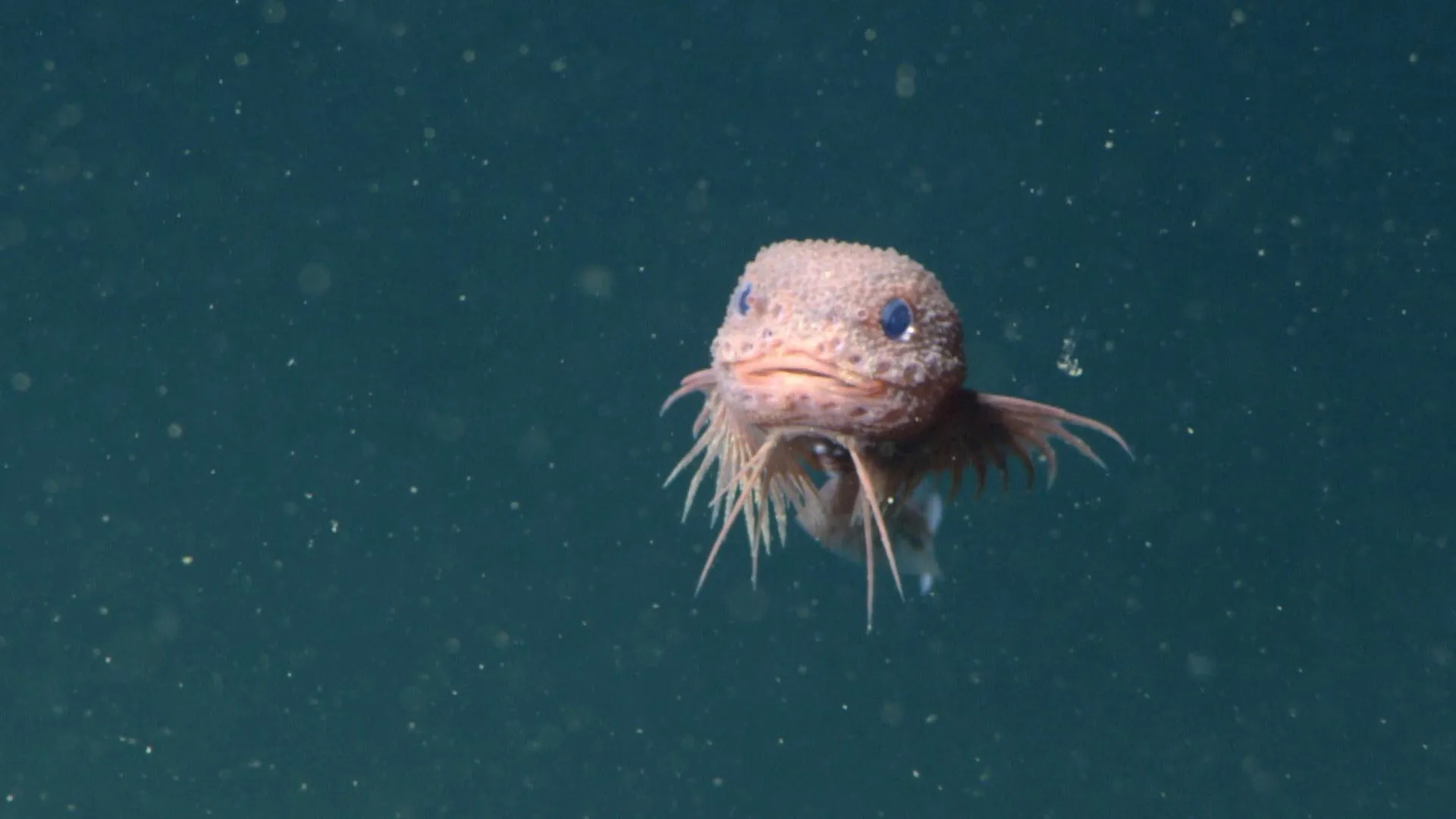
A pink bumpy snailfish was just discovered miles beneath the ocean

The bumpy snailfish is one of three new species of deep-sea snailfish described by MBARI collaborators at SUNY Geneseo.

MBARI’s advanced underwater technology is revealing the remarkable species that thrive in the deep sea. In 2019, MBARI researchers encountered an unfamiliar pink snailfish swimming just above the seafloor. New research from MBARI collaborators has confirmed this individual represents a species previously unknown to science: the bumpy snailfish (Careproctus colliculi).

A team of researchers from the State University of New York at Geneseo (SUNY Geneseo), with scientists from the University of Montana and the University of Hawaiʻi at Mānoa, published their findings in the scientific journal Ichthyology and Herpetology, describing the bumpy snailfish observed by MBARI researchers alongside two other snailfishes from the abyssal seafloor offshore of California.

“MBARI seeks to make ocean exploration more accessible by sharing our data and technology with our peers in the science community. We welcomed the opportunity to collaborate with researchers from SUNY Geneseo to expand our understanding of life in the deep ocean, especially since documenting deep-sea biodiversity is critical to detecting any changes that may be occurring in this environment,” said MBARI Senior Scientist Steven Haddock, who led the research expedition that encountered the bumpy snailfish.

Uncovering secrets to survival in extreme environments

Snailfishes belong to the family Liparidae. They typically have a large head, jelly-like body covered in loose skin, and narrow tail. Many snailfish species have a disk on their belly that allows them to grip the seafloor or hitchhike on larger animals, such as deep-sea crabs. Shallow-water snailfishes often cling to rocks and seaweed, curling up like a snail.

Scientists have described more than 400 different species of snailfish worldwide. These fishes make their homes in a variety of ocean habitats, from shallow tide pools to deep-sea trenches. In fact, a snailfish holds the record for the deepest-dwelling fish.

SUNY Geneseo Associate Professor Mackenzie Gerringer studies deep-sea physiology and ecology and has conducted extensive research on deep-sea snailfishes. Her research uses comparative techniques in taxonomy, functional morphology, and physiology to understand how fishes are adapted to life under crushing pressure, frigid cold, and perpetual darkness in the ocean’s depths.

“The deep sea is home to an incredible diversity of organisms and a truly beautiful array of adaptations. Our discovery of not one, but three, new species of snailfishes is a reminder of how much we have yet to learn about life on Earth and of the power of curiosity and exploration,” said Gerringer.

Chance encounters spark new discoveries

MBARI’s Biodiversity and Biooptics Team observed the newly described bumpy snailfish during an expedition aboard the institute’s retired flagship research vessel Western Flyer. Haddock and his team were exploring the outer reaches of Monterey Canyon, approximately 100 kilometers (62 miles) offshore of Central California, with MBARI’s remotely operated vehicle Doc Ricketts at a depth of 3,268 meters (10,722 feet) when they observed this small snailfish swimming above the abyssal seafloor.

MBARI researchers collected this individual — an adult female 9.2 centimeters (3.6 inches) long — for further study in the laboratory. With features unlike other deep-sea snailfishes that MBARI had encountered offshore of California, Haddock reached out to Gerringer for more detailed analysis. MBARI frequently collaborates with expert taxonomists to review footage and specimens. These partnerships offer fresh perspectives that often spark new discoveries.

New additions to the family

Gerringer and researchers from the University of Montana and the University of Hawaiʻi at Mānoa, including former MBARI postdoctoral fellow Jeff Drazen, examined the bumpy snailfish as part of a comprehensive analysis of three unusual snailfish specimens collected offshore of California. The team combined imaging, morphological, and genetic approaches to compare these snailfishes to other known fishes.

Using microscopy, micro-computed tomography (micro-CT) scanning, and careful measurements, the team collected detailed information about the size, shape, and physical characteristics of the three fishes, distinguishing them from all known species. They also sequenced the DNA of the specimens to compare these animals to other snailfishes and determine their evolutionary position in the family Liparidae. Their examination confirmed that all three snailfishes were new to science. The team has made their CT scan data publicly available via MorphoSource and genetic sequence data via GenBank (PV300955-PV300957 and PV298545-PV298546).

In addition to the bumpy snailfish, the SUNY Geneseo team described the dark snailfish (Careproctus yanceyi) and the sleek snailfish (Paraliparis em).

The bumpy snailfish has a distinctive pink color, a round head with large eyes, wide pectoral fins with long uppermost rays, and a bumpy texture. The dark snailfish has a fully black body with a rounded head and horizontal mouth. The sleek snailfish is distinguished from other snailfishes by a long, black, laterally compressed body, absence of a suction disk, and prominently angled jaw.

Both the dark and sleek snailfishes were collected in 2019 by Drazen and colleagues during an expedition with the submersible Alvin at Station M, a research site operated by MBARI offshore of Central California at a depth of approximately 4,000 meters (13,100 feet). MBARI scientists and researchers worldwide have leveraged a unique 30-year dataset collected by a suite of advanced instruments at Station M to make several important discoveries about abyssal ecosystems and the ocean-climate connection. The species name of the sleek snailfish, Paraliparis em, recognizes this unique research site and the people and programs that have supported the Station M time series.

Haddock’s encounter is the only confirmed observation of the bumpy snailfish, so the full geographic distribution and depth range of this species remain unknown. However, a closer look at MBARI’s extensive archive of underwater video suggests this species may have been previously encountered offshore of Oregon in 2009 and mistaken for a similar species, the bigtail snailfish (Osteodiscus cascadiae).

Cataloging life in the depths

The deep sea is the largest living space on Earth. The inky waters beneath the ocean’s surface teem with life, including many species unknown to science. With threats like climate change and mining putting deep-sea communities at risk, documenting the residents of this environment is more urgent than ever.

Over the past 38 years, MBARI researchers and our collaborators have discovered more than 300 new species. We share video footage and specimens with taxonomy experts around the world, giving other researchers access to the deep sea. MBARI science and technology are helping establish a baseline understanding of ocean health and deep-sea biodiversity so we can better assess how climate change, pollution, mining, and other human activities will affect the marine ecosystems. From the mesmerizing “mystery mollusc” to the carnivorous harp sponge, each discovery is a new piece of the puzzle.

Funding for this work was provided by the U.S. National Science Foundation Division of Ocean Sciences (OCE-1829612), the David and Lucile Packard Foundation, and the SUNY Geneseo Research Foundation.

Share Button

This new camera sees the invisible in 3D without lenses

Researchers have used the centuries-old idea of pinhole imaging to create a high-performance mid-infrared imaging system without lenses. The new camera can capture extremely clear pictures over a large range of distances and in low light, making it useful for situations that are challenging for traditional cameras.

“Many useful signals are in the mid-infrared, such as heat and molecular fingerprints, but cameras working at these wavelengths are often noisy, expensive or require cooling,” said research team leader Heping Zeng from East China Normal University. “Moreover, traditional lens-based setups have a limited depth of field and need careful design to minimize optical distortions. We developed a high-sensitivity, lens-free approach that delivers a much larger depth of field and field of view than other systems.”

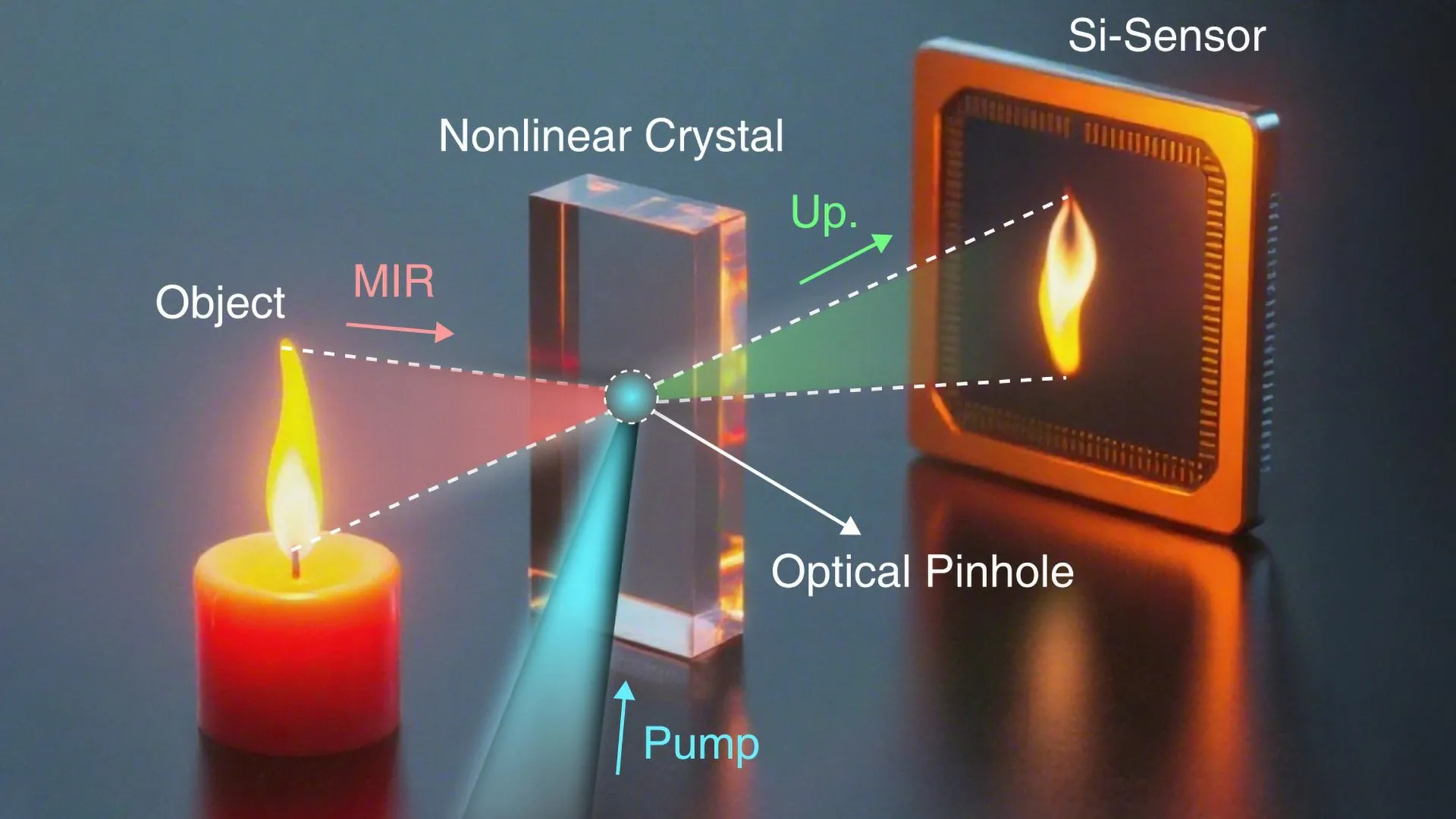
In Optica, Optica Publishing Group’s journal for high-impact research, the researchers describe how they use light to form a tiny “optical pinhole” inside a nonlinear crystal, which also turns the infrared image into a visible one. Using this setup, they acquired clear mid-infrared images with a depth of field of over 35 cm and a field of view of more than 6 cm. They were also able to use the system to acquire 3D images.

“This approach can enhance night-time safety, industrial quality control and environmental monitoring,” said research team member Kun Huang from East China Normal University. “And because it uses simpler optics and standard silicon sensors, it could eventually make infrared imaging systems more affordable, portable and energy efficient. It can even be applied with other spectral bands such as the far-infrared or terahertz wavelengths, where lenses are hard to make or perform poorly.”

Pinhole imaging reimagined

Pinhole imaging is one of the oldest image-making methods, first described by the Chinese philosopher Mozi in the 4th century BC. A traditional pinhole camera works by letting light pass through a tiny hole in a lightproof box, projecting an inverted image of the outside scene onto the opposite surface inside. Unlike lens-based imaging, pinhole imaging avoids distortion, has an infinite depth of field and works across a wide range of wavelengths.

To bring these advantages to a modern infrared imaging system, the researchers used an intense laser to form an optical hole, or artificial aperture, inside a nonlinear crystal. Because of its special optical properties, the crystal converts the infrared image into visible light, so that a standard silicon camera can record it.

The researchers say that the use of a specially designed crystal with a chirped-period structure, which can accept light rays from a broad range of directions, was key to achieving a large field of view. Also, the upconversion detection method naturally suppresses noise, which allows it to work even in very low light conditions.

“Lensless nonlinear pinhole imaging is a practical way to achieve distortion-free, large-depth, wide-field-of-view mid-infrared imaging with high sensitivity,” said Huang. “The ultrashort synchronized laser pulses also provide a built-in ultrafast optical time gate that can be used for sensitive, time-of-flight depth imaging, even with very few photons.”

After figuring out that an optical pinhole radius of about 0.20 mm produced sharp, well-defined details, the researchers used this aperture size to image targets that were 11 cm, 15 cm and 19 cm away. They achieved sharp imaging at the mid-infrared wavelength of 3.07 μm, across all the distances, confirming a large depth range. They were also able to keep images sharp for objects placed up to 35 cm away, demonstrating a large depth of field.

3D imaging without lenses

The investigators then used their setup for two types of 3D imaging. For 3D time-of-flight imaging, they imaged a matte ceramic rabbit by using synchronized ultrafast pulses as an optical gate and were able to reconstruct the 3D shape with micron-level axial precision. Even when the input was reduced to about 1.5 photons per pulse — simulating very low-light conditions — the method still produced 3D images after correlation-based denoising.

They also performed two-snapshot depth imaging by taking two pictures of a stacked “ECNU” target at slightly different object distances and using those to calculate the true sizes and depths. With this method, they were able to measure the depth of the objects over a range of about 6 centimeters, without using complex pulsed timing techniques.

The researchers note that the mid-infrared nonlinear pinhole imaging system is still a proof-of-concept that requires a relatively complex and bulky laser setup. However, as new nonlinear materials and integrated light sources are developed, the technology should become far more compact and easier to deploy.

They are now working to make the system faster, more sensitive and adaptable to different imaging scenarios. Their plans include boosting conversion efficiency, adding dynamic control to reshape the optical pinhole for different scenes, and extending the camera’s operation across a wider mid-infrared range.

Share Button

Biochar’s secret power could change clean water forever

We’ve all heard the story: biochar cleans water by adsorbing pollutants — trapping them like a sponge. Or, in fancier setups, it acts as a catalyst to help oxidants like hydrogen peroxide break down toxins. But Dr. Gao’s team asked a bold question: What if biochar can degrade pollutants all by itself? Turns out — it can. And it’s been doing it quietly all along.

The Electron Ninja: Biochar’s Secret Power

The secret lies in electron transfer — a natural ability of biochar that’s been overlooked for years. Think of it like this: instead of just catching a bad guy (adsorption), biochar can now take them down on its own (direct degradation). Using advanced electrochemical tests, quantification methods, and correlation analysis, the team proved that biochar actively breaks down organic pollutants through direct electron transfer — without needing extra chemicals. In their experiments, direct degradation accounted for up to 40% ± 10% of the total pollutant removal. That’s almost half the cleaning power coming straight from the biochar itself!

What Makes Biochar So Electric?

Not all biochar is created equal. The team discovered that three key features supercharge its electron power:

  • C-O and O-H functional groups – the “handholds” for electron transfer
  • Graphitic carbon structure – the “highway” for electrons to travel fast The better the structure, the more electrons flow, and the faster pollutants vanish.

Even after five reuse cycles, the biochar kept its direct degradation power — nearly 100% stable. That’s sustainability with stamina.

Why This Changes Everything

This study flips the script on how we use biochar in wastewater treatment. It’s not just a passive filter or a sidekick catalyst — it’s an active pollutant destroyer.

This means:

  • Fewer chemicals needed in water treatment plants
  • Lower costs and less sludge
  • Greener, smarter purification for industries and communities

“Biochar has been underestimated,” says Dr. Gao. “It’s not just a sponge — it’s a battery, a conductor, and a degrader all in one. We’re just beginning to tap into its true potential.”

A New Era for Environmental Engineering

With industrial pollution still a global challenge, discoveries like this are more than just lab wins — they’re blueprints for a cleaner future. By clarifying the difference between adsorption, direct degradation, and indirect (catalytic) degradation, this research paves the way for smarter, more efficient biochar design — custom-built for real-world water crises. And at the heart of it all is Dalian University of Technology, shining as a hub of innovation in environmental science and industrial ecology.

Ready to Rethink “Clean”?

Next time you hear “biochar,” don’t just think “carbon-rich charcoal.” Think electron-powered eco-warrior — silently zapping pollutants, one electron at a time. Kudos to Dr. Yuan Gao and the DUT team for pushing the boundaries of green tech. Stay tuned, stay curious, and let’s keep turning science into solutions — for cleaner water, healthier ecosystems, and a more sustainable world.

Share Button

Hidden galaxy bursting with baby stars, X-ray fireworks, and cosmic energy

While it may appear unassuming at first glance, just another spiral galaxy among thousands in the Universe, this subject of this Hubble Picture of the Week has plenty to study. NGC 7456 is its name, located over 51 million light-years away in the constellation Grus (the Crane).

In this image we see in fine detail the patchy spiral arms of this galaxy, followed by clumps of dark, obscuring dust. Blossoms of glowing pink are rich reservoirs of gas where new stars are forming, illuminating the clouds around them and causing the gas to emit this tell-tale red light. The Hubble program which collected this data is focused on stellar activity just like this, tracking new stars, clouds of hydrogen and star clusters to learn how the galaxy has evolved through time.

Hubble, with its ability to capture visible, ultraviolet and some infrared light, is not the only observatory focused on NGC 7456. ESA’s XMM-Newton satellite has imaged X-rays from the galaxy on multiple occasions, discovering a number of so-called ultraluminous X-ray sources. These small, compact objects emit terrifically powerful X-rays, much more than would be expected for their size. Astronomers are still trying to pin down what powers these extreme objects, and NGC 7456 contributes a few more examples.

On top of that, the region around the galaxy’s supermassive black hole is spectacularly bright and energetic, making NGC 7456 an active galaxy. Whether looking at its core or its outskirts, at visible light or X-rays, this galaxy has something interesting to show!

Share Button

The quantum internet just went live on Verizon’s network

In a first-of-its-kind experiment, engineers at the University of Pennsylvania brought quantum networking out of the lab and onto commercial fiber-optic cables using the same Internet Protocol (IP) that powers today’s web. Reported in Science, the work shows that fragile quantum signals can run on the same infrastructure that carries everyday online traffic. The team tested their approach on Verizon’s campus fiber-optic network.

The Penn team’s tiny “Q-chip” coordinates quantum and classical data and, crucially, speaks the same language as the modern web. That approach could pave the way for a future “quantum internet,” which scientists believe may one day be as transformative as the dawn of the online era.

Quantum signals rely on pairs of “entangled” particles, so closely linked that changing one instantly affects the other. Harnessing that property could allow quantum computers to link up and pool their processing power, enabling advances like faster, more energy-efficient AI or designing new drugs and materials beyond the reach of today’s supercomputers.

Penn’s work shows, for the first time on live commercial fiber, that a chip can not only send quantum signals but also automatically correct for noise, bundle quantum and classical data into standard internet-style packets, and route them using the same addressing system and management tools that connect everyday devices online.

“By showing an integrated chip can manage quantum signals on a live commercial network like Verizon’s, and do so using the same protocols that run the classical internet, we’ve taken a key step toward larger-scale experiments and a practical quantum internet,” says Liang Feng, Professor in Materials Science and Engineering (MSE) and in Electrical and Systems Engineering (ESE), and the Science paper’s senior author.

The Challenges of Scaling the Quantum Internet

Erwin Schrodinger, who coined the term “quantum entanglement,” famously related the concept to a cat hidden in a box. If the lid is closed, and the box also contains radioactive material, the cat could be alive or dead. One way to interpret the situation is that the cat is both alive and dead. Only opening the box confirms the cat’s state.

That paradox is roughly analogous to the unique nature of quantum particles. Once measured, they lose their unusual properties, which makes scaling a quantum network extremely difficult.

“Normal networks measure data to guide it towards the ultimate destination,” says Robert Broberg, a doctoral student in ESE and coauthor of the paper. “With purely quantum networks, you can’t do that, because measuring the particles destroys the quantum state.”

Coordinating Classical and Quantum Signals

To get around this obstacle, the team developed the “Q-Chip” (short for “Quantum-Classical Hybrid Internet by Photonics”) to coordinate “classical” signals, made of regular streams of light, and quantum particles. “The classical signal travels just ahead of the quantum signal,” says Yichi Zhang, a doctoral student in MSE and the paper’s first author. “That allows us to measure the classical signal for routing, while leaving the quantum signal intact.”

In essence, the new system works like a railway, pairing regular light locomotives with quantum cargo. “The classical ‘header’ acts like the train’s engine, while the quantum information rides behind in sealed containers,” says Zhang. “You can’t open the containers without destroying what’s inside, but the engine ensures the whole train gets where it needs to go.”

Because the classical header can be measured, the entire system can follow the same “IP” or “Internet Protocol” that governs today’s internet traffic. “By embedding quantum information in the familiar IP framework, we showed that a quantum internet could literally speak the same language as the classical one,” says Zhang. “That compatibility is key to scaling using existing infrastructure.”

Adapting Quantum Technology to the Real World

One of the greatest challenges to transmitting quantum particles on commercial infrastructure is the variability of real-world transmission lines. Unlike laboratory environments, which can maintain ideal conditions, commercial networks frequently encounter changes in temperature, thanks to weather, as well as vibrations from human activities like construction and transportation, not to mention seismic activity.

To counteract this, the researchers developed an error-correction method that takes advantage of the fact that interference to the classical header will affect the quantum signal in a similar fashion. “Because we can measure the classical signal without damaging the quantum one,” says Feng, “we can infer what corrections need to be made to the quantum signal without ever measuring it, preserving the quantum state.”

In testing, the system maintained transmission fidelities above 97%, showing that it could overcome the noise and instability that usually destroy quantum signals outside the lab. And because the chip is made of silicon and fabricated using established techniques, it could be mass produced, making the new approach easy to scale.

“Our network has just one server and one node, connecting two buildings, with about a kilometer of fiber-optic cable installed by Verizon between them,” says Feng. “But all you need to do to expand the network is fabricate more chips and connect them to Philadelphia’s existing fiber-optic cables.”

The Future of the Quantum Internet

The main barrier to scaling quantum networks beyond a metro area is that quantum signals cannot yet be amplified without destroying their entanglement.

While some teams have shown that “quantum keys,” special codes for ultra-secure communication, can travel long distances over ordinary fiber, those systems use weak coherent light to generate random numbers that cannot be copied, a technique that is highly effective for security applications but not sufficient to link actual quantum processors.

Overcoming this challenge will require new devices, but the Penn study provides an important early step: showing how a chip can run quantum signals over existing commercial fiber using internet-style packet routing, dynamic switching and on-chip error mitigation that work with the same protocols that manage today’s networks.

“This feels like the early days of the classical internet in the 1990s, when universities first connected their networks,” says Broberg. “That opened the door to transformations no one could have predicted. A quantum internet has the same potential.”

This study was conducted at the University of Pennsylvania School of Engineering and Applied Science and was supported by the Gordon and Betty Moore Foundation (GBMF12960 and DOI 10.37807), Office of Naval Research (N00014-23-1-2882), National Science Foundation (DMR-2323468), Olga and Alberico Pompa endowed professorship, and PSC-CUNY award (ENHC-54-93).

Additional co-authors include Alan Zhu, Gushi Li and Jonathan Smith of the University of Pennsylvania, and Li Ge of the City University of New York.


Share Button

Scientists unveil breakthrough pixel that could put holograms on your smartphone

New research from the University of St Andrews paves the way for holographic technology, with the potential to transform smart devices, communication, gaming and entertainment.

In a study published recently in Light, Science and Application, researchers from the school of Physics and Astronomy created a new optoelectronic device from the combined use of Holographic Metasurfaces (HMs) and Organic Light Emmitting Diodes (OLEDs).

Until now, holograms have are created using lasers, however researchers have found  that using OLEDs and HMs gives a simpler and more compact approach that is potentially cheaper and easier to apply, overcoming the main barriers to hologram technology being used more widely.

Organic light-emitting diodes are thin film devices widely used to make the colored pixels in mobile phone displays and some TVs. As a flat and surface-emitting light source, OLEDs are also used in emerging applications such as optical wireless communications, biophotonics and sensing, where the ability to integrate with other technologies makes them good candidates to realize miniaturized light-based platforms.

A holographic metasurface is a thin, flat array of tiny structures called meta-atoms – the size of roughly a thousand of the width of a strand of hair – they are designed to manipulate light’s properties. They can make holograms and their uses span diverse fields, such as data storage, anti-counterfeiting, optical displays, high numerical aperture lenses – for example optical microscopy, and sensing.

This, however, is the first time both have been used together to produce the basic building block of a holographic display.

Researchers found that when each meta- atom is carefully shaped to control the properties of the beam of light that goes through it, it behaves as a pixel of the HM. When light goes through the HM, at each pixel, the properties of the light are slightly modified.

Thanks to these modifications, it is possible to create a pre-designed image on the other side, exploiting the principle of light interference, whereby light waves create complicated patterns when they interact with each other.

Professor Ifor Samuel, from the School of Physics and Astronomy, said: “We are excited to demonstrate this new direction for OLEDs.  By combining OLEDs with metasurfaces, we also open a new way of generating holograms and shaping light.”

Andrea Di Falco, professor in nano-photonics at the School of Physics and Astronomy, said: “Holographic metasurfaces are one of the most versatile material platforms to control light. With this work, we have removed one of the technological barriers that prevent the adoption of metamaterials in everyday applications. This breakthrough will enable a step change in the architecture of holographic displays for emerging applications, for example, in virtual and augmented reality.”

Professor Graham Turnbull, from the School of Physics and Astronomy, said: “OLED displays normally need thousands of pixels to create a simple picture. This new approach allows a complete image to be projected from a single OLED pixel!”

Until now, researchers could only make very simple shapes with OLEDs, which limited their usability in some applications. However, this breakthrough provides a path toward a miniaturized and highly integrated metasurface display.

Share Button

Life-saving stem cell centre welcomes first donors

The Anthony Nolan Cell Collection Centre is the first in the UK dedicated to transplants.

Share Button