Health24.com | From Hillbrow to Amsterdam – local Aids activist shares her experience

Ananelang Tumi Motumi (26), who has just returned from Amsterdam following a reward trip to the World AIDS Conference 2018, describes the experience as the best time of her life.

Motumi was sent on the trip after two years of hard work as an Aids activist in Hillbrow, where she has succeeded in convincing many young people who have defaulted on their treatment to go back to taking their medication properly.

A lot of stigma

In Amsterdam Motumi met 30 other young people from 21 countries who are youth champions and ambassadors at the International AIDS Society (IAS). The group spent a week sharing their experiences in working with young people and advised influential leaders in global health how to cater for the needs of young people at health care centres.

“It was a wonderful experience that I will never forget for the rest of my life,” Motumi gushed when she returned home this week.

She said she can’t wait to share what she experienced with her peers.

“The key message there was about stigma – there is still a lot of stigma around HIV. That’s why a lot of young people are afraid to come out.”

Ananelang Tumi Motumi (26) with other youth ambassadors at the Worlds AIDS Conference in Amsterdam.

Motumi is a health connector at the Wits Reproductive Health Institute (WRHI) – a leading African HIV and vaccine research centre based in Hillbrow in the Joburg inner city.

Non-judgemental approach

For the past two years, her work at the institute has been mainly to trace young people who have missed their appointments and defaulted on their HIV treatment. She managed to do this through the dedicated Youth Friendly Services at the five clinics in the City of Johannesburg and has so far managed to trace over 200 young people.

She has linked each of them to a Youth Care Club at WRHI where they are encouraged to stay in the treatment.

“I tell them HIV is highly controlled and won’t kill you when you take your treatment consistently without fail,” she said, explaining that this non-judgemental approach, being sensitive to their feelings and not subjecting them to stigma has made it easy for them to open up to her.

The 26-year-old, who hails from Matatiele in the Eastern Cape, says growing up in a single parent household is what has made her passionate about young people.

“I’m the third born child and from grade 1, I was under the care of my elder brother as my mom was working in Johannesburg. And when my brother finished his matric and went to look for work, it became my turn to raise our younger siblings,” she said.

“After matric in 2011 I came to join my mom in Hillbrow. I became part of Love Life where I was a GroundBreaker, which is an initiative aimed at encouraging young people to lead a positive lifestyle. I was there until 2016 before I joined WRHI.”

Haunting images

She said although she doesn’t have direct personal experience with HIV, she has witnessed many people die in her community due to the virus and “it’s sad seeing young people falling prey too”. She believes young people need positive role models.

She loves her job but sometimes finds it difficult, such as a recent experience when she encountered a 10-year-old girl who was diagnosed HIV positive – causing her to worry about what happened to the child at such a young age for her to contract the virus.

Motumi goes for debriefing, but often the images of what she sees still haunt her. However, her hard work was rewarded when she was selected by the WRHI as a youth ambassador and sent to the global conference in Amsterdam – her first trip overseas.

Her colleagues at WRHI were happy for her.

“She is an inspiration to young people,” said Rue Rushwaya, Acting Communications Project Manager at WRHI. 

Motumi’s trip came at the time when the country is concern about HIV incidence rate among young people aged 15 to 24. This was revealed during the launch of the South African National HIV Prevalence, Incidence, Behaviour and Communication Survey of 2017. – Health-e News.

Image credit: Health-e News

NEXT ON HEALTH24X

Share Button

Alcohol and dementia – is moderate drinking safe?

Alcohol abuse is bad for the brain – but could there be health benefits for moderate drinkers?

Share Button

Wales GP out-of-hours crisis figures revealed

Thousands of hours of GP shifts are unfilled at weekends and in the evenings, figures reveal.

Share Button

Health24.com | Is playing ‘virtual sports’ good exercise?

With the rise of video, television and computer games, research has shown that people have become more inactive. Where we previously played tennis and soccer, or went for a hike in the mountains, we now sit in front of a screen.

But the advent of so-called “virtual sports” is changing the way we play games, allowing us to exercise at the same time. These are electronic games that generate visual feedback on a display device. They’re inspired by real sports events and instead of simply pressing button, you actively mimic the action required by the sport. 

Some studies have shown that these games are not as effective as the real deal (your burn about half the amount of calories), but you still get considerable benefit. Other studies have shown little benefit from virtual sports, and that especially children don’t get their daily exercise requirements from virtual sport alone. 

The verdict might still be out on virtual sports, but there’s little argument that they can be immense fun and do have some health benefits. 

NEXT ON HEALTH24X

Share Button

What makes diamonds blue? Boron from oceanic crustal remnants in Earth’s lower mantle

Blue diamonds — like the world-famous Hope Diamond at the National Museum of Natural History — formed up to four times deeper in the Earth’s mantle than most other diamonds, according to new work published on the cover of Nature.

“These so-called type IIb diamonds are tremendously valuable, making them hard to get access to for scientific research purposes,” explained lead author Evan Smith of the Gemological Institute of America, adding, “and it is very rare to find one that contains inclusions, which are tiny mineral crystals trapped inside the diamond.”

Inclusions are remnants of the minerals from the rock in which the diamond crystallized and can tell scientists about the conditions under which it formed.

Type IIb diamonds owe their blue color to the element boron, an element that is mostly found on the Earth’s surface. But analysis of the trapped mineral grains in 46 blue diamonds examined over two years indicate that they crystallized in rocks that only exist under the extreme pressure and temperature conditions of the Earth’s lower mantle.

The research group — which included Carnegie’s Steven Shirey, Emma Bullock, and Jianhua Wang — determined that blue diamonds form at least as deep as the transition zone between the upper and lower mantle — or between 410 and 660 kilometers below the surface. Several of the samples even showed clear evidence that they came from deeper than 660 kilometers, meaning they originated in the lower mantle. By contrast, most other gem diamonds come up from between 150 and 200 kilometers.

So how did the boron get down there if it is an element known for residing predominately in the shallow crust?

According to the hypothesis put forth by the research group, it came from seafloor that was conveyed down into the Earth’s mantle when one tectonic plate slid beneath another — a process known as subduction.

The new study proposes that boron from the Earth’s surface was incorporated into water-rich minerals like serpentine, which crystallized during geochemical reactions between seawater and the rocks of the oceanic plate. This reaction between rock and water is a process called serpentinization and can extend deep into the seafloor, even into the oceanic plate’s mantle portion.

The group’s discovery reveals that the water-bearing minerals travel far deeper into the mantle than previously thought, which indicates the possibility of a super-deep hydrological cycle.

“Most previous studies of super-deep diamonds had been carried out on diamonds of low quality,” Shirey said. “But between our 2016 finding that the world’s biggest and most-valuable colorless diamonds formed from metallic liquid deep inside Earth’s mantle and this new discovery that blue diamonds also have super-deep origins, we now know that the finest gem-quality diamonds come from the farthest down in our planet.”

Story Source:

Materials provided by Carnegie Institution for Science. Note: Content may be edited for style and length.

Share Button

As temperatures rise, Earth’s soil is ‘breathing’ more heavily

The vast reservoir of carbon stored beneath our feet is entering Earth’s atmosphere at an increasing rate, most likely as a result of warming temperatures, suggest observations collected from a variety of the Earth’s many ecosystems.

Blame microbes and how they react to warmer temperatures. Their food of choice — nature’s detritus like dead leaves and fallen trees — contains carbon. When bacteria chew on decaying leaves and fungi chow down on dead plants, they convert that storehouse of carbon into carbon dioxide that enters the atmosphere.

In a study published August 2 in Nature, scientists show that this process is speeding up as Earth warms and is happening faster than plants are taking in carbon through photosynthesis. The team found that the rate at which microbes are transferring carbon from soil to the atmosphere has increased 1.2 percent over a 25-year time period, from 1990 through 2014.

While that may not seem like a big change, such an increase on a global scale, in a relatively short period of time in Earth history, is massive. The finding, based on thousands of observations made by scientists at hundreds of sites around the globe, is consistent with the predictions that scientists have made about how Earth might respond to warmer temperatures.

“It’s important to note that this is a finding based on observations in the real world. This is not a tightly controlled lab experiment,” said first author Ben Bond-Lamberty of the Joint Global Change Research Institute, a partnership between the Department of Energy’s Pacific Northwest National Laboratory and the University of Maryland.

“Soils around the globe are responding to a warming climate, which in turn can convert more carbon into carbon dioxide which enters the atmosphere. Depending on how other components of the carbon cycle might respond due to climate warming, these soil changes can potentially contribute to even higher temperatures due to a feedback loop,” he added.

Globally, soil holds about twice as much carbon as Earth’s atmosphere. In a forest where stored carbon is manifest in the trees above, even more carbon resides unseen underfoot. The fate of that carbon will have a big impact on our planet. Will it remain sequestered in the soil or will it enter the atmosphere as carbon dioxide, further warming the planet?

To address the question, the team relied heavily on two global science networks as well as a variety of satellite observations. The Global Soil Respiration Database includes data on soil respiration from more than 1,500 studies around the globe. And FLUXNET draws data from more than 500 towers around the world that record information about temperature, rainfall and other factors.

“Most studies that address this question look at one individual site which we understand very well,” said author Vanessa Bailey, a soil scientist. “This study asks the question on a global scale. We’re talking about a huge quantity of carbon. Microbes exert an outsize influence on the world that is very hard to measure on such a large scale.”

The study focused on a phenomenon known as “soil respiration,” which describes how microbes and plants in the soil take in substances like carbon to survive, then give off carbon dioxide. Soils don’t exactly breathe, but as plants and microbes in soil take in carbon as food, they convert some of it to other gases which they give off — much like we do when we breathe.

Scientists have known that as temperatures rise, soil respiration increases. Bond-Lamberty’s team sought to compare the roles of the two main contributors, increased plant growth and microbial action.

The team discovered a growing role for microbes, whose action is outstripping the ability of plants to absorb carbon. In the 25-year span of the study, the proportion of soil respiration that is due to microbes increased from 54 to 63 percent. Warmer temperatures can prompt more microbial action, potentially resulting in more carbon being released from carbon pools on land into the air.

“We know with high precision that global temperatures have risen,” said Bond-Lamberty. “We’d expect that to stimulate microbes to be more active. And that is precisely what we’ve detected. Land is thought to be a robust sink of carbon overall, but with rising soil respiration rates, you won’t have an intact land carbon sink forever.”

Share Button

Frequent sauna bathing has many health benefits

Sauna bathing is an activity used for the purposes of pleasure, wellness, and relaxation. Emerging evidence suggests that beyond its use for pleasure, sauna bathing may be linked to several health benefits. A new report published in Mayo Clinic Proceedings found that sauna bathing is associated with a reduction in the risk of vascular diseases, such as high blood pressure and cardiovascular disease, neurocognitive diseases, nonvascular conditions, such as pulmonary diseases, mental health disorders, and mortality. Furthermore, sauna bathing alleviated conditions such as skin diseases, arthritis, headache, and flu. The evidence also suggests that regular sauna baths are associated with a better health-related quality of life.

The research team led by scientists from the University of Jyväskylä, the University of Eastern Finland, and the University of Bristol conducted a comprehensive literature review on the effects of Finnish sauna baths on health outcomes. Finnish sauna bathing is characterized by exposure to high environmental temperature (80 degrees C-100 degrees C) for a brief period.

Findings from this comprehensive literature review also suggest that the health benefits of sauna bathing are linked to the effects of sauna on circulatory, respiratory, cardiovascular, and immune functions. Regular sauna bathing stabilizes the autonomic nervous system, reduces blood pressure, inflammation, oxidative stress, circulation of bad cholesterol, arterial stiffness, and vascular resistance. Moreover, sauna bathing contributes to beneficial levels of circulating hormones and other cardiovascular markers. The physiological responses produced by an ordinary sauna bath correspond to those produced by moderate- or high-intensity physical activity such as walking.

The same research team has published several experimental studies demonstrating the beneficial effects of short-term sauna exposure on blood pressure, specific cardiovascular biomarkers, inflammation, arterial compliance, and cardiovascular function. The feelings of relaxation and promotion of mental health and well-being associated with sauna sessions may be linked to the increased production of circulating levels of hormones such as endorphins, the research team reported. The review also reports that sauna bathing produces beneficial changes that are equivalent to those produced by physical activity. Indeed, the research team has shown in their previous studies that a combination of sauna bathing and physical activity might have added health benefits compared with each activity alone.

This review emphasized that sauna bathing has a good safety profile and can even be used in patients with stable cardiovascular disease. Hot Finnish sauna baths have been shown to be hemodynamically well tolerated without the occurrence of complex ventricular arrhythmias in patients with heart diseases.

Story Source:

Materials provided by Elsevier. Note: Content may be edited for style and length.

Share Button

Drug makers Sanofi and Novartis stockpiling for Brexit

Pharmaceuticals giants Novartis and Sanofi are building stockpiles of drugs in case of Brexit disruption.

Share Button

Health24.com | 7 sexual health myths

There is a lot of misinformation out there about sex, sexual health and sexually transmitted infections (STIs).

We have all heard our fair share of bizarre sexual health myths, from when we were at school discussing what we thought we knew about sex, to that awkward “sex talk” parents have with their children.

Despite the progress in spreading awareness around these important topics, false ideas continue to be perpetuated.

Some of them you might know, some of them might shock you, but what is important is that these things are spoken about openly. Ignorance really is not bliss when it comes to your sexual health. These myths are harmful to our progression toward a more sex-positive and informed society. 

Here are seven sexual health myth that should no longer be allowed to circulate. 

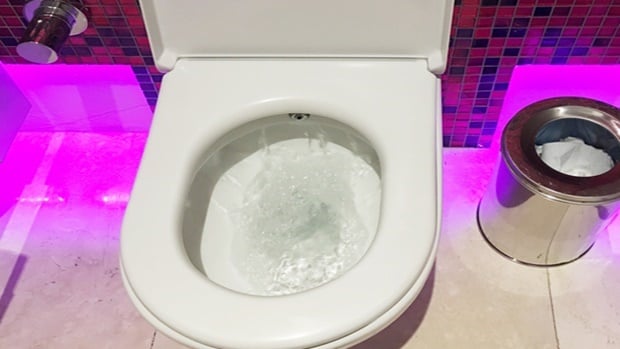
1. ‘You can get an STI from a toilet seat’

Please stop squatting and dripping all over the seat – you cannot get an STI from a toilet seat.

While contact with infected skin could lead to an STI transmission, contact with a toilet seat will not. This is because the pathogens that cause STIs cannot live outside the human body for long.

It’s also unlikely you’ll contract any sort of infection from a toilet seat, for the same reason. Pathogens need a way into your body, and skin that has no open wounds or cuts acts as a natural barrier.

2. ‘You cannot get an STI from oral sex’

While the risk of getting an STI from oral sex is less than from vaginal or anal sex, there is still some risk. Many STIs, including syphilis, gonorrhoea, herpes and chlamydia, can be spread through oral sex. 

Good news, though, the chances of giving or receiving an STI during oral sex can be lowered by using a condom or dental dam.

3. ‘Anal sex causes hemorrhoids’ 

Hemorrhoids are as a result of increased pressure in the veins of the anus, the pressure causes these veins to swell, making them painful, especially when you are seated. 

The main causes of hemorrhoids are excessive exertion during your bowel movements, constipation and anal infections. Anal sex will not cause hemorrhoids, as long as you take your time and make sure your anus is fully relaxed before engaging.

However, for those who already have hemorrhoids, anal sex can make your condition significantly worse. 

Interested in anal play or prostate massage? It has been found to provide relief for those with erectile dysfunction and painful ejaculation. It has also been linked to improving urine flow. 

4. ‘You cannot get pregnant during menstruation’

While conception during menstruation is unlikely, it is not impossible. Your chances of pregnancy are highest during ovulation, which is the point in your menstrual cycle where a tiny egg takes a trip from an ovary into one of your fallopian tubes.

Those who have short or irregular periods have an increased chance of having an egg present during menstruation. The egg can live for several days in your body, and additionally, not all women ovulate two weeks before their period; some ovulate closer to the time of their actual period.

Final nail in this myth’s coffin: Sperm can live for up to a week inside your body, so the combination of an egg and sperm hanging around together could lead to pregnancy, even if the timing is unusual. 

5. ‘Douching after sex cleans the vagina and prevents pregnancy’

The vagina is self-cleaning and does not need extra solvents and soaps. In fact, douching has been found to cause more harm than good, disrupting the balance of bacteria and altering the normal pH of the vagina. 

The vagina has both good and harmful bacteria, and douching can cause an overgrowth of harmful bacteria. A study conducted at the Schools of Public Health and Medicine, University of Alabama, found that douching can lead to bacterial vaginosis or a yeast infection. If you’re still not freaked out by this information, douching when you already have an infection can lead to pelvic inflammatory disease, which is a serious health issue. 

You can keep your vagina clean and healthy without having to douche. You can do that by washing the outside of your vagina with either mild soaps or cleansers that have been formulated to maintain and protect the natural pH balance. Avoid scented tampons and pads as these can increase your chances of an infection.

As for preventing pregnancy, douching should never be used as a form of birth control as it does not prevent pregnancy. Sperm are fast swimmers, and thousands of them can reach your uterus before you even think of douching.

6. ‘Masturbation makes achieving orgasm more difficult’

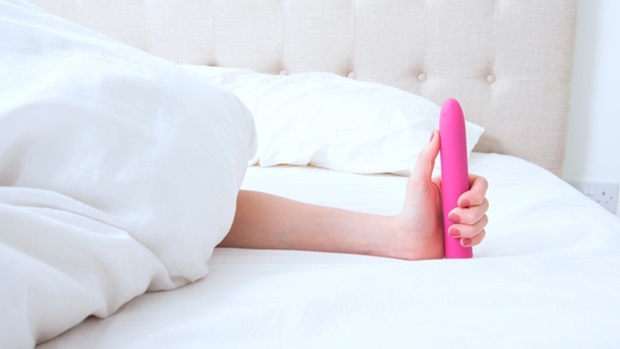
There seems to be a belief that regular masturbation will make you less sensitive down there and result in struggling to orgasm. This is completely untrue. In fact, frequent masturbation can actually improve your sex life as you become in tune with yourself. It will help you figure out what you like and dislike in bed. How can that be a bad thing? 

Of course, using an intense vibrator six times a day, every day, might lead to some numbness. According to sexologist Dr Marelize Swart, “If used repetitively over the same area you may over-stimulate the nerves and so create altered or diminished sensation over that area. This should however return with time. It’s normal, and no problem in the long term.” So go ahead and enjoy yourself! 

7. ‘Vaginas are tight or loose depending on the amount of sex a woman has had’

The “tight vs. loose” myth is fairly common. It is, however, completely untrue. The vagina is a muscle, much like an elastic band that has the ability to expand and contract. When a woman is aroused, the walls of the vagina soften and lengthen, making penetration easier. If you feel scared or uncomfortable, the walls of the vagina will naturally contract, making penetration difficult. The myth of a “loose” vagina has throughout history been used as a way to shame women for their sexual activities. 

The truth is that it does not matter that much who you have sex with, or how often. While a vagina may change over time as a result of age and childbirth, penetration will not cause your vagina to stretch permanently.

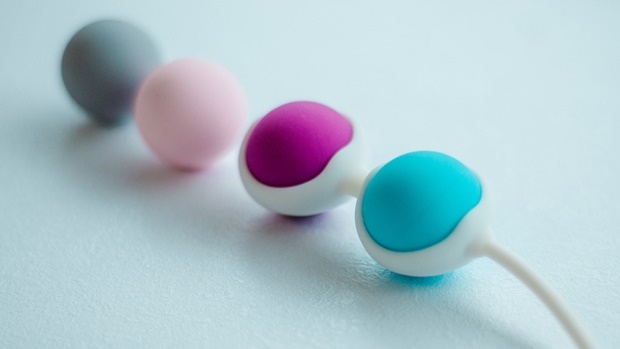
Do you want to strengthen your vaginal muscles? Try Kegel exercises. 

Image credit: iStock

NEXT ON HEALTH24X

Share Button

Health24.com | 5 myths about eating disorders we should stop believing

Eating disorders can be defined as psychological problems linked to concerns about eating, body image, exercise, body shape and weight.

According to Recovery Space, a website devoted to resources for eating disorder recovery, individuals affected by eating disorders tend to be preoccupied with their eating and exercising habits, and how these affect their body shape and weight.

Eating disorders are not only limited to anorexia nervosa and can be hard to diagnose, and even harder to treat. According to Dewald Louw, a counselling psychologist at Montrose Manor, an eating disorder treatment facility in Cape Town, treatment in South Africa is especially hard as most medical aids will only cover 21 days, and many months of treatment as an inpatient are needed to treat an eating disorder successfully.

Here are five common myths that stigmatise eating disorders:

1. Eating disorders are a choice

“They are not. They are complex. They are actual diseases which cause a lot of distress,” says Lauren Aron, a registered social worker at Montrose Manor in Cape Town. There is a strong notion that those suffering from an eating disorder should simply start eating. It’s not that simple. According to Aron, eating disorders take up a lot of “headspace”, which is emotionally exhausting. “It can take over large chunks of your life and interfere with your daily functions.”

Eating disorders are classified and treated as mental disorders and a patient simply can’t “snap out of it”. There are certain biological markers such as a dysfunction in serotonin and dopamine levels that can determine the behaviour and thought patterns in a patient with an eating disorder.

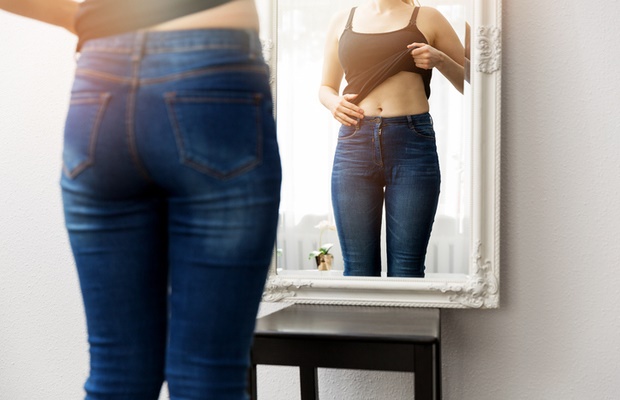
girl looking at her body in mirror

2. Parents cause eating disorders

“There is absolutely no research indicating that eating disorders are intrinsically linked to problematic relationships with parents or that parents are the main cause,” says Louw. There might be a history where the parents had an eating disorder or substance abuse problem themselves, but this doesn’t mean that parents are fully responsible for children’s eating disorders.

Parents should, however, play a role in creating a healthy recovering environment by taking the focus away from food and weight and encouraging a positive body image from a young age, says Aron.

mother comforting teenage daughter

3. Eating disorders are not that serious

According to Louw, eating disorders have the highest mortality rate of any psychiatric disease. Besides all the physical medical complications linked to eating disorders such as organ shutdown and heart failure, suicide remains a huge risk in a patient suffering from an eating disorder. 

teenager in hospital bed

4. An eating disorder is a ‘girl thing’

Eating disorders were always regarded as an illness occurring mainly in females in Western society. This perception is changing as eating disorders are becoming increasingly common in males.

A study based on the body image of young boys has revealed the shocking statistic that 33–35% of boys between the ages of six and eight aspire towards a thinner body. The same study mentions that since the 1980s there has been a heightened perception of the “ideal” male body, as more scantily clad male models started appearing in advertisements. Additionally, the measurements of the male action figures young boys play with exceed even those of the biggest bodybuilders, giving young boys a skewed view of how they should ideally be built.

The presence of eating disorders among boys and men who participate in sport is especially strong. Eating Disorder Hope states that 45% of males who suffer from anorexia nervosa are involved in competitive sport.

male athlete on treadmill

5. Anorexia is the only deadly eating disorder

Bulimia can be equally deadly. Using laxatives to purge can cause a dangerous electrolyte imbalance in the body that can damage the heart and cause sudden heart failure. Persistent malnutrition can damage organs such as the kidneys, which can lead to severe kidney infections or even kidney failure. The Eating Disorders Association (UK) estimates that 10% of bulimics die as a result of their bulimia.

The danger doesn’t stop at bulimia. Binge eating disorder (BED) can also be fatal as it can lead to health problems, such as heart disease, diabetes, high blood pressure, high cholesterol and other chronic issues when left untreated. According to the DSM-5, other eating disorders include rumination disorder, the regular regurgitation (spitting up and rechewing) of food; Other Specific Eating or Feeding Disorder (OSFED), where all the criteria for an eating disorder, except weight loss, are met; and Unspecified Feeding or Eating Disorder (UFED), where eating behaviour causes distress, but not yet enough to be classified as one of the other eating disorders.

All patterns of disordered eating can eventually lead to health problems if left untreated. 

girl sitting on floor after weighing herself

Image credit: iStock 

NEXT ON HEALTH24X

Share Button