Health24.com | How music affects these 4 disorders

There are more 1 200 different types of modern music genres.

Some people like swaying to the rhythms of jazz, while others prefer bobbing to the latest hip-hop beats.

But how does music affect those with certain disorders? In some cases it can alleviate symptoms, whereas in others it can make matters worse. 

Here are four examples:

1. Music and epilepsy

Epilepsy that’s triggered by musical stimulation is known as musicogenic epilepsy. This form of epilepsy was first noted by British Neurologist Macdonald Critchely in 1937.

Musicogenic epilepsy can be described as a form of reflex epilepsy (epilepsy that is triggered by a stimulus). Seizures are induced by exposure to a certain type of music. The musical trigger is different for everyone. For some, it may be a specific song, whereas others are triggered by a pitch or instrument.

According to a study of the disorder, a response can be linked to emotional or cognitive appreciation of the stimulus. Simply thinking or dreaming about the stimulation can also lead to an epileptic episode.

2. Music and insomnia

Many people use music as a way to de-stress and relax. Studies show that music can help patients suffering from insomnia get a better night’s sleep.

Music as a form of therapy for people who have insomnia is popular as it is relatively easy to conduct and has no side effects. Music therapy limits the need for prescriptive drugs, thus lessening the risk of drug dependence.

In a recent study, listening to relaxing music 45 minutes before falling asleep increases sleep duration, quality of sleep and REM. It should, however, be noted that music, although helpful, is not a cure for insomnia.

3. Music and anxiety

Many studies have found that playing music during medical treatments or surgeries helps to relieve stress and anxiety experienced by patients.

In some ways, music serves as a distraction during these procedures. According to music therapists, music has the ability to lower heart rate and regulate hormones. 

Dopamine levels are known to increase when listening to music. This is, however, only true for music with positive undertones or music that one enjoys. Due to the effect music has on emotions, anxiety and depression levels tend to be higher in those who listen to sad or aggressive music when experiencing the same or similar negative emotions. 

4. Music and autism

Music can be a channel of communication for patients with autism spectrum disorder. It can encourage interaction between people. This is particularly evident in music therapy group sessions for patients with autism.

Studies have found that music helps autistic patients process and express emotions. According to psychology professor Ani Patel, “The great emotional power of music may be because it doesn’t just activate one emotion system in the brain; it seems to activate almost every single emotion system at the same time in ways that very few other things can.” 

Image credit: iStock

NEXT ON HEALTH24X

Share Button

Health24.com | SEE: Leech therapy saves woman’s nose after botched surgery

When going for a surgical procedure, you need to be confident that the doctors know what they’re doing – and even more so when the procedure is going to affect the way you look.

Shari Manchon decided to “treat” herself to a nose job for her 40th birthday, but little did she know that her birthday present would go pear shaped.

After the surgery, while the healing process was taking place, Manchon noticed that her nose had developed a “polly beak” deformity – the tip started looking like a parrot’s beak – and she had lost circulation, which resulted in the front part of her nose turning purple and ice cold.

Manchon also started suffering from many sinus-related infections.

She decided to consult with celebrity plastic surgeon, Dr Paul Nassif from the television series Botched, and took his advice to get leech therapy treatment.

Three days after undergoing the leech therapy treatment, Manchon regained circulation to the tip of her nose and once she was done with the full course of therapy, she could breathe much better than before.

Manchon’s occupation is make-up artistry, and she is now using various social media platforms to spread the news about the wonders of leech therapy treatment and how it has helped her.

NEXT ON HEALTH24X

Share Button

New drug for recurring malaria

A drug that can stop people getting recurrent bouts of malaria has been approved by regulators in the United States.

Share Button

Health24.com | Here’s why you should stay with one doctor for life

Sticking with one primary care doctor may help you stay healthy and extend your life, according to a new study.

Researchers reviewed 22 studies from nine countries with different cultures and health systems.

Of those, 18 concluded that staying with the same doctor over time significantly reduced early deaths, compared with switching doctors.

In South Africa, Health Minister Aaron Motsoaledi has said that the National Health Insurance (NHI) will be compulsory for all South African citizens. One of the major issues highlighted with this, is that patients won’t have access to the same general practitioners. (GP’s)

“Currently, arranging for a patient to see the doctor of their choice is considered a social convenience,” said lead researcher Dr Denis Pereira Gray. “Now it is clear that it is about improving the quality of medical practice with profound implications for all health systems.”

The report was published in the journal BMJ Open.

How to prolong your life 

Dr Gray is an emeritus professor at the University of Exeter in England. He is also former president of the Royal College of General Practitioners and former chairman of the Academy of Medical Royal Colleges.

He said this study is the first systematic review of the relationship between continuity of doctor care and death rates. Not only can seeing the same primary care doctor prolong life, but the same holds true for specialists such as surgeons and psychiatrists, Gray said.

“Patients talk more freely to doctors they know, and doctors can then understand them better and tailor advice and treatment better. Although technology has brought advances in medical care, this research shows that human factors like continuity of care remain important and are indeed a matter of life and death.”

A continuing relationship with one doctor has many benefits that can improve care, said Dr Marc Siegel, a professor of medicine at NYU Langone Medical Center in New York City. “The intangible aspect of knowing your patients, knowing their history, knowing their quirks, and knowing who they are can help predict outcomes and help you intervene,” said Dr Siegel, who wasn’t part of the study.

At a time of increasing consolidation of medical information, communication among doctors is still fractured, he added. For example, patients who get their care in clinics or hospitals might not see the same doctor at each visit.

The importance of personalization 

Plus, doctors today spend less time with each patient. “Less face time is disadvantageous,” Dr Siegel said. The personal relationship between a patient and caregiver should also include nurses, nurse practitioners and physician assistants, he added.

“The whole idea is a personalization of the health care industry and a continuity of care,” Dr Siegel said.

That’s why it’s important to find what has been called a “medical home”. A medical home is a team-based approach to care coordinated by a primary care physician. Besides providing care, it’s a one-stop location for all your medical data and a place where caregivers know you and your needs, Dr Siegel said.

Knowing you well also helps a primary care doctor refer you to the ideal specialist when needed.

“Once you have a good primary care doctor, follow their suggestions on who else to go to,” Dr Siegel said. “Primary care doctors are guides. Good doctors know good doctors.”

Image credit: iStock

Share Button

Health24.com | Use this workout plan to master the superman push-up in under a month

Few body-weight moves are as impressive as this one, which has you briefly taking flight – just like the man of steel. You can do it: Follow our five-week plan to lift-off.

Read more: Build quads of the gods with these 6 moves to killer legs

Backup plan: Strong middle-back muscles will help you elevate your arms. Keep doing prone Supermans.

In a row: Use dumbbell rows to build the strength you’ll need to pull your arm backwards.

Butting edge: Your glutes help elevate your legs in flight. Train them with three sets of 10 glute bridges.

Before starting week one, do one set of 10 explosive push-ups, pushing your hands off the floor on each rep.

Week 1:

Do clap push-ups: At the top of the move, push off the floor and clap your hands together; descend.

Day 1: 5 sets of 6

Day 2: 5 sets of 6

Day 3: 5 sets of 8

Day 4: Prone Supermans. Lie on your belly, arms extended forward. Lift your legs and arms. That’s one rep; do five sets of 10.

Day 5: 5 sets of 10 claps

Day 6: 5 sets of 12

Day 7: Test – do 15 straight clap push-ups. Can’t? Re-do week 1.

Read more: Take this 3 minute push-up test to find out how fit you really are

Week 2:

Move on to shoulder-slap push-ups, slapping your shoulders with both hands at the top of the rep.

Day 8: 5 sets of 4

Day 9: 5 sets of 4

Day 10: 5 sets of 6

Day 11: Prone Supermans. Five sets of 10

Day 12: 5 sets of 6 shoulder-slap push-ups

Day 13: 5 sets of 8

Day 14: Test – complete 10 shoulder-slap push-ups, back-to-back. Not there yet? Week 3 again.

Read more: The only type of cardio that gets you jacked

Week 3:

Do hands-flying push-ups, extending your arms forward at the top of each rep before descending.

Day 15: 4 sets of 3

Day 16: 4 sets of 3

Day 17: 4 sets of 4

Day 18: Prone Supermans, this time holding for 2 seconds. Do 4 sets of 8.

Day 19: 4 sets of 6 hands-flying push-ups

Day 20: 4 sets of 6

Day 21: Test – perform 1 set of 8 hands-flying push-ups. Can’t? Try week 3 again.

Read more: These 3 cardio lessons will make you train harder and better

Week 4:

Do full-body explosive push-ups, “jumping” your whole body off the floor on each rep.

Day 22: 3 sets of 2

Day 23: 3 sets of 2

Day 24: 3 sets of 3

Day 25: Prone supermans, holding for 2 seconds, 4 sets of 8.

Day 26: 3 sets of 4 full-body explosive push-ups

Day 27: 3 sets of 4

Day 28: Test – do 5 full-body explosive push-ups. Missed it? Repeat week 4.

Week 5:

Day 29: Superman push-up. Lower your body, then explode into the air. Extend your arms; squeeze your glutes. Land. Reset. Smile.

This article was originally published on www.mh.co.za

Image credit: iStock

NEXT ON HEALTH24X

Share Button

Health24.com | 8 prebiotic foods you should probably add to your diet

Okay, okay I get it. Jamie Lee Curtis was right – probiotics (you know, those live bacteria in foods like yogurt and sauerkraut that can boost your gut health) are good for me.

But those Activia adverts were missing one key fact about probiotics: Their ability to boost your good gut bacteria is only temporary. Basically, they pass out of your system as soon as you, ahem, digest your food.

“People think probiotics change their gut bacteria, but they don’t,” says registered dietician Karen Ansel. “They just modify it for a short period of time.”

That’s where prebiotics come in. Unlike probiotics, which give your gut a quick hit of good bacteria (kind of like a sugar rush), prebiotics act as long-term nourishment for your gut.

Luckily prebiotics, which come in many different varieties, are present in plenty of delish foods. “Each [prebiotic type] fosters a different type of bacteria, so the more types you eat, the more you cultivate well-rounded, healthy gut bacteria,” explains Ansel. Pair your prebiotics with probiotic foods or supplements to help both of them work better in your body.

If you’re stumped, add this prebiotic food list to your cart the next time you go shopping.

1. Walnuts

Walnuts contain fibre and other prebiotic compounds that support the growth of healthy gut bacteria. “Eating walnuts helps you to grow more lactobacillus, which helps crowd out bad gut bacteria and helps good ones grow,” says Ansel. And a small 2018 study found that people who ate about a half a cup of walnuts every day for three weeks increased the number of butyrate-producing gut bacteria (a fatty acid that reduces inflammation for a healthier colon).

Per 28g serving (14 walnut halves): 774kJ, 19g fat (2g sat), 4g carbs, 1g sugar, 1mg sodium, 2g fibre, 4g protein

Read more: Can you really use probiotics to fight acne?

2. Dark chocolate

“This one is always a big surprise,” says Ansel. Turns out, dark chocolate is an excellent source of polyphenols, prebiotic antioxidant compounds that help increase two types of gut bacteria (lactobacillus and bifidobacteria) that keep you regular.

Ansel suggests adding a scoop of pure cocoa powder and a splash of low-fat milk to your morning coffee for a DIY mocha. If you go for solid chocolate, most experts suggest choosing a plain dark bar with at least 70% cacao (to avoid excess sugar).

Per 28g serving of dark chocolate: 711kJ, 12g fat (7g sat), 13g carbs, 7g sugar, 6mg sodium, 3g fibre, 2g protein

Woman eating dark chocolate


3. Onions

Onions are a great natural source of the prebiotic inulin, which helps your body produce colon-protecting butyrate and may also enhance heart health by lowering bad LDL cholesterol and triglycerides (fats in your blood). They also contain the phytonutrient quercetin, which Ansel says may help prevent cancer.

Per cup of chopped onions: 267kJ, 0.2g fat (0.07g sat), 15g carbs, 7g sugar, 2mg sodium, 3g fibre, 2g protein

Read more: 3 delicious snacks that are great for your gut

4. Oats

Oats are a huge source of resistant starch – a prebiotic type of starch your body can’t break down. It travels intact to your large intestine, where bacteria feast on it and ferment it, producing compounds that have a laxative effect to keep your colon healthy and protected from cancer, explains Ansel. What’s more, resistant starch may even help lower your blood sugar and cholesterol.

Per half-cup of dry oats: 640kJ, 3g fat (0.5g sat), 27g carbs, 0.4g sugar, 2mg sodium, 4g fibre, 5g protein

bowl of oats

5. Red lentils

Red lentils serve up a double-whammy of resistant starch and soluble fibre to help sweep cholesterol from your body. Bonus: They cook faster than any other type of lentils, taking just 15 minutes. For a quick meal, mix cooked lentils with curry powder and top with a generous serving of nonfat plain Greek yoghurt.

Per half-cup of cooked lentils: 481kJ, 0.4g fat (0g sat), 20g carbs, 2g sugar, 2mg sodium, 8g fibre, 9g protein

Read more: the 4 best supplements for your gut issues – and those to totally avoid

6. Corn

In addition to having resistant starch, corn also contains zeaxanthin and lutein – phytonutrients that keep eyes healthy and protect against macular degeneration. Ansel likes cooking corn whole on the cob and slicing off to add to risotto for a light but filling dish. To get an extra resistant starch bump, cool corn and add to black bean salad with tomatoes and a lime vinaigrette.

Per large ear of corn: 514kJ, 2g fat (0.5g sat), 27g carbs, 9g sugar, 18mg sodium, 3g fibre, 5g protein

Grilled corn on the cob

7. Leeks

Another great source of the colon-protecting prebiotic inulin, leeks have also been shown to potentially help prevent breast, stomach, and gastric cancer, says Ansel – plus one cup cooked has just 133kJ. Don’t have a clue how to cook them? Keep it simple: Poach leeks with thyme and serve with balsamic vinaigrette as an alternative to a leafy green salad.

Per leek (raw): 225kJ, 0.3g fat (0g sat), 13g carbs, 3g sugar, 18mg sodium, 2g fibre, 1g protein

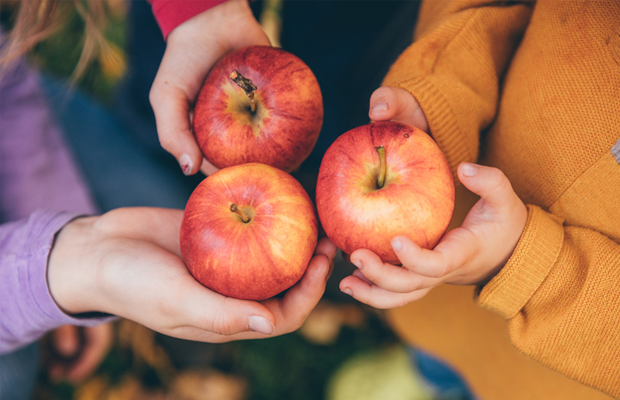
8. Apples

Apples are rich in the prebiotic pectin, which Ansel says improves an overall healthy gut by supporting a diversity of healthy bacteria. Apples can also help keep you slim by filling you up thanks to their high fibre and water counts; one often-cited study found that women who ate three apples a day lost 1.1 kilos in 12 weeks without changing anything else about their diets.

Per large apple: 485kJ, 0.4 g fat (0g sat), 31g carbs, 23g sugar, 2mg sodium, 5g fibre, 0.6g protein

Children holding apples

This article was originally published on www.womenshealthmag.com

Image credit: iStock

NEXT ON HEALTH24X

Share Button

Health24.com | Can you really get an STD from kissing?

Kissing can be awkward but, aside from beard burn or the common cold, it’s pretty safe, right?

Not exactly. A peck on the mouth (or a full-blown, let-me-shove-my-tongue-down-your-throat make out session) can actually transmit a couple different types of STDs [insert cringing emoji here]: Herpes simplex virus (HSV) 1 and 2 and syphilis, says Dr Teena Chopra, corporate medical director of infection prevention and hospital epidemiology at Detroit Medical Center and Wayne State University.

Talk about a mood killer. Luckily, you don’t have to swear off kissing forever – but, it’s a good idea to just be aware of what can be spread through spit-swapping. Here’s what you need to know about the two STDs you can get through kissing.

What to know about herpes and kissing:

Herpes simplex virus (HSV 1 and 2) infections are one of the most common STDs and, once contracted, they last a lifetime, according to the American National Institute of Allergy and Infectious Diseases (NIAID).

“Once a person has been infected, the virus can remain dormant (latent) for years before periodically reactivating to cause recurrent disease,” the website notes. Which is why it’s also important to note: People who don’t know they have herpes can still spread herpes, per the Centers for Disease Control and Prevention (CDC).

Whereas HSV-1 is responsible for oral herpes, HSV-2 is what causes genital herpes. However, oral herpes can be spread from the mouth to the genitals as a result of oral sex, which is how some cases of genital herpes are caused by HSV-1, according to the CDC. And, yes, the reverse is also true: Genital herpes can be passed from one person’s genitals to another person’s mouth, causing oral herpes.

If you’re concerned about herpes (and you know your partner has it), ask them to be diligent about symptoms that signal an outbreak is coming (you’re more likely to contract the virus during a herpes flare). Burning, itching, and/or tingling feelings are all signs that sores are about to appear.

You might also want to encourage your partner to be upfront by assuring them that herpes is nothing to be embarrassed about. In fact, it’s ridiculously common.

Another prevention method: If your partner has herpes, then they can chat with their doctor about taking medication that can lower their chances of spreading the virus.

Read more: 8 vagina changes that mean you’ve just caught an STD

So, what about syphilis?

Syphilis occurs in four stages, according to the CDC, with different signs and symptoms associated with each stage.

Primary syphilis will be evident because a person will generally have sores, typically around the genitals and/or mouth, called chancres, per the CDC. Secondary syphilis includes a skin rash, swollen lymph nodes and fever, but there are no signs or symptoms during the third or latent stage of the STD.

The fourth stage of syphilis, however, known as tertiary syphilis, can be linked to severe medical problems. Left untreated, syphilis can affect the heart, brain and other organs of the body, according to the CDC.

The infection can be passed by direct contact with a sore during the first three stages, through vaginal, anal or oral sex – and, yes, even through kissing.

Dr Chopra says the only way to fully avoid syphilis is to avoid sex or kissing completely, but uh, since that’s not totally practical, there are ways to reduce your risk.

Straight-up asking new partners whether or not they have an STD (or asking them to get tested if they don’t know) is a good practice, as is nixing the kissing when you see visible sores, says Dr Amesh A Adalja, a senior scholar at the Johns Hopkins University Center for Health Security.

And while you’re at it, make sure to get yourself tested too – doctors won’t typically test you for herpes unless you’re showing symptoms like sores, but you can still get tested for syphilis whether you’re showing signs or not.

The bottom line: Ask questions before getting hot and heavy. If you know your partner has herpes or syphilis, cool it on the kissing until active oral sores have been treated or healed.

This article was originally published on www.womenshealthmag.com

Image credit: iStock

NEXT ON HEALTH24X

Share Button

Health24.com | 4 amazing body benefits of weightlifting that’ll persuade you to give it a try

Weightlifting isn’t just about picking up heavy things. It’s a dynamic sport that measures, not only strength, but explosiveness and agility (ever seen how fast they lift those things?) with a big focus on form.

It’s also one of the best ways to achieve your fitness goals in pretty much any sport. That last bit is what got Mona Pretorius into lifting – now she’s a Commonwealth Games medallist in the sport. She shares some of the many other reasons you should pick up a barbell.

1. You’ll age better

“Weightlifting is a great way for women – even older adults – to stay healthy and in shape over the years,” says Pretorius. Science backs it up: Studies show that resistance training has a positive impact on bone density, which in turn lowers the risk of osteoporosis.

Read more: This is the one move you need for leaner, stronger legs

2. You’ll build resilience

“You have to be mentally strong and believe in yourself in this sport,” says Pretorius. She sees this with the people she coaches. “When they start off, a lot of them don’t have a lot of confidence and they don’t believe in themselves,” she says.

“But as time goes by, they start lifting a bit more weight, they get the exercises right and it actually shows them that with hard work and a bit of patience, things will be achieved.” And that feeling of lifting a weight you couldn’t a month ago? Move over, Wonder Woman.

Read more: The 12 best foods to burn fat and build lean muscle

3. You’ll stand taller

Because the weights are heavy, form is enormously important. Everything, from your butt and core to your neck, has to be in perfect alignment or you risk injury. For this reason, your first few lessons will involve light weights with most of the emphasis on proper form. “Posture always gets emphasised when we train,” says Pretorius.

Now, good posture comes naturally to her – even when she’s not training.

Read more: “I’ve only been doing pilates for a month – and discovered this incredible sex benefit”

4. You’ll get toned

Women are constantly asking Pretorius if lifting heavy weights will make them bulky. “Weightlifting won’t make you look like a man because a female doesn’t have the testosterone that a man has, so you will never build as much muscle,” she says. What she can guarantee? A toned physique. “Your body will tone, you’ll be healthy and you’ll look great!”

This article was originally published on www.womenshealthsa.co.za

Image credit: iStock

NEXT ON HEALTH24X

Share Button

Sahara dust may make you cough, but it’s a storm killer

The bad news: Dust from the Sahara Desert in Africa — totaling a staggering 2 to 9 trillion pounds worldwide — has been almost a biblical plague on Texas and much of the Southern United States in recent weeks. The good news: the same dust appears to be a severe storm killer.

Research from a team of scientists led by Texas A&M University has studied Saharan dust and their work is published in the current issue of the Journal of Climate of AMS (American Meteorological Society).

Texas A&M’s Bowen Pan, Tim Logan, and Renyi Zhang in the Department of Atmospheric Sciences analyzed recent NASA satellite images and computer models and said the Saharan dust is composed of sand and other mineral particles that are swept up in air currents and pushed over the Atlantic Ocean to the Gulf of Mexico and other nearby regions.

As the dust-laden air moves, it creates a temperature inversion which in turn tends to prevent cloud — and eventually — storm formation.

It means fewer storms and even hurricanes are less likely to strike when the dust is present.

“The Saharan dust will reflect and absorb sunlight, therefore reduce the sunlight at the Earth’s surface,” said Pan.

“If we have more frequent and severe dust storms, it’s likely that we have a cooler sea surface temperature and land surface temperature. The storms have less energy supply from the colder surface therefore will be less severe.”

The study goes on to show that dust and storm formation don’t mix.

“Our results show significant impacts of dust on the radiative budget, hydrological cycle, and large-scale environments relevant to tropical cyclone activity over the Atlantic,” said Zhang.

“Dust may decrease the sea surface temperature, leading to suppression of hurricanes. For the dust intrusion over the past few days, it was obvious that dust suppressed cloud formation in our area. Basically, we saw few cumulus clouds over the last few days. Dust particles reduce the radiation at the ground, but heats up in the atmosphere, both leading to more stable atmosphere. Such conditions are unfavorable for cloud formation.”

Zhang said that the chances of a hurricane forming tended to be much less and “our results show that dust may reduce the occurrence of hurricanes over the Gulf of Mexico region.”

Logan said that recent satellite images clearly show the Saharan dust moving into much of the Gulf of Mexico and southern Texas.

“The movement of the dust is there,” Zhang said, “but predictions of dust storms can be very challenging.”

Story Source:

Materials provided by Texas A&M University. Original written by Keith Randall. Note: Content may be edited for style and length.

Share Button

Parakeet pecking orders, basketball match-ups, and the tenure-track

Sometimes, knowing who wins and who loses is more important than how the game is played.

In a paper published this week in Science Advances, researchers from the Santa Fe Institute describe a new algorithm called SpringRank that uses wins and losses to quickly find rankings lurking in large networks. When tested on a wide range of synthetic and real-world datasets, ranging from teams in an NCAA college basketball tournament to the social behavior of animals, SpringRank outperformed other ranking algorithms in predicting outcomes and in efficiency.

Physicist Caterina De Bacco, a former postdoctoral fellow at Santa Fe Institute, now at Columbia University, says SpringRank uses information that’s already built into the network. It analyzes the outcomes of one-on-one, or pairwise, interactions between individuals. To rank NCAA basketball teams, for example, the algorithm would treat each team as an individual node, and represent each game as an edge that leads from the winner to the loser. SpringRank analyzes those edges, and which direction they travel, to determine a hierarchy. But it’s more complicated than simply assigning the highest ranking to the team that won the most games; after all, a team that exclusively plays low-ranked teams may not deserve to be at the top.

“It’s not just a matter of wins and losses, but which teams you beat and which you lost to,” says mathematician Dan Larremore, a former postdoctoral fellow at the Santa Fe Institute, now at the University of Colorado Boulder. Larremore and De Bacco collaborated with computer scientist Cris Moore, also at the Santa Fe Institute, on the paper.

As its name suggests, SpringRank treats the connections between nodes like physical springs that can contract and expand. Because physicists have long known the equations that describe the motions of springs, says De Bacco, the algorithm is easy to implement. And unlike other ranking algorithms which assign ordinal numbers to nodes — first, second, third, etc., — SpringRank assigns each node a real-valued number. As a result, nodes may be close together, spread apart, or arranged in more complicated and revealing patterns, like clusters of similarly ranked nodes.

“Ideas from physics often give us elegant and effective algorithms,” says Moore. “This is another win for that approach.”

In the paper, the researchers tested the predictive power of SpringRank on a variety of datasets and situations, including sports tournaments, animal dominance behaviors among captive parakeets and free-ranging Asian elephants, and faculty hiring practices among universities.

The researchers uploaded the code for SpringRank to GitHub, an online code repository, and say they hope other researchers, especially in the social sciences, will use it. “It can be applied to any dataset,” says De Bacco.

The next dataset she and her coauthors plan to analyze with SpringRank is unlike any of those featured in the Science Advances paper. They’ll be working with Elizabeth Bruch, an external professor at the Santa Fe Institute, to analyze patterns of messaging in online dating markets.

Story Source:

Materials provided by Santa Fe Institute. Note: Content may be edited for style and length.

Share Button