Plastic chemical linked to smaller prefrontal cortex, reduced cognitive ability in rats

Society for Neuroscience. “Plastic chemical linked to smaller prefrontal cortex, reduced cognitive ability in rats: Findings demonstrate long-term influence of endocrine-disrupting compounds on brain development.” ScienceDaily. ScienceDaily, 16 July 2018. <www.sciencedaily.com/releases/2018/07/180716130738.htm>.

Society for Neuroscience. (2018, July 16). Plastic chemical linked to smaller prefrontal cortex, reduced cognitive ability in rats: Findings demonstrate long-term influence of endocrine-disrupting compounds on brain development. ScienceDaily. Retrieved July 16, 2018 from www.sciencedaily.com/releases/2018/07/180716130738.htm

Society for Neuroscience. “Plastic chemical linked to smaller prefrontal cortex, reduced cognitive ability in rats: Findings demonstrate long-term influence of endocrine-disrupting compounds on brain development.” ScienceDaily. www.sciencedaily.com/releases/2018/07/180716130738.htm (accessed July 16, 2018).

Share Button

Health24.com | The pros and cons of 4 sleeping positions

Everyone has their preferred sleeping position.

But while the position in which you sleep may be the coziest, it might not be the best one for your health.

We take a look at a few sleeping positions and their effects on your health:

1. Lying on your stomach

In an interview with Tonic, physical therapist Hidde Hulshof states that sleeping on your stomach is probably the worst position.

Pros

Sleeping on your stomach has been proven to benefit those suffering from sleep apnoea.

Cons

Sleeping on your stomach adds strain to your back and neck areas.

Hulshof states, “Physically, it’s an unnatural position that’s unfavourable to your neck and back. Your neck is turned in a way that locks your upper cervical vertebrae, which can cause headaches and neck problems.”

2. Foetal position

The foetal position is the most common sleeping position of all.

Pros

This position is recognised as being great for menstruating and pregnant women. 

Cons

Studies show that sleeping on the right side increases the risk of stillbirth in pregnant women. 

It is therefore suggested that pregnant women sleep on their left side.

In an interview with Glamour magazine, gynaecologist Lisa Lindley notes, “Sleeping in the foetal position takes pressure off the abdominal muscles.” Sleeping on one’s side alleviates pressure on the lower back and promotes healthy blood circulation to the heart.

3. Straight side sleeping

Commonly described as “sleeping like a log”.

Pros

This position, much like the foetal position, alleviates pressure on the back, therefore minimising back pain. It is regarded as being great for digestion.

Cons

Those who sleep with their arms under their pillows, however, often complain of intense pins-and-needles.


4. Back sleepers

Sleeping on your back is considered to be the best position.

Pros

One receives optimal neck and back support sleeping this way.

Cons

However, director of the Sleep Assessment and Advisory Service in London, Chris Idzikowski believes “sleeping on your back may lead to snoring and difficultly sleeping”. It is also not recommended for people suffering from sleep apnoea.

Image credit: iStock

Share Button

Health24.com | This man was constipated for 22 years

Imagine being constipated for two decades. For a 22-year-old Chinese man this was a reality until Shanghai doctors removed about 76cm of his colon. It weighed nearly 13kg and was filled with faeces that had accumulated since birth.

The man, who wishes to remain anonymous, said he’d suffered from constipation for his entire life and laxatives offered only mild relief. Dr Yin Lu from 10th People’s Hospital of Shanghai told The Paper, a Chinese news site, that his stomach looked as though he was more than nine months pregnant. 

During the three-hour surgery, Dr Lu discovered that the man had years of faeces built up in his colon. He said it “looked like it could explode at any time”.

So how does this happen? Unfortunately the man’s family did not pay any attention to his chronic constipation, so he thought it “was not a big deal“. But the man is also believed to have Hirschsprung’s disease, a condition that affects one in every 5 000 live births.

(Don’t ignore constipation –  read more about when it becomes an emergency here.)

About Hirschsprung disease

According to the National Institute of Diabetes and Digestive and Kidney Diseases (NIDDK) “Hirschsprung disease is a birth defect in which nerve cells are missing at the end of a child’s bowel.”

In a healthy digestive tract nerve cells control how the bowel works by letting it know when to move stool. But, when these nerve cells are missing, in the case of Hirschsprung’s disease, the bowel does not work as it should. 

Instead, the stool moves through the bowel until it reaches the area without nerve cells, where it either slows down or stops entirely, which can result in a blockage or constipation.  

The NIDDK says the rectum and sigmoid colon are areas that are most often missing nerve cells. Some people, however, might have missing nerve cells in whole colon or part of the small intestine.Hirschsprung disease, constipation, illness, healt

Causes of Hirschsprung’s disease

According to Stanford Children’s Health, a foetus develops nerve cells in the digestive tract between the fourth and 12th week of pregnancy. But, for unknown reasons, “nerve cells do not grow past a certain point in the intestine in babies with Hirschsprung’s disease.” 

Males are five times more likely than females to develop Hirschsprung’s disease. The NIDDK adds that children with Down’s syndrome and other medical conditions, for example congenital heart defects, are at a greater risk of developing Hirschsprung’s disease.  

The condition is congenital (i.e, present at birth), but symptoms are not always obvious when a child is born.

Signs and symptoms

Although symptoms may vary, how they vary will not depend on how much of the digestive tract is missing nerve cells. The NIKKD says that no matter where the nerve cells are missing, once faeces reach this section, a blockage forms and symptoms develop.

These symptoms include:

  • constipation or intestinal obstruction
  • stunted growth
  • swollen abdomen
  • unexplained fever
  • vomiting

An early symptom in newborns is no bowel movement within 48 hours following birth. Other symptoms in newborns include:

  • green or brown vomit
  • explosive stools following a rectal examination
  • swollen abdomen
  • diarrhoea, often bloody

Treatment

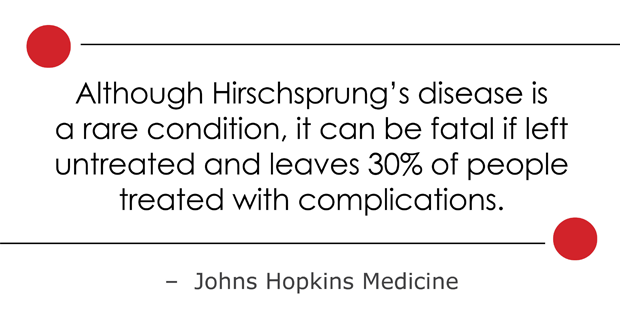
Once Hirschsprung’s disease is diagnosed it needs to be corrected with surgery. It can be fatal if left untreated.

A common procedure is the “pull-through” operation. The NHS explains that the affected area of the bowel is removed and the healthy sections are joined together. This operation is usually performed when babies are about three months old. 

Image credit: iStock

Share Button

Health24.com | 7 facts you probably didn’t know about hearing aids

Despite the fact that many people use hearing aids, many of us may not fully understand what they actually do or how they work. We’ve uncovered seven facts you should know about these useful devices.       

1. Hearing aids are not just for the elderly

According to the World Health Organization (WHO), about 466 million people across the world suffer from disabling hearing loss – 34 million of these are children. It’s estimated that by 2050 more than 900 million people will be affected by disabling hearing loss. The WHO says that 1.1 billion young people – between the age of 12 and 35 – are at risk of hearing loss due to exposure to loud noise in recreational settings. 

2. Hearing aids can adjust automatically to surrounding noise

Our ears do an amazing job of picking up important sounds – such as your dinner date’s conversation in a busy restaurant or a bored colleague muttering under his breath at a meeting. Hearing aids can do exactly the same, and technological advancements have made them versatile in all sound environments.

3. Hearing aids will not cure your hearing loss

A hearing aid will not return your hearing to normal. And while a hearing aid won’t cure your hearing loss, it will help you to hear conversations, the TV or the radio. A hearing aid will definitely improve your quality of life.

4. You should not buy hearing aids online

Sure, if you search online you might find a hearing aid that is more affordable than the quote you received. However, it’s impossible to know whether the device will work for you – in the same way that prescription glasses are tailored to your eyesight, hearing aids are tailored to your hearing needs. An audiologist needs to test your hearing and find the right hearing aid for you.

Doctor fitting hearing aid

5. You may need a hearing aid even if you have mild hearing loss

We all have different needs when it comes to hearing, and while some people with mild hearing loss don’t require a hearing aid, others find that it makes a huge difference to them. If you are concerned or confused, book an appointment with an audiologist who will be able to help you figure out what you need.

6. You may need to wear two hearing aids even if you only experience hearing loss in one ear

You use both ears to hear, which means wearing two hearing aids may improve your hearing even more. According to the American Speech, Language, Hearing Association, wearing two hearings aids “lets you figure out where sounds come from. This is called localisation. It helps in noisy places and makes sounds more natural. Wearing two aids may make it easier to understand what others say.”

7. Hearing aids can be used in any lifestyle

As technology continues to improve, it means that no matter what type of lifestyle you currently enjoy, you’ll be able to find a suitable hearing aid. Nowadays you can find hearing aids that are water resistant or waterproof. Just because you need to wear a hearing aid doesn’t mean you have to change your lifestyle.  

Woman with hearing aid at beach

Image credit: iStock

Share Button

Hot summer leading to ‘toxic’ algae

Blooms have flourished during the warm spell but they pose a health risk to humans and animals.

Share Button

Health24.com | It’s the beautiful game, but injuries can make it a dangerous one

With the final World Cup showdown this Sunday, frenzied fans have seen the best soccer has to offer.

They’ve also seen some of the worst injuries the sport can inflict.

While chasing down a ball during a game last month against Iran, Moroccan midfielder Noureddine Amrabat knocked heads with a rival so violently he awoke hours later in a hospital with a concussion – and no memory of the match he’d just played.

Amrabat played in Morocco’s next game, just five days later, a decision that was heavily criticised.

This was not long after Liverpool goalkeeper Loris Karius was found to have suffered a concussion during the the Uefa Champions League final against Real Madrid on 26 May.

Karius performed poorly in the game won by Real Madrid, where he suffered a head knock in a collision with the Spanish team’s captain, Sergio Ramos.

The concussion was only diagnosed five days later, after he was sent for tests because of symptoms he was suffering from.

But it’s not just elite players who are susceptible to dangerous injuries from soccer, which has come under scrutiny in recent years for concussion management.

More than half of soccer-related concussions come from some type of “aerial challenge,” where two players competing for a ball crash in mid-air at high speeds, said Dr George Chiampas, chief medical officer for US Soccer, the sport’s national governing body.

The injuries could be from a head-to-head collision, or from an elbow or knee to the head. Sometimes, it’s the ground that gives the noggin a good knock after the player falls or gets pushed down.

“What makes a concussion a very complex injury is that it’s a difficult thing to see on any traditional imaging, or any biomarkers,” said Chiampas, an assistant professor of emergency and sports medicine at Northwestern University in Chicago.

“There’s no blood test that can verify that someone has suffered a concussion.”

Direct head collisions aren’t the only perils to potential brain damage, however.

Recent studies have found that regularly “heading” soccer balls can cause cognitive problems. And a report published earlier this year suggests consistent headers may result in worse cognitive function than a direct hit from occasional collisions or recognised concussions.

Dr Michael Lipton, a neuroscientist whose research focuses on “sub-concussive” impacts, said smaller but more frequent blows like those from heading a soccer ball often fly beneath the radar because they usually don’t cause physical symptoms immediately.

But even regular recreational soccer players can easily head a soccer ball hundreds or even thousands of times in a single year, he said. That repeated impact, spread over several years, can have “an accumulating effect on the brain,” said Lipton, a professor of radiology and psychiatry at Albert Einstein College of Medicine and Montefiore Medical Center, both in New York City.

“More extreme amounts of heading seem to create changes in the brain’s microscopic structure, which then lead to changes in cognitive function,” he said.

Specifically, research suggests that regular heading of the ball can impair memory, attention and executive function.

In a study published in April that looked at 308 amateur soccer players in New York City who played at least six months a year, participants who reported the most headings in a two-week period had poorer performance on tests for attention, memory and reaction time. Meanwhile, no such connection was detected between accidental head collisions or recognised concussions and cognitive function.

While Lipton’s work looked at adults, similar findings over the years were enough in 2015 to prompt US Soccer to ban heading by players 10 and younger. Headers also were limited to training practices for players 11 through 13.

Those restrictions got additional backing in May when a study presented at an American College of Sports Medicine meeting showed kids ages 9 to 11 who headed a ball at least once during a game had lower scores afterward on cognitive tests.

US Soccer has invested deep resources and personnel over the years to address concussion prevention, management and awareness, Chiampas said.

One of the first steps nearly four years ago was to hire him as the federation’s first-ever chief medical officer.

US Soccer also created the “Recognize to Recover” program, with guidance from medical experts, to reduce injuries among soccer players of all ages and to promote safe play by everyone in and around the soccer field.

“We’re establishing a culture of safety within our games that we want to become innate across the United States,” Chiampas said, “not just for our players, but for coaches, referees and even parents.”

Share Button

Health24.com | New study reveals that your testosterone levels are based on your childhood rather than genetics

Testosterone is one of the most spoken and thought about hormones among men.

It’s the subject of much curiosity and misunderstanding, and the scapegoat for that aggressive guy at the bar. It’s responsible for muscle-building and sex drive; and men shudder at the thought that their T levels may not be up to scratch.

Read more: Are your testosterone levels normal?

The reasons for differences in testosterone levels from man to man have long been debated across weight racks and doctor’s desks. But a new study has shed light on why you might have low or high T.

The study published in Nature Ecology and Evolution found that men’s testosterone levels are determined by environmental conditions experienced in early childhood rather than genetics or race, a popular belief.

The low down

According to the new study from Durham University, men who grew up around infectious diseases and in challenging environments are more likely to have lower testosterone levels than men who grew up in healthier environments.

The study examined men who were either born in Bangladesh and still lived there, born in Bangladesh and then moved to the UK as children, born in Bangladesh and then moved to the UK as an adult, born in the UK with parents who were born in Bangladesh or born in the UK who were ethnic Europeans.

Read more: Three steps to more testosterone

The men who grew up and lived as adults in the UK had much higher levels of testosterone compared to those who grew up and lived in Bangladesh as adults. The researchers contribute this to the fact that in more challenging environments such as Bangladesh, men’s energy is expelled on fighting infections because they are more exposed to disease and may have poorer nutrition. There are more demands placed on the body in challenging conditions, so developing males spend their energy on survival at the cost of testosterone levels.

So what?

Although the effects of having low testosterone are often emphasised because they impact your sex drive, muscle growth and mood; high testosterone levels pose some serious health threats. If you have high testosterone levels you’re at an increased risk of an enlarged prostate and cancer. It’s also linked to increased muscle mass and aggression.

Read more: 8 steps to prevent prostate cancer

“Very high and very low testosterone levels can have implications for men’s health and it could be important to know more about men’s childhood circumstances to build a fuller picture of their risk factors for certain conditions or diseases,” said co-author Professor Gillian Bentley.

This means that when men are screened, their childhood environments need to be taken into account.

What now?

Do an audit of your lifestyle and your environment as a child. This could give you insight into what your testosterone levels may be like. But this will be subjective. A more objective way? If you’re concerned, look out for symptoms or get checked out by a doctor.

Signs of low T: Decreased sex drive, shrinking muscles, smaller penis, increasing belly, faltering memory, tanking mood or weaker bones.

Read more: Warning: This type of exercise can kill your sex drive

Signs of high T: Low body fat, increased aggression, very high sex drive, acne or shrinking testicles.

If you suspect your testosterone levels may not be normal, head to your doctor. They will usually perform two blood tests before they make an official diagnosis, says Dr Anawalt, a spokesperson for the Endocrine Society.

This article was originally published onwww.mh.co.za

Image credit: iStock

Share Button

Health24.com | Can CLA supplements really help you lose weight?

You’ve seen a lot of bizarre supplements stocking the shelves of your local vitamin store – all of them claiming to “burn fat fast”. But seriously, what are CLA safflower oil supplements?

Give it a quick Google and you’ll find blogs that tout these pills as a “weight-loss aid” that “helps improve metabolism”. Vague much?

Here’s what you need to know about CLA safflower oil for weight loss.

What is CLA safflower oil anyway?

So, CLA stands for conjugated linoleic acid – a fat high in monounsaturated and polyunsaturated fats (a.k.a. the good kinds). CLA is typically found in foods like dairy and beef, but it can also be found in small amounts in vegetable oils. Safflower oil is a vegetable oil – it’s produced by the seeds of a safflower plant (which, by the way, looks kind of like a dandelion).

It’s that conjugated linoleic acid that carries the alleged weight-loss benefits in CLA safflower oil supplements.

Read more: 7 fat-melting supplements you need to include in your diet

Well, can CLA safflower oil help you lose weight?

Basically, the weight-loss benefits of CLA are up in the air still – research has mainly been in animals or very small study groups.

One 2007 study published in the American Journal of Clinical Nutrition found that CLA supplements could increase fat oxidation and energy burn during sleep. Another 2007 study in the International Journal of Obesity found that it could help reduce body fat and stave off holiday weight gain.

Sounds promising, but there’s a catch: Both studies involved less than 50 subjects, and study authors agreed that more need to be done to evaluate CLA’s effects on weight loss.

A 2015 clinical review in the journal Nutrition & Metabolism went a step further, saying that “CLA is not eliciting significantly promising and consistent health effects so as to uphold it as neither a functional nor a medical food,” per the study authors.

Read more: People are now pairing apple cider vinegar with Garcinia cambogia to lose weight

So, that means I shouldn’t use CLA safflower oil for weight loss?

Basically? No.

First and foremost, the research isn’t there to suggest that CLA safflower oil supplements do anything for weight loss.

Plus, safflower oil only contains a small amount of CLA – about 0.7 milligrams of CLA per gram of fat, according to research from the Journal of Food Composition and Analysis. That means safflower oil supplements in pill form must be chemically altered to increase the amount of CLA – which makes it slightly different than the good-for-you CLA found naturally in foods.

But there’s another thing: Weight-loss supplements in general are usually neither effective nor healthy.

“I’m not a fan of any supplements that promote weight loss because dropping kilos is more about the foods you eat and the exercise you do than the pills or powers that you pop,” says Bonnie Taub-Dix, registered dietician and author of Read It Before You Eat It. “These things are ridiculous.”

Your best bet? “There is nothing that can substitute for a healthy lifestyle, which includes a plant-based diet – full of vegetables, fruits, whole grains and (mostly) plant proteins,” says Taub-Dix, who also highlights the importance of exercise and good sleep.

“There is only one way to achieve health and vitality,” says Taub-Dix. “And that is through a healthy eating and exercise plan.”

The bottom line: Once again, there is no magic pill for weight loss – including CLA safflower oil.

This article was originally published on www.womenshealthmag.com

Image credit: iStock 

NEXT ON HEALTH24X

Share Button

Heatwave causes spike in insect bite calls to NHS

Horsefly bites are painful and can lead to a skin infection that may require antibiotics, say doctors.

Share Button

The Cardiff woman who is allergic to water

Cherelle Farrugia, 25, breaks out in a painful rash every time she comes into contact with water.

Share Button