Controlling robots with brainwaves and hand gestures

Getting robots to do things isn’t easy: usually scientists have to either explicitly program them or get them to understand how humans communicate via language.

But what if we could control robots more intuitively, using just hand gestures and brainwaves?

A new system spearheaded by researchers from MIT’s Computer Science and Artificial Intelligence Laboratory (CSAIL) aims to do exactly that, allowing users to instantly correct robot mistakes with nothing more than brain signals and the flick of a finger.

Building off the team’s past work focused on simple binary-choice activities, the new work expands the scope to multiple-choice tasks, opening up new possibilities for how human workers could manage teams of robots.

By monitoring brain activity, the system can detect in real time if a person notices an error as a robot does a task. Using an interface that measures muscle activity, the person can then make hand gestures to scroll through and select the correct option for the robot to execute.

The team demonstrated the system on a task in which a robot moves a power drill to one of three possible targets on the body of a mock plane. Importantly, they showed that the system works on people it’s never seen before, meaning that organizations could deploy it in real-world settings without needing to train it on users.

“This work combining EEG and EMG feedback enables natural human-robot interactions for a broader set of applications than we’ve been able to do before using only EEG feedback,” says CSAIL director Daniela Rus, who supervised the work. “By including muscle feedback, we can use gestures to command the robot spatially, with much more nuance and specificity.”

PhD candidate Joseph DelPreto was lead author on a paper about the project alongside Rus, former CSAIL postdoctoral associate Andres F. Salazar-Gomez, former CSAIL research scientist Stephanie Gil, research scholar Ramin M. Hasani, and Boston University professor Frank H. Guenther. The paper will be presented at the Robotics: Science and Systems (RSS) conference taking place in Pittsburgh next week.

Intuitive human-robot interaction

In most previous work, systems could generally only recognize brain signals when people trained themselves to “think” in very specific but arbitrary ways and when the system was trained on such signals. For instance, a human operator might have to look at different light displays that correspond to different robot tasks during a training session.

Not surprisingly, such approaches are difficult for people to handle reliably, especially if they work in fields like construction or navigation that already require intense concentration.

Meanwhile, Rus’ team harnessed the power of brain signals called “error-related potentials” (ErrPs), which researchers have found to naturally occur when people notice mistakes. If there’s an ErrP, the system stops so the user can correct it; if not, it carries on.

“What’s great about this approach is that there’s no need to train users to think in a prescribed way,” says DelPreto. “The machine adapts to you, and not the other way around.”

For the project the team used “Baxter,” a humanoid robot from Rethink Robotics. With human supervision, the robot went from choosing the correct target 70 percent of the time to more than 97 percent of the time.

To create the system the team harnessed the power of electroencephalography (EEG) for brain activity and electromyography (EMG) for muscle activity, putting a series of electrodes on the users’ scalp and forearm.

Both metrics have some individual shortcomings: EEG signals are not always reliably detectable, while EMG signals can sometimes be difficult to map to motions that are any more specific than “move left or right.” Merging the two, however, allows for more robust bio-sensing and makes it possible for the system to work on new users without training.

“By looking at both muscle and brain signals, we can start to pick up on a person’s natural gestures along with their snap decisions about whether something is going wrong,” says DelPreto. “This helps make communicating with a robot more like communicating with another person.”

The team says that they could imagine the system one day being useful for the elderly, or workers with language disorders or limited mobility.

“We’d like to move away from a world where people have to adapt to the constraints of machines,” says Rus. “Approaches like this show that it’s very much possible to develop robotic systems that are a more natural and intuitive extension of us.”

Video: https://www.youtube.com/watch?v=_Or8Lt3YtEA&feature=youtu.be

The project was funded, in part, by the Boeing Company.

Share Button

Health24.com | When is constipation a medical emergency?

Constipation is mostly a short-term problem that can be resolved at home, but it’s important to know when it requires emergency care.

Faeces can become hardened and lodged in the rectum. This is the most severe outcome of constipation and can be linked to complications such as bleeding and bowel obstruction.

Bowel obstruction occurs when your small or large intestine becomes partially or fully blocked. The stretching of the intestines can cause pain, a rupture and bleeding, requiring urgent medical attention.

According to a study published in the American Journal of Gastroenterology, the number of visits to emergency units in America hospitals has increased over the past decade and there is an increasing trend towards hospital visits with constipation-related complications. 

When you experience the following symptoms, you should seek immediate medical assistance: 

1. When you have unbearable abdominal pain

When your constipation is coupled with crippling abdominal pain, this might be the symptom of a larger issue such as appendicitis or a bowel obstruction, which definitely requires a trip to the ER, according to Robynne Chutkan, a gastroenterologist in Maryland, USA, as reported by Women’s Health.

woman with severe abdominal pain

2. When you are vomiting

Vomiting when you are constipated could possibly be a sign of faecal impaction, where the stool in the blocked colon can’t be moved, according to Harvard Medical School. The backed up waste can cause vomiting. This is extremely dangerous and requires urgent medical attention.  

woman vomiting in toilet

3. When your stomach is severely bloated

Painful bloating of the stomach can also be a sign of a serious bowel obstruction. Bloating caused by constipation can often be treated at home and might clear up in time. However, if your bloating doesn’t clear up, it could be bowel obstruction or blockage.

runner holding stomach

4. When there is blood in your stool

The presence of blood in your stool is not always reason to panic. According to the American Society for Gastrointestinal Endoscopy, there are several minor causes of rectal bleeding, such as fissures, haemorrhoids, rectal ulcers or rectal inflammation.

But if you are constipated and discover that the stools you do pass are tarry and maroon in colour, it requires urgent medical care, states the Cleveland Clinic.

man holding toilet paper

5. When your constipation has lasted for longer than two weeks

According to the Cleveland Clinic, any case of constipation lasting for longer than two weeks without relief from home remedies or changes in diet should be checked out by a doctor. If your stools become lodged in the rectum, it can lead to faecal incontinence, which will occur when mucus or fluids leak around the stools.

Chronic constipation can also cause your health in general to take a knock. When you suffer from chronic constipation, you are unable to get rid of excess waste that builds up in your colon. This can end up making you sick as your intestines will become overloaded, not allowing your body to absorb crucial nutrients.

Image credit: iStock

Share Button

Cough syrup recall over mould risk from ingredients

Eight products are affected and the advice is to return bottles to where they were bought.

Share Button

Health24.com | How often should you eat fish to ward off heart disease?

There is more reason than ever for people to make fish a bigger part of their diets, according to the American Heart Association.

The heart group has long recommended that people eat fish, preferably fatty varieties, once or twice a week. Now it is reaffirming that advice based on additional evidence that fish helps ward off heart disease. 

According to the Heart and Stroke Foundation, foods that are high in omega 3 fats are incredibly good for your heart and can even help to improve cholesterol levels, especially naturally oily fish such as sardines, pilchards, mackerel and salmon, which should be eaten at least twice a week.

Specifically, adults should strive for two 3.5-ounce (100g) servings of fish each week, the American Heart Association (AHA) said. 

Preparation important

Whatever you choose, just don’t fry it, the group warned. That’s because studies have found that fried-fish lovers have increased rates of heart failure.

The main omega-3 fatty acids in fish are EPA and DHA, said Sonya Angelone, a registered dietitian and spokesperson for the Academy of Nutrition and Dietetics. EPA has anti-inflammatory effects that might help counter the hardening and narrowing of arteries that can lead to a heart attack, Angelone said.

Beyond that, she said, omega-3 fats may also make the blood less prone to clotting, while high doses can help lower triglycerides, a type of blood fat. Oily fish is not the only source of omega-3, said Angelone, who was not involved in the AHA recommendations. “Chia seeds, flaxseeds and walnuts are good sources of alpha linolenic acid (ALA), which is a precursor to EPA, which is then converted to DHA,” Angelone said.

Fish at least once a week

In contrast, the heart association noted, 4 ounces (113g) of salmon each week would provide adults with the recommended daily intake of omega-3, which is around 250 milligrams. The latest heart association advice does not differ from its previous recommendations, issued in 2002. But there is now much more evidence to back it up.

Eric Rimm, a professor at the Harvard School of Public Health, is the lead author of the AHA report, published in Circulation. “Scientific studies have further established the beneficial effects of eating seafood rich in omega-3 fatty acids, especially when it replaces less healthy foods, such as meats that are high in artery-clogging saturated fat,” Rimm said in an AHA news release.

A number of large studies have found that people who eat fish at least once a week have moderately lower risks of heart attack, stroke, heart failure and sudden cardiac death, according to the new report. 

salmon and red meat

So it seems key to replace red or processed meat, or other less-than-healthy fare, with fish, the heart association advised.

Fish may even benefit people who’ve already suffered heart trouble, the heart association said. A study of heart attack survivors found that those who were told to eat fish twice a week were 27% less likely to die over the next two years, versus those given standard care only.

Seafood does contain mercury, the AHA pointed out. And pregnant women and young children should avoid certain large fish that are high in mercury, such as shark, swordfish and king mackerel. But for most adults, the benefits of eating fish outweigh any potential harms associated with mercury, Rimm’s team said.

Image credit: iStock

Share Button

Health24.com | 7 ways to keep your liver healthy

Your liver plays an important role in keeping your body functioning – in fact, it performs more than 500 functions that involve processing everything you eat and drink. It’s also the largest organ in your body and weighs around 1.4kg.

You need to keep your liver healthy and functioning because without it, you cannot live. Here are seven ways to look after your liver.

1. Practice safe sex

There are five main types of the hepatitis virus – A, B, C, D and E. Types A, B and C are the most serious forms as they can cause long-term liver damage. Hepatitis B and C can be transmitted through unprotected sex or having sex with multiple partners.

Hepatitis B is also transmitted through sharing needles or syringes, direct contact with the blood of an infected person, or a mother can pass the virus onto her baby during birth. 

Man and woman holding condom

2. Manage your medication

Most drugs are broken down in the liver after being metabolised by your digestive system. That means you can damage your liver if you use medication incorrectly – for example, when you take more than the prescribed dose, you use the wrong kind or you mix different types. 

If you are unsure about whether the medication you are taking may cause liver damage, speak to your doctor or chemist. Always follow the instructions – from how to take it to when to take it, and how much to take at a time.

Chemist helping woman

3. Follow a balanced diet

It’s also important to watch what you eat. “While nearly every cell in the body is able to metabolise glucose, only the liver cells can handle fructose,” says Dr Sherwood of the Functional Medicine Institute in Tulsa, Oklahoma. “If we consume too much fructose over time, the liver can become overwhelmed and suffer irreparable damage.” Limit foods that are high in refined sugars and high-fructose corn syrup, such as soft drinks, baked goods and sweets. Stick to natural sources of sugar (fruit for example) instead.

The Liver Foundation suggests avoiding high-kilojoule meals, saturated fat and refined carbs (white bread, white rice and regular pasta, for example). Make sure you get enough fibre, too, from fresh fruits, vegetables, whole-grain breads, rice and cereals. 

Fresh fruit and vegetables

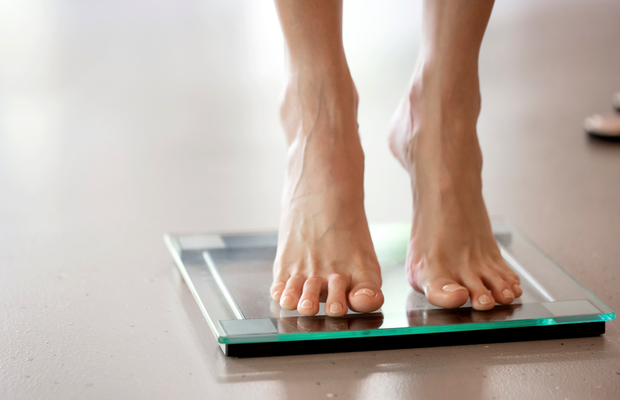
4. Maintain a healthy weight

Alcohol is not the only thing that can cause fatty liver disease – obesity (or even just being overweight) puts you at risk of developing non-alcoholic fatty liver disease (NAFLD).

People who have NAFLD are at an increased risk of suffering from cardiovascular problems; they also typically have diabetes and high cholesterol. During the early stages of NAFLD, the condition can be managed by losing weight, drastically reducing fat intake and exercising regularly.  

Woman standing on scale

5. Exercise regularly

Regular exercising helps your body burn triglycerides for fuel, which can help reduce liver fat. According to Dr Melissa Palmer, author and practicing hepatologist, following an exercise programme that includes both aerobic exercises (walking, cycling or swimming) and weight training can improve your liver function.

Aerobic exercise helps strengthen your heart muscle, which means it can pump blood more efficiently throughout your body. When this happens, your pulse slows and blood flow improves – it’s easier for your heart to move blood to your liver, and then for your liver to send the filtered blood back into your system.

Building lean muscle mass delays severe muscle wasting, which occurs during the advanced stages of liver disease. Weight training also prevents a build-up of excess body fat, which can cause fatty liver and result in a non-alcoholic steatohepatitis (NASH). The National Institute of Diabetes and Digestive and Kidney Diseases says that although NASH initially presents with only a few symptoms, it can cause your liver to become non-functional. 

Men and women exercising in gym

6. Stay hydrated

Your body needs to remain hydrated. Toxins that affect your kidneys, liver and bowel function will build up when you become dehydrated.

According to Dr Neil-Sherwood, “Dehydration can have a direct effect on our liver’s ability to properly detoxify our body. So as the liver loses hydration, it also loses its organ reserve, or what it uses to take care of the rest of the body.” 

Water also helps maintain the fluid content of your blood. When you become dehydrated, your blood becomes thicker – your liver is responsible for filtering blood and the thickness can impact its ability to detoxify.

Thirsty man drinking water

7. Limit your alcohol consumption

Consuming excessive amounts of alcohol can cause damage to your liver cells. Over time, liver damage can cause a build-up of fat in your liver, inflammation or swelling and/or scarring (cirrhosis). If you already have liver disease, even a small amount of alcohol can worsen your condition. 

How much is a moderate amount of alcohol? According to a previous Health24 article, women should limit their consumption to one drink per day, while men should only have two. One drink is equal to 148ml of wine, a 355ml beer or one shot (44ml) of an 80-proof liquor. 

Friends drinking wine

Image credit: iStock

Share Button

Medicinal cannabis use to be reviewed by government

But Home Secretary Sajid Javid stresses rules on recreational use of the drug won’t change.

Share Button

Hague’s call to legalise cannabis rejected by government

But the home secretary tells MPs there will be a review of cannabis-based medicines in the UK.

Share Button

Health24.com | SA first country to break all barriers to revolutionary TB drug

South Africa made history on Monday when the health department announced that all drug-resistant tuberculosis (DR-TB) patients will be eligible to receive the new medicine, bedaquiline.

“The Department of Health’s [DoH] commitment is momentous globally and marks a new era of DR-TB management where we are really prioritising the patient,” Doctors Without Borders’ Dr Anja Reuters told Health-e News.

Little chance of being cured

Up until recently treating patients with DR-TB has been “difficult, with old medicines used, which had many negative side effects and over long periods – often up to 24 months”, noted the DoH in a press statement.

Even if patients take their full course of toxic medicines they have little chance of being cured and risk long-term disability, including permanent deafness.

In 2012, before bedaquiline, fewer than one in five (19%) South African patients with extensively drug-resistant TB (XDR-TB) were cured, according to the DoH’s Dr Norbert Ndjeka.

He said new government data showed that, by 2015, after all XDR-TB patients became eligible for the drug, the portion of patients who completed treatment successfully shot up to 51%.

According to this data, cure rates for XDR-TB patients taking bedaquiline are as high as 80% in some areas.

No more hearing loss

The World Health Organisation (WHO) recommends the drug, manufactured by Johnson & Johnson, for all XDR-TB patients, but it does not yet do the same for people with multi-drug resistant TB (MDR-TB).

MDR-TB is resistant to two of the most common anti-TB drugs and XDR-TB is resistant to four – leaving very few effective drugs available.

For the first time, no patient will have to receive the injectable drugs that cause hearing loss in up to 60% of users, as they will be completely replaced by bedaquiline.

“It will have a huge impact in terms of decreasing disability,” said Reuters. “Deafness for a child, for example, can prevent the development of speech and lead to social isolation and bullying.”

All-access policy

In an open letter to health minister Dr Aaron Motsoaledi local organisation TB Proof wrote, “We are ecstatic that no South African with this terrible disease will have to ‘choose’ between their hearing or their life again.”

And, according to Reuters, the country’s “bold” move may influence the WHO to shift its current “conservative” stance and revise their guidelines in line with our own.

In addition to announcing an all-access policy towards bedaquiline the DoH said that it would be cutting the DR-TB treatment duration to just nine months – in line with new and ongoing research.

“This is an evidence-based decision. This is a person-centred decision. It is visionary and courageous and marks a fundamental shift in how leaders and policy makers engage with people who have TB,” wrote TB Proof. – Health-e News.

Image credit: iStock

Share Button

Health24.com | Here’s how to train your bladder

According to Health24, urinary incontinence develops when the pelvic floor muscles, which support the bladder and the bowel, weaken. The weakened pelvic floor muscles cause a loss of control with regards to urine as well as flatulence. The implications of this are partial or total leakage of urine and even uncontrolled bowel moments.

An old bladder can learn new tricks

Training your bladder involves strengthening your pelvic floor muscles. Thankfully, strengthening your pelvic floor muscles doesn’t involve going to the gym. All you need to do is implement new habits involving your loo breaks. The benefits of training your bladder now, despite not having any problems with incontinence at this stage, is that it will correct possible bad habits you may have. It may also help prevent incontinence later on in life.   

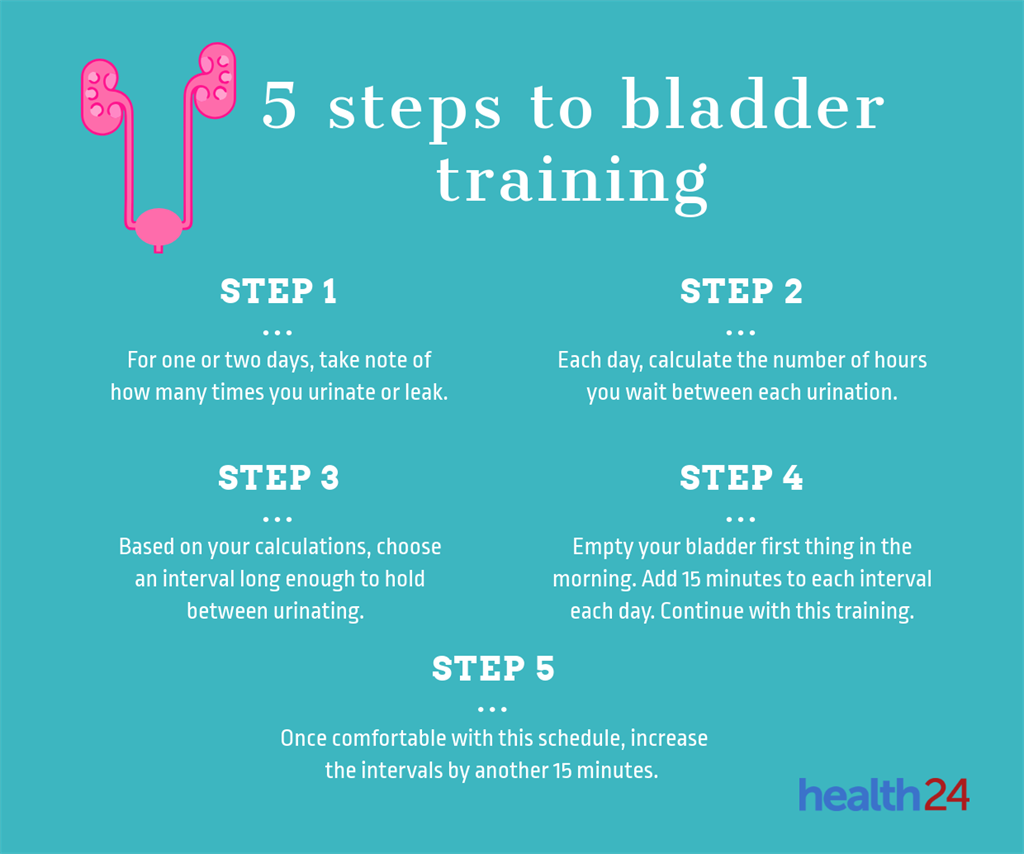
Follow this step-by-step training programme to train your bladder:

Another form of training of the urinary muscles is to pause in mid urination until the stream has completely come to a halt and then continue urinating. Do this multiple times as you relieve yourself – it is a great way to start exercising your pelvic muscles and regain control.

There are four different types of urinary incontinence:

Stress incontinence

The pressure caused by coughing, sneezing or even laughing causes the weakened bladder neck to leak urine. This is often a temporary situation. 

Urge incontinence

This occurs when the bladder cannot hold sufficient volumes of urine and the person feels the immediate urgency to urinate because of the inability to control the bladder.

Overflow incontinence 

This is when the bladder is constantly full to bursting. The kidneys produce urine but there is difficulty urinating, so the bladder fills up quickly. This is caused by an obstruction in the bladder or a dysfunction of the bladder muscle. 

Total incontinence

This happens when there is complete loss of bladder control for a prolonged time. It is more common in the elderly, and affects women more often than men.  

We can form bad habits and not realise that they are detrimental to our health. When you regularly urinate before your bladder is full, you can increase your risk of developing urinary incontinence in the future. When you relieve yourself before your bladder is full you are actually training it not to work properly.

Do you think you are clued up on how often you are supposed to wee? Take this fun quiz to find out.

Image credit: iStock

Share Button

Cannabis debate: I appealed to the prime minister

Hannah Deacon, whose son suffers from epilepsy, says she was given a pledge by Theresa May

Share Button