The prime minister promises any tax increases will be introduced in a “fair and balanced” way.


The prime minister promises any tax increases will be introduced in a “fair and balanced” way.
Geneva – The World Health Organization says compulsively playing video games now qualifies as a new mental health condition – a move that some critics warn may risk stigmatising its young players.
In its latest revision to an international disease classification manual, the UN health agency said on Monday that classifying “Gaming Disorder” as a separate condition will “serve a public health purpose for countries to be better prepared to identify this issue”.
Minority of gamers affected
Dr Shekhar Saxena, director of the WHO’s department for mental health, said the WHO accepted the proposal that Gaming Disorder should be listed as a new problem based on scientific evidence, in addition to “the need and the demand for treatment in many parts of the world”.
Dr Joan Harvey, a spokesperson for the British Psychological Society, warned that the new designation might cause unnecessary concern among parents and said only a minority of gamers would be affected.
Others welcomed the move, saying it was critical to identify video game addicts quickly because they are usually teenagers or young adults who don’t seek help themselves.
“We come across parents who are distraught, not only because they’re seeing their child drop out of school, but because they’re seeing an entire family structure fall apart,” said Dr Henrietta Bowden-Jones, a spokesperson for behavioural addictions at Britain’s Royal College of Psychiatrists. She was not connected to WHO’s decision.
Non-financial kind of gambling
Bowden-Jones said gaming addictions were usually best treated with psychological therapies but that some medicines might also work.
Dr Mark Griffiths, who has been researching the concept of video gaming disorder for 30 years, said the new classification would help legitimise the problem and strengthen treatment strategies.
“Video gaming is like a non-financial kind of gambling from a psychological point of view,” said Griffiths, a distinguished professor of behavioural addiction at Nottingham Trent University.
“Gamblers use money as a way of keeping score whereas gamers use points.”
He guessed that the percentage of video game players with a compulsive problem was likely to be extremely small – much less than 1% – and that many such people would likely have other underlying problems, like depression, bipolar disorder or autism.
Image credit: iStock

NEXT ON HEALTH24X

We are generally not encouraged to like the villains in animation movies. Think of Cruella de Vil in 101 Dalmatians or Jafar in Aladdin; not only are their personalities off-putting, but their looks are also not desirable.
New research from the University of Texas found that 76% of so-called “bad” characters in animation movies have skin issues such as freckles, moles or eye bags. This is compared to only 26% of “good” characters. Generally the good characters, such as Mr and Mrs Incredible, Rapunzel and Moana, are portrayed with perfect skin.
And this can have an effect on people’s insecurities about their skin, the researchers said. In fact, the study concluded, “Increased skin findings for evil characters in animated children’s movies can reinforce stigmas surrounding skin disease and may contribute to the distress felt by dermatology patients.”
Top 50 movies
The researchers examined major characters from the top 50 highest grossing animated movies and divided them into four categories based on what they call “dermatologic findings”. These include scars, baldness, wrinkles, moles, eye bags or darkness round the eyes and freckles. The four categories were:
The researchers said that the atypical protagonists would normally be assumed to be bad and were made to look that way. Interestingly a lot of the hidden antagonists had no skin problems – this enforced the stereotype that good people don’t have skin problems (the movie makers want the audience to believe these characters are good, especially at the beginning of the movie).
Ninety-two percent of the movies were released after the year 2000, and 50% were released after 2010, making the research current. All animal characters were excluded from the analysis and four movies were excluded based on mechanical or robotic characters and one due to its PG-13 rating.
“Characters with villainous roles or negative attributes had a higher number of findings than characters meant to appear good,” the study found.
“Only 25.9% of traditional protagonists and hidden antagonists had any skin findings at all and averaged 0.37 findings per character, while 76.5% of traditional antagonists and atypical protagonists had skin findings, averaging 1.56 findings per character.”
Here are some examples from the study:

It goes deeper
In a British Association of Dermatologists press release Michael Ryan, one of the researchers, said, “The depiction of skin issues in movies and its association with evil over good could be a factor contributing to the stigma of skin disease. By repeatedly portraying protagonists as characters with flawless skin, there is the potential to cause distress in those whose appearance does not fit this unrealistic ideal.”
Matthew Gass from the British Association of Dermatologists agrees with Ryan. “The animated films we watch as children tend to stick with us, with many of us being able to fondly recall our favourites with ease. We watch them in formative years when we are learning about good and evil, and whether they mean to or not, it’s likely that they impact our biases and associations,” he said.
“One thing that thing that we know is that the creators of these works are capable of producing emotional, nuanced and thoughtful works. We hope that this means that they will be open to considering this research when making animated films in future.”
Real life
And these negative perceptions about the skin don’t stay in Hollywood.
“Real life examples of this can be seen in dermatology clinics where cosmetic treatments are performed to remove harmless moles, eliminate wrinkles, and alter many of the natural skin changes that develop with age and solar exposure,” said Ryan.
“Societal perceptions and beliefs regarding beauty and youthfulness are likely underlying the desire for these treatments. The association between evil and skin findings in film could be one factor that contributes to these beliefs.”
Image credit: Wikipedia

NEXT ON HEALTH24X


Luqmaan Ismail is a life coach for Coolplay SA, a local project funded by Laureus Sport for Good Foundation. The foundation is dedicated to nurturing today’s youth through sport engagement.
Their vision? To create a positive and lasting change in the lives of children. The former Lions player showed promise from a young age which made way for him to play rugby internationally.
“I used to play for Paarl Gymnasium and I had the privilege of being contracted by the Lions Rugby Club to play for them after high school. So after matriculating, I played for three years in Johannesburg and then in France and Scotland,” he recalls.
Upon his return to his home in Kuilsriver, Cape Town, Ismail began his journey as a role model for the youth of the Mother City.
“I was part of the Laureus YES programme in 2016 and realised I can give back as a human being and sports lover. I don’t have to be a sports icon to be an example to others. I could be myself and I used rugby as a means to give back to my community.”
Read more: How this pro footballer stays motivated and is changing the lives of young South Africans
Battling mental illness
But the realisation didn’t come without obstacles. A few years ago, Ismail was a kid who needed the guidance and reassurance he now offers to others.
“I lost my father when I was nine years old. He committed suicide. I then went into a heavy depression and later attempted suicide as well. Fortunately, it wasn’t a success and I’m happy about that.”
Read more: How this man went from attempting suicide to finding true happiness
He used his love for rugby as an escape from depression and encourages others to find their passion and utilise it to overcome negativity.
“It was my commitment to myself and to sport [that helped me]. I devoted myself to rugby. I always tell the kids to keep themselves busy with something they love. That can change their lives and keep them focused. Rugby was my tool. Rugby was my way out.”
Ismail believes that men shouldn’t put up the tough guy act. “Nowadays, I think it’s better to speak up about mental issues. If we as men open up more, we can be a bigger benefit to society and better role models for the youth to look up to.
My advice would be to write down what you are feeling. Both good and bad. And try to make all the positives outweigh the negatives. Don’t be afraid to speak up and seek help if you need to. You won’t be considered less of a man if you do.”
A role model and mentor
Ismail is the epitome of confidence and positivity, using his new-found purpose to inspire young men at Coolplay as a life coach (aka Coolplay Champion).
Read more: The Blitzboks workout
With the foundation, he’s made an incredible impact. In April, Coolplay sent 12 boys to China to watch the Hong Kong Sevens Rugby tournament. With Ismail accompanying the youngsters and guiding them along the way.
“I spoke to all of the kids afterwards [and] they learnt a lot of valuable skills. [Learning to be] independent and to think about and plan for their future,” he says. “Most of them didn’t expect to be on a plane to Hong Kong.”
The experience itself was incredible for them. Some of the boys are even starting their own life skills programme at their schools.”
Ismail is a role model and hero amongst all boy and men. Find out how you can get involved by checking out his social media:
Twitter: @Luqmaan652
Instagram: @Luqmaan13
Read more: Meet Loyiso Mkize, the creator of SA’s own comic superhero
This article was originally published on www.mh.co.za
Image credit: Supplied

The vaccine has brought about an 86% reduction in cancer-causing infection, a study has found.
For millions, it is a harmless hobby but for some it can become more than that.
The PM says it will be part-funded by a “Brexit dividend” but Labour says this is a “hypothetical” windfall.
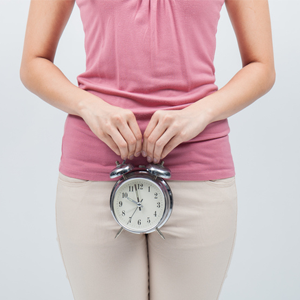
In a perfect world, your period would be but a blip on your radar – you’d get it at the same time each month, be just slightly uncomfortable for a week, tops, and then go about the rest of your 21 days unbothered and period-free.
But a perfect world, this is not (as if you needed that reminder); periods can be unpredictable and messy at best, and totally mind-boggling and life-altering at worst. Even more: They’re different for all women, so the concept of “normal” goes out the window.
That’s why it’s so important to know what’s normal for you – and the first part of that is knowing what is going on down there to begin with. So, it’s time to test your knowledge and maybe (definitely) learn a few things
Let’s start with something that seems to stump everyone: Can you get pregnant on your period?
Answer: It’s unlikely that you’ll get pregnant after having sex on your period, but it’s not totally impossible. Theoretically, if you ovulate within days of having unprotected sex, there’s a chance that sperm (which can survive in the vagina for up to five days) will hook up with an egg and, well, you know the rest.
Read more: 6 times your period blood looks different – and what it means about your health
How long can (or should you) leave a tampon in?
Answer: Unless you want to up your chances of getting toxic shock syndrome (TSS), you need to change that thing at least every eight hours, says Dr Diana Hoppe, a gynae based in Encinitas, California. True, TSS is super rare, but if you have your period, can’t remember the last time you changed your tampon and start feeling any flu-like symptoms (fever, vomiting, diarrhoea, rash), get to the ER as soon as possible.
Is it safe to use birth control to skip your period?
Answer: That’s actually a trick question. That blood you see during your week of sugar (or placebo) pills isn’t actually a period at all – it’s actually a hormone withdrawal bleed, says Dr Lauren Streicher, associate clinical professor of obstetrics and gynaecology at Northwestern University’s Feinberg School of Medicine and author of SexRx. So you’re already skipping your period by taking birth control. But yes, you can skip that placebo week if you want to forego the faux flow, Dr Streicher says.
Here’s a tricky one: Does your period mark the beginning or the end of your menstrual cycle?
Answer: The first day of your period is also day one of your 28-day menstrual cycle. That lasts for about four to eight days; about a week later, on day 14-ish, a woman begins ovulating (that’s when you’re most likely to get pregnant). On days 15 to 24, the newly released egg starts travelling down the fallopian tubes to the uterus, where, if it’s not fertilised by day 28, it breaks apart and leaves the body (along with your built-up uterine lining). Then you’re back at day one.
Read more: How to tell the difference between period blood and spotting
Is it normal to see blood clots in your period blood?
Answer: Not every woman gets blood clots during her period, but it’s not unusual to see a few, says Susan Wysocki, a nurse practitioner and board member of the American Sexual Health Association. “Our bodies are engineered in a way that blood, with the help of internal chemicals, clots so that we don’t bleed to death,” she says. Some of those “clots” could also be uterine tissue that wasn’t properly broken down, she adds. But, if you regularly see clots the size of a 20c piece or bigger, it’s time to see a doctor – those could signal a more serious problem like uterine fibroids, hormone-related issues, or other illnesses.
Are awful period cramps (like, ones that keep you home from work or school) a normal part of having a period?
Answer: Some cramping is, unfortunately, to be expected during your period (thanks to prostaglandins – hormone-like substances that trigger uterine muscle contractions to help you shed your lining, per the Mayo Clinic). But super painful cramps that disrupt your life each month may be a sign of something more serious like endometriosis, uterine fibroids, adenomyosis or pelvic inflammatory disease.
Can hanging out with your BFF all the time make your periods sync up?
Answer: There’s no hard-and-fast, yes-or-no answer here, but some research (specifically a 1971 study published in the journal Nature suggests it is possible for women to sync up, thanks to odourless chemicals called pheromones. Another possible reason you can sync up with your BFF: People living in close proximity may have similar diets, exercise routines, sleep/wake cycles and shared stressors that can impact menstruation, says Dr Alyssa Dweck, a gynae at the Mount Kisco Medical Group and author of V Is for Vagina.
Read more: This is the reason why you fart more on your period
Is it true that a missed period always means you’re pregnant?
Answer: Yep, there are tons of reasons you have a late (or missed) period that have nothing to do with something growing inside of you, says Dr Dweck. Those include major weight loss or excessive exercise, stress, a thyroid irregularity, polycystic ovary syndrome (PCOS), your birth control, premature menopause and other chronic illnesses like celiac disease.
This article was originally published on www.womenshealthmag.com
Image credit: iStock

“My dad is overweight, and I can’t get him to work out or eat healthy no matter how hard I try.”
If I’ve heard this once, I’ve heard it … well, a few times. More than once, is my point. It’s usually someone who trains other people for a living, or is otherwise invested in fitness as a career.
The real question is this, “Why do my powers of persuasion end at the front door of my home? Why do complete strangers seek me out, and hang on everything I say, while the people I care about most couldn’t care less?”
“I get this question from students all the time,” says Kathleen Martin Ginis, PhD, a professor of exercise psychology at McMaster University in Hamilton, Ontario. “They want to know how to motivate their parents to be active.”
The answer is complicated.
The first and most important thing to know: “Nagging never seems to work,” Martin Ginis says. The result is often “behavioural reactance” – doing the opposite of what you want. “Nobody likes to be controlled, and that’s one way of regaining control from a person who just won’t let it go.”
Here’s how to persuade without nagging.
The first step is the hardest
A few words about what you’re up against:
According to The Psychology of Exercise, a textbook Martin Ginis wrote with two coauthors, about half of adults get little to no exercise. It starts in their mid-20s and stays about the same until the retirement years, when close to 60% of those 65 and older are inactive.
There are also big differences based on education, income and even race. An affluent, well-educated white guy is going to have more peers who’re fit and active than a black or Latino guy who went straight to work after high school. That could give him more motivation.
On the flip side, the blue-collar guy may not have many friends who work out, so within his own circle, not exercising could be perfectly normal.
That’s why your approach requires both finesse and patience. “I think everybody has a ‘hook’, or a reason to be active, but it can take some time to figure out what it is,” Martin Ginis says. “People won’t do something unless they can see the value in it.”
Read more: Five of the best sneakers to give dad this Father’s Day
For one guy it might be golf; even with a cart, there’s some walking involved, and he doesn’t want to be the only guy who gets winded walking from the cart path to the green. For another it might be travel, and being able to hike or climb stairs or paddle a kayak.

For someone else the hook might be appearance-related. “Maybe he hates his beer gut,” she says.
Once you find the hook, the next step is to understand why he isn’t already doing something about it. A process that seems simple and straightforward to you may look hopelessly complicated to your dad. No middle-aged man wants to walk into a gym and feel like the only newbie.
Even if he was an athlete or a weight-room monster in his youth, a gym can be a bewildering environment if you haven’t been in one for the past decade or two. The equipment, the exercises and even the clientele will look very different.
To take some of the fear away, Martin Ginis suggests investing your own time in the venture. “Doing it together is often the best type of support,” she says. Take a walk or a bike ride, or take him through a couple of workouts at his local gym.
The second step is no picnic either
You may know, as someone who’s been training hard and consistently, that your dad’s goals won’t be easy to achieve. That’s especially true if he’s looking to lose a lot of weight, or to build a noticeable amount of muscle.
But if you frame it that way, you’re going to lose him long before he gets much benefit. The problem, Martin Ginis says, is that you frame the concept with an emphasis on the “work” part of working out. “It creates images of pain, sweat and heavy breathing,” she says.
Those sensations may give you the feedback you want from your training programme. But it’ll probably do the opposite for someone who didn’t want to work out in the first place.
Read more: How to lose the dad bod in 4 weeks!
You need to reframe the idea of a workout so it gives your dad immediate positive reinforcement. A walk outside with someone whose company he enjoys will probably elevate his mood. A light gym workout may give him just enough of a pump to feel better about himself, even if the effect on his gut is negligible.
“It might not fit the Men’s Health idea of ‘working out,’ but it can be a good starting point,” she says. A modest result is still a result and might lead him to pursue something more ambitious on his own.
Conversely, if he refuses to do anything, Martin Ginis suggests an informational approach. Focus on the benefits of exercise without nagging him to get off his butt and do some of it. Small nudges may eventually convince him to try something. And if he tries it, he may like it enough to continue.
Don’t underestimate the old man
Here’s an example.
My own father was both obese and sedentary, and suffered sometimes excruciating back pain. His life seemed so unpleasant that I wanted to be the opposite of him, which helped reinforce my own interest in health and fitness.
But when he got divorced from my mom, he did something I didn’t expect: He started working out. He even paid for my first-ever gym membership, back when I was a recent college grad who could barely afford petrol for my car.
Which means, ironically enough, he helped support my commitment to be nothing like him.
Over the next few years he swam regularly, and even took up racquetball (hey, it was the ’80s). He never looked like a guy who belonged to a health club, much less used it regularly. But working out helped him feel better about himself, and that was enough to keep him going, against all odds.
“I tell my students that exercise has to be the toughest health behaviour to change,” Martin Ginis says. That’s especially true when it’s someone else’s behaviour you’re trying to fix.
You never know what might work for your dad. Just hope it’s not a divorce from your mom.
Lou Schuler is an award-winning journalist and contributing editor to Men’s Health. Check out his book Strong: Nine Workout Programs for Women to Burn Fat, Boost Metabolism, and Build Strength for Life, with coauthor Alwyn Cosgrove.
Read more: 10 subscription boxes your dad will enjoy months after Father’s Day
This article was originally published on www.mh.co.za
Image credit: iStock

Twelve-year-old receives oil for “medical emergency” after it was confiscated, home secretary says.
