Smoking’s hidden gut bacteria trick may lead to new colitis treatments

Researchers led by Hiroshi Ohno at the RIKEN Center for Integrative Medical Sciences (IMS) in Japan have discovered why smoking tobacco helps people suffering from ulcerative colitis, a chronic disease typified by inflammation of the large intestine. Published in the scientific journal Gut, the study shows that smoking produces metabolites that encourage bacteria from the mouth to grow in the large intestines where they trigger an immune response. These findings imply that protection against ulcerative colitis can be achieved through prebiotics like hydroquinone or probiotic therapy with bacteria like Streptococcus mitis, thus eliminating the need to smoke and all the associated risks for other diseases.

Inflammatory bowel disease comes in two main varieties, Crohn’s disease and ulcerative colitis. Although both cause chronic abdominal pain, diarrhea, fatigue and weight loss, their causes and the exact type and location of the inflammation differ. Along with these differences is a mystery that has puzzled doctors and scientists for over 40 years; smoking increases the risk of Crohn’s disease but somehow protects against ulcerative colitis. As both diseases are related to gut inflammation — which is an immune response — and gut immunity depends in part on the types of bacteria in the gut, Ohno and his team at RIKEN IMS set out to investigate whether the differential effects of smoking on these diseases can be explained by gut bacteria.

The researchers used a combination of human clinical data and experiments with mice to reach their conclusions. Among those with ulcerative colitis, they found that smokers had certain bacteria usually found in the mouth, such as Streptococcus, growing in the gut, specifically in the colonic mucosa that cover the inner lining of the intestines. This phenomenon did not occur in ex-smokers. Thus, while these bacteria normally pass all the way through the digestive system as we swallow saliva throughout the day, smoking somehow allows them to settle down in the gut mucosa.

The next question was why? The researchers also examined gut metabolites — small substances produced in the gut when food is broken down and processed by the body and gut bacteria. They found that levels of several gut metabolites were higher in smokers with ulcerative colitis than in ex-smokers with colitis. In mice, the researchers found that one of these metabolites, called hydroquinone, promoted the growth of Streptococcus in the gut mucosa. So, smoking-related metabolites like hydroquinone allow mouth bacteria like Streptococcus to flourish in the mucus layer that covers the inner lining of the intestines. But how do these bacteria help reduce inflammation? And why don’t they help in Crohn’s disease?

The researchers then went back to the oral bacteria that they had discovered was growing in the gut mucosa of smokers with ulcerative colitis, and isolated 10 strains from the saliva of smokers. When they treated mouse models of Crohn’s disease and ulcerative colitis with each of these 10 strains for five days, they found that giving the mice Streptococcusmitis had almost the same effect as smoking. Inflammation was reduced in mice with ulcerative colitis and exacerbated in mice with Crohn’s disease.

Analysis showed that S. mitis triggered the emergence of helper Th1 cells, which are an important part of the gut’s immune response to invaders. In Crohn’s disease this likely worsens the condition because the original inflammation is actually caused by these same helper Th1 cells. But in colitis, the Th1 cells fight against an initial Th2-immune response, and this ends up reducing inflammation.

As smoking poses high risks for cancer, heart disease, and many other illnesses, it is not a sustainable treatment for ulcerative colitis. “Our results indicate the relocation of bacteria from the mouth to the gut, particularly those of the Streptococcus genus, and the subsequent immune response in the gut, is the mechanism through which smoking helps protect against the disease,” says Ohno. “Logically, direct treatment with this kind of bacteria, or indirect treatment with hydroquinone, is thus likely to mimic the beneficial effects of smoking but avoid all the negative effects.”


Share Button

Forgotten royal warship sunk 500 years ago reveals surprising secrets

Lund University archaeologists have revealed details of late medieval artillery from the wreck of the royal Danish-Norwegian flagship, Gribshunden. The shipwreck is the only known example of its kind from the medieval period — as both ship and weapons are nearly identical to those of the early Spanish and Portuguese explorers. The new study tells the story of how early modern maritime adventurers were equipped to start the process of dominance and colonisation across the world.

“Diving on this late medieval royal shipwreck is of course exciting. However, the greatest satisfaction is when we can actually put the pieces of the puzzle together later on; combining Martin’s castle expertise with Kay’s deep understanding of artillery,” explains Brendan Foley, the marine archeologist behind the study, who worked closely with fellow LU archaeologist Martin Hansson and medieval artillery expert Kay Douglas Smith.

Gribshunden, the flagship of the Danish-Norwegian King Hans, sank mysteriously in 1495 off the coast of Ronneby, Sweden. The wreck is internationally significant as the world’s best-preserved ship from the Age of Exploration — a proxy for the vessels of Christopher Columbus and Vasco da Gama.

Ocean-going ships like Gribshunden and the artillery they carried were critical technologies for European explorers after 1492. The voyages to America and into the Indian Ocean via the Cape of Good Hope led to European colonization around the world. Gribshunden is a rare archaeological resource, as it is the most complete example yet discovered of a late medieval carvel warship.

The ship carried 50 or more small calibre guns firing lead shot with an iron core. They were intended for anti-personnel use at close range, with tactics designed to injure or kill the enemy ships’ personnel, followed by boarding to capture the vessel. Led by Lund University Professor Nicolo Dell’Unto, the Lund University team recreated the guns from 3D models of the artifacts

A Danish ‘floating castle’

Gribshunden was built near Rotterdam between 1483-84. King Hans of Denmark and Norway had taken possession of the ship by spring 1486. The high cost of building and equipping these ships meant Gribshunden probably absorbed about 8% of the Danish national budget in 1485.

Hans utilized his flagship differently from other monarchs; he personally sailed on it frequently, using it not for exploration, but to solidify his grasp on his kingdom. It was his floating castle, enabling royal travel to Sweden and all around the Danish realm including Gotland and especially Norway. The king used this vessel in ways similar to a terrestrial royal fortification. This included several soft power functions: economic, diplomatic, social, cultural, and administrative. Underpinning all of these was the obvious hard power of the ship’s martial purpose embodied by the guns and other weapons carried aboard.

Evidence of explosion

Gribshunden served the crown for a decade before sinking while the king was en route from Copenhagen to a political summit in Sweden, where he expected to unify the entire Nordic region in a new Kalmar Union. Historical documents including eyewitness accounts relate that while Hans was ashore in Ronneby, an explosion and fire claimed the ship while it was anchored off the town.

Among the 22-lead artillery shots from Gribshunden, several are flattened on one or two sides. This may be a result of the explosion that sank the vessel. Shot stored in the hold near the gunpowder ricocheted inside the ship.

No Nordic expansion into North America

So, given the existence of these warships, why didn’t Denmark compete in expanding to the Americas? Denmark and Norway shared the long Viking and medieval Nordic history of exploration and settlement in the west, with colonies in Iceland and Greenland, and settlements in North America. Coupled with adoption of this new enabling technology, Hans might have successfully competed with the Iberian rulers in global exploration and expansion to the Americas.

However, Hans’ primary concern was consolidating rule over the Baltic region. In pursuit of that goal, Hans himself sailed on Gribshunden into the Atlantic on several royal visits, and to Kalmar on the ship’s final voyage.

One reason for Denmark’s inattention to the Americas might have been a 1493 papal bull signed by Pope Alexander VI. This granted Spain rights to the Americas, and a treaty between Spain and Portugal ceded the Indian Ocean to the latter. Prior to the Reformation, the threat of excommunication for ignoring the papal ‘Inter Caetera’ was very real.

Summary of the publication:

  • Presents the artillery of a well-preserved late medieval Danish-Norwegian carvel warship, Gribshunden
  • Of its original 50 or more guns, elements of 11 have been recovered and digitally recreated, and more remain on the wreck
  • Provides insights into the development of shipboard artillery in the late 15th century

More about the study:

The study was written by archaeologists Brendan Foley and Martin Hansson, with English medieval artillery expert Kay Douglas Smith. The project is conducted in collaboration with Blekinge Museum, Vikingeskibsmueet, and Ronneby municipality. The research was funded by grants from the Swedish Research Council (Vetenskapsrådet), Crafoordska Stifltelsen, Huckleberry Foundation (USA), and with support from Blekinge Museum and the Lund University Department of Archaeology and Ancient History.

The Gribshunden artillery artifacts are exhibited and curated at the Blekinge Museum facility in Rosenholm, with select artifacts on temporary display in Kallvattenkuren in Ronneby, and in Museet for Søfart in Helsingør, Denmark. Plans are underway to create a dedicated Gribshunden museum in Ronneby, where the artillery and other objects from the wreck may ultimately find a permanent home.

Share Button

Ambulance workers arrested after six people die

Two ambulance workers have been arrested over the deaths of six adults, Wiltshire Police have said.

Share Button

‘Shocking’ pharmacy chain should be shut down – MP

Some Jhoots pharmacies are accused of not paying staff, as patients face closures and low stock.

Share Button

Scientists just found the hidden cosmic fingerprints of dark matter

A Rutgers-led team of scientists has uncovered evidence of how galaxies expand by tracing the invisible scaffolding of the universe created by a mysterious substance known as dark matter.

In a newly published study in Astrophysical Journal Letters, researchers used what they said are the largest-ever samples of special galaxies called Lyman-alpha emitters to study how galaxies clumped together over billions of years. In doing so, they gained an improved understanding of how galaxies relate to the surrounding dark matter and how they evolve over time.

“Analyzing these fingerprints gives us insight into the mass of dark matter surrounding the galaxies,” said Eric Gawiser, a Distinguished Professor with the Department of Physics and Astronomy in the Rutgers School of Arts and Sciences and an author of the study. “The dark matter masses revealed by this study are consistent with the idea that Lyman-alpha emitting galaxies evolved into present-day galaxies like our own Milky Way.”

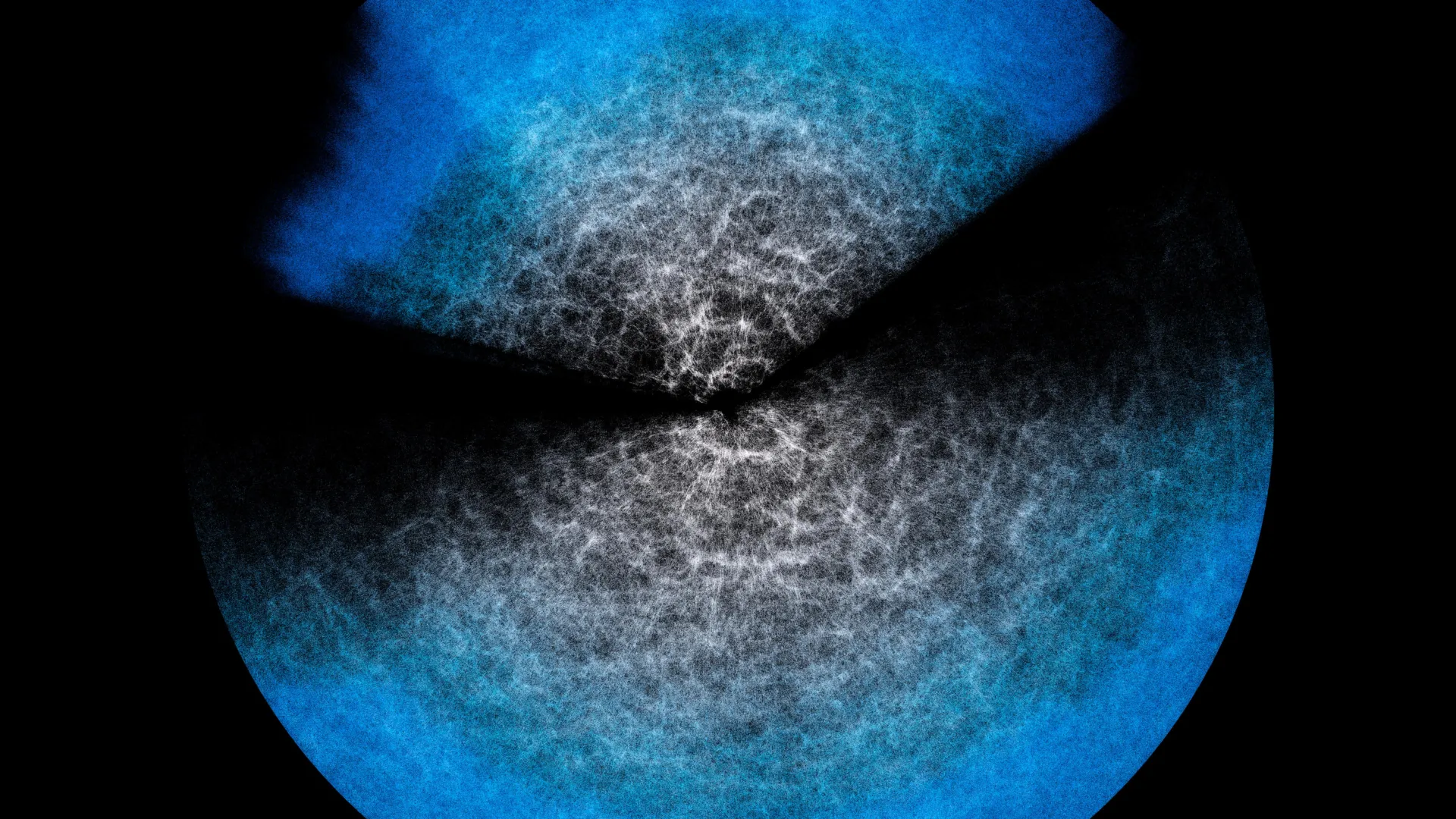
The analysis, which assessed wide-field images across three different eras of the universe’s history shortly after the Big Bang, revealed distinct patterns, akin to cosmic fingerprints. These patterns point to where dark matter is most concentrated, the researchers said.

Dark matter, a mysterious substance that doesn’t emit light or energy, cannot be seen, but makes up most of the matter in the universe, according to scientists. They know dark matter exists because its gravity affects how galaxies move and how these vast cosmic systems are arranged in space.

The study, led by Rutgers doctoral student Dani Herrera, used data from the ODIN (One-hundred-square-degree DECam Imaging in Narrowbands) survey, which is a large astronomical project designed to analyze more than 100,000 Lyman-alpha emitting galaxies.

The researchers focused on data taken from a region of the sky known as the Cosmic Evolution Survey Deep Field (COSMOS), in one of the largest deep-sky surveys ever conducted. Looking deep into space and into the distant past, they viewed three time periods, some 2.8 billion, 2.1 billion and 1.4 billion years after the Big Bang. During these periods, Lyman-alpha emitter galaxies were young and actively forming stars, making them ideal markers for study. They also contain hydrogen gas that emits a special glow, which allows scientists to discover large numbers of them in the distant universe.

“We wanted to find the dark matter whose gravity drives galaxies to merge and grow,” Herrera said. “Understanding where it is and how it has evolved helps us understand how the universe itself has evolved.”

Dark matter plays a crucial role in galaxy formation by acting as a gravitational “glue” that helps pull gas together to form galaxies, Herrera said. Its invisible mass creates deep wells in space where galaxies can grow, merge and evolve, forming the large-scale structure of the universe.

“We used the clumpiness of these galaxies to identify where the dark matter was densest,” Gawiser said. “Visualizing that with a contour map, much the way that a hiking map shows elevations, lets us observe the ‘fingerprints’ of dark matter in the distant universe.”

One result stood out. Three percent to 7% of the dense regions of dark matter capable of hosting galaxies contain Lyman-alpha emitting galaxies, they found. This means that Lyman-alpha emitting galaxies represent a small percentage of the galaxies forming where the dark matter is densest. The low percentage hints that the galaxies were observed during a short-lived phase, glowing in Lyman-alpha light for tens to hundreds of millions of years.

To uncover these results, the researchers used a technique called clustering which measures how galaxies are grouped compared with random distributions. They calculated the angular correlation function, a method of counting pairs of galaxies.

This research, the scientists said, not only deepens understanding of galaxy evolution but also helps scientists refine models of the universe’s structure. As the ODIN survey continues, future studies will expand to more galaxies, offering a more complete view of the cosmic web, they said.

“While invisible to our telescopes, dark matter shapes the universe through interactions with visible material,” Gawiser said. “While some try to understand what it is, others like this research team try to understand where it is and what that implies about the evolution of the universe.”

Share Button

Cosmic simulations that once needed supercomputers now run on a laptop

If you think a galaxy is big, compare it to the size of the Universe: it’s just a tiny dot which, together with a huge number of other tiny dots, forms clusters that aggregate into superclusters, which in turn weave into filaments threaded with voids — an immense 3D skeleton of our Universe.

If that gives you vertigo and you’re wondering how one can understand or even “see” something so vast, the answer is: it isn’t easy. Scientists combine the physics of the Universe with data from astronomical instruments and build theoretical models, such as EFTofLSS (Effective Field Theory of Large-Scale Structure). Fed with observations, these models describe the “cosmic web” statistically and allow its key parameters to be estimated.

Models like EFTofLSS, however, demand a lot of time and computing resources. Since the astronomical datasets at our disposal are growing exponentially, we need ways to lighten the analysis without losing precision. This is why emulators exist: they “imitate” how the models respond, but operate much faster.

Since this is a kind of “shortcut,” what’s the risk of losing accuracy? An international team including, among others, INAF (Italy), The University of Parma (Italy) and the University of Waterloo (Canada) has published in the Journal of Cosmology and Astroparticle Physics (JCAP) a study testing the emulator Effort.jl, which they designed. It shows that Effort.jl delivers essentially the same correctness as the model it imitates — sometimes even finer detail — while running in minutes on a standard laptop instead of a supercomputer.

“Imagine wanting to study the contents of a glass of water at the level of its microscopic components, the individual atoms, or even smaller: in theory you can. But if we wanted to describe in detail what happens when the water moves, the explosive growth of the required calculations makes it practically impossible,” explains Marco Bonici, a researcher at the University of Waterloo and first author of the study. “However, you can encode certain properties at the microscopic level and see their effect at the macroscopic level, namely the movement of the fluid in the glass. This is what an effective field theory does, that is, a model like EFTofLSS, where the water in my example is the Universe on very large scales and the microscopic components are small-scale physical processes.”

The theoretical model statistically explains the structure that gives rise to the data collected: the astronomical observations are fed to the code, which computes a “prediction.” But this requires time and substantial compute. Given today’s data volume — and what is expected from surveys just begun or coming soon (such as DESI, which has already released its first batch of data, and Euclid) — it’s not practical to do this exhaustively every time.

“This is why we now turn to emulators like ours, which can drastically cut time and resources,” Bonici continues. An emulator essentially mimics what the model does: its core is a neural network that learns to associate the input parameters with the model’s already-computed predictions. The network is trained on the model’s outputs and, after training, can generalize to combinations of parameters it hasn’t seen. The emulator doesn’t “understand” the physics itself: it knows the theoretical model’s responses very well and can anticipate what it would output for a new input. Effort.jl’s originality is that it further reduces the training phase by building into the algorithm knowledge we already have about how predictions change when parameters change: instead of making the network “re-learn” these, it uses them from the start. Effort.jl also uses gradients — i.e., “how much and in which direction” predictions change if you tweak a parameter by a tiny amount — another element that helps the emulator learn from far fewer examples, cutting compute needs and allowing it to run on smaller machines.

A tool like this needs extensive validation: if the emulator doesn’t know the physics, how sure are we that its shortcut yields correct answers (i.e., the same ones the model would give)? The newly published study answers exactly this, showing that Effort.jl’s accuracy — on both simulated and real data — is in close agreement with the model. “And in some cases, where with the model you have to trim part of the analysis to speed things up, with Effort.jl we were able to include those missing pieces as well,” Bonici concludes. Effort.jl thus emerges as a valuable ally for analyzing upcoming data releases from experiments like DESI and Euclid, which promise to greatly deepen our knowledge of the Universe on large scales.

The study “Effort.jl: a fast and differentiable emulator for the Effective Field Theory of the Large Scale Structure of the Universe” by Marco Bonici, Guido D’Amico, Julien Bel and Carmelita Carbone is available in the Journal of Cosmology and Astroparticle Physics (JCAP).

Share Button

Doctor sexual misconduct hearings too lenient, review suggests

Sanctions for UK doctors guilty of sexual misconduct are too lenient in around a quarter of cases, reports suggest.

Share Button

Trust apologises for treating A&E patients in cafe

Using the cafe to treat patients “will not be allowed to happen again”, the trust’s boss says.

Share Button

A soft play designed for autistic kids

The play area also has a calming room for children to relax in.

Share Button

Scientists build micromotors smaller than a human hair

Researchers at the University of Gothenburg have made light-powered gears on a micrometer scale. This paves the way for the smallest on-chip motors in history, which can fit inside a strand of hair.

Gears are everywhere – from clocks and cars to robots and wind turbines. For more than 30 years, researchers have been trying to create even smaller gears in order to construct micro-engines. But progress stalled at 0.1 millimeters, as it was not possible to build the drive trains needed to make them move any smaller.

Researchers from Gothenburg University, among others, have now broken through this barrier by ditching traditional mechanical drive trains and instead using laser light to set the gears in motion directly.

Gears powered by light

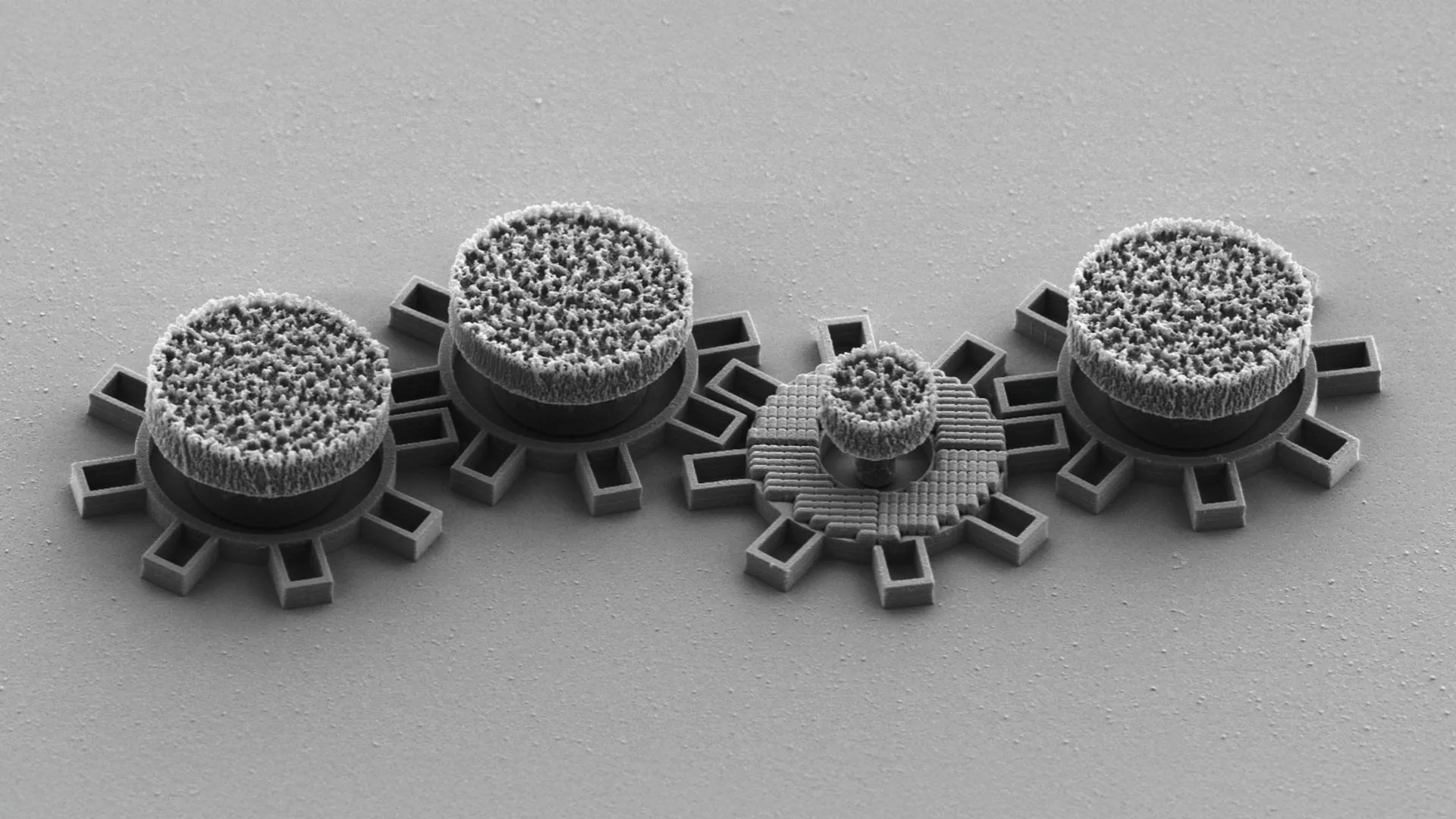
In their new study, the researchers shows that microscopic machines can be driven by optical metamaterials – small, patterned structures that can capture and control light on a nanoscale. Using traditional lithography, gears with an optical metamaterial are manufactured with silicon directly on a microchip, with the gear having a diameter of a few tens of micrometers. By shining a laser on the metamaterial, the researchers can make the gear wheel spin. The intensity of the laser light controls the speed, and it is also possible to change the direction of the gear wheel by changing the polarization of the light.

The researchers are thus close to creating micromotors.

A new way of thinking

“We have built a gear train in which a light-driven gear sets the entire chain in motion. The gears can also convert rotation into linear motion, perform periodic movements and control microscopic mirrors to deflect light,” says the study’s first author, Gan Wang, a researcher in soft matter physics at the University of Gothenburg.

The ability to integrate such machines directly onto a chip and drive them with light opens up entirely new possibilities. Since laser light does not require any fixed contact with the machine and is easy to control, the micromotor can be scaled up to complex microsystems.

“This is a fundamentally new way of thinking about mechanics on a microscale. By replacing bulky couplings with light, we can finally overcome the size barrier,” says Gan Wang.

Cell size

With these advances, researchers are beginning to imagine micro- and nanomachines that can control light, manipulate small particles or be integrated into future lab-on-a-chip systems. A gear wheel can be as small as 16-20 micrometers, and there are human cells of that size. Medicine is a field that is within reach, believes Gan Wang.

“We can use the new micromotors as pumps inside the human body, for example to regulate various flows. I am also looking at how they function as valves that open and close.”

Share Button