Allergen in red meat linked to heart disease

A team of researchers says it has linked sensitivity to an allergen in red meat to the buildup of plaque in the arteries of the heart. While high saturated fat levels in red meat have long been known to contribute to heart disease for people in general, the new finding suggests that a subgroup of the population may be at heightened risk for a different reason — a food allergen. The study, which is supported by the National Heart, Lung, and Blood Institute, part of the National Institutes of Health, appears in Arteriosclerosis, Thrombosis, and Vascular Biology (ATVB), a peer-reviewed journal of the American Heart Association.

“This novel finding from a small group of subjects from Virginia raises the intriguing possibility that allergy to red meat may be an underrecognized factor in heart disease,” said study leader Coleen McNamara, M.D., a professor of medicine in the Cardiovascular Research Center of the University of Virginia Health System, Charlottesville. “These preliminary findings underscore the need for further clinical studies in larger populations from diverse geographic regions and additional laboratory work.”

The number of people with red meat allergies in the United States is unclear, but researchers estimate that it may be 1 percent of the population in some areas. The number of people who develop blood antibodies to the red meat allergen without having full-blown symptoms is much higher — as much as 20 percent of the population in some areas, the researchers say.

Only in recent years did scientists identify the main allergen in red meat, called galactose-α-1,3-galactose, or alpha-Gal, a type of complex sugar. They also found that a tick — the Lone Star tick — sensitizes people to this allergen when it bites them. That is why red meat allergies tend to be more common where these ticks are more prevalent, such as the Southeastern United States, but also extending to other areas, including Long Island, New York.

Researchers have suspected for some time that allergens can trigger certain immunological changes that might be associated with plaque buildup and artery blockages, but no one had identified a specific substance that is responsible for this effect. In the current study, researchers showed for the first time that a specific blood marker for red meat allergy was associated with higher levels of arterial plaque, or fatty deposits on the inner lining of the arteries. The blood marker they identified is a type of antibody (immunoglobulin or IgE) that is specific to the alpha-Gal allergen.

To identify this blood marker, the researchers analyzed blood samples from 118 adults and detected antibodies to alpha-Gal, indicating sensitivity to red meat, in 26 percent of them. Using an imaging procedure, the researchers found that the quantity of plaque was 30 percent higher in the alpha-Gal sensitized patients than in the non-sensitized patients. These plaques, a hallmark of atherosclerosis (hardening of the arteries), also tended to be more structurally unstable, which means that they have an increased likelihood of causing heart attack and stroke.

The evidence for a link between red meat allergens and coronary artery disease is still preliminary, the researchers noted, so they plan to conduct detailed animal and human studies to confirm their initial findings. Currently, the only treatment for red meat allergy once it is diagnosed is strict avoidance of red meat.

“While more studies are needed, the current work provides a potential new approach or target for preventing or treating heart disease in a subgroup of people who are sensitized to red meat,” said Ahmed Hasan, M.D., Ph.D., a medical officer and program director in NHLBI’s Atherothrombosis & Coronary Artery Disease Branch.

For now, consumers are encouraged to follow current recommendations for a heart-healthy lifestyle. This includes adapting a healthy diet, such as eating plenty of vegetables, fruits, whole grains, and other heart-healthy foods. Lean red meats can be part of a heart-healthy diet for those who are not allergic. Other heart-healthy lifestyle changes also include aiming for a healthy weight, managing stress, getting more exercise, and quitting smoking.

In addition to funding from NHLBI, this study was also funded by the National Institute of Allergy and Infectious Diseases (NIAID). NIH funding support includes the following grants: (KO8-AI085190, K23-HL093118, RO1-AI 20565, PO1-HL55798, RO1-HL136098-01, RO1-HL107490)

Share Button

Immigration rules to be relaxed for non-EU doctors and nurses

There is currently a cap on the number of non-EU doctors and nurses that can come to the UK.

Share Button

Health24.com | This is how easy it is to donate blood

Donating blood is one of the few ways you can help save the lives of others, especially with stocks regularly running low.

According to the South African National Blood Service, blood stocks are running critically low, especially O Positive, and O Negative, which have 2.5 and 2.6 days worth of stock left, respectively.

Many people shy away at the thought of needles, but if you look at the broader picture, the benefits far outweigh the discomfort of a tiny needle prick.

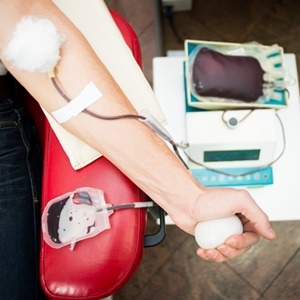
Sister Kim Strutt, clinic co-ordinator of the Western Province Blood Transfusion Services (WPBTS), details the process of an ordinary blood donation.

Step 1:

The first step is filling out a confidential questionnaire.

The questionnaire helps give the nurses at hand a general idea about your health. Your answers determine whether the coordinators should proceed with the blood donation or not. This questionnaire protects you and the recipient from any possible harm.

Step 2:

Once the questionnaire is completed and accepted, a finger-prick test is done, and your haemoglobin levels (iron) are checked. According to Sister Strutt, “This needs to be 12.5 for women and 13.5 for men.”

If your iron levels are too low, you may be suffering from an iron deficiency or anaemia. If your iron levels are too low, you will not be able to donate. (Donating blood is a great way to gain insight into your health.)

Step 3:

If your haemoglobin levels are fine, your blood pressure is then measured. “If all is good to go, blood donation process goes ahead, taking about 10 minutes to complete,” says Sister Strutt.

Step 4:

According to a study by the American Psychological Association, the act of donating blood is one of benevolence, formerly described as an act of altruism. Once your donation is complete, you will be rewarded with a cookie and some juice. You may experience some lightheadedness or fatigue after the donation, caused by a loss of haemoglobin. The refreshments help to counter this. 

What happens next? 

One unit may seem very little, but when a unit is processed and divided into compartments, it can go a long way. Blood compartments can be divided into platelet concentrates, red blood concentrates, cryoprecipitate and plasma.

According to Dr Phillip DeChristopher from Loyola University, “If blood has a high viscosity, or resistance to flow, it will flow like molasses.” By donating, your blood will be able to flow better, apply less pressure on your arteries and thus reduce arterial damage. It also helps to regulate the iron levels within your blood and protect your arteries from damage.

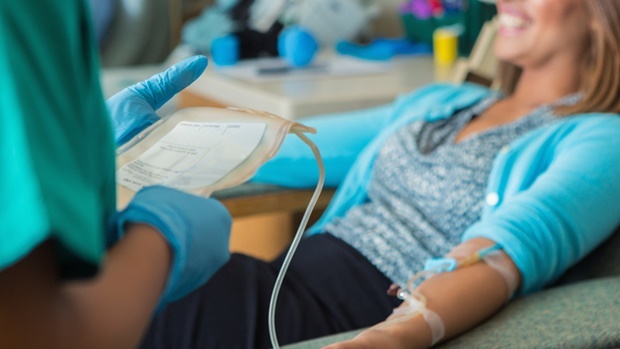
When you donate blood, you only donate 475ml, which equals one unit. You’re only allowed to donate one unit every 56 days. 

Image credit: iStock

Share Button

Health24.com | Lifesavers: Meet two of SA’s most prolific blood donors

Meet Mike O’Neill and David Schreuder, two of South Africa’s true heroes, men who have saved countless lives with their blood donations. 

According to the South African National Blood Service (SANBS), O’Neill and Schreuder are two of the country’s most prolific blood donors.  

When it all began

For O’Neill (64), it started out as a one-time blood donation as a teenager, but developed into a lifelong commitment to helping others. He has donated an amazing 725 times, and donating blood was a way for him to make a difference.

“I donated my first unit of blood on my 18th birthday, which was the minimum age at the time. My older brother had donated a few times and I just thought that it would be a good way to make a difference to someone,” he told Health24.

David Schreuder (66) is a regular blood donor who will be making his 674th donation this Friday in Loop Street, Pietermaritzburg. When asked about his experience the first time he donated blood, Schreuder said, “I was 18-years-old when I started giving blood, and it’s a bit of a funny story.

“When I started work, I lived in a hostel in Durban. The night the blood bank came around, they said to me, ‘Look, wouldn’t you mind giving a donation of blood?’ and they said that I could have a pint of beer if I gave blood. I said, ‘My dear, listen, I don’t drink beer, but I will give you a pint of blood.'”

Laughing at the recollection, Schreuder went on to explain that, in those days, it was “a pint for a pint”.

Continuing to donate 

For Schreuder and O’Neill, donating blood has become a part of who they are. According to Schreuder, “It’s part of me; when you’re sick and told you can’t give blood, you actually feel wrong that you don’t get to do it. I was off for six months from September last year until about February or March this year, and I felt lost when I didn’t donate. It’s just so much a part of me.” He added, “Donating blood is so important; you’re saving lives.”

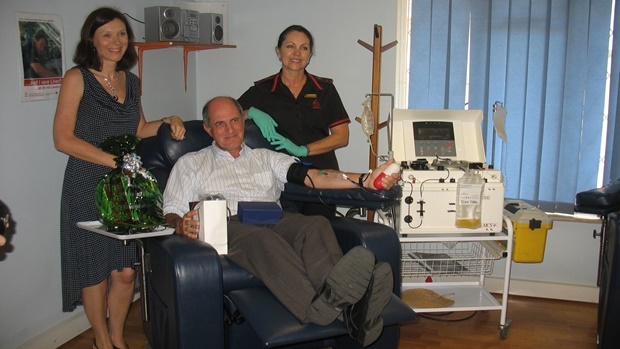
The same enthusiasm is felt by O’Neill. “Donating blood just became a good habit. When I joined the plasma donation panel, we used to make an appointment regularly after work every two weeks and meet with the same group of donors at the donor centre. Every time someone hit a milestone, they would bring in a plate of snacks, which would be consumed with enthusiasm while we sat in the chairs.

“Donating was not a negative thing at all, even though we were ‘plugged in’ for around an hour and a half every time. Even now, as a whole blood donor, I feel very comfortable going to the donor centre and am always made to feel welcome.”

Routines before and after donating blood 

When asked about their routines before donating blood, O’Neill said, “I need to watch what medication I take, but my day is pretty normal. As long as I eat something before I donate and also ensure that I have had plenty of liquids, there are no problems. It is really important to be properly hydrated to ensure that your body can cope with the loss of fluid.

“I normally have breakfast as I go early in the morning, and that is a cup of coffee and a couple of slices of toast. I don’t eat heavy,” added Schreuder.

The WP Blood Transfusion Service (WPBTS) stresses that it is “important to eat a substantial meal three to four hours before heading off to the donation clinic, as well as increasing your fluid intake on the day, both before and after donating blood. Increasing your liquid intake helps to replace the blood volume that has been lost.”

How you can donate today

O’Neill revealed that while some of his family members are unable to donate for health reasons, he still challenges others to do so. “Ironically, my wife and daughter have medical reasons why they can’t donate, but my son was quite reliable while living in South Africa.

“When I was teaching, I started up a donor clinic at the Marist school where I taught. I always challenged the learners to collectively chase my personal donations. Needless to say, they caught up within a few years. I occasionally bump in to past pupils at the regional donor clinic.”

When asked why he thinks people don’t donate blood as often as they should, O’Neill had this to say, “The most common reason given by people for not donating is fear of the needle. While some of these fears are valid, I find that it is most often fear of the unknown that is the problem.

“I sometimes ask if they would take a needle if they needed blood, but ultimately it is their choice and I can only hope that my example may influence them to try it. It also seems to make a difference when people are made aware of what a blood donation can be used for and how many lives can be changed by just one donation.”

With a single donation of blood, 475ml to be exact, you could save up to three lives and it won’t cost you a cent. However, before donating blood, make sure you meet the basic donor criteria. 

Image credits: iStock; Mike O’Neill  

Share Button

‘Women spend more time planning holiday than pregnancy’

A healthy pregnancy requires planning in advance – but some women leave it all a bit late, a charity says.

Share Button

Unfit in middle age: Are you doomed?

How bad is a lack of fitness in middle age and is it condemning you to bad health in the future?

Share Button

Scientists discover a new way to find mass extinctions

During the history of the Earth, there were many mass extinctions, when huge numbers of species died out. They are usually easy to identify because of the sudden extinctions, followed by a gap, and then the recovery of life.

A new mass extinction has been identified during the Triassic period, some 232 million years ago — called the Carnian event. It was less easy to identify because the different sites around the world were hard to date and cross-match. But it was important because it marked the likely trigger for the explosive takeover of the Earth by dinosaurs.

Using a new statistical method, a team from the University of Bristol, has pinpointed the event.

The statistical method is called breakpoint analysis. Counts of species from many samples through the Triassic were compared, and a straight line was fitted to best explain changes in the proportions of dinosaurs to other beasts. To improve the fit of the line, a model was used that allowed for one break, but the position of the break was not specified.

Professor Mike Benton from the University of Bristol’s School of Earth Sciences led the project. He said: “This method is great. We know where we think the change occurred, but we don’t tell the computer.

“We let it crunch the numbers and identify the break point, or the time when one kind of ecosystem ended, and the new one began. In this case, it landed precisely on the point in the Carnian when major environmental changes triggered the extinctions.”

Massimo Bernardi, a co-author of the report, and now curator at MUSE — Science Museum, Trento, Italy, added: “This event had been identified before. This was a time of huge volcanic eruptions off modern Canada, and profound climate changes. The gases from the volcanoes caused long-term shuttling between dry and wet conditions.”

The climate changes had been noted back in 1990, and the dry-wet-dry cycle caused a major change in plants, from succulent wet-loving seed ferns to conifers, which are better adapted to dry conditions.

Cormac Kinsella, another collaborator, and now at the University of Amsterdam, said: “We built a database of 47 faunas from different parts of the world, including 7,773 specimens of reptiles.

“Half way through the Carnian there was a sudden shift in the composition of ecosystems, from comprising a mixed assemblage, to being absolutely dominated by dinosaurs and their relatives.”

This new discovery adds to growing evidence for a previously undetected mass extinction, during a time of general upheaval in evolution. There had been a huge mass extinction 252 million years ago, and life was recovering fitfully from that crisis, when it was hit again at 232 million years ago, and then at the end of the Triassic, 201 million years ago.

The Carnian event was important in heralding the explosion of dinosaurs onto the scene, but it also marked the beginning of many modern groups, such as turtles, crocodiles, lizards, and mammals.

Story Source:

Materials provided by University of Bristol. Note: Content may be edited for style and length.

Share Button

Painted lady’s roundtrip migratory flight is the longest recorded in butterflies

Previously known to migrate from Europe to the Afrotropics during the autumn, the fate of this butterfly species and its offspring remained unknown.

Researchers were now able to demonstrate that painted lady butterflies return from the Afrotropical region to recolonise the Mediterranean in early spring, travelling an annual distance of 12,000 km across the Sahara Desert.

While the Palearctic-African migratory circuit is typically associated with birds, scientists from the Institute of Evolutionary Biology (IBE), a joint research centre of the Spanish National Research Council (CSIC) and Pompeu Fabra University (UPF), in Barcelona, Spain, found that a butterfly species endures annual trans-Saharan circuits like some birds do ?the Painted Lady (Vanessa cardui). Their results were published today in the journal Biology Letters.

This butterfly species travels 12,000 km and crosses the Sahara Desert twice to seasonally exploit resources and favourable climates on both sides of the desert. Few species are known to perform annual long-range trans-Saharan circuits, and that of the painted lady is the longest migratory flight known in butterflies to date.

In a previously published study, the researchers demonstrated that painted lady butterflies migrate from Europe to tropical Africa by the end of summer, crossing the Mediterranean Sea and Sahara Desert.

The fate of these migrants and that of their offspring remained unknown. “Our hypothesis was that the species initiates a reverse northward migration towards Europe in spring, thus completing a regular migratory cycle,” states Roger Vila, one of the authors.

The answer is in the wings

With the aim of confirming this hypothesis, they studied the natal origin of the butterflies that reached the Mediterranean region in early spring. To do so, they analysed the stable hydrogen isotopes of the butterflies sampled in Morocco, Andalusia and Catalonia in Spain, Crete, Egypt and Israel.

An isotope is a form of a chemical element whose atomic nucleus contains a different number of neutrons compared to protons in the nucleus. In water, the proportion of hydrogen and its stable isotope depends on the geographical location. When absorbing water, this proportion is maintained in plants; it later remains in the caterpillars that feed on these plants, and, eventually, in adult butterflies.

By analysing the hydrogen stable isotopes found in the wings of adult butterflies, the researchers could determine where they had developed as caterpillars.

“It is difficult to study the movement of insects by means of observations, marking or radio tracking, since there are millions of individuals and they are very small. This is why finding out where a butterfly grew up before undergoing the metamorphosis by means of stable isotope analysis turns out to be extremely useful. It feels like magic,” says Gerard Talavera, who led the research.

The results show a major proportion of specimens stay in the Afrotropics during winter and that those recolonising the Mediterranean are most probably their offspring. This scenario closes the loop for the Palearctic-African migratory system of Vanessa cardui and shows that the annual distance travelled by the successive generations may reach about 12,000 km, including crossing of the Sahara Desert twice.

Whether the Painted Lady does regular migratory circuits similar to those of the monarch butterfly in North America was a matter of scientific debate. This research reveals the parallelisms in such a unique evolutionary adaptation.

Clément Bataille, professor at the Department of Earth and Environmental Sciences at the University of Ottawa and expert in geochemistry, is co-author of this research.

Story Source:

Materials provided by British Ecological Society. Original written by Sabrina Weiss. Note: Content may be edited for style and length.

Share Button

British mammals’ fight for survival

Almost one in five of British mammal species face a high risk of extinction, according to the first comprehensive review of their populations for more than 20 years launched today by The Mammal Society and Natural England.

The red squirrel, wildcat and the grey long-eared bat are all listed as facing severe threats to their survival.

The review — commissioned by Natural England working in partnership with Scottish Natural Heritage and Natural Resources Wales — also found other mammals such as the hedgehog and water vole have seen their populations decline by up to 66% over the past 20 years.

Climate change, loss of habitat, use of pesticides and road deaths are all putting pressure on some of the best loved and most recognisable of Britain’s 58 terrestrial mammals, whose current status, historical and recent population trends, threats, and future prospects have all been assessed in the review. The work will prioritise conservation actions and also sets an agenda for future research efforts.

Prof Fiona Mathews, Mammal Society Chair and professor of Environmental Biology at the University of Sussex, said: “This is happening on our own doorstep so it falls upon all of us to try and do what we can to ensure that our threatened species do not go the way of the lynx, wolf and elk and disappear from our shores forever.”

The Mammal Society is now calling for more research to be carried out urgently to get a clearer and more accurate picture of Britain’s mammal populations. For many species, including common animals such as rabbits and moles, very little information is available.

Last month, the Society launched a Mammal Mapper app so that any nature lover could record sightings of local mammals using just their smartphone.

Prof Mathews, lead author of the Review of the Population and Conservation Status of British Mammals, said: “The report highlights an urgent requirement for more research to assess population densities in key habitats because at present, uncertainty levels are unacceptably high. It is possible that declines in many species are being overlooked because a lack of robust evidence precludes assessment. There is also an urgent need to quantify precisely the scale of declines in species such as the hedgehog, rabbit, water vole and grey long-eared bat. Effective and evidence-based strategies for mammal conservation and management must be developed before it is too late.”

The report does highlight that some British mammal populations are in more robust health. Five species have increased in numbers in 20 years, and 18 species have increased their geographical range. The otter, polecat, beaver, wild boar are all now found in more locations than they were 20 years ago although it is also notable that many of the ‘success stories’ are species recently introduced to Great Britain, such as the grey squirrel and muntjac deer.

Surprisingly given their importance to both humans and wildlife, there is very little information on species such as brown rats and house mice: their population estimates are around 7 million, and 5 million respectively, but could in reality be much higher or lower.

Natural England Senior Specialist for Mammals, Katherine Walsh, who coordinated the project, said: “This project has significantly improved our understanding of the current status of terrestrial mammals known to breed in Great Britain, which is essential to underpin our efforts to protect them and their habitats. Natural England has been leading the way in efforts to recover these vulnerable species, notably through the ‘Back from the Brink’ project which aims to support the recovery of mammals and other species through habitat improvements across England.”

Natural England have been leading the way in efforts to protect these vulnerable species, they have been working in partnership with a number of expert conservation organisations on the Back from the Brink project which aims to bring more than 20 species back from the brink of extinction. This project will benefit hundreds of species, improving habitats and helping to secure the natural recovery of mammals in Great Britain.

Liz Halliwell, Mammal Ecologist for Natural Resources Wales said: “The project has given us a better understanding of the status of many of the mammals in Wales. It has underlined the importance of having good data for all our mammal species, including some of our most common and widespread. Given the varying patterns of distribution across Britain, understanding area population trends is important.”

Story Source:

Materials provided by University of Sussex. Original written by Neil Vowles. Note: Content may be edited for style and length.

Share Button

Health24.com | Beauty in every stage of life

Defining when exactly someone has reached ‘old age’ these days is a lot more complicated than it used to be in the past. It is very common to find people living very active, healthy lives well into their seventies and even eighties these days. This is because there have been incredible medical treatment breakthroughs as well as research that’s given insight on how to maintain a healthy lifestyle that prolongs overall health. But this is not possible for everyone, particularly when it comes to mental health. For some people who are predisposed through hereditary origins there are very few cures but there are means to still maintain a full life despite the challenges caused by neurological disorders such as Alzheimer’s and dementia.

According to Alzheimers.org, the country’s 2011 census figures reveal that there are approximately 2.2 million people in South Africa with some form of dementia.

This indicates that there is a significant amount of people in our country who suffer from dementia – and this number may be growing.

Dementia does not discriminate

People with dementia will need assistance in their daily lives, especially as the condition progresses. And with the current socio-economic challenges many families cannot afford professional assistance when caring for their parent or family member who has developed dementia.

A study by the University of the Free State, explains that “to date it has been incorrectly assumed that dementia is less prevalent among urban black communities. This assumption is strongly disputed by the findings of the current study, which indicates a preliminary prevalence rate of approximately 6% for adults aged 65 years and older in this population group. Previous estimates for Southern Africa have been set at around 2,1%.”

Support is vital

When we have the loving support of family, friends or carers many challenges can be overcome. In addition to this, is having access to quality products that can assist with making life easier for someone who has dementia.

Incontinence is the loss of the ability to control your bladder and can be the result of various conditions. In certain cases, however, Dementia can cause incontinence, because not being able to remember that you need to go to the bathroom could cause you to be incontinent.  

The management of incontinence is important to the quality of the lifestyle the person can live. Wearing a good quality incontinence product that is also easy to use can bring great relief and comfort.

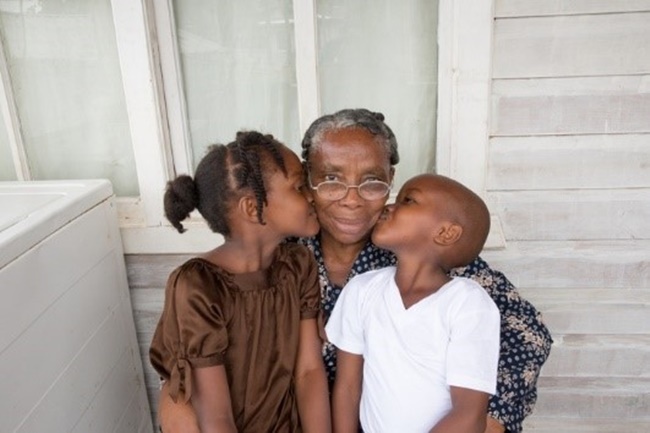
There can be beauty in every stage of life

A young woman named Kelli Taylor tweeted about her parents and their loving marriage. Her mum was diagnosed with early onset dementia when she was only 53 years old.  Her dad has looked after her mum full time.

These are some of the warning signs Alzheimers.org recommend to look out for – visit a medical professional if you or your loved one is experiencing these symptoms:

•          Difficulty performing familiar tasks

•          Problems with finding words in everyday conversation

•          Confusion with time or place

•          Poor or decreased judgment and decision making

•          Problems with calculation and recognising numbers

•          Misplacing things regularly and inability to retrace steps

•          Inability to plan everyday activities

•          Changes in mood, personality and loss of initiative

Images source: iStock and TENA

Share Button