Putting animals in their best light: Some shades of LED lamps threaten wildlife

A new generation of outdoor lights spreading across landscapes require greater scrutiny to reduce harm to wildlife, says a USC-led research group that developed a new tool to help fix the problem.

The team of biologists surveyed select species around the world to determine how the hues of modern light-emitting diode (LED) lamps affect wildlife. They found that blues and whites are worst while yellow, amber and green are more benign. Some creatures, including sea turtles and insects, are especially vulnerable.

The findings, which include the first publicly available database to help developers, designers, and policymakers choose wildlife-friendly lighting colors, appear today in the Journal of Experimental Zoology Part A: Ecological and Integrative Physiology.

“Outdoor environments are changing rapidly and in ways that can impact wildlife species,” said Travis Longcore, lead author of the study and assistant professor of architecture, spatial sciences and biological sciences with the Spatial Sciences Institute at the USC Dornsife College of Letters, Arts and Sciences. “We provide a method to assess the probable consequences of new light sources to keep up with the changing technology.”

Big cities and industrial sites so illuminate night sky now that much of Earth resembles a big, glowing ball. Scientists have spent years studying how light brightness and direction affects wildlife, including migration and attraction, predator-prey relationships and circadian rhythms. The USC team availed that existing ecological data and broke new ground by examining how a range of commercially available LED lights impact species.

LED lights are expected to comprise 69 percent of the global market by 2020, compared to just 9 percent in 2011. They are popular because they have many uses, conserve energy and last longer than other lamps.

To understand the impacts, and find compromise solutions between human and animal needs, the researchers focused on insects, sea turtles, salmon and Newell’s shearwater, a seabird, for which existing data were readily available. They found that the worst nighttime lights are intense blue and white colors — some affect species as much as the brightness of midday sun — and three times more than yellow or green lights designed with wavelengths less disruptive to wildlife.

The research is important for wildlife conservation. For example, loggerhead sea turtle hatchlings, an endangered species, leave beach nests at night and follow artificial light inland to danger instead of skittering to the ocean. Similarly, lights attract migrating juvenile salmon, exposing them to predators. Also, global declines in insects have been linked in part to light pollution, Longcore said. The new research will help people choose lighting to reduce wildlife impacts.

The researchers focused on only four groups of creatures, which have been studied for light responses previously. Future studies will incorporate more species worldwide.

A central component of the USC research includes the first publicly available database showing how about two dozen different types of artificial lighting affect wildlife. The matrix is called “Rapid Assessment of Lamp Spectrum to Quantify Ecological Effects of Light at Night.” Developers, land-use planners and policy makers can use it to choose lighting that balances the needs of nature and people. Today, regulations to limit light direction or intensity typically don’t account for the different hues of LED lights, Longcore said.

“If we don’t provide advice and information to decisionmakers, they will go with the cheapest lighting or lighting that serves only one interest and does not balance other interests,” Longcore said. “We provide a method to assess the probable consequences of new light sources to keep up with the changing technology and wildlife concerns.”

The study authors include Longcore; Airam Rodríguez of the Estación Biológica de Doñana CSIC in Spain; Blair Witherington of the Walt Disney Company’s Animals, Science and Environment program; Jay Penniman of the University of Hawaii at Manoa, Pacific Cooperative Studies Unit; and Lorna and Michael Herf of f.lux Software, LLC.

Story Source:

Materials provided by University of Southern California. Original written by Gary Polakovic. Note: Content may be edited for style and length.

Share Button

Public Health Agency recalls 150 women for cancer test

150 patients are being contacted to have their cervical smear test redone.

Share Button

Bottle feeding is a woman’s right, midwives told

Breast is best for a baby’s health, says the Royal College, but both choices must be respected.

Share Button

Health24.com | ‘I had acne and then stopped drinking milk – this is what happened’

A couple of months ago, on a whim, I decided to stop drinking milk in my coffee. I think I was interested to see if it would help move the scale downwards because I had been stuck on a plateau for ages. So, one morning, I ordered my usual Americano – but this time without milk.

Every morning my order remained the same. I quite enjoy drinking black coffee so I didn’t miss the splash of milk. A few weeks later, I suddenly noticed something interesting happening (hint: nothing to do with the scale). I noticed that my acne was starting to clear up.

I have battled with cystic acne for many years – it improved while I was on the Pill but I stopped using that a couple of years ago and just accepted that my bad skin was part of the Pill-free package. I even tried a three-month course of antibiotics. Because I wasn’t on the Pill, my doctor did not recommend Roaccutane as the risks to an unborn child are dangerous, and I couldn’t take the chance in case of an unplanned pregnancy.

Antibiotics for three months

The good news is my skin did clear up for a bit while on antibiotics. But the bad news is that the antibiotics stained my teeth terribly. When I came off them, my skin remained unblemished for a few weeks until one day I woke up with a huge, painful cyst on my chin. It was downhill from there – I was once again plagued with cystic acne, and it seemed even worse than before. It was painful and unsightly.

Vanity aside, the pain caused by cystic acne is horrific. You see, cystic acne forms deep in your skin, which causes pain and pressure. It never really forms a pimple, so you must wait for it to clear up. At least with a pimple you can pop it to get rid of the pain from the pressure (although, that is never advised because of the risk of spreading infection, which can cause scarring).

A new, milk-free life

I was dumbstruck when I realised that milk may be the cause of years of suffering. I had tried so many things (the Pill, antibiotics and tons different face products) and nothing worked. I never for a second thought that it could be something I was consuming that was aggravating my acne (because we’ve dispelled the myth about chocolate).

Since I’ve stopped drinking milk – I’m not a huge fan of cream and don’t eat much ice cream, so the only milk I had in my diet was in my morning cup of coffee – my skin is a lot clearer. I do still have breakouts but those are usually a sign my period is on the way. And I can handle one or two hormonal spots once a month. Previously, my skin was constantly breaking out.

What science says

Even though I no longer drink milk, I still eat yoghurt and that seems to have zero effect on my acne. I did some digging and was quite surprised at what I found.

Growing research shows that there is definitely a link between acne and milk. According to dermatologist Dr Joshua Zeichner, who is also director of cosmetic and clinical research at Mount Sinai Hospital, that’s because acne is an inflammatory condition. Oil gets trapped and clogs up your pores, allowing bacteria to grow in the follicles. The trapped bacteria cause the inflammation and then acne.

How does milk affect this? Dr Zeichner says the hormones in milk can react with your testosterone to increase the production of sebum (the oily substance that blocks the pores) in your skin, which leads to a breakout. 

Dr Jeremy Fenton of Schweiger Dermatology Group, agrees and told Bustle, “Milk contains hormones, such as oestrogen, which can affect the person who’s drinking it. Dairy has also been shown to stimulate testosterone in those who consume it. Additionally, it may also stimulate the production of other hormones and cell signalling, particularly inflammatory signals, in the body.” 

There is a bit of good news

While milk and ice cream might be the obvious dairy products to put your “do not consume” list, it appears that yoghurt doesn’t seem to have the same effect. This is good news because we do need to include dairy in our diet for calcium. 

According to Dr Whitney Bowe, a board-certified dermatologist in New York City, probiotics found in yoghurt may actually help control your breakouts. She says researchers aren’t sure why but they believe that probiotics may help to calm inflammation. 

(By the way, they still don’t know whether cheese is a trigger for acne, but it doesn’t appear to affect me.)

So, what should you do?

Dr Bowe said in a media release that more clinical research is needed to determine dairy’s impact on the severity of acne but she advises that you speak to a dermatologist if you think one or more dairy products, is aggravating your acne. 

“Given the benefits of calcium and vitamin D – especially in a growing adolescent population – patients who choose to limit or avoid dairy products should supplement their diet with appropriate levels of calcium and vitamin D,” said Dr Bowe.

“Patients can be their own best detectives in determining possible food triggers for acne, and I encourage them to make an appointment with a dermatologist if they have any acne concerns.”

Does something you eat or drink affect your skin? Email mandy.freeman@24.com and share your story.

Image credit: iStock

Share Button

Health24.com | 7 common sinusitis myths you shouldn’t believe

If you are familiar with the sometimes debilitating symptoms of sinusitis, you might know a thing or two about the condition.

Or do you? There are a couple of myths that even die-hard sufferers who’ve seen it all still tend to believe.

Let’s get to the bottom of things:

1. Sinusitis is contagious.

Sinusitis itself is not contagious, but if you catch a viral infection such as a cold or flu, it may lead to sinusitis, according to the Houston Advanced Nose & Sinus Institute. If the source of your sinusitis is a viral infection, you are probably contagious – but this doesn’t mean that the next person will also develop sinusitis.

2. You can easily relieve congestion with nasal spray.

Nasal spray may provide short-term relief for congestion, but it’s not viable as a long-term treatment. 

Some nasal sprays are not meant to be used longer than a couple of days and it’s possible to develop a dependence on the product with prolonged use.

Nasal spray dependence is such a well-known problem that there’s even a name for the term: rhinitis medicamentosa. This describes the adverse nasal congestion that develops after using nasal decongestants for longer than the recommended period.

It is also important to keep in mind that not all nasal sprays serve the same purpose and can contain different ingredients such as steroids, saline or antihistamine.

Before you take the over-the-counter route, consult your doctor to determine what type of nasal spray you should be using, following the directions exactly as prescribed.

nasal spray

3. You always need antibiotics for a sinus infection.

This is not true. A patient’s need for antibiotics depends on the cause of the sinusitis. Sinusitis can be acute (lasting less than a week) or chronic (lasting for a couple of months) and can be either caused by a viral or bacterial infection or persisting allergies. 

According to the Massachussets Eye and Ear institution, many patients who are diagnosed with sinusitis often take antibiotics unnecessarily because there is no bacterial infection to treat. The patient doesn’t get better and, ultimately, bacteria may be created that are resistant to treatment with antibiotics.

Whether your doctor decides to prescribe an antibiotic will be determined by the duration and cause of the sinusitis.

Other ways of treating sinusitis can include decongestants, mucolytics, nasal steroids and antihistamines. In some cases, surgery may be suggested.

doctor prescribing antibiotics

4. You are more likely to suffer from sinusitis during spring.

You might think that sinusitis as a result of allergies is more likely to occur in spring, but there are a couple of factors that can make you more susceptible to sinusitis during winter. This includes change in air pressure, as well as indoor factors, such as dust in rugs and carpets.

girl blowing her nose

5. Surgery is only an option for those with physical constraints and often doesn’t work.

It is a common misconception that sinus surgery is only considered to correct a physical cause such as a deviated septum.

Dr Azgher Karjieker, a Cape Town ear, nose and throat (ENT) specialist, mentioned in a previous Health24 article that surgery to alleviate sinus problems should be considered when all other options have been exhausted. While surgery sounds invasive, it’s generally not a dangerous procedure and recovery time is about two weeks.

There is also a misconception that sinus surgery often ends up not working. According to Dr Joshua Zimm, a facial plastic and reconstructive surgeon from New York, the vast majority of patients who have sinus surgery have significant improvements in their quality of life. According to Dr Zimm, studies show that 77% to 97% of patients showed improvement and that sinus surgery is highly effective.

He does note that revision surgery might be needed in those with nasal polyps. 

nose surgery

6. Your constant headache has to be sinusitis, right?

You are suffering from chronic headaches which you bluntly dismiss because it’s “only sinusitis”. But could your persistent headache actually be a migraine? According to Hossein Ansari, the medical director of the Headache Centre at Neurology & Neuroscience Associates in the USA, one reason for the high rate of misdiagnosed “sinus” headaches is that most patients don’t seek care from a headache specialist.

It is therefore important to reevaluate your diagnosis if no sinusitis treatment has worked for you in the past. Beware of the subtle differences between a sinus headache and a migraine – migraines often include symptoms like flashing sensations, blurred vision and nausea.

If you suspect that your headache could be more than congestion, it might be time to seek specialist advice. 

girl with severe headache

7. If your mucus is green or yellow, it’s a sinus infection.

Nasal drainage with a green or yellow tinge is a classic sign of a sinus infection. The colour is caused by the death of white blood cells fighting off infection, but it still can’t indicate whether the infection is viral or bacterial. It’s important to consult your doctor or ENT specialist who will help determine the cause of infection and determine the correct treatment.

man blowing his nose

 Image credit: iStock

Share Button

More cuts to care on way – council chiefs

Vulnerable elderly and disabled people will lose out, campaigners warn, as councils feel the squeeze.

Share Button

Billy Caldwell cannabis oil plea rejected by Home Office

His mother brought the banned substance back from Canada but it was confiscated at Heathrow Airport.

Share Button

Prostate cancer spit test is trialled

It looks for high-risk genes that put one in 100 men at increased risk of the disease.

Share Button

Hospital stays and appointments ‘for essential care only’

More care could be provided in communities or at home to ease pressure on the NHS.

Share Button

Health24.com | Ariana Grande reveals PTSD diagnosis – but what exactly is it?

In an interview with British Vogue, singer Adriana Grande opened up about her struggles with post-traumatic stress disorder (PTSD). The singer told the magazine she is still haunted by the Manchester Arena bombing on 22 May 2017. Ariana had just finished her concert on that night when a suicide bomber detonated an explosive device at the venue. 

“I know those families and my fans, and everyone there experienced a tremendous amount of it as well,” said Grande. “My anxiety has anxiety… I’ve always had anxiety. I’ve never really spoken about it because I thought everyone had it, but when I got home from tour it was the most severe I think it’s ever been.”

She says it is still difficult for her to talk about the issue without crying. “I feel like I shouldn’t even be talking about my own experience – like I shouldn’t even say anything.” 

It’s clearly been a difficult journey for Grande, but what exactly is PTSD and how prevalent is it in SA? 

What is it? 

According to the South African Depression and Anxiety Group (SADAG), PTSD is a “debilitating condition which follows a traumatic event”. Patients often relive the traumatic events and it is most often accompanied by sudden and vivid memories. 

Alternative names: Shell shock, battle fatigue, soldier’s heart and accident neurosis 

Symptoms

The fifth edition of the Diagnostic and Statistical Manual of Mental Disorders (DSM-5) specifies five criteria for a person to be diagnosed with the disorder. 

Criterion one: The person was exposed to: death, threatened death, actual or threatened serious injury, or actual or threatened sexual violence in at least one of the following ways: 

  • Direct exposure
  • Witnessing the trauma
  • Learning that a relative or close friend was exposed to a trauma
  • Indirect exposure to aversive details of the trauma, usually in the course of professional duties  

Criterion two: The traumatic event is persistently re-experienced, in at least one of the following ways:

  • Unwanted upsetting memories
  • Nightmares
  • Flashbacks
  • Emotional distress after exposure to traumatic reminders
  • Physical reactivity after exposure to traumatic reminders

Criterion three: Avoidance of trauma-related stimuli after the trauma, in one of the following ways:

  • Trauma-related thoughts or feelings
  • Trauma-related reminders

Criterion four: Negative thoughts or feelings that began or worsened after the trauma, in two of following ways:

  • Inability to recall key features of the trauma
  • Overly negative thoughts and assumptions about oneself or the world
  • Exaggerated blame of self or others for causing the trauma
  • Negative affect
  • Decreased interest in activities
  • Feeling isolated
  • Difficulty experiencing positive affect

Criterion five: Trauma-related arousal and reactivity that began or worsened after the trauma, in at least two of the following ways:

  • Irritability or aggression
  • Risky or destructive behaviour
  • Hypervigilance
  • Heightened startle reaction
  • Difficulty concentrating
  • Difficulty sleeping

These symptoms must last for more that a month; they must create distress or cause impaired function; and the symptoms can’t be due to medication, substance use, or another illness.

PTSD in South Africa

According to a recent study from the University of Cape Town, our “unique history, characterised by apartheid, and a long period of political violence and state-sponsored oppression ending only in 1994, suggests a high level of trauma exposure in the general population”. This study conducted a national survey with more than 4 000 adults participating and revealed that the lifetime and 12-month prevalence rates of PTSD were 2.3% and 0.7% respectively. 

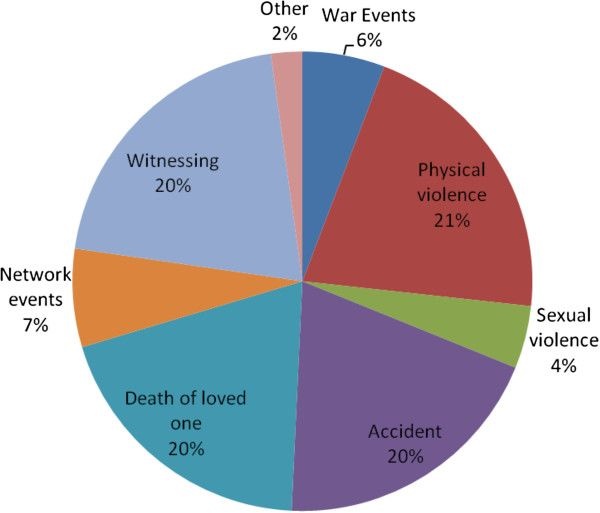
In South Africa physical violence is the most prevalent form of exposure. A breakdown of the “triggers” is as follows:

PTSD, PTSD South Africa

Unfortunately, not only adults are plagued by PTSD. A study from Stellenbosch University shows that more than 20% of South African children have symptoms of the disorder. “We hope our study can help increase the access of adolescents with PTSD to much-needed support in a developing country such as South Africa,” said principal researcher Jaco Rossouw. 

Treatment

A combination of therapy and medication is often effective and according to SADAG “a person who has survived a trauma cannot expect to function as they normally do immediately after the trauma”. Cognitive Behavioural Therapy (CBT) has been successfully used in the treatment of many patients and an experienced psychologist is often one’s first point of call. 

SADAG’s 24-hour Helpline is 0800 12 13 14.

NEXT ON HEALTH24X

Share Button