Health24.com | We decode 3 popular diets – here are the pros and cons

There is never a shortage of various and conflicting diets making their rounds and leaving you wondering just what foods you are allowed to eat. Here is a guide to each with pros, cons and steals, starting with the Paleo eating plan.

Read more: Your crappy diet is literally killing you, here’s how

Paleo

Plant foods, healthy foods, no processed foods, lean meats

Pros: It’s simple, minimises processed foods and emphasises plant foods and lean meats.

Cons: Restricts diary and wholegrains.

Steal this: Avoid stuff in wrappers, refined and processed foods tend to be caloric but not satiating, reports a recent Harvard University Study. Paleo fans snack on nuts and seeds, a smart strategy given that a new study from Spain reveals that nut’s and seed’s healthy fat content may help make you feel full.

Read more: 6 weird things that happen to your body when you go on the paleo diet

Low-fat vegetarian

Plant foods, no processed foods, wholegrains and seafood

Pros: Promotes vegetables and fish, but restricts fat.

Cons: Lean meats like chicken, which may boost satiety levels, are limited; and so are healthy monounsaturated fats.

Steal this: Incorporating more fibre into your diet with more vegetables, wholegrains and legumes is a proven way to help you lose more weight.

Read more: This diet is ranked #1 in the world – but is it right for you?

Mediterranean

Plant foods, healthy fats, no processed foods, wholegrains, seafood

Pros: Emphasises healthy fats, like olive oil and whole foods, such as produce, wholegrains and fish.

Cons: Low on red meat.

Steal this: A landmark study in the International Journal of Obesity found that men who eat three servings a week of fish (like cod) or fatty fish (salmon) lose more weight on a diet than those who don’t. But why stop at three?

This article was originally published on www.mh.co.za

Image credit: iStock

NEXT ON HEALTH24X

Share Button

Health24.com | Husband saves wife a week after learning CPR from TV show

The night before leaving on a cruise, Alisa Mari was trying to free up room on her DVR to record programmes she would miss while on vacation. One of the space-eaters was a talk show demonstrating how to perform CPR that she’d been saving for her husband, Andy.

Just watch this so I can delete it, she said, and he did.

A week later, their cruise ended in Miami, where Andy’s mom lived in a senior community. Alisa greeted her mother-in-law, then excused herself to visit the restroom.

Quick thinking

The next thing Andy heard was a loud thud. He rushed to the bathroom and found Alisa on the floor, foaming at the mouth.

His mom’s apartment was equipped with an emergency alert cord; she rushed to pull it. Meanwhile, Andy checked for a pulse and found none, so he began chest compressions – using the technique he’d learned on the programme Alisa prodded him to watch the week before.

“It was just automatic,” he said. “It’s the kind of thing where once you learn, you know what to do.”

Alisa suffered cardiac arrest, which essentially means the power went out in her heart. This is different from a heart attack, which is caused by blood flow to the heart being blocked.

More than 350 000 people in the United States suffer a cardiac arrest outside a hospital each year. There are not definitive South African stats, but it is believed that our rate is amongst the highest in the world. If CPR is performed immediately, it can double or even triple the chance of survival.

TV can save your life

Alisa was among those fortunate to have a potential lifesaver nearby – and fortunate that Andy was willing to act. Hands-only CPR requires pressing hard and fast in the centre of the chest, preferably at a rate of about 100 to 120 compressions per minute – about the rhythm of the classic disco song, “Stayin’ Alive.”

Andy spent about 15 minutes giving Alisa compressions. This kept blood flowing to her organs until help arrived.

Paramedics took over CPR, then tried to restart Alisa’s heart by deploying an electric shock using an automatic external defibrillator. It wasn’t until they reached the hospital that doctors were finally able to stabilize her.

A few days later, doctors placed an implantable cardioverter defibrillator under Alisa’s skin to shock her heart if it goes into a fatal rhythm again. Doctors also discovered a significant blockage in one of her heart’s arteries, so they inserted a stent to prop it open.

At risk

Alisa was 44 at the time of her cardiac arrest in 2010, but was at risk for heart problems. She’d long been treated for high blood pressure and high cholesterol, and was a former smoker. She also has a family history of heart disease, including some relatives who died in their 40s from heart-related conditions.

Alisa and Andy became advocates for wider CPR training. They also began participating in their local Heart Walk. They now live in Ramsey Springs, Mississippi, and own a convenience store. They keep a bucket on the counter collecting money to help fund CPR training classes for school bus drivers in the rural area.

“It could take 30 minutes for an ambulance to reach some areas out here,” Alisa said. “If my husband didn’t know CPR, I wouldn’t be here.”

If you find yourself in a situation where someone needs CPR, we’ve included some practical tips you can use.

Try and remember the acronym C.A.B 

C – Chest compressions. Place your hands, one over the other, fingers interlocked at the centre of the person’s chest. Position your hands so that the heel of your hand is making contact with the person’s chest. Press down on their breast bone continuously, to a count of one-two-three-four. Push at a rate of 100 compressions per minute. 

A – Airway. Open their airway. Gently tilt their head back to allow for easy breathing. Check for breathing. Taking note of the chest rising or breathing sounds. 

B – Breathing. If the person is not breathing, you have to breathe for them. Begin mouth-to-mouth breathing. Breathe gently into their mouth, closing their nose. Check to see if their chest rises. If the chest does not rise begin chest compressions again. 

Image credit: iStock

NEXT ON HEALTH24X

Share Button

New measures to protect doctors after Bawa-Garba case

Jeremy Hunt says patient safety will improve if staff can learn from their mistakes.

Share Button

Health24.com | 4 tips for getting superhero muscle from Deadpool’s trainer

Deadpool 2 is one of the most anticipated movies of the year thanks to its quick-witted humour, inability to take itself seriously and of course Ryan Reynolds (beloved by everybody).

Read more: Ryan Reynolds’ 7.5 rules for being totally awesome like Deadpool

Ryan Reynolds is one of the funniest men in Hollywood, but he is also one of the fittest. So what was his secret to getting superhero muscle ahead of Deadpool?

Work towards long-term fitness, says Don Saladino, Reynolds’s trainer. These are his four ways to armour-plate your body:

1. Find focus

“This is a mindset issue,” says Saladino, “but at the end of the day it doesn’t matter if Ryan’s benching 125kg. What matters is that he can perform with optimal energy, recovery and resiliency. That’s why we train.”

2. Prep first

“We go for an hour,” says Saladino, “but we always start with five minutes of foam-rolling and then 10 to 12 minutes of movement prep where we attack any areas of his body that are tight and need to move better.”

Read more: These are the 50 fittest action heroes and the rules they use to maintain movie muscle

3. Do variations

“One thing that worked for Deadpool was incorporating heavy training. Instead of doing 8 and 10 reps, we’re starting with 4s, 3s, and 2s, progressing from 75% of max to 85%, then 95%.”

Read more: Take on superheros with this abs and arm routine

4. Train for function

Reynolds does jumping, throwing and carrying in every session. “People underuse carries,” says Saladino. “Double farmer walks, single-arm carries and up-down carries really help stabilise the core and shoulders.

Read more: Ryan Reynolds’ trainer shares the secret to losing weight

This article was originally published on www.menshealth.com

Image credit: iStock

NEXT ON HEALTH24X

Share Button

Health24.com | COMRADES: What happens to your body during an ultramarathon?

The Comrades Marathon is one of the most popular, but also gruelling, ultramarathons with a measured distance of 90.18km this year (following the so-called “down route” from Pietermaritzburg to Durban).

This is not an event on the racing calendar to be taken lightly and runners have to prepare themselves both physically and mentally.

But no matter how well you’ve trained, an ultramarathon will take its toll on your body. We explore the effects of such a gruelling distance on various parts of the body.

1. Your legs: There is unfortunately no way to avoid leg fatigue when you run 90km.

Think about it – you rely on your legs, which are made up of a collection of large joints, muscles and tendons, to move you forward. Every kilometre, this complex structure will hit the ground about 1 000 times, depending on the length of your strides and your speed. 

When your legs start to cramp, it’s because of lactic acid forming around your muscles. While lactic acid itself isn’t the only thing responsible for sore muscles, it’s also the higher acid levels inside your cells that disrupt your muscle function. Your brain will “tell” your legs to take it easy – hence the feeling that your legs are on fire. It’s your brain’s way of slowing you down. 

Combat this: Keeping your legs strong isn’t just about hitting the pavement regularly for the optimum distance. You should also do plenty of strength exercises to keep your glutes and tendons strong.

It’s a good idea to add workouts to your routine that will prepare you for specific features in the race, such as uphill or downhill runs on similar terrain, according to Matthew Laye, a physiologist specialising in endurance athletes at the College of Idaho’s department of Health and Human Performance. 

You should also restore your glycogen levels by fuelling up during your ultramarathon. Eat plenty of carbohydrates and take in electrolytes.
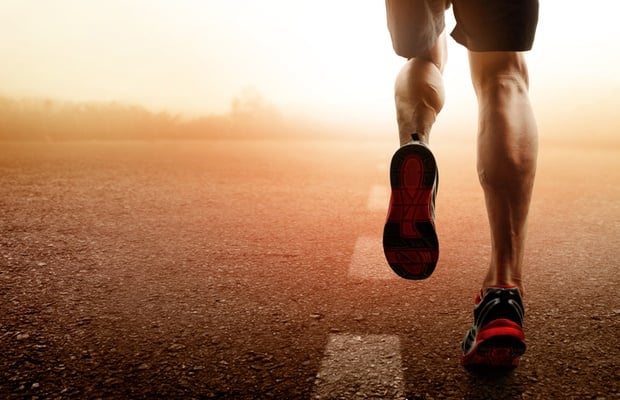
running in sunset

2. Your feet: If you think about the fact that the Achilles tendon, your body’s strongest tendon, will raise with each step you take over the distance, propelling your body weight forward as you run, you will understand that this race will have a daunting impact on your feet.

Each foot is made up of an intricate structure of more than 100 parts, including bones, tendons and joints.

During the Comrades, the structure of your feet absorbs up to three times your body weight with each stride. No wonder ultramarathon runners are susceptible to stress fractures.

And then we haven’t even touched on the friction of socks and shoes against your skin. Your feet can form blisters as your socks and shoes chafe you during the long race.

Combat this: Make sure that your shoes and socks fit properly and can withstand the distance. You can prevent chafing and blisters by taking measures like applying Vaseline, according to Lindsey Parry, renowned South African runner’s coach.
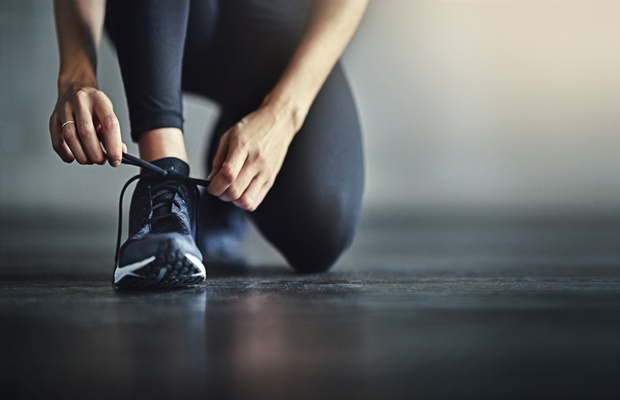
female runner tying shoelaces

3. Your stomach: If you know enough about running, you will be aware that potty problems (also referred to as “runner’s trots”) can be disconcerting. Stomach cramps and nausea can also be experienced during a long run.

With all the pounding and shaking of our digestive systems while running it’s no wonder that our stomachs can act up.

You may also experience nausea as a result of dehydration. 

Combat this: Proper fuelling during an ultramarathon is crucial. Whether you restore your energy levels with sports drinks or solid snacks, be sure that your source of energy works for you and doesn’t cause indigestion. It’s also important to listen to your body and to give it what it craves during the race.

Avoid foods that can be potentially irritating to the digestive tract – this includes caffeine, spicy foods, dairy products and high-fibre foods, such as beans and other legumes.

runner holding side

4. Your lungs: Oxygen is vital, not only for optimal breathing, but also for your body to process glucose into much-needed energy. During an ultramarathon your body works hard to burn fuel, which causes your aerobic respiration to drop, making it difficult to breathe. This means that your body is behind with the process of “cleaning up” waste products.

Combat this: It’s important to be physically fit enough and for your lungs to work at optimum capacity before undertaking such a race. Minimise burnout by keeping your energy levels high by regularly taking in fuel such as carbohydrates and sports drinks. 
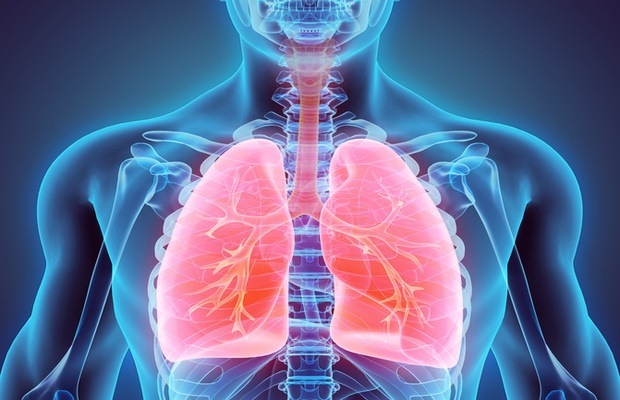
lung diagram

5. Your heart: Exercise does wonders for heart health and lowers your risk for cardiovascular disease. But during a gruelling ultramarathon, your heart works harder than during a typical daily training session.

According to Dr Larry Creswell, a cardiac surgeon at the University of Mississipi, one of two things can happen – your heart rate can either rise or drop, depending on the conditions of the day. Your heart rate will increase when you are dehydrated or when conditions are hot, and it will drop when you experience extreme fatigue.

It’s not uncommon for runners to become dizzy at the finish line – once you stop running, the blood flow to your heart is disrupted. This is also a reason why runners faint after finishing their run.

Combat this: Stay hydrated and sit down as soon as you feel dizzy at the end of the race. Be aware of your heart rate by wearing a heart-rate device such as a strap or watch. This should give you an idea of your normal heart rate during a run while you are training. 

man clutching his chest

6. Your brain: You might not only take mental strain during such a tough endeavour (negative thoughts and feelings of wanting to give up), but an ultramarathon can also have a physical impact on your brain. According to Laye, your brain is very sensitive to heat damage and dehydration. While the brain generally prevents heat stroke by forcing the body to cool down, it’s still a possibility. 

Then there’s the risk of hallucinations – yes, you read right. This stems from general fatigue that results in your mind playing tricks on you. 

Combat this: Prepare yourself physically by adequately hydrating yourself and shielding yourself from the sun, and mentally by enforcing positive thoughts and visualising your race conditions. 

tired runner holding his head

Image credit: iStock

NEXT ON HEALTH24X

Share Button

Tea towels ‘can cause food poisoning’

Scientists found E.coli was more likely to be found on damp towels and those used for multiple jobs.

Share Button

SNP conference: Sturgeon announces ‘immediate’ NHS pay rise

The SNP leader was speaking as the party’s two-day conference in Aberdeen drew to a close.

Share Button

The 10 Most Slimming Vacations

Share Button

24 Inspirational Health Quotes

Wisdom, humor, and frankly outrageous sayings we love.

Share Button

Find Your Ultimate Happiness

Share Button