
Health24.com | 5 common hypertension myths debunked

High blood pressure or hypertension is often dubbed “the silent killer”. It’s a chronic disease where the pressure or tension in your arteries is too high.

This pressure is generated by the pumping action of the heart and counteracted by the resistance of the small arteries. We debunk five common myths about hypertension: 

1. ‘I don’t add extra salt to any of my foods – therefore I’m not at risk.’

Well done for not adding extra salt to your food, but unfortunately this doesn’t mean that you don’t consume hidden sodium. Eating salt raises your sodium level, which disturbs the delicate balance of water in your body, causing it to hold on to more water, which raises your blood pressure. Unfortunately table salt isn’t the only culprit – because sodium can be found in so many processed products, you may be blissfully unaware that you are consuming more sodium than you actually need.

According to a previous a Health24 article, bread, cereals and meat products (polony, Vienna sausages, salami, ham, sausages/boerewors, meat pies) are major contributors to salt intake from processed food. In South Africa, bread provides the greatest contribution to total dietary sodium intake.

This article also mentions that South African bread contains more salt than breads in many other countries. Unsure about your salt intake? Check the labels on processed products to see the amount of sodium they contain – you may be surprised.
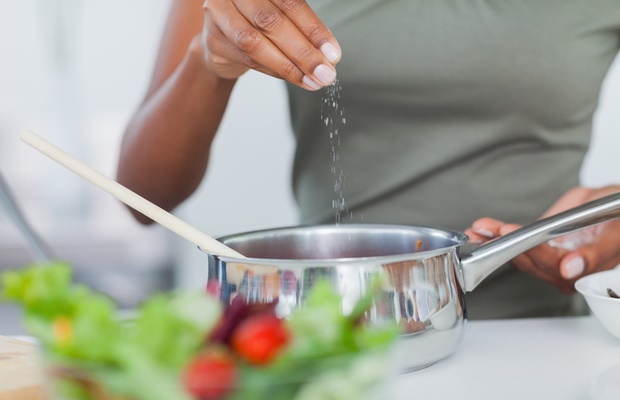
woman cooking with salt

2. ‘High blood pressure runs in my family – so there is nothing I can do about it.’

High blood pressure is hereditary, but that doesn’t mean you are doomed to suffer the effects of hypertension. According to the Heart and Stroke Foundation South Africa, hypertension can be controlled by making healthy lifestyle choices. It’s important to understand your family’s health history and to know whether hypertension runs in your family. If it does, you can take extra measures to control your blood pressure.  

3. ‘I am not overweight and I don’t smoke – there is no way I can have high blood pressure.’

Some lifestyle factors, such as smoking and being overweight, can increase your risk for hypertension. It is therefore easy to believe that you are not susceptible to high blood pressure if you follow a fairly healthy lifestyle. 

High blood pressure can be slightly elevated when you are stressed or anxious, but if the reading is still high after several measurements, you will need to get to the bottom of the problem. Hypertension can also be genetic, but you can keep your blood pressure in check by controlling your sodium intake and destressing.

woman on scale

4. ‘I have no symptoms – I shouldn’t be worried.’

Have we mentioned that hypertension is called “the silent killer”? According to the American Heart Association, high blood pressure is mostly without symptoms and if you ignore your blood pressure because you think a certain symptom or sign will alert you to the problem, you are taking a dangerous risk. You may not be aware of the silent toll it might be taking on your arteries and organs.

Have your blood pressure measured by a medical professional during each checkup.

5. High blood pressure is the same as a high heart rate.

High blood pressure is not the same as a high heart rate and the latter isn’t an indication of hypertension as such.

If you have a high heart rate, an irregular heartbeat or a rapid pulse, this doesn’t mean that you suffer from hypertension.

A high heart rate does not cause your blood pressure to rise. If you are healthy, your blood vessels will enlarge sufficiently to allow a larger amount of blood through, especially during exercise.

If you suffer from hypertension, speak to your doctor before starting a serious exercise regime – an elevated heart rate can cause problems if your blood vessels can’t let larger volumes of blood through.

Image credit: iStock

Share Button

Rise in ‘preventable’ emergency readmissions to hospital

Undiagnosed pneumonia and pressure sores are behind the rise in hospitals in England.

Share Button

Bereaved parents ‘let down at work by lack of support’

Two out of five parents said no-one talked to them about the loss of their baby when they went back to work.

Share Button

Educate children to tackle ethnic minority donor crisis, MPs say

MPs say teaching children about organ donation could boost donor numbers and bust some common myths.

Share Button

Bigger human brain prioritizes thinking hub — at a cost

Some human brains are nearly twice the size of others — but how might that matter? Researchers at the National Institute of Mental Health (NIMH) and their NIH grant-funded colleagues have discovered that these differences in size are related to the brain’s shape and the way it is organized. The bigger the brain, the more its additional area is accounted for by growth in thinking areas of the cortex, or outer mantle — at the expense of relatively slower growth in lower order emotional, sensory, and motor areas.

This mirrors the pattern of brain changes seen in evolution and individual development — with higher-order areas showing greatest expansion. The researchers also found evidence linking the high-expanding regions to higher connectivity between neurons and higher energy consumption.

“Just as different parts are required to scale-up a garden shed to the size of a mansion, it seems that big primate brains have to be built to different proportions,” explained Armin Raznahan, M.D., Ph.D., of the NIMH Intramural Research Program (IRP). “An extra investment has to be made in the part that integrates information — but that’s not to say that it’s better to have a bigger brain. Our findings speak more to the different organizational needs of larger vs. smaller brains.”

Raznahan, Paul Reardon, Jakob Seidlitz, and colleagues at more than six collaborating research centers report on their study incorporating brain scan data from more than 3,000 people in Science. Reardon and Seidlitz are students in the NIH Oxford-Cambridge Scholars Program.

To pinpoint how the human brain’s organization varies in relation to how big it is, the researchers — including teams from the University of Pennsylvania, Philadelphia, and Yale University, New Haven, Connecticut, as well as the Douglas Mental Health University Institute, Verdun, Quebec — analyzed magnetic resonance imaging brain scans of youth from the Philadelphia Neurodevelopmental Cohort, a NIMH IRP sample, and the Human Connectome Project.

Cortex areas showing relatively more expansion in larger brains sit at the top of a network hierarchy and are specialized functionally, microstructurally and molecularly at integrating information from lower order systems. Since this theme holds up across evolution, development and inter-individual variation, it appears to be a deeply ingrained biological signature, Raznahan suggested.

“Not all cortex regions are created equal. The high-expanding regions seem to exact a higher biological cost,” explained Raznahan. “There’s biological ‘money’ being spent to grow that extra tissue. These regions seem to be greedier in consuming energy; they use relatively more oxygenated blood than low-expanding regions. Gene expression related to energy metabolism is also higher in these regions. It’s expensive, and nature is unlikely to spend unless it’s getting a return on its investment.”

Since people with certain mental disorders show alterations in brain size related to genetic influences, the new cortex maps may improve understanding of altered brain organization in disorders. The higher expanding regions are also implicated across diverse neurodevelopmental disorders, so the new insights may hold clues to understanding how genetic and environmental changes can impact higher mental functions.

“Our study shows there are consistent organizational changes between large brains and small brains,” said Raznahan. “Observing that the brain needs to consistently configure itself differently as a function of its size is important for understanding how the brain functions in health and disease states.”

“Notably, we saw the same patterns for scaled-up brains across three large independent datasets,” noted Seidlitz.

Share Button

Hydropower in Cambodia could threaten food security of region

Farmers and anglers in Cambodia depend on the Mekong River’s predictable seasonal patterns, but new dams for hydroelectricity are altering the hydrology of the river. These changes have the potential to threaten fish migration, livelihoods, and regional food security.

A new paper from the University of Illinois and Iowa State University urges a participatory approach for managing the Mekong River basin that engages local residents who have deep knowledge of the river. This local knowledge, combined with technical and scientific findings, is important for developing effective strategies to adapt to the changing flows and uses of the river.

“Due to years of civil wars that destroyed infrastructure and hindered modernization, only a little more than half of the Cambodian population has access to electricity. Hydropower is a critical building block for needed modernization. However, using the water resources for power presents difficult trade-offs for fishers and farmers,” explains Kenneth Olson, professor emeritus in the Department of Natural Resources and Environmental Sciences at U of I and co-author of the article.

In the article, Olson and co-author Lois Wright Morton detail the geology and soils of the Mekong River and Tonle Sap Lake and River area, which dominate the Cambodian landscape.

The Tonle Sap River is a tributary of the Mekong River, connecting it with Tonle Sap Lake northwest of Phnom Penh, the capital of Cambodia.

“This unique, complex hydrological system is strongly influenced by the Asian monsoon. During the monsoon season, the Tonle Sap Lake surface area enlarges to become four times greater than in the dry season and hold nine times more water by volume. The surface water level can change by more than 30 feet, so homes are either in floating villages or on stilts,” Olson explains.

This phenomenon occurs because the Mekong River begins to flood in May and June and backs up into the Tonle Sap River and Lake. The rains stop in November, and as the Mekong River water levels begin to drop, the Tonle Sap River flow reverses and again becomes a tributary of the Mekong River. Thus, the Tonle Sap River flows northwest into the lake for six months a year and then reverses and flows into the Mekong River for the other six months.

“The flooding brings needed sediments and nutrients for crops and fishing, but an increase in sedimentation has the potential to shut down dry-season navigation between the capital and regional centers by making the already shallow lake even more shallow over time,” Olson says.

There are currently plans to build 11 more dams on the main stem of the lower Mekong River.

River ecology scientists and environmentalists, including Olson and Wright, are concerned about how these dams will affect the historically predictable downstream flows and seasonal flood patterns to which birds, fish, and plant communities have adapted over time.

Specifically, fish migration is a huge concern.

“Cambodia is dependent on fish for high-quality protein and food security,” Olson says.

One dam being built, named the Lower Se San 2, will block fish migration between the Se San and the Mekong and will flood homes behind the dam, according the authors.

“The tradeoffs among hydroelectricity production, food security, and fisheries’ livelihoods are difficult and complex, and developing an integrated resource management plan is not an easy task. Broad participatory approaches that include local residents in the scientific and technical information exchanges can improve decision-making and better meet government, industry, and rural communities’ goals. Fishers and farmers can continue to successfully adapt if given opportunity, resources, and tools. These issues don’t just affect Cambodia; they impact the food security of urban people throughout Southeast Asia,” Olson warns.

Share Button

Combining experts and automation in 3D printing

Researchers in Carnegie Mellon University’s College of Engineering have developed a novel approach to optimizing soft material 3-D printing. The researchers’ Expert-Guided Optimization (EGO) method combines expert judgment with an optimization algorithm that efficiently searches combinations of parameters relevant for 3-D printing, enabling high-fidelity soft material products to be printed.

The researchers — which include lead author Sara Abdollahi, a Ph.D. student in biomedical engineering; Adam Feinberg, associate professor of biomedical engineering and materials science and engineering; Alex Davis, assistant professor of engineering and public policy; and Dietrich College of Humanities and Social Sciences Professor John Miller — designed the EGO method to optimize high quality 3-D prints of soft materials.

In their paper, “Expert-guided optimization for 3D printing of soft and liquid materials,” which was recently published in PLOS One, the researchers demonstrate the EGO method using liquid polydimethylsiloxane (PDMS) elastomer resin, a material often used in wearable sensors and medical devices. The researchers used a printing method called freeform reversible embedding (FRE), in which soft materials are deposited within a gel support bath.

When it comes to 3-D printing soft materials, many parameters can affect the final product. How fast the head of the 3-D printer moves, the consistency of the gel bath in which the product is printed, and the concentrations of each material in the print are just a few of the variables that can affect the final product. In each print, there can be dozens of parameters to take into account, and many more possible combinations of them.

A typical optimization model or experimental design will focus on a few parameters that are considered most important to the print. However, adapting these optimization models for experimental materials, whose 3-D printing characteristics aren’t well known, can be extremely challenging.

“When 3-D printing thermoplastics, if you have just five or 10 main print parameters and want to explore, say, five levels of each, a factorial design can result in millions of possible combinations of settings to print,” says Abdollahi. “The combinations become even more daunting when exploring an experimental material whose print characteristics are unknown. For example, if the experimental material has 20 print parameters with five levels, the experimenter can have trillions of combinations of print settings to explore.”

However, with the EGO model, this challenge can be made less of an obstacle because experts are able to rule out many combinations as being ineffective. By combining an expert’s scientific judgment with efficient search algorithms, EGO significantly reduces the time and energy required to find combinations that yield optimal 3-D prints for experimental materials.

“The purpose of EGO is to create an effective search algorithm that explicitly combines both expert knowledge and traditional search algorithms,” says Davis. “Typically we think of machine learning being useful for big data, but EGO works in situations when we have little or no data and need to rely on expert judgment, then through a combination of search algorithms and the expert’s knowledge, effectively transition from small to big data.”

The EGO model is comprised of three steps. First, a human expert selects the initial set of parameters, giving the algorithm the boundaries for search. Then, a hill climbing algorithm searches within those boundaries for promising combinations of those parameters, resulting in a “local optimum.” Finally, the expert evaluates the local optimum and decides whether to alter the search process by adding new parameters, or continue to search within the existing boundaries. The process iterates until an ideal solution is found.

The EGO method, which can extend beyond the 3-D printing of soft materials for a variety of engineering processes, has great potential as a systematic tool to discover the key parameters that yield reproducible, high-quality, novel materials.

Share Button

What Your Phone Type Says About Your Personality

Your choice of smartphone may affect what other people think of you—and say something about your own personality, as well. In a study presented last week at the British Psychological Society Social Psychology Section annual conference, participants viewed Android users as having greater levels of honesty, humility, agreeableness, and openness than iPhone users. They were also seen as less extroverted.

When the researchers performed personality assessments on both Android and iPhone users, most of these perceptions did not hold true. Android users did, however, rank higher in honesty and humility.

The study was led by Heather Shaw, a psychology doctoral student at the University of Lincoln in the United Kingdom. Shaw notes that while Android and iPhones account for more than 95 percent of all smartphones sold worldwide, individual differences between the two types of consumers have never been studied in this way. That’s surprising, she says, considering how much research there is on how other purchasing decisions can predict personality traits.

She and her colleagues performed two experiments, first asking 240 participants to answer questions about characteristics they associated with users of each smartphone brand. Then, they analyzed personality questionnaires from 530 Android and iPhone users to see if those stereotypes held up.

In addition to the differences in honesty and humility, the researchers found that women were twice as likely as men to choose an iPhone over an Android. People who scored high on “avoidance of similarity”—meaning that they don’t like having the same products as others—were more likely to have an Android, while people who thought it was more important to have a high-status phone were more likely to choose iPhones.

Shaw says she wasn't surprised to find such differences between the two groups. "iPhone and Android smartphones have different apps, technical specs, and functionalities, which appeal respectively to the users of each smartphone brand due to their personality," she says. She also says it's possible that people start to embody the semantics and characteristics of the technologies they own. "So if you buy an iPhone, over time you might start acting like a typical iPhone users."

Brand choice is the most basic level of smartphone personalization, Shaw says, and her study shows that even this can hold clues as to a user's personality. There are also plenty of other ways users can customize their smartphones—with colors, cases, photos, and music, for example. “Many of us don’t like it when other people use our phones because it can reveal so much about us,” she points out.

Further research could explore other ways that smartphones can hint at important details about their users—like, for example, studying the specific apps people download. “It is becoming more and more apparent that smartphones are becoming a mini digital version of the user,” she says—a fact that could have implications in the fields of psychology, marketing, user privacy, and more.

Shaw adds, though, that it's still not fair to assume anything about a person based solely on their smartphone choice. "Humans are very complex, and you can never truly understand what a person is like from one piece of information alone," she says.


This article originally appeared on RealSimple.com.

Share Button

Even Optimists Tend to Expect the Worst

Even if you consider yourself to be pretty upbeat, it’s easy to get caught up in feelings of dread as you wait to hear about uncertain news. As the moment of truth draws nearer, people often find themselves increasingly convinced that bad results are ahead.

These emotions may feel stressful and unhealthy, but a new study suggests they’re totally normal. In fact, this instinct to brace for the worst can actually be protective and serve as a buffer against potentially bad news, say researchers from the University of California Riverside.

In previous studies, it’s been recognized that, as individuals wait for their respective results, students become increasingly convinced they’ve failed an exam, patients become increasingly convinced they have a terrible disease, and voters become increasingly convinced that their candidate will lose an election.

RELATED: Optimism Can Help You Live Longer

Kate Sweeny, Ph.D., a psychology professor at UC Riverside, wanted to see if this was true of optimists and pessimists alike. “Intuition might suggest that some people are more likely to brace than others,” Sweeny said in a press release. “In particular, happy-go-lucky optimists would seem immune to the anxiety and second-guessing that typically arise as the decisive moment draws near.”

So she and her co-author performed nine different experiments in their lab and in real-life settings. Some involved college students anticipating rankings of their attractiveness from peers, for example, while others involved law-school graduates awaiting the results of their bar exams. All participants answered questions beforehand to determine their natural disposition.

The researchers’ findings, published in the Journal of Personality, were “counter to intuition,” Sweeny said. “Optimists were not immune to feeling a rise in pessimism at the moment of truth. In fact, not a single study showed a difference between optimists and pessimists in their tendency to brace for the worst.”

RELATED: Happy People Make Their Spouses Happier

There was a difference, unsurprisingly, in overall predictions: Optimists started out with more positive expectations than pessimists. But everyone in the study tended to shift those expectations downward over time.

This may be because not getting one’s hopes up can be a natural defense. “If you expect the worst, you can lessen feelings of shock and disappointment if things don’t go as you hoped,” Sweeny told RealSimple.com, “and you’ll be pleasantly surprised if they do.”

So if you feel down right before a big announcement, Sweeny says you shouldn’t necessarily fight those feelings. Rather, she says, we should all try to be more like the optimists in this study, and save our pessimism for these strategic moments.

“It’s generally good to be optimistic about the future,” she says. “Optimists are happier and healthier in lots of different ways, and it’s true that worrying too much or for too long can lead to anxiety and rumination. But in these final moments before you get big news, optimism can be really treacherous.”

In other words, she says, making sure you’ve done everything you can to ensure your chances of success—and then putting off your worries until those final moments—may be the best balance you can strike. And if you do feel like the world’s about to end while you wait, take heart in knowing that that’s normal, too.

This article originally appeared on RealSimple.com.

Share Button

American Marriages Are Much Better — and Much Worse — Than Ever


When your partner is your best friend — someone who really gets you, you know? — it’s a wonderful thing. And yet thinking of marriage as the ultimate BFF-ship potentially comes with its own set of problems, setting some lofty expectations for the relationship. It often means that this is the one person to whom you look to meet your deepest psychological and personal growth requirements; it’s the tippy-top of the old Maslow’s Hierarchy of Needs pyramid, in other words.


When it works, it’s bliss. But according to the authors of a new paper in Current Directions in Psychological Science — lead-authored by Northwestern University's Eli Finkel — it’s also incredibly difficult to meet these huge and time-consuming demands, meaning the modern American marriage has the potential to be both much better and much worse than ever before. Because here's the twist: At the same time Americans are asking more out of their marriages than ever, they're also spending less time with their spouses. 


Modern American marriages are more strongly linked to psychological well-being — happiness, basically — than they were in decades past, according to a review of 93 studies from 1980 to 2005, and the authors on this current paper, led by Northwestern University’s Eli Finkel, believe they know why. Basically, they think Americans have begun understanding their marriages in a different, historically unusual way than they used to.


To Finkel and his co-authors, there have been three major eras of marriage in American history, cultural shifts in what's largely considered the fundamental purpose of the institution. In the country’s earliest years, marriage was there to help people meet basic economic needs — someone to help harvest the crops and keep warm in the winter. Then there was a middle era, from about 1850 to 1965, when employment shifted to outside the home, and the point of marriage was to be a source for love and passion.


Today, Finkel and his colleagues argue, it’s a “self-expressive era” of marriage, in which Americans look to the institution “to fulfill needs like self-esteem, self-expression and personal growth.” Finkel expanded on that in an email to Science of Us:


As we have increasingly come to look to our marriages to help us achieve our deepest psychological needs—rather than helping us harvest crops or even just loving us, for example—we need much stronger communication and responsiveness than ever before. More and more marriages are struggling to achieve those lofty standards, especially on top of all of the other stresses in our lives.


However, those of us who succeed in building a marriage that can meet our deepest psychological needs—a marriage that helps us become closer to our ideal self—are immensely satisfying. That is, achieving a successful marriage today is tougher than in the past, while at the same time the payoff for such achievement is larger than in the past.


Helping your partner harvest crops or weather a drought or prepare for winter wasn’t easy, in other words, but these things also didn’t require deep contemplation and understanding of his or her innermost thoughts and desires. Meeting these self-actualization expectations takes some serious face time together, and yet the evidence shows that at the same time Americans are demanding more out of their marriages, they’re also putting less time into them.


To wit, as Finkel and his co-authors point out: From 1975 to 2003, the amount of times childless couples spent together, just the two of them, dropped from 35 to 26 hours per week. The decline in togetherness-time is most likely explained by a rise in time spent working. During that same time period, couples with kids saw a similar dip in time spent one-on-one, from 13 to 9 hours per week. This decline appears to be owed to an uptick in what the researchers called “time-intensive parenting.” 


And these problems are likely exacerbated for lower-income couples, who likely have less time or money to devote to the kind of quality time needed to meet today’s marriage expectations than their wealthier counterparts. But the research shows that lower-income couples still very much want the same things out of marriage as higher-income spouses.


It’s not hopeless, however. There are a few ways of improving marriage quality, none of which take huge amounts of time, which Finkel and his co-authors helpfully outline in their paper:


If you want to get nerdy about it, you guys can take on some writing exercises. The researchers cite a study that found couples who spent just 21 minutes a year writing about their conflicts through the eyes of an impartial third party saw improvements in their relationships over the following two years. It’s not going to magically turn a dissatisfying relationship into a blissfully happy one, but it’s a pretty simple way to give it a nudge.


Schedule regular "date nights." (There’s a reason it’s a cliché.) It’s because scheduling time together really works to improve the relationship, the research suggests. Spending more fun hang-out times for just the pair of you will likely help increase the odds that you meet each other’s psychological needs.  


Seek at least some of that self-actualization stuff elsewhere. Find a hobby, join a group, call your friends — shift at least some of that personal-growth burden off of your relationship. “Doing so can bring the demands on the marriage into closer alignment with the available resources,” the authors write, “thereby reducing dissatisfaction from unmet expectations.”


It's not impossible to have a successful marriage in this "self-expressive" era, Finkel said, but we're only just starting to learn how to do it. (Incidentally, he's currently writing a book on that very subject.) Finding a balance between sky-high expectations and the time people can realistically invest in their relationships seems like one way to start.


More from Science of Us:


Married People Are Happier People


What Happens When Rich People Marry Poor People


3 Ways Your Text Messages Change After You Get Married


Americans Now Slightly More Relaxed About Casual Sex That They Were in the '90s


Why Men Always Think Women Are Flirting


The Case Against 'Soul Mates'


This article originally appeared on nymag.com


Share Button