Less is more when it comes to predicting molecules’ conductivity

The smaller and smarter that phones and devices become, the greater the need to build smaller circuits. Forward-thinking scientists in the 1970s suggested that circuits could be built using molecules instead of wires, and over the past decades that technology has become reality.

The trouble is, some molecules have particularly complex interactions that make it hard to predict which of them might be good at serving as miniature circuits. But a new paper by two University of Chicago chemists presents an innovative method that cuts computational costs and improves accuracy by calculating interactions between pairs of electrons and extrapolating those to the rest of the molecule.

“Current models tend to overpredict conductance, but our theory outperforms traditional models by as much as one to two orders of magnitude,” said Prof. David Mazziotti, who coauthored the paper, published May 17 in Nature’s Communications Chemistry.

Everything from better computer chips and batteries to greener ways to produce chemicals depends on discovering new kinds of chemistries and materials, and scientists increasingly look to computers to search for new combinations more efficiently. Instead of trying permutations one by one, they can run models that predict the best options.

But it’s a delicate art, because in many cases these calculations can consume computing time alarmingly fast. In molecules with a lot of interacting electrons, “you can very quickly end up with the computation size increasing exponentially with the size of the molecule,” Mazziotti said.

Mazziotti and graduate student Manas Sajjan set out to simplify, creating a method for predicting molecular conductivity that uses the interaction between two electrons to represent all of the interactions. “To take one example, for a particular molecule the traditional method might require computing with 1024 variables, whereas ours has 109 variables — a quadrillion fewer variables,” Sajjan said. That’s the difference between a problem for which you need a supercomputer versus one you can do on a laptop.

This choice allows an unusual but powerful approach. Existing theories for molecular conductivity assign a set number of voltage applied to the molecule to predict a number for the current that could then flow through it. Sajjan and Mazziotti flipped this paradigm on its head. They fixed the current first, and then computed the voltage. This turns out to be much more accurate: When they checked their method with a well-known molecule, they saw it outperformed traditional methods by one-to-two orders of magnitude.

“What’s important is it’s really rigorous. Even with the conduction there’s still a one-to-one mapping with the many-electron system,” Mazziotti said. The process of making sure that the two-electron system still represents the many-electron system is a very challenging problem that’s been around for 50 years, but he said it’s worth the struggle.

“Almost all of the big problems that people are trying to solve involve working with materials that are difficult to explore with traditional methods,” he said. “If we can better predict the conductivity, we can more effectively design better molecules and materials.”

Story Source:

Materials provided by University of Chicago. Note: Content may be edited for style and length.

Share Button

Health24.com | Here’s what happens to your body when you quit smoking

When you quit smoking, over time you’ll notice changes to your body and health: your sense of taste returns, breathing becomes easier, your fitness improves, and the appearance of your skin and teeth improves. 

“When a cigarette burns, it releases a dangerous cocktail of over 5 000 different chemicals; many of these chemicals are poisonous and more than 70 may cause cancer,” Thea Cunningham, Cancer Research UK’s health information officer, told The Independent.

“If you smoke, the best thing you can do for your health is to quit. There’s no such thing as a safe cigarette – whether you’re a social smoker or use your tobacco in a roll-up, cigar or shisha pipe, it puts your health at risk.” 

We decided to find out what happens to your body when you quit smoking:

What were the best health benefits you experienced after you quit smoking? Email mandy.freeman@24.com to share your story. 

Image credit: iStock

Share Button

Health24.com | The 7 biggest problems with vaping

Smoking tobacco is linked to a slew of chronic diseases. With the rise in alternative ways of smoking, e-cigarettes have come more and more under scrutiny with medical researchers asking exactly what the implications of these devices are.

Many people turn to e-cigarettes as a way to quit smoking actual cigarettes. But could this only be one bad habit replacing another?

Over the years, Health24 has published a number of articles debating the health risks of e-cigarettes and similar devices. Here are some of the more serious effects that have been linked to vaping.

1. Vaping can cause cancer

A US study indicates that while the carcinogenic potential of e-cigarettes is lower than traditional cigarettes, these devices can still cause cancer by damaging cell DNA.

Studies on lab mice showed that those exposed to e-cigarette vapours “had higher levels of DNA damage in the heart, lungs, and bladder, compared with control mice exposed to filtered air”, and that similar effects were seen when human lung and bladder cells were exposed to nicotine and nicotine-derived nitrosamine ketone (NNK).

The claim that e-cigarettes are safer and less carcinogenic than traditional cigarettes is therefore not accurate.

cancer cell

2. The flavours used in e-cigarettes are bad for your health and may irritate others

The enticing flavours – toffee, vanilla, mint etc. – might be part of the appeal of e-cigarettes.  Unfortunately, however, these fragrances have been linked to health problems.

While flavours like cinnamon might sound yummy, the chemicals behind them are not.

An earlier study shows that the various chemicals in the liquid responsible for the flavour are toxic to human cells. The big problem is that e-cigarette liquids have not been cleared for inhalation, even though some of them have been approved by the FDA.  

Health problems aside, the lingering scent of cherries might not appeal to your colleagues. Think twice before vaping in an enclosed space.

e-cigarette liquid

3. Vaping damages blood vessels

It is common knowledge that traditional cigarette smoking can cause significant damage to the arteries, which may lead to conditions such as hypertension and cardiovascular disease.

Unfortunately, your arteries aren’t spared when you use an e-cigarette. It turns out that e-cigarettes can lead to stiffened arteries that can ultimately lead to a variety of cardiovascular problems, according to a Swedish study.

“If you look at what kills cigarette smokers, more die from cardiovascular disease than lung disease. We really can’t tell patients that e-cigarettes are a safe alternative to real cigarettes – there is evidence of some harm,” according to Dr Norman Edelman, a senior scientific advisor to the American Lung Association.

blood vessels

4. Vaping leads to a condition called ‘popcorn lung’

Lung disease is probably the first thing that comes to mind when thinking about smoking. But trading your trusty pack a day for an e-cigarette in an attempt to spare your lungs may all be in vain, according to research.

Health24 reported in 2015 that a team from Harvard School of Public Health in Boston, USA, tested 51 types of e-cigarette liquids and found that 75% of these liquids contained diacetyl, a chemical compound often added to alcohol and food beverages to mimic a buttery taste.

This chemical has been linked to a condition called bronchiolitis obliterans, a lung disease dubbed “popcorn lung” as it was first diagnosed in workers who inhaled this flavouring in factories where microwave popcorn was made. 

popcorn

5. E-cigarettes can explode and lead to injury

Health risks aside, e-cigarettes can also cause injuries if the device explodes in your hand or near your face. The University of Washington Regional Burn Centre in Seattle has treated 22 people for burns and other injuries caused by exploding e-cigarettes since October 2015, said Dr Elisha Brownson, a burn/critical care surgical fellow at the hospital.

Similar injuries have been reported by various other institutions. The explosions are mostly caused by the overheating of the lithium-ion batteries used in the devices.

exploding e-cigarette

6. E-cigarette liquid can lead to poisoning in children

Not only is the liquid used in the devices a health risk for those smoking e-cigarettes, but can be a hazard to children.

“E-cigarettes and liquid nicotine can cause serious poisoning, and even death, among young children. Like other dangerous poisons, they should be kept out of sight and reach of children, preferably in a locked location,” says Dr Gary Smith, director of Nationwide Children’s Hospital’s Centre for Injury Research and Policy in Ohio. He was involved in a study published in Pediatrics.

baby in play pen

7. Vaping is the gateway to real cigarettes

While many people regard vaping as the stepping stone between smoking cigarettes and quitting altogether, a study published in JAMA Pediatrics suggests otherwise. This study has shown that teens and young adults who use e-cigarettes are four times more likely to start smoking than their peers.

According to the study lead author Samir Soneji, the use of e-cigarettes significantly increases the possibility of teens smoking real cigarettes, for three reasons:

  • Teens may want a bigger “fix” and move on to the next best thing.
  • They are more likely to spend time with friends who already smoke cigarettes, encouraging them to start smoking themselves.
  • E-cigarettes make the transition to real cigarettes easier.

teenagers smoking e-cigarettes

Image credits: iStock

Share Button

Health24.com | Yes, you can have uterine fibroids in your 20s and 30s – here are the signs

Uterine fibroids are no longer reserved for women over the age of 40. In recent years these abnormal tissue growths have been making an appearance in younger women. Here’s what you should look out for…

What are fibroids?

Fibrous connective tissues and muscle cells that are clustered together make up a fibroid and often occur in multiple parts of the uterus, either on the lining or outside the uterus. They range in size and severity, with some fibroids visible from a simple pelvic exam and others requiring an ultrasound.

Read more: Would you recognise these 8 uterine fibroid symptoms?

According to gynaecologist and endoscopic surgeon Dr Natalia Novikova, fibroids are actually common among women of reproductive age and can grow pretty big.

Although symptom-free fibroids do exist, they’re generally accompanied by a range of disruptive symptoms, such as prolonged periods, excessive bleeding, painful sex, pelvic pain, pica (the desire to eat clay), pressure in the abdomen, and bowel and bladder pressure.

Read more: 6 signs you’ve got an ovarian cyst that’s about to become a big problem

Although fibroids are non-cancerous, their symptoms can be super-inconvenient. There’s some debate around whether they shrink after menopause (this differs from case to case), but the consensus is it’s best to get them removed. “Treatment is extremely valuable for women who suffer from terrible symptoms,” explains Dr Novikova.

How do you treat uterine fibroids?

So, what are your options if you’re diagnosed with fibroids? Currently, the number one treatment is a hysterectomy, which involves partial or complete removal of the womb. For many younger women who still want to have kids, this should really only be a last resort. Another surgical option, myomectomy, a procedure that removes the fibroid(s) but leaves the uterus intact, does carry the risk of regrowth.

Read more: What is a hysterectomy – and how common is it for young women?

Is surgery the only option?

Well, no. For those who don’t want to go under the knife, there are less invasive treatments. Birth control pills have been used as a fibroid management method, with many women reporting relief of symptoms with continuous use. Then there are micro-invasive methods, such as uterine fibroid embolisation (UFE), which effectively targets the fibroids with very little chance of regrowth.

Read more: “My uterine fibroids almost killed me – now I have a miracle baby”

“The benefit of offering younger patients UFE is that they’re likely to remain fibroid-free for far longer than if they’d have undergone myomectomy,” says Dr Andrew Lawson of Fibroid Care, one of the primary providers of UFE in Southern Africa. “Young myomectomy patients have an extraordinary high fibroid recurrence rate and considering first-line UFE might simply give them a better chance to avoid a second procedure in years to come.”

This article was originally published on www.womenshealthsa.co.za

Image credit: iStock

Share Button

Deficit for NHS trusts in England double the amount planned

Higher patient demand and staff costs are blamed for a total deficit of £960m for trusts in England.

Share Button

Study casts doubt on ‘healthy obesity’

Fat but otherwise healthy women are still likelier to have a stroke or heart attack, a study says.

Share Button

Cellular recycling process is key to longer, healthier life

Building on two decades of research, investigators at UT Southwestern have determined that “cellular housekeeping” can extend the lifespan and healthspan of mammals.

A study jointly led by Drs. Salwa Sebti and Álvaro Fernández, postdoctoral researchers in the Center for Autophagy Research, found that mice with persistently increased levels of autophagy — the process a cell uses to dispose of unwanted or toxic substances that can harm cellular health — live longer and are healthier. The study, published online today, is found in Nature.

“Specifically, they have about a 10 percent extension in lifespan and are less likely to develop age-related spontaneous cancers and age-related pathological changes in the heart and the kidney,” said Dr. Beth Levine, Director of the Center for Autophagy Research at UT Southwestern.

Twenty years ago, Dr. Levine and her colleagues discovered beclin 1 — a key gene in the biological process of autophagy. The group’s research has since shown that autophagy is important in many aspects of human health, such as preventing neurodegenerative diseases, combating cancer, and fighting infection.

In 2003, Dr. Levine’s team found that the genetic machinery required for autophagy was essential for the lifespan extension observed in long-lived mutant roundworms.

“Since then, it has become overwhelmingly clear that autophagy is an important mechanism necessary for the extended lifespan that is observed when model organisms are treated with certain drugs or when they have mutations in certain signaling pathways,” said Dr. Levine, also a Professor of Internal Medicine and Microbiology who holds the Charles Cameron Sprague Distinguished Chair in Biomedical Science. “The body’s natural ability to perform autophagy declines with aging, which likely contributes to the aging process itself.”

Yet a crucial question remained unanswered: Is increased autophagy throughout mammalian life safe and beneficial? In other words, can autophagy extend lifespan and improve healthspan?

To answer this question, Dr. Levine and her UTSW colleagues created a genetically engineered mouse that had persistently increased levels of autophagy. The researchers made a mutation in the autophagy protein Beclin 1 that decreases its binding to another protein, Bcl-2, which normally inhibits Beclin 1’s function in autophagy. As the researchers expected, these mice had higher levels of autophagy from birth in all of their organs.

Last summer, Dr. Congcong He, a former trainee in Dr. Levine’s laboratory at UT Southwestern who originally made the mice, reported in PLOS Genetics that these mice are partially protected against mouse models of Alzheimer’s-like disease. The most recent findings now show that mice with increased cellular housekeeping live longer, healthier lives.

Additionally, in collaboration with Dr. Ming Chang Hu, Associate Professor of Internal Medicine and Pediatrics who holds the Makoto Kuro-o Professorship in Bone and Kidney Research, and Dr. Orson Moe, Professor of Internal Medicine and Physiology who holds The Charles Pak Distinguished Chair in Mineral Metabolism and the Donald W. Seldin Professorship in Clinical Investigation, the Nature study also shows that the mice with increased autophagy are protected from the early death that occurs when the anti-aging hormone klotho is lacking.

“These studies have important implications for human health and for the development of drugs to improve it,” said Dr. Levine, who is also a Howard Hughes Medical Institute Investigator. “They show that strategies to increase the cellular housekeeping pathway of autophagy may retard aging and aging-related diseases. The results suggest that it should be safe to increase autophagy on a chronic basis to treat diseases such as neurodegeneration. Furthermore, they reveal a specific target for developing drugs that increase autophagy — namely the disruption of Beclin 1 binding to Bcl-2.”

Dr. Levine’s group is collaborating with Dr. Jef De Brabander, Professor of Biochemistry and a member of the Harold C. Simmons Comprehensive Cancer Center who holds the Julie and Louis Beecherl, Jr. Chair in Medical Science, and his team to synthesize such drugs. Based on the results reported in the Nature study, drugs acting through this mechanism might be expected to improve the health and prolong the lifespan of human beings.

Share Button

In ancient boulders, new clues about the story of human migration to the Americas

The conventional story says that the earliest settlers came via Siberia, crossing the now-defunct Bering land bridge on foot and trekking through Canada when an ice-free corridor opened up between massive ice sheets toward the end of the last ice age.

But with recent archaeological evidence casting doubt on this thinking, scientists are seeking new explanations. One dominant, new theory: The first Americans took a coastal route along Alaska’s Pacific border to enter the continent.

A new geological study provides compelling evidence to support this hypothesis.

By analyzing boulders and bedrock, a research team led by the University at Buffalo shows that part of a coastal migration route became accessible to humans 17,000 years ago. During this period, ancient glaciers receded, exposing islands of southern Alaska’s Alexander Archipelago to air and sun — and, possibly, to human migration.

The timing of these events is key: Recent genetic and archaeological estimates suggest that settlers may have begun traveling deeper into the Americas some 16,000 years ago, soon after the coastal gateway opened up.

The research will be published online on May 30 in the journal Science Advances.

“People are fascinated by these questions of where they come from and how they got there,” says lead scientist Jason Briner, PhD, professor of geology in UB’s College of Arts and Sciences. “Our research contributes to the debate about how humans came to the Americas. It’s potentially adding to what we know about our ancestry and how we colonized our planet.”

“Our study provides some of the first geologic evidence that a coastal migration route was available for early humans as they colonized the New World,” says UB geology PhD candidate Alia Lesnek, the study’s first author. “There was a coastal route available, and the appearance of this newly ice-free terrain may have spurred early humans to migrate southward.”

The findings do not mean that early settlers definitely traversed Alaska’s southern coast to spread into the Americas: The project examined just one section of the coast, and scientists would need to study multiple locations up and down the coastline to draw firmer conclusions.

Still, the work is exciting because it hints that the seafaring theory of migration is viable.

The bones of an ancient ringed seal — previously discovered in a nearby cave by other researchers — provide further, tantalizing clues. They hint that the area was capable of supporting human life at the time that early settlers may have been passing through, Briner says. The new study calculates that the seal bones are about 17,000 years old. This indicates that the region was ecologically vibrant soon after the ice retreated, with resources including food becoming available.

Co-authors on the research included Briner; Lesnek; Charlotte Lindqvist, PhD, an associate professor of biological sciences at UB and a visiting associate professor at Nanyang Technological University; James Baichtal of Tongass National Forest; and Timothy Heaton, PhD, of the University of South Dakota.

A landscape, touched by ice, that tells a story

To conduct their study, the scientists journeyed to four islands within the Alexander Archipelago that lie about 200 miles south/southeast of Juneau.

The team traveled by helicopter to reach these remote destinations. As soon as the researchers arrived, Briner knew that the islands had once been covered by ice.

“The landscape is glacial,” he says. “The rock surfaces are smooth and scratched from when the ice moved over it, and there are erratic boulders everywhere. When you are a geologist, it hits you in the face. You know it immediately: The glacier was here.”

To pinpoint when the ice receded from the region, the team collected bits of rock from the surfaces of boulders and bedrock. Later, the scientists ran tests to figure out how long the samples — and thus the islands as a whole — had been free of ice.

The researchers used a method called surface exposure dating. As Lesnek explains, “When land is covered by a glacier, the bedrock in the area is hidden under ice. As soon as the ice disappears, however, the bedrock is exposed to cosmic radiation from space, which causes it to accumulate certain chemicals on their surface. The longer the surface has been exposed, the more of these chemicals you get. By testing for these chemicals, we were able to determine when our rock surfaces were exposed, which tells us when the ice retreated.

“We use the same dating method for huge boulders called erratics. These are big rocks that are plucked from the Earth and carried to new locations by glaciers, which actually consist of moving ice. When glaciers melt and disappear from a specific region, they leave these erratics behind, and surface exposure dating can tell us when the ice retreated.”

For the region that was studied, this happened roughly 17,000 years ago.

The case for a coastal migration route

In recent years, evidence has mounted against the conventional thinking that humans populated North America by taking an inland route through Canada. To do so, they would have needed to walk through a narrow, ice-free ribbon of terrain that appeared when two major ice sheets started to separate. But recent research suggests that while this path may have opened up more than 14,000 years ago, it did not develop enough biological diversity to support human life until about 13,000 years ago, Briner says.

That clashes with archaeological findings that suggest humans were already living in Chile about 15,000 years ago or more and in Florida 14,500 years ago.

The coastal migration theory provides an alternative narrative, and the new study may mark a step toward solving the mystery of how humans came to the Americas.

“Where we looked at it, the coastal route was not only open — it opened at just the right time,” Lindqvist says. “The timing coincides almost exactly with the time in human history that the migration into the Americas is thought to have occurred.”

The research was funded by a UB IMPACT award, and Lesnek’s work on the project, which will contribute to her dissertation, was supported by the National Science Foundation.

Share Button

Health24.com | Should you really be using coconut oil for everything?

It’s in our bliss balls and raw vegan slices. It’s taken up permanent residence in our pantry. It splashes out of the jar during summer and magically goes rock-solid in winter. But is coconut oil really the wonder ingredient it’s cracked up to be?

What is coconut oil?

“Coconut oil is the fat component of coconut flesh (copra),” explains nutritionist Teresa Boyce. “[It] can be obtained from crushing and pressing the copra to extract the oil.”

Yep, the unrefined oil is free from nasty chemicals, which is a big bonus. But, while it doesn’t have scary ingredients, it does have a whole lot of saturated fat. In fact, sat fats make up a startling 92% of coconut oil. Bottom line: That coco-rich bliss ball might not be so blissful for your heart.

“While coconut oil has been claimed as a superfood, the new report from the American Heart Association backs what the science has been saying for some time,” says Nicole Dynan, an accredited practicing dietitian and spokesperson for the Dietitians Association of Australia. “We know coconut oil can raise our unhealthy LDL cholesterol, which raises the risk of heart disease.”

Read more: Is coconut water actually good for you?

Break it down

Before you abandon your stash, coconut oil does have its good points. It may raise unhealthy LDL cholesterol, but it also slightly increases the healthy HDL kind, too. This means it’s less worrying than your regular saturated fats.

However, that doesn’t give us a free pass to slosh it around in our food, says Dynan. “There are much healthier oil choices around.” (She suggests extra-virgin olive, avocado, canola and macadamia oils, which are low in sat fat and high in the healthy, unsaturated kind.)

So how much is too much?  Guidelines state that saturated fat should be less than 10% of your total energy intake. So for an average adult, that’s less than 24g a day. One 20ml tablespoon of coconut oil? More than 18g of sat fat. By comparison, extra-virgin olive oil has just 2.8g per tablespoon.

Coconut oil is also very energy-dense – we’re talking 720kJ per tablespoon. (A heads-up: Many other common cooking oils, such as canola and extra-virgin olive, clock up similar kilojoule counts.)

Read more: Can you really use coconut oil to treat acne?

Weighing it up

Of course, how much you eat depends on your lifestyle – you’ll have different needs to the woman next to you at the wholefood cafe. “[It] really is dependent on the individual: their health goals, health complaints and current nutrition status,” says Boyce. “I have patients who consume coconut oil several times a week, then I have fat-adapted athletes who consume it daily as a major fuel source.”

Here’s the thing: We definitely shouldn’t be afraid of healthy fats – it’s just that experts are still debating whether this fat is actually all that healthy.

Read more: Can coconut oil really help you lose weight?

MCT me

Another reason coconut oil has reached cult status? The benefits of the medium-chain triglycerides (MCTs) in it – essentially, the particular combination of fatty acids within coconut oil, which behave in a specific way in the body.

MCTs can certainly be a great workout buddy, says Boyce. “They exhibit health benefits including appetite reduction and weight loss, improved cognition, immune support, increased energy and improved athletic performance.”

However, Dynan argues that “much of the evidence used to support the health benefits of coconut comes from historical research on MCT oils. Advocates have relied on these findings, applying them to coconut oil, when in fact, coconut oil wasn’t used in the research.” This isn’t to say it doesn’t have the claimed wellbeing benefits, it’s just the evidence is currently a bit thin on the ground.

Something the experts do agree on, though: coconut oil can be a delicious addition to a meal; plus it’s a great vegan ingredient for sweet treats. Beyond food, it’s an all-natural skin saviour, removing make-up and rehydrating like some sort of double-wonder wipe.

So should we just move the jar into our beauty cabinets instead? Not necessarily. “It’s like everything in nutrition; it’s about having a balanced approach,” says Boyce.

“My tip is to consume saturated fats in moderation, as close to nature as possible and as a part of a balanced diet.” And that’s where coconut oil’s benefit really lies – it isn’t from a test tube, it’s from a tree. So there’s no need to trash it. Just save the bigger portions for your skin, not your stir-fry.

This article was originally published on www.womenshealthsa.co.za

Image credit: iStock

NEXT ON HEALTH24X

Share Button

Health24.com | This is why diabetics have a higher risk of going blind

It has been proven that diabetics have a higher risk of blindness and other eye problems. 

However, with the correct care and intervention you can protect your eyes and detect any complications before they affect your vision.

The link between diabetes and the eyes

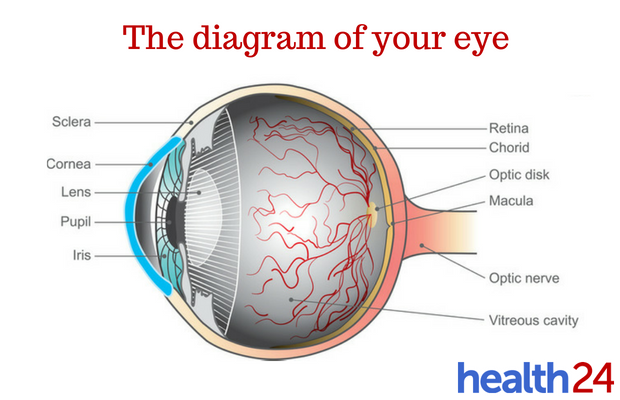
To understand the link between diabetes and eye problems, it’s important to understand how your eye works.

Your eye is protected by a tough outer clear membrane, called the cornea. It protects the eye while letting light pass through.

After light passes through the cornea, it goes through the pupil to a space called the anterior chamber and onward to another lens that enables you to focus on objects. The light then passes through another chamber in the centre of the eye and finally travels to the retina at the back of the eye.

The image is now captured and sent to the brain to be decoded. The macula, an important part of the retina, enables you to see clearly. This part is nourished by the nervous system and tiny blood vessels.

Having chronic high blood sugar levels caused by diabetes can cause damage to the nervous system and tiny blood vessels throughout the body, including those in the eyes. This can lead to several eye complications. The blood vessels can also start leaking fluid, which can cause swelling in the eye. 

diagram of eye

What are the different eye problems you may encounter?

Diabetic eye disease includes a variety of eye conditions that can occur in people with diabetes and includes the following:

  • Diabetic retinopathy: A condition that affects the blood vessels in the retina that line the back of the eye.
  • Diabetic macular oedema: Swelling of an area in the retina, called the macula, caused by the build-up of fluid.
  • Cataracts: The clouding of the normally transparent crystalline lens in the eye, causing blurry vision.
  • Glaucoma: The occurrence of abnormally high pressure in the eye because of too much liquid. This can cause damage to the optic nerve.

According to the journal Eye and Vision, globally diabetic retinopathy is one of the biggest causes of blindness.

Who is at risk for diabetic eye complications?

The Global Diabetes Community says that anyone with diabetes (type 1, 2 or gestational) is at risk for eye complications, and the risk increases the longer you have diabetes.

Any diabetes-related eye complication can lead to partial or complete loss of vision if left untreated.

When should you immediately consult a medical professional?

Most eye complications usually have no symptoms in the beginning, but as they progress, they will start affecting vision. Bleeding from abnormal blood vessels in the retina can cause the appearance of dark spots in your vision (often called “floaters”).

Although these dark spots can disappear on their own, they can also signal the risk of retinal bleeding, which can cause permanent loss of vision.

Other signs and symptoms that should be immediately checked out include:

  • Sudden blurry vision – this could be caused by your insulin dosage, which may need to be adjusted  
  • Sudden sharp pain in your eye, which can signal pressure
  • Sudden loss of vision in one or both eyes
  • Any flashes of light
  • Any nausea, vomiting or headaches accompanying eye complications

What are the treatment options?

There are a couple of options to correct vision loss and retina damage. These include:

  • Laser treatment in the case of severe retina damage.
  • A surgical procedure called vitrectomy to treat bleeding in the eye, scar tissue around the eye and retinal detachments.
  • Injection or oral medication to repair blood vessels and help bring down swelling.

Keep your eyes in tip-top shape

Early detection and treatment can reduce a diabetic’s risk of blindness by 95%. Here are a few things you can do to monitor your eye health:

  • Have a comprehensive eye test once a year, or more frequently if you already have eye complications.
  • Control your blood sugar and insulin, as this slows the onset of diabetic retinopathy and other eye conditions.
  • Include plenty of fruits and vegetables in your diet and include exercise in your daily routine to keep your nervous system healthy.
  • Check your cholesterol levels, as too much “bad cholesterol” (LDL) can cause damage to blood vessels.
  • Keep your blood pressure under control, as high blood pressure increases your risk for glaucoma.

Image credit: iStock

Share Button