Health24.com | This diet is ranked #1 in the world – but is it right for you?

You’ve probably declared some lofty weight-loss resolutions for the upcoming year. Besides the gym, one of your most valuable weapons will be an easy-to-follow, effective nutrition plan. But with the host of popular diets available, is one actually better than the next? US News & World Report seems to think so.

They released rankings of 40 diets – including Mediterranean (tied for first place), vegetarian (#10), paleo (#32) and ketogenic (last place at #40) – this week. The leader of the pack: The DASH diet, for the eighth year in a row in the “best diet” category.

The DASH diet took the #1 spot in the “healthy eating” and “heart healthy” categories, too. And on top of that, it made the top 10 for “best weight-loss diets”, “best diabetes diets” and “easiest diets to follow” – but can one way of eating really rule them all? Read on to find out of if the DASH diet is right for you.

Read more: 6 weird things that happen to your body when you go on the paleo diet

What is the DASH diet?

DASH stands for Dietary Approaches to Stop Hypertension. This plan was first developed by the National Heart, Lung, and Blood Institute (NHLBI) in the 1990s as a way to fight high blood pressure, but secondary benefits have become apparent after 20 years.

“The DASH diet is so popular because it’s probably the most robustly researched diet out there, specifically when it comes to heart health,” says Mike Roussell, PhD, Men’s Health nutrition advisor.

Here’s the typical menu: Five daily servings of fruit, five daily servings of vegetables, two to three daily servings of low-fat dairy, roughly eight daily servings of whole grains, and protein from two daily servings of lean meats, along with five servings of beans, nuts and seeds a week.

Your goal with DASH is to minimise your sodium intake to less than 2 300mg a day, and restrict added sugars and saturated fats – mostly from red meats.

Read more: Special report: The salt in your diet could kill you – how much (or how little) is healthy?

What are the health benefits of the DASH diet?

One study in the Archives of Internal Medicine found that a combination of the DASH Diet and regular exercise can help hypertensive patients lower systolic blood pressure by up to 16 points in four months. Research also shows that the diet can help lower your LDL cholesterol, or the most harmful form of cholesterol.

While DASH doesn’t claim to provide rapid weight loss, research has shown you can, in fact, shed kilos. That same Archives of Internal Medicine study found that people lost on average 8.5kg when they added exercise to a DASH diet, while people following the diet without exercise lost less than half a kilo.

Another study found that a reduced-kilojoule DASH diet paired with resistance training can help you lose 3kg in 10 weeks, gain muscle and decrease body fat by 11%. “The DASH diet can be effective, but if you’re trying to lose a ton of weight there might be better solutions,” says Roussell.

One downfall may be its preference for high carbs – about 55% of your daily kilojoules – and consuming that volume of fibre from a combination of the whole grains, fruits, and vegetables can be difficult, says Roussell.

“If you have a lot of weight to lose – say 20-plus [more than 9kg] pounds – it might be better if you took a more carb-restricted approach,” he says.

Read more: Cut the carb crap – this is what you should be eating

Low-carb diets can also reduce your risk of heart disease. Research shows that a 12-week low-carb diet, such as the Atkins Diet, can significantly reduce triglycerides (a type of fat in your blood), blood sugar, insulin and LDL cholesterol. A separate study found the same type of diet can also reduce inflammation, a deep immune response that precedes serious health issues like heart disease and diabetes.

How does the DASH diet compare to the mediterranean diet?

The DASH diet tied for first place with the ever popular and Mediterranean diet, which is also founded on lots of fruits, vegetables and whole grains. The Mediterranean diet offers its own slew of benefits, like improving your brain health and heart disease risk.

However, this way of eating does place a heavier emphasis on fish, fat in the form of olive oil and the occasional glass of wine.

It doesn’t really prescribe a serving count, either. Instead, the Mediterranean diet offers a pyramid-like approach: Whole grains, fruits, vegetables, nuts and olive oil are at the base of every meal, fish comes in next at two servings per week, while poultry and dairy are consumed more moderately.

Read more: How this guy lost nearly 30kgs and transformed his gut into a six pack

So, how do you choose the right diet for you?

Ranking diets is a little bit like ranking workouts. Someone who enjoys powerlifting may not like cycling, but in the big picture, both have health benefits. The real secret is finding a diet that allows you to enjoy your meals, consume a wide-variety of healthful nutrients and feel good – all while not overeating.

That approach can be different for everyone, and it’s far more important than the actual composition of your diet. If a plate of chicken, brown rice and roasted vegetables sounds great to you, then DASH might be your thing. If you have trouble digesting dairy or rather load up on a big green salad with cucumbers, tomatoes and salmon drizzled with olive oil, then Mediterranean might be worth a try.

One way you can’t go wrong: If you’re an active healthy person, stick to a whole-foods diet that’s rich in produce – whether it’s the ketogenic, Mediterranean or DASH diet. The rest is just details.

If you want to try DASH yourself, check out the NHLBI’s website for a free guide.

This article was originally published on www.menshealth.com

Image credit: iStock

NEXT ON HEALTH24X

Share Button

Health24.com | Bipolar in the workplace: ‘I was asked whether I was taking crazy people’s meds’

Michelle Lewis* has experienced a great deal of discrimination against her in the workplace for having a mental illness. In 2016, she suffered suicidal thoughts and knew she needed help. She was diagnosed with bipolar and admitted to a clinic.

“When I was discharged from the clinic, I returned to work as normal. Before my official diagnosis, there were no complaints about my quality of work,” Lewis says. But when she returned to the office she realised something wasn’t right.

She was called into a meeting and asked what was wrong. She believed that because she had worked for the company for six months, she assumed she could be honest.

Lewis explained she was seeing a psychiatrist and psychologist once a month. At first this was not an issue but it slowly became one.

“I was told that it might be better if I rather resign as, due to my new diagnosis, my work is now terrible. During this time they made my life really difficult. I eventually resigned on request from the company. It was also better for my health at that stage.”

Unfortunately that was not the end of discrimination for Lewis. She needed to find a new job and went for numerous interviews. “During one of these interviews I was asked whether I take any medication “for crazy people”, because if I did, they didn’t want me. I immediately knew that this wasn’t for me. I was shocked.”

Lewis says she has had recruitment agencies ask about her mental health. “It feels like if you lie to them and get the job and then disclose your mental illness it feels like you were lying.”

“People never see bipolar as a disease you have, they see it is a thing you ‘are’,” she says. 

Discrimination against mental illness

Unfortunately stigma or discrimination against mental illness exists due to misinformation and ignorance around mental health conditions. Dr Lori Eddy, a counselling psychologist, says, “For example, that mental health conditions are a ‘sign of weakness’ or a ‘character flaw’.” 

In October 2017, SADAG released update stats showing that 61% of respondents had disclosed their mental illness at work. We conducted our own survey. Out of the 1 077 people who completed it, 57.8% said they would not disclose a mental illness to their employer.

However, only 54.2% said they would disclose mental health as the reason for taking a sick day. What is encouraging though is that 64.7% said their manager would approve the day if it was for mental health reasons, and 53.3% said their manager’s reaction would be supportive.

Although this does indicate that there is a strong move toward less discrimination in the workplace with regards to mental illness, discrimination still exists.

What HR says about mental health 

According to Jeannine Scheltens, divisional HR manager at 24.com, you should never be asked during a job interview about your mental health – unless you choose to disclose it then.

“In the same way you cannot be asked if you’re pregnant. That just sets up the possibility for discrimination. These questions shouldn’t be asked in an interview process.”

Scheltens says managers must handle cases of mental health with respect and not discrimination. “I think [mental health] is scary – it’s not tangible, so they don’t really know what to do. It’s also difficult because they don’t know when it’s going to end. It’s not like someone has flu and is booked off for three days. Mental health is ongoing.”

She says if the employee with a mental illness is willing to have the conversation with their line manager, then it’s much easier for the manager to come to some kind of reasonable accommodation.

Shelagh Goodwin, general manager of human resources at Media24, says that the stigma attached to mental illness makes a work situation that much harder for someone who is already struggling.

“It’s a tricky thing to handle, and education and awareness are important – especially as there are still some old-fashioned managers out there who think people are faking it.”

She does believe the situation is changing, however. “People’s attitudes are changing, managers have a much better understanding of what mental health issues involve and what they need to do to support someone who has mental health issues.”

To disclose or not to disclose?

“It’s against the law to discriminate against someone on the grounds of their health conditions or gender,” Goodwin says. “But it’s important as an employee to know your rights and that you cannot be discriminated against for disclosing.”

In fact, Goodwin says disclosing your mental illness actually offers you better protection.

“It means there is a statement on record from you that says, ‘I have a disability.’ And if the employer wants to dismiss you or discriminate against you, you have a strong case of unfair discrimination because you disclosed.”

*Name has been changed to protect the identity of the person quoted.

Image credit: iStock

Share Button

Health24.com | People are going under the knife to get fake but permanent dimples

How we look nowadays is entirely up to us now… well kind of, but not really. Confusing right? We know, it seems like all the apps and filters we use to modify how we look on pictures is not enough as some people has taken this appearance thing to a whole new level. And by that we mean surgery – people are going real permanent.

It started with fuller lips, a bigger bottom, then boobs and now, among many other things, it’s dimples. That’s correct, you can get man-made dimples!  The procedure is called dimpleplasty and will only cost you about R15 000. Keen? Here’s all you need to know about it.

What is it?

Yup, like faux freckles, you can now fake dimples too. The operation involves an incision inside the mouth and through the cheek, going into the under-surface of the skin. In theory, when the suture is tied, it should leave a natural-looking dimple in the overlying skin. Surgery takes about 30 minutes and can be performed under local anaesthetic.

Read more: ‘I had plastic surgery and liposuction to change my body – here’s what happened’

Why are people opting to go under the knife?

This one’s purely cosmetic. “Dimples possibly add character to one’s smile,” says plastic and reconstructive surgeon Dr Nerina Wilkinson. In some cultures, it’s believed that dimples are a symbol of good luck, but science defies this.

“Natural dimples are actually formed due to weakness in the underlying muscle where the skin adheres to this area. When the muscle contracts, its weakness is visible as a dimple,” says Dr Wilkinson. Because of this, faking a dimple can go very wrong, making dimpleplasty a difficult procedure.

Read more: Women are opting out of incontinence surgery for this scary reason

What you need to know

Although it’s relatively quick, dimpleplasty is not a straightforward procedure, cautions Dr Wilkinson. “Depending on your healing, there could be an unsightly permanent indentation,” she warns. “The dimple could also be misplaced and rather than being ‘cute’, it could look like an irregularity or a scar. On rare occasions, there could be nerve or muscle damage that could affect your speech.” Yikes!

This article was published on www.womenshealthsa.co.za

Image credit: iStock

Share Button

One in 25 children aged 10 or 11 ‘severely obese’

The figures for 10 and 11-year-olds are a further wake-up call, the Local Government Association says.

Share Button

Dino-bird dandruff research head and shoulders above rest

Palaeontologists from University College Cork (UCC) in Ireland have discovered 125 million-year-old dandruff preserved amongst the plumage of feathered dinosaurs and early birds, revealing the first evidence of how dinosaurs shed their skin.

UCC’s Dr Maria McNamara and her team studied the fossil cells, and dandruff from modern birds, with powerful electron microscopes for the study, published today in the journal Nature Communications.

“The fossil cells are preserved with incredible detail — right down to the level of nanoscale keratin fibrils. What’s remarkable is that the fossil dandruff is almost identical to that in modern birds — even the spiral twisting of individual fibres is still visible,” said Dr Maria McNamara.

Just like human dandruff, the fossil dandruff is made of tough cells called corneocytes, which in life are dry and full of the protein keratin.

The study suggests that this modern skin feature evolved sometime in the late Middle Jurassic, around the same time as a host of other skin features evolved. “There was a burst of evolution of feathered dinosaurs and birds at this time, and it’s exciting to see evidence that the skin of early birds and dinosaurs was evolving rapidly in response to bearing feathers,” Dr McNamara added.

Dr McNamara led the study, in collaboration with her postdoctoral researcher Dr Chris Rogers; Dr Andre Toulouse and Tara Foley, also from UCC; Dr Paddy Orr from UCD, Ireland; and an international team of palaeontologists from the UK and China.

The dandruff is the first evidence of how dinosaurs shed their skin. The feathered dinosaurs studied — Microraptor, Beipiaosaurus and Sinornithosaurus — clearly shed their skin in flakes, like the early bird Confuciusornis studied by the team and also modern birds and mammals, and not as a single piece or several large pieces, as in many modern reptiles.

Co-author Professor Mike Benton, from the University of Bristol’s School of Earth Sciences, said: “It’s unusual to be able to study the skin of a dinosaur, and the fact this is dandruff proves the dinosaur was not shedding its whole skin like a modern lizard or snake but losing skin fragments from between its feathers.”

Modern birds have very fatty corneocytes with loosely packed keratin, which allows them to cool down quickly when they are flying for extended periods. The corneocytes in the fossil dinosaurs and birds, however, were packed with keratin, suggesting that the fossils didn’t get as warm as modern birds, presumably because they couldn’t fly at all or for as long periods.

Story Source:

Materials provided by University College Cork. Note: Content may be edited for style and length.

Share Button

Most popular vitamin and mineral supplements provide no health benefit, study finds

The most commonly consumed vitamin and mineral supplements provide no consistent health benefit or harm, suggests a new study led by researchers at St. Michael’s Hospital and the University of Toronto.

Published today in the Journal of the American College of Cardiology, the systematic review of existing data and single randomized control trials published in English from January 2012 to October 2017 found that multivitamins, vitamin D, calcium and vitamin C — the most common supplements — showed no advantage or added risk in the prevention of cardiovascular disease, heart attack, stroke or premature death. Generally, vitamin and mineral supplements are taken to add to nutrients that are found in food.

“We were surprised to find so few positive effects of the most common supplements that people consume,” said Dr. David Jenkins*, the study’s lead author. “Our review found that if you want to use multivitamins, vitamin D, calcium or vitamin C, it does no harm — but there is no apparent advantage either.”

The study found folic acid alone and B-vitamins with folic acid may reduce cardiovascular disease and stroke. Meanwhile, niacin and antioxidants showed a very small effect that might signify an increased risk of death from any cause.

“These findings suggest that people should be conscious of the supplements they’re taking and ensure they’re applicable to the specific vitamin or mineral deficiencies they have been advised of by their healthcare provider,” Dr. Jenkins said.

His team reviewed supplement data that included A, B1, B2, B3 (niacin), B6, B9 (folic acid), C, D and E; and ?-carotene; calcium; iron; zinc; magnesium; and selenium. The term ‘multivitamin’ in this review was used to describe supplements that include most vitamins and minerals, rather than a select few.

“In the absence of significant positive data — apart from folic acid’s potential reduction in the risk of stroke and heart disease — it’s most beneficial to rely on a healthy diet to get your fill of vitamins and minerals,” Dr. Jenkins said. “So far, no research on supplements has shown us anything better than healthy servings of less processed plant foods including vegetables, fruits and nuts.”

Story Source:

Materials provided by St. Michael’s Hospital. Note: Content may be edited for style and length.

Share Button

Rise and fall of the Great Barrier Reef

A landmark international study of the Great Barrier Reef has shown that in the past 30,000 years the world’s largest reef system has suffered five death events, largely driven by changes in sea level and associated environmental change.

Over millennia, the reef has adapted to sudden changes in environment by migrating across the sea floor as the oceans rose and fell.

The study published today in Nature Geoscience, led by University of Sydney’s Associate Professor Jody Webster, is the first of its kind to reconstruct the evolution of the reef over the past 30 millennia in response to major, abrupt environmental change.

The 10-year, multinational effort has shown the reef is more resilient to major environmental changes such as sea-level rise and sea-temperature change than previously thought but also showed a high sensitivity to increased sediment input and poor water quality.

Associate Professor Webster from the University’s School of Geosciences and Geocoastal Research Group said it remains an open question as to whether its resilience will be enough for it to survive the current worldwide decline of coral reefs.

“Our study shows the reef has been able to bounce back from past death events during the last glaciation and deglaciation,” he said. “However, we found it is also highly sensitive to increased sediment input, which is of concern given current land-use practices.”

The study used data from geomorphic, sedimentological, biological and dating information from fossil reef cores at 16 sites at Cairns and Mackay.

The study covers the period from before the “Last Glacial Maximum” about 20,000 years ago when sea levels were 118 metres below current levels.

History of death events

As sea levels dropped in the millennia before that time, there were two widespread death events (at about 30,000 years and 22,000 years ago) caused by exposure of the reef to air, known as subaerial exposure. During this period, the reef moved seaward to try to keep pace with the falling sea levels.

During the deglaciation period after the Last Glacial Maximum, there were a further two reef-death events at about 17,000 and 13,000 years ago caused by rapid sea level rise. These were accompanied by the reef moving landward, trying to keep pace with rising seas.

Analysis of the core samples and data on sediment flux show these reef-death events from sea-level rise were likely associated with high increases in sediment.

The final reef-death event about 10,000 years ago, from before the emergence of the modern reef about 9000 years ago, was not associated with any known abrupt sea-level rise or “meltwater pulse” during the deglaciation. Rather it appears to be associated with a massive sediment increase and reduced water quality alongside a general rise in sea level.

The authors propose that the reef has been able to re-establish itself over time due to continuity of reef habitats with corals and coralline-algae and the reef’s ability to migrate laterally at between 0.2 and 1.5 metres a year.

Future survival

However, Associate Professor Webster said it was unlikely that this rate would be enough to survive current rates of sea surface temperature rises, sharp declines in coral coverage, year-on-year coral bleaching or decreases in water quality and increased sediment flux since European settlement.

“I have grave concerns about the ability of the reef in its current form to survive the pace of change caused by the many current stresses and those projected into the near future,” he said.

Associate Professor Webster said previous studies have established a past sea surface temperature rise of a couple of degrees over a timescale of 10,000 years. However, current forecasts of sea surface temperature change are around 0.7 degrees in a century.

“Our study shows that as well as responding to sea-level changes, the reef has been particularly sensitive to sediment fluxes in the past and that means, in the current period, we need to understand how practices from primary industry are affecting sediment input and water quality on the reef,” he said.

Story Source:

Materials provided by University of Sydney. Note: Content may be edited for style and length.

Share Button

One million French smokers quit in a year amid anti-smoking measures

France sees the steepest drop in daily smokers for over a decade as anti-smoking regulations bite.

Share Button

Health24.com | Mother-and-daughter duo diagnosed weeks apart beat the Big C

A brave mother and daughter who were diagnosed with cancer weeks apart have now beat the disease after two years of treatment.

Lucy Eardley (37) was diagnosed with breast cancer in July 2016, and just eight weeks later her mom, Angela Bucknell (64), was told the same dreaded news.

The pair needed urgent treatment to save their lives and Lucy underwent surgery followed by chemotherapy.

‘We stayed positive’

But the mom and daughter remained positive, with Angela claiming Lucy had saved her life after urging her to seek medical attention after finding a lump.

Now, two years later, they’re victorious in their battle against cancer.

Lucy, a receptionist and mom to seven-year-old Holly and four-year-old Charlie, from Macclesfield in the UK said it was devastating to discover both she and her mom had cancer at the same time.

“When I first found a lump, I never imagined it would be cancer, but my shock diagnosis prompted mom’s diagnosis eight weeks later as she also found a lump.

“Despite both being petrified we stayed positive during it all. I was even laughing and smiling as my head was being shaved.

“My cancer was fast growing and aggressive and I knew I’d need chemotherapy to survive.

“I had an operation to remove the lump and my mom needed the same thing before starting her radiotherapy.”

‘We’d always pick each other up’

Lucy had just started her chemotherapy when her mom was diagnosed. She says it was a scary time, but thankfully Angela’s cancer was at an earlier stage and she didn’t need to undergo the same gruelling treatment.

Lucy says the pair used humour to cope with their diagnoses and often found themselves laughing during treatments.

“We’d always pick each other up when the other was down. It was an awful experience but it felt incredibly comforting that I had my mom going through the same [thing].

“Most of our treatments were on the same day and although we weren’t always at the same hospital, we were always checking up on each other.”

Angel says she’s grateful she had her daughter by her side through this journey.

“Lucy’s positive and brave attitude from the very beginning definitely helped me overcome my fears.

“We’ll both need check-ups every year to ensure our breast cancer hasn’t returned.

“I couldn’t be happier that two years after our journeys began we can both say we’re cancer-free.”

Image credit: CATERS/WWW.MAGAZINEFEATURES.CO.ZA

NEXT ON HEALTH24X

Share Button

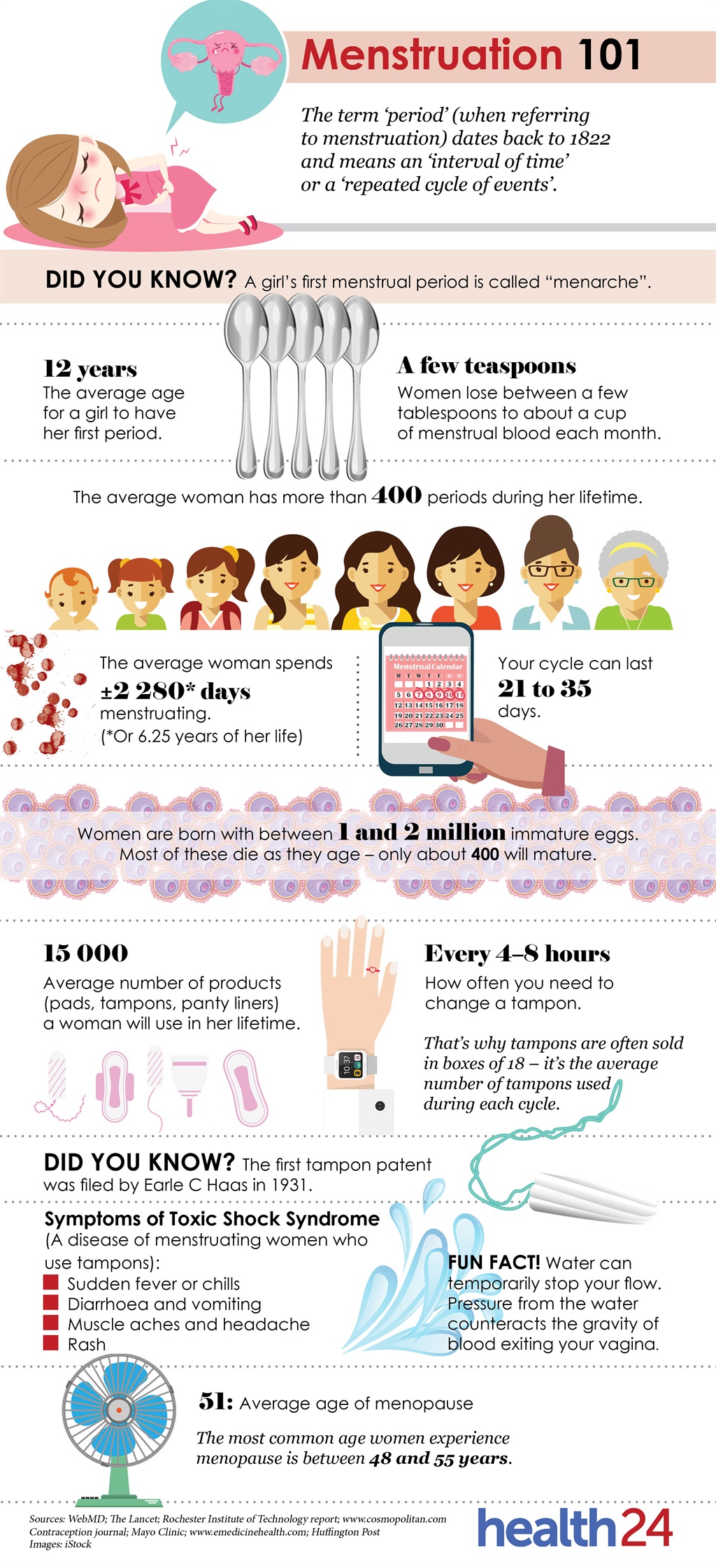
Health24.com | SEE: 14 facts about menstruation you might not know

12 quick PMS tips

Pre-menstrual symptoms affect many women. Here are some quick tips on reducing the impact of this on your life.

Beat PMS with diet

It’s that time of the month again and you’re feeling grumpy and miserable. Does the answer lie in what you eat?

Share Button