Deciphering the language of cells using observation chambers

Like humans, cells of the same species each have a distinct “personality.” When confronted with an external stimulus like a virus, they each secrete a different quantity of molecules and communicate with each other to a varying degree. Studies have already shown that two cells of the same type may not behave identically when subjected to the same treatment.

In their quest to learn more, researchers from EPFL, working in collaboration with RMIT University in Australia and the University of Lausanne, have come up with an optofluidic device that has a tiny chamber inside. The chamber is around one one-thousandth the size of a raindrop. A cell is placed in the chamber, and then researchers can observe it in real time without disrupting its environment. The quantity and type of the cell’s chemical secretions can be monitored continuously. The device has been shown to work for 12 hours straight but could function much longer, offering researchers a powerful and innovative selection tool. The results have been published in Small.

Studying cells one by one

All cells function in their own complex way. Cancer cells, for example, produce various hormones and proteins in order to spread and to invade healthy tissue; immune cells respond to an infection or an intruder by secreting chemical mediators called cytokines that stimulate the immune system to fight the enemy. But what is the actual mechanism underlying each cell’s behavior?

Numerous studies have been run on how groups of cells function, but we have precious little information on the behavior of individual cells. Compatible with traditional microscopes, the integrated and miniaturized device developed by the EPFL researchers offers a new way to gain insight into cell processes and communication. It also sets the stage for the development of new therapies to treat cancer and autoimmune diseases. “We could, for example, select the most effective immune cells to combat a given disease,” says Hatice Altug, a co-author of the study and head of the Bionanophotonic Systems Laboratory at EPFL’s School of Engineering.

Cells individually housed, fed and analyzed

The nanophotonic biosensor developed by the researchers is a glass slide coated with a thin gold film, perforated with billions of nanopores arranged in a precise pattern. A small chamber whose walls are made of porous membranes is placed above the slide. The chamber receives a steady flow of water and nutrients through tiny microfluidic channels. Temperature and humidity are carefully regulated. The device contains valves that let scientists insert a cell into the chamber, in which ligands or antibodies are positioned to recognize and capture specific molecules secreted by the cell.

A broadband light source shines on the chamber. Thanks to an optical phenomenon called plasmons, the nanopores let only one light-wave frequency or color through. When a cell secretes a molecule, it attaches to the antibodies, thereby changing the frequency transmitted by the nanopores. This is how minutes of specific molecules can be identified.

The researchers have used their new technique to study cytokine secretion levels in lymphoma cells. “Until now, the methods used to study individual cells have always required fluorophores,” says Altug. “Yet these compounds interfere with the cells’ functioning and make real-time studies impossible.” Maria Soler, the study’s co-lead author, adds: “In our device, each nanopore is a separate sensor. Cells can thus settle naturally anywhere in the chamber, and we can analyze them the same way.”

There are numerous potential applications. “Our approach could be used to identify the most aggressive cancer cells in a tumor and decide exactly which treatment to administer to the patient,” concludes Xiaokang Li, the study’s co-lead author.

Story Source:

Materials provided by Ecole Polytechnique Fédérale de Lausanne. Note: Content may be edited for style and length.

Share Button

Health24.com | Hunger in SA: ‘We sometimes go to bed on an empty stomach’

On World Hunger Day, an overview of the country’s hungry people shows that South Africa’s social grants are just not enough for indigent families facing malnutrition.

South Africa’s child support grant, introduced in 1998 with the objective of improving the wellbeing of young children, was intended to reduce malnutrition. But surveys show that there has been no shift in child malnutrition rates since the 1990s, said Dr Stephen Devereux Co-Director of the Centre for Social Protection Institute of Development Studies (IDS).

Struggle to raise children

The Food Security South Africa working paper titled “Why does malnutrition persist in South Africa despite social grants?” mentions that social grants are essential to finance food consumption and reduce hunger in poor households.

In Vosloorus informal settlements on the East Rand winter is moving in fast as temperatures have started dropping.

Women from this area spoke to Health-e News about their struggle to raise children on the R400 child support grant, and the kind of foods they can afford.

Leaning against the wall of her shack, 58-year-old Nonosisi Maseko explains: “It’s really hard but I try to make ends meet from my grandson’s grant. He is doing grade one. I pay school transport R250 per month, and then we buy food from that money. We don’t have any other income in this house.”

Rising prices of basic food items

According to Maseko, she can afford 5kg maize meal, 2l cooking oil, 10kg of potatoes and sunlight soap which they use to bath and for doing laundry.

She says she buys food so that they can eat and does not consider the nutritional value.

“What matters is to go to bed with a full stomach,” she said.

According to Stats SA’s General Household Survey, one in five South Africans skip meals and/or reduce the size of their meals at least five days each month. Rising costs of living, including rising prices of basic food items, also reduce dietary diversity in poor households, as more of their budget is allocated to staple foods such as bread and maize meal, leaving less to spend on other food groups.

Just a block away from Maseko’s house is Ntombizanele Mbuweni’s house. She is a single parent and supports a family of five from one CSG.

“We sometimes go to bed on an empty stomach, more especially towards end of the month,” she says as she opens a Tupperware full of macaroni.

“Amongst other foods I buy, this is what I buy to sustain ourselves for the month,” she says.

Grant spent on many needs

Mbuweni sometimes go to the nearby Spar to get expired rolls to feed her children. As she steps to the outside she points a giant nylon sack full of boxes.

“I also sell boxes to the nearby scrap yard where I make not more than R70. It depends on how many kilograms they are when they are weighed,” she says.

Devereux explains how the cost of living can lead to malnutrition.

“It costs over R600 per month to buy a nutritious balanced diet for a child, so the Child Support Grant is only enough for two-thirds of a healthy diet for the child, if all the grant money is spent only on food for the child,” says Devereux.

“But in reality the grant is collected by an adult in the family, usually the child’s mother, and it is spent on many needs – not only food, and on other family members, not only the child.”

Stunting higher in poor households

According to Stats SA (2012), social grants contribute 42% of household income in poor families, making grants the most important source of income, as wages contribute only 32%.

Devereux says that families that survive on social grants have to ration their consumption of basic needs, including food.

“So they often go hungry, especially at the end of the month before the grants are paid. Indicators of malnutrition, such as stunting (children that are too short for their age) are higher in poor households than richer households,” says Devereux.

The Food Security SA working paper suggests that for the country to eradicate malnutrition child grants need to be increased so that parents can buy adequate food – especially in periods of drought and high price inflation. Also, since social grants on their own are not enough, other models such as cash transfers to access to basic services such as health, education and social services also need to be considered. – Health-e News.

Image credit: iStock

NEXT ON HEALTH24X

Share Button

Hunt ‘determined’ to eliminate doctors’ gender pay gap

Female doctors are paid on average £10,000 less than male doctors in England, figures show.

Share Button

Novel method to grow elastic diamonds

Diamonds is the strongest naturally occurring material on Earth. It is also renowned for its incomparable properties, such as high stiffness, exceptional thermal conductivity, high chemical resistance, and high optical transparency. Although these remarkable properties of diamond make it highly desirable for many scientific and technological applications, progress has been slow due to its brittleness.

A recent study, affiliated with UNIST has unveiled that brittle diamonds can be bent and stretched elastically when made into ultrafine needles.

This breakthrough has been jointly conducted by Distinguished Professor Feng Ding’s team from the Center for Multidimensional Carbon Materials (CMCM), within the Institute for Basic Science (IBS) at UNIST, in collaboration with an international team of researchers from Massachusetts Institute of Technology (MIT), City University of Hong Kong, and Nanyang Technological University. The results of the study has been reported this week in the journal Science.

The team demonstrated that their nanoscale diamond needles could flex and stretch by as much as nine percent without breaking, then return to their original shape. Their discovery completely overturns previous theories that diamonds are brittle. Their results, the research team say, could open up unprecedented possibilities for tuning its optical, optomechanical, magnetic, phononic, and catalytic properties through elastic strain engineering.

“Ultrahigh elasticity of diamond is due to the paucity of internal defects.”

Ordinary diamond in bulk form has a limit of well below one percent stretch, according to the researchers. In the study, Professor Ming’s group handled the chemical calculation and the analysis of the crystal structure of diamond and ascribed that the ultrahigh elasticity of the diamond nanoneedles is due to the paucity of internal defects and the relatively smooth surface.

“Diamonds, either natural or artificial, have internal defects in their crystal structure,” says Professor Ding. “When outside force is applied to these defects, they can crack and eventually break.”

In the study, via detailed simulations, Professor Ding determined precisely how much stress and strain the diamond needles could accommodate without breaking. He determined the corresponding maximum local stress was close to the known theoretical limit achievable with a perfect, defect-free diamond. He noted that defect-free diamonds can stretch by as much as 12% without breaking.

“Diamond needles stretched and flexed as much as 9% without any breakage.”

The research team from the City University of Hong Kong succeeded in fabricating nanoscale diamond needles by plasma-induced etching of diamond thin films deposited on Si substrates through bias-assisted chemical vapor deposition (CVD). As a result, the team was able to demonstrate ultralarge, fully reversible elastic deformation of nanoscale (~300 nanometers) single-crystalline and polycrystalline diamond needles.

The team measured the bending of the diamond needles, which were grown through a chemical vapor deposition process and then etched to their final shape, by observing them in a scanning electron microscope while pressing down on the needles with a standard nanoindenter diamond tip. They demonstrated experimentally that single-crystalline needles are simultaneously ultrastrong and susceptible to large elastic deformation, with fully reversible mechanical deformability of up to a maximum of 9% of elastic tensile strain.

The research team expects that their findings could lead to performance enhancement in applications, involving bioimaging and biosensing, strain-mediated nanomechanical resonators, drug delivery, data storage, and optomechanical devices, as well as ultrastrength nanostructures. Besides, Professor Ding noted that large elastic deformation in nanoscale diamond needles will be suitable for use in next-generation flexible and foldable displays.

Share Button

Health24.com | 6 sports to take up in winter so you stay active, get fitter and build more muscle

Here’s a bone-chilling fact for you: South Africa’s leading wellness programme, Discovery Vitality, sees a 9% drop in gym visits during winter. And that’s just the people who have gym contracts and choose to be active every day.

Imagine people who don’t have gym fees coming out of their bank account, motivating them to go to gym even if they don’t feel like it. That’s a lot of people who aren’t exercising enough in winter.

Read more: Don’t take winters off: These are the three things you should do instead

It’s understandable of course, we’d rather sit curled up on the couch than doing bicep curls in an ice-cold gym. And that’s why we decided to get creative, because we too, suffer from the slack that winter brings.

These are six activities you can take up that are perfect, if not even better, when done in winter. Your summer body will thank us!

1. Rock-climbing

This one is far from your typical workout, and that’s why we’re loving it for winter. You’ll have so much fun (or fear) it will hardly even feel like a workout.

Read more: So you want to go rock climbing?

On top of enjoying the feeling that you’ve conquered something after your workout, there are so many benefits that you will get to enjoy. Rock climbing is a lot more than just an upper-body workout, it’s a full-body, full-mind exercise.

Strength training and cardio are combined into a single session and you’ll be leaving those kilojoules along the wall as you climb along. According to the Harvard Health Publications, a 70kg person burns around 3 423 kilojoules per hour while doing a rock climbing ascent.

You’ll also be improving your grip strength which will have mega-results in the gym. Strong grip is also associated with decreasing your risk for cardiovascular disease. According to Circulation, people with strong grips were 36% less likely to develop coronary heart disease than those with weak grips, regardless of their genetic predisposition.

Read more: Are you ready to take on the CityROCK speed challenge?

We’re not just saying it’s a great workout and challenge, we’ve tried and tested this and it’s one of our winter workouts here at MH headquarters. We even created a challenge so you can join us too! It’s called The CityROCK Speed Challenge and the guys over there have built a wall especially for our Men’s Health readers and fans. There’s a CityROCK in Joburg and Cape Town, if you’re amped to take on the 15m wall.

The challenge? Climb the wall as quickly as you can and record your time to get on the board. Try to beat other climbers, or go with a group of mates and see who is the fastest out of all of you.

You can find out more about it here. Get climbing!

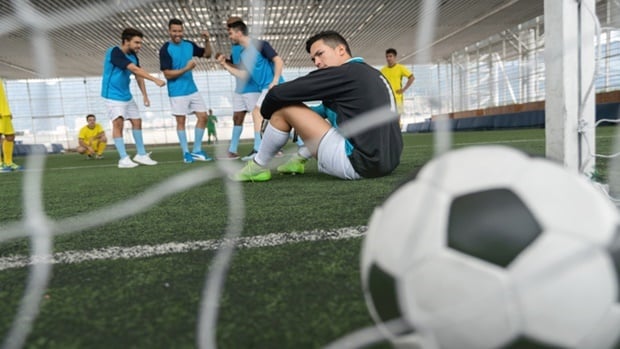
2. Indoor soccer

If you’re worried about climate control, you’re pretty much covered when it comes to indoor soccer. A lot of people forget that they can continue their favourite warm-weather sports in winter if they just do a little re-thinking and rule-changing. That’s why indoor soccer works so well. Think of it as your off-season soccer practice or think of it as a new sport you can continue to play even after the winter chill has gone.

Read more: How to prepare for a gruelling workout like a world-class soccer player

Get together a group of friends and form a league where you play once a week. Or join a league of people you don’t know and make a whole lot of new friends. You can improve your own skills and it’s a lot more fast-paced than outdoor soccer which means you will get more touches and opportunities to make like Messi and score a goal.

Also, we’re not saying this should factor into your decision, but we kind of are. With the Premier and Champions League wrapping up and The FIFA World Cup starting in the heat… or should we say cold of winter. You’re going to have major FIFA fever. Take that excitement straight to the court (your mates, too) instead of sitting on your couch, beer in hand, watching the pros play.
3. Mountain biking

Who said winter meant you wouldn’t be getting dirty? Mountain biking in the cold, wet and mud provides some of the best training and most fun you could have. Cycling is a great way to get in your cardio and build some muscle.

Read more: The ultimate guide to mastering mountain biking: From buying bikes to finding trails                       

Slipping and sliding down forest trails and switching back and forth on single-track, mud flying all over your bike and body is an adventurous way to get in a winter workout.

And getting outdoors in winter has its proven benefits; brown fat is triggered by the cold according to a study in The Journal of Clinical Investigation. This means you will burn more kilojoules and expend more energy while working out in the cold.

It’s not for the faint of heart, but then again. How much do you really want to join the hundreds of other people who have given up their summer sports and headed to the spinning bikes at the gym? Our guess is not so much.

Check out mtbroutes.co.za, for the mountain bike trails you can hit all over South Africa and even Lesotho.

4. Squash

For every half an hour of squash you smash, you could crush some serious kilojoules; 2 092 to be exact. Despite it being indoors which means you can play it all year round, you’ll be running, leaping and diving which will help build up a sweat and most likely keep you warm in that winter weather.

Read more: Top three squash workouts

Squash improves your cardiovascular health which is pivotal if you want to have a healthy heart (and trust us, you do). It will also improve your agility, flexibility and hand-eye co-ordination. So that come summer time, you will never miss catching that beer that your mate chucks your way.

5. Trail running

With so many trail running events in winter, not lacing up your takkies and hitting the terrain would be a shame. Running in winter has its own challenges but the rewards you will reap outweigh them tenfold. While the cold might have an effect on your breathing, you won’t have to deal with the sun piercing your skin, making sweat droplets flow from every pore in your body.

And if you’re struggling for motivation, joining a running club is the best thing you could do. All you need to do in the winter months when motivation is low, is show up and run, because you’ll feel the guilt if you don’t.

Read more: 5 signs you need new running shoes

Just remember that your running shoes need extra care in the cold and rain. According to Asics, any time you run in the rain, you need to clean your shoes with a cloth and if possible remove the insoles. Once removed, stuff them with newspaper so the moisture inside the shoe can be absorbed.

Check out trailrunning.co.za to find trail running races in your area. It’s crazy how active this sport is in winter – we’re talking more than seven trail races, and that’s just in the next month!

6. Golf

Okay, hear us out on this one. Most guys hang up their clubs for the winter when really, these could be the best months to get in your practise. The first bonus? There are a lot less guys on the green so you don’t have to worry about slow play. It will just be you and a few other golfers who have figured this out.

Read more: Expert tips for a better golf game

And if having your own private golf course isn’t selling you, the financial gain will be a hole-in-one. Because most people choose staying put on their couch instead of putting about; golf courses struggle to make the money they make in summer. This means discounted membership fees, slashed lesson prices, cheaper prices on green fees and so much more.

You’ll also be getting some much needed vitamin D that a lot of us miss out on during winter. This nutrient is crucial for your bone, skin and mental health; and preventing a whole host of issues and diseases that a vitamin D deficiency can cause you.

Here in South Africa, we’re lucky we don’t have to endure those snowy and extreme conditions that other countries do. All you need to do to enjoy the green? Grab a jacket.

Read more: 5 reasons winter is making you fat

Ultimately, the point is to try and stay as active as possible during the colder months no matter how much of a struggle it may seem like. Winter-weather workouts = the two H’s, health and happiness.

Because your body works harder to keep you warm, you get an increased amount of endorphins (endorphins are responsible for that post-gym feel-good feeling). This means you will feel even better after your workout according to research published in Environmental Science & Technology.

So take up one of these sports so that when summer comes around your muscles haven’t melted away.  

This article was originally published on www.mh.co.za

Image credit: iStock

NEXT ON HEALTH24X

Share Button

Health24.com | Why guys are spending thousands of rands a year to produce more semen

About a year and a half ago, Ted*, 41, was diagnosed with low testosterone, which led his doctor to put him on testosterone replacement therapy (TRT).

“It was a godsend for me,” he told Men’s Health. But TRT has been linked to lower sperm count, and Ted and his wife were trying to get pregnant.

So Ted started doing some research on the Internet for supplements that could help raise his sperm count, which in turn led him down the path of trying to increase the actual volume of his semen – or, as he put it, “I started looking at ways to increase my loads,” he says.

Read more: 8 signs you have low testosterone levels

After stumbling on a few Reddit threads devoted to the topic, Ted started taking supplements to increase his semen volume, including zinc, vitamin D3 and folic acid. At one point, he says, he was taking more than a dozen pills per day, spending a fortune on supplements per month.

He swears that not only did his semen volume increase while taking the pills, he also “discovered the ability to be able to go for a second round” of sex with his wife after years of struggling with ED.

The costs started piling up, but at the time, he thought it was worth it.

“My wife once told me she’d had a lover who produced large amounts of semen, which she enjoyed. So I felt [enhancing production] was an added bonus.”

When it comes to sex, we men are an insecure bunch: We’re always comparing ourselves to others and asking ourselves how we can do it better. That’s true when it comes to penis size, and it’s true when it comes to our, well, cum.

Read more: Are your testosterone levels normal?

According to the World Health Organization, most guys produce about 3.7ml of ejaculate, or roughly three-quarters of a teaspoonful. But some men want more than that, which is why they’re trying to “hack” their own semen production by way of a cocktail (pun intended) of supplements.

“I would speculate that if given the choice, most guys would like to produce a reasonably to hilariously large load of semen.”

There’s no functional reason why guys would want to increase the volume of their semen. Contrary to what Ted thought, the link between count is tenuous at best: Sperm cells only constitute about one to 10% of semen, so guys with a high volume of semen can have low-quality sperm, while men with a low volume of semen can have high-quality sperm. Nonetheless, guys like Ted are still willing to a lot of money every month on semen-enhancing supplements. The question is, why?

Like everything else that has to do with sex in the 21st century, a large part of the answer comes down to one word: porn, says urologist Jahmin Brahmbhatt, MD.

“A lot of the pressure to produce large amounts of semen probably stems from [that],” he says. Indeed, on subreddits like r/Sex, the influence of porn is clear, “All my life, I feel I’ve never been able to produce anything like the cum shots they do in the porn vids,” one Redditor muses enviously.

Read more: 5 ways you can make your sperm stronger right now

But as Dr Brahmbhatt points out, male porn stars aren’t exactly a good standard to measure against. “These films do not represent reality – they are produced and edited over hours and days,” he says.

There’s also probably a healthy dose of male ego involved. “Some men do identify with their sexual function and perceive their ejaculatory function as sort of a marker of their virility, or a mark of their manliness,” Daniel Williams, MD, an associate professor in the department of urology and director of male reproductive medicine and microsurgery at the University of Wisconsin School of Medicine and Public Health, previously told Men’s Health.

Do these supplements actually work?

Well, it depends what you’re using them for. There is some evidence, says Dr Brahmbhatt, that a combination of supplements like zinc, folic acid, selenium and vitamin C can improve sperm count specifically. “Individual studies have shown small percentage benefits [to fertility] from each, so the theory is combining them in some form will help maximise the health of your sperm.”

But if you’re just looking to up your semen volume for the hell of it, there’s not much evidence that the supplements recommended on Reddit will do the trick.

“There are so many reasons why your volume could be up or down on a daily basis,” says Dr Brahmbhatt. “Some of these supplements may increase your sperm counts, but that generally does not lead to a significant change in your semen volume.”

Read more: Why your sperm count may be lower than you think

We know that drinking lots of fluids helps. In fact, porn star Peter North, who is notorious for producing large amounts of ejaculate, previously told Men’s Health that “being hydrated with coconut water helps”.

But even he says he has no idea why he just produces more semen than others. “Everyone thinks the reason is because I have an extra prostate gland or something, but it’s just genetic.”

Should you be concerned about low semen volume?

If you notice you’re ejaculating smaller amounts than usual, you should see a urologist, as it could be a sign of a health issue like low testosterone or diabetes. But for the most part, there’s no reason to try to increase the volume of your semen.

To maintain your overall sperm health, Dr Brambhatt’s answer is simple: Eat well and exercise. “Thirty-three percent of obese men have low sperm count,” he says. “Eat more antioxidants and increase your fruits and veggies.”

He also urges men to drink moderately, quit smoking and avoid hot tubs, which have been linked to decreased male fertility.

Read more: Do you have low semen volume?

Eventually, Ted’s wife did get pregnant, but he stopped taking his supplements because they ended up costing too much money. Occasionally, he’ll pop a few Horny Goat Weed pills to amp up his libido, but for the most part, his days of self-experimentation are behind him.

Still, he does think there’s an intangible psychological reason that drove him to pursue mythologically giant loads. “I would speculate that if given the choice, most guys would like to produce a reasonably to hilariously large load of semen,” he says.

This article was originally published on www.menshealth.com

Image credit: iStock 

Share Button

Boots owner denies overcharging NHS for cancer mouthwash

A Times newspaper investigation found the NHS was charged £3,220 for a mouthwash used by cancer patients.

Share Button

Health24.com | ‘I finally learnt how to skip at the age of 36 – this is how you can do it too’

My journey to skipping started on my 36th birthday when my husband gave me a skipping rope. I know. Who does that, right? Well, against all odds, it turned out to be one of the best gifts I’ve ever received.

A diary of shame

I’ve never been able to skip. I have vivid memories of sitting on the sidelines at school – and we’re talking all the way back to pre-school – while other girls did criss-cross. For all my hours of practising, the best I could manage was an ungainly gallop.

As an adult, I learnt that skipping has all kinds of amazing fitness benefits. I desperately wanted to reap them. But I couldn’t go 10 skips without tripping over the rope. (Not ideal when you work for a health and fitness magazine and regularly have to try group workout classes where skipping ropes are standard.)

It took me about four months to learn to skip. These are the tips that helped me.

Get the right rope

Turns out, skipping ropes are not all the same. When you’re a skipping queen like Mapule Ndhlovu, you’ll probably be able to pick up any rope and do great things. But, I discovered, when you’re just getting started, finding the type of rope that’s easiest for you to skip with can make all the difference.

The rope my husband gave me was a speed rope – one of those very thin skipping ropes that people who are much better at skipping than I am use to do fancy things like double-unders. I always thought a heavier rope would be easier to control, but actually the lighter rope worked much better for me.

Adjustable handles let me figure out what length worked best for me. Even though I’m fairly short, I found a longer length easier to skip with because of the hand position (more on that later).

This is how it started. Not pretty.

Practise at home

After so many years of sucking royally, I associated skipping with failure and humiliation. So there was no way that I was going to be seen flailing around the gym floor for the entertainment of everyone on the treadmills. Instead, my husband had me practise in the garden (yes, the rope came with free lessons) and he turned out to be a surprisingly good coach.

After just one session, I was up to 20 unbroken skips and ready to be seen in public. I was also exhausted, gasping for breath and my calves threatened to cramp.

When skipping was death.

Uncoordinated? Go slo-mo

One of my biggest issues was coordination. I was constantly tripping over the rope and getting tangled because I couldn’t match the timing of my hands with my feet. My hands were much slower than my feet so, for a long time, I would do two jumps for every arm swing.

Fixing this was surprisingly easy. I simply slowed the whole movement down. Swing the rope, wait for it to land, jump over it. Repeat over and over again. Amazingly, after just a few minutes, I was managing 10 skips without any double-hopping.

Read more: This strength workout totally counts as cardio too

Adjust your hand position

Ideally you want your hands fairly close to your body for a tight, controlled movement. But I found this position had me tripping over the rope again. As I got tired, my hands would stray even closer together and the rope would hit my feet. Or I’d swing it skew with the same result. By using a slightly longer rope, I could keep my hands further apart and these were no longer issues.

A couple of months in…

If you have no rhythm, use music

A key factor in skipping success is getting a good rhythm going. That repetitive action is what allows you to sync your hands and feet. In the beginning I just couldn’t get this part right, so I was jumping high over the rope to avoid falling on my face. It not only looked ridiculous, it’s also inefficient – you end up using much more energy than you would doing small, rhythmic hops.

Someone on Instagram suggested I try skipping to music. It made all the difference – even when I was just skipping along to a song in my head, my hops became much quicker, smaller and more rhythmical. It also stopped me from panic speed increase – where I would skip faster and faster and not know how to slow down.

Read more: This 15-minute skipping rope workout will transform your arms and abs

Do a little bit every day

I incorporated skipping into my existing workout, throwing it in between strength moves as active rest. That meant I was doing a little bit at least five days a week. And I do mean a little. In the beginning, I would just skip to failure – that meant 20, maybe 30 skips at a time. So not much at all. But it made a difference.

Within a month, I was routinely managing 60 unbroken skips, which became a comfortable plateau for a while until I decided it was time to go big and upped it to 100 skips. These days some of my workouts include three minutes of unbroken skipping. And that’s the warm-up! I can’t believe how far I’ve come!

Finally able to skip!

via GIPHY

The results

The best part of learning to skip is that I finally got to reap all those health and fitness benefits that I used to covet. But, ironically, I was so busy focusing on the act of learning to skip that I didn’t even notice them until later. My legs are much more toned – I actually have definition in my calves for the first time in my life.

And my cardio fitness has improved tremendously – I can do a cardio workout without ending up in a gasping heap on the floor. But best of all is that I no longer fear skipping. In fact (and this is going to sound crazy) after more than 30 years, I’ve finally learnt to enjoy it!

This article was originally published on www.womenshealthsa.co.za

Image credit: iStock

NEXT ON HEALTH24X

Share Button

YouTube stars ‘might encourage kids to eat more calories’

Social media stars Zoella and Alfie Deyes feature in a study into the protection of children online.

Share Button

Health24.com | What exactly are ‘dense breasts’?

“My doctor told me that I have dense breasts. What does that mean exactly? And should I be concerned?”

Answer: It’s not an immediate cause for concern, but here’s what you need to know:

What are dense breasts?

Our breasts are composed of three kinds of tissue: glandular (the milk glands and ducts), connective (the fibrous tissue that surrounds the ducts and glands) and fatty tissue.

Read more: 6 weird facts we bet you didn’t know about your breasts

They’re considered “dense” when they have a lot of glandular and connective tissue and not much of the fatty kind. Only a mammogram can determine whether you have dense breasts. Neither your doctor nor you (during a self-exam) can tell from their size, shape, firmness or other factors, such as your BMI or weight.

What causes dense breast tissue?

The younger we are, the denser our breasts are, and as we age, our breasts tend to become less dense and fattier. This gradual change is due to a decline in our oestrogen levels as part of the natural ageing process, particularly during menopause.

Read more: 8 nipple symptoms that are totally normal

However, having dense breasts well into adulthood is common and affects about half of all women. And some people have a genetic predisposition to them – so if your mom had dense breasts, it’s likely you do too.

What you should know

Having very dense breasts raises two concerns. First, higher density has been linked to an increased risk for breast cancer, although the exact reason for that is unknown. Second, if you do have breast cancer, it can be harder to diagnose it in dense breasts because both non-fatty tissues and cancer appear white on a mammogram.

Read more: The real reason men are obsessed with your breasts

Be sure to tell your doctor if you have a family history of breast cancer – she might suggest alternative or additional tests like an ultrasound or MRI. In general, no matter your breast density, you can reduce your cancer risk by exercising regularly, limiting your alcohol consumption and maintaining a healthy weight.

Source: Dr Keri Peterson

This article was originally published on www.womenshealthmag.com

Image credit: iStock 

Share Button