Health24.com | How to burn more kilojoules at the gym — without doing any extra exercise

You’re doing your 60 minutes of moderate-intensity exercise most days, but the scale hasn’t budged in weeks. The solution? Don’t do more exercise – just change how you do it.

Read more: 5 ways to switch up your workout routine to lose more weight

The amount of fat you burn during exercise is determined by your weight, age, gender and the amount of muscle mass you have, says Catherine Viljoen, a biokineticist at Virgin Active SA. So there’s no one-size-fits-all approach that’s guaranteed to work, but a few adjustments will go a long way.

Hit the HIIT

High-intensity interval training (HIIT) is a great way to jolt your metabolism into action. “By alternating between high- and low-intensity training, you burn more kilojoules,” explains Viljoen. “An example of a cardio interval would be one minute of step-ups or star jumps interspersed with two minutes of brisk walking. Ensure you build up a good sweat and increase your breathing and heart rate.”

Read more: “I tried HIIT training for 3 months – here’s what I learned”

Flex that muscle

Another way to up your burn: Introduce strength training. A kilo of muscle burns more energy than a kilo of fat, meaning muscular people typically have a higher resting metabolic rate. So if you’ve lost muscle mass as you dropped kilos, it’s time to start rebuilding.

Read more: Exactly how to build lean muscle – without the bulk

Should you eat before training?

According to Gina Fourie, who has a BSc in dietetics, postgraduate in dietetics and BSc medical honours in exercise science, you should only eat before a high-energy workout, not a medium one. If your workout’s going to be intense, you’ll need the extra energy to sustain you, but if you’re not pushing yourself to the edge of endurance, you don’t need the extra kilojoules – especially if you want to metabolise fat.

Read more: The best way to lose weight when you just love food too much

What about a post-workout snack?

Recovering muscles need fuel and protein. Prepare a healthy meal or snack, such as a banana with a little peanut butter, to have straight after the workout – this will also prevent you from grabbing a takeaway on your way home.

This article was originally published on www.womenshealthsa.co.za

Image credit: iStock

NEXT ON HEALTH24X

Share Button

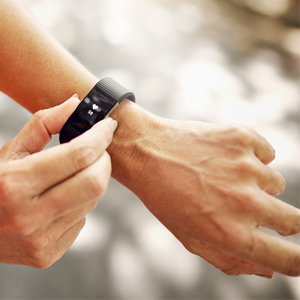
Health24.com | PSA: You can now track your periods using your Fitbit

If you’re anything like us, then it’s a safe to assume you’re tracking your health online, whether it’s your running routine, kilojoules you’re eating, counting steps, or keeping an eye on your sleep and menstrual cycle. And we bet you’re using a bunch of different apps to do it.

But good news… Fitbit announced in March that it was introducing a new feature that will help you keep track of your fitness and fertility at once. And we’re happy to announce that the female health feature is officially live!

You can log your monthly cycle, record the symptoms (hello, cramps), and see that data alongside your fitness stats on your Fitbit. And FYI – it also gives you reminders about your fertility and reproductive health, so you’ll be able to track your health trends over time (like how long your cycle usually is and when you usually ovulate).

You’ll now be able to keep track of this new data using the Fitbit app, or on one of the newer Fitbit smartwatches like the Ionic which was launched last year.

Read more: We spent 72 hours with the new Fitbit Ionic – here’s what you need to know

According to a recent Fitbit survey, 80% of women did not know how many phases are in a menstrual cycle and more than 70% were unable to correctly identify the average length of a cycle, demonstrating a lack of awareness about women’s health. 

It turns out menstrual cycle tracking was one of the most requested features from Fitbit community. The company says many users already used separate apps to track their periods, but wanted to put all their information in one convenient place.

The wearable tech company also announced two new product launches.

First up is the Versa and it looks so pretty. This particular tracker is more like a smartwatch than your typical Fitbit, but get this… it has four days of battery life! The Versa is now available for R3 199.

Read more: 6 women share the craziest things they’ve done to hit 10 000 steps

Then get this… Fitbit are launching a tracker that’s geared towards kids. Parents will now be able to control what they track and keep tabs on their information. The Fitbit Ace, is set to hit stores later in the year and will cost R1 499.

Oh and by the way, the Fitbit Ionic got a little relaunch, too – they’ve teamed up with adidas so you can expect to find some killer workouts with adidas athletes on this version of the fitness tracker.

Don’t know about you, but we can’t wait to put these to the test.

This article was originally published on www.womenshealthsa.co.za

Image credit: iStock

Share Button

Researchers discover how body temperature wrecks potential dengue, Zika vaccine

A major route toward creating effective vaccines against dengue virus and Zika involves the E protein that covers the surface of each viral particle. If we could develop strong antibodies against this E protein, then that would be the crux of a formidable vaccine — based on the important fact that the 180 E proteins come in pairs. But creating such a vaccine has proven difficult for a number of reasons. Now UNC School of Medicine researchers have delineated the details of one major barrier to a promising vaccine. It’s something we all have — a natural body temperature of about 98.6 degrees. Previous studies in Aravinda de Silva’s lab have shown that humans create strong antibodies to the E protein on the virus surface, suggesting that a soluble version of the E protein (called sRecE) could make a good vaccine.

Unfortunately, so far this has not panned out, and vaccines based on sRecE have failed. UNC researchers led by Brian Kuhlman, PhD, professor of biochemistry and biophysics, and Aravinda de Silva, PhD, professor of microbiology and immunology, have shown that body temperature reduces the pairing propensity of sRecE and its ability to be recognized by these strong antibodies.

These findings, Published in the Journal of Biological Chemistry, suggest that stabilizing the pairing propensity of sRecE may be critical to creating an effective vaccine. “We’ve shown how our natural body temperature subverts sRecE potency and how future sRecE-based vaccine development needs to take temperature into account from the beginning,” said UNC graduate student Stephan Kudlacek, the first author on the JBC paper.

After decades of intense research, dengue and Zika virus vaccine development has had limited success. These mosquito-borne flaviviruses are a major public health concern. More than 50 percent of the world’s population is at risk of infection, hundreds of millions of people are infected, and a large percentage of them face serious, debilitating symptoms. Dengue infection can lead to life-threatening hemorrhagic disease. Meanwhile, the recent Zika outbreak has linked Zika infection to serious neurological disorders, such as microcephaly in infants and Guillain-Barré Syndrome in adults. For these reasons, vaccine development has been ramped up to protect against both dengue and Zika.

Vaccine development is challenging because there are four different serotypes or “flavors” of dengue, and a vaccine needs to provide equal protection against each of them. Also, a vaccine has to be created such that it doesn’t promote the immune system to make antibodies that recognize but can’t neutralize the virus. If that happens, dengue and Zika can use these antibodies to infect immune system cells and make the infection more severe — this is called antibody dependent enhancement.

This inherent problem is why Dengvaxia — the only licensed vaccine for dengue — is now only recommended for use in people with partial immunity to dengue obtained from a previous dengue infection because the vaccine appears to increase the risk of severe disease when used in people who have never been exposed to the virus, and the vaccine provides partial protection between the different dengue serotypes.

The surface of dengue and Zika viral particles are structurally similar. Both viruses are coated with a single protein — called the envelope (E) protein. Each virus contains 180 copies of the E protein on the surface, in pairs of two, known as homodimers. A soluble version of the E protein, called sRecE, can form the same homodimer structure observed by E proteins on the surface of the virus. Dengue- and Zika-infected patients develop neutralizing and protective antibodies that target specific regions on the E protein called epitopes. This knowledge has led researchers to test whether the E protein or sRecE can serve as effective vaccines. Unfortunately, sRecE-based vaccines have performed poorly.

Other researchers have discovered that many of the most potent neutralizing antibodies isolated from human patients bind to epitopes that are present on the E protein homodimer on the surface of the virus, while the weakly neutralizing antibodies that promote disease enhancement bind to a site on the E protein monomer — a single copy of the E protein, known as the fusion loop. A particular class of the potent antibodies called the E Dimer Epitope (EDE) antibodies strikingly recognizes a region of the E protein in both dengue and Zika. These antibodies are capable of neutralizing all four dengue serotypes and Zika. These discoveries suggest that to create effective vaccines, it will be important to engineer antigens that present these newly discovered dimer epitopes.

Dimer-specific epitopes could be the most straightforward kind to create, if using recombinant proteins like sRecE. And it has been proposed that sRecE homodimers may function as effective vaccines.

But studies have suggested that our natural body temperature of 98.6 degrees changes the E protein’s ability to pair and form homodimers on the virus surface. As sRecE is a promising antigen for vaccine development, and since the stability of the sRecE homodimer is important for presenting dimer antibody epitopes such as the EDE for vaccination, Kuhlman and de Silva’s labs sought to understand how temperature affects the stability of the sRecE protein and its ability to form homodimers.

“We used a number of biophysical techniques to answer these questions.” Kudlacek said. “As typically observed, we found that colder temperatures help to keep proteins in their native or active structure. Because of this, we then tested to see how sRecE from three dengue serotypes and in Zika can form homodimers, as seen on the surface of the virus, in buffer at room temperature.”

The UNC researchers discovered that dengue and Zika sRecE do form homodimers at room temperature. “But when we did the experiment at physiological temperature [98?F], all sRecE’s — including dengue serotype 2 (DENV2) and Zika sRecE homodimers — fell apart and became monomers. This result showed that the physiological temperature-induced E protein changes observed on the virus surface also occur in the sRecE.” Further analysis showed that the ability for DENV2 sRecE to form homodimers at body temperature is reduced 150 fold when compared to the ability to form homodimers at room temperature.

The researchers then wondered: since sRecE dimerization is reduced at physiological temperature, are antibodies that specifically recognize the E dimer able to bind to dengue and Zika sRecE at physiological temperature? They tested this and found that the dengue and Zika sRecE homodimers fell apart at 98.6F, thus eliminating the dimer epitopes present in the sRecE homodimer and reducing antibody binding.

“Our results show that, at body temperature, the presence of dengue and Zika sRecE homodimers is greatly reduced, and the presence of sRecE monomer is increased,” Kudlacek said. “This provides an explanation for why previous sRecE-based vaccine strategies have performed poorly, since body temperature favors monomer sRecE, thus focusing the immune system on generating more weakly neutralizing antibodies, which can result in disease enhancement, rather than producing potently neutralizing dimer-specific antibodies.”

For future sRecE-based vaccine development, this work suggests that the sRecE homodimer needs to be re-engineered to be stable at body temperature so the immune system can generate E dimer-specific antibodies strong enough to protect against disease instead of enhancing it.

The National Institutes of Health and the Centers for Disease Control and Prevention funded this research.


Share Button

Diamond ‘spin-off’ tech could lead to low-cost medical imaging and drug discovery tools

It may sound contradictory, but diamonds are the key to a new technique that could provide a very-low-cost alternative to multimillion-dollar medical imaging and drug-discovery devices.

An international team led by scientists at the Department of Energy’s Lawrence Berkeley National Laboratory (Berkeley Lab) and UC Berkeley discovered how to exploit defects in nanoscale and microscale diamonds and potentially enhance the sensitivity of magnetic resonance imaging (MRI) and nuclear magnetic resonance (NMR) systems while eliminating the need for their costly and bulky superconducting magnets.

“This has been a longstanding unsolved problem in our field, and we were able to find a way to overcome it and to show that the solution is very simple,” said Ashok Ajoy, a postdoctoral researcher in the Materials Sciences Division at Berkeley Lab, and the Department of Chemistry at UC Berkeley, who served as the lead author of the study. “No one has ever done this before. The mechanism that we discovered is completely new.”

MRI machines are employed to locate cancerous tumors and aid in the development of treatment plans, while NMR machines are used to examine the atomic-scale structure and chemistry of drug compounds and other molecules.

The new technique, described in the May 18 edition of the Science Advances journal, could lead to the direct use of these tiny diamonds for rapid and enhanced biological imaging. Researchers will also seek to transfer this special tuning, known as spin polarization, to a harmless fluid such as water, and to inject the fluid into a patient for faster MRI scans. The high surface area of the tiny particles is key in this effort, researchers noted.

Enhancing this spin polarization in the electrons of the diamonds’ atoms can be likened to switching the direction of some compass needles facing in many different to the same direction. These “hyperpolarized” spins could provide a sharper contrast for imaging than conventional superconducting magnets.

“This important discovery in the hyperpolarization of nano- and microscale diamonds has enormous scientific and commercial implications,” Ajoy said, as some of the most advanced MRI and NMR machines can be incredibly expensive and out of reach for some hospitals and research institutions.

“This could help expand the market for MRI and NMR,” he said, and could also potentially shrink the devices from room-sized to benchtop-sized, which “has been the dream from the start.” Ajoy is a member of the Alex Pines research lab at UC Berkeley — Pines is a senior faculty scientist in Berkeley Lab’s Materials Sciences Division, and a pioneer in the development of NMR as a research tool.

Scientists had struggled to overcome a problem in properly orienting the diamonds to achieve a more uniform spin polarization — and this problem was even more pronounced in collections of very small diamonds that presented a chaotic jumble of orientations. Earlier efforts, for example, had explored whether drilling tiny features into diamond samples could aid in controlling their spin polarization.

The tunable spin properties in diamonds with defects known as nitrogen vacancies — in which nitrogen atoms take the place of carbon atoms in the crystal structure of diamonds — have also been studied for potential use in quantum computing. In those applications, scientists seek to control the spin polarization of electrons as a way to transmit and store information like the ones and zeros in more conventional magnetic computer data storage.

In the latest study, scientists found that by zapping a collection of microscale diamonds with green laser light, subjecting it to a weak magnetic field, and sweeping across the sample with a microwave source, they could enhance this controllable spin polarization property in the diamonds by hundreds of times compared with conventional MRI and NMR machines.

Emanuel Druga, an electrician in the UC Berkeley College of Chemistry R&D shops, devised a large measurement tool for the new technique that proved instrumental in confirming and fine-tuning the spin polarization properties of the diamond samples. “It allowed us to debug this in about a week,” Ajoy said.

The device helped researchers to home in on a good size for the diamond crystals. At first, they were using crystals that measured about 100 microns, or 100 millionths of an inch across. The tiny samples of pinkish diamonds resemble fine red sand. After testing, they found that diamonds measuring about 1 to 5 microns performed about twice as well.

The tiny diamonds can be manufactured in economical processes by converting graphite into diamond, for example.

The team of scientists has already developed a miniaturized system that uses off-the-shelf components to produce the laser light, microwave energy, and magnetic field required to produce the spin polarization in the diamond samples, and they have applied for patents on the technique and the hyperpolarization system.

“You could think of retrofitting existing NMR magnets with one of these systems,” said Raffi Nazaryan, who participated in the study as an undergraduate researcher at Berkeley Lab and UC Berkeley. Prototypes of the system cost just several thousand dollars, he noted.

While the spin is short-lived, researchers said they are exploring ways to continuously polarize the samples, and are also researching how to transfer this polarization to liquids. Ajoy said, “We could potentially recycle the liquid so it flows in a closed loop, or keep injecting newly polarized liquid.”

Share Button

E. coli tailored to convert plants into renewable chemicals

What does jet fuel have in common with pantyhose and plastic soda bottles? They’re all products currently derived from petroleum. Sandia National Laboratories scientists have demonstrated a new technology based on bioengineered bacteria that could make it economically feasible to produce all three from renewable plant sources.

Economically and efficiently converting tough plant matter, called lignin, has long been a stumbling block for wider use of the energy source and making it cost competitive. Piecing together mechanisms from other known lignin degraders, Sandia bioengineer Seema Singh and two postdoctoral researchers, Weihua Wu, now at Lodo Therapeutics Corp., and Fang Liu, have engineered E. coli into an efficient and productive bioconversion cell factory.

“For years, we’ve been researching cost-effective ways to break down lignin and convert it into valuable platform chemicals,” Singh said. “We applied our understanding of natural lignin degraders to E. coli because that bacterium grows fast and can survive harsh industrial processes.”

The work, “Towards Engineering E. coli with an Auto-Regulatory System for Lignin Valorization,” was recently published in the Proceedings of the National Academy of Sciences of the United States of America and was supported by Sandia’s Laboratory Directed Research and Development program.

Engineering a costly process into profitability

Lignin is the component of plant cell walls that gives them their incredible strength. It is brimming with energy, but getting to that energy is so costly and complex that the resulting biofuel can’t compete economically with other forms of transportation energy.

Once broken down, lignin has other gifts to give in the form of valuable platform chemicals that can be converted into nylon, plastics, pharmaceuticals and other valuable products. Future research may focus on demonstrating the production to these products, as they could help bring biofuel and bioproduction economics into balance. Or as Singh puts it, “they valorize lignin.”

Solving three problems: cost, toxicity and speed

Singh and her team have solved three problems with turning lignin into platform chemicals. The first was cost. E. coli typically do not produce the enzymes needed for the conversion process. Scientists must coax the bacteria into making the enzymes by adding something called an inducer to the fermentation broth. While effective, for activating enzyme production, inducers can be so costly that they are prohibitive for biorefineries.

The solution was to “circumvent the need for an expensive inducer by engineering the E. coli so that lignin-derived compounds such as vanillin serve as both the substrate and the inducer” Singh said.

Vanillin is not an obvious choice to replace an inducer. The compound is produced as lignin breaks down and can, at higher concentrations, inhibit the very E. coli working to convert it. This posed the second problem: toxicity.

“Our engineering turns the substrate toxicity problem on its head by enabling the very chemical that is toxic to the E. coli to initiate the complex process of lignin valorization. Once the vanillin in the fermentation broth activates the enzymes, the E. coli starts to convert the vanillin into catechol, our desired chemical, and the amount of vanillin never reaches a toxic level,” Singh said. “It auto regulates.”

The third problem was efficiency. While the vanillin in the fermentation broth moves across the membranes of the cells to be converted by the enzymes, it was a slow, passive movement. The researchers looked for effective transporters from other bacteria and microbes to fast track this process, Wu said.

“We borrowed a transporter design from another microbe and engineered it into E. coli, which helps pump the vanillin into the bacteria,” Liu said. “It sounds pretty simple, but it took a lot of fine tuning to make everything work together.”

Engineering solutions like these, which overcome toxicity and efficiency issues have the potential to make biofuel production economically viable. The external inducer-free, auto-regulating method for valorizing lignin is just one way that researchers are working to optimize the biofuel-making process.

“We have found this piece of the lignin valorization puzzle, providing a great starting point for future research into scalable, cost-effective solutions,” Singh said. “Now we can work on producing greater quantities of platform chemicals, engineering pathways to new end products, and considering microbial hosts other than E. coli.”

Share Button

A new map for a birthplace of stars

A Yale-led research group has created the most detailed maps yet of a vast seedbed of stars similar to Earth’s Sun.

The maps provide unprecedented detail of the structure of the Orion A molecular cloud, the closest star-forming region of high-mass stars. Orion A hosts a variety of star-forming environments, including dense star clusters similar to the one where Earth’s Sun is believed to have formed.

“Our maps probe a wide range of physical scales needed to study how stars form in molecular clouds, and how young stars impact their parent cloud,” said Yale postdoctoral associate Shuo Kong, first author of a study about the group’s research that appears in the Astrophysical Journal Supplement.

The research team includes astronomers from institutions in the U.S., Chile, Japan, France, Germany, Spain, and the U.K. The team’s principal investigators are Yale astronomy professor Héctor G. Arce, ALMA Observatory scientist John Carpenter, and Caltech astronomy professor Anneila Sargent.

Kong said the team constructed its maps of the Orion A cloud by combining data from a single-dish telescope and an interferometer. The Yale Center for Research Computing assisted in handling the large dataset and producing the images.

The dataset and maps are collectively known as the CARMA-NRO Orion Survey. The name refers to the Combined Array for Research in Millimeter Astronomy (CARMA), an interferometer that was located in California, and the Nobeyama Radio Observatory (NRO) telescope, in Japan.

“Our survey is a unique combination of data from two very different telescopes,” said Yale graduate student Jesse Feddersen, a co-author of the study. “We have combined the zoom of CARMA with the wide-angle of NRO to simultaneously capture the details of individual forming stars and the overall shape and motions of the giant molecular cloud.”

In addition, the maps will help researchers calibrate star formation models for extragalactic studies. “The data we provide here will benefit research on a broad range of evolutionary stages of the star formation process and on the environment stars form,” Arce said.

Yale graduate student María José Maureira is also a co-author of the study.

“The combined observations are a great help for astronomers seeking to understand how fast and efficiently stars form. For example, their maps show the energy released by high-mass stars has a strong impact on the cloud environment,” said Glen Langston, program director at the National Science Foundation. The research was supported by the National Science Foundation.

Watch a video featuring the new maps: https://www.youtube.com/watch?v=vWc6A3Xf1Oo&feature=youtu.be

Story Source:

Materials provided by Yale University. Note: Content may be edited for style and length.

Share Button

Matabele ants: Travelling faster with detours

Termites are the African Matabele ants’ (Megaponera analis) favourite dish. Proceeding in long files of 200 to 600, they raid termites at their foraging sites and haul the prey back to their nest where they are ultimately eaten.

Before starting their raids, the ants send out scouts to look for the termites’ foraging sites. Once they have spotted them, the scout ants return to the nest to mobilize their comrades. On their way back to the nest, the scouts show astonishing navigational abilities: They take the quickest route rather than the shortest.

Travelling faster in open country

If the direct way back passes through an area densely grown with grass, for example, the scouts prefer taking detours through open terrain which enables them to double their pace — and this is worth it: They travel much faster although they are not taking the shortest route. This reduces their time back to the nest by 35 percent on average as Erik T. Frank, Philipp Hönle, and Karl Eduard Linsenmair from Julius-Maximilians-Universität Würzburg (JMU) in Bavaria, Germany, discovered. The biologists’ results have been published in the Journal of Experimental Biology.

Individual ants make decisions

“Other ant species are known to rely on various navigational aids to determine the shortest way back to the nest from a foraging site,” Erik Franks says. The navigational skills of the Matabele ants seem to be even more complex, a finding the researchers want to explore in greater detail now.

Moreover, the JMU scientists were surprised that the decision which way to take is made by individual ants and not collectively. “We have thus provided the first proof of time optimized path integration by individuals in the ant kingdom,” says Frank who is currently conducting postdoc research at the University of Lausanne.

Story Source:

Materials provided by University of Würzburg. Note: Content may be edited for style and length.

Share Button

Giraffes surprise biologists yet again

New research from the University of Bristol has highlighted how little we know about giraffe behaviour and ecology.

It is commonly accepted that group sizes of animals increase when there is a risk of predation, since larger group sizes reduce the risk of individuals being killed, and there are ‘many eyes’ to spot any potential predation risk.

Now, in the first study of its kind, Bristol PhD student Zoe Muller from the School of Biological Sciences has found that this is not true for giraffes, and that the size of giraffe groups is not influenced by the presence of predators.

Zoe Muller said: “This is surprising, and highlights how little we know about even the most basic aspects of giraffe behaviour.”

This study investigates how the grouping behaviour of giraffes differed in response to numerous factors, such as predation risk, habitat type and the characteristics of individuals.

Habitat type had some effect on group size, but the main effect on group size was in the behaviour of adult females, who were found to be in smaller groups when they had calves.

This is contrary to another popular belief that female giraffes form large groups to communally care for their young — this study, published this week in the Journal of Zoology presents the first evidence to show that actually, the opposite is true.

Giraffe populations have declined by 40 percent in the last 30 years, and there are now thought to be fewer than 98,000 individuals remaining in the wild.

In recognition of their drastic decline in the wild, they have recently been listed as “Vulnerable” on the International Union for Conservation in Nature’s Red List of Threatened Species.

However, conservation review is ongoing due to current debate over their taxonomic status, since some subspecies may be even more at risk of extinction than is currently recognised.

Zoe Muller added: “This research adds another important piece to the puzzle of understanding how giraffes live in the wild.

“Giraffes are a threatened species, suffering ongoing decline across Africa, and this research highlights how they are actually an incredibly misunderstood species. We can only manage and conserve giraffe populations effectively if we properly understand their behaviour and ecology, which we are only just beginning to do.

“Despite their prominence, giraffes have been significantly understudied in comparison to other charismatic African mammals. “The common misconception is that giraffes are ‘everywhere’ in Africa, yet recent research efforts have highlighted the fragmented and rapidly declining nature of their populations.

“Their recent listing as ‘Vulnerable’ on the IUCN red list is a valuable step towards recognising their potential to become extinct, and more research is sorely needed to understand the threats and challenges they face in the wild.”

The next steps for this research will be to replicate the findings in other areas of Africa. This is one case study from East Africa, and more research is needed to see if the same effects are observed in other giraffe populations. Results can be used to understand how the management of habitats, environmental and social variables can support the conservation of giraffe populations.

Story Source:

Materials provided by University of Bristol. Note: Content may be edited for style and length.

Share Button

Robotic assembly of the world’s smallest house — Even a mite doesn’t fit through the door!

A French nanorobotics team from the Femto-ST Institute in Besançon, France, assembled a new microrobotics system that pushes forward the frontiers of optical nanotechnologies. Combining several existing technologies, the μRobotex nanofactory builds microstructures in a large vacuum chamber and fixes components onto optical fiber tips with nanometer accuracy. The microhouse construction, reported in the Journal of Vacuum Science and Technology A, from AIP Publishing, demonstrates how researchers can advance optical sensing technologies when they manipulate ion guns, electron beams and finely controlled robotic piloting.

Until now, lab-on-fiber technologies had no robotic actuators for nanoassembly, so working at this scale inhibited engineers from building microstructures. This innovation allows miniaturized sensing elements to be installed on fiber tips so engineers can see and manipulate different components. With this advancement, optical fibers as thin as human hair can be inserted into inaccessible locations like jet engines and blood vessels to detect radiation levels or viral molecules.

“For the first time we were able to realize patterning and assembly with less than 2 nanometers of accuracy, which is a very important result for the robotics and optical community,” said Jean-Yves Rauch, an author on the paper.

The French engineers combined all the technological components for nanoassembly — a focused ion beam, a gas injection system and a tiny maneuverable robot — in a vacuum chamber, and installed a microscope to view the assembly process. “We decided to build the microhouse on the fiber to show that we are able to realize these microsystem assemblies on top of an optical fiber with high accuracy,” Rauch said.

Building a microhouse is like making a giant dice from a piece of paper, but nanoassembly requires more sophisticated tools. The focused ion beam is used like scissors to cut or score the silica membrane “paper” of the house. Once the walls fold into position, a lower power setting is selected on the ion gun, and the gas injection system sticks the edges of the structure into place. The low-power ion beam and gas injection then gently sputters a tiled pattern on the roof, a detail that emphasizes the accuracy and flexibility of the system.

In this process, the ion gun had to focus on an area only 300 micrometers by 300 micrometers to fire ions onto the fiber tip and silica membrane. “It’s very challenging to pilot the robot with high accuracy at this cross point between the two beams,” Rauch said. He explained that two engineers worked at multiple computers to control the process. Many steps are already automated, but in the future the team hopes to automate all the robotic stages of assembly.

Now, using the μRobotex system, these engineers are constructing functionalized microstructures to detect specific molecules by attaching their microstructures onto optical fibers. The nanorobotics team is hoping to push the limits of the technology further still, by constructing smaller structures and fixing these onto carbon nanotubes, only 20 nanometers to 100 nanometers in diameter.

Story Source:

Materials provided by American Institute of Physics. Note: Content may be edited for style and length.

Share Button

How likely is your e-cigarette to explode?

As a man dies from an exploding vape pen, we ask how dangerous are the devices?

Share Button