Health24.com | Speech therapist endures smacks and punches with a smile

Children born with Cerebral Palsy (CP) often struggle to swallow, while medication for multi-drug resistant tuberculosis makes some patients go deaf.

When hospital staff members find patients with these problems, they call in speech and language pathologists to help their patients to communicate.

A poor province

For the past four months, speech and language pathologist Thaaniyah Gydien has been working mainly with paediatric patients at a large hospital in the Northern Cape. (She was allowed to do the interview on condition that the hospital isn’t named.)

“With CP patients, we have to teach them the safest way to eat. We also see a lot of children with severe acute malnourishment or SAM. Most of these children have developmental delays, with not speaking on time. The SAM kids have to stay in the hospital for a while and we have to make sure that they get stimulation.”

The Northern Cape is a vast and poor province and Gydien says much of the malnourishment is related to poverty, parental ignorance and alcoholism.

“There are a lot of social issues. Some of the moms drink a lot, and some are teenagers who don’t know how to raise a child.”

Trying to teach autistic children to communicate is a particular challenge, especially as most are outpatients who usually only get therapy a couple of times a month – and then for only 30 minutes.

“Sometimes it can take 15 minutes just to calm a child,” says Gydien.

Insanely high patient load

“I was smacked hard by a seven-year-old autistic child two days ago. My face was red and swollen. Another autistic child punched me hard in the stomach. They don’t understand pragmatics. If you say no, they get angry. It takes months to make any progress.”

The one thing Gydien struggles with is the workload.

“The patient load is insanely high. We see 10 to 15 inpatients a day and four or five outpatients,” says 22-year-old Gydien, who graduated from the University of Cape Town last year.

Therapy is a slow process, so each patient needs at least 30 minutes of attention for the interaction to be meaningful.

“There are pages and pages of outpatients waiting to be seen. We haven’t even got to the ones from November yet.”

‘You have to prioritise’

Although there are four speech therapists at the hospital, only one is permanent – the other three are doing community service. When people take leave, patients get left behind.

“Over one long weekend, I was the only one working. You get a pile of 50 patients, and it is impossible to see so many in the day, so you have to prioritise,” said Gydien.

Despite the workload, Gydien says that the speech therapists constantly remind doctors to refer patients to them and also screen the wards for patients.

“Doctors are usually very curative. We need to advocate for what we do to get them to think about therapy, and refer patients to us who are struggling to eat, for example.

“But I can really see the impact of my work. I really want to continue to work in a big hospital once my community service year is over.” – Health-e News.

Image credit: Health-e News

NEXT ON HEALTH24X

Share Button

Health24.com | QUIZ: How much do you know about hypertension?

Hypertension expert

Dr Jacomien de Villiers qualified as a specialist physician at the University of Pretoria in 1995. She worked at various clinics at the Department of Internal Medicine, Steve Biko Hospital, these include General Internal Medicine, Hypertension, Diabetes and Cardiology. She has run a private practice since 2001, as well as a consultant post at the Endocrine Clinic of Steve Biko Hospital.

Share Button

Dementia exercise programmes ‘don’t slow brain decline’

Gym exercise programmes for people with mild to moderate dementia “don’t work”, researchers say.

Share Button

Dementia patients ‘abandoned’ by system

Thousands of people with the condition are ending up in hospital unnecessarily because of inadequate support, a charity says.

Share Button

Patients ‘could have been harmed’ after Capita outsourcing

Support services run by Capita have been “well below” acceptable standards, a watchdog says.

Share Button

Diabetes blood test ‘could mean end to daily insulin jabs’

Doctors in Edinburgh say a simple blood test has identified previously unrecognised variations in Type 1 diabetes.

Share Button

The mystery of lime-green lizard blood

Green blood is one of the most unusual characteristics in the animal kingdom, but it’s the hallmark of a group of lizards in New Guinea. Prasinohaema are green-blooded skinks, or a type of lizard. The muscles, bones and tongues of these lizards appear bright, lime-green due to high levels of biliverdin, or a green bile pigment, which is toxic and causes jaundice. Surprisingly, these lizards remain healthy with levels of green bile that are 40 times higher than the lethal concentration in humans.

“In addition to having the highest concentration of biliverdin recorded for any animal, these lizards have somehow evolved a resistance to bile pigment toxicity. Understanding the underlying physiological changes that have allowed these lizards to remain jaundice-free may translate to non-traditional approaches to specific health problems,” said lead author Zachary Rodriguez, a doctoral candidate in LSU Department of Biological Sciences Professor Chris Austin’s lab.

Austin has spearheaded many expeditions to the megadiverse island of New Guinea to discover and document reptile and amphibian diversity. Rodriguez, Austin and colleagues investigated the evolutionary history of green blood, which evolved in several species of New Guinea lizards. They examined 51 species of skinks, which included six species with green blood, two of which are species new to science. They discovered that there are four separate lineages of green-blooded lizards, and each likely shared a red-blooded ancestor.

“We were excited by the complex history of these animals and surprised by the breadth of green-blooded lineages across lizards,” Rodriguez said. Their results will be published on May 16 in Science Advances.

Green blood likely emerged independently in various lizards, which suggests that green blood may have an adaptive value. Slightly elevated levels of bile pigments in other animals, including insects, fish and frogs, have played potentially positive roles in these animals. Previous studies have shown that bile pigment can act as an antioxidant scavenging free radicals as well as preventing disease during in vitro fertilization. However, the function of green bile pigment in these lizards is still uncertain.

“The green-blooded skinks of New Guinea are fascinating to me as a parasitologist because a similar liver product, bilirubin, is known to be toxic to human malaria parasites. Ongoing work with the Austin lab examines the potential effect of the green blood pigment on malaria and other parasites that infect these lizards,” said co-author Susan Perkins, curator and professor at the Sackler Institute for Comparative Genomics and the Division of Invertebrate Zoology, American Museum of Natural History.

The scientists examined DNA samples from 27 green-blooded lizards and 92 closely related red-blooded lizards. They determined that red blood was the most likely ancestral state and that green blood likely evolved four times.

“Our next goal is to identify the genes responsible for green blood,” Rodriguez said.

Story Source:

Materials provided by Louisiana State University. Note: Content may be edited for style and length.

Share Button

Three gallons of radioactive tank waste vitrified last month

In a first-of-its-kind demonstration, researchers at the Department of Energy’s Pacific Northwest National Laboratory have vitrified low-activity waste from underground storage tanks at Hanford, immobilizing the radioactive and chemical materials within a durable glass waste form.

Approximately three gallons of low-activity Hanford tank waste were vitrified at PNNL’s Radiochemical Processing Laboratory in April. The laboratory-scale demonstration is an important step toward the eventual treatment of millions of gallons of hazardous waste generated during past plutonium production at Hanford.

“This was the first time low-activity Hanford tank waste has been vitrified in a continuous process, very similar to the treatment process that will be used at Hanford, rather than as a single batch,” said Albert Kruger, glass scientist with DOE’s Office of River Protection. “The experience from this test will help us as we prepare for full-scale operations.”

Researchers at PNNL performed the work in partnership with Hanford tank operations contractor Washington River Protection Solutions and ORP.

To vitrify the material, researchers mixed the liquid waste with glass-forming materials and pumped it, at a controlled rate, into the melter. Approximately 5 inches in diameter, the melter sits inside a furnace that keeps the glass forming materials within it at 2100?F. A half-pound of glass poured from the melter every half hour, and the test produced approximately 20 pounds of glass.

“This successful test confirms the science and engineering approach,” said Will Eaton who led the test for PNNL. “Seeing actual Hanford low-activity waste being converted to glass is really exciting. It ties together 20 years of work from the design and construction of the Waste Treatment Plant to the research and testing that has supported that effort.”

The vitrification test was the most recent in a series that used the PNNL-designed test platform to mimic the key processes to be used in the Direct Feed Low-Activity Waste system being constructed at Hanford. DFLAW will remove solids and cesium from tank waste and send the resulting low-activity waste to the Waste Treatment Plant for vitrification inside large melters.

In tests leading up to the vitrification, the original high-level tank waste was pretreated inside a PNNL hot cell. There, researchers used a filter and ion exchange columns to remove solids and cesium, leaving a low-activity solution containing dissolved waste constituents.

Off-gases generated during the vitrification process produced a liquid condensate which will be concentrated and grouted later this spring in another related test. The grouted material will be analyzed to see if it meets disposal requirements.

A second laboratory-scale vitrification test is planned later this year using approximately two gallons of waste from a different Hanford tank. Pretreatment of that waste will test different filtration and ion exchange methods.

“Being able to run real tank waste instead of simulant through these tests provides valuable input for validating and refining our approach to the treatment of low-activity waste,” said Kris Colosi, the WRPS project manager. “It’s another important step toward the removal and disposal of a large portion of Hanford’s tank waste.”

PNNL, which is located near the Hanford site, developed the liquid-fed ceramic waste melter technology in the 1970s and it has become the standard for waste vitrification in this country and elsewhere around the world. Numerous melter tests have been conducted in the decades that followed, including both small- and large-scale simulant tests and pilot-scale tests with high-level radioactive waste.

Story Source:

Materials provided by DOE/Pacific Northwest National Laboratory. Note: Content may be edited for style and length.

Share Button

Climate change impacts fragile river ecosystems

Research undertaken in South Africa’s Kruger National Park (KNP) has shown that some of the world’s most sensitive and valuable riverine habitats are being destroyed due to an increasing frequency of cyclone-driven extreme floods.

As part of a Natural Environmental Research Council (UK) funded project, researchers from the universities of Hull, Aberystwyth, and Salford and the engineering consultants “Architecture, Engineering, Consulting, Operations, and Maintenance” (AECOM), used laser survey technology (LiDAR) flown from an aircraft, to measure the impacts of cyclone-driven extreme floods in 2000 and 2012 on rivers in the KNP. The KNP game reserve has global significance for its habitats and associated species, and the rivers flowing through the park provide essential ecosystem services, including water and habitat in the shape of the many varied channel morphologies and associated riparian forest. The high-resolution data has been used to create accurate digital models of the river bed, and through comparisons with pre-2012 flood data, they were able map detailed spatial patterns of erosion and deposition.

Dr. David Milan, University of Hull, principal investigator for the project said, “We are primarily interested in trying to understand how these large bedrock-influenced river channels respond to large floods. From comparing our LiDAR models between 2012 and 2004, we have calculated that the 2012 event alone removed almost 1.25 million tonnes of sediment from the river bed. We also found that patches of mature riparian forest that survived larger floods in 2000 were removed by the 2012 floods. There is a suggestion that the frequency of large flood events is increasing due to climate change, and our analysis of river channel morphology for a 50 km length of the Sabie River shows us that these rivers need timespans longer than a decade to recover.”

The UK group has concerns over the impacts of the geomorphological changes happening in the KNP rivers. Drylands are known to be some of the regions most vulnerable to climate change, and some climate model predictions suggest increased landfall for cyclones over South Africa.

Dr. Milan continued, “We present a conceptual model showing the likely pathways that the KNP river systems are likely to follow in the future depending upon flood frequency and magnitude, and conclude by suggesting that more frequent floods will continue to strip out sediment and vegetation from the river channel, leaving a more barren environment with less habitat value. Continued progressive loss of habitat diversity will fundamentally, and for all intents and purposes irreversibly, alter our riverine landscapes and this will be accompanied by a catastrophic loss of species unable to adapt to the new environments. Conservationists need to work alongside geomorphologists to look at ways in which dryland river habitats can be best managed into the future.”

These results not only have significance for the rivers of the KNP, but also for bedrock-influenced rivers in other dryland areas globally.

Story Source:

Materials provided by Geological Society of America. Note: Content may be edited for style and length.

Share Button

Health24.com | 6 things that are sabotaging your sleep

Feel like you need to catch up on some sleep? Better hurry. Lack of sleep can disrupt your immune system, metabolism and cognitive function, and also increase your risk of hypertension, obesity and diabetes.

We’ve exposed six sneaky sleep snatchers; read on to find out how to put them to bed.

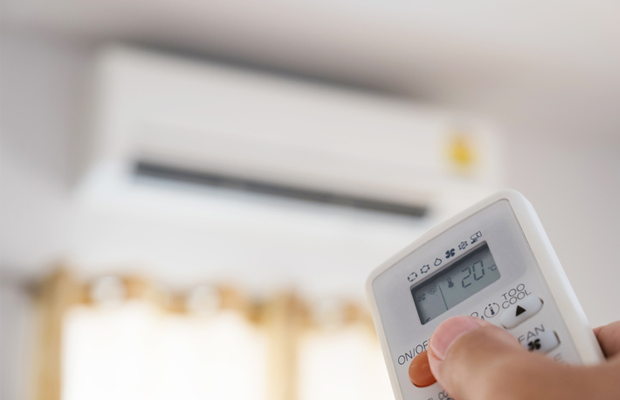
1. A hot bed

Sure, during sex you want things to heat up. The rest of the time, though, you should keep your cool.

Keeping your indoor temperature between 20 and 23°C promotes solid slumber, says psychiatrist and sleep specialist Dr Tracey Marks, author of Master Your Sleep.

Your body clock regulates your core temperature, and its fluctuations tell you when to sleep and when to wake up, she says. “You’re coolest in the middle of the night, when sleep is deepest.”

If you’re too warm, your internal alarm assumes it’s time to rise, and sleep becomes fitful.

Rest easy: If the idea of cooling your entire house gives you nightmares, consider installing a “slave thermostat” to regulate only your bedroom temp. You can also tackle the problem lying down by using 400-thread-count cotton sheets – they’re breathable but soft.
air-con, cooling, hot air, bedroom

Read more: In honour of World Sleep Day, here are seven products to help you snooze better

2. Money worries

A seemingly endless economic recession can swipe your sleep with the speed of a free-falling retirement fund. “Decreased financial resources leads to worry over paying bills, and you may be required to work more,” Dr Marks says. “The physical and mental overload increases activity in your brain, causing you to ‘think yourself awake’.”

This is when frustrated insomniacs often resort to distraction tactics, such as television. But even though watching TV may calm your racing mind, the flickering light will interrupt secretion of the sleep hormone melatonin, causing a less-than-restful night.

Rest easy: You’ll need to wage chemical warfare. Stress triggers the release of the hormone cortisol, which has been linked to insomnia, says Dr Marks. Endorphins, the brain’s “happy chemicals”, have a relaxing effect. Sex or masturbation causes a rush of endorphins, but there’s an even quicker fix – humour. Try watching a funny three-minute video on YouTube, Dr Marks suggests.

To avoid stimulation from the light of your screen, install F.lux (stereopsis.com/flux), which dulls its glow to a warm hue at night. If you still wake up fretting in the night, try counting sheep. Seriously. Counting occupies space in your brain’s “articulatory loop”, the part that processes ongoing information, according to a 2010 study review in Insomnia and Anxiety. The loop’s capacity is limited, so the fluffy guys crowd out unwanted thoughts.

man, bed, sleep, worried, tired, scared, concerned

3. Hellish heartburn

If daytime heartburn is a pain, a midnight attack is a nightmare. “It can stir you awake, often multiple times throughout the night,” says Dr William Orr, a clinical professor of medicine at the University of Oklahoma. Symptoms of gastroesophageal reflux disease, or GERD, occur when the valve between your stomach and oesophagus malfunctions, allowing acid to seep past.

Some patients wake up choking or coughing, while others don’t consciously rouse but still feel drained in the morning. People with night-time heartburn often wake up with a bitter taste in the mouth or a sore throat.

Rest easy: Beyond avoiding oversized meals and spicy food before bed, try a sleeping wedge to elevate your head a few centimetres above the rest of your body. “It’s a lot easier for acid to creep out of your stomach and into your oesophagus if you’re lying flat,” Dr W Christopher Winter says.

If you like to sleep on your side, curl up on your left side. On you right side, the sphincter between your stomach and oesophagus may stay open longer, letting acid flow freely, a study review in the Archives of Internal Medicine found.

heartburn, pain, man, chest, uncomfortable

Read more: 8 foods you had no idea could put you to sleep

4. A squirming bedmate

A limb-flinging, snoring, blanket-stealing partner will undeniably disrupt your sleep, but your bedmate may also be guilty of subtler offenses. Your partner’s teeth grinding, frequent bathroom trips or even body heat can also spoil your slumber, says Dr Winter.

Rest easy: If she tosses and turns, top your mattress with memory foam, which won’t shift with her body. Too warm? Choose a mattress with pocket coils; these aren’t tied together, so movement won’t create a chain reaction. If she’s a kicker, ask her to sleep on her back or stomach.

“On her back, it becomes more of a toe-tapping movement,” says Dr Winter. Or consider “sleep vacations” – sleeping apart a few nights a week. “You’re ensured sound sleep, and there’s no guilt, because these are set nights,” Dr Winter says.

snoring, couple, man, woman, bedroom, bed, pillow,

5. Bad air

Love those pretty red sunsets in your town? Many times they’re caused by air pollution, which may be seeping into your home and keeping you awake long after the sun dips below the horizon. According to a recent study from Harvard, poor air quality can increase your risk of disordered sleep breathing – repeated lapses in respiration during the night.

“Air pollution increases inflammation. This may make your throat more likely to close and your oxygen levels to fall during sleep,” says study author Dr Susan Redline. The condition affects up to 17% of adults.

Rest easy: HEPA filters can help, but only if you choose the right one. Standard HEPA filters offer a “minimum efficiency reporting value” (MERV) of one to four. But you should upgrade to a higher-efficiency MERV 13 filter that also traps tinier particles (which can travel deeper into your lungs). If you have allergies or asthma, consider importing a GAPA filter, a more powerful filter that uses electrostatic energy to attract fine particles.

pollution, smoke, city, air, dirty, allergy

Read more: A sleep doctor reveals the four fastest ways to stop snoring

6. Smartphone addiction

Emailing and checking sports scores are all stimulating activities that prevent you from winding down, Dr Winter says. The worst part? The Pavlovian response to a “new message” sound. “If you hear the tone, it’s irresistible,” he says. Even a quick check wakes your brain and your body. “It’s a light box that you’re shining into your eyes at 11pm,” Dr Winter says. “Your body is seeing a strong trigger that it’s daytime.”

Rest easy: Break your addiction by using a password on your phone and changing it once a week, suggests Dr William Pollack, an associate clinical professor of psychiatry at Harvard medical school. This forces you to pause before accessing the phone, breaking a behaviour that’s often on autopilot. You’ll mentally register what you’re doing, which helps control the habit. Check the phone once an hour or so before bed, and then cut yourself off, he says.

phone, couple, man, woman, bedroom, bed, night,

This article was originally published on www.mh.co.za

Image credit: iStock

Share Button