UK struggling to hit cancer targets as number of cancelled operations hit record high in England.


UK struggling to hit cancer targets as number of cancelled operations hit record high in England.
Researchers recently discovered that WAY-316606, a drug used to treat osteoporosis, can induce hair growth. The drug has however not yet undergone any clinical trials.
Scientists forming part of a project run by the University of Manchester’s Centre for Dermatology Research previously investigated the chemical compounds in the immunosuppressant drug Cyclosporin A (CsA), because of excessive hair growth (hypertrichosis) being one of its side effects.
A safer alternative
The study, published in the Public Library of Science (PLOS) Biology journal, states that because it was found that CsA potentially induces hair growth in humans, scientists decided to pursue that angle.
CsA however has a toxic profile – and it would be harmful to use the drug purely for the benefit of a side-effect, rather than its primary function.
This meant scientists needed to find a safer alternative to the chemical compound found in CsA. They then discovered WAY-316606 – a drug used to treat osteoporosis.
The scientists tested WAY-316606 on more than 40 human scalp hair follicles samples and found that the samples went into a state of anagen – the active growth phase of hair follicles.
A chemical compound in CsA restricts the protein, Secreted Frizzled-Related Protein-1 (SFRP-1), which usually slows or stops the growth of new hair follicles.
They believe that WAY-316606 delivers the same effect and restricts the action of SFRP-1, while avoiding the harmful effects of CsA.
Bring on a clinical trial
The study’s lead, Dr Nathan Hawkshaw, told Sky News that this breakthrough could, one day, make a real difference to people who suffer from hair loss.
“The fact that this new agent, which had never even been considered in a hair loss context, promotes human hair growth is exciting because of its translational potential.
“Clearly though, a clinical trial is required next to tell us whether this drug or similar compounds are both effective and safe in hair loss patients,” said Dr Hawkshaw.


The emergency services can assess how seriously ill a person is before setting off to the scene.
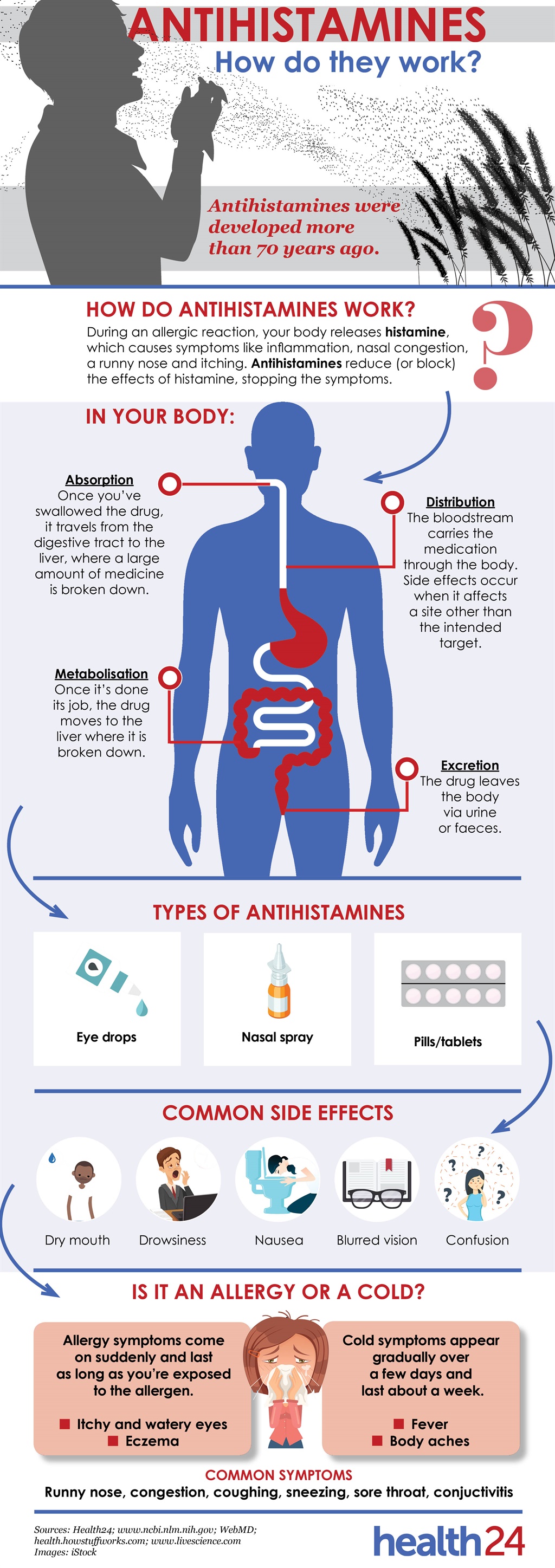
The information provided does not constitute a diagnosis of your condition. You should consult a medical practitioner or other appropriate health care professional for a physical exmanication, diagnosis and formal advice. Health24 and the expert accept no responsibility or liability for any damage or personal harm you may suffer resulting from making use of this content.


We write as African woman who have been involved in work to end Aids and gender-based violence in the last few decades.
As activists, and women who are deeply committed to both ending Aids and ending gender injustice, we have been saddened and angered to hear of the various cases of sexual harassment that have allegedly taken place at UNAIDS. Many of us have worked closely with UNAIDS Executive Director Michel Sidibé over the years, and with staff and colleagues across the agency in various offices on the African continent, as well as in Geneva.
‘We demand action’
We write now to express our view that Michel has mishandled the cases in a manner that is so profound that he must now step down. If he does not step down, the UNAIDS Programme Coordinating Board (PCB) will have to make the decision to terminate his contract.
Two weeks ago, Vuyiseka Dubula met Michel Sidibé, UNAIDS Executive Director, in his office in Geneva as part of a visit to key organisations based in the city. For most of the hour-long meeting, Vuyiseka and Michel discussed the case of alleged sexual harassment against his former colleague UNAIDS Assistant Secretary General Luiz Loures and how Michel responded to it.
Based on her report from that meeting, we write to express our concern and demand action from the UNAIDS PCB.
We are not satisfied with the outcomes of that meeting. We remain deeply concerned that Michel interfered in the 14-month investigation – a length of time that in itself shows a lack of seriousness. We do not understand why Michel urged Martina Brostrom (the complainant) to drop the complaint.
We still don’t understand why in a speech to UNAIDS staff members, Michel clearly took the side of Loures, and was critical of the women who dared speak out.
Suggestive messages and overtures
The day after the meeting with Michel, Vuyiseka received a WhatsApp message from Erasmus Morah, formerly the UNAIDS office in South Africa, now moved to UNAIDS Nigeria. “Apart from calling Vuyiseka ‘fair lady’ in his message, he urged her to help ‘protect Michel’.”
That Erasmus and others are scrambling to protect Michel, in a way they never did for Brostrom, is emblematic of the rot at UNAIDS.
That specifically Erasmus should come to Michel’s defence is also somehow emblematic of the state of UNAIDS. Many activists have had to deal with suggestive messages and overtures from Erasmus in the past. A number of women we have spoken to have noted that Erasmus has asked to meet male colleagues at the office, but has asked them [the women] to meet him at his hotel.
Like Loures, he seems to believe he has a right to inappropriate behaviour.
We will tell these stories about Erasmus, we will point out the culture of protection and impunity, and we will do so as part of a global movement of women who have had enough of institutions that try to deal with these matters informally.
Blaming the victims
These stories are echoed by women who worked for or with UNAIDS in Geneva and across the world. They are not a few isolated incidents, people like Loures and Erasmus thrive in UNAIDS. Men like these, and the culture of impunity at UNAIDS thrive because men in power like Michel do nothing when women complain about people like Loures. When women complained to Michel about Loures years ago, he thought about how best to “manage” the situation, instead of doing what was right.
The culture of impunity thrives because at UNAIDS sexual harassment complaints take ages to resolve. It thrives because Michel tried to convince Brostrom to drop her complaint. It thrives because Michel, the head of UNAIDS, blames the victims in staff meetings.
It is patently clear that Michel Sidibe and his leadership style are at the core of what has gone wrong at UNAIDS. Yet, Michel has not taken any meaningful responsibility for his part in it. Instead, he has tried to suggest that the problem is one of process – and thus one that can be fixed by five-point-plans and a gender plan 2018 – 2023. Apparently, Michel now also thinks it is appropriate to waste UNAIDS funds on hiring McKinsey to help him paper over UNAIDS’s leadership failings. We strongly disagree with this misuse of funds.
If Michel and his allies in UNAIDS leadership really cared about UNAIDS they would have from the outset been much more open about how they handled Loures’s case, as many of us had advised Michel. They would have instituted a truly independent investigation. They would certainly not have stood for, or been party to, the unacceptable victim-blaming in UNAIDS staff meetings.
‘Empty PR’
What some cocooned leaders in Geneva, and even some influential scientists and civil society representatives with influence at UNAIDS clearly still don’t understand is that simply too many lines have already been crossed by the mismanagement of sexual harassment at the agency. In the #MeToo era we will no longer settle for “damage control” and empty PR. We are frankly disappointed that more people, some of whom we really expected better from, have not been willing to take a principled stance on this matter.
If those currently in power at UNAIDS were truly serious about the mission of UNAIDS, they would listen to us when we say we have lost confidence in you. We don’t feel safe working while you are in charge. They would listen when we say that a halfhearted five-point-plan is not good enough. They would listen, actually listen, when we say that nothing they have done so far has made us feel any safer. They would get out of the lager mentality where people are told to keep this quiet to spare UNAIDS’s reputation – when in fact it is the attempts to paint over all of this that is the true threat to UNAIDS’s reputation.
This letter serves to put UNAIDS leadership on notice. We will not stand for this bullshit any longer. Aids is an on-going crisis in many of our countries. Violence against women is also a crisis. We desperately need UNAIDS to be an accountable, transparent and well governed agency that can lead our response to these crises. We need UNAIDS to be an example we can look up to in our countries – but instead, UNAIDS have provided the blueprint of exactly how not to respond to sexual harassment.
An independent and thorough investigation
The only way for UNAIDS to lead from here, and to restore its credibility, is if all those involved in sexual harassment and all those involved in the mishandling of sexual harassment complaints, and this includes Michel, are held fully to account.
We will not stand for the hypocrisy whereby UNAIDS preaches to the world about “key populations” and “human rights”, while in its own corridors women are being ostracised for blowing the whistle.
We are not so naïve as to think that Michel and a few others stepping down will on its own be enough to undo the organisational rot. We repeat the call for a properly independent and thorough investigation – and following that a process of reforms. But it is clear as day that we do not need to wait for all these investigations and reforms before addressing the rot at the top.
Justice over loyalty
We will not let this go. Should Michel not stand down in the next few weeks, we will mobilise like we haven’t mobilised in years. We will put Michel’s face on banners and make UNAIDS’s tone-deafness to sexual harassment the talk of the 2018 International AIDS Conference in Amsterdam.
If UNAIDS is to emerge as an institution that has the trust of women, their allies, and communities around the world, it must demonstrate that it is prepared to choose justice over loyalty to those at the top.
We beat Aids denialism. We won the battle for affordable antiretroviral medicines. We will win the battle against sexual harassment and for gender equality – and as we will eventually win this battle in our countries, we must win it now at UNAIDS. #MeToo.
Signed by the following 23 prominent women activists:
Vuyiseka Dubula, activist, former TAC Secretary General (South Africa), Nomfundo Eland, feminist activist (South Africa), Shereen Essof, feminist activist (international), Dr Tlaleng Mofokeng, SHRR expert (South Africa), Sisonke Msimang, writer (South Africa & Australia), Sipho Mthati, activist, former TAC Secretary General (South Africa), Dr Lydia Buzaalirwa, activist (Uganda), Aisha Kangere, activist (Uganda), Martha Thonalah, feminist (Zimbabwe), Seehaam Samaai, African feminist lawyer (South Africa), Alice Kayongo, feminist activist (Uganda), Lucinda van den Heever, African feminist and queer activist (South Africa), Winnie Muiisa, activist (Uganda), Prima Kwangala, advocate (Uganda), Polly Clayden (United Kingdom), Dr Francoise Louis, activist (South Africa), Irene Omoding, activist (Uganda), Oluwakemi Gbadamosi, activist (Uganda), Peace Nyangoma, activist (Uganda), Vuyokazi Matiso-Gonyela, feminist (South Africa), Yvette Raphael, feminist (South Africa), Dr Cecilia Natembo, activist (Uganda) and Salome Ssekakoni, activist (USA).
Note: This op-ed is adapted from a letter sent by Vuyiseka Dubula and 22 other leading activists to the leadership of UNAIDS.
Image credit: iStock

The actress’s symptoms of memory loss and confusion have grown worse recently, her husband says.
You might be concerned about getting harmful substances into your body through the food you eat, but what about the products you put directly onto your skin?
Have you ever wondered about how hygienic your makeup bag is? Truth be told, it can be a perfect breeding ground for bacteria and germs.
According to the Food and Drug Administration of the USA (FDA), it is a fact that microorganisms can grow and reproduce in cosmetics. While we don’t ingest cosmetic products, these microorganisms can still wreak havoc with our health.
In 2015, a 27-year-old Australian woman became paralysed after she contracted an MRSA (Methicillin-resistant Staphylococcus aureus) infection in her spine. The culprit? A makeup brush she borrowed from a friend. The brush was contaminated with the Staphylococcus bacteria, which caused MRSA, a dangerous, antibiotic-resistant strain.
What makes makeup risky?
But how can these colourful, fragrant, sparkly products be so dangerous?
It’s simple. Not only does the waxy, creamy, moist consistency of some cosmetic products make the perfect place for bacteria and fungi to grow, but your “beauty tools”, such as brushes and sponges, also contribute to the problem. Your makeup brushes come into contact with your skin on a daily basis, transferring bacteria living on your skin into your cosmetics, and vice versa.
What exactly is lurking in your cosmetic products?
Research on a variety of personal toiletries and beauty equipment has shown that Bacillus, Staphylococcus spp., Pseudomonas spp., Enterobacter, Aspergillus, Penicillium and Candida are the predominant species found in cosmetics.
The same study surveyed products and tools used in salons and by makeup artists. The predominant bacteria in these were Streptococcus spp., Staphylococcus spp., Escherichia coli, Citrobacter freundi, Klebsiella, Enterobacter and Pseudomonas aeruginosa, and also fungi like Aspergillus and Penicillium.
Why are these dangerous?
These nasties lurking in your makeup can cause a host of infections ranging from mild to severe, including:
How product contamination happens
A study published in the journal Health Promotion Perspectives investigated the reasons why cosmetic products are often contaminated by bacteria and fungi and came across three main reasons:
1. Unsterile, raw products are used as ingredients, with not enough stabilising preservatives such as parabens.
2. During the course of the manufacturing process, hygiene standards may be compromised.
3. After purchase, cosmetics are opened and exposed to air and the skin.
Another big problem that causes serious skin infections is the trafficking of counterfeit cosmetic products. This is a major problem in many countries, as there are no safety regulations or standardisation of ingredients, which compromises the safety of these products.

Keep your cosmetics clean:
Tempted to throw all your makeup away after reading this? Don’t. There are a few ways you can keep your cosmetic products clean:
Image credit: iStock


An international collaboration of scientists, led by the University of Leicester, has investigated Earth’s climate over half a billion years ago by combining climate models and chemical analyses of fossil shells about 1mm long.
The research, published in Science Advances, suggests that early animals diversified within a climate similar to that in which the dinosaurs lived.
This interval in time is known for the ‘Cambrian explosion’, the time during which representatives of most of the major animal groups first appear in the fossil record. These include the first animals to produce shells, and it is these shelly fossils that the scientists used.
Scientists have long thought that the early Cambrian Period was probably a greenhouse interval in Earth’s climate history, a time when there were no permanent polar ice sheets.
Until now, however, scientists have only had a sense of what the Cambrian climate was like because of the types of rock that were deposited at this time — while it has long been believed that the climate was warm, specific details have largely remained a mystery.
Data from the tiny fossil shells, and data from new climate model runs, show that high latitude (~65 °S) sea temperatures were in excess of 20 °C. This seems very hot, but it is similar to more recent, better understood, greenhouse climates like that of the Late Cretaceous Period.
Thomas Hearing, a PhD student from the University of Leicester’s School of Geography, Geology and the Environment, explained: “Because scientists cannot directly measure sea temperatures from half a billion years ago, they have to use proxy data — these are measurable quantities that respond in a predictable way to changing climate variables like temperature. In this study, we used oxygen isotope ratios, which is a commonly used palaeothermometer.
“We then used acid to extract fossils about 1mm long from blocks of limestone from Shropshire, UK, dated to between 515 — 510 million years old. Careful examination of these tiny fossils revealed that some of them have exceptionally well-preserved shell chemistry which has not changed since they grew on the Cambrian sea floor.”
Dr Tom Harvey, from the School of Geography, Geology and the Environment, added: “Many marine animals incorporate chemical traces of seawater into their shells as they grow. That chemical signature is often lost over geological time, so it’s remarkable that we can identify it in such ancient fossils.”
Analyses of the oxygen isotopes of these fossils suggested very warm temperatures for high latitude seas (~65 °S), probably between 20 °C to 25 °C.
To see if these were feasible sea temperatures, the scientists then ran climate model simulations for the early Cambrian. The climate model simulations also suggest that Earth’s climate was in a ‘typical’ greenhouse state, with temperatures similar to more recent, and better understood, greenhouse intervals in Earth’s climate history, like the late Mesozoic and early Cenozoic eras.
Ultimately, these findings help to expand our knowledge of the early animals of the period and the environment in which they lived.
Thomas Hearing said: “We hope that this approach can be used by other researchers to build up a clearer picture of ancient climates where conventional climate proxy data are not available.”
The research was carried out as an international collaboration involving scientists from the University of Leicester (UK), British Geological Survey (BGS; UK), and CEREGE (France). This collaboration brought together expertise in geochemistry, palaeontology and climate modelling to tackle this longstanding problem.
The scientists have co-authored an open access (publicly available) paper in the journal Science Advances.
Story Source:
Materials provided by University of Leicester. Note: Content may be edited for style and length.

Producing living tissue or organs based on human cells is one of the main research fields in regenerative medicine. Tissue engineering, which involves growing replacement parts in the laboratory, forms a key part of this research. The parts can be used to replace defective cells and tissues in the body and restore their normal functioning. The bioengineered replacements have significant advantages over the artificial implants currently in use: They do not cause immune reactions in the patient’s body, and they can grow and regenerate themselves.
Designing heart valves on the computer
An international consortium led by UZH Professor Simon P. Hoerstrup has now reached a milestone on the road towards being able to treat heart patients using new heart valves cultured from human cells: As part of the EU-funded project LifeValve, for the first time the team, using computer simulations, succeeded in individually predicting how well cultured heart valves would grow, regenerate, and function in large animal models (sheep). “Thanks to the simulations, we can optimize the design and composition of the regenerative heart valves and develop customized implants for use in therapy,” says Hoerstrup of the Institute of Regenerative Medicine at UZH.
Predicting regeneration — an important step towards clinical application
In particular, changes to the structure of the heart valve that occur in the body during the dynamic regeneration process can be predicted by computer simulations and anticipated accordingly in the design. The results that have now been published in the journal Science Translational Medicine are a significant step towards the routine application of the Zurich-developed tissue engineering technology in the future. Moreover, the findings provide a basic conceptual contribution that will aid the successful transfer to clinical use of new bioengineering technologies in regenerative medicine.
Current prostheses have to be regularly replaced in children
Valvular heart disease is one of the major causes of morbidity and mortality worldwide. Currently available artificial heart valve prostheses are an unsatisfactory solution, in particular for children with congenital heart defects. Children with defective heart valves or blood vessels often have to undergo an operation to have them replaced by prostheses which cannot grow as the child’s body grows. This means they then require multiple reoperations with an associated increased risk of surgical complications and considerable psycho-social stress for the young patients and their families. Prostheses of animal origin — e.g. from pigs or cows — also wear out with time and have to be replaced. Adult patients could therefore also benefit from regenerative heart valves and blood vessels.
No one-size-fits-all solution
While this field of research is promising and the first clinical uses of heart valves and blood vessels cultured using tissue engineering have already been made, there are still a few hurdles to get over before the technology can be routinely used. “One of the biggest challenges for complex implants such as heart valves is that each patient’s potential for regeneration is different. There is therefore no one-size-fits-all solution,” emphasizes Hoerstrup, whose research team has been among the pioneers of cardiovascular tissue engineering for more than 20 years.
The University Children’s Hospital Zurich is currently preparing a study treating children who have congenital heart defects with tissue engineered blood vessels, developed as part of the LifeMatrix project by Wyss Zurich. Wyss Zurich is a new center run jointly by the University of Zurich and ETH to support the clinical translation of innovative findings into novel medical therapies in the areas of regenerative medicine and robotics.
Story Source:
Materials provided by University of Zurich. Note: Content may be edited for style and length.

A new study has discovered that horses were first domesticated by descendants of hunter-gatherer groups in Kazakhstan who left little direct trace in the ancestry of modern populations. The research sheds new light on the long-standing “steppe theory” on the origin and movement of Indo-European languages made possible by the domestication of the horse.
The domestication of the horse was a milestone in human history that allowed people, their languages, and their ideas to move further and faster than before, leading both to widespread farming and to horse-powered warfare.
Scholars from around the world have collaborated on a new inter-disciplinary research project, which was published in the journal Science 9 May 2018. The researchers analysed ancient and modern DNA samples from humans and compared the results — the 74 ancient whole-genome sequences studied by the group were up to 11,000 years old and were from inner Asia and Turkey.
Professor Eske Willerslev, who holds positions both at St John’s College, University of Cambridge, and the University of Copenhagen, jointly led the study which looked at archaeological findings, history, and linguistics.
Much of the study builds on questions raised by scholars of Indo-European studies at the Institute of Nordic Studies and Linguistics at University of Copenhagen. A number of conflicting theories have been presented about who first domesticated the horse, with previous studies pointing to people of the pastoralist Yamnaya culture, a dominant herding group who lived in Eastern Europe and Western Asia.
Dr. Guus Kroonen, historical linguist at University of Copenhagen, explains:
“The successful spread of the Indo-European languages across Eurasia has puzzled researchers for a century. It was thought that speakers of this language family played a key role in the domestication of the horse, and that this, in combination with the development of wheeled vehicles, allowed them to spread across Eurasia from the Yamnaya culture.”
However, as this study shows, domesticated horses were used by the Botai people already 5,500 years ago, and much further East in Central Asia, completely independent of the Yamnaya pastoralists. A further twist to the story is that the descendants of these Botai were later pushed out from the central steppe by migrations coming from the west. Their horses were replaced too, indicating that horses were domesticated separately in other regions as well.
No link between Botai and Yamnaya cultures
The study does not find a genetic link between the people associated with the Yamnaya and Botai archaeological cultures, which is critical to understanding the eastward movement of the Yamnaya. Apparently, their eastward expansion bypassed the Botai completely, moving 3000 kilometres across the steppe to the Altai Mountains in Central and East Asia.
Professor Alan Outram from the Department of Archaeology at the University of Exeter and one of the paper’s authors, states:
“We now know that the people who first domesticated the horse in Central Asia were the descendants of ice age hunters, who went on to become the earliest pastoralists in the region. Despite their local innovations, these peoples were overrun and replaced by European steppe pastoralists in the middle and later Bronze Age, and their horses were replaced too.”
Languages spread through exchanges between several cultures
The authors also demonstrate the oldest known Indo-European language, Hittite, did not result from a massive population migration from the Eurasian Steppe as previously claimed.
In contrast to a series of recent studies on population movement in Europe during the Bronze Age, the new results from Asia suggest that population and language spread across the region is better understood by groups of people mixing together.
Gojko Barjamovic, Senior Lecturer on Assyriology at Harvard University, explains:
“In Anatolia, and parts of Central Asia, which held densely settled complex urban societies, the history of language spread and genetic ancestry is better described in terms of contact and absorption than by simply a movement of population.”
He adds:
“The Indo-European languages are usually said to emerge in Anatolia in the 2nd millennium BCE. However, we use evidence from the palatial archives of the ancient city of Ebla in Syria to argue that Indo-European was already spoken in modern-day Turkey in the 25th century BCE. This means that the speakers of these language must have arrived there prior to any Yamnaya expansions.”
The study also shows that the spread of the Indo-Iranian languages to South Asia, with Hindi, Urdu and Persian as major modern offshoots, cannot result from the Yamnaya expansions. Rather, the Indo-Iranian languages spread with a later push of pastoralist groups from the South Ural Mountains during the Middle to Late Bronze Age.
Prior to entering South Asia, these groups, thought to have spoken an Indo-Iranian language, were impacted by groups with an ancestry typical of more western Eurasian populations. This suggests that the Indo-Iranian speakers did not split off from the Yamnaya population directly, but were more closely related to the Indo-European speakers that lived in Eastern Europe.
Unique collaboration between the humanities and the natural sciences
In this study, geneticists, historians, archaeologists and linguists find common ground — pointing to increased interaction between the steppe and the Indus Valley during the Late Bronze Age as the most plausible time of entry of Indo-European languages in South Asia. Several authors of the paper had radically conflicting views before the final interpretation was achieved.
Lead author on the article, Peter de Barros Damgaard, who is a geneticist working at the University of Copenhagen comments:
“The project has been an extremely enriching and exciting process. We were able to direct many very different academic fields towards a single coherent approach. By asking the right questions, and keeping limitations of the data in mind, contextualizing, nuancing, and keeping dialogues open between scholars of radically different backgrounds and approaches, we have carved out a path for a new field of research. We have already seen too many papers come out in which models produced by geneticists working on their own have been are accepted without vital input from other fields, and, at the other extreme, seen archaeologists opposing new studies built on archaeogenetic data, due to a lack of transparency between the fields.”
“Data on ancient DNA is astonishing for its ability to provide a fine-grained image of early human mobility, but it does stand on the shoulders of decades of work by scholars in other fields, from the time of excavation of human skeletons to interpreting the cultural, linguistic origins of the samples. This is how cold statistics are turned into history.”
Guus Kroonen adds:
“The recent breakthrough in ancient genomics poses challenges for archaeologists, linguists and historians because old hypotheses on the spread of languages and cultures can now be tested against a whole new line of evidence on prehistoric mobility. As a result, we now see that geneticists are driven by key questions from the humanities, and that research within the humanities is energized by the influx of new data from the sciences. In the future, we hope to see more cross-disciplinary co-operations, such as the one leading to this study.”

