Health24.com | 6 yoga poses to improve your sex life

Hate yoga? Well, there’s a pretty good reason why you might want to give it a shot: Yoga can actually improve your sex life, according to health experts.

“Because yoga helps people develop a sense of calmness, strength, stamina, agility, knowledge of their own bodies, and the ability to remain in the present moment, and make small adjustments, it can greatly enhance sexual performance and confidence, regardless of which asana (poses) are practiced,” says sex therapist Gracie Landes, LMFT, CST.

What’s more, research shows that practicing an hour of yoga daily is linked to prolonging ejaculation and enhancing overall sexual performance. That’s because certain yoga poses can work out your Kegel muscles (yes, guys – you have them, too), which can help strengthen your erection and help you last longer in bed.

(There’s also a possibility yoga can increase testosterone, thus enhancing libido, according to the book The Science of Yoga: The Risks and Rewards, but more research needs to be done to determine this.)

Hit up a yoga class with your partner and rush back home for some shower sex. You’d be surprised how much more flexible (and aroused) you’ll both be.

Here are a few poses to get you started.

Read more: These 5 ripped guys are proof that yoga is definitely for dudes

1. Spinal flexsion/extension

Better known as cat and cow, these movements tone the hip and pelvis, increasing blood flow to those areas and strengthening the muscles that support your genitals, which can lead to better sexual function and performance.

“Set up on hands and knees. In cat, press through the hands and round the back, paying attention to turn the sit bones to the back of the thighs. Move into cow, by tilting the pelvis and dropping the belly towards the floor. Repeat 10 times,” says Megan Kearney, a yoga instructor with Yoga Medicine.

2. Cobra

“Cobra is one of the best spine and core-strengthening postures in yoga,” says yoga instructor Dean Pohlman, the founder of Man Flow Yoga. When you have a strong core, you’re able to thrust and have more control over your pelvis, which can make for better performance, says sexologist Lawrence A Siegel, CSE, AASECT.

To do cobra, lie on your stomach, and place your hands under your shoulders with your elbows pointing straight back, close to your sides. “Spread your fingers wide and relax palms under your shoulders. Engage and rotate thighs inward so kneecaps point straight down and all toes are touching the floor. Squeeze your big toes, ankles, knees and inner thighs toward each other,” says Pohlman.

Press your pelvis into the floor and inhale as you use your core to lengthen the spine forward and slightly lift your chest away from the floor. Pull shoulder blades down and toward each other, and use your hands to pull (not push) your body forward and up. Hold the posture for 30-120 seconds, for one to two sets.

3. Boat pose

“This pose is an effective, beginner-friendly yoga posture for developing and improving pelvic floor muscles,” Pohlman says.

Sit on the floor, bend your knees and place your feet flat on the floor, with heels 1.5 to 2 feet (45.7 to 61cm) away from the hips. Lightly grip your knees with your hands, sit as upright as possible, and lean back slightly, says Pohlman.

“Keeping your chest lifted and your torso still, squeeze your hip flexors and abdominal muscles toward each other to engage core. Let go of knees, and reach arms forward and up, palms up,” he says.

Continue to firmly engage your abdominal muscles and hip flexors, and slowly lift your feet off the floor and straighten your legs. Pull the sternum toward the ceiling, while keeping the spine neutral. Hold the posture, inhaling as you lengthen the spine, and exhaling as you tighten the core. Hold for 30 to 90 seconds, for one to two sets.

Read more: 4 ways yoga can improve chronic health conditions

4. Bridge pose

Bridge pose “opens the chest and upper back, increasing circulation and respiration,” says Landes. It also opens and stretches the pelvic region and tones the legs, as “squeezing your glutes together helps to improve ejaculation and blood flow in the genital area,” Pohlman says.

Lie on your back and rest your arms at your sides, palms facing up. Bend your knees and plant your feet hip-width apart, no more than a few inches away from glutes. Tighten your abs and engage the core as you prepare to lift your hips.

“On an exhale, lift your hips slowly but firmly away from the floor. Squeeze the hips, glutes and core to form a straight line from shoulders to knees. Reach your tailbone toward your knees to lengthen the spine,” Pohlman says. Hold the posture, inhaling as you lift your hips higher, and exhaling as you tighten your core. Hold for 30 to 120 seconds, for one to two sets.

5. Standing bow

“This is a great balancing exercise to increase hip mobility, stretch your chest and shoulders, and strengthen the spine. The combination of stretching and strengthening the core is great for endurance and engaging the pelvic floor,” says Pohlman.

Stand in mountain pose, with your big toes touching and your heels about 1 inch (2.5cm) apart. Face your palms forward to open the chest. Lift your left foot, bend the leg behind you and squeeze the leg to pull heel towards glutes, he says.

“Reach back with your left hand and grasp the inside of your left foot. Extend your right arm straight up. Press into the floor with your right foot. Inhale as you lengthen your body and reach fingertips higher. Exhale as you press your left foot firmly into your left hand, using this force to stretch the left hip flexors,” he says.

Hold the posture, inhaling as you lengthen the torso and exhaling as you press deeper. Hold for 30 to 60 seconds, for one to two sets. Repeat on the other side.

Read more: The 10 best yoga poses for men

6. Locust pose

This move “tones the back and limbs, increases respiration and stamina, and opens and stretches the pelvic region,” says Landes. Plus, it stimulates pressure on the genitals while demanding a high level of abdominal engagement from your core.

Lie on your stomach. Rest your arms at your sides, palms facing down, and straighten the legs. Engage your core and thighs and rotate your thighs inward so your toes touch the floor.

“Inhale as you lift your legs, arms, and chest away from the floor, and exhale to lengthen your body, pressing toes further back and head further up. Completely engage core and hips. Squeeze thighs to lock knees, and press the toes back as far as you can, making legs as long as possible. Squeeze arms toward each other to engage the mid-back and open the chest,” Pohlman says.

Hold the posture, inhaling to lift higher and increase arch, and exhaling to create more length from toes to head. Hold for 30 to 60 seconds for one to two sets.

This article was originally published on www.mh.co.za

Image credit: iStock

NEXT ON HEALTH24X

Share Button

Can the science of autophagy boost your health?

Autophagy is being hailed as the new way to lose weight, look younger and extend your life.

Share Button

Is sex addiction a real condition?

Relationship charity Relate is calling for help to be made available on the NHS.

Share Button

Breast cancer screening programme ‘does more harm than good’

A group of doctors say any women offered catch-up appointments should “carry on with their lives”.

Share Button

Health24.com | 3 ways to avoid getting ‘text neck’ from your cellphone

Your cellphone puts the world at your fingertips, but it can wreak havoc with your neck. There’s even a name for the pain you get when looking down at your screen – “text neck” – and it can cause problems along the entire length of your spine.

Bending your head forward multiplies the amount of weight your neck muscles need to support. Normally your neck supports the 10 pounds that your head weighs, but when bending forward it may need to support the equivalent of 60 pounds (27.2kg). 

How to prevent injury

A previous Health24 article points out that there are 37.2 million adults in South Africa and 97% of them have a cellphone. Cellphones have many benefits, but also bring a new set of health issues, such as text neck.

The following tips from the University of California’s Ergonomics Injury Prevention Program can help.

1. Find the best angle. The best viewing angle is a bit below eye level, so remember to adjust the way you hold your phone.

2. Give it a rest. Being constantly bent over looking at your screen or contorting yourself to view your smartphone from different angles can cause problems. Take frequent breaks and use that time to stretch your neck, shoulders and back.

3. Make adjustments. Your smartphone comes with myriad ways to adjust how you use it. Learn how to change the settings for font size, contrast and brightness to make it easier to see the screen – that helps to avoid eye strain, which can lead to headaches.

How you hold your phone also makes a difference. You should frequently change the way you grip your phone. And alternate typing between your index fingers and thumbs to reduce pain from repetitive thumb movement.

Don’t overlook the large number of ways you can talk on your smartphone without holding it. Remember that you can give your hands a break by using a hands-free option like the speakerphone or dictation options.

Cape Town based ergonomics expert, Angela Hendricks emphasises that the key to preventing any musculoskeletal problems is mobility. “Extended periods in any awkward posture can result in neck pain but if you are regularly changing your position and giving your body a break, it gives the muscles time to recover.” she says.

Image credit: iStock

Share Button

Trump’s London knife crime comments ridiculous, says surgeon

A doctor says London has a “serious issue” but the US president was wrong to see guns as a “solution”.

Share Button

Health24.com | Cancer and your genes – separating the myths from facts

We often hear how cancer is linked to genetics, especially when there is a strong occurrence of cancer in your family.

But while only 5–10% of cancers are caused by an inherited gene mutation, genetic testing may benefit people with a strong history of family cancer, an expert in genetics suggests.

This is especially true in families with a history of breast, ovarian, prostate or pancreatic cancers (especially if you are of Ashkenazi Jewish descent), as well as colon and uterine cancers, said Monique Lubaton. She is a cancer genetic counsellor at LifeBridge Health in Baltimore.

Lubaton said there are many myths about inherited cancers and genetic testing.

1. If you have a genetic mutation, you will develop cancer

It is a myth that having an inherited genetic mutation guarantees a person will develop cancer. While most hereditary cancer syndromes have “moderate-to-high” risk levels, the risk can be reduced “with guided management”, according to Lubaton – this means that you can decrease your cancer risk through lifestyle factors such as a balanced, healthy diet, moderate alcohol usage and quitting smoking. 

Signs of hereditary cancer syndrome include:

  • Cancers found before age 50
  • The same type of cancer in three or more members on the same side of the family
  • One or more family members with multiple cancers

People with rare cancers like medullary thyroid cancer and male breast cancer, or a history of more than 10 colon polyps, may also have hereditary cancer syndrome.

genetic testing

2. A woman can only inherit cancer from her mother’s side of the family

Some people think a woman can’t get a genetic mutation from her father. That’s wrong, Lubaton said.

Nearly all hereditary cancer syndrome mutations can be passed down from either mother or father. But inherited mutations in these genes increase female carriers’ risk of breast and ovarian cancers, she added.

3. If you’ve had cancer, you shouldn’t worry about inherited genetic mutations

Another misconception is believing that if you’ve already had cancer, there’s no need to find out whether you have an inherited gene mutation.

People with such mutations are at increased risk for multiple cancers over a lifetime, so it’s important to know about these mutations, according to Lubaton.

“Also something important to know, there are now targeted therapies for individuals with genetic mutations,” she said.

Lubaton said genetic testing is more affordable than most people think and insurance often covers the cost. In South Africa genetic testing is only covered by medical schemes in certain cases. 

4. A negative test for BRCA1 or BRCA2 = no cancer risk

It is also a misconception that a negative test for a BRCA1 or BRCA2 mutation means a person does not have hereditary cancer syndrome.

In the general population, about one person in 500 has a BRCA1 or BRCA2 mutation. That compares to about one in 40 among the Ashkenazi Jewish population (Central or Eastern European).

While these mutations are the most common cause of hereditary breast or ovarian cancer, a negative genetic test does not mean there is no hereditary cancer risk, Lubaton explained.

“There are a number of other genes that are associated with hereditary cancer,” Lubaton said in a LifeBridge Health news release.

Image credits: iStock

Share Button

Health24.com | Striking North West workers storm into operating theatre

Doctors reporting for duty at Tshepong Hospital in North West on Thursday morning had to be escorted into the facility by police after striking workers blockaded the premises, turning patients and workers way.

A doctor who spoke on condition of anonymity said a fire was blazing at the hospital entrance when he arrived for work.

“The gate was closed. We couldn’t get in until the police came and they negotiated with the strikers and let a few doctors go through,” she said.

Strikers rampage through hospital

According to the doctor protesting members of National Education, Health and Allied Workers Union (NEHAWU) entered the theatre where doctors were performing surgery and demanded that everyone vacate the building. The doctor, who said she fears for her life and those of the patients, said the strikers have been rampaging through the hospital.

“Usually what happened in the past is that if there was a strike at the hospital, the protesters never used to come into the theatre. They would never go into the ICU because that is where the very sickest patients are. And they never go to the maternity section where new babies are. Those are usually the three areas that are protected. But now they have come into theatre,” she said.

Acting spokesperson for the North West Department of Health, Foster Mohale, confirmed to Health-e News that police had to escort doctors into Tshepong Hospital in Klerksdorp.

“We appeal to the striking workers to allow those who are willing to work to be allowed into the hospital so that no patient’s life is lost as result of the protests. One life lost is a life too many for us,” said Mohale.

A slight improvement

Health Minister Aaron Motsoaledi has been talking to the union leaders in order to find a solution to the strike that has been going for more than two months. Mohale says the department is reaching out to all actors in the strike to ensure a speedy resolution.

“The minister is talking to everyone in order to understand their grievances so that we are able to end the strike. He has also reached out to the national leadership of NEHAWU,” said Mohale.

Meanwhile Doctors Without Borders (MSF) which sent a group of doctors into the province last week, said while the situation remained desperate in the Mahikeng area, there had been a slight improvement from how it was a week ago.

MFS spokesperson, Sean Christie, said Zeerust and Lehurutshe hospitals were closed since 20 and 25 April respectively.

“We still have people on the ground monitoring the situation and giving support  to the Health Department to ensure the health services continue. In Bojanala district things are moving much better this week.” 

Christie says in Mahikeng the MSF was also operating some mobile clinics to give people access to healthcare – especially to the foreign nationals displaced by the civil unrest associated with protests against Premier Supra Mahumapelo’s leadership.

Ministerial task team appointed

Of the 30 clinics in Mahikeng only one remains closed after seven were shut down last week. Tswaaing, which had all of its 10 clinics closed during the same period, has six clinics operating normally this week.

Administration of the provincial Health Department has now been taken over by a six-person team from the national department.  Mohale said the technical team is headed by Jeanette Hunter, Deputy Director General Primary Health Care at the National Department of Health.

“The team will be working to establish the causes of the current situation in the provincial health sector and to find solutions to the problems that are preventing people from accessing health care,” said Christie.

Last week cabinet appointed a ministerial task team lead by Minister in the Presidency Nkosazana Dlamini-Zuma to go on a fact-finding mission and report back within two weeks. Mohale said the technical team from the department is expected to have completed its preliminary report on the situation before the 14 May deadline. – Health-e News.

Image credit: iStock

NEXT ON HEALTH24X

Share Button

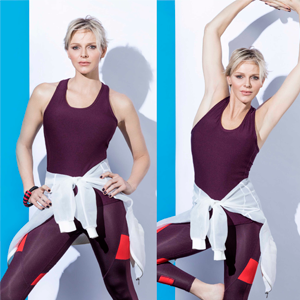
Health24.com | This is how Princess Charlene stays fit and healthy at 40

Her Serene Highness Princess Charlene of Monaco is a mom of twins, a retired professional swimmer and spends her life jetting from one function to the next. She’s also just turned 40. And she’s not a fan of the gym.

Any one of those things would be a great excuse for piling on the kilos. But Charlene is in great shape, with visible muscle tone in her arms and legs and a slim waist. Here’s how she stays fit, strong and trim without the gym.

1. Make healthy choices most of the time…

Charlene spends a lot of time attending events in different parts of the world, so she struggles to maintain a routine. “There isn’t really consistency – my days are never the same and you can’t really choose what you get to eat at events,” she says.

Instead, she makes an effort to select the healthier options available. “I try to eat a lot of fish and fresh fruit and vegetables. And I drink a lot of water – it’s important to stay hydrated.”

Read more: These are Melinda Bam’s go-to moves for rocking abs

2. … But don’t forget to live a little

Diet fatigue is a major reason why many women fall off the healthy eating wagon. Your willpower is like a muscle – if you keep it working for too long without a break, eventually it will give in.

“Don’t be too strict on yourself,” says Charlene. “A dessert once in a while is not so bad.”

3. Move your body in ways you enjoy

Charlene still loves being in the water. She swims regularly and, when she arrives at a new destination, the hotel pool is her first stop. She also does stand-up paddle boarding, which is particularly good for working your core and sculpting lean muscle in your arms and shoulders.

Through her foundation, Charlene teaches kids around the world to swim and perform CPR.

4. Try new things

Do the same old workout week in and week out and you’re going to get very bored, very quickly. Charlene mixes it up with outdoor activities like running and hiking that take her into nature.

Her latest obsession? Waterbike – a new sport that has you pedalling across the water on a bicycle attached between two floats that look like seaplane struts. It’s fun and also a killer leg workout.

Read more: This is the diet Jessica Alba used to lose 27cm in four months

Check out this video of the Riviera Waterbike Challenge that Charlene organised last year. Competitors included her husband, Prince Albert, along with several sports stars from around the world. Proceeds went to the Princess Charlene of Monaco Foundation.

[embedded content]

5. Exercise for life

After years of gruelling training as a professional swimmer, Charlene’s focus has shifted dramatically. Now, she trains to stay fit and healthy and to enjoy life. Because she spends a lot of time on the plane, Charlene stretches often to maintain good mobility. She counteracts hours clocked in heels with downtime going barefoot.

Read more: Gigi Hadid’s “emergency shred” moves for abs, arms and butt

And she keeps her body strong to be capable.

“As an athlete my training was explosive,” she says. “Now I focus more on strength, core training and stability. You lose strength with age and I need to be strong so I can pick up my children and do my sport.”

This article was originally published on www.womenshealthsa.co.za

Image credit: Sean Laurénz

Share Button

Can this invasive exotic pest make better materials for industry and medicine?

Researchers at the National Institute of Standards and Technology (NIST) have combined derivatives of two surplus materials — wood pulp and dried-up pieces of an invasive exotic pest — to form a new composite material that is flexible, sustainable, nontoxic and UV light-reflective. The material, described in a new paper (link is external) published in Advanced Functional Materials, could soon be used in a wide variety of applications, including food packaging, biomedical devices, building construction and the design of cars, trucks and boats.

The key to this unlikely marriage of wood and pests is a motif called the “Bouligand structure,” in which molecules stack up in a twisted shape, similar to tiny spiral staircases. Scientists have learned that the Bouligand structure provides a certain kind of resilience to cracking; the force of an impact is guided by those tiny, nanosized, staircase-like twists and turns through a series of detours. Rather than cracking straight through, the energy of a bump or crash is thus deflected through a kind of tortuous path, leaving the overall material intact and functional.

While wood does not have a natural Bouligand structure, it has attracted scientists for decades, in part because there is an ample supply of material left over after the processing of paper and commercial lumber.

“The idea of making useful products out of wood pulp has long intrigued a lot of people in many different industries,” says Jeff Gilman, who leads the composites project team at NIST.

By washing that pulp with acid to remove its lignin and amorphous cellulose, scientists discovered several years ago that they could create a milky solution that ultimately dried to form a new material with a Bouligand structure. The key component of this solution was tiny crystalline rods of cellulose, known as cellulose nanocrystals or nanocellulose. However, on their own, the pulp-derived Bouligand films are brittle and won’t hold much weight.

The NIST team hypothesized that combining the short wood-derived nanocellulose rods with another natural material with longer crystalline rods would result in something new that would be incredibly strong and flexible. With appropriate additives, this new material could be used to create films that could slow down the diffusion of water and oxygen.

“The right product, if developed, could be used in everything from aerospace composites to packaging that would keep food fresh,” Gilman said.

One option for the new composite material: the carcasses of a dried-up aquatic creature called a tunicate that is considered a pest in some countries and a delicious treat in others.

In many parts of Asia, the brown aquatic creatures (Styela clava) are often cooked and served in spicy sauces. But without natural predators present to eat them in new environments, their populations begin to grow into super-abundant numbers that eventually clog boat engines and fishing gear, outcompete native fish, reduce healthy plankton populations and foul and ruin productive shellfish beds. Some environmental managers think that finding a way to remove and use them as a resource could serve a beneficial purpose. Harvesting them is one option. Like an oyster, the inside of a tunicate is considered the tasty bit. The outside is usually just thrown away, meaning there could be a ready source for this material in areas where they are often cooked.

What specifically intrigued the NIST researchers, however, was the tunicate’s inner structure, which was made of very long, highly crystalline nanocellulose. These were different from the shorter crystals found in wood.

“Tunicates have stuck out as the gold standard for their physical properties,” said Johan Foster from Virginia Tech University, who is one of only a handful of teams working on tunicate harvest and research around the globe. Foster gathered and supplied the tunicates for the NIST project from a dock in Western France, where the animals are considered a nuisance species.

Some scientists had assumed that a composite made entirely out of long crystalline tunicate nanocellulose would be incredibly strong and tough. However, by testing dried mixed tunicate/wood composite materials, lead author Bharath Natarajan was able to identify the exact point of greatest toughness.

“If you put a little tunicate into the wood pulp composite, it makes it a little stiffer, and it doesn’t break as quickly and becomes more flexible,” Natarajan said. “Put in 10 percent and it’s twice as strong. If your mixture is 30 percent tunicate and 70 percent wood pulp, the resulting composite is 15-20 times tougher. But after that, you really don’t see an improvement in strength, and there is a reduction in toughness.”

Tunicates are plentiful, but remain expensive to process, so knowing exactly how much to add is key to scaling up their use in the future, and for keeping any resulting products affordable.

Adding the tunicates also caused the nanocrystals to twist in a different way and accelerated the structure formation in the wood pulp. It also formed a pattern that was tighter and denser, making the new composite material UV-reflective.

“Many materials begin to degrade if they are exposed to the sun for a long time,” said Gilman. “This material could potentially be used as a coating on other surfaces in order to reflect light and extend durability.”

In the coming years, Natarajan and his team will continue to test ways their new tunicate-wood pulp mixture could be used to manufacture resilient, flexible and UV-reflective composites for use in the manufacture of sustainable, lightweight automobiles and aerospace vehicles, among other products.

Share Button