Making new layered superconductors using high entropy alloys

Researchers from Tokyo Metropolitan University have created new superconductors made of layers of bismuth sulfide (BiS2) and a high entropy rare earth alloy oxyfluoride, containing five different rare earth (RE) elements at the same crystallographic site. The new material retains superconducting properties over a wider range of lattice parameters than materials without high-entropy-alloy states. Their work promises an exciting new strategy for designing new layered superconductors, a potentially key development in the search for high-temperature superconductors.

Superconductors are key to a range of exciting potential applications. For example, zero resistivity promises loss-free power transmission and powerful electromagnets. The challenge has been to discover a material that retains this property at higher temperatures, closer to ambient temperatures. Despite focused work and a number of breakthroughs in recent years, the hunt is still on for effective strategies to create new superconducting materials.

One strategy is the use of layered materials with a molecular structure consisting of alternating superconducting layers and “blocking layers” acting as insulating spacers. A team led by Associate Professor Yoshikazu Mizuguchi from the Department of Physics, Tokyo Metropolitan University, has uncovered an important aspect of designing the insulating layer. They were able to combine five different rare earth (RE) elements, lanthanum, cerium, praseodymium, neodymium, and samarium, and create a “high entropy alloy” in the blocking layer. High entropy alloys have attracted considerable attention in recent years for their toughness, resistance to fatigue and ductility, amongst many other notable physical properties.

The team’s new materials, with different proportions of REs (10-30%), exhibited enhanced superconducting properties; in particular, materials with the same period in their molecular structure exhibited a superconducting transition at higher temperatures when the blocking layer contained a high entropy alloy. They believe that the high entropy alloy helps to stabilize the crystal structure of the superconducting layer.

The work’s impact is not limited to the new materials they present. Given the existence of a large number of superconducting layers which are compatible with RE oxides, this innovation opens the way for a broad new strategy for engineering new, revolutionary superconducting materials.

Story Source:

Materials provided by Tokyo Metropolitan University. Note: Content may be edited for style and length.

Share Button

Greenhouse gas ‘feedback loop’ discovered in freshwater lakes

A new study of chemical reactions that occur when organic matter decomposes in freshwater lakes has revealed that the debris from trees suppresses production of methane — while debris from plants found in reed beds actually promotes this harmful greenhouse gas.

As vegetation in and around bodies of water continues to change, with forest cover being lost while global warming causes wetland plants to thrive, the many lakes of the northern hemisphere — already a major source of methane — could almost double their emissions in the next fifty years.

The researchers say that the findings suggest the discovery of yet another “feedback loop” in which environmental disruption and climate change trigger the release of ever more greenhouse gas that further warms the planet, similar to the concerns over the methane released by fast-melting arctic permafrost.

“Methane is a greenhouse gas at least twenty-five times more potent than carbon dioxide. Freshwater ecosystems already contribute as much as 16% of the Earth’s natural methane emissions, compared to just 1% from all the world’s oceans,” said study senior author Dr Andrew Tanentzap from the University of Cambridge’s Department of Plant Sciences.

“We believe we have discovered a new mechanism that has the potential to cause increasingly more greenhouse gases to be produced by freshwater lakes. The warming climates that promote the growth of aquatic plants have the potential to trigger a damaging feedback loop in natural ecosystems.”

The researchers point out that the current methane emissions of freshwater ecosystems alone offsets around a quarter of all the carbon soaked up by land plants and soil: the natural ‘carbon sink’ that drains and stores CO2 from the atmosphere.

Up to 77% of the methane emissions from an individual lake are the result of the organic matter shed primarily by plants that grow in or near the water. This matter gets buried in the sediment found toward the edge of lakes, where it is consumed by communities of microbes. Methane gets generated as a byproduct, which then bubbles up to the surface.

Working with colleagues from Canada and Germany, Tanentzap’s group found that the levels of methane produced in lakes varies enormously depending on the type of plants contributing their organic matter to the lake sediment. The study, funded by the UK’s Natural Environment Research Council, is published today in the journal Nature Communications.

To test how organic matter affects methane emissions, the scientists took lake sediment and added three common types of plant debris: deciduous trees that shed leaves annually, evergreen pine-shedding coniferous trees, and cattails (often known in the UK as ‘bulrushes’) — a common aquatic plant that grows in the shallows of freshwater lakes.

These sediments were incubated in the lab for 150 days, during which time the scientists siphoned off and measured the methane produced. They found that the bulrush sediment produced over 400 times the amount of methane as the coniferous sediment, and almost 2,800 times the methane than that of the deciduous.

Unlike the cattail debris, the chemical makeup of the organic matter from trees appears to trap large quantities of carbon within the lake sediment — carbon that would otherwise combine with hydrogen and get released as methane into the atmosphere.

To confirm their findings, the researchers also “spiked” the three samples with the microbes that produce methane to gauge the chemical reaction. While the forest-derived sediment remained unchanged, the sample containing the bulrush organic matter doubled its methane production.

“The organic matter that runs into lakes from the forest trees acts as a latch that suppresses the production of methane within lake sediment. These forests have long surrounded the millions of lakes in the northern hemisphere, but are now under threat,” said Dr Erik Emilson, first author of the study, who has since left Cambridge to work at Natural Resources Canada.

“At the same time, changing climates are providing favourable conditions for the growth and spread of aquatic plants such as cattails, and the organic matter from these plants promotes the release of even more methane from the freshwater ecosystems of the global north.”

Using species distribution models for the Boreal Shield, an area that covers central and eastern Canada and “houses more forests and lakes than just about anywhere on Earth,” the researchers calculated that the number of lakes colonised by just the common cattail (Typha latifolia) could double in the next fifty years — causing current levels of lake-produced methane to increase by at least 73% in this part of the world alone.

Added Tanentzap: “Accurately predicting methane emissions is vital to the scientific calculations used to try and understand the pace of climate change and the effects of a warmer world. We still have limited understanding of the fluctuations in methane production from plants and freshwater lakes.”

Share Button

Health24.com | Is it bad to eat dairy if it gives you diarrhoea?

If eating a cup of ice cream or drinking a glass of milk sends you scurrying to the bathroom or starts your gut gurgling, you might have lactose intolerance.

And you’re not alone. About 65% of the world’s population has some issues digesting milk products. And the effects don’t need to be as severe as full-blown diarrhoea – even symptoms like slight bloating or mild cramping can indicate a problem.

Read more: Why you have heinous bad breath after eating dairy – and how to fix it

But the question is, what’s your move if you do have a sensitivity to things like milk, cheese and ice cream? Are you destined to a life sans dairy? And if you choose to eat the good stuff anyway – symptoms be damned – are you putting your body at risk? We break it down below.

What exactly is lactose intolerance?

When you eat foods containing lactose – a sugar found in milk products – an enzyme called lactase works to break down the sugar into smaller particles, explains Dr Jennifer Inra, a gastroenterologist at Brigham and Women’s Hospital in Boston, MA.

These smaller particles are easier for your GI tract to absorb and digest. A problem arises, though, if your body doesn’t produce enough lactase to break the milk sugars down.

And that’s a common side effect of growing older, says registered dietician, Dana Hunnes, a senior dietician at Ronald Reagan UCLA Medical Centre.

“As infants, we require milk [preferably breast milk or a similar alternative] to properly access healthful nutrition,” she says.

But after that, we can get our nutrients form solid food, so we no longer need to drink milk. As a result, many of us lose the lactase enzyme that allows us to break those milk sugars down into smaller parts, says Hunnes.

That’s what causes lactose intolerance. Without enough of the lactase enzyme, your body can’t metabolise dairy, leading to digestive problems like diarrhoea, abdominal cramping or pain, bloating, gas, nausea and sometimes even vomiting about 30 minutes to two hours after eating it.

Read more: Can eating cheese really give you nightmares?

“The severity of symptoms typically increases with the amount of lactose you eat,” says Dr Inra.

Usually, lactose intolerance is something that develops as you age – you’ll usually notice some symptoms start to begin in adolescence.

It’s also possible to pick up symptoms later in life, says Dr Inra. An injury to your small intestine – from infection or inflammation, such as from celiac disease or inflammatory bowel disorders – can also lead to lactose intolerance. The good news, though, is in these cases, your lactase levels will return to normal after you treat the underlying disease.

Otherwise, lactose intolerance doesn’t get better over time – even if you try to reintroduce yourself to dairy little by little, she says.

Two people holding glasses of milk

So how bad is it to eat dairy if you’re lactose intolerant?

Lactose intolerance isn’t dangerous, Dr Inra notes and, if you splurge on the cheesy nachos, there will likely be no long-term consequences.

But, that’s not the case 100% of the time: “There are some individuals who actually do have permanent damage done to the microvilli [finger projections lining the intestine] of their intestine when they drink or consume foods with lactose in it,” says Hunnes.

And that’s a problem, since the microvilli absorb nutrients into your bloodstream. So if they are damaged, you won’t be able to absorb and utilise your nutrients properly. The result? Malnutrition, says Hunnes, which can leave you lacking the nutrients you need.

Read more: Is milk really healthy for you? Learn the facts

But don’t freak out – it’s a very rare condition, affecting less than 1% of the population, she says.

Most of us, instead, pay for eating dairy with the nasty – albeit temporary – symptoms listed above. In most cases, you’ll start to feel better once everything is through your system, about 12 to 24 hours later, says Hunnes.

Still, even if you’re lactose intolerant, you don’t have to swear off cheese. You just need a better game plan, and that can include some OTC meds that can help you digest dairy.

“Lactaid pills and other similar products contain the enzyme lactase, and help some people tolerate dairy,” says Dr Inra.

Just make sure to take the pills before eating dairy. “If they are taken later, they may not work as well.”

One important note: The OTC pills aren’t foolproof, either. Many people have mild symptoms even with a lactase enzyme supplement, because these meds may not be able to break down all the lactose present in your food – say, especially if you’re eating foods with lots of lactose, says Dr Inra.

Read more: 7 common nutrition myths busted!

That’s where choosing your dairy wisely comes into play, too. The ageing process reduces lactose, so aged cheeses like cheddar, Parmesan and Swiss may be safer, says Dr Inra.

“Younger, fresher cheeses, such as American, feta and mozzarella have higher lactose content,” she says.

Plus, fermented foods such as yoghurt and kefir are also naturally lower in lactose, too, says Hunnes. On the other hand, reduced-fat and fat-free dairy products also tend to have a higher lactose contents, Dr Inra says.

Fortunately, we also live in an age of dairy-free and lactose-free foods and drinks. “Almond milk, soy milk or Lactaid milk are good options instead of regular milk,” says Dr Inra.

Dairy without the diarrhoea. A win-win.

This article was originally published on www.menshealth.com

Image credit: iStock

NEXT ON HEALTH24X

Share Button

Health24.com | 5 dangerous health risks of tattoos

Tattoos remain popular and people get them for a multitude of reasons. But before you finally make the decision to “ink” your skin, it’s worth understanding all the potential risks.

Cape Town dermatologist Dr Ian Webster previously told Health24 that you should only go to a professional tattoo artist. Severe complications can arise if the instruments are poorly sterilised or not used correctly. And always check that the tattoo parlour is hygienic and clean.

Transmission of serious infections like HIV and hepatitis, as well as allergic reactions may occur, and many people don’t consider these dangers beforehand, said Dr Webster.

Tattooing implants permanent granules of pigment granules under the skin. Aside from the usual dangers (HIV and other blood-borne infections), here are five complications you could experience after getting a tattoo.

1. You could be allergic to the ink

UK mother Nicola Hickman decided to get a tattoo of a heart on her ankle to show her love for her daughter. Everything was fine until six weeks later.

“I noticed that the tattoo was bumpy and the red colour was fading. I went back to the tattooist to ask his opinion, and he said he would be happy to top up the colour when the bumps went down,” Hickman told the Daily Mail.

He told her to use an antiseptic cream. However, it just worsened. “I tried to ignore it but it got to the point where I couldn’t think of anything else. I couldn’t wear proper footwear and I couldn’t sleep on it.”

Hickman was allergic to the red ink. “The dermatologists took one look at it and were shocked. They’d never seen an allergic reaction like it before. They took pictures which they wanted to use for a report in a medical journal,” she said.

Doctors had to surgically remove the growth that developed 11 months later, and she was left with a 4cm scar on her ankle.

“I had another tattoo done of my daughter’s name in black ink on my neck and I’ve never had any problems with it. They’re still not sure what it was in the red ink which caused the allergic reaction. It might have been a metallic chemical. My ankle’s still not perfectly healed, but I’m glad the growth has gone.”

According to an article in the Journal of Cutaneous and Aesthetic Surgery, “classic pigments and their degradation products used in tattooing, such as dichromate (green), cobalt (blue), cadmium (yellow) and mercury salt (red)-based pigments are responsible for these kind of [allergic] reactions with permanent tattoos.”

When a foreign substance is introduced into the skin during tattoo, it can cause a toxic or immunological response. This reaction can occur shortly after the tattoo or years later.  

tattoo artist with ink

2. A tattoo could hide skin cancer

German clinicians report a case in JAMA Dermatology where a man wanted to have multicoloured tattoos removed from his arms and chest. However, doctors noticed a suspicious-looking mole inside a tattoo on his right arm, which they recommended having removed before starting laser therapy.

The man refused to have it excised and began laser therapy. Forty-seven surgeries and seven years later, the mole had to be removed and was diagnosed as stage 2 melanoma. 

Dr Robert Shmerling, faculty editor at Harvard Health Publications, says tattoo ink may hide changes to moles, making it difficult to evaluate. The ink can also move into underlying tissues and resemble the spread of metastatic melanoma.

He says laser removal therapy is problematic if you have moles because the lasers break up the pigment of the tattoo. “Lasers break up pigment inside the tattoo. But it can also break up pigment inside a suspicious mole, making assessment of the mole difficult.”

If you still want a tattoo, make sure you have it done on skin that has no moles or birthmarks, or ask your doctor to check any of the moles before you are tattooed.

Man with moles getting tattoo

3. It could affect how you sweat

Tattoos may interfere with how your skin sweats – compared with non-inked skin, tattooed skin releases about 50% less sweat.

“We also found the sodium in sweat was more concentrated when released from tattooed skin,” Maurie Luetkemeier, a professor of physiology at Alma College in Michigan, said. Your skin usually reabsorbs sodium and electrolytes released during perspiration, but he says tattoos may partially block this reabsorption.

It won’t really matter if you have a single small tattoo but if you have a large tattoo – particularly on your back, arms or other areas with many sweat glands – your body may struggle to cool itself down and hold onto nutrients.

“You look at someone in the military, where tattoos are very prevalent, and if they’re exposed to high heat and a heavy workload, there could be thermoregulatory problems,” Prof Luetkemeier said.

He does add that this is speculative, however, so more research may be needed – but it’s worth keeping in mind if you are planning a large piece of ink on your body.

Man with tattoos at gym

4. It could raise your risk of a bacterial infection

An article in the Journal of Cutaneous and Aesthetic Surgery says tattoos can cause bacterial infections caused by Streptococcus pyogenes, which could lead to impetigo, erysipelas and septicaemia; Staphylococcus aureus can cause rare toxic shock syndrome; skin and soft tissue infections can be caused by community-acquired methicillin-resistant S. aureus (CA-MRSA); treponema pallidum can cause syphilis; and Mycobacterium leprae which causes leprosy.

A case study published in BMJ Case Reports refers to a man who got a leg tattoo and then swam in the Gulf of Mexico. He was admitted to hospital with an infection with the bacterium Vibrio vulnificus. He suffered from skin necrosis and septic shock for two months before dying. While the man didn’t die directly from the tattoo, he did have chronic liver disease. 

Unfortunately the recently tattooed skin allowed the bacterium, which he was exposed to in the sea water, to enter his blood stream. “Infections can also occur with exposure of open wounds to contaminated salt or brackish water,” the study adds. “However, this represents an uncommon mechanism of infection.”     

Woman with tattoo on beach

5. A tattoo may lead to complications during medical procedures

You’re probably not thinking about MRIs when you’re having a tattoo done but studies show that metal-based ink tattoos can react with magnetic resonance imaging studies.

An article in the American Journal of Roentgenology reports a man who received second-degree skin burns in two tattoos while having a cervical spine MRI. He complained of a burning sensation on his arm – his tattooed skin was raised and swollen. In another case, a professional football player sustained a burn on a tattoo following an MRI of his pelvis. 

The study says burn was caused by an “electromagnetic reaction due to the ferromagnetic metallic compounds found in tattoo pigments, especially iron oxide – a reaction that has the potential to distort the field of image.”  

Fortunately this reaction is rare but if you are thinking about getting a tattoo, experts suggest avoiding iron-based inks that may interfere with MRIs, or alerting your doctor if you already have such a tattoo.

Patient holding hands with friend

What kind of reactions may occur after getting a tattoo?

According to the US Food and Drug Administration, you could notice a rash in the area of the tattoo or develop a fever.

More severe complications include a high fever, chills and sweats. You may need to treat an infection with a course of antibiotics or have surgery. A rash could indicate an allergy to the ink – remember, tattoo inks are permanent, which means the reaction may persist.

See your doctor if you have any concerns about, or adverse reactions to tattoos.

Image credit: iStock

Share Button

Regular fast food eating linked to fertility issues in women

Women who eat fast food regularly and not enough fruit are more likely to struggle to conceive, a study suggests.

Share Button

Thousands of calls made to breast screen error helpline

It follows revelations that 450,000 women have not been invited for breast scans since 2009.

Share Button

Volcanic hazard scenarios: Mount Taranaki, New Zealand

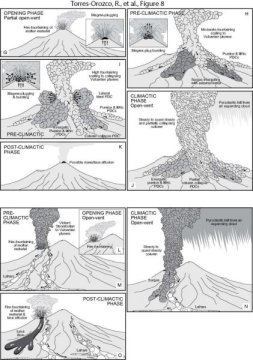
Volcanic hazard scenarios for Plinian eruptions at Mount Taranaki’s summit crater and Fanthams Peak vent. A-F: Scenario I. Close-conduits and conduit decompression by vent unroofing and dome collapse. G-K: Scenario II. Transient open and clogged conduits by repeated plugging-and-bursting of gas-depleted or chilled magma. L-O: Scenario III. Rapid progression into steady phases by open conduits. P: Possible upper conduit dynamics for each scenario based on data and interpretations of Torres-Orozco et al. (2017a, 2017b).

Credit: R. Torres-Orozco et al., GSA Bulletin, 2018.

Over the last 5000 years, Mount Taranaki volcano, located in the westernmost part of New Zealand’s North Island, produced at least 16 Plinian-scale explosive eruptions, the latest at AD 1655. These eruptions had magnitudes of 4 to 5, eruptive styles, and contrasting basaltic to andesitic chemical compositions comparable to the eruptions of Etna, 122 BC; Vesuvius, AD79; Tarawera, 1886; Pelée, 1902; Colima, 1910; Mount Saint Helens, 1980; Merapi, 2010; and Calbuco, 2015.

In this work, Rafael Torres-Orozco and colleagues combined geological mapping and lithostratigraphic analyses to define the possible hazard scenarios in case of Taranaki’s explosive reawakening.

The results indicate that, during a future Plinian event, bursting of both long-lasting, large-volume lava domes and transient, small-volume lava plugs from Taranaki’s andesitic summit crater would be typical, and these would produce different types of pyroclastic density currents (PDCs) flowing down the volcano flanks mainly due to gravity.

The most deadly “blast-type” PDCs would first explode and expand laterally, and then would flow downstream, reaching urban areas located at up to 18 km distance from the crater. Eruptive columns following or accompanying PDCs are ubiquitous to every scenario. These columns would inject ash and gas into the atmosphere, and could disperse 10-cm-thick layers of volcanic material over the most populated areas at 20-30 km from the crater. In the scenario of eruptions produced from vents different to the summit-crater, these would be expected to be basaltic and lack major PDCs.

These scenarios highlight the major role that PDCs must have in evaluating the hazardscape of Taranaki and of other similar volcanoes. The scenarios can be tailored to different sites around the world by localized studies, and can also be used to plan emergency management.

Story Source:

Materials provided by Geological Society of America. Note: Content may be edited for style and length.


Journal Reference:

  1. Torres-Orozco et al. Volcanic hazard scenarios for multi-phase andesitic Plinian eruptions from lithostratigraphy: Insights into PDC diversity at Mount Taranaki, New Zealand. GSA Bulletin, 2018 DOI: 10.1130/G31850.1

Cite This Page:

Geological Society of America. “Volcanic hazard scenarios: Mount Taranaki, New Zealand.” ScienceDaily. ScienceDaily, 3 May 2018. <www.sciencedaily.com/releases/2018/05/180503142955.htm>.

Geological Society of America. (2018, May 3). Volcanic hazard scenarios: Mount Taranaki, New Zealand. ScienceDaily. Retrieved May 3, 2018 from www.sciencedaily.com/releases/2018/05/180503142955.htm

Geological Society of America. “Volcanic hazard scenarios: Mount Taranaki, New Zealand.” ScienceDaily. www.sciencedaily.com/releases/2018/05/180503142955.htm (accessed May 3, 2018).

Share Button

Gray hair linked to immune system activity and viral infection

A new study on mice offers insights into why some people’s hair may turn gray in response to a serious illness or chronic stress. Publishing May 3 in the open access journal PLOS Biology, researchers at the National Institutes of Health and the University of Alabama, Birmingham have discovered a connection between the genes that contribute to hair color and the genes that notify our bodies of a pathogenic infection.

When a body is under attack from a virus or bacteria, the innate immune system kicks into gear. All cells have the ability to detect foreign invaders and they respond by producing signaling molecules called interferons. Interferons signal to other cells to take action by turning on the expression of genes that inhibit viral replication, activate immune effector cells, and increase host defenses.

The connection between hair pigmentation and innate immune regulation was initially a bit surprising. Melissa Harris, primary author and assistant professor within the Department of Biology at UAB explains, “Genomic tools allow us to assess how all of the genes within our genome change their expression under different conditions, and sometimes they change in ways that we don’t anticipate. We are interested in genes that affect how our stem cells are maintained over time. We like to study gray hair because it’s an easy read-out of melanocyte stem cell dysfunction.” Melanocyte stem cells are essential to hair color as they produce the melanocytes that are responsible for making and depositing pigment into the hair shaft.

In this case, an unexpected link was found between gray hair, the transcription factor MITF, and innate immunity. MITF is best known for its role in regulating the many functions within melanocytes. But the researchers found that MITF also serves to keep the melanocytes’ interferon response in check. If MITF’s control of the interferon response is lost in melanocyte stem cells, hair-graying results. Furthermore, if innate immune signaling is artificially activated in mice that are predisposed for getting gray hair, increased numbers of gray hairs are also produced.

“This new discovery suggests that genes that control pigment in hair and skin also work to control the innate immune system,” said William Pavan, study co-author and chief of the Genetic Disease Research Branch at NIH’s National Human Genome Research Institute (NHGRI). “These results may enhance our understanding of hair graying. More importantly, discovering this connection will help us understand pigmentation diseases with innate immune system involvement like vitiligo.” Vitiligo, which causes discolored skin patches, affects between 0.5 percent to 1 percent of all humans.

Why mice that are predisposed for getting gray hair are more susceptible to dysregulated innate immune signaling remains to be answered. The researchers speculate that perhaps this can explain why some people experience premature gray hair early in life, and they will continue their studies to address this question.

Story Source:

Materials provided by PLOS. Note: Content may be edited for style and length.

Share Button

Microbeads to combat infection show promise in burn wound simulations

Computer simulations of microscopic, protein-coated beads that block bacteria from binding to host cells suggest that the microbeads could help reduce or eliminate bacterial infections in burn wounds. Paul Roberts of the University of Birmingham, U.K., and colleagues present these new findings, funded by the BBSRC, in PLOS Computational Biology.

The microbeads were developed several years ago as a potential alternative to antibiotics, which are difficult to innovate quickly enough to keep up with the rapid emergence of bacterial strains that are resistant to existing drugs. The tiny plastic spheres are coated with the same protein used by many bacteria to bind host cells. Thus, they compete with bacteria for binding sites, physically keeping them from attaching to host cells.

Previous laboratory research has demonstrated the potential of the microbeads to treat infections in burn wounds in rats. To further explore this potential, Roberts and colleagues developed a mathematical model that simulates microbead treatment of rats with burn wounds infected by Pseudomonas aeruginosa, a bacterium that often infects burn wounds in humans.

The researchers ran computer simulations for a range of parameter values representing different infection scenarios and microbead treatment strategies. This enabled them to explore which conditions allow for effective microbead treatment and how to refine microbead treatment to maximize its anti-bacterial power.

The simulations showed that microbead treatment is unlikely to be effective on its own, but when combined with a technique called debridement, it could significantly reduce or eliminate infection. Debridement is a method of cleansing a burn wound with a cloth and is already used regularly to treat burn wounds in humans.

“Our results also suggest that these microbeads could be used to complement traditional antibiotic drugs,” Roberts says. “In theory, this would allow us to eliminate bacterial infections more rapidly, reducing the quantity of antibiotics used and hence lessening the chances that bacteria will develop resistance to them.”

Next, the model results will be tested in laboratory experiments to determine if a combined microbead-debridement treatment is as effective as predicted. Meanwhile, Roberts and colleagues are developing more sophisticated mathematical models in order to explore the best ways to combine microbeads and debridement with traditional antibiotic treatment.

Story Source:

Materials provided by PLOS. Note: Content may be edited for style and length.

Share Button

Xanax: Children as young as 11 taking anxiety drug

Children are “self-medicating” with an anxiety drug often sold to them by schoolmates, the BBC finds.

Share Button