Health24.com | ‘I feel so honoured I was able to help save his life’: Daughter donates kidney to dying father

There’s nothing like the bond between a father and his daughter.

Hailee Stender donated her kidney to her father, John, who was diagnosed with stage four kidney failure and given just two years to live.

‘I feel so honoured’

After both surgeries, the harvesting and the transplant, were successfully completed in March, the two shared a teary-eyed embrace once they were reunited.

The 30-year-old, who’s John’s only biological child, didn’t think twice about donating her organ when she heard her dad’s health was deteriorating.

“No matter how much pain I was in I would have done it every single time,” Hailee recalled. “I saw how much better he looked because of it.

“I’m connected to my dad more than just by blood now. A part of me will always be with him.

“I feel so honoured I was able to help save his life.”

Officially a lifesaver

Her sister, AnaRosa – who was adopted in Ecuador when she was a newborn – documented the entire experience and thanked her sister for the “life-saving and selfless act”.

“Hailee knew at some point in her life she was going to get married and she wanted her father to walk her down the aisle,” says AnaRosa.

“She is the most selfless and admirable person I’ve ever known.

“She loves deeply and her willingness to donate a kidney speaks volumes about that. Hailie is officially a lifesaver.

“She saved our father’s life. For our family, this it’s truly life-changing.”

John, who’s said to be recovering well from his surgery, is being closely monitored by medics and sees his surgeons twice a week.

Hailee, who named the donated kidney Kevin, has had to alter her entire life after the operation, including adjusting her diet and workouts.

Both surgeries lasted a collective eight-and-a-half hours and specialists predicted a recovery time of up to six months.

Source: Magazine Features

Image credit: CATERS/WWW.MAGAZINEFEATURES.CO.ZA

NEXT ON HEALTH24X

Share Button

Health24.com | Mysterious illness turns energetic pole dancer into a fatigued ‘gran’

A young woman has gone from being an energetic pole dancer to a fatigued “gran” after falling ill with a mystery disease – even doctors can’t figure out what’s caused the change.

Ashleigh Butler’s life was transformed overnight when she suddenly lost feeling in her legs at work during a shift as a waitress.

Boyfriend now full-time carer

When her symptoms worsened she consulted several doctors – but with tests not showing anything, they have been left stumped.

More than a year later, 22-year-old Ashleigh, a law student and fitness fanatic from Jervis Bay in Australia, is no closer to knowing what is wrong with her.

She suffers from chronic fatigue and pain, numbness and tingling, seizures and slurred speech. She also experiences blurred vision, hair loss and excess sweating.

The former pole dancing instructor now spends her time knitting and her boyfriend Justin, 23, is now her full-time carer.

“One day I was a normal, healthy 21-year-old girl and the next day I was burdened with a sickness that left me disabled and no one has been able to explain why.

“It turned me into a gran overnight. I went from being a pole dancing instructor to knitting. It made me old before my time.”

Ashleigh was studying a double full-time degree in law and psychology and working long hours as a waitress.

“I was extremely fit and healthy because I was a pole dancer and instructor, plus a regular gym-goer.

Many tests, but no answer

“One day I just couldn’t feel my legs. Doctors thought I had the early symptoms of MS [multiple sclerosis]. But I had the tests and they just couldn’t place what was wrong with me.

“In a weird way that crushed me as I was so sick I just wanted to know what was wrong with me.”

Months passed by and Ashleigh saw several specialists, with no answer.

“My boyfriend has to help me walk and supports me financially.”

“I’ve been searching for a diagnosis since September 2016 and I’ve spent thousands on medical testing and specialist opinions that didn’t get me anywhere.”

However, Ashleigh has found a doctor who’s close to a diagnosis, for which she needs to undergo extensive testing over the next few weeks. 

She’s started a blog to help other people who are in her position.

Image credit: CATERS/WWW.MAGAZINEFEATURES.CO.ZA

NEXT ON HEALTH24X

Share Button

Health24.com | Here’s why your leg cramps while you sleep – and how to treat it

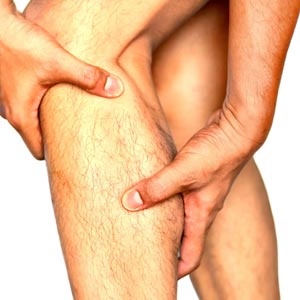
Up to 60% of adults experience the occasional nocturnal leg cramp, which can feel like a painful spasm, tightening or twinge. They develop when the nerves that carry signals to your muscles fire off too many messages at once.

This causes your muscles to contract in an uncomfortable way, says Dr Scott Garrison, director of the department of family medicine at the University of Alberta.

Read more: Make a muscle cramp vanish

Sitting or lying down for a long time – like when you’re sleeping – can trigger the nerve malfunction. That’s why you tend to get cramps in the middle of the night. And weirdly, these cramps are more common in warmer months, according to a study from Dr Garrison and his team.

It might be because you have higher levels of vitamin D in the summer, thanks to increased sun exposure. The nutrient plays a role in regulating the growth and repair of your muscle fibres, says Dr Garrison.

But more growth and repair may also send the muscle mechanism behind your cramps into overdrive, he says.

Read more: Is muscle soreness really a sign of an effective workout

Nocturnal leg cramps become more common – and painful – as you age, says Dr Garrison. After you hit 50, you start losing more of the nerve cells that send messages from your brain to your muscles. The cells that are left have to work harder, which experts speculate might cause cramping.

Fortunately, the spasms are usually harmless. But in rare cases, they can signal electrolyte imbalance or neuromuscular disorders like amyotrophic lateral sclerosis (ALS), known as Lou Gehrig’s disease.

Stretching your calves, hamstrings and quads before bed will stop cramps before they start. In fact, a 2012 study from the Netherlands found that older adults who suffered from these cramps experienced fewer, less severe spasms when they stretched their legs for three minutes prior to hitting the sack.

Read more: This is what would happen to your muscles if you stretched for 10 minutes every day

If a spasm does strike in the middle of the night, ease the pain by using the same stretches. Your usual first line of defence – hopping out of bed and walking around for a minute – will help relieve tightness, too.

This article was originally published on www.menshealth.com

Image credit: iStock

Share Button

Health24.com | This is how Viagra can help you live longer

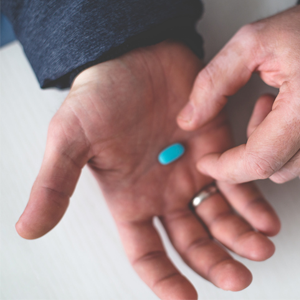
Once you’ve had a heart attack, getting back your sex life can feel scary. But it might come with an important health benefit – especially if you use certain erectile dysfunction (ED) drugs to get there.

That’s because taking ED drugs like Viagra after a heart attack might protect your heart and cut your chances of dying prematurely, new research from Sweden suggests.

Read more: Why you shouldn’t take Viagra for ‘fun’

Researchers followed more than 43 000 men for three years who were hospitalised for a heart attack. Of these guys, 7% were prescribed meds for ED. The researchers discovered that men who were treated for ED were 40% less likely to be hospitalised for heart failure, and were 33% less likely to die of any cause during the follow up.

But then the scientists delved a little deeper into how the patients were treated for their ED, and a clearer picture emerged. It seemed that only men taking oral ED drugs called PDE5 inhibitors, such as Viagra or Cialis, had the longer-living benefit.

Men taking PDE5 inhibitors after their heart attack were 38% less likely to die during follow up than those not taking any ED medicine, or than those taking alprostadil, an injectable ED drug. In fact, there was no link between risk of early death and alprostadil use.

Read more: This breakthrough treatment is the Viagra of the future

That’s important, because otherwise, the link between premature death and ED treatment might be explained by sex itself – seeking treatment for ED might indicate a more active sex life, which could contribute to, or be a sign of, a more healthier lifestyle overall.

But the fact that the longevity benefit was seen just in guys taking PDE5 inhibitors seems to suggest that it may be something with how that specific class of drug works that’s protecting the heart. And the researchers have a few theories: PDE5 inhibitors may reduce the stiffness in your arteries, as well as allowing for more blood flow to your heart.

Read more: What to do if Viagra doesn’t work

Still, more research is needed to clarify the link, as well as to study whether having untreated ED, or an active sex life without taking ED meds, might have played a role.

In the meantime, guys who have had a heart attack can rest assured that taking ED meds like Viagra is likely a safe choice, the researchers said in a press release.

This article was originally published on  www.menshealth.com

Image credit: iStock   

Share Button

Why a faecal transplant could save your life

Patient’s lives are being saved by poo, but how far can microbial medicine go?

Share Button

Dodo’s violent death revealed

The famous Oxford Dodo died after being shot in the back of the head, according to breakthrough research by Oxford University Museum of Natural History and WMG at the University of Warwick.

Using revolutionary forensic scanning technology and world-class expertise, researchers have discovered surprising evidence that the Oxford Dodo was shot in the neck and back of the head with a shotgun.

The significant and unexpected findings, made by Professor Paul Smith, director of the Museum of Natural History, and Professor Mark Williams from WMG at the University of Warwick, only became apparent when mysterious particles were found in the specimen during scans carried out to help analyse its anatomy.

Subsequent analysis of the material and size of the particles revealed that they are lead shot pellets, typically used to hunt wildfowl during the 17th century.

The findings cast doubt on the popular theory that the Oxford Dodo is the remains of a bird kept alive in a townhouse in 17th-century London.

Held at Oxford University Museum of Natural History, the Oxford Dodo represents the most complete remains of a dodo collected as a living bird — the head and a foot — and the only surviving soft tissue anywhere in the world.

The researchers have shown that this famous specimen was shot in the back of the head and the neck, and that the shot did not penetrate its skull — which is now revealed to be very thick.

To conduct this research, the Dodo remains were securely transferred from Oxford to Professor Williams’ state-of-the-art scanning laboratory at WMG, where he used CT scanning technology and specialist 3D analysis software to analyse the bird’s skull and create a three-dimensional digital replica of it.

Professor Williams and his team gained an unprecedented level of insight to the precious dodo remains, looking inside the skull of the bird and discovering crucial information about its anatomy, as well as how it lived and died.

The Oxford Dodo originally came to the University of Oxford as part of the Tradescant Collection of specimens and artefacts compiled by father and son John Tradescant in London in the 17th century. CT scanning technology allowed researchers to see inside the famous specimen for the first time, revealing details without disturbing the remains or taking them apart.

Professor Paul Smith, Director of Oxford University Museum of Natural History, commented: “The Oxford Dodo is an important specimen for biology, and because of its connections with Lewis Carroll it is of great cultural significance too. The new findings reveal an unexpected part of history of this specimen as we thought the bird had come to the museum after being displayed as a live specimen in London.”

The researchers at WMG produced detailed scans of the dodo remains, and created a 3D model of the bird, which was analysed by the researchers at Oxford, who were able to confirm the findings.

The results of three years of collaborative research, these findings deliver ground-breaking fresh knowledge about this famous but mysterious creature that has been extinct since the mid-17th century.

Dodos were endemic to the island of Mauritius in the Indian Ocean. The first European accounts of the bird were made by Dutch explorers in 1601, after they rediscovered the island in 1598. The last living bird was sighted in 1662, and the dodo has subsequently become an icon of human-caused extinction.

Professor Mark Williams, leader of the Product Evaluation Technologies and Metrology Research group at WMG, University of Warwick, commented: “When we were first asked to scan the Dodo, we were hoping to study its anatomy and shed some new light on how it existed. In our wildest dreams, we never expected to find what we did.

“Although the results were initially shocking, it was exciting to be able to reveal such an important part of the story in the life of the world’s most famous extinct bird. It just goes to show that when you are carrying out investigative research, you never quite know what you are going to find.”

Dr Jay Warnett, Assistant Professor at WMG, commented: “At its core, the technology is the same as what is used in medical X-ray CT scanning. But because we weren’t limited by dose (because we were scanning an inanimate object rather than a person), it meant we were able to get a much higher resolution.

“Because of this higher resolution — going down to a fraction of the size of a human hair — this meant that we had a much bigger data challenge.”

Professor Mark Williams has employed the same digital forensics techniques to provide crucial evidence in over sixty major police trials, and to conduct crucial automotive research.

He has also used it to reveal long-lost details of other landmark historical and archaeological artefacts — providing answers that are only possible through using this pioneering scanning technology at WMG.

Share Button

Allied Healthcare: Home care provider seeks rescue plan

Allied Healthcare, one of the UK’s biggest providers of in-home care, blames a “challenging environment”.

Share Button

Scientists discover gene controlling genetic recombination rates

Genetics is a crapshoot. During sexual reproduction, genes from both the mother and the father mix and mingle to produce a genetic combination unique to each offspring. In most cases, the chromosomes line up properly and crossover. In some unlucky cases, however, “selfish DNA” enters the mix, causing abnormal crossovers with deletions or insertions in chromosomes, which can manifest as birth defects.

Scientists have long recognized that the exchange of genetic material by crossing over — known as recombination — is vital to natural selection. Yet some species display far more crossover than others. Why? Researchers hypothesize that crossover rates have evolved to balance the benefits of crossing over with the risks of selfish DNA.

“There’s a bit of a mystery being solved now about how certain molecular, biological, and genome phenomena have evolved in response to selfish genetic elements,” says Daven Presgraves, a dean’s professor of biology at the University of Rochester. “The role of natural selection in an ecological context is essentially a solved problem, but the role of natural selection in response to selfish genetic elements is still being worked out.”

Presgraves and PhD candidate Cara Brand recently accomplished an important milestone in learning about these evolutionary dynamics. By studying two species of fruit flies, they discovered a gene, MEI-218, that controls the rate of recombination. In a paper published in Current Biology, they explain how MEI-218 controls differences in the rate of crossing over between species and the evolutionary forces at play.

“This is the first gene I know of that anyone has shown to be responsible for the evolution of recombination rates,” Presgraves says.

The team focused on two closely related species of fruit flies — Drosophila melanogaster and its sister species, Drosophila mauritiana — because large differences have evolved in their rates of recombination: D. mauritiana does about 1.5 times more crossing over than D. melanogaster. When they compared genes in the two different species, the researchers found that the DNA sequences of MEI-218 were extraordinarily different.

“Natural selection works best when there’s a diversity of genotypes to act upon,” says Brand, the lead author of the paper. “Shuffling combinations of alleles through recombination generates the diversity upon which natural selection acts.”

Recombination is therefore important for two main reasons:

1. Imagine two chromosomes with genes A and B. On one chromosome you might have a “good” (beneficial) A allele and a “bad” (deleterious) B allele. On the other chromosome you might have the opposite; a bad A allele and a good B allele. Which chromosome would be a better? “It’s a mixed bag where one chromosome can’t necessarily outcompete the other,” Brand says. “Recombination can shuffle our allele combinations so that one chromosome can end up with the good A and B alleles together, while the other can get the bad A and B alleles together. Now when these chromosomes compete, the two good alleles will win out in future generations.”

2. We have combinations of alleles that are good in our current environment, but the environment is always changing. The good alleles that are adaptive and healthy now may not be so in the next generation. Recombination can shuffle these combinations of genes so that some will be bad and those offspring will die, but some will be good and these offspring will survive.

“Recombination is important — it’s not hard to convince anyone of that — but when we look across different species, we see that the rates of crossing over are different,” Brand says. “Why increase or decrease the recombination rate?”

There is no single ideal rate or distribution of crossovers, Brand says. Crossovers are necessary to produce viable offspring, but crossing over also has risks. Selfish DNA sequences known as transposons — repetitive genetic elements that do not seem to have benefits to their hosts — are distributed throughout the genome. Transposons are akin to viruses, but instead of injecting themselves in cells, they invade genetic material. If abnormal crossovers occur between transposons in different locations on the chromosomes, the chromosomes do not line up properly and important genes may be duplicated or deleted.

Brand and Presgraves hypothesize that the change in recombination rates between D. mauritiana and D. melanogaster may have evolved because the species have different amounts of transposons in their genomes. The D. melanogaster genome has more transposons than D. mauritiana, so D. melanogaster may therefore have evolved a lower rate of crossing over in order to avoid the higher risk of harmful crossovers between transposons.

This means, then, that the MEI-218 gene is constantly evolving to an ever-changing optimum. The evolution of MEI-218 is similar to genes involved in immunity, Presgraves says. “That should make some intuitive sense because genes involved in immunity are constantly adapting to the changing community pathogens that are challenging us all the time.”

Evolutionary biologists refer to these kinds of evolutionary dynamics as “evolutionary arms races” because, through positive natural selection, genes are chasing a constantly changing fitness optimum. “Maybe you just adapted, but a few generations from now you’re not at the optimum anymore. You have to evolve again and again and again,” Presgraves says.

The MEI-218 gene has so far only been investigated in fruit flies, but the research into recombination has applications for humans. “During meiosis at least one crossover per chromosome, in general, is required to make sure the chromosomes separate properly,” Brand says. “Either a lack of crossing over or crossing over in the wrong regions of the genome is what leads to many birth defects like Down Syndrome.”

Share Button

Cystic fibrosis: Company urged to lower cost of life-changing drug

Health ministers call on company to lower price of cystic fibrosis drug Orkambi so the NHS can afford it.

Share Button

Health24.com | Why women are opting to get their virginity restored through hymenoplasty

Hymenoplasty. It’s a thing. And it’ll set you back by around R1 500 to R2 000. Here’s the low-down on the surgery, what exactly it entails and the two main reasons women are opting to put their bits under the knife…

Read more: ‘I had sex for the first time on my wedding night – this is what happened’

What Is hymenoplasty?

Hymeoplasty is essentially medical repair of the hymen.

“The hymen has a secondary layer that is sown up to cover the torn skin,” says obstetrician and gynaecologist Dr Kim Sonntag.

As it grafts together once more, the hymen will appear intact. The procedure will take about 45 minutes and you’ll need to be put under anaesthetic. The recovery period is quite quick – about a week.

Read more: 6 things you might not understand about vaginas

Why women are doing it

In most cases, it’s for cultural or religious reasons, says Dr Natalia Novikova, a gynaecologist and endoscopic surgeon. In some cultures, having an intact hymen signifies chastity.

But hymenoplasty is also sometimes performed as part of a psychological healing process for women who’ve been raped or sexually abused.

Read more: 10 women share their favourite masturbation techniques

What you need to know

“Hymenoplasty is a relatively safe procedure that tends to carry few risks and side effects,” says Dr Novikova. As with any operation, there’s a small risk of infection and prolonged bleeding, as well as risks associated with anaesthetic. But complications from hymen repair are very rare.

Occasionally there can be over-correction, where the opening of the vagina becomes narrowed, making your next sexual encounter difficult. But this rarely causes problems in the long term.

“This procedure should only be done by a specialist with the correct experience and knowledge of the procedure,” says Dr Sonntag. “It’s still a fairly new procedure in South Africa and not offered widely. And remember: A woman’s hymen can still tear with the insertion of a tampon or during vigorous exercise.”


This article was originally published on  www.womenshealthsa.co.za

Image credit: iStock  

Share Button