The draft guidance advises against many popular but unproven fertility add-ons offered by clinics.


The draft guidance advises against many popular but unproven fertility add-ons offered by clinics.
“You don’t die as a human being, you live on with others,” Rosen told Saturday Live.
More than 14.1 million people experienced food insecurity last year, warns the Trussell Trust.

Women taking popular weight-loss medications during their reproductive years may be unaware of associated risks to pregnancy and unborn babies, warn Flinders University researchers.
A new study has revealed that most Australian women of reproductive age prescribed GLP-1 receptor agonists — medications increasingly used for weight loss such as Ozempic — are not using effective contraception, despite known risks during pregnancy.
Published in the Medical Journal of Australia, the research analyzed data from over 1.6 million women aged 18 to 49 who attended general practices between 2011 and 2022. Of the 18,010 women who were first prescribed GLP-1 receptor agonists during that time, only 21% had reported using contraception.
Originally developed to manage type 2 diabetes, GLP-1 receptor agonists have gained popularity for their appetite-suppressing and weight-loss effects, with the study finding that most prescriptions are now issued to women without diabetes.
Lead author and pharmacist, Associate Professor Luke Grzeskowiak, says that in 2022 alone, more than 6,000 women began treatment on GLP-1s, and over 90% of those did not have a diabetes diagnosis.
“We’re seeing widespread use of these medications among women of childbearing age, but very little evidence that contraception is being considered as part of routine care,” says Associate Professor Grzeskowiak from the College of Medicine and Public Health.
“These medications can be incredibly helpful, but they’re not risk-free, especially during pregnancy.”
The study found that 2.2% of women became pregnant within six months of starting GLP-1 treatment with pregnancy rates highest among younger women with diabetes, and among women without diabetes in their early thirties.
Women with polycystic ovary syndrome were twice as likely to conceive, suggesting that weight loss may improve fertility, even when unintended.
Importantly, women who were using contraception at the time of prescribing had a significantly lower risk of pregnancy.
A previous review of animal studies from the University of Amsterdam linked GLP-1 exposure during pregnancy to reduced fetal growth and skeletal abnormalities, and while human data is limited, the potential risks remain concerning.
“Whilst the UK advises that women using GLP-1 receptor agonists should avoid pregnancy and use effective contraception, this advice is not being followed consistently in Australian clinical practice,” says Associate Professor Grzeskowiak.
“We need to ensure that reproductive health is part of every conversation when these drugs are prescribed to any women of childbearing age.
“It is also vitally important that we have clearer practice recommendations and guidelines for those prescribing GLP-1s to women to ensure their safe and effective use.
“Our advice is to speak to your GP about the risks and benefits of GLP-1 medicines before taking them, and only take those prescribed by a healthcare professional.”
The authors say that further studies evaluating the impact of these medications on pregnancy and unborn babies are warranted.
Acknowledgements: Luke Grzeskowiak receives salary support from a Channel 7 Children’s Research Foundation Fellowship (CRF-210323). We also acknowledge the contributions of members of the SPHERE Centre of Research Excellence in Women’s Sexual and Reproductive Health in Primary Care (SPHERE 2.0 CRE), which is funded by the National Health and Medical Research Council (APP2024717).
Traditional, healthy diets are being replaced by ultra-processed foods, often high in sugar and additives, the UN agency says.
Scientists leading the trial at University College London believe the blood test could improve the accuracy of diagnosis of the disease to more than 90%.
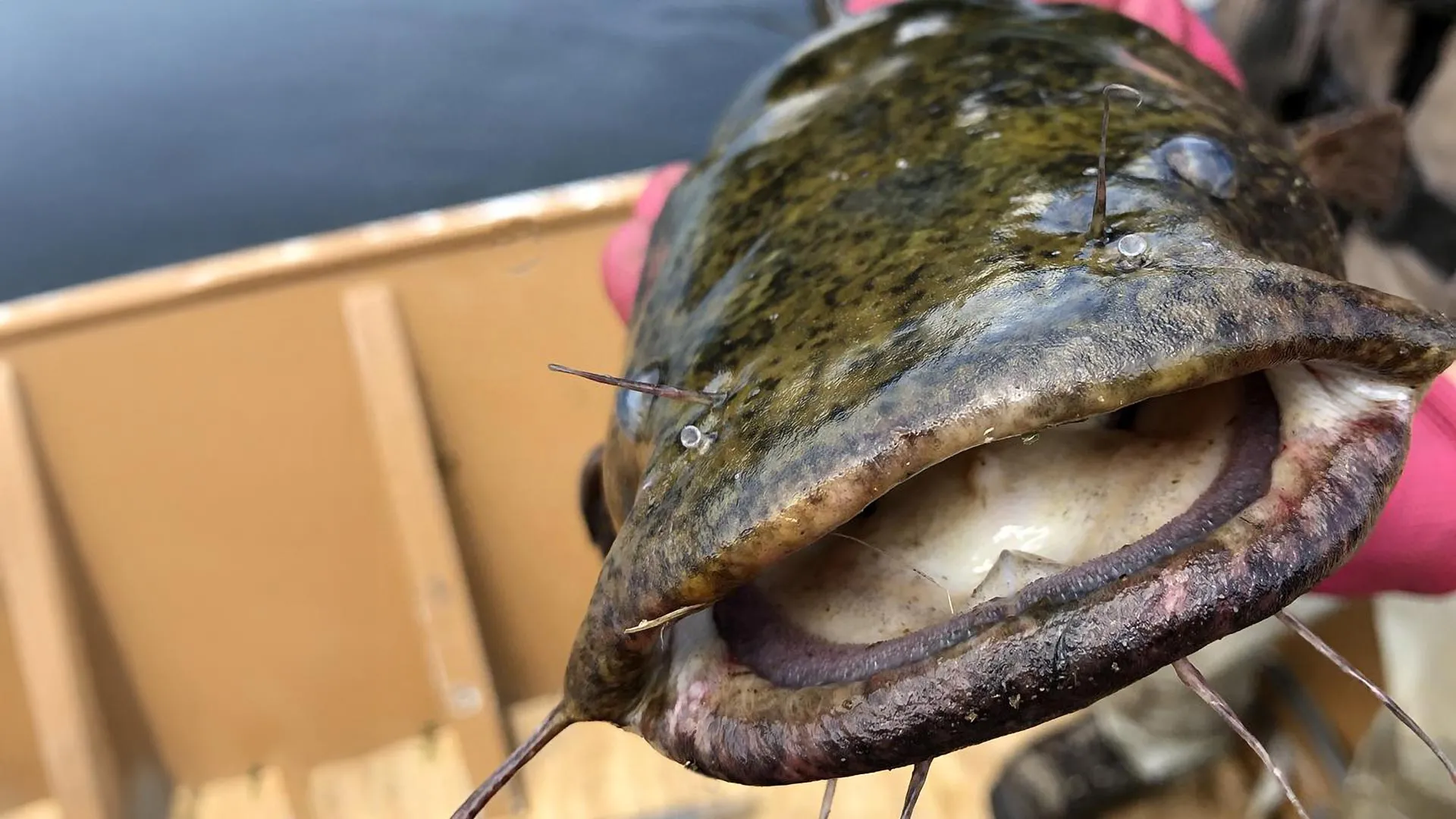
Flathead catfish, opportunistic predators native to the Mississippi River basin, have the potential to decimate native and recreational fisheries, disrupting ecosystems in rivers where they become established after their introduction or invasion from a nearby river drainage. That concern led a team of researchers from Penn State, the U.S. Geological Survey (USGS), and the Pennsylvania Fish and Boat Commission to assess how flatheads are affecting the food web and energy flow in the Susquehanna River in Pennsylvania, where they were first detected in 1991. Their population has grown rapidly in the decades since.
“Flatheads grow fast in this river system, attain large body sizes and can eat a variety of prey,” said study first author Olivia Hodgson, a master’s degree student in Penn State’s Intercollege Graduate Degree Program in Ecology. “Because adult flatheads have few natural predators, flathead catfish can exert strong control over the ecosystem.”
Hodgson is working with Tyler Wagner, a scientist with the USGS Pennsylvania Cooperative Fish and Wildlife Research Unit Program and a Penn State affiliate professor of fisheries ecology. He is senior author on the study. In findings published Sept. 4 in Ecology, the researchers reported that flathead catfish are apex predators.
Flatheads had the highest trophic position — the level an organism occupies in a food web, based on its feeding relationships — even higher than resident top predators such as smallmouth bass and channel catfish. Channel catfish had a lower trophic position in areas with flathead catfish. This means they now eat lower on the food chain, likely because they are being outcompeted by flatheads or avoiding them, the researchers explained. In areas with flathead catfish, they found, all species showed broader and overlapping diets.
“This suggests that resident species are changing what they eat to avoid competing with or being eaten by the invader,” Hodgson said. “These findings support the ‘trophic disruption hypothesis,’ that says when a new predator enters an ecosystem, it forces existing species to alter their behavior, diets and roles in the food web. This can destabilize ecosystems over time. Our study highlights how an invasive species can do more than just reduce native populations — it can reshape entire foodwebs and change how energy moves through ecosystems.”
Although the predatory effects of invasive catfishes on native fish communities have been documented — such as in a recent study on the Susquehanna River led by researchers at Penn State — the impacts of invasion on riverine food webs are poorly understood, Hodgson noted. This study quantified the effects of invasive flathead catfish on the food web in the Susquehanna by comparing uninvaded river sections to invaded sections, focusing on several key species: flathead catfish — invader, channel catfish and smallmouth bass — resident predators, and crayfish and minnows — prey.
In addition to evaluating trophic position, the researchers analyzed the isotopic niche occupied by the fish species — the range of carbon and nitrogen markers found within the tissues of an organism, reflecting its diet and habitat, providing insights into its ecological role.
To reach their conclusions, the researchers employed stable isotope analysis, a widely used tool that can explain patterns within a food web, highlighting links between trophic positions, as well as the breadth and overlap of trophic niches. Stable isotope analysis is especially useful for studying invasion ecology, such as investigating trophic reorganization and trophic overlap between introduced and resident species.
When fish eat, their bodies incorporate the isotopic signature of their food. By sampling their tissues, scientists can measure nitrogen isotopes and determine their diet, carbon isotopes to determine habitat use, and compare isotopic signatures across regions to deduce fish migration or habitat shifts. For this study, channel catfish, smallmouth bass, minnows and crayfish were selected as focal species because a previous diet analysis conducted in collaboration with Penn State, USGS, and Pennsylvania Fish and Boat Commission researchers within the Susquehanna River, showed that these species are important prey for flathead catfish.
The researchers collected a total of 279 fish and 64 crayfish for stable isotope analysis, including 79 flathead catfish, 45 smallmouth bass, 113 channel catfish and 42 minnows comprising nine species. All samples were oven dried and ground to a fine powder using a mortar and pestle. Stable isotope samples were sent to Penn State’s Core Facilities and the Michigan State University Stable Isotope Laboratories for isotope determination.
“Stable isotope analysis explained patterns within the Susquehanna food web in habitats invaded and not invaded by the flathead catfish, and it allowed us to understand links between different species in the river food web and how invasive species might lead to changes in how native species interact and compete, what they eat and how their diets overlap, and if they might be displaced from preferred habitats by the invader,” Hodgson said. “We were able to infer resource use, helping us to better understand potential competition for resources and how this changes when flathead catfish become established.”
Contributing to the research were: Sydney Stark, recent Penn State graduate with a master’s degree in wildlife and fisheries science; Megan Schall, associate professor of biology and science at Penn State Hazleton; Geoffrey Smith, Susquehanna River biologist for the Pennsylvania Fish and Boat Commission; and Kelly Smalling, research hydrologist withtheU.S. Geological Survey, New Jersey Water Science Center.
Funding for this research was provided by Pennsylvania Sea Grant and the U.S. Geological Survey.

The spread of species beyond their native habitat is a human-made environmental change on a global scale. Among vascular plants, over 16,000 species have now permanently settled in foreign countries. The majority of these “naturalizations” has taken place since the 1950s and predominantly in regions with considerable human influence.
Naturalized alien plants, also known as neophytes, can have major impacts on the affected regions’ ecosystems. This is particularly evident in the case of invasive plants, which are spreading rapidly in new regions and outcompete the native flora. But what makes these plants so successful? Is it because they are exploiting an “ecological gap” in the foreign ecosystem, allowing them to thrive so easily? Or are they simply “naturally” good at expanding their range? In other words: Do plant species that are on the rise in their native habitats also become globally widespread as naturalized aliens?
Led by the University of Konstanz, an international research team found clear evidence supporting this theory. Their study compared the spread of 3,920 native plant species in ten European countries with how widely these species are naturalized globally. Europe is one of the world’s “main exporters” of naturalized plants. “Our results show that many of the European plant species that successfully naturalize in foreign ecosystems are species that have expanded rapidly in their European home regions as well,” explains Konstanz biologist Mark van Kleunen, who led the study. “Plants that are declining in their natural range, on the other hand, rarely succeed in settling in foreign areas.”
The results of the study indicate that it could be the same characteristics that make plants successful both in their homelands and in foreign regions. The researchers identified common characteristics of these species: “In general, they are tall, ecologically versatile generalists that are highly competitive and prefer nutrient-rich habitats,” summarizes Rashmi Paudel, first author of the study.
“If the plant species that are widespread and on the rise within their native habitats are essentially the same as those that spread successfully – and sometimes become invasive – in other regions of the world, then it stands to reason that both processes are at least based on similar biological mechanisms,” concludes Paudel. “This could reflect that the selective pressures that have made certain species common in their native regions also have preadapted them for success as invaders. This could also reflect that such common species were more likely to be picked up, transported and introduced elsewhere.” Observing the dynamics of the spread of native plants at home can thus provide valuable indications for assessing the likelihood of their establishment in new territories.
Mitchum said a change in the manufacturing process had affected some of its roll-on products after users complained of soreness.
Critics question the usability of new league tables meant to inform the public and let them exercise choice.
