Health24.com | Doctors analysed 10 000 tumours – here’s what they found

In a previous Health24 article, a study from the medical journal Lancet predicted that South Africa could see an increase of 78% in the number of cancer cases by 2030. 

For decades researchers have been trying to come up with ways to fight the devastating effects of cancer. 

And now, a consortium of scientists reported that they have established the genetic blueprints of 33 different cancer types.

The hope of this research is that DNA similarities observed in 10 000 tumour samples – arising in different sites in the body – might allow targeted treatments to fight cancers no matter where they occur.

More targeted treatments

Ideally, “patients will have the best shot at successful treatment if their tumours can first be classified according to their genomic and molecular makeup,” explained scientist Prof Christopher Benz.

He’s a member of The Cancer Genome Atlas (TCGA) Network, the group that produced the new report. He’s also a professor of cancer and developmental therapeutics at the Buck Institute for Research on Aging in San Francisco.

Speaking in an institute news release, Benz said the TCGA insights “will provide a new foundation for future cancer research efforts and clinical trials.”

Tumours can share basic genetic makeup

For years, scientists and oncologists have been moving away from the notion of categorising and treating cancers based on where in the body they occur.

Instead, projects like the TCGA have raised awareness that tumours can share the same basic genetic makeup – even if they occur in discrete locales. Targeting treatments to these shared genetics might, therefore, be far more effective an approach than the traditional “site-specific” method.

The new work, collectively called the PanCancer Atlas, was published on 5 April in a series of papers in Cell journals.

“This project is the culmination of more than a decade of groundbreaking work,” NIH Director Dr Francis Collins said in an news release. “This analysis provides cancer researchers with unprecedented understanding of how, where and why tumours arise in humans, enabling better informed clinical trials and future treatments.”

Carolyn Hutter directs the Division of Genome Sciences at the National Human Genome Research Institute. Speaking in the NIH news release, she said, “TCGA was the first project of its scale to characterise – at the molecular level – cancer across a breadth of cancer types.”

For example, the scientific effort has already uncovered strong molecular similarities between “squamous cell” cancers of the head and neck, lung, bladder, cervix and oesophagus. That means these cancers might someday be classed together, even though they arise in different parts of the body.

The next step

All of these insights should help doctors focus treatments to hit genetic or molecular vulnerabilities unique to particular cancers. The next step could be to sort out why particular tumour types develop, and how they then progress.

Having the PanCancer Atlas on hand “is really important for us to look in future studies at why these alterations are there, and to predict outcomes for patients,” another UNC participant, geneticist Katherine Hoadley, explained in the university news release.

Image credit: iStock

Share Button

Woman’s missing jaw regrown by 9cm after cancer

Val’s jaw has been reconstructed by “stretching” her own tissue and bone around a frame.

Share Button

Brain injuries increase dementia risk, study finds

An analysis found people who had brain injuries were 24% more likely to be diagnosed with dementia.

Share Button

Private hospitals warned over surgeons

Inspectors warn private hospitals that the lessons of rogue surgeon Ian Paterson must be learned.

Share Button

Tiny injectable sensor could provide unobtrusive, long-term alcohol monitoring

Engineers at the University of California San Diego have developed a miniature, ultra-low power injectable biosensor that could be used for continuous, long-term alcohol monitoring. The chip is small enough to be implanted in the body just beneath the surface of the skin and is powered wirelessly by a wearable device, such as a smartwatch or patch.

“The ultimate goal of this work is to develop a routine, unobtrusive alcohol and drug monitoring device for patients in substance abuse treatment programs,” said Drew Hall, an electrical engineering professor at the UC San Diego Jacobs School of Engineering who led the project. Hall is also affiliated with the Center for Wireless Communications and the Center for Wearable Sensors, both at UC San Diego. Hall’s team presented this work at the 2018 IEEE Custom Integrated Circuits Conference (CICC) on Apr. 10 in San Diego.

One of the challenges for patients in treatment programs is the lack of convenient tools for routine monitoring. Breathalyzers, currently the most common way to estimate blood alcohol levels, are clunky devices that require patient initiation and are not that accurate, Hall noted. A blood test is the most accurate method, but it needs to be performed by a trained technician. Tattoo-based alcohol sensors that can be worn on the skin are a promising new alternative, but they can be easily removed and are only single-use.

“A tiny injectable sensor — that can be administered in a clinic without surgery — could make it easier for patients to follow a prescribed course of monitoring for extended periods of time,” Hall said.

The biosensor chip measures roughly one cubic millimeter in size and can be injected under the skin in interstitial fluid — the fluid that surrounds the body’s cells. It contains a sensor that is coated with alcohol oxidase, an enzyme that selectively interacts with alcohol to generate a byproduct that can be electrochemically detected. The electrical signals are transmitted wirelessly to a nearby wearable device such as a smartwatch, which also wirelessly powers the chip. Two additional sensors on the chip measure background signals and pH levels. These get canceled out to make the alcohol reading more accurate.

The researchers designed the chip to consume as little power as possible — 970 nanowatts total, which is roughly one million times less power than a smartphone consumes when making a phone call. “We don’t want the chip to have a significant impact on the battery life of the wearable device. And since we’re implanting this, we don’t want a lot of heat being locally generated inside the body or a battery that is potentially toxic,” Hall said.

One of the ways the chip operates on such ultra-low power is by transmitting data via a technique called backscattering. This occurs when a nearby device like a smartwatch sends radio frequency signals to the chip, and the chip sends data by modifying and reflecting those signals back to the smartwatch. The researchers also designed ultra-low power sensor readout circuits for the chip and minimized its measurement time to just three seconds, resulting in less power consumption.

The researchers tested the chip in vitro with a setup that mimicked an implanted environment. This involved mixtures of ethanol in diluted human serum underneath layers of pig skin.

For future studies, the researchers are planning to test the chip in live animals. Hall’s group is working with CARI Therapeutics, a startup based in the Qualcomm Institute Innovation Space at UC San Diego, and Dr. Carla Marienfeld, an addiction psychiatrist at UC San Diego who specializes in treating individuals with substance abuse disorders, to optimize the chip for next generation rehab monitoring. Hall’s group is developing versions of this chip that can monitor other molecules and drugs in the body.

“This is a proof-of-concept platform technology. We’ve shown that this chip can work for alcohol, but we envision creating others that can detect different substances of abuse and injecting a customized cocktail of them into a patient to provide long-term, personalized medical monitoring,” Hall said.

Paper title: “A Sub-1 uW Multiparameter Injectable BioMote for Continuous Alcohol Monitoring.” Authors of the study are Haowei Jiang*, Xiahan Zhou*, Saurabh Kulkarni, Michael Uranian, Rajesh Seenivasan, and Drew A. Hall at UC San Diego.

Story Source:

Materials provided by University of California – San Diego. Original written by Liezel Labios. Note: Content may be edited for style and length.

Share Button

Humans and others exposed to prenatal stress have high stress levels after birth

Vertebrate species, including humans, exposed to stress prenatally tend to have higher stress hormones after birth, according to a new Dartmouth-led study published in Scientific Reports. While previous research has reported examples of maternal stress experience predicting offspring stress hormones in different species, this study is the first to empirically demonstrate the impact of prenatal stress on offspring stress hormone levels using data from all known studies across vertebrates.

Through a meta-analysis of 114 results from a total of 39 observational and experimental studies across 14 vertebrate species, including birds, snakes, sheep and humans, the study examines the impact of prenatal exposure to maternal stress on offspring. The researchers analyzed the role of the hypothalamic pituitary adrenal (HPA)-axis, the stress physiological system that is shared across all vertebrates, which ultimately, results in the production of stress hormones known as “glucocorticoids.” The HPA-axis is the hormonal system responsible for mobilizing an animal’s stress response. Offspring exposed prenatally to maternal stress were found to have more stress hormone levels (glucocorticoids) after birth. This could reflect a biological adaptation with an evolutionary history, as more stress hormones could increase an animal’s chances for survival in a stressful environment.

In the present study, the researchers tested the strength of the effect of prenatal stress on offspring stress hormone levels across a range of characteristics. Remarkably, the effects of prenatal stress on offspring stress hormones were consistent across species, regardless of evolutionary relationships or factors, such as brain or body size. There were also no differences when considering offspring sex, age of the offspring at the time of assessment, or the timing of the stressor exposure prenatally or its severity.

Only two factors influenced the size of the effect. Experimental studies had a stronger effect than observational studies. In addition, studies that measured glucocorticoid recovery showed a greater association with prenatal stress than was observed at baseline or during peak glucocorticoid response.

“Animals, including humans, modify their stress hormones in response to their environment. Your stress response is set like a thermostat — your body can amp up or down stress hormones in response to anticipated environmental conditions,” explains lead author Zaneta Thayer, an assistant professor of anthropology at Dartmouth.

An animal’s stress response tends to be activated by external factors, such as when its see a predator or whether food is availabile. Higher stress hormone levels among offspring may help extend survival but come at a cost and may affect other physiological systems, such as reproduction. In humans, the mere anticipation of stress or just thinking about prior experiences of discrimination or trauma can activate a stress response. Overactive stress hormones can lead to chronic health problems in humans, including anxiety, depression and cardiovascular disease.

One of the studies included in the meta-analysis looked at how maternal stress hormones in pregnant snow hares changed in relation to the abundance of their natural predators, lynxes, over a 10-year cycle. The research team found that in years where there were more lynxes, snow hare offspring had more stress hormones and anti-predator behaviors.

“Our stress response is meant to be adaptive to acute stress, such as being chased by predators. However, humans’ stress response is often triggered by social evaluative threats and is not serving the adaptive purpose that it was designed for,” added Thayer. “This research confirms what other scientists have long speculated that there are trends across species when it comes to linking prenatal stress and offspring hormonal stress responses.”

Prior work co-authored by Thayer has explored early origins of humans’ health disparities and the impacts of maternal stress during pregnancy on offspring’s postnatal stress hormone levels.

Story Source:

Materials provided by Dartmouth College. Note: Content may be edited for style and length.

Share Button

Making computer animation more agile, acrobatic — and realistic

It’s still easy to tell computer-simulated motions from the real thing — on the big screen or in video games, simulated humans and animals often move clumsily, without the rhythm and fluidity of their real-world counterparts.

But that’s changing. University of California, Berkeley researchers have now made a major advance in realistic computer animation, using deep reinforcement learning to recreate natural motions, even for acrobatic feats like break dancing and martial arts. The simulated characters can also respond naturally to changes in the environment, such as recovering from tripping or being pelted by projectiles.

“This is actually a pretty big leap from what has been done with deep learning and animation. In the past, a lot of work has gone into simulating natural motions, but these physics-based methods tend to be very specialized; they’re not general methods that can handle a large variety of skills,” said UC Berkeley graduate student Xue Bin “Jason” Peng. Each activity or task typically requires its own custom-designed controller.

“We developed more capable agents that behave in a natural manner,” he said. “If you compare our results to motion-capture recorded from humans, we are getting to the point where it is pretty difficult to distinguish the two, to tell what is simulation and what is real. We’re moving toward a virtual stuntman.”

The work could also inspire the development of more dynamic motor skills for robots.

A paper describing the development has been conditionally accepted for presentation at the 2018 SIGGRAPH conference in August in Vancouver, Canada, and was posted online April 10. Peng’s colleagues in the Department of Electrical Engineering and Computer Sciences are professor Pieter Abbeel and assistant professor Sergey Levine, along with Michiel van de Panne of the University of British Columbia.

Mocap for DeepMimic

Traditional techniques in animation typically require designing custom controllers by hand for every skill: one controller for walking, for example, and another for running, flips and other movements. These hand-designed controllers can look pretty good, Peng said.

Alternatively, deep reinforcement learning methods, such as GAIL, can simulate a variety of different skills using a single general algorithm, but their results often look very unnatural.

“The advantage of our work,” Peng said, “is that we can get the best of both worlds. We have a single algorithm that can learn a variety of different skills, and produce motions that rival if not surpass the state of the art in animation with handcrafted controllers.”

To achieve this, Peng obtained reference data from motion-capture (mocap) clips demonstrating more than 25 different acrobatic feats, such as backflips, cartwheels, kip-ups and vaults, as well as simple running, throwing and jumping. After providing the mocap data to the computer, the team then allowed the system — dubbed DeepMimic — to “practice” each skill for about a month of simulated time, a bit longer than a human might take to learn the same skill.

The computer practiced 24/7, going through millions of trials to learn how to realistically simulate each skill. It learned through trial and error: comparing its performance after each trial to the mocap data, and tweaking its behavior to more closely match the human motion.

“The machine is learning these skills completely from scratch, before it even knows how to walk or run, so a month might not be too unreasonable,” he said.

The key was allowing the machine to learn in ways that humans don’t. For example, a backflip involves so many individual body movements that a machine might keep falling and never get past the first few steps. Instead, the algorithm starts learning at various stages of the backflip — including in mid-air — so as to learn each stage of the motion separately and then stitch them together.

Surprisingly, once trained, the simulated characters are able to deal with and recover from never-before-seen conditions: running over irregular terrain and doing spin-kicks while being pelted by projectiles.

“The recoveries come for free from the learning process,” Peng said.

And the same simple method worked for all of the more than 25 skills.

“When we first started, we thought we would try something simple, as a baseline for later methods, not expecting that it was going to work. But the very simple method actually works really well. This shows that a simple approach can actually learn a very rich repertoire of highly dynamic and acrobatic skills.”

Share Button

Health24.com | 7 foods doctors prescribe for your health

Here’s what most men buy at the shops: beef, chicken, sugary desserts and alcohol. Really! This is what the research firm Hartman Group recently found. These categories are also among the top sources of kilojoules in the average man’s diet.

Beef and chicken are fine, but you know the effects of excess alcohol and sweets. Carry extra fat and you could end up in the office of a nutritionist or cardiologist.

Why not avoid this pitfall and eat the way the experts do? We checked in with six top names in health to find out what foods they consistently eat and why they eat them. This go-to shopping list will keep all your systems running at optimum efficiency.

Read more: 8 fatty foods you’ve been warned against, but should definitely eat anyway

The expert panel: 

David Katz – founding director, Yale-Griffin Prevention Research Centre

Dr Stephen Kopecky – cardiologist and professor of medicine, Mayo Clinic

William Yancy – programme director, Duke Diet & Fitness Centre

Jim White – spokesman, Academy of Nutrition and Dietetics

Cara Anselmo – clinical dietitian, Memorial Sloan Kettering Cancer Centre

Alicia Anskis – clinical dietician, Massachusetts General Hospital

1. Oysters

Yes, oysters. These briny bivalves outmatch all other foods when it comes to zinc content. “Zinc plays a role in enzyme activity and protein synthesis and is key for immune health,” says Anskis. Plus, studies suggest a link between zinc deficiency and decreased testosterone. Oysters are also loaded with iron and vitamin B12, both of which support blood circulation and energy metabolism. Try to work oysters into your rotation of two to three servings of seafood a week.


Read more: 
These foods are all natural aphrodisiacs, add them to your dinner tonight

Try them: If you can find fresh oysters, shuck them and slurp. Or buy canned, smoked, bacony-tasting oysters (they’re in the tuna aisle). Pop them on crackers and add goat’s cheese.

2. Something blue or purple

Dr Kopecky came up with this one, and he’s not talking about blue Smarties. He means produce like blueberries, grapes, aubergine (with the skin) and red cabbage. The pigmentation signals the presence of anthocyanins, a group of antioxidants that battle inflammation. Eat these to lower your risk of inflammation-related illnesses like heart disease, diabetes and cancer.

Try it: In a medium bowl, mash a handful of blueberries with a little salt and chopped basil; add a splash of balsamic. (You can add fresh minced chilies too.) Spoon this slightly sweet sauce on top of baked salmon or roast chicken.


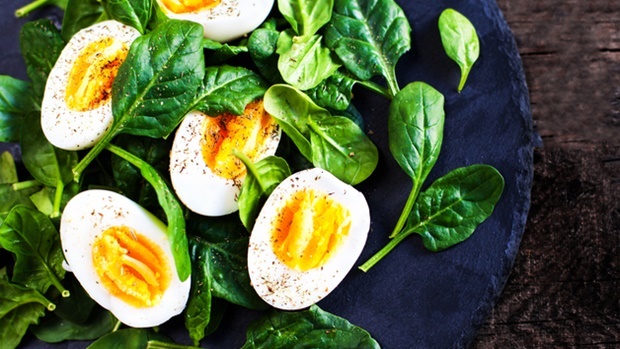
3. Eggs

We’re talking whole eggs, not just whites. Yolks have compounds that keep your eyes, brain and bones healthy. Research now confirms that they won’t spike your cholesterol, says Anskis. Eggs also have the highest “biological value” of any protein source. Translation: your body can absorb more of the protein for greater muscle-building benefits.

Read more: A quick muscle recipe: pizza eggs

Try them: For a no-heat lunch, try curried egg salad with greens. Mix eight chopped hard-boiled eggs with one tablespoon Greek yoghurt, half a tablespoon curry powder, some chopped parsley and salt to taste.


4. Olive oil

“Your primary fat should be olive oil,” Dr Kopecky says. Researchers credit a potent polyphenol called oleocanthal for fighting everything from Alzheimer’s to some cancers. Consider your supplier too. “I only buy extra-virgin olive oil and get it at shops that have a high turnover,” Dr Kopecky says. “If it sits for too long a time, it loses some of its benefits.”

Try it: Extra-virgin olive oil is best used for lower-temp cooking. At higher temperatures, beneficial compounds break down and the taste suffers. So use it to sauté or as a finisher for soups or salads.


5. Oats

“All whole grains are good, but oats are probably the easiest to add to your diet since they’re not hard to cook,” Anskis says. Two cups of oatmeal has 8g of fibre; that’s about half of what the average person eats daily. That’s not close to the 38g you need to drop your risk of heart disease, stroke, hypertension and diabetes, so eat fibre from produce too.

Read more: 4 simple heart-healthy, fibre-rich breakfast bowls

Try them: You don’t always have to go sweet with oats; its sturdy texture can also support savoury flavours. Add salmon and avocado, or mix in mushrooms and greens sautéed in garlic.


6. Beans

Two things in life are guaranteed to break your heart: high school crushes and not eating beans. In a 2014 study, people who ate two thirds of a cup a day of legumes – such as peas, beans and lentils – reduced their LDL (bad) cholesterol by 5%. Have a half-cup serving of beans at least three or four times a week. Black, white, red, kidneys, navy – your body doesn’t care.

Try them: Toss a rinsed can of chickpeas with olive oil, a little garlic powder, smoked paprika and salt. Roast at 200°C for 30 to 40 minutes, tossing halfway. It’s a crunchy, smoky snack.


7. Walnuts

All nuts contain heart-healthy good fats, but three of our experts singled out walnuts as nutritional champs. They’re packed with omega-3 fatty acids, says White, which may also strengthen your sperm. In a Biology of Reproduction study, the swimmers of men who ate about two thirds of a cup of walnuts a day showed improved motility, vitality and shape.

Read more: Improved memory with walnuts

Try them: Mellow out their flavour by blending walnuts into a shake, dropping them into a soup, scattering a few over a salad, or crushing them to use in a breading for fish or chicken.

Image credit: iStock

This article was originally published on www.menshealth.com 

Share Button

Health24.com | 3 women describe what it’s actually like to have a miscarriage

Miscarriage can be caused by so many things and has happened to many expectant mothers. Three women with very different experiences show that pregnancy loss can be accompanied by a range of emotions – all valid, all normal…

“Becoming a mom wasn’t a priority”

For six years, I was in a relationship with a man who didn’t want kids; his ambivalence rubbed off on me. I spent so much time thinking about the negatives – a baby would wreck my body, I’d never sleep again – that even after we broke up, becoming a mom wasn’t a priority.

Read more: Can you really get pregnant while on your period?

A few years later, I met, then married, my husband. He really wanted kids, so we tried. When the test showed I was pregnant, I didn’t feel negative or positive; it just happened so fast. Then, five days later, at work, I started to bleed – bright-red blood that wouldn’t stop. I broke down sobbing.

I felt like I’d lost a child. I didn’t know how much I wanted children. How much I wanted that baby. Now we have a two-year-old son, but I still wear an angel necklace to commemorate the baby I lost.

– Dana Norris, 36

“It just wasn’t meant to be”

As a psychotherapist who counsels people through trauma, including miscarriage, I knew how common it was. When I miscarried at nine weeks, I was sad, of course, but, in my mind, it wasn’t even a foetus yet – it was a developing foetus. I bled for a few days and had a bit of cramping, but I didn’t need to take off work.

Read more: 7 reasons your period might be late – other than pregnancy

Two weeks later, while I was driving, I felt this crushing wave of emotion out of nowhere. I pulled over and called my husband and we talked about it. Cried together. I felt better immediately; I just needed to process it. After that, I was able to move on pretty quickly. I knew I’d be able to get pregnant again – we’d conceived easily a few years earlier with my son; it just wasn’t meant to be that time.

– Michelle Maidenberg, 45

“I had to spend the weekend pregnant, but not”

Three years ago, my husband and I were elated when we got pregnant the first month of trying. We saw the heartbeat, told friends and family and even bought a house to raise our family in. Then, at a routine 17-week check-up, the ultrasound technician went silent. My baby wasn’t moving. There was no heartbeat. It was Friday and they scheduled a D&C for Monday. I had to spend the weekend pregnant, but not.

Read more: 5 things you need to know about sex after pregnancy

The D&C itself was awful. My doctor told me that most women are able to go home the same day, but there were complications – I lost a lot of blood during the procedure and I needed a transfusion and a stay in the hospital.

A day or two later, after I went home, my milk came in. My breasts tripled in size overnight and I got stretch marks. That’s when it really hit me, emotionally. My body thought I’d had a baby, but I hadn’t… Now, it’s really strange to have a post-pregnancy body, even though I haven’t had a child. We haven’t decided whether or not we’ll try again.

– Brittany Meiling, 28

Image credit: iStock

This article was originally published on www.womenshealthsa.co.za

Share Button

Health24.com | Is it really OCD?

“I can’t sleep without turning the light on and off three times. I have OCD!” 

“I hate the colour yellow; it’s my OCD coming out.” 

It’s such a common turn of phrase that most of us aren’t aware that obsessive-compulsive disorder (OCD) is really a psychiatric disorder.

It’s characterised by obsessions and compulsions, which mean that unwanted ideas, thoughts, impulses and images repeatedly play on the mind and manifest in your behaviour at times.

What is OCD is not…

  • Being organised and methodical about everyday routines and having set habits is not obsessive-compulsive disorder.
  • Washing your hands every time you go the bathroom is not OCD; that’s just good hygiene.
  • Having a few quirky personality traits.

People with OCD may be obsessed with cleaning for example, but it’s not an “enjoyable” obsession. Their obsessions don’t make them happy; rather they cause stress and anxiety – very different from simply washing your dishes before bedtime.

As explained by the International OCD Foundation, “If it’s a personality trait, you have control – you can choose to do it or not. If you have obsessive compulsive disorder, you’re doing it out of unrelenting debilitating necessity.”

What causes OCD?

OCD is an anxiety disorder. There’s no single, proven cause of OCD. Research shows that it can stem from genetic and environmental factors. The simplest explanation is that OCD is related to faulty communication between the front part of the brain (the orbital cortex) and deeper structures (the basal ganglia).

These brain structures use serotonin, a neurotransmitter (chemical “messenger” between nerve cells). Another theory is that OCD involves various autoimmune reactions (in which the body’s disease-fighting mechanism attacks normal tissue). Evidence to support this is that OCD sometimes starts in childhood in association with strep throat.

Am I at risk for OCD?

OCD affects up to 3% of people but as it’s not linked to stress or psychological issues, it’s hard to predict who might be vulnerable. It’s likely that OCD can occur along with depression, bipolar affective disorder and manic depression.

OCD usually involves obsessions and compulsions, although in rare cases, one may be present without the other. Obsessions are defined as recurrent and persistent thoughts, impulses or images that you feel unable to control or prevent. You will usually experience these as senseless, disturbing and intrusive, and try to ignore or suppress them. Obsessions are often accompanied by anxiety, fear, disgust or doubt.

Compulsions on the other hand, are defined as repetitive and ritualistic behaviour or mental acts, often performed according to certain “rules”.

Common obsessions:

  • Worrying excessively about dirt or germs and that you may become contaminated or contaminate others.
  • Imagining you’ve harmed yourself or others; having doubts about safety issues (if you’ve turned off the stove).
  • Fearing something terrible will happen or that you will do something terrible. 
  • Preoccupations with symmetry, or a need to have things “just so”.  
  • Intrusive violent or repulsive images.
  • Excessive religious or moral doubt or guilt; intrusive blasphemous images. 
  • Excessive doubting or indecision: “Should I or shouldn’t I?”
  • A need to tell, ask or confess.

Common compulsions:

  • Washing or cleaning, showering repeatedly or washing your hands until the skin is red and painful.
  • Repeatedly checking the doors, windows, and so on.
  • Repeating a name or phrase many times to ease anxiety.
  • Performing a series of steps in an exact order or repeating them until you feel they are done perfectly.
  • Repetitive ordering, arranging or counting of objects.
  • Hoarding, collecting useless items you may repeatedly count or order.
  • Excessive and repetitive praying.
  • Repetitive touching.

OCD tends to be underdiagnosed. Because of the stigma of mental illness, people may hide symptoms and avoid getting help. People with OCD may also be unaware that they have a recognisable and treatable illness. Unfortunately, there are no laboratory tests for OCD; diagnosis is based on an assessment of your symptoms. Your doctor will ask you, and often people close to you, about your symptoms, and pose specific questions about the type of obsessions or compulsions you experience. Your doctor will also check that a medication or drug is not making your symptoms worse.

Getting help

Combining antidepressant medication and cognitive-behavioural therapy has been found to be the most effective treatment for OCD. Both kinds of treatment may take a few months to be effective, but a good response is often seen in time.

If you suspect you have OCD, it’s worth having a talk with your doctor. Don’t simply think of it as quirky habits. OCD is stressful, and can really impact the quality of your life. Get help, sooner than later.

Image credit: iStock

NEXT ON HEALTH24X

Share Button