More than a quarter of pupils starting primary school in north Wales are overweight or obese.


More than a quarter of pupils starting primary school in north Wales are overweight or obese.
A new study has revealed for the first time the last 500-year flood history of the Mississippi River. It shows a dramatic rise in the size and frequency of extreme floods in the past century — mostly due to projects to straighten, channelize, and bound the river with artificial levees.
The new research, led by scientists at Woods Hole Oceanographic Institution (WHOI), also uncovered a clear pattern over the centuries linking flooding on the Mississippi with natural fluctuations of Pacific and Atlantic Ocean water temperatures. This newly recovered long-term record provides a historical context that spotlights how more recent river engineering has intensified flooding to unprecedented levels.
“The floods that we’ve had over the last century are bigger than anything we’ve seen in the last 500 years,” said Sam Muñoz, a former postdoctoral scholar at WHOI and the lead author of the study, published April 5, 2018, in the journal Nature. The research shows that in the past 150 years, the magnitude of the 100-year flood — a flood that has a 1 percent chance of occurring in any given year — has increased by about 20 percent. The research team found that about three-quarters of that elevated flood hazard can be attributed to human modifications of the river and its basin.
“There’s been a longstanding question about the extent to which all the changes we have made to the Mississippi River — one of the most engineered rivers in the world — have altered the probability of really large floods,” said Muñoz, now an assistant professor at Northeastern University.
To answer that question, the scientists used a technique that WHOI paleoclimatologist Jeff Donnelly pioneered in the coastal ocean to track the history of hurricanes: extracting long cores of bottom sediment from lakes and marshes.
“It’s sort of the equivalent of sticking a straw in a milkshake, putting your thumb over the top, and pulling it out,” said Donnelly, a co-lead on the study. In this case, the “straw” was a 30-foot-long aluminum tube deployed from a small pontoon boat, and the “milkshake” was the mud, sand, and silt at the bottom of three oxbow lakes adjacent to the Mississippi River.
During large floods, faster moving water from the river channel stirs up larger-grained sediments and flows into the usually disconnected lakes, carrying sediments and debris along with it. The material from the river is caught in the lakes and eventually sinks. It forms a layer on the bottom that is subsequently buried over time. The layers are telltale clues of past floods. The deeper the cores, the further back in time the scientists can reach.
The grain size in the layers provides clues to the size of the floods. The larger the flood, the more energy is generated by the river water, and the larger the grains that get deposited in the lakes, said WHOI geoscientist Liviu Giosan, another lead member of the research team. By analyzing grain size and flood size for known flood events — for example, the Great Mississippi River flood of 1927 — Muñoz could estimate the sizes of previously unknown floods represented in the sediment cores.
To find out when those floods had occurred, the team used isotopes of lead, cesium, and carbon to date the coarse sediment layers. Zhixiong Shen of Coastal Carolina University used a technique called optically-stimulated luminescence — which determines a material’s age by analyzing when it was last exposed to sunlight. Matthew Therrell of the University of Alabama used annual tree rings to reconstruct a detailed record of more recent regional flooding. Combining these methods, the team traced the history of floods back over 500 years — about 350 years further back in time than the oldest written flood records.
Next, they compared what they found to records of naturally oscillating climate cycles that affect sea surface temperatures in the Atlantic and Pacific, such as the El Niño-Southern Oscillation (ENSO). They found that the Mississippi’s flood cycles corresponded with ocean and climate cycles.
In particular, El Niño events bring more storms and rainfall to central North America, which saturates the ground around the Mississippi. One phase of the Atlantic Ocean oscillation brings extreme rainfall over the Mississippi basin. When the two coincide, flooding is more likely.
“We’re able for the first time to really parse out how the natural variability of the climate system influences flooding, and then how people have modified that,” Muñoz said.
The sediment data also showed that the natural rhythm of flooding caused by ocean changes was greatly amplified by major federally-funded river engineering projects that began after 1928 to facilitate commercial navigation on the river and to protect communities and cropland from floods. The societal benefits of river engineering should be weighed against the risks that more large floods pose to agriculture, infrastructure, and communities, the scientists said. In addition, big floods sweep more pollutants and fertilizers into the Gulf of Mexico, causing oxygen-depleted “dead zones.”
Giosan says restoring more natural flood patterns to the river and allowing sediments to flow onto the floodplain during floods would help rebuild the drowning Mississippi delta, whose planned restoration is projected to cost tens of billions of dollars.
According to the team, the next steps will be to dig deeper into the river sediments to extend the flood record even further back in time and to apply this new method to understand what drives flooding on other major rivers systems around the world.
Funding for this project was provided by WHOI’s Coastal Ocean Institute, Postdoctoral Scholar Program, and Ocean and Climate Change Institute. Support for collaborators at the University of Alabama and Southern Illinois University was provided by the U.S. National Science Foundation Geography and Spatial Science Program.

Researchers at the RIKEN Center for Sustainable Resource Science (CSRS) in Japan have discovered a small hormone that helps plants retain water when none is available in the soil. Published in the journal Nature on April 4, the study shows how the peptide CLE25 moves from the roots to the leaves when water is scarce and helps prevent water loss by closing pores in the leaf surface.
In animals, peptide hormones are small chains of amino acids that move through the blood and help keep our bodies in balance when the environment changes. For example, when your blood pressure is low, your body produces the hormone vasopressin, which circulates in the blood and acts to narrow your arteries, which increases your blood pressure back to normal levels.
Plants also have hormones — called phytohormones — but, scientists know much less about them. The plant scientists at RIKEN CSRS wanted to find out whether any plant hormones respond to physical — abiotic — stress. As first author Fuminori Takahashi explains, “Although we know that some peptide hormones in plants mediate cellular development, until now nobody had identified any that regulate responses to physical stresses such as dehydration.”
The team began by looking at CLE peptides that are synthesized in the roots and at ABA — a hormone that is known to accumulate in leaves and help close pores in response to drought stress. Applying many CLE peptides to plant roots showed that only CLE25 led to increased ABA in the leaves and pore closure. The team determined that the link between these two events was the increase in an enzyme necessary for making ABA. In addition to this artificial situation, they showed that CLE25 levels increase in the roots of plants that are subjected to dehydration stress, leading to the same results. The next question was whether CLE25 moves through the plant circulatory system.
Detecting functional peptide hormones is very difficult in living cells because the amounts are so small. “We resolved this problem,” says Takahashi, “by using a high sensitive mass spectrometry system, and developing a screening system that can identify the mobile peptides moving from root to shoot.” With this technology, the researchers were able to tag CLE25 molecules and visualize their movement from the roots to the leaves, indicating that it was indeed a mobile hormone and that it likely interacted with other molecules in leaves to produce ABA.
Before investigating how CLE25 induces ABA synthesis once it arrives at the leaf, the team created mutant plants that lacked CLE25 or ABA and performed several control experiments that confirmed their findings. In particular, after only three hours of dehydration, plants without CLE25 already showed 7 times less leaf ABA and had lost more water than control plants. Finally, the team examined several mutants and discovered that BAM1/BAM3 receptors in the leaf were the link between CLE25 and ABA production.
Now that they have discovered the CLE25 peptide hormone and determined how it helps plants retain water, the team is confident that this is just the beginning. As Takahashi notes, “Our research absolutely has applications in the real world and should contribute to the development of abiotic stress-resistant crops that take advantage of the mobile peptide system in plants.”
The group at RIKEN CSRS already has its own plans in this direction. “First,” explains Takahashi, “we are working on modified peptides that are more effective for stress resistance than the natural ones. Second, we are working on ways to mix functional peptides into fertilizer to enhance drought resistance of crops in the field.”
Story Source:
Materials provided by RIKEN. Note: Content may be edited for style and length.

A Columbia University-led team of astrophysicists has discovered a dozen black holes gathered around Sagittarius A* (Sgr A*), the supermassive black hole in the center of the Milky Way Galaxy. The finding is the first to support a decades-old prediction, opening up myriad opportunities to better understand the universe.
“Everything you’d ever want to learn about the way big black holes interact with little black holes, you can learn by studying this distribution,” said Columbia Astrophysicist Chuck Hailey, co-director of the Columbia Astrophysics Lab and lead author on the study. “The Milky Way is really the only galaxy we have where we can study how supermassive black holes interact with little ones because we simply can’t see their interactions in other galaxies. In a sense, this is the only laboratory we have to study this phenomenon.”
The study appears in the April 5 issue of Nature.
For more than two decades, researchers have searched unsuccessfully for evidence to support a theory that thousands of black holes surround supermassive black holes (SMBHs) at the center of large galaxies.
“There are only about five dozen known black holes in the entire galaxy — 100,000 light years wide — and there are supposed to be 10,000 to 20,000 of these things in a region just six light years wide that no one has been able to find,” Hailey said, adding that extensive fruitless searches have been made for black holes around Sgr A*, the closest SMBH to Earth and therefore the easiest to study. “There hasn’t been much credible evidence.”
He explained that Sgr A* is surrounded by a halo of gas and dust that provides the perfect breeding ground for the birth of massive stars, which live, die and could turn into black holes there. Additionally, black holes from outside the halo are believed to fall under the influence of the SMBH as they lose their energy, causing them to be pulled into the vicinity of the SMBH, where they are held captive by its force.
While most of the trapped black holes remain isolated, some capture and bind to a passing star, forming a stellar binary. Researchers believe there is a heavy concentration of these isolated and mated black holes in the Galactic Center, forming a density cusp which gets more crowded as distance to the SMBH decreases.
In the past, failed attempts to find evidence of such a cusp have focused on looking for the bright burst of X-ray glow that sometimes occurs in black hole binaries
“It’s an obvious way to want to look for black holes,” Hailey said, “but the Galactic Center is so far away from Earth that those bursts are only strong and bright enough to see about once every 100 to 1,000 years.” To detect black hole binaries then, Hailey and his colleagues realized they would need to look for the fainter, but steadier X-rays emitted when the binaries are in an inactive state.
“It would be so easy if black hole binaries routinely gave off big bursts like neutron star binaries do, but they don’t, so we had to come up with another way to look for them,” Hailey said. “Isolated, unmated black holes are just black — they don’t do anything. So looking for isolated black holes is not a smart way to find them either. But when black holes mate with a low mass star, the marriage emits X-ray bursts that are weaker, but consistent and detectable. If we could find black holes that are coupled with low mass stars and we know what fraction of black holes will mate with low mass stars, we could scientifically infer the population of isolated black holes out there.”
Hailey and colleagues turned to archival data from the Chandra X-ray Observatory to test their technique. They searched for X-ray signatures of black hole-low mass binaries in their inactive state and were able to find 12 within three light years, of Sgr A*. The researchers then analyzed the properties and spatial distribution of the identified binary systems and extrapolated from their observations that there must be anywhere from 300 to 500 black hole-low mass binaries and about 10,000 isolated black holes in the area surrounding Sgr A*.
“This finding confirms a major theory and the implications are many,” Hailey said. “It is going to significantly advance gravitational wave research because knowing the number of black holes in the center of a typical galaxy can help in better predicting how many gravitational wave events may be associated with them. All the information astrophysicists need is at the center of the galaxy.”
Hailey’s co-authors on the paper include: Kaya Mori, Michael E. Berkowitz, and Benjamin J. Hord, all of Columbia University; Franz E. Bauer, of the Instituto de Astrofísica, Facultad de Física, Pontificia, Universidad Católica de Chile, Millennium Institute of Astrophysics, Vicuña Mackenna, and the Space Science Institute; and Jaesub Hong, of Harvard-Smithsonian Center for Astrophysics.

There were 617,000 hospital admissions in England in 2016-17 where obesity was a factor.
A document says an order that would have shut down West Suffolk Hospital was looked at.
Alcohol consumption is glamorised across different aspects of Punjabi culture and shame stops many seeking the help that they need.
Have you ever wondered which of your organs is the heaviest? If you guessed your brain or lungs, you are wrong.
The largest organ of the human body is the skin. Yes, the skin is an organ. And it not only consists of the outer layer we can see, but has a total of three layers: the epidermis, the dermis and the subcutaneous tissue (hypodermis). The thickness of the skin differs throughout the body – for example, it’s thin underneath the eyes and thick on the soles of your feet.
So, how much does our largest organ weigh? According to The Journal of Investigative Dermatology the skin of most adults weighs roughly 10kg, depending on factors such as gender, weight and age. If you were to spread the skin out on a flat surface, it would cover about 2m².
But what about your internal organs? Here’s a breakdown of how much they weigh. Note that these figures will differ from person to person.
1. The liver
A healthy adult liver can weigh up to 1.6kg, which makes it the largest solid, non-porous organ in the body. It’s about the size of a rugby ball. The liver holds 10% of the body’s blood and pumps nearly 1.5l per minute.

2. The brain
The adult human brain accounts for 2% of our total body weight and weighs roughly 1.5kg, once again depending on one’s size and age. There’s an ongoing debate about the link between brain size and intelligence. A number of studies have reported moderate correlations between brain size and intelligence.

3. The small and large intestines
Your intestines are not only fairly heavy, but also quite long. The small intestine weighs around 2kg and is 7m long, while the large intestine weighs 1.5kg, but with a length of only 1.5m. Although the large intestine is shorter, it’s called the large intestine because of its diameter of around 7cm.

4. The heart
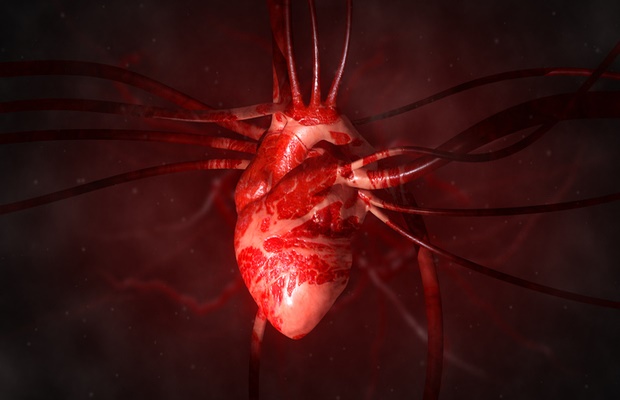
Your heart is a fist-sized, hollow muscle that weighs between 300g and 350g. The size of your heart corresponds with the size of your fist. Your heart pumps between 5l and 7l of blood per minute through your veins – which for such a relatively small organ is impressive.
5. The kidneys
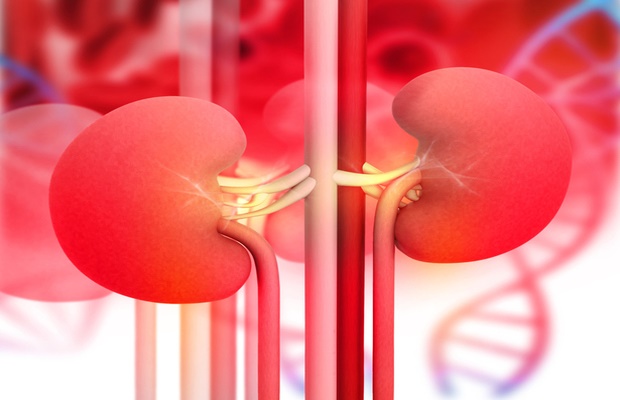
Each kidney weighs anything between 150g and 300g, once again depending on your age and size. This means that an average kidney weighs roughly the same as a mobile phone. Your kidneys can filter up to 1 500l of blood daily.
6. The lungs
The total weight of your lungs (“pulmo”) is about 1kg. These spongy, cone-shaped organs process more than 10 000l of air per day. The right lung is slightly bigger than the left lung. The right lung has three lobes and the left lung only two.

Image credits: iStock

NEXT ON HEALTH24X

MIT severs ties with a start-up attempting to copy people’s memories when they die.
Every year as the weather starts to change, the debate begins as to whether or not to have the flu shot. According to Health24’s CyberDoc, Dr Heidi van Deventer, the best time to schedule your flu vaccine is in April before the flu season starts.
Now is also the time when people start repeating ridiculous myths about the flu – chicken soup will cure flu, the flu vaccine will make you sick… We bust nine myths you should stop believing right now.
Myth 1: ‘I’m going to get the flu from the vaccine.’
This is a popular myth that does the rounds every year. However, according to Harvard Medical School, the vaccine is made from an inactivated virus, which means it can’t transmit an infection. If you find that you are feeling under the weather after the shot, it’s probably because you were already infected with flu.
“The virus that you have might not be the exact same version of the vaccine that you received,” adds Dr Van Deventer. “But it should give you some protection against becoming extremely ill.”
The World Health Organization (WHO) recommends that you have an annual vaccination if:
Remember, it takes about one to two weeks after getting the vaccine before you’re protected.

Myth 2: ‘I don’t have flu, it’s a just a really bad cold.’
Symptoms like a sore throat, runny nose, sneezing and cough are similar to cold symptoms. Flu symptoms, however, come on suddenly and can cause severe complications like death. Flu will also see you spending a few days in bed with a fever, chills and aching muscles, whereas a cold will just slow you down.

Myth 3: ‘I can’t spread the flu when I feel well.’
You may already be carrying the flu virus before you start to feel unwell – according to Harvard Medical School, 20 to 30% of people who have the virus show no symptoms.
Flu is spread easily when you cough or sneeze, so always cover your mouth and nose. The flu virus can also live for up to 48 hours on hard, non-porous surfaces, so make sure you keep your hands clean and regularly disinfect surfaces in your home and office.

Myth 4: ‘Chicken soup will speed up my recovery.’
Yes, hot fluids like chicken soup may help soothe a sore throat and keep you hydrated but that’s all it will do. Harvard Medical School says chicken soup has no flu-fighting qualities.
Myth 5: ‘I need antibiotics to cure the flu.’
Viral infections cause the flu, so although antibiotics work well against bacteria, they won’t be as effective at curing a bout of the flu.
However, people sometimes develop a bacterial infection, such as bacterial pneumonia, as a result of the flu – your doctor will be able to advise on the best course of treatment. If your symptoms worsen or you are just not getting better, don’t delay going back to your doctor.

Myth 6: ‘I can’t die from the flu.’
In some cases, the flu can become dangerous – particularly for elderly people, young children, pregnant women and people with compromised immune systems.
The flu can turn deadly if someone suffers from a complication – for example, if they develop bacterial pneumonia, a sinus infection, dehydration or it worsens an existing chronic condition such as asthma, congestive heart failure or diabetes. According to the WHO, flu causes between 250 000 and 500 000 deaths annually.

Myth 7: ‘I’ve had the flu vaccine so I don’t need it again.’
Unfortunately the flu virus mutates every year. A new flu vaccine is formulated every year, which is “why we need a new vaccine every year,” says Dr Van Deventer.

Myth 8: ‘I take vitamin C so I’m protected from the flu.’
According to the NHS, there is no evidence to prove that taking regular vitamin C will protect you from getting the flu.

Myth 9: ‘I’m pregnant, so I can’t have the flu vaccine.’
Pregnant woman have a higher risk for complications from flu. The University of California San Francisco says that getting the flu shot while pregnant can help protect your baby from infection for months after delivery.
Babies younger than six months can’t receive the flu vaccine but are more susceptible to suffering complications from the flu.
Image credit: iStock