Friends and family members left behind after a suicide tell the stories of the men they have lost.


Friends and family members left behind after a suicide tell the stories of the men they have lost.
Four Welsh health boards now have a combined rolling deficit of £360m over three years.
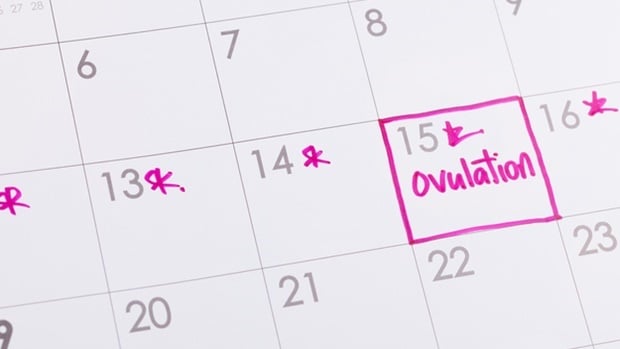
If there’s one thing that’s worth keeping track of, it’s when you ovulate.
Sure, ovulation lasts for all of one day out of your 28-day cycle, but it’s arguably the most important day.
That’s because it represents the tiny window of time when you could feasibly conceive a baby (either an exciting or terrifying concept, depending).
What is ovulation?
Ovulation is the point in the menstrual cycle where one little egg travels from your ovary (where it lives with thousands of other eggs) into the body’s fallopian tubes, according to the National Institutes of Health.
The egg knows it’s time to start this journey thanks to signals from your hormones – usually around day 14 of your menstrual cycle. And those hormones also trigger the uterus to prepare for a potential baby by thickening its lining, says the NIH.
The egg will then hang out in the fallopian tubes for 12 to 24 hours, waiting to join forces with passing sperm, according to the American Pregnancy Association. (Sperm can remain in the female reproductive tract for up to five days, so it’s not like you’ve only have a one-day window to do the deed if you’re trying to conceive.)
If the egg is not fertilised, the uterus sheds its lining (and the egg) – and you get your period.
“Technically, a period is the release of blood and uterine tissue that happens two weeks after your period starts – the body’s way of resetting the uterus after not getting pregnant from that month’s ovulation,” Dr Jennifer Conti, a clinical assistant professor at Stanford University in California, tells Women’s Health.
Read more: 5 things every woman needs to know about her fertility
Signs of ovulation
Unless you’re tracking your cycle, you probably won’t know when you’re ovulating – although some people report feeling mittelschmerz (German for “middle pain”), abdominal pain that coincides with ovulation.
For the majority of people, vaginal discharge is a clearer indicator: When you’re ovulating or close to ovulation, discharge becomes thick and white.
Those who use fertility awareness – based family planning methods (not a good idea if you don’t want to get pregnant; fine if you do) might also be familiar with tracking their basal body temperature, or the body’s temperature when fully at rest. Basal body temperature is best measured first thing after you wake up, and dips slightly as ovulation approaches. When you ovulate, that number will swing suddenly up.
You might also notice that your sex drive peaks around ovulation, depending on your baseline libido levels.
Ovulation tests are also available at most drug stores, but Dr Conti cautions that if you have polycystic ovary syndrome, you might get false positives.
Read more: 17 weird things that can mess with your fertility
Are you ovulating regularly?
Hard to say.
“Ovulation is not as straightforward as it seems,” says Dr Conti. “A lot of people think that just because they’re bleeding, they’re ovulating regularly, and that’s not necessarily true. Blood does not always equal ovulation, and blood does not always equal a period, or menstruation.”
Bleeding between periods or at unpredictable intervals, Dr Conti says, could be a sign that you’re not ovulating regularly.
Irregular vaginal bleeding can also signal a number of more serious problems, so if you’re concerned, it’s best to book an appointment with a gynaecologist or visit a reproductive health care clinic.
Image credit: iStock
This article was originally published on www.womenshealthmag.com

Scientists might have discovered a new organ in the human body that was not recognised before. This newly identified organ is called the interstitium and is basically a network of interconnected, fluid-filled spaces all over the body, according to the research published online on 27 March 2018 in the journal Scientific Reports.
Dr Neil Theise, a pathologist at the New York University School of Medicine said that this potential organ serves as a fluid-filled shock absorber throughout the body and that it could recognised as the largest human organ, if scientifically verified.
How was the organ discovered?
The interstitium was first discovered in 2015 by endoscopists Dr David Carr-Locke and Dr Petros Benias at Mount Sinai Beth Israel medical centre in New York.
They were examining a patient’s bile duct for cancer when they noticed the interconnected passages through a microscope.
What they saw resulted in more research lead by Dr Theise.
The recently published study now suggests that this network of passages, made up from dense tissue and fluid-filled compartments, can indeed be seen as a proper organ since it is a unique structure of tissue performing a specialised task, just like the heart or liver.
The interstitium is found throughout the body, just underneath the skin and in the digestive, respiratory and urinary systems.
It consists of both strong (collagen) and flexible (elastin) connective tissue proteins, with interstitial fluid moving throughout, which drains into the lymphatic system. It is said to be the source of lymph, which is vital to the functioning of inflammation-causing immune cells.
“There are no pictures of it. There are no illustrations of the construct,” Dr Theise said. “It’s just there.”
What could this discovery mean?
Research on the interstitium could give better insight on how cancer cells and other diseases are transported through the body, according to The New Scientist. It is understood that cancer cells can spread from the original site to other parts of the body and the lymphatic system through these fluid-filled spaces of the interstitium.
This represents a better understanding of how cancerous tumours spread and how they can be treated, says Dr Theise.
Further research needed
Whether the interstitium can be seen as an actual organ or not will be determined by a series of further studies and scientific verification. But for now, the awareness of the interstitium reflects “a significant reassessment of anatomy affecting every organ of the body,” Dr Theise said.
Image credit: iStock

NEXT ON HEALTH24X

A study claims bacteria is present in rubber ducks. But what other unexpected risks are in your bathroom?

South African Health Minister, Dr Aaron Motsoaledi, recently openly declared his hate for the tobacco industry and pledged stronger action against the industry that will also affect smokers.
Smokers who think cigars or pipes are somehow safer than cigarettes may want to think again, new research indicates.
Tobacco-linked cancer
The study tracked the health and habits of more than 357 000 Americans from 1985 to 2011.
It found that, compared to people who had never smoked, people who regularly smoked only cigarettes had double the risk of death during that time, from whatever the cause. And they had four times the odds of dying from a tobacco-linked cancer such as cancer of the lung, bladder, oesophagus, pancreas, larynx and mouth.
But people who claimed they smoked only cigars weren’t off the hook.
Cigar smokers had a 20% higher chance of death from any cause, and a 61% higher risk of death from a tobacco-linked cancer, the researchers reported in JAMA Internal Medicine.
Rates for pipe smokers were similarly high: This group had a 58% higher risk of dying from a tobacco-linked cancer during the study period, compared to never-smokers.
“In 2015, an estimated 12.5 million people in the United States aged 12 years or older were current cigar smokers,” noted the research team, which was led by Carol Christensen, of the US Food and Drug Administration’s Center for Tobacco Products.
Increased risk of heart disease and stroke
The study authors also noted that just under 1% of Americans said they have smoked some sort of tobacco pipe at least 50 times over their lifetime.
Tobacco can also be chewed or sniffed. A previous Health24 article cautions that “smokeless tobacco” is also harmful to health and, aside from the fact that it includes nicotine, is linked with a variety of cancers, such as in the mouth, oesophagus and pancreas. It is also associated with an increased risk of heart disease and stroke.
Two medical experts said the study sends an important message, especially to young people who might think one form of smoking is less dangerous than another.
“Combustible tobacco used in any form is a cancer risk, and pipe and cigar smokers cannot be given a pass,” said Dr Len Horovitz, a pulmonary specialist at Lenox Hill Hospital in New York City.
Patricia Folan directs the Center for Tobacco Control at Northwell Health in Great Neck, New York.
She noted that “a full-size cigar can contain chemicals to the equivalent of one pack of cigarettes, and individuals who switch from cigarettes to cigars frequently unintentionally inhale cigars the way they inhaled cigarettes – exposing them to large amounts of the hazardous substances in cigar smoke.”
Some good news
There was some good news from the FDA study, however: The risk of death from any cause or tobacco-linked cancers fell once smokers quit.
So, Folan said, “I would not say that cigars are better than cigarettes – but quitting is.” She urged smokers “to ask for help from your health care provider” on kicking the habit.
Image credit: iStock

Discrimination against LGBT people is “alive and kicking” in the care sector, charities tell the Victoria Derbyshire programme.
Researchers hope the study of 24,000 will cut infections in the young and the wider community.
“We all have the same 24 hours in a day,” the saying goes. Often tossed around by successful people, these words are supposed to motivate the rest of us to to make time for our goals and not put them off with the I'm-too-busy excuse.
Thing is, we actually don't all have the same 24 hours; some people are dealing with life and work challenges that require them to back-burner their goals temporarily. Melissa Hartwig, the founder of the popular Whole30 plan, just posted the most perfect explanation of this on Instagram.
Considering that her post has been liked by thousands of users, it's clearly struck a nerve.
RELATED: 5 Quick Tricks to Stop Stressing Out Right Now
“The problem is, we DON’T all have the same 24 hours,” Hartwig wrote. She was specifically referring to the way fitness influencers often use the saying to imply that everyone can and should carve out time for daily gym sessions and healthy meal prep.
“A few years ago, my 24-hours looked like me working my ass off just trying not to fall apart, as my marriage was crumbling, my business was up in the air, and I was single-parenting my young son. Those 24 hours look NOTHING like the 24 hours I have now.”
She went on to explain that while busting her butt to keep her life together, she didn't have the time to vigilantly maintain a healthy lifestyle, and therefore wasn't seeing fitness results.
“Life stress, marital stress, financial stress; responsibilities to a job, a child, a sick loved one; your own health challenges, physical and mental… all of these shape our 24 hours,” Hartwig wrote. “WE don’t all have the same days, and suggesting someone does ALSO suggests that the issue is THEM; they’re not committed, hard-working, or making the effort. Which perhaps comes from a place of motivation … but really only serves to pile more guilt and shame onto an already burdened mental and emotional state.”
RELATED: 11 Letter Board Quotes That Will Inspire You
Of the more than 13,000 comments, the majority praised Hartwig and thanked her for her honest message.
“Thank you for this,” one respondent said. “I am in a season of heavy and it seems like I can’t make traction in the fitness area of my life. It’s all I can do right now to ‘mom’, homeschool our three young kids (ages 3-6), prepare nourishing food and keep all the plates spinning. Thank you for offering grace for this season and a reminder in the process that this season isn’t permanent, just like yours was not permanent.”
“I love you. Never needed this more,” shared another. “All of this,” wrote another supporter. “Every.single.word!!”
The PM says she wants to move away from annual cash “top-ups” to allow health service to plan for future.
