About a quarter of patients in A&E departments last month waited longer than four hours.


About a quarter of patients in A&E departments last month waited longer than four hours.
How savvy are you likely to be in an emergency involving yourself? Would you be able to recognise a heart attack and save your own life?
Many of us are reliant on paramedics or emergency medical services, but a 44-year-old nurse was left to his own devices at a health clinic in a small, remote settlement in Australia.
Without any hesitation, he managed to diagnose and treat his own heart attack.
Performed EKG on himself
The man, whose name was withheld for privacy reasons, experienced severe chest pain and dizziness while he was the sole medical professional on duty at a nursing post in Coral Bay, more than 600 miles (1 000km) from Perth, the capital of Western Australia, said the account published in the New England Journal of Medicine.
With the next medical facility 90 miles (150km) away and no one else around to help, he hooked himself up to an electrocardiogram (EKG), which showed a complete heart block that may have been due to an evolving heart attack.
The man then performed another EKG on himself, which confirmed the diagnosis of a heart attack.
He emailed the results to a doctor via the Emergency Telehealth Service (ETS) and found an emergency physician to talk with him via real-time video.
Then, he inserted intravenous (IV) lines in both of his own arms and self-administered drugs including aspirin, blood thinners, painkillers and a clot-dissolving drug called tenecteplase.
“He attached his own defibrillator pads and prepared adrenaline, atropine, and amiodarone,” which are drugs to treat heart rhythm problems, said the report.
As it turned out, the clot-busting drugs worked, and the heart attack subsided.
He was flown the next day to a cardiology unit in Perth, a stent was inserted in the coronary artery that had become blocked, and he went home two days later.
DIY-approach not recommended
Experts said his extreme, do-it-yourself, MacGyver-like approach would not be recommended for most people.
But the use of the clot-busting drug is standard procedure for people who are far from a hospital, and his own medical knowledge likely contributed to saving his own life.
“It was quite genius to be able to do all these things,” said Brandon Godbout, vice chair of the emergency department at Lenox Hill Hospital in New York.
“When nobody else is around, what do you do? This person seemed to have quite good experience in emergency care, based on their confidence in managing this severe situation,” said Godbout, who was not involved with the case but said reading about it made him smile.
The case also shows the importance of telemedicine, particularly as hospitals retreat from rural areas, leaving more people far from emergency medical care.
“I think telemedicine is crucial to dealing with these sorts of emergencies,” Godbout added.
Recognise the symptoms
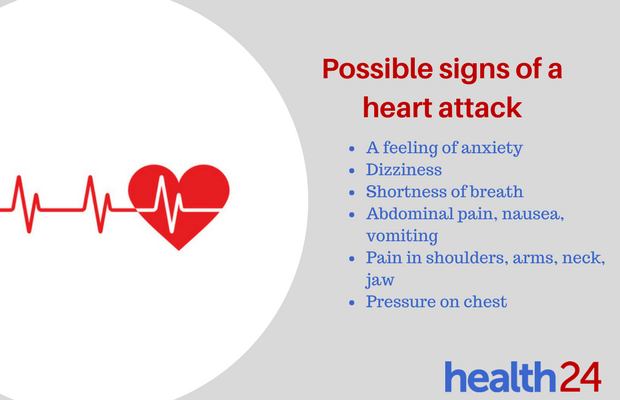
While mere mortals won’t have the access to medical devices to perform this life-saving action, you can still save yourself by being able to recognise the symptoms of a heart attack on time. Look out for:
According to a previous Health24 article, you should do the following if you think you are having a heart attack:
Image credit: iStock


Examples of common fungal infections are athlete’s foot, yeast infections, ringworm and onychomycosis.
These infections are usually treated with over-the-counter medications. Home remedies can be used in conjunction with medication or by themselves if the infection is mild. Don’t ignore fungal infections, however – here’s a guide for when to see the doctor.
These easy-to-find ingredients are a great help when treating less serious fungal infections.
Plain yoghurt
When treating a yeast infection, plain yoghurt with active cultures will reduce the growth of the fungi. Yoghurt is full of probiotics, which are bacteria that line your digestive tract and help your body’s ability to absorb vital nutrients and combat infection.
The live active cultures in the yoghurt refer to the living organisms that essentially create yoghurt during fermentation. Most yoghurts are heated during the process which kill these beneficial organisms, so make sure you buy one that contains live Lactobacillus strains.

Coconut oil
A study published in the US National Library of Medicine found that coconut oil helped kill species of yeast.
This popular oil, extracted from the edible part of the fruit, however, works just as effectively as a remedy for fungal skin due to the presence of medium chain fatty acids. The fatty acids act as fungicides that destroy the infection when you dab it onto the affected skin area. If you’re using it to treat a vaginal yeast infection, you can soak a warmed tampon in coconut oil before inserting it.

Garlic
The antibacterial properties of garlic are great for skin infections on any area. With some fungal infections found under the nail bed, which is hard to reach, applying crushed garlic is the best treatment.
Garlic also acts as an antibiotic, helping to speed up the recovery process as an added bonus.

Apple cider vinegar
Filled with antimicrobials, apple cider vinegar is a well-known treatment for any kind of fungal infection. Drinking diluted apple cider vinegar may help kill off infections while preventing them from spreading, and increasing recovery time.
Apple cider vinegar is naturally high in essential nutrients such as phosphorous, magnesium, calcium and potassium.

Cranberry juice
Although it is widely known that cranberry juice helps combat urinary tract infections, it is also effective against fungal growth conditions like yeast infections. Cranberry juice contains a substance that helps stop bacteria from sticking to mucous membranes.
Cranberry juice also helps to correct the pH levels of urine, which helps to prevent fungal growth.

Image credit: iStock


Traditionally high blood pressure is treated with one of four main types of medicine: ACE inhibitors, angiotensin receptor blockers (ARBs), calcium channel blockers or thiazide diuretics.
Researchers now, however, report that a pill that combines three blood pressure-lowering drugs improves people’s chances of lowering their high blood pressure.
The pill contains low doses of the three medications – telmisartan, amlodipine and chlorthalidone.
The finding stems from a study of 700 people, who averaged 56 years old. All had high blood pressure.
More effective and just as safe
Among those who took the so-called “triple pill” for six months, 70% had achieved their blood pressure targets, compared with 55% of those who received their usual care. Usual care meant taking whatever blood pressure medicine their doctor prescribed.
The rate of side effects was no greater among those who took the three-in-one pill than among the usual care group.
“Based on our findings, we conclude that this new method of using blood pressure-lowering drugs was more effective and just as safe as current approaches,” lead author Ruth Webster said in a news release from the American College of Cardiology. She’s a researcher with the George Institute for Global Health at the University of New South Wales in Sydney, Australia.
Reconsideration of recommendations
“The most urgent need for innovative strategies to control blood pressure is in low- and middle-income countries,” Webster said. “The triple pill approach is an opportunity to ‘leapfrog’ over traditional approaches to care and adopt an innovative approach that has been shown to be effective.”
High blood pressure increases the risk for heart attack, stroke and kidney problems.
“A control rate of 70% would be a considerable improvement, even in high-income settings,” Webster said. “Most hypertension guidelines in these countries do not recommend combination blood-pressure-lowering therapy for initial treatment in all people.”
The findings, she said, “should prompt reconsideration of recommendations around the use of combination therapy.”
Image credit: iStock

NEXT ON HEALTH24X

Health experts say the researchers’ findings show how easy it is to consume “huge” amounts of sugar.
HIV naturally mutates and eventually develops resistance to ARVs, which are then rendered ineffective. Patients infected with drug resistant strains of HIV are therefore commonly moved to alternative regimens known as 2nd line drugs.
HIV resistance to the potent antiretroviral drug tenofovir (Viread) has become increasingly common.
A new medication, Trogarzo (ibalizumab-uiyk), has however been approved by the US Food and Drug Administration to treat Aids-causing HIV that has not responded to other antiretroviral medications.
A new class of medications
Trogarzo is given intravenously once every 14 days in combination with other antiretroviral drugs, the Food and Drug Administration (FDA) said in a news release.
“While most patients living with HIV can be successfully treated using a combination of two or more antiretroviral drugs, a small percentage of patients who have taken many HIV drugs in the past have multidrug resistant HIV, limiting their treatment options,” said Dr Jeff Murray, deputy director of the agency’s Division of Antiviral Products.
HIV suppression
“Trogarzo is the first drug in a new class of antiretroviral medications that can provide significant benefit to patients who have run out of HIV treatment options,” Dr Murray added.
Trogarzo was evaluated in clinical studies involving 40 people who continued to have high levels of HIV, despite use of antiretroviral drugs. After 24 weeks of Trogarzo and other drugs, 43% of trial participants achieved HIV suppression, the FDA said.
The most common adverse reactions to Trogarzo were diarrhoea, dizziness, nausea and rash. More severe side effects included immune system abnormalities.
Image credit: iStock



Flying is a lot less glamorous than it was a few decades ago, but it remains a necessity. Whether you’re flying for work or pleasure – and let’s face it, travelling for the holidays can feel like both – you’ve invested a lot in that flight, and you aren’t going to risk missing it.
Read more: Don’t leave home without these 10 travel essentials
And for lots of travellers, that doesn’t change if they’re sick, either. In fact, a recent survey conducted by MattressFirm of more than 2 500 travellers found that 75% said they wouldn’t cancel a non-refundable flight if they came down with a cold or flu.
Remember that stat next time you look around your flight: There’s a pretty good chance some of the travellers next to you are flying sick. But does that mean you’re destined to arrive at your destination under the weather, too?
“Planes, trains, and automobiles are the mainstay for travel during the holidays and are also the perfect breeding ground for illness,” says UCHealth infectious disease expert Dr Michelle Barron.
That’s because viruses that cause the flu and colds can live on surfaces for minutes to hours, and bacteria – which can cause things like skin and gastrointestinal infections – can live for days to weeks. Then, if you touch one of the contaminated surfaces and then your mouth or eyes, for instance, you can introduce the bugs into your own body and get sick, too
“Think about how many handles and surfaces you touch when travelling and how often these surfaces (door handles, seat trays, light fixtures) have actually been cleaned,” Dr Barron says. Well, chances are, you’ll never find out for sure – so don’t depend on that to keep you safe from sickness on your flight.
The best thing you can do is be proactive on your own: Horizontal surfaces, easy-accessible objects like tray tables, bathroom handles, and hand rails are the areas that are most likely to be contaminated by viruses and bacteria due to the frequency that they are touched, says Dr Barron.
Read more: How to be a good dad when you travel for work
Your move, then, is to bring a pack of antiseptic wipes with you in your carry-on. Then simply wipe the area down the surfaces in front of you, especially the ones you’re going to eat off. When you’re done, rub your hands with a hand sanitiser, too.
While you’re actually flying, keep your hydration levels up. “Having good hydration makes your mucosal membranes (the inside of your nose and mouth) less likely to dry,” says Dr Barron. That’s a problem, because that can make it easier for germs to invade.
So aim to drink 235ml or more of water per hour, and minimise alcohol intake too, which contributes to dehydration, she says. And if you’re really worried about germs – and if you just know you’ll be given a coughing, snivelling, snotty seatmate – you can take a more extreme measure of a face mask, says Dr Philip M Tierno, Jr, professor of microbiology and pathology at NYU School of Medicine.
“I was seated in front of a woman with a raging cold who sneezed and coughed continuously. It was a full plane so I couldn’t be moved. So I darned a mask so as not to get her cold!” he says.
That’s your game plan for the day of of your flight, but you actually should be prepping to stay healthy well before your plane takes off. For one, keep your immune system chugging along. “Try to eat foods like yoghurt or kefir, which contain probiotics, and fresh fruits and vegetables that are loaded with healthy vitamins and antioxidants,” says Dr Barron.
Read more: 5 tips to beat travel bugs
While the research on vitamin C for colds is mixed – one new study did find that taking substantial amounts of it can shorten a cold’s duration – it can’t hurt to make sure you’re eating foods rich in it, both in the weeks leading up to your trip and while you are travelling.
“Vegetables and fruits are the best sources of vitamin C, so consider packing a bag of portable snacks like grape tomatoes or berries. I personally take vitamin C a few days before I plan to travel to prepare my system for any germs in the air,” says Dr David A Greuner, cofounder of NYC Surgical Associates.
And, on the flip side, what if you are the sickie? If you absolutely must fly, at least be considerate of your fellow passengers.
“Cough into your elbow or into a tissue instead of your hands, which limits your likelihood of contaminating a surface you subsequently touch,” says Dr Barron. Use sanitising wipes or hand sanitisers liberally to try to limit continued spread.
This article was originally published on www.menshealth.com
Image credit: iStock 
A new analysis of the controversial PACE trial suggests the effects of exercise therapy have been exaggerated.
A study suggests the martial art has benefits similar to or greater than aerobic exercise.
Parents of millennials still living at home aren’t the only ones with children that refuse to leave. Many animal species have adult offspring that are slow to take flight, but when and how they leave has been poorly understood by scientists. Now, new UBC research on a desert-dwelling African bird is yielding some answers.
Martha Nelson-Flower, a postdoctoral fellow at UBC, studied the behaviour of wild southern pied babblers, which live in family groups of up to 14 in the Kalahari Desert in South Africa. Her findings, published in the Journal of Animal Ecology, suggest that better prospects elsewhere, as well as family dynamics between brothers and stepfathers, play a big part in determining when offspring disperse.
Nelson-Flower used 11 years of data to investigate how the dispersal of male and female babblers was affected by their position in the group social hierarchy, conditions in the environment, and the benefits of staying in their group. She discovered large distinctions between the sexes. Female birds were more independent, but tended to remain at home when in a larger (and therefore safer) group. In contrast, males left only when they had improved chances of leading a group of their own elsewhere.
“Males often leave when there’s more rain, which probably means there’s more food in the environment,” said Nelson-Flower. “They also leave when there are more breeding vacancies for males, and they leave when the distance between groups is small. We think that’s because they’re more likely to encounter other groups, and they can check to see if there are any breeding vacancies in those groups.”
However, a male’s position in the group social hierarchy made a big difference to their decision to disperse. Brothers queue for an opportunity to inherit the leadership of their group, or that of a neighbouring group; by leaving early, younger brothers could boost their queue position and improve their prospects. Intriguingly, males with step-fathers also left early, likely because step-fathers prioritize their own, younger sons in the queue.
In contrast, females lower in the pecking order did not leave early, but bided their time, waiting for opportunities to overthrow dominant females in other groups. Nelson-Flower suggests this may be because they sometimes achieve dominance through extreme aggression: “A large, subordinate strong female would go to a group with a dominant female, and attack that female until she left. Sometimes sisters would come in pairs, and they would work together.”
Story Source:
Materials provided by University of British Columbia. Note: Content may be edited for style and length.

