Emma Forrest gets up five times a night to satisfy her cravings and stockpiles cans of the drinks.


Emma Forrest gets up five times a night to satisfy her cravings and stockpiles cans of the drinks.

On 13 March 2018 news broke that famed physicist Stephen Hawking had passed away. When celebrities pass on, I usually feel a brief pang of sadness before something else distracts me on my social media feed. But as a disabled man, I felt a little bit differently about Hawking’s passing.
Aside from Christopher Reeve, Stephen Hawking has been one of the most public disabled figures in my lifetime. Our experiences of disability were vastly different: as an adult, Hawking developed early on-set Lou Gehrig’s disease, or ALS, while I was born with cerebral palsy, a disability that, for the most part, is stable and unchanging.
I wouldn’t say that he was a role model per se, but every time I saw a video or picture of him in his wheelchair, my disabled heart would burst with a sense of indescribable pride. Here was someone who looked like me – a wheelchair user – doing great things that would change the world.
So when I saw that he had passed, I lingered just a little while longer on his story. After all, one of my teammates in disability was gone, and even as I type this, it hurts a little bit to consider the implications of that. People with disabilities get so little recognition from the outside world; we’re rarely depicted in popular culture, unless it’s in a way that pities or infantilises us. The significance of a disabled man being viewed as one of the brightest minds of our generation cannot be understated.
As a disabled person, however, I’m also troubled by the way the media has framed his life and his passing. Among the run-of-the-mill condolences I saw on social media, there were a few that bothered me, including a meme depicting the spirit of Mr Hawking walking out of his wheelchair, as if he were now free of it.
This is how I will always remember Dr. Stephen Hawking, freed from the confines of his wheelchair, with the biggest smile on his face I have ever seen. Thank you for your service to humanity. From stardust you were made, to stardust may you return… RIP (1942-2018) pic.twitter.com/sTbOq9WeSn
— Loretta Whitesides (@lorettahidalgo) March 14, 2018
As a fellow wheelchair user, these kinds of depictions, while perhaps well-intentioned, sting. I wouldn’t want someone to erase my identity as a disabled person in my death, as it is a huge intrinsic part of who I am and how I see the world around me. It is unfair that in order for us to celebrate his life, we feel it necessary to remove a part of who Stephen Hawking was: A disabled man.
When I hear people saying things like, “He went on despite all odds,” I want to point out that Hawking went on because he had no choice not to. His disability was what it was; he wanted to live his life and pursue his academic passions, and he knew that his disabled identity was going to need to be a part of that.
Pro-tip to journalists:Stephen Hawking *used* a wheelchair. He is the active person in the arrangement. The wheelchair helped him do things. It did not bind him.
— Alexandra Erin (@alexandraerin) March 14, 2018
It also bothers me when I see the media framing Hawking’s disability as something he “suffered”. As a disabled person, I am sure there were days when Hawking did suffer the effects of his disability (all disabled people have been there at some point or another).
But I am also sure there were moments where his disability was a source of great humour, levity and connection for him, and it is important that we acknowledge that as well when we talk about him. I mean, c’mon, he had guest spots on The Simpsons and The Big Bang Theory. The man could clearly laugh at himself.
When I think of Hawking’s passing, I don’t see his spirit rising up out of his wheelchair to be free, because I don’t see his disability as something he needed to be freed from. Instead, I take comfort in the knowledge that wherever he is now, whether it be among the cosmos or in a black hole of nothingness, his disability is with him.
Rest in power, Mr Hawking, and thank you.
This article was originally published on www.menshealth.com
Image credit: NASA/Paul E. Alers via Wikicommons

Not only do we need to undergo regular eye tests to ensure healthy vision, but there are also a couple of serious health problems that can be detected through eye examinations, such as diabetes and glaucoma.
One of the more unusual diseases that can be detected through an eye examination is a brain tumour.
The optic nerve and brain tumours
How exactly can your eyes give a clue to this? Dr Nigel Best, an optometrist from Specsavers, explains, “Swelling of the optic nerve can be visible during an eye test, and that can indicate that a brain tumour is present.”
According to Harvard Medical School, this swelling of the optic nerve is called papilledema and occurs due to intracranial pressure (pressure inside the skull). Fluid surrounding the brain is constantly produced and reabsorbed, maintaining just enough intracranial pressure to help protect the brain if there is blunt head trauma.
When a tumour is present, however, it creates extra intracranial pressure, which causes the optic nerve to swell.
Other changes to the eye that can signal a possible brain tumour include sudden changes to a person’s field of sight and onset of blurry vision. The rest of the eye can also swell, and rapid changes to the retina can signify pressure from a brain tumour.

Is it really a brain tumour?
In the case of a brain tumour, you will most likely also experience symptoms such as headaches and nausea. But these symptoms are easy to ignore and interpret as something far less serious, like flu for example.
Your optometrist will inform you of any alarming changes or other problems in your eyes. They should also have a record of your previous eye scans and vision tests for comparison. If there is any reason for concern, you will be referred to a doctor for additional examinations.
Tips to maintain eye health
A previous Health24 article gives the following tips to keep your eyes in tip-top shape:
According to the American Academy of Ophthalmology you should go for a check-up if you have any of the following:
Image credit: iStock


New courses are in under-doctored areas as ministers set out plans to expand student places by 25%.
Small scale agricultural farming was first initiated by indigenous communities living on Turkey’s Anatolian plateau, and not introduced by migrant farmers as previously thought, according to new research by the University of Liverpool.
Professor Douglas Baird and his team discovered the presence of carbonised seeds and phytoliths of wheat chaff at Boncuklu, along with agricultural weeds commonly found in early farming sites, suggesting the cultivation of crops did take place.
Additionally, nitrogen isotopes from sheep and goat bone collagen indicate very small scale experimentation with the herding of these animals.
Analysis of stone tools and ancient DNA suggests an indigenous population, rather than migrants from earlier agricultural communities within the Fertile Crescent.
Professor Baird said: “Confounding the expectations of some archaeologists that the migrant farmer brought farming to central Anatolia, our evidence shows that the site of Boncuklu was occupied by long present, local Anatolian communities who mostly hunted and gathered a wide range of wetland animals and plants, but adopted farming from areas to the south and east through exchange.
“Although used; cultivated plants, wheat, lentils and peas were not fully domesticated and contributed only a small amount to the diet of the Boncuklu community.”
Project Co-Director, University of Queensland Associate Professor Andrew Fairbairn, said: “Unexpectedly, this low level food production persisted for at least five centuries.
“Archaeologists usually consider these kinds of food production systems to be short-lived and transitional, but our research suggests a stable and persistent use of crops and herd animals as a minor part of the economy for a long time.
“This does not fit existing theory.”
The team contrasted Boncuklu with the nearby site of Pınarbaşı, excavated by Professor Baird in 2003-4. Lying 30km south of Boncuklu in Karaman Province, evidence suggests these communities resisted the adoption of farming and maintained a hunter-gatherer lifestyle, showing the spread of agriculture beyond the Fertile Crescent was neither uniform nor inevitable.
Professor Baird, from the University’s Department of Archaeology, Classics and Egyptology, said: “Intriguingly, while Pınarbaşı was abandoned and its people disappeared from the archaeological record, we believe that the way of life we see at Boncuklu contributed directly to that conducted at the slightly later Neolithic settlement, Çatalhöyük.
“Farming at Boncuklu was a relatively minor economic activity 10,000 years ago, but its adoption may have had both immediate and long-term consequences for the particular communities who committed to it.”
Funded by the British Academy, the British Institute at Ankara and the Australian Research Council, the research is published in the journal Proceedings of the National Academy of Sciences of the USA (PNAS).
It was conducted by an international team led by Professor Baird, Associate Professor Andrew Fairburn, and Assistant Professor Gokhan Mustafaoglu and included researchers from Bournemouth University, University College London, University of Reading, Cornell University, Middle Eastern Technical University Ankara, Thrakya University, Bulent Ecevit University Zonguldak, Peking University and Harvard University, as well as Universities of Liverpool and Queensland.
As part of the project an experimental area has been developed, including reconstructed Neolithic houses, with plans to develop a Neolithic ‘garden’.
Professor Baird added: “We are keen to communicate our results to local communities in Turkey as well as international visitors.”

Police detectives analyze isotopes in human hair to find out where a murder victim was born and grew up. Ashley Sharpe, an archaeologist at the Smithsonian Tropical Research Institute in Panama, and colleagues combined clues from carbon, nitrogen, oxygen and strontium isotope analysis discovering the earliest evidence that the Maya raised and traded dogs and other animals, probably for ceremonial use.
Their results are published in the Proceedings of the National Academy of Sciences during the week of March 19.
“In Asia, Africa and Europe, animal management went hand-in-hand with the development of cities,” said Sharpe. “But in the Americas people may have raised animals for ceremonial purposes. The growth of cities doesn’t seem to be directly tied to animal husbandry.”
Sharpe found that animal trade and management began in the Preclassic Period some 2,500 years ago and intensified during the Classic Period, making it likely that organized ceremonies involving animal and human sacrifice and raising animals for food played important roles in the development of Maya civilization.
Isotopes are atoms that have the same number of protons and electrons but different numbers of neutrons and therefore have different physical properties. For example, carbon has two stable isotopes: carbon 12 with six protons and six neutrons and carbon 13 with six protons and seven neutrons. Carbon in animals’ bodies comes from the plant tissues they consume directly or indirectly. Most plants use the most common type of photosynthesis to turn carbon dioxide into carbohydrates. This process leaves mostly the lighter carbon isotope, carbon 12, behind, bound up in carbohydrate molecules. Corn, sugar cane and other grasses use another type of photosynthesis that concentrates heavier, carbon 13 molecules. Nitrogen isotopes in proteins demonstrate a similar pattern.
Sharpe and colleagues analyzed the isotopes in animal remains from Ceibal, Guatemala, a Maya site with one of the longest histories of continuous occupation, and one of the earliest ceremonial sites. Most of the bones and teeth they tested were from the Maya Middle Preclassic period (700-350 B.C.).
“The animal remains fall into two categories, those with lower carbon isotopes, indicating they were eating mostly wild plants, and those with higher isotopes, which were probably eating corn.”
All of the dogs, two northern turkeys, Meleagris gallopavo, the turkey species that was eventually domesticated, and one of two large cats were probably eating corn or other animals that fed on corn, such as a peccary (wild pig).
Because people in the region often killed animals that came into gardens and areas where crops were being cultivated, it is possible that peccaries and turkeys may also have been eating crop plants, but it is likely that turkeys were managed by the end of the Classic Period.
Deer bones showed butcher marks, but they were hunted from the forest, not domesticated according to isotope analysis of bones that also had lower carbon isotopes.
One large cat and a smaller cat, probably a margay, Leopardus wiedii, had lower carbon isotopes indicating that they ate animals that fed on wild plants.
The ratio of two strontium isotopes reflects the local geology in a region. Forty-four of the 46 animals had strontium isotope ratios matching Ceibal and the surrounding southern lowlands region. However, to Sharpe’s surprise, jaw bones from two dogs excavated from deep pits at the heart of the ancient ceremonial complex had strontium isotope ratios matching drier, mountainous regions near present-day Guatemala City. “This is the first evidence from the Americas of dogs being moved around the landscape,” Sharpe said. “Around 1000 A.D. there’s evidence that dogs were moved out to islands in the Caribbean, but the Ceibal remains are dated at about 400 B.C.” Part of the jaw bone and teeth of a big cat was found with one of the dogs in the same deposit.
“The interesting thing is that this big cat was local, but possibly not wild,” Sharpe said. “Based on its tooth enamel, it had been eating a diet similar to that of the dogs since it was very young. Perhaps it was captured and raised in captivity, or it lived near villages and ate animals that were feeding on corn. We still have to look at the DNA to figure out if it was a jaguar or a puma.”
Sharpe is looking forward to understanding more about the context of these finds. “The results in this publication are based on excavations we did in 2012. My colleagues at the Ceibal-Petexbatun Archaeological Project will publish additional analyses, and I’m looking forward to finding out if all of the human remains at the site are from the region.”
“It’s interesting to consider whether humans may have had a greater impact managing and manipulating animal species in ancient Mesoamerica than has been believed,” Sharpe said. “Studies like this one are beginning to show that animals played a key role in ceremonies and demonstrations of power, which perhaps drove animal-rearing and trade.”

A long-standing debate in the field of cultural evolution has revolved around the question of how and why human societies become more hierarchical. Some theorize that material changes to a society’s resources or subsistence strategies lead it to become more hierarchical; others believe that hierarchy is the cause rather than the result of these changes. Many see the answer as being somewhere on the spectrum between these two extremes. In order to test these theories, a group of researchers from the Max Planck Institute for the Science of Human History and the University of Auckland examined 155 Austronesian societies, the results of which are published in PNAS.
Diverse societies with similar cultural ancestry
The societies examined had a geographical range stretching from Taiwan to New Zealand, Madagascar to Easter Island. They are also diverse in terms of social stratification and agricultural practices, making them a good fit for the study. “The Pacific is an ideal setting to test these ideas,” explains senior author Quentin Atkinson, of the Max Planck Institute for the Science of Human History and the University of Auckland. “It’s like a giant natural experiment with populations spread across hundreds of islands with different political institutions and modes of subsistence. And we know the cultural ancestry of these populations because it is encoded in the languages they speak.” These societies varied from egalitarian to rigidly stratified, and their agricultural systems ranged from among the least intensive to the most intensive in the pre-modern world — the rice terraces built by the Ifugao people of the Philippines have often been described as the “eighth wonder of the world.”
Intensive agriculture and social hierarchies in a feedback loop
The results of the study showed that there was not a simple causal connection between changes in a society’s mode of agriculture and increasing hierarchy. Although in many cases agricultural intensification appeared to coevolve with sociopolitical hierarchy, in other cases, these traits appeared independently of each other. When both traits did appear, it was not always the case that intensive agriculture came first. “There’s a widely held view that material changes to the environment drive social evolution and not the reverse,” states Atkinson. “Our findings challenge that view and show that the causal arrow actually goes both ways.”
“The findings suggest that intensification and hierarchy promoted each other, perhaps as a part of a feedback loop that may also have involved population growth,” explains first author Oliver Sheehan, also of the Max Planck Institute for the Science of Human History and the University of Auckland. “These results reveal how social and political factors, far from being secondary to the process of cultural evolution, are among its most important drivers.”
Study co-author and current Managing Director of the Max Planck Institute for the Science of Human History Professor Russell Gray states, “This study shows the power of computational phylogenetic methods to test causal hypotheses about human history.” The researchers next hope to conduct similar research in other areas and in other cultural contexts.
Story Source:
Materials provided by Max Planck Institute for the Science of Human History. Note: Content may be edited for style and length.

Getting your first period definitely came with a little bit of street cred back in the day: You could finally complain about PMS and cramps!
But now tons of research shows that getting your period before age 12 might actually be linked with health issues down the road – and all of a sudden your days of trading tampons in middle school probably seem a little less cute.
Obviously, though, it’s too late to turn back the clock on your hormones, says Dr Lauren Streicher, associate professor of obstetrics and gynaecology at Northwestern University.
That’s why, if your period did come early (show of hands?), it’s even more important to know and stay on top of any conditions linked with your early-to-arrive womanhood.
Here are seven health issues linked with early periods:
1. Breast cancer
Your period is accompanied by extreme hormonal changes, especially in oestrogen, which is known to influence virtually every tissue in the body, says Dr Steicher.
And that includes your boobs: Women who had their first bleed before age 12 were 50% more likely to develop breast cancer compared to those who got their period at age 16, according to a report from the Breast Cancer Fund. The study explains that early puberty is associated with increased exposure to the breast-cancer-promoting hormone oestrogen.
Read more: 7 things you should always do during your menstrual cycle
2. Early menopause
Research published in the journal Human Reproduction in 2017 found that women who had their first period at age 11 or younger had an 80% higher risk of entering menopause before age 40 (premature menopause) and a 30% higher risk of menopause between the ages of 40 and 44 (early menopause), compared with women who got their first period between 12 and 13.
This risk is greatest in women who also have never had children, says Suzanne Steinbaum, director of the Heart and Vascular Institute at Lenox Hill Hospital in NYC.

Read more: 7 reasons your period might be late – other than pregnancy
3. Heart disease
Seriously, what doesn’t increase your risk of heart disease? According to a long-term 2018 observational study published in the journal Heart, women who report getting their first period before 12 are 10% more likely to experience heart disease than those who didn’t get their period until 13 or older.
However, Dr Streicher notes that, so far, there’s no proof that one causes the other – there’s simply a link.
It’s possible that childhood obesity, especially if it continues throughout adulthood, may be the common denominator. Fat cells are a large producer of period-triggering oestrogen, Dr Streicher explains. Increasing rates of childhood obesity may explain why the average age of first period has dropped by more than a month to 12 years and six months, according to the Centers for Disease Control and Prevention. And of course, obesity is also linked to an increased risk of heart disease.
To make matters worse: Early menopause is also linked to an increased risk of heart disease and stroke.
Read more: 7 facts that could change your mind about menstrual cups
4. Osteoporosis
Early periods, weaker bones? The answer may depend on if you’re one of the unlucky women whose early periods contribute to early menopause, explains research in the Journal of Clinical Endocrinology & Metabolism. The study shows that the more oestrogen you’re exposed to over time, the more your body could be protected from osteoporosis.
This could go both ways: For some women, early periods means more years spent menstruating, and enjoying(?) higher levels of oestrogen, Steinbaum explains. That means a lower risk of osteoporosis, she says.
However, if your early period leads to an even earlier menopause, your risk of osteoporosis can increase in a big way. In the study, researchers concluded that menstruating for fewer than 25 years, rather than 35 or more, puts you at a greater risk of osteoporosis.
In the prevention of osteoporosis, strength training, calcium and vitamin D are your greatest allies. And, no, there’s no such thing as “too early” when it comes to taking care of your bones.

Read more: 5 types of period cramps that could signal a serious problem
5. Ovarian cancer
Women who got their periods early were significantly more likely to develop ovarian cancer compared to later bloomers, according to an International Journal of Cancer meta-analysis of 27 previous studies.
To make matters worse, research also shows that ovarian cancer is 51% more likely to prove fatal in women who get their first period before the age of 12, compared to in those who got theirs at age 14 or later.
Again, oestrogen may play a role, according to Steinbaum. Talk to your doctor if you experience any ovarian cancer symptoms, as Paps don’t tend to catch ovarian cancer until it’s advanced.
Read more: What your period blood consistency says about your health
6. Diabetes
A study of 13 308 women published in the journal Diabetologia also shows that women who get their periods early are more likely to develop type 2 diabetes.
According to researchers, the issue may not be that early periods cause diabetes, but that high levels of body fat cause both early periods as well as diabetes.
While it’s important to maintain overall healthy body fat levels, Steinbaum notes that belly, or visceral fat, which hangs out in and around the vital organs (as opposed to subcutaneous fat, which sits right under the skin) is the most detrimental to health and hormone levels.

Read more: How to tell the difference between period blood and spotting
7. Infertility
Apart from the fact that early menopause can put a serious time-crunch on your family planning, research published in Fertility and Sterility shows that early periods are linked to a much greater risk of infertility.
Steinbaum explains that women who got their period early are prone to having low functional ovarian reserves, simply meaning that you’ve got fewer follicles growing eggs for potential fertilisation.
If you’re worried about yours, discuss ovarian reserve testing with your doctor.
This article originally appeared on www.womenshealthmag.com
Image credit: iStock

Two patients have had pioneering stem cell therapy to restore their vision.
A rare disease is any disease that affects a small percentage of a population.
While you might have not heard of these lesser known diseases, these stars are using their voices to raise awareness and lessen the stigma for those fighting these conditions.
Here are seven celebs with rare diseases:
Missy Elliot

The Get Ur Freak On rapper disappeared from the music scene in 2008 as a result of her struggle with Graves Disease
Graves Disease is an autoimmune disease that causes an over activity of the thyroid gland and results in various symptoms such as muscle weakness, weight loss and eye disease.
Elliot was diagnosed with the disease after experiencing hand tremors, in an interview with People magazine, she revealed her struggles saying that she could not “even use a pen.” Elliot has, with the help of radiation combined with medication, made her return to the stage and hopes to shed more light on the disease.
Shannen Doherty
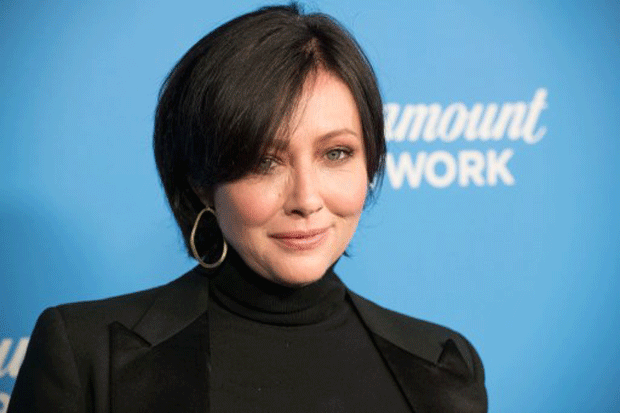
Charmed actress Shannen Doherty has had her fair share of health problems. While you might know about her battle with cancer, she has not been very open about her one with Crohn’s Disease.
Crohn’s disease is a chronic inflammatory bowel disease resulting in the inflammation of the digestive and gastrointestinal tract. The most common symptoms include diarrhoea, weight loss and abdominal pain. However, the eyes and joints can also be affected.
Venus Williams

In 2011, after winning her first round at Wimbledon, tennis star Venus Williams retired, shortly after receiving the diagnosis of Sjögrens Syndrome.
Sjögrens Syndrome is an autoimmune disease which results in the damaging of healthy parts of the body. It commonly affects the part of the body that produce fluids like tears and saliva although in some cases, nerves and joints as well.
By drastically changing her diet to a raw vegan one, she was able to alleviate many of the symptoms associated with the disease. Speaking to Forks Over Knives, Williams stated that “chronic health conditions can be demoralizing and limiting. However, you have to see the glass as half full and always focus on what you can accomplish and not what you can’t.”
Atticus Shaffer

You might know Shaffer as Brick Heck, from the popular TV show, The Middle. Shaffer was born with osteogenesis imperfecta, a rare genetic defect that prevents the body from making strong and healthy bones.
This results in bones that are so fragile, a person living with osteogenesis imperfecta can break hundreds of bones in their body within their lifetime.
Shaffer opened up in an interview with Parade about living with his condition, “I just have to be cautious. But my message to people with or without a condition is the fact that you can still do anything you set your mind to. You just have to do it in a slightly different way than other people.”
Toni Braxton

Singer Toni Braxton has been extremely vocal about living with Lupus, an autoimmune disease that causes inflammation of the tissue in the organs it affects. The most common of symptoms include fatigue, joint pain, swollen glands, seizures and nausea.
In an interview with Huffington Post, Braxton opened up about her struggle, “Some days I can’t balance it all. I just have to lay in bed.”
Lady Gaga

The eccentric singer was forced to cancel a tour in 2017 as a result of her Synovitis.
Synovitis is often confused with fibromyalgia as their symptoms are similar. Both include swollen joints, joint pain, fatigue and sensitivity to pain. However, with synovitis, pain only occurs when the joint is moved with the pain caused by fibromyalgia is constant. Fatigue is also a symptom of fibromyalgia that is not associated with synovitis.
Gaga reportedly could not walk as a result of the disease and took some time off her grueling tour to regain her strength.
Sarah Michelle Gellar

Actress Sarah Michelle Gellar spoke out on her body dysmorphic disorder when asked in a Health magazine interview about her insecurities.
Body dysmorphic disorder results in constant negative thoughts about one’s real or imagined flaws, causing the individual to see themself as ugly or disfigured. It often interferes with everyday life and can lead to depression and anxiety.
Gellar revealed that while she avoids mirrors, she was making strides in coping with the disorder, “I just have to remember that I’m human and I’m a mom. Being a parent changes the vanity at least a little bit. It has to. Your priorities are different.”
Image credit: AFP

NEXT ON HEALTH24X

