MPs are debating a petition calling for all people with cystic fibrosis to be given the life-changing, but very expensive, drug.


MPs are debating a petition calling for all people with cystic fibrosis to be given the life-changing, but very expensive, drug.
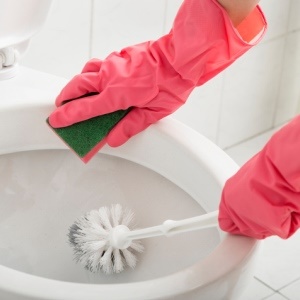
It’s a Saturday night and you’re out with friends when those last three drinks take their toll. A public bathroom is your only option – and so you do what needs to be done – squat daintily over the bowl and do your business as fast as possible.
After all, that’s as hygienic as you can get in a public bathroom, right? Ensure your skin doesn’t touch the bowl at all.
Not quite. It turns out that squatting might be the major contributor to dirty toilets in the first place.
Pee pressure
Squatting means employing exceptional control to avoid urinating all over the seat. And few of us are that perfectly controlled! This means that hovering runs the risk of spraying droplets of pee all over the seat, defeating the so-called hygienic value of squatting in the first place.
Trying to make sure you’re perfectly in control of your pee also means pressure on your pelvic muscles. As you hover, your hip rotators, back and abs tense up to keep your muscles in control, which makes the flow of urine difficult.
You may feel you have to “force” out the stream, which leads to messiness and discomfort. Even worse, this forcing style might mean you don’t fully empty out your bladder, which could lead to a bladder infection.
Sit pretty
So what should you do? You’ve always heard that toilet seats are crawling with every germ alive. The good news is that you’re very unlikely to pick a sexually transmitted infection from a toilet seat. Most disease-carrying and causing organisms don’t have long shelf lives, so it would take a lot of doing for germs to attach themselves to your skin, a cut or sore and cause a serious level of damage.
There are germs to worry about, however, like the common cold virus and hepatitis A virus which live in public spaces. But this is where hand-washing becomes vital. Hand-washing is one of the simplest and most thorough ways to banish bacteria.
Research also shows that in general, a person’s upper thighs are usually much cleaner than their hands, so it’s probably ickier to shake hands than sit on a toilet seat!
“Unless the seat is visibly soiled, it’s usually cleaner than most other things in the bathroom,” says Travis Stork, host of The Doctors
Actually, door handles and taps are the biggest germ-carrying culprits in public bathrooms. They’re both full of bacteria that can cause respiratory and diarrhoeal illnesses. So if you want to avoid getting ill, “the most effective thing you can do in the bathroom is wash your hands and avoid touching handles on the way out,” says Stock.
Your anti-squatting options:
Image credit: iStock

Rethink everything you know about fitness. With these revolutionary methods, you’ll be ripped and ready for anything.
For John Schaeffer, a former world champion powerlifter and kickboxer, fatigue isn’t just the result of exercise; it’s the goal.
And anyone who doubts his methods need only consider the accomplishments of the athletes he has trained, including eight-time Olympic medalist Apolo Ohno, world heavyweight boxer Alexander Zolkin and 2013 NFL rushing leader LeSean McCoy.
Learn his five training secrets to unlock your own potential and take your workouts to a whole new level.
1. The fuel rule: don’t be afraid of fat
“The thing that most radically improves athletes’ performance is proper nutrition,” says Schaeffer, who developed the recipe below to help clients push harder in workouts and recover faster afterwards.
“Most of the kilojoules come from high-quality fats, a more efficient source of energy than carbs,” he says. “Plus, your body is actually less likely to store fat as fat.”
Make cookies: Combine one cup raw oats, four tablespoons coconut oil, two tablespoons whey protein and one cup applesauce. That makes four servings (no baking). Eat one, wait an hour and hit the gym.
Read more: Make the perfect preworkout protein shake
2. The clock rule: brief workouts are the best
Muscle growth and fat loss are proportional to hours spent lifting, right? “They’re not,” says Schaeffer. He points to Ohno’s workouts leading up to the 2010 Olympics, which rarely lasted longer than 30 minutes. “But he did more in that time than most guys do in two hours,” Schaeffer says. “Workout density trumps duration because it forces you to keep the intensity high.”
Cut waste: Slice “fat” from your workouts – that is, socialising at the water fountain, chatting up the brunette on the treadmill and watching SuperSport highlights. Then give your rest periods the same attention you do sets and reps. “Keep them to 30 seconds or less,” says Schaeffer.
Read more: Do this 25-minute fat-burning workout anywhere, anytime
3. The brain rule: reaction speed can be trained
A brain that can process what it sees and respond quickly has an edge. “You can grab a steal, tip a pass or land a jump faster and more efficiently than your opponent,” says Schaeffer. The Journal of Strength and Conditioning Research reports that NBA players with faster reaction times log better stats. “It’s a game changer for athletes,” says Schaeffer. “But it can help regular guys do better in everyday tasks, from driving to kid watching.”
Hone your reflexes: Face a buddy from 10m away. Close your eyes and have him bounce a tennis ball to you, yelling “left” or “right”. When he does, open your eyes and catch it with that hand. Training solo? Use a wall.
Read more: Thrust your way to a stronger, faster and more injury-resistant body
4. The rest rule: pack in more work
No matter how hard you go in the gym, you can probably go harder. The reason: You set the weight down between sets. “Staying under load for the entire exercise and then immediately doing one set of a ballistic move – like explosive step-ups or push-ups – will recruit dormant motor neurons and condition your body to recover under stress,” says Schaeffer. “It will also trigger a surge of muscle-building hormones.”
Mix it up: Add Killer Combos to your fitness plan. “These can be very difficult, mentally and physically,” says Schaeffer. “So don’t just grind through them. Focus on good form.” If you feel your form slipping, use less weight.
Read more: Add this ultimate plyometric finisher onto your next workout for explosive gains
5. The finishing rule: if you end slow, you’ll be slow
Many guys think of strength and cardio as separate entities. But interval training can be beneficial at the end of a resistance workout. “Your body remembers and adapts to what it does last in a training session,” Schaeffer says. “If you end slow, you’ll be slow. That’s why my athletes finish their workouts with speed work.”
Hit the afterburners: When the last lift or rep is done, hop on a treadmill, rower or Airdyne bike for five to 10 intervals. “For each interval, sprint all out for 30 seconds and recover 30 seconds,” says Schaeffer. “But don’t dial it back too much during the recovery.”
This article was originally published on www.menshealth.com
Image credit: iStock

NEXT ON HEALTH24X

We know you love yoga – for your girlfriend. Her weekly practice makes her bendy in bed, more relaxed overall and therefore more sexy even when she’s lounging around.
Well, we’ve got news for you. Yoga isn’t a ladies-only thing like going to the bathroom in packs. In fact, taking one yoga class per week or doing a couple of pre-workout poses can increase endurance, build strength, prevent injuries and may even stave off heart disease.
How? “Men often suffer from tightness particularly in the hips, hamstrings and shoulders that can lead to injury or weakness,” says Baron Baptiste, creator of Baptiste Power Vinyasa Yoga and former assistant coach with the Philadelphia Eagles.
“Over-training in any one sport can cause repetitive stress and other more serious injuries. Yoga is a full-body workout that creates both strength and flexibility. You need to have both. One without the other is a recipe for disaster.”
Not sure where to start? Practise these 10 poses in this order, which Baptiste says benefit men because they stretch out guys’ tightest spots (like the shoulders, hips and groin) and strengthen muscles that get no love during workouts (like the low back and knees). In no time, you’ll be ready to take your first class.
Read more: These five ripped guys are proof that yoga is definitely for dudes
1. Forward fold
Stretches hamstrings, calves, and hips; strengthens legs and knees
Stand with feet hip-width apart, gently hinge forward at the hips and lower the torso toward the floor. Bend your knees generously to take any pressure out of the low back and hamstrings. Grab your ankles or grasp opposite elbows with opposite hands. Breathe deeply and let gravity take the body toward the earth. Relax your head, neck, shoulders and torso. Slowly sway your torso or gently shake your head. Hold for one minute and roll back up to standing.

Why it’s good for you:
This is a great move to use as part of a warm-up for any workout.
We often have a hard time knowing when we are holding excess tension in our head, neck and shoulders, and that buildup of tension can create headaches, insomnia, poor circulation and decreased lung capacity. If you practise slow, steady breathing along with this pose, it can lower your blood pressure over time.
2. Downward-facing dog
Stretches feet, shoulders, hamstrings, and calves; strengthens arms, legs and core
Start on your hands and knees with your feet and knees hip-width apart. Position your hands about shoulder-width apart and spread your fingers wide. Pressing firmly through your hands, lift your knees off the floor and straighten your legs. (If you have tight hamstrings, a gentle bend in the knees is fine). Walk your hands forward a few centimetres, and walk your feet back a few centimetres to lengthen the pose.
Squeeze your thighs as you press them toward the back wall. Press your heels back and down toward the floor (though they might not reach the floor). Relax your head and neck and let your shoulder blades slide down your back toward your feet. Set your gaze between your feet. Suck your stomach in and engage your core muscles. Breathe deeply. Hold for three minutes, rest, and repeat one more time.

Why it’s good for you:
We often experience back pain due to chronic tightness in the hamstrings and hips. It’s also common for us to have very tight shoulders. Downward-facing dog releases those areas, while building upper body strength. If you can do only one pose a day, start with downward-facing dog.
Read more: Yoga your way to a strong back
3. Chair
Stretches shoulders and chest; strengthens thighs, calves, spine and ankles
Stand up tall with your big toes touching. Inhale and raise your arms straight up to the ceiling alongside your head and neck with palms facing each other. Drop your shoulders down your back as you lengthen up through the neck.
As you exhale, bend your knees, sit down and back as if you were sitting in a chair (like doing a squat with your feet together). Do not let your knees extend past your toes. With each inhale lengthen the spine. With each exhale sit a little deeper in the chair.
Eventually your thighs will be parallel to the floor. Drop your tailbone down toward the floor to take any stress out of your lower back. Keep your core muscles engaged and keep your knees and thighs pressed tightly together. Hold for 30 seconds.

Why it’s good for you:
No gym necessary! Chair pose torches abdominal fat while strengthening the thighs and legs.
4. Crescent lunge
Loosens tight hips by stretching the groin; strengthens arms and legs
Start on your hands and knees. Step your right foot between your hands into a lunge, keeping your right knee directly above your heel. Inhale and slowly lift your back knee off the floor. Press your back heel toward the wall behind you as you begin to straighten the back leg. Keep your spine long as you hold and breathe.
Let your hips fall forward as you continue to press the back heel behind you. Hold for one minute and then repeat on the second side. Do each side twice.

Why it’s good for you:
Tight hips can cause lower back pain, knee strain and injury, which can keep you out of the game, out of the gym and in pain at your desk. Add crescent lunge to your pre-workout routine to open the hips.
Read more: The average guy’s guide to trying yoga for the first time
5. Warrior
Stretches shoulders and hips; strengthens upper and lower body
Come into crescent lunge with your right foot forward in the lunge. Spin your left toes to face the left side of the room and press your heel down. Your back foot should be parallel with the front of the room.
Inhale and reach your arms up alongside your head with your palms facing each other. Drop your shoulders down your back. Bring your torso up and off the front thigh. Don’t let your front knee extend past the toes. Both hips should face forward.
Hold for one minute. Repeat on the opposite side.

Why it’s good for you:
Warrior increases space and mobility in areas where men need it most – shoulders, hips and knees. It’s another pose that generates great stability in and around the knee, so increases stability for high-impact workouts.
6. Bridge
Stretches chest, neck, spine and hips
Lie on your back, bend your knees, and place your feet flat on the floor hip-width apart. You should be able to tickle the backs of your heels with your hands. Place your arms on the floor alongside your body, palms down and, as you inhale, lift your hips off the floor and press them to the ceiling. Keep your knees directly over your heels.
For an added shoulder stretch slide your arms under your body, interlace your fingers, and press the backs of your arms into the floor as you continue to lift your hips.
Hold for 45 seconds and with each breath, let your hips float a little higher. Exhale when you lower your hips. Repeat three times.

Why it’s good for you:
Many men are tight in the intercostal muscles and connective tissue surrounding the rib cage, which can limit lung capacity. Bridge pose opens the chest and releases those tight muscles, allowing for fuller, easier breaths. Over time, practising this pose can improve performance in all physical activities and is helpful for relieving upper respiratory issues.
Read more: A yoga pro will show you how to nail everything from the downward dog to the flopping fish
7. Half bow pose
Stretches hips, shoulders, and thighs; strengthens back
Lie on your stomach and reach your left arm back toward your left foot with the palm facing up. Stretch your right arm out in front of you and your right leg out behind you. Bend your left knee so that your heel comes in toward your buttocks. Inhale and grab the outside of your left ankle. Press your ankle into your hand and your hand into your ankle as you lift your thighs off the floor.
Breathe deeply and fully as you continue pressing your legs up and back. Hold for 30 seconds and switch sides. Repeat two or three times.
Try the full bow pose by grabbing both ankles.

Why it’s good for you:
One of the best stress-busting poses, bow opens the chest to allow you to take in more oxygen. Strong abs are great, but can lead to injury if you don’t strengthen the back, too. Bow pose takes care of this, reducing your risk of injury due to muscular imbalance.
8. Boat pose
Strengthens abs, spine, arms and hip flexors
Sit on the floor with your knees bent and feet on the floor in front of you. Place your hands behind your glutes and lean into the arms for support. Engage your core muscles and keep a perfectly straight spine as you lift your right leg and then the left, bringing them to a 45-degree angle with the floor.
Bring your legs together and imagine squeezing a book between your thighs to keep them active. Lift through the sternum and slowly straighten your legs while keeping your torso straight (if it starts to collapse, keep a slight bend in the knees). Press through the balls of the feet and spread your toes wide. Reach your arms toward the front of the room, on either side of your legs, keeping them in line with your shoulders, palms facing down.
Hold for 30 seconds, working up to a minute or longer.

Why it’s good for you:
In addition to strengthening the core and back muscles, boat promotes healthy thyroid and prostate gland function.
9. Hero pose
Stretches knees, ankles and thighs
Begin in a kneeling position with knees touching. Bring your heels out alongside your buttocks, keeping your shins and ankles pressing down into the floor. If you can, sit your buttocks on the floor between your legs. If this is uncomfortable, place a phone book or block beneath you to lessen the tension in the knees and ankles. You will feel a strong stretching sensation, but you should not feel pain.
This is a progressive pose and your body will adapt to it over time. Hold for one minute and keep your breath slow and deep. Rest, and repeat a second time.

Why it’s good for you:
Hero pose stabilies and strengthens the vulnerable knee joints while lubricating the connective tissues in and around the knee with blood, oxygen and fluid, making it an essential pose for runners.
Read more: 3 reasons yoga is awesome for guys
10. Reclining big toe
Stretches hips, thighs, hamstrings, groins and calves; strengthens the knees
Lie on your back and extend your left leg toward the ceiling at a 90-degree angle with your right leg extended along the floor. Flex both feet. Bend your left knee and bring the knee in toward your chest using your hands. Hug it tightly against your body to relax your hip.
Next, loop a strap around your left foot and slowly straighten the left leg back to 90 degrees. Press your right thigh firmly down against the floor. Hold for five breaths and repeat on the opposite side. Repeat twice on each side.

Why it’s good for you:
This pose stimulates the prostate gland and improves digestion. Runners may find it useful for relieving sciatica caused by a tight piriformis.
This article was originally published on www.mh.co.za
Image credit: iStock

NEXT ON HEALTH24X

Police have said they are “extremely concerned” about the baby’s mother’s welfare.
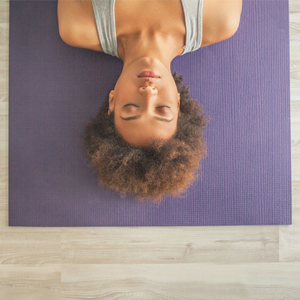
Ever heard of the wonderful things that happen to your body when you sleep on a hard surface? I have. I stumbled across a Women’s Health US article while browsing things for my Women’s Health SA guinea pigs to test – so you guys don’t have to.
But I feared the team would be scandalised, so I skimmed it and moved on to something tamer – like a million squats every day for 30 days…
Read more: These 7 night-time products do astounding things while you sleep
But then, through an accident caused by pure unadulterated laziness, I ended up testing the theory myself. I spent a night in a tent on a yoga mat. Because, honestly, it was holidays, I was camping and… beer. Plus: It was late and all we had was a whistley old foot pump. I’d blow up that damn mattress the next day.
The next day came – but I didn’t inflate the mattress. In fact, it didn’t get used for the entire seven days I was away. Here’s why.
Day 1: ‘Seriously – I woke up like this’
The next day, I woke up and I felt… different. In a couple of pretty significant ways. (And, no, it wasn’t just because I was in my happy “camping” place, as a colleague suggested. I’m like a 98-year-old getting off a water bed after a night on a blow-up mattress. Truth.)
First off, my eyes flew open at 05:00. I was awake. Not staring through soup, not incoherently swear-mumbling about turning 40, not reaching out a shaky hand for caffeine – I can be dramatic like that.
Then I stood up. And guys, get this: I just stood up. I felt nothing. Zero stiffness. No weird neck thing. No cajoling my spine back into position 17 times before brunch. I stood up and walk-cartwheeled to the ablution block.
Read more: Can ‘bedtime’ teas really help you fall asleep faster?
Where I spied myself in the mirror. I looked different too. Like, where’d the eye bags go? Seriously – where!? I stared myself down in that ablution block glass for a shamefully long time verifying this. Science – had to. People came and went, and still that face remained – quite frankly – pretty, for someone whose hair was screaming the opposite.
I felt younger. And (even better, blush) I looked younger. After one night on the ground. What the hell crazy voodoo was this?
Days 2-7: This is not a trick
I packed away the pump, gave my mattress the finger and hit the mat every night for the rest of my trip. And you know what? Nothing changed. In fact, it got better. I continued to rise with the birds and stare, wild-haired and lovingly, at myself in the ablution block mirror. I had more energy. I felt younger. Ten years younger – easy.
Obviously sleeping half a centimetre from the ground doesn’t feel as delicious as a bed, but you get used to it. And when I got back to my flat I was tempted to take the yoga mat up with me. But the queen-size went psst, and I figured I was ready for it. A treat. As I dissolved into the softness of sponge and five pillows, I smiled.
And then I woke up. Not smiling.
The spell was broken. I was tired, stiff, irritable. And… Eye bags!? An ou vrou again. How?
Beds bring bad things to backs, and other body parts
On my return to work – and the article I’d scanned and prematurely discarded – it started to make more sense. According to movement specialist Katy Bowman, who’s put out several books on pain relief and proper body alignment, there is something to be said for what I inadvertently did.
“We live an over-cushioned life,” Bowman says. “We sit in chairs at work, on couches in front of the TV and we sleep on thick mattresses at night.” All this cushiness, she argues, makes us soft.
Sleeping without a mattress, on the floor, as Bowman has done for years, has legit benefits. “You’ll sleep better, achieve a deeper quality of sleep and wake up feeling good,” she says. Really good.
What about ‘special‘ beds, you ask?
Those super-pricey, memory-foam mattresses are movement restrictors, Bowman says. “They lock you into one position. This prohibits the natural turning your body undergoes overnight. The aches and pains most people suffer after waking up are due to not moving for hours,” she says.
“By sleeping without a mattress, you’ll strengthen tiny muscles that build over time. You’re putting pressure on your body parts. It’s like a massage all night.” Bowman calls this “dynamic rest” and I call it the first “real” rest my body has had in a very long time.
If you don’t believe me, try it.
This article was originally pusblished on www.womenshealthsa.co.za
Image credit: iStock

A study finds men with low sperm counts are more likely to have health issues that put them at risk.
A study finds chemicals in lavender and tea tree oil appear to be hormone disruptors.
When you start to get physical with someone new, it’s only natural to wonder (read: stress over) if the sex is going to be good – for both parties involved.
But Match’s Singles in America survey should help you feel a little more relaxed about the whole thing.
They polled more than 5 500 single people from different age groups, ethnicities and incomes across the country and found 83% of singles (regardless of their sexual orientation) listed having a caring and enthusiastic partner as their top two indicators of good sex.
Read more: 6 mind-blowing ways to stimulate your clit
Obviously, being able to orgasm is also important, but it was ranked as slightly less important, as was being a good communicator and solid kisser. So you can ditch the stress of delivering mind-blowing orgasms or crazy moves – apparently people just want to have sex with a good person (imagine that!).
Of course, the survey covered the good and the bad. It found that there are certain things singles don’t like in bed, including too much talking, a lack of passion, little movement, being with a bad kisser and not saying “I love you” (when the relationship gets to that point, naturally).
To be fair, the majority of singles said that they think sex gets better after you do it a few times with someone, so you shouldn’t stress too much if the first time isn’t utterly amazing.
Read more: 11 thoughts every woman has while giving a blow job
As for one-night stands, 30% of men said it’s the best kind of sex, while just 15% of women said the same. But both 19% of men and women said that one-night stands are the worst kind of sex. Basically, they’re kind of a gamble.
Overall, men are three-times more likely to use a one-night stand to try to start a relationship. Not only that, millennials are 48% more likely to sleep with someone right away to see if there’s a connection.
Ultimately, sex should be something that you both enjoy. But it’s good to know that being caring and enthusiastic in bed are the top satisfiers.
This article was originally published on www.womenshealthmag.com
Image credit: iStock

NEXT ON HEALTH24X

Airborne soot produced by wildfires and fossil-fuel combustion and transported to the remote McMurdo Dry Valleys of Antarctica contains levels of black carbon too low to contribute significantly to the melting of local glaciers, according to a new study by researchers supported by the National Science Foundation (NSF).
Strong winds in the Dry Valleys, however, can temporarily cause large spikes in the amount of locally produced black carbon, which is distributed through the ecosystem, the researchers found.
In the study, the researchers differentiated between black carbon produced elsewhere in the world and carried by winds to the Dry Valleys and black carbon produced by local combustion sources, such as helicopter flights, combustion toilets and other fossil fuel-intensive activities associated with Dry Valleys field camps.
They conclude that further study of local carbon production and transport would help to understand the limited effects of local black carbon production on the Dry Valleys ecosystem, compared to the effects of windblown sediments, commonly deposited in the ablation regions of the glaciers, that have been shown to influence melt.
Alia Khan from the the University of Colorado Boulder’s Institute of Arctic and Alpine Research and the National Snow and Ice Data Center, along with her colleagues at the NSF-funded McMurdo Dry Valleys Long Term Ecological Research (LTER) project, published the paper in the Journal of Geophysical Research: Atmospheres.
The Dry Valleys are a unique ecosystem within the Antarctic continent. The continent as a whole is a landmass the size of the U.S. and Mexico combined, of which 98 percent is permanently covered with ice and snow. The Dry Valleys, by contrast, are ice-free, mountainous regions, interspersed with glaciers, where little snow accumulates because they are scoured by winds.
Samples taken from a snow pit in the accumulation region of the Commonwealth Glacier suggest the black carbon transported from beyond the continent is not sufficient to reduce the albedo — the glacier’s ability to reflect light — to a degree that would increase melting. Researchers took the samples during the 2013-2014 Antarctic research season.
“The black carbon deposited from long-range atmospheric transport in the snow accumulation regions of the glaciers is present in very low concentrations in the snow, too low to reduce the surface albedo of the glaciers,” Khan said.
The research showed that while concentrations of black carbon aerosols near the surface of the valley floor are low, locally produced black carbon may stay sequestered in the upper layers of soils near field camps until it is disturbed and distributed by high winds, including the so-called Foehn wind event, a warm southerly wind that occurred during the study period.
The results of the work indicate that the near-surface concentrations of black carbon in the air in the local area can increase by a factor of three during episodic wind storms.
“We were surprised by the sharp increase in concentrations at the field camp site during the strong winds, which suggests the locally produced black carbon particles, which are generally too large to travel very far, are re-suspended during these wind events,” Khan said.
Story Source:
Materials provided by National Science Foundation. Note: Content may be edited for style and length.

