Health24.com | Your pee can reveal your true age

A simple urine test can apparently reveal how old your body really is – showing its biological, not chronological age.

That information can then help determine your risk for age-related diseases and even death, a new study suggests.

Increasing oxidative damage

The urine test checks for a substance – called a marker – that indicates cellular damage from a process known as oxidation. The substance increases in urine as people get older.

“As we age, we suffer increasing oxidative damage, and so the levels of oxidative markers increase in our body,” explained study co-author Jian-Ping Cai, a researcher at the National Center of Gerontology at Beijing Hospital in China.

People’s bodies age at different rates, according to the researchers. That’s due to varying amounts of cellular damage associated with such factors as genetics, lifestyle and environment.

Real condition of our bodies

For this study, the researchers focused on an indicator of oxidation called 8-oxo-7,8-dihydroguanosine (8-oxoGsn). They measured levels of this marker in urine samples from more than 1 200 people in China, ages two to 90, and found age-related increases in the marker among those 21 and older.

“Therefore, urinary 8-oxoGsn is promising as a new marker of ageing,” Cai said in news release from the journal Frontiers in Aging Neuroscience. The study was published online in the journal.

“Urinary 8-oxoGsn may reflect the real condition of our bodies better than our chronological age, and may help us to predict the risk of age-related diseases,” Cai said.

According to a previous Health24 article, a device called the TruAge scanner can also determine your biological age by measuring Advanced Glycation End-products (AGEs). It measures the levels of AGEs in both the skin and blood to determine how much stress your body has undergone and your biological age as a result of that.

Image credit: iStock

Share Button

MPs warn of ‘poisonous air’ emergency costing £20bn a year

Petrol and diesel cars must be phased out earlier than the 2040 target, Commons committees say.

Share Button

Health24.com | 6 of the biggest health lies told by celebs

It’s hard to get away from celebs – they’re on our TVs, the covers of magazines and all over the internet. We tend to value their opinions, so when they come out with bizarre health claims, many people believe them.

Timothy Caulfield, the Canada Research Chair in Health Law and Policy, a professor at the University of Alberta and author of Is Gwyneth Paltrow Wrong About Everything?, believes that the intense pressure of fame encourages them to have unscientific beliefs.

He told RealClearScience, “Often their careers depend, to some degree, on appearance. This may make them more susceptible to pseudoscience suggestions in the realm of health and beauty. There may be a desire to try anything that might work. The same phenomenon plays out with professional athletes. Anything for an edge. [American football quarterback] Tom Brady is a great example of how this can play out. He seems to genuinely believe his science-free diet and exercise regimens work. He then becomes a powerful, attractive testimonial for pseudoscience. Look how he is playing at 40 years old! How can you argue with results? But it is just an anecdote, not real science.” 

Here are six of the most unscientific health claims from celebs – and the science of why you should not believe what they say.

1. Vaginal steaming

The claim: Gywneth Paltrow claims that steaming your vagina has a multitude of benefits. She says, “You sit on what is essentially a mini-throne, and a combination of infrared and mugwort steam cleanses your uterus, et al. It is an energetic release – not just a steam douche – that balances female hormone levels. If you’re in LA, you have to do it.”

A cloud of steam against black background

The science: For years, experts have been telling us that the vagina is self-cleaning. In fact, experts advise against douching because it disturbs the natural flora of the reproductive system, which can cause urinary tract infections or yeast infections.

In 2015, Dr Jen Gunter, a certified obstetrician and gynaecologist, responded to Paltrow’s claim in an article on her blog, “Steam is probably not good for your vagina. Herbal steam is no better and quite possibly worse. It is most definitely more expensive. Steam isn’t going to get into your uterus from your vagina unless you are using an attachment with some kind of pressure and most definitely never ever do that. Mugwort or wormwood or whatever when steamed, either vaginally or on the vulva, can’t possibly balance any reproductive hormones, regulate your menstrual cycle, treat depression, or cure infertility Even steamed oestrogen couldn’t do that.” 

Dr Mary Jane Minkin, clinical professor of ob-gyn at Yale School of Medicine, agrees. She told Women’s Health, “The hormone factory is in the ovaries, and there’s no reason why steam would affect the hormones produced there.”  

2. Cupping

The claim: In 2016, Olympic swimmer Michael Phelps shocked the world with bruises on his body caused by cupping. He believes that cupping helps with recovery time and painful muscles. Reuters reports him saying, “I have done it for a while but I haven’t had bad ones [marks] like this awhile though. That’s where I hurt the most [referring to the marks on his shoulder]. I have done it before pretty much every meet I go to. I just asked for a little cupping yesterday because I was sore.”     
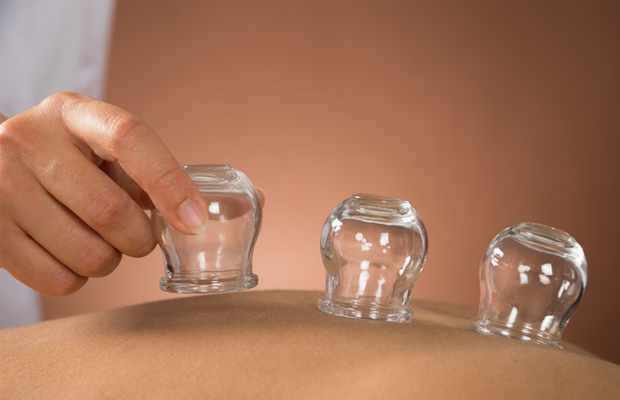
Person performing cupping

The science: Although athletes like Phelps are using cupping as a recovery tool, Dr Rachel Vreeman, director of research at the Indiana University Center for Global Health and co-author of a series of books on medical myths says there’s little research behind it.

She told Sports Illustrated, “There are no health benefits to cupping documented in the scientific literature. The only study I have seen… with any impact related to cupping is one that rigorously examined various therapies for back pain, and suggested that any impact from cupping was likely related to a placebo effect.” 

3. Psychiatry is quackery

The claim: Tom Cruise has publicised his disdain for psychiatry and the mental health profession in several interviews. He has even called psychiatrists drug dealers, “Here is the thing: you have to understand, with psychiatry, there is no science behind it. And to pretend that there is a science behind it is criminal.”

He also called actress Brooke Shields irresponsible for publishing a book, Down Came the Rain: My Journey Through Postpartum Depression, that highlights her battle with and treatment of postpartum depression. Cruise believes vitamins and exercise will treat depression.

Patient and therapist in a consult

The science: Ushma Neill responded to these claims in an article published on the Journal of Clinical Investigation, “I beg to differ and so does 50 years’ worth of  literature. While indeed other theories have been proffered to explain depression, the idea that chemical or genetic imbalances may underlie depression has been widely accepted.” 

According to the American Psychiatric Association, “Science has proven that mental illnesses are real medical conditions that affect millions of Americans. Over the past five years, the nation has more than doubled its investment in the study of the human brain and behaviour, leading to a vastly expanded understanding of postpartum depression, bipolar disorder, and attention-deficit/hyperactivity disorder. Much of this research has been conducted by the National Institutes of Health and the nation’s leading academic institutions. Safe and effective treatments are available and may include talk therapy, medication, or a combination of the two. Rigorous, published, peer-reviewed research clearly demonstrates that treatment works.” 

4. Increased oxygen intake

The claim: Simon Cowell claims he gets his “youthful glow” from taking regular shots of oxygen from a tank he carries around with him.

Close up of an oxygen mask

The science: According to researchers at the University of Texas Southwestern Medical Center at Dallas in a study published in the Journal of Cerebral Blood Flow and Metabolism, when baby mice were resuscitated with pure oxygen they suffered more brain damage and cerebral palsy than mice that breathed air during resuscitation.

Steven Kernie, developmental biologist and lead author of the study, said, “Our results are counterintuitive. Many think oxygen doesn’t hurt and you can give as much as possible to make up for a deficiency. Our study shows this notion is wrong.” 

Kay Mitchell, a scientist at the Centre for Altitude Space and Extreme Environment Medicine, says that high levels of oxygen can be toxic, especially in the lungs where oxygen levels are the highest.

5. Supplement your life

The claim: Katy Perry tweeted in 2013, “I’m all about that supplement and vitamin LYFE [sic]” along with a photograph of her holding up huge bags of pills.

Colourful pile of vitamins

The science: Timothy Caulfield, in his book Is Gwyneth Paltrow Wrong About Everything? reminds us that the supplement market is a billion-dollar industry. “It’s a huge part of the diet and fitness world.” However, there’s “very little evidence” supporting the notion that people who follow healthy diets should take daily supplements of any kind – never mind by the bagful like Perry claims to.

“No one [trustworthy] believes that taking mega doses of supplements is a good idea,” he says. “There is zero proof that mega doses improve health.” 

6. Anti-vaccinations

The claim: A number of celebs have publicly stated that vaccinations put children at risk for autism – Jenny McCarthy, Mayim Bialik and Alicia Silverstone are all on that list.

Person giving a vaccination

The science: According to Caulfield, “There’s a growing distrust because of all the traditional sources people are worried about big pharma and big food. There’s some justification of that. I think that growing distrust creates a space for people like Gwyneth.”

Autism Speaks, an organisation dedicated to advancing research into causes and better treatments for autism spectrum disorders, says researchers have conducted extensive studies over the last 20 years to find out if there is a link between childhood vaccinations and autism. And the results say no.

The American Academy of Pediatrics has compiled an article that lists studies (with links), which allows parents to read up on the evidence that shows there is no link between vaccinations and autism.  

Image credits: Andrea Raffin [CC BY-SA 3.0 (https://creativecommons.org/licenses/by-sa/3.0)], via Wikimedia Commons; iStock

NEXT ON HEALTH24X

Share Button

‘I was suicidal and the NHS didn’t know what to do’

At the age of 17 Sherry Denness tried to kill herself nine times in 10 days, and only then got the help she needed.

Share Button

Brain genes related to innovation revealed in birds

Wild birds that are more clever than others at foraging for food have different levels of a neurotransmitter receptor that has been linked with intelligence in humans, according to a study led by McGill University researchers. The findings could provide insight into the evolutionary mechanisms affecting cognitive traits in a range of animals.

The study, published in Science Advances, was conducted by McGill biologists Jean-Nicolas Audet and Louis Lefebvre, in collaboration with researchers from Duke and Harvard universities.

Barbados birds

The researchers caught bullfinches and black-faced grassquits near McGill’s Bellairs Research Institute in Barbados. Bullfinches are bold, opportunistic and innovative, while grassquits are shy and conservative. They are each other’s closest relative in Barbados and are cousins of Darwin’s finches from the Galápagos islands.

In captivity, the problem-solving skills of the two species differed considerably in lab tests. Most of the bullfinches quickly figured out how to lift the lid off a jar of food, for example, while all the grassquits were stumped by the challenge. These performances were in line with the differences in the birds’ innovativeness in the wild — a trait that can help animals survive in changing environments.

New tools for the study of wild behavior

The researchers then compared the expression of all genes in six parts of the brain of the two bird species using state-of-the-art molecular techniques, including next-generation sequencing — the first time these tools have been used to find brain properties related to innovation and problem-solving in wild birds.

A family of genes stood out: glutamate neurotransmitter receptors, especially in the part of the bird brain that corresponds to humans’ prefrontal cortex. Glutamate receptors are known to be involved in a variety of cognitive traits in humans and other mammals. In particular a receptor known as GRIN2B, when boosted in transgenic mice, makes them better learners. Levels of that receptor were higher in the Barbados bullfinch than in the grassquit, the researchers found.

“By comparing an extremely innovative species like the Barbados bullfinch with a closely related conservative one like the black-faced grassquit, we gain insight into the evolutionary mechanisms that can lead to divergence in behavior,” Audet says. “It might be that mammals, including humans, and birds like the Barbados bullfinch use similar mechanisms to perform cognitively. If our results are confirmed in future studies, it would be a unique demonstration of convergent evolution of intelligence, involving the same neurotransmitter receptors despite the widely different brain structures of birds and mammals.”

Story Source:

Materials provided by McGill University. Note: Content may be edited for style and length.

Share Button

Coral reef experiment shows: Acidification from carbon dioxide slows growth

Ocean acidification will severely impair coral reef growth before the end of the century if carbon dioxide emissions continue unchecked, according to new research on Australia’s Great Barrier Reef led by Carnegie’s Ken Caldeira and the California Academy of Sciences’ Rebecca Albright.

Their work, published in Nature, represents the first ocean acidification experiment in which seawater was made artificially acidic by the addition of carbon dioxide and then allowed to flow across a natural coral reef community. The acidity of the seawater was increased to reflect end-of-century projections if carbon dioxide from greenhouse gas emissions are not abated.

Two years ago, Caldeira and Albright, then at Carnegie, published a landmark study providing evidence that ocean acidification is already slowing coral reef growth.

In that work, they made a coral reef community’s seawater chemistry more alkaline — essentially giving the reef an antacid — and demonstrated that the coral’s ability to construct its architecture was improved under these conditions. It was the first time that seawater chemistry was experimentally manipulated in a natural coral reef environment.

They once again altered seawater chemistry of reef flats surrounding One Tree Island off the coast of Australia. But this time they gave the reef heartburn, increasing acidity by adding carbon dioxide to seawater flowing over a coral reef community.

“Last time, we made the seawater less acidic, like it was 100 years ago, and this time, we added carbon dioxide to the water to make it more acidic, like it could be 100 years from now,” Caldeira explained.

When coal, oil, or gas is burned, the resulting carbon dioxide is released into the atmosphere. It is well established that these emissions are the culprit of global climate change, the warming from which has a negative impact on coral reefs. But this atmospheric carbon is also absorbed into the ocean, where it remains for millennia.

A chemical reaction between the seawater and these soaked-up carbon emissions produces carbonic acid, which is corrosive to coral reefs, shellfish, and other marine life. Reefs are especially vulnerable to this ocean acidification, because their skeletons are constructed by accreting calcium carbonate, a process called calcification. As the surrounding water becomes more acidic, calcification becomes more difficult.

“Our findings provide strong evidence that ocean acidification caused by carbon dioxide emissions will severely slow coral reef growth in the future unless we make steep and rapid reductions in greenhouse gas emissions,” said first author Albright.

Furthermore, by working in controlled areas of a natural reef community, Caldeira, Albright, and their team were able to demonstrate how acidification affects coral reefs on the ecosystem scale, not just in terms of individual organisms or species, as other studies have done.

They say this approach is crucial to understanding the full scope and complexity of ocean acidification’s impact, as well as to predicting how acidification will affect the coastal communities that depend on these ecosystems.

“Coral reefs offer economic opportunities to their surrounding communities from fishing and tourism,” Caldeira said. “But for me the reef is a beautiful and diverse outpouring of life that we are harming with our carbon dioxide emissions. For the denizens of the reef, there’s not a moment to lose in building an energy system that doesn’t dump its waste into the sky or sea.”

Share Button

Existence of new form of electronic matter

Researchers have produced a “human scale” demonstration of a new phase of matter called quadrupole topological insulators that was recently predicted using theoretical physics. These are the first experimental findings to validate this theory.

The researchers report their findings in the journal Nature.

The team’s work with QTIs was born out of the decade-old understanding of the properties of a class of materials called topological insulators. “TIs are electrical insulators on the inside and conductors along their boundaries, and may hold great potential for helping build low-power, robust computers and devices, all defined at the atomic scale,” said mechanical science and engineering professor and senior investigator Gaurav Bahl.

The uncommon properties of TIs make them a special form of electronic matter. “Collections of electrons can form their own phases within materials. These can be familiar solid, liquid and gas phases like water, but they can also sometimes form more unusual phases like a TI,” said co-author and physics professor Taylor Hughes .

TIs typically exist in crystalline materials and other studies confirm TI phases present in naturally occurring crystals, but there are still many theoretical predictions that need to be confirmed, Hughes said.

One such prediction was the existence of a new type of TI having an electrical property known as a quadrupole moment. “Electrons are single particles that carry charge in a material,” said physics graduate student Wladimir Benalcazar. “We found that electrons in crystals can collectively arrange to give rise not only to charge dipole units — that is, pairings of positive and negative charges — but also high-order multipoles in which four or eight charges are brought together into a unit. The simplest member of these higher-order classes are quadrupoles in which two positive and two negative charges are coupled.”

It is not currently feasible to engineer a material atom by atom, let alone control the quadrupolar behavior of electrons. Instead, the team built a workable-scale analogue of a QTI using a material created from printed circuit boards. Each circuit board holds a square of four identical resonators — devices that absorb electromagnetic radiation at a specific frequency. The boards are arranged in a grid pattern to create the full crystal analogue.

“Each resonator behaves as an atom, and the connections between them behave as bonds between atoms,” said Kitt Peterson, the lead author and an electrical engineering graduate student. “We apply microwave radiation to the system and measure how much is absorbed by each resonator, which tells us about how electrons would behave in an analogous crystal. The more microwave radiation is absorbed by a resonator, the more likely it is to find an electron on the corresponding atom.”

The detail that makes this a QTI and not a TI is a result of the specifics of the connections between resonators, the researchers said.

“The edges of a QTI are not conductive like you would see in a typical TI,” Bahl said, “Instead only the corners are active, that is, the edges of the edges, and are analogous to the four localized point charges that would form what is known as a quadrupole moment. Exactly as Taylor and Wladimir predicted.”

“We measured how much microwave radiation each resonator within our QTI absorbed, confirming the resonant states in a precise frequency range and located precisely in the corners,” Peterson said. “This pointed to the existence of predicted protected states that would be filled by electrons to form four corner charges.”

Those corner charges of this new phase of electronic matter may be capable of storing data for communications and computing. “That may not seem realistic using our ‘human scale’ model,” Hughes said. “However, when we think of QTIs on the atomic scale, tremendous possibilities become apparent for devices that perform computation and information processing, possibly even at scales below that we can achieve today.”

The researchers said the agreement between experiment and prediction offered promise that scientists are beginning to understand the physics of QTIs well enough for practical use.

“As theoretical physicists, Wladimir and I could predict the existence of this new form of matter, but no material has been found to have these properties so far,” Hughes said. “Collaborating with engineers helped turn our prediction into reality.”

The National Science Foundation and U.S. Office of Naval Research supported this study.

Share Button

Health24.com | Rare brain condition forces 11-year-old girl to make heartbreaking decision

At just 11 years old, she had to decide whether to undergo a drastic operation which would leave the left half of her body paralyzed The Birmingham Mail reports.

Shania, from Telford in England, suffers from a rare disease called Rasmussen’s syndrome. Only 1.8 million people worldwide suffer from it.

The syndrome causes chronic inflammation in one half of the brain. That brain hemisphere then swells, leading to seizures. Shania has more than 30 seizures a day.

“Shania’s first seizure was in January 2016, just before her 10th birthday,” her mom, Tilly, said.

“I remember it like it was yesterday, it was so frightening. Up until then, she’d been a normal, healthy child. This came completely out of the blue.”

Because Rasmussen’s is so rare, it took 18 months before Shania was diagnosed, The Mirror reports.

Tough decision 

Doctors have told the family there is one way to treat it – but it will be one of the most difficult decisions they’ll ever make.

Shania’s parents had to decide between her continuing to get upwards of 30 seizures a day – which could eventually kill her – or doctors would isolate the right hemisphere of her brain. But that would mean the left half of her body would be completely paralyzed for the rest of her life.

She would be blind in her left eye and she wouldn’t be able to walk or use her left hand. But without the operation, her condition might only worsen.

“It was such a hard decision to make, but it had to be done,” Tilly says. “She [Shania] said she couldn’t do it.

“I wanted to help her and I couldn’t think what to do. We’re fighters and I wanted to show her she wasn’t on her own, and that she had lots of support. So I set up a Facebook page called Shania’s Rasmussen Fight.

“She received hundreds of messages of support – and even a letter from America. She saw all the messages, she said, ‘I couldn’t do it but now I will.’ ”

No more seizures 

Tilly knows her daughter loves Disneyland, so before the operation they took her on a care-free day trip to give her a last chance to just be a regular kid.

The operation was done on 21 February and was successful – Shania’s hasn’t had another seizure since. She’s undergoing intense physical therapy to learn to walk again, according to The Mirror.

“She can’t stand or walk on her own yet, she has to be hoisted up and out of bed,” Tilly says.

“They took away a piece of my brain and they’re testing it now because it’s a rare condition,” Shania says. “Hopefully, what they find will help other people with Rasmussen.”

Image credit: Facebook (@Shania’s Rasmussen fight)

NEXT ON HEALTH24X

Share Button

Hawking: Did he change views on disability?

“I think he’s done more than anyone else,” says a former student.

Share Button

Thousands more women with heavy periods to be offered test

A hysteroscopy examines the inside of the womb and improves diagnosis, health officials say.

Share Button