Health24.com | 9 things that drain your energy – and how to fix them

Tomorrow at the office, pitch up in something really original. Dress as a man who’s rested, refreshed and bursting with energy. Trust us – no one will ever recognise you. Ah, if only it was that simple. But it is…

Energy Drain 1: Alcohol

You might be paying penace for too much Pinot Noir – or you might just be suffering from something called sleep inertia. This grogginess and disorientation you experience upon waking – which is especially severe if your alarm has interrupted deep sleep – can be as crippling as intoxication according to a study in the Journal the American Medical Association.

That’s because your barely awake brain needs time to reboot and bring it’s signals back up to speed after sleep.

“It will probably take you 30 to 45 minutes to shake off the grogginess,” says John Caldwell, PhD, a psychologist who has researched fatigue for NASA and the US military. 

Fight It: Drink cold water

Chugging iced water and splashing it on your face can speed the transition from comatose to conscious.

“Cold triggers the stimulating hormone adrenaline,” says internist Dr Jacob Teitelbaum, the author of From Fatigued to Fantastic! This helps your heart pump stronger, boosting blood flow to your brain.

Another benefit: drinking water revives shrivelled cells after hours of sleep-induced dehydration, which is known to cause tiredness.

Read more: This is the best type of alcohol to drink if you’re trying to lose weight

Energy Drain 2: Stress

Your body responds to serious work and relationship stress the same way it would to a bear attack – by cranking out the fight-or-flight hormone cortisol.

“This raises energy levels initially, but your body can’t keep up with the cortisol demand,” says integrative physician Dr Alicia Stanton, the author of Hormone Harmony.

The effect: your cortisol plummets – and you tank just when you need to be on top of your game.
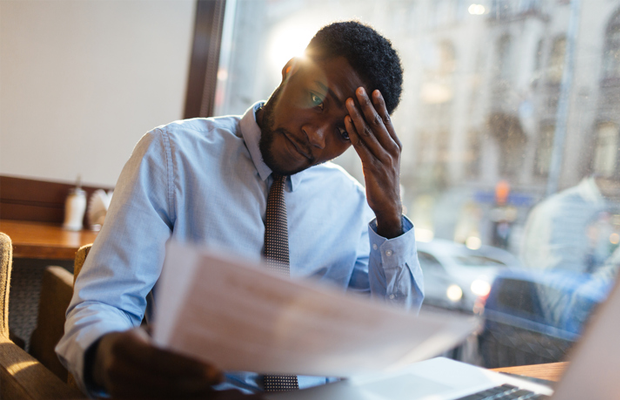
Man looks stressed

Fight It: Drink green tea

Don’t drain the office coffee machine. The megadose of caffeine will only leave you anxious and jittery, says nutritionist Dr Jonny Bowden, author of The 150 Most Effective Ways to Boost Your Energy.

Green tea, however, has just enough caffeine to boost production of the hormone adrenocorticotropin, which triggers the release of cortisol. It also contains EGCG, a flavonoid that promotes focus and calmness, Australian scientists say.

To achieve Don Draper smoothness, grab a glass about 90 minutes before you need it to kick in. “Green tea takes longer to hit than coffee does,” says Dr Bowden.

Energy Drain 3: Sleep

There’s a reason your eyelids feel like they have anvils on them. “Your body is not a machine,” says Dr Matthew Edlund, director of the Centre for Circadian Medicine in Florida and author of The Power of Rest. “It’s an organism that’s being continuously renewed and rebuilt.”

Much of this regeneration, including growth of new heart and brain cells, takes place during sleep. If you consistently log less than you need, your body becomes increasingly insistent that you pay off your sleep debt, says Caldwell. Add to that the monotony of staring at spreadsheets and the need for sleep becomes curl-up-under-your-desk urgent.
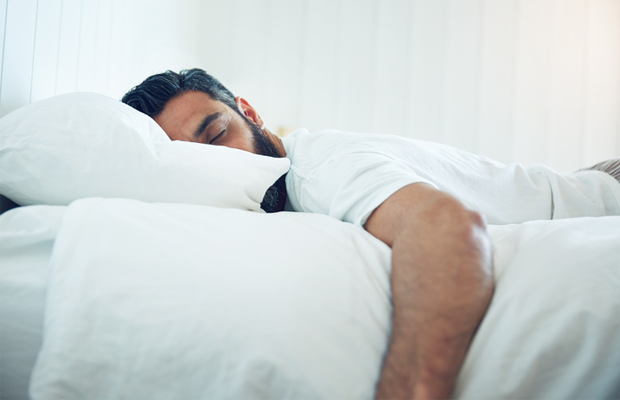
Man sleeping

Fight It: Take a BS break

Can’t catnap in your car? Go visit your office mate. In one of Caldwell’s NASA studies, sleep-deprived participants acted more alert after taking a seven-minute break to chat.

The simple act of ungluing your rear from your chair helps too: in a recent study from the Aeromedical Research Laboratory, fatigued folks performed better on an alertness test when they took it standing instead of sitting.

Read more: 3 tips to a better night’s sleep

Energy Drain 4: Breakfast

How was breakfast? “Your morning meal sets the stage for the way your blood sugar behaves the rest of the day,” says Dr Stanton. If you skip it entirely, you deprive your brain and muscles of energising glucose.

Or if you grab a refined-carbohydrate meal, like a muffin, you’ll experience a brief sugar spike but then inevitably crash. When insulin rushes in, it helps clear sugar, but it also sends a signal to your adrenal glands to stop producing cortisol properly, says endocrinologist Dr Eva Cwynar, author of The Fatigue Solution. This can trigger a wave of exhaustion known as “adrenal fatigue”.

Fight It: Munch on protein

Grab a snack with at least 10g of protein – like two hardboiled eggs – to produce a steady rise in blood sugar and energy levels, counteracting a post-carb crash.

“Protein causes a peptide called CCK to be released in your gut. It satiates you and stabilises your cortisol and insulin levels for hours,” says Dr Cwynar.

Even if you ate a solid breakfast, a shot of protein can still help you power through the morning.

Energy Drain 5: Brain

Your feeling of exhaustion may be all in your head. In a recent Welsh study, cyclists who felt mentally fatigued stopped pushing themselves sooner than those who felt refreshed did, even though both groups’ cardiovascular and muscular responses to exercise were the same.

Brain drain may increase activity in the anterior cingulate cortex, an area of your brain in which motivation, emotion and perception of physical effort converge, the researchers say.

Fight It: Cue up some music on your phone

Cranking LMFAO does more than just motivate you; it can also boost your exercise performance. “People listening to music can run about 15% longer,” Dr Edlund says.

The benefit extends beyond endurance: A recent study from California State University at Fullerton found that people who listened to tunes they liked performed squat jumps more quickly and forcefully. Use the Rhythm Runner (free for Android devices) to create a cardio mix of songs with tempos that range from 125 to 140 beats a minute. Then, when you lift, switch to a motivating playlist.
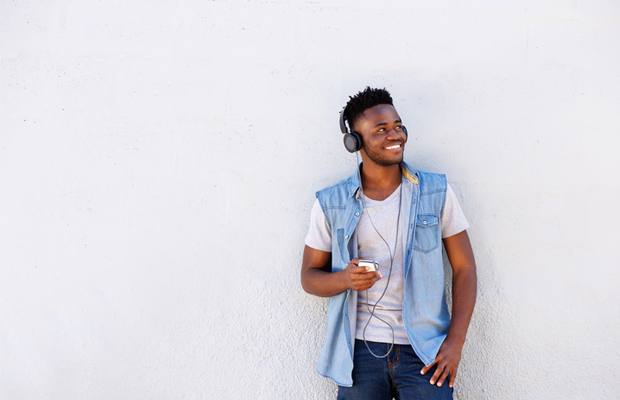
man listening to music


Read more: 
7 things you do in the morning that make you feel tired all day

Energy Drain 6: Afternoon

You were tearing through your to-do list before lunch, but now you can barely move your mouse. That’s because you’ve become mired in the circadian trough – also known as the afternoon slump – which typically strikes somewhere between 13:00 and 15:00.

“Your levels of cortisol (the get-up-and-go hormone) are high in the morning but then drop in the afternoon,” says Dr Bowden. Also at play are your levels of melatonin, the sleep hormone, which begin to rise around this time.

Fight It: Bask in the light

To stay out of the trough, join the blues brothers. In a 2011 Swiss study, men who parked themselves in the glow of bulbs that emitted blue light produced less sleep-inducing melatonin.

Purchase a compact fluorescent bulb – and install it in one of your desk lamps. Turn the lamp on around lunchtime, and leave it shining until 17:00. “This will stabilise your circadian rhythms and even improve your sleep later on,” says study author Dr Christian

Energy Drain 7: Coffee

Don’t stop at the coffee shop on your way to the bar. Combining alcohol and caffeine can increase risk-taking behaviour, possibly because the latter blunts the depressant effect of the former, according to a Cedars Sinai Medical Center review. Plus, the stimulating effect of caffeine may mask the feeling of being drunk. Mixing the two could reduce your ability to gauge your own intoxication, making you more likely to overdo it.

When the energising effects wear off, you’ll be sloshed and sleep deprived – a potentially lethal combination, says Dr Edlund.
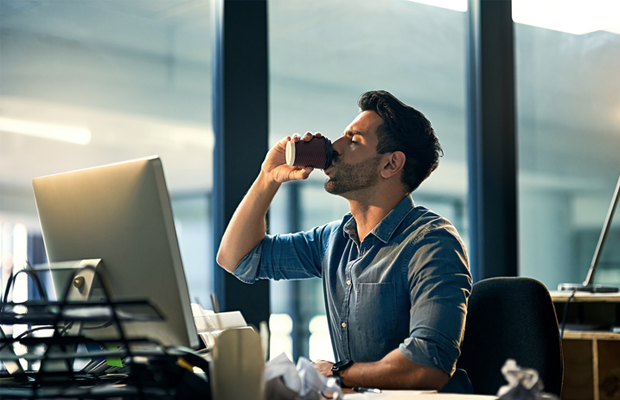
Man drinking coffee


Fight It: Take a power nap

Head, meet pillow. Just make sure you set your alarm: A 2011 study from Ireland showed that when you nap late in the day, you’re more likely to descend into slow-wave sleep, which if interrupted can bring on sleep inertia (see Energy Drain 1).

So limit your nap to 10 to 20 minutes. Recent Australian research found that this interval is brief enough to keep you out of the slow-wave zone while still allowing sufficient time for the sleep to work its magic.

Read more: Doing this in the afternoon will leave you more alert than a giant cup of coffee

Energy Drain 8: Cortisol

While you may think you’re a free man, you’re really a slave to your circadian rhythms. See, your body is going to command you to start winding down about an hour before your regular bedtime.

“You’re tired because your cortisol drops. It’s meant to be low so you can fall asleep and your brain can recover for the next day,” Dr Cwynar explains. This is an instance when you’re supposed to feel tired – which means you need a big-time boost.

Fight It: Chew gum

Caffeinated gum is what the US Army hands out to its combat soldiers, so it should be more than sufficient for your duties as wingman or to keep you on your toes for that meeting. For a boost that lasts three to four hours, says Caldwell, go with gum that has contains a fair amount of caffeine.

Gum is an even more efficient caffeine delivery system than coffee: “You release all the caffeine in about a minute,” Caldwell says. “It’s rapidly absorbed into your bloodstream through the blood vessels in your mouth and throat.”

Energy Drain 9: Testosterone

Your body is swimming in hormones – except it’s low tide for testosterone. Your T levels peak in the morning (the reason for your morning erection) and then significantly drop in the evening, says Dr Scott Isaacs, an Emory University endocrinologist.

This hormonal decline can cause your sex drive to take a nosedive, he says. What’s more, it can affect your overall stamina: “Testosterone is one of the most potent energy boosters men have,” notes Dr Cwynar.

Man looking unhappy sitting on bed


Read more: 
8 signs you have low testosterone levels

Fight It: Hit The gym

Lift iron to raise wood. “Men who work out regularly have higher testosterone and better performance in bed,” says Dr Isaacs. A higher baseline level of the hormone means the night time slump will be less pronounced – and less likely to impact your sex life.

Your T rises after just one workout, so exercise in the evening before a hot date. Keep it to about 30 minutes of weights or an hour of weights and cardio; going longer or doing only aerobic exercise may blunt your testosterone response, a 2012 study from Spain found.

This article was originally published on www.menshealth.com

Image credits: iStock

Share Button

Health24.com | 2 common dagga myths busted

Mention legalising medical marijuana (dagga), and people often think two things:

  • This will prompt teens to think marijuana use is OK, and more will start using it.
  • Legalising marijuana will reduce the number of adults overdosing on opioids (pain medication).

As it turns out, neither has proven to be true, according to new research.

Since medical marijuana first became legal in California in 1996, it’s been legalised across nearly three-fifths of the United States. However, that’s had virtually no impact on the rate of recreational marijuana use among teens, a broad review of published studies has found.

The results of both studies are published online in the journal Addiction.

In South Africa, a state legal team has brought the Western Cape High Court’s decision to legalise the private use of dagga to the Constitutional Court, in the hope of reversing it.

The State has asked the Constitutional Court to rule in favour of returning the case on the legality of dagga to the high court to be debated thoroughly. The Constitutional Court has however reserved judgement and says it will make a ruling soon.

Sending the wrong message

“Several years ago, before the group of papers we [analysed] started to be published, people thought that US medical marijuana laws would increase teen marijuana consumption by ‘sending the message’ to teens that marijuana was safe and acceptable to use,” explained Deborah Hasin – a professor of epidemiology at Columbia University’s College of Physicians and Surgeons in New York City, and the new study’s lead author.

Professor Hasin however said, “It doesn’t seem that teens were impacted much by this – perhaps because they didn’t find the legalisation of medical use very relevant to them or didn’t even know about the laws.”

Little chance of overdosing

The impact of marijuana legalisation also has been minimal on the risk for fatal overdosing among adult users of opioid pain medications, a separate study team has found.

American, Australian and British researchers found little to suggest that increased access to medical marijuana as an alternative way to manage chronic pain has led to any measurable drop in deaths from opioid abuse.

In fact, lead author Wayne Hall warned that research suggesting any substantive link between the two is “weak”. He is a professor with the Center for Youth Substance Abuse Research at the University of Queensland in Brisbane, Australia.

Professor Hall and his colleagues caution that “it is premature to recommend the expansion of access to medical dagga as a policy to reduce opioid overdose risks in the United States and Canada”.

Though the chances of overdosing on marijuana are low, the drug has been shown to have only a “modest” effect for pain control, according to the researchers.

“There are much better treatments [than marijuana] that have been shown to reduce [opioid] overdose deaths that are not currently being widely used in the USA,” Hall said. “Foremost among these is medication-assisted treatment, using methadone or buprenorphine.”

Marijuana does have some risks

Despite the findings of both research teams, legalising medical marijuana is not consequence-free, Professor Hasin said.

“Passing laws legalising marijuana use has some social benefits – business and tax revenues, job creation, and reduction in unfair race-based arrests,” she said.

“And while not every marijuana user experiences harms, using marijuana does have some risks, including withdrawal, addiction and increased chances of vehicle crashes,” Professor Hasin said.

Image credit: iStock

Share Button

Health24.com | 5 worst things you can do in the morning (before you leave your house)

If you’re like most guys, you have no time to spare before work. And yet, you still have plenty of opportunities to mess up your entire day.

Here are the five most common mistakes men make after they wake. Avoid these morning mishaps to start every day right.

1. Checking your work email as soon as you wake up

The flood of new messages can throw you into panic mode before you’ve even had the chance to wipe the gunk from your eyes.

“It sets your day off to a negative start,” says Susan Bartell, PsyD, a psychologist who specialises in work-life balance. “And if you’re responding to an email when you’re half awake, you’re more likely to make mistakes.”

So if you must log in before you reach your desk, pick a set time when you’re fully awake to do so: People who check their email at designated times report feeling less stressed than those who are exposed to a constant flow of new messages, a recent University of British Columbia study found.

Woman checks phone in bed

Read more: Why being a morning person makes you better than everyone else

2. Telling yourself you’ll hit the gym later

It might be obvious advice, but it’s worth repeating: Evening sweat sessions get derailed more often than morning ones do, says Jessica Matthews, MS, assistant professor of health and exercise science at Miramar College in California.

Things like extra-long meetings or spur-of-the-moment happy hours can all crop up over the course of the day and compete for your after-work time. And you might even be more tired after a stressful workday than you were at the sound of your alarm.

So make it a point to fit in what you can in the morning. If you’re running late and don’t have time to do your entire workout, just do part of it. Even a 10- or 15-minute sweat session can be worth doing. Plus, that doesn’t preclude you from working out later.

Read more: Morning or evening: What time you workout could impact your gains

3. Steaming up your shower

Sure, the pulse of hot water feels great on your tired body, but it might be lulling you back into La-La land. Heat tells your nervous system that it’s time for your muscles to relax and for your heart rate to slow down, so you start to feel calm and sleepy, says Jared Heathman, MD, a psychiatrist based in Cypress, Texas.

If you want to feel more awake, take a quick cold shower. It sucks a little bit, yes. But it’ll signal the release of the energising hormone adrenaline, Dr Heathman says. It might boost your mood, too, since research shows that cold showers can flood the body with feel-good endorphins.

Woman taking a shower

Read more: This guy took freezing cold showers every day for a week. here’s what happened

4. Having a carbfest for breakfast

That easy-to-grab morning bagel might torpedo your entire diet, even hours after you gobbled it down. Research suggests that if you pick empty carbs over protein-rich fare in the morning, you might be more likely to spring for junkier foods all day long.

Instead of chowing down on that stuff, aim to get at least 20g of muscle-building protein in your morning meal, roughly the amount in an omelette made with two whole eggs and two egg whites, says Men’s Health nutrition advisor Alan Aragon, MS. You’ll stay fuller for longer – which, over time, can help keep your fat loss goals on track, he says.

5. Brushing your teeth right after you eat

No one wants to walk into a morning meeting with dragon breath. But brushing up right after breakfast – especially if you’ve downed acidic stuff like fruit or coffee – can actually push sugars into the surface of your teeth and erode your enamel, says Michael Tischler, DDS, owner of Tischler Dental in Woodstock, New York.

So brush your teeth after you rise, but before you eat. And drink a glass of water right after your meal, which will help feel your mouth feel a little cleaner. Or if you can’t stand to skip brushing after breakfast, hold off for half an hour after you eat. In one study of people who drank an acidic beverage, those who waited 30 to 60 minutes before brushing lost significantly less tooth enamel compared to those who brushed within 20 minutes.

man brushing his teeth

This article was originally published on www.menshealth.com

Image credits: iStock

Share Button

Health24.com | ‘Grey’s Anatomy’ not like real ER

As much as you might love watching the popular TV drama Grey’s Anatomy, don’t mistake it for real medicine, researchers suggest.

If you do, your expectations may exceed reality if you ever find yourself in an emergency room.

Death rate three times higher on show

The researchers, led by Dr Jordan Weinberg, from the department of surgery at St. Joseph’s Hospital and Medical Center in Phoenix, compared the TV portrayal of treatment of 290 trauma patients in 269 episodes of the show with more than 48 000 actual patients treated for trauma in 2012.

While 71% of patients on the TV show went straight from emergency care to an operating room, that happened in only 25% of real-life cases. And only 6% of trauma survivors on the TV show were transferred to long-term care, compared with 22% of real-life patients.

Half of the seriously injured patients on the TV show spent less than a week in hospital, compared with 20% of real-life patients. And the death rate for trauma patients on the TV show was three times higher than in real life – 22% vs. 7%.

The study was published in the online journal Trauma Surgery & Acute Care Open.

“Although realism is an integral element to the success of a television drama set in a contemporary workplace, be it a hospital or police department, the requirements for dramatic effect demand a focus on the exceptional rather than the mundane,” the study authors wrote.

Divergence from reality

“Hence, American television medical dramas tend to rely on storylines that feature rare diseases, odd presentations of common diseases, fantastic and/or quirky injuries, and mass casualty events, all framed within a ‘realistic’ representation of a typical US hospital,” they noted.

[embedded content]

“The balancing act between the presentation of the realistic and the dramatic can actually result in a skewed perception of reality among television viewers,” the authors warned.

“Divergence of patient expectations from reality may, in fact, contribute to lower levels of satisfaction,” they said in a journal news release.

Image credit: Wikimedia Commons

Share Button

NHS homeopathy ending in London

The Royal London Hospital for Integrated Medicine will stop NHS homeopathy in April.

Share Button

Chinese takeaway can bust your salt allowance

Some takeaway dishes have half an adult’s recommended daily allowance in just one dish, an analysis finds.

Share Button

How to Avoid Technology-Related Stress

girl-on-tablet

Jamie Grill/Getty

We like to think our high-tech tools are helping us get more done faster, thanks to our 24/7 access to information and other people. And, yes, technology has considerable upsides: Staying in touch with far-flung loved ones is easier than ever, and "theres tremendous efficiency when it comes to work, like exchanging information and collaborating," says Gary Small, MD, a neuroscientist at UCLA and co-author of iBrain: Surviving the Technological Alteration of the Modern Mind.

But for many of us, a little too much of this good thing is actually causing a neurological phenomenon that psychiatrist Edward Hallowell, MD, author of Driven to Distraction, has called "attention deficit trait," marked by distractibility and impatience. "Were constantly scanning the environment for a new ring or buzz," Dr. Small says. "And theres something irresistible about an unopened message," Dr. Hallowell adds. "We want to keep opening them even though we know that were distracting ourselves, taking ourselves out of the moment, the conversation."

Thats because our brains crave newness and reward us with a feel-good squirt of the neurotransmitter dopamine every time our phone pings with a text or emails show up in our inbox. In a soon-to-be- published study from the University of Chicago, researchers found that people have a harder time resisting the tug of gadgets than any other desire, including the urge to eat, sleep, shop, and have sex.

As a result, instead of helping us multitask better, our phones, computers, texts, emails, and apps may keep us from accomplishing as much as we want to. "What people mean by multitasking is switching their attention back and forth from one task to the next," Dr. Hallowell explains. "And every time you do that, each task loses a little bit of your attention."

But you can organize your gadget usage so youre not overwhelmed by the never-ending emails and those incessant pings from your BlackBerry. Here are smart strategies for making your tech work in ways that keep your brain focused—and even more efficient.

Sidestep the time-suck
Need to get some work done, but finding it hard to resist the lure of Facebook? So-called "productivity tools" can stop you from surfing when you cant stop yourself. LeechBlock, a free add-on for Firefox, lets you block sites of your choosing during certain times of the day or after youve already wasted a set amount of time on them; Freedom, a $10 download for PC and Mac users, blocks your Internet access for up to eight hours. Even simpler: Set a timer for 25 minutes of focused work. When it goes off, you get five minutes to check Twitter or your favorite blog.

Manage your email better
Email has morphed into a continuous form of communication—more like a phone call than an electronic letter—and, says Dr. Hallowell, you have to set boundaries. "You cant think and email at the same time," he says. To make that stream of messages less intrusive, designate specific times when youll read whats in your inbox—say, every hour on the hour—instead of compulsively checking. To make this easier, change the settings on your email program so a pop-up doesnt alert you to each new message.

And if you read business email after work or on the weekend, avoid hitting "reply" if you dont have to, since the more messages you send out, the more you get back.


[ pagebreak ]De-tech your bedroom
Its tempting to cozy up with your Kindle Fire or iPad as you drift off to dreamland, but researchers say we should turn off TVs, laptops, and backlit tablets an hour before bed, since exposing yourself to light-emitting gadgets at night suppresses your bodys production of the sleep-inducing hormone melatonin.

That makes it harder to get your zzzs, leaving you less than sharp the next day. Same goes for people calling and texting you in the middle of the night. Ask your friends and family to resist contacting you after a certain hour unless its an emergency, silence your email and text alerts, and put the phone out

red-usb-cord

Liam Bailey/Getty

of arms reach—under the bed or upside-down on the dresser—so its not glowing in your face all night but you can still hear it if it rings. Checking your phone the minute your eyes open in the a.m. also sets a frazzled tone for the day, so try to resist reaching for it first thing.

Ease into gadget-free time
"People now pull out their BlackBerry instead of daydreaming or reading," Dr. Hallowell points out. "Theres little time where youre awake with yourself and thinking, pondering life." So try to cut back on tech—but note that "you will have ‘withdrawal," warns Marsha Lucas, PhD, a neuropsychologist in Washington, D.C. "Your nervous system has gotten reset to having a lot of stimulation, and you have to recalibrate so that less feels good again." Baby steps first: Try leaving the cell in the car while you hit the gym or the store, and then work up to running errands sans phone. It wont kill you to be inaccessible for an hour or two, and you may just accomplish those tasks faster without the constant pinging. If you get work calls and emails at night that you have trouble ignoring, create "free times" where you dont check them.

To avoid feeling like youre leaving correspondents in the lurch, set an out-of-office message: "I will be unreachable from 6–9 p.m." This way, youll get space to develop ideas you might never have had while buried in your computer.

At the very least, clear your head by getting outside for a few minutes, since research shows that being in nature is the most powerful antidote to the drain of technology. One study found that even having a plant at your desk increases attention so you can do better work.

Keep a quiet car
Staying off your phone while driving is a no-brainer: Studies show that texting and talking in the car—even hands free—could be as dangerous as driving drunk. But some tech actually helps us pay attention on the road, says University of Kansas psychologist Paul Atchley, PhD. Listening to a GPS system is safer than looking down at a map, and backseat DVD players keep kids from distracting you. Just program the GPS and start the DVD before you hit the road. Then enjoy the ride, free of rings and beeps (at least the kind inside your car).

Share Button

Stand Up for Your Health

kicking-green-chair

Sarah Kehoe

Are you sitting down? Perfect. Please take a moment to check in with your body. Is your rear kind of numb? Do the backs of your thighs feel smushed? Is your lower back all crunched? This is your body crying out for help! Really.

A wave of new research indicates that sitting all day is actively damaging your health. By forcing a body designed for movement to hold a crushingly immobile position, sitting strains muscles, slows your metabolism, increases your risk of heart disease, and even shortens your life span. "Sitting is a health hazard on the order of smoking," says Marc Hamilton, PhD, a microbiologist at the Pennington Biomedical Research Center.

I was once like you: I sat 10 to 11 hours a day. And then, in 2008, I was researching an article about newfangled chairs and learned that few of the designers actually sat on chairs because of the ill effects on their health. Tired of that glommed-up, dull feeling I got at my desk, I shoved my chair to the side and tried a standing desk. Over the next six months, I slowly rid my home of chairs. I couldn't believe how my body responded. My back pain disappeared, along with my poor posture. And 15 pounds nearly fell off my frame. Need more incentives? Here's why over-sitting must—and can—be stopped.

Sitting makes you fat
When you park your butt in a chair, your metabolism comes to a screeching halt. It's all because of an enzyme called lipoprotein lipase, which resides in the blood vessels of your muscles. "Lipoprotein lipase captures fat in the blood and incinerates it," says Hamilton. When you're standing, the postural muscles that support your weight, mostly in your legs, release the enzyme, which goes to work burning fat. But when you're sitting still, and not shifting every 30 to 90 seconds as the body does naturally, "the fat stays in the arteries, and can be stored in adipose tissue—also known as body fat," Hamilton explains.

A typical day of sitting lowers lipoprotein lipase activity by 90 to 95% (in animals), which is why when Hamilton takes blood samples of his human subjects while they're sitting and eating, the plasma—ideally clear—is white and chunky, filled with fat, the sign of a sluggish metabolism.

Worse yet, experts say that 60 to 90 minutes of daily exercise may not counteract the effects of sitting all day. In fact, Hamilton says, the biochemical reactions slowed by sitting are completely different from the ones that are activated by your daily workout. The biggest difference between thin and fat people is not how much they eat or exercise, but how much they sit, according to James Levine, MD, an obesity researcher at the Mayo Clinic.

In a now famed 2005 study, Dr. Levine placed mildly obese and lean participants with similar, fairly healthy diets in sensored "magic" underwear that recorded their body position every half second. The thin people spent a whopping 120 fewer minutes every day sitting, and the overweight people would have burned an average of 350 more calories if they'd engaged in as many non-exercise-related activities (i.e., puttering around). The take-home message: Sitting can have just as great an effect on your weight than eating or exercise, all because our metabolism engine is fueled by constant little movements.


[ pagebreak ]

standing-talking-cell

Sarah Kehoe

Sitting messes with your back
Your powerful abdominal, pelvic, and leg muscles evolved to do the work of supporting your 100-plus pounds of organs and bones. "But when you sit, you're placing most of your weight directly on the spine and pelvis instead," explains Andrew Hecht, MD, co-chief of spinal surgery at Mount Sinai Medical Center. You're also forcing the natural S-curve of your spine into a C-shape, which isn't strong enough to take the pressure. "Imagine resting a heavy weight on top of the letter S or C," says Galen Cranz, PhD, author of The Chair: Rethinking Culture, Body & Design. "Which is going to collapse more easily?"

Sitting shortens your life
How's this for a case against being on your bum? A long-term study published in the American Journal of Epidemiology in 2010 followed nearly 70,000 healthy women and their daily habits for 14 years. After adjusting for risk factors including body mass index and smoking, researchers found that women who spent six hours a day sitting had a 37% increased risk of dying versus those who spent less than three hours a day seated. Also, death rates from cardiovascular disease were 2.7 times higher in women who sat six or more hours a day, regardless of how much they exercised or weighed. Yes, sitting literally kills.


Share Button

5 Healing Effects of Lavender

Share Button

Extracellular vesicles could be personalized drug delivery vehicles

Creating enough nanovesicles to inexpensively serve as a drug delivery system may be as simple as putting the cells through a sieve, according to an international team of researchers who used mouse autologous — their own — immune cells to create large amounts of fillable nanovesicles to deliver drugs to tumors in mice.

Nanovesicles are tiny sacs released by cells that carry chemical messages between cells. These nanovesicles are natural delivery vehicle and useful in drug delivery for cancer treatment.

“Currently, natural nanovesicles can be harvested from cell culture supernatant (the fluid surrounding cultured cells) and they are fillable,” said Yuan Wan, postdoctoral fellow in biomedical engineering, Penn State. “However, there are two problems using them for cancer treatment. There aren’t enough nanovesicles produced in short timescales and they do not have targeting effect.”

The researchers developed an approach and platform to create large amounts of fillable and targeted nanovesicles. They report their results in a recent issue of Cancer Research.

To create targeted nanovesicles, ligands — perhaps short pieces of protein — need to be attached to the nanovesicle wall so they can recognize tumor cells. The process for making targeted nanovesicles now requires using viruses to insert relevant DNA fragments into the genome of the donor cells and then collecting ligand-bearing nanovesicles released from the gene-modified cells.

Yuan, working with Si-Yang Zheng, associated professor of biomedical engineering, developed a simpler and faster method for attaching ligands. The researchers chemically graft the lipid-tagged ligands onto the cell membrane. They do this before they pass the cells through a sieve, which converts the cell membranes into millions of vesicles bearing ligands that can be filled with an appropriate drug to target the cancer.

“Pushing the cells through a filter is the engineered way to produce lots of nanovesicles,” said Zheng.

The researchers used mouse autologous immune cells and created the ligand-targeted, fillable nanovesicles in the laboratory. They then infused these drug-loaded nanovesicles into the original mouse to treat tumors.

“This approach enables us to create nanovesicles with different ligands targeting different types of tumors in about 30 minutes to meet actual needs,” said Zheng. “With this approach, we also can put different types of ligands on a nanovesicle. We could have one ligand that targets while another ligand says, ‘don’t eat me.'”

Zheng is referring to the body’s propensity to clear materials that do not belong from the blood stream. If a nanovesicle has a ligand attached that suggests the vesicle is autologous, then the vesicle, and its drug payload, might remain in circulation longer, making it more successful in finding and killing the target cancer cells.

The researchers believe that a variety of other cells, including stem cells, T cells — cells of the immune system — and other cell types could be modified and used as donor cells for extrusion of nanovesicles.

Also working on the project at Penn State were Yiqiu Xia, graduate student in biomedical engineering, and Gong Cheng, former postdoctoral fellow in biomedical engineering.

Others working on this project include Chuandong Zhu, Qin Zheng, Jinlong Tong and Yuan Fang, Second Affiliated Hospital of Southeast University; Lixue Wang, Second Affiliated Hospital of Southeast University and Jiangsu Cancer Hospital & Jiangsu Institute of Cancer Research; and Xia He, Jiangsu Cancer Hospital & Jiangsu Institute of Cancer Research; all in Nanjing, China.

The Nanjing Science and Technology Development Foundation, Jiangsu Provincial Medical Youth Talent Award, Natural Science Foundation of Jiangsu Province and the U.S. National Institutes of Health supported this work.

Story Source:

Materials provided by Penn State. Original written by A’ndrea Elyse Messer. Note: Content may be edited for style and length.

Share Button