Health24.com | I had a vasectomy – this is what it’s really like

That V word strikes fear into men’s hearts and, more importantly, their balls.

The good news for you: I’m your test pilot. I’ve had the op (and survived with my balls and testosterone levels intact) and I’ve asked my urologist all the stupid questions so you don’t have to.

I decided to get a vasectomy for two reasons. Firstly, my wife and I have two kids, and we’re very happy for it to stay that way. Secondly, getting a vasectomy is a way safer and more effective option than any of the long-term contraceptive options available to my wife.

But it is a permanent procedure, so it’s important for you to be completely sure you don’t want any more children in the future.

The fear most guys have of getting a vasectomy stems from a number of different factors, the biggest being ignorance and fear of the unknown.

It’s also made worse by the fact that many of us have had to take our furry best friends to be neutered at the vet – the guilt there is a thing.

Men mistakenly think it will affect your sex god status, make you less of a man, and that the op is painful – all untrue.

I’m here to talk you through the experience, along with my urologist, Dr Luigi Aldera.

Here’s how a vasectomy works

“The testicles make sperm which are carried into the body via two small tubes to storage areas near the prostate gland,” explains Dr Aldera. “These tubes are divided during a vasectomy so that the sperm can no longer get through.”

The night before the op, you have to shave your scrotum and surrounding area to help prevent infection. My wife found that funny.

Read more: The most surprising side effect of a vasectomy

You also have to decide whether you want to be put under for the op (general anaesthetic) or to be awake (local anaesthetic, which completely numbs the operation area).

I chose the local option, so I was awake and aware the entire time. It was a little weird to hear what was happening during the operation (especially the actual snipping sounds), but there was no pain.

On the day of the op, I went into hospital at 08:00 on a Tuesday morning, the operation took roughly 40 minutes, and once I had peed out the residual anaesthetic, I drove myself home by lunchtime. I was surprised by how quickly it went, and I was back in the office the next day.

Here are some frequently asked questions, answered by Dr Aldera.

Will it affect my sex life?

No. “There is no affect on sex drive or ability,” says Dr Aldera. “Some men confuse sexual function with reproductive function. A vasectomy doesn’t affect your erections or the feeling and sensation in ejaculation. Your orgasm doesn’t change.”

In fact, some research shows that couples who aren’t worried about unwanted pregnancy are likely to hop into bed more often! This study showed that getting a vasectomy might give your sex life a huge boost.

Is it painful?

No. “The op is done under local or general anaesthetic, according to preference and it does not hurt. The area may ache slightly during the first evening, but Aspirin or Panado tablets will help. Men fear the procedure, and for a lot of guys, it’s their first visit to the hospital, theatre and surgery,” explains Dr Aldera.

“But you do need to appreciate it is an operation, therefore potential for discomfort and infection is always there.” You get one or two dissolving stitches (they take a week or so to break down) and a waterproof dressing (which comes off after three days).

“You shouldn’t do any strenuous activity for a week, but you can go to work the next day,” says Dr Aldera.

Will I still ejaculate when I orgasm?

Yes. Here’s a fact that many guys don’t know about their semen: only 2–5% of what you ejaculate is actually sperm. The rest of the fluid comes from your prostate, seminal vesicles and other parts. So the only difference to your semen after you have a vasectomy is that 2–5% of sperm.

“At the climax of the sex act, the ejaculated fluid is free of sperm and slightly clearer,” Dr Aldera says.

Does the op work straight away?

No! This is an important one. “Because there are storage areas for sperm inside the body (and sperm still in the tubes), it takes time for all the sperm to come out,” Dr Aldera. He recommends plenty of sex to get that sperm out, but using other forms contraception!

You should also wait four to five days after the op before having sex (and there’s no discomfort). To be safe, you need to have your semen tested three months after the op – if there’s no sperm, you are clear to stop the other forms of contraception.

Read more: This guy had a vasectomy… and then got his wife pregnant twice

Is it reversible?

For your sake, no. Don’t count on changing your mind. Make sure you are mentally prepared to not have any more kids. “In some cases, reversal can be attempted, or the sperm harvested for in-vitro fertilisation,” says Dr Aldera.

That’s because your balls are still producing sperm, but they can’t get out, and they dissolve away. However, the reversal is not something to count on as it’s a difficult op and in-vitro fertilisation is costly.

Is it failproof?

No. “The only 100% effective contraception is complete abstinence, but of all methods of contraception, vasectomy is the safest,” says Dr Aldera. “There are no hormonal side-effects and it’s a simple, uncomplicated procedure.”

Read more: 8 signs you have low testosterone levels

This article was originally published on www.mh.co.za

Image credit: iStock 

Share Button

Alfie Evans: Life support appeal outcome deferred

A request by the parents of seriously ill toddler Alfie Evans for an adjournment is refused.

Share Button

Health24.com | How this teen Stranger Things actor is dealing with a rare condition

In 2016, Gaten Matarazzo was launched into the spotlight by playing Dustin Henderson in the Netflix series Stranger Things, but what many people didn’t know was that both Matarazzo and his character have a rare disease called Cleidocranial Dysplasia (CCD).

Matarazzo openly speaks about his condition and is working worked towards raising awareness about CCD. He told People how rare the condition is – and since then he’s been receiving messages from people who also have the disease.

He added how thrilled he is about the feedback. “A lot of people messaged me saying things like, ‘You made me feel better about myself – that you can show that you have this condition on TV and embrace it.'”

What is CCD?

Cleidocranial Dysplasia (CCD) is the flawed development of skull bones, collar bones (clavicles), but may include dental complications and other defective skeletal development, according to the Genetic and Rare Diseases Information Centre.

Cleido is a medical prefix meaning “clavicle” and cranial means “of or relating to the skull or cranium”, while dysplasia refers to “abnormal growth or development”, according to the Merriam-Webster medical dictionary.

The National Craniofacial Association states that the condition is characterised by the poor or unusual development of certain bones in the skull, along with the flawed development or complete absence of collar bones (clavicles).

But it may also affect other parts of the body and their functionality – for example, women who have the condition may never be able to give birth naturally and may be forced to have a Caesarean section due to a narrow pelvis.

Males and females are equally affected by the condition; it isn’t gender specific.

CCD Cleidocranial dysplasia Gaten Matarazzo Strang

How does this happen?

The disorder is caused by a gene mutation on one of the chromosomes. The affected gene is responsible for commanding the production of a protein which plays an important part in teeth, bone and cartilage development, according to the National Library of Medicine.

It is usually inherited as an autosomal dominant genetic trait, which means the person has one copy of the mutant gene and one normal gene on a pair of autosomal chromosomes.

Autosomes are the chromosomes one to 22 and do not include the sex chromosomes, X or Y.

This also means that the person who has an autosomal dominant condition has a 50% chance of passing it on to their offspring.

Treating CCD

Like many rare diseases, CCD is embedded in the genes of the person who has it and the condition itself cannot be treated or cured.

Secondary conditions as a result of CCD need to be addressed. Matarazzo says he’s fortunate because he’s only needed a few dental operations.

He told The Doctors that his milk teeth did not fall out when they were supposed to and he has many more teeth than the average human.

The National Organisation for Rare Disorders states that headgear may be needed to protect the skull while the bones fuse together.

Like Matarazzo, those with CCD may have hyperdontia or supernumerary teeth, a condition where extra teeth grow anywhere in the mouth. This needs to be addressed by a dentist and possibly an orthodontist.

CCD Cleidocranial Dysplasia supernumerary teeth hy

Matarazzo has joined forces with the organisation CCD Smiles, which aims to help children with CCD receive the necessary treatment for their hyperdontia.

In the clip below he tells of how people with CCD can do “cool” things like move their shoulders much closer together than someone who doesn’t have the condition, but also speaks about how expensive dental treatment is.

Treatment is be extremely pricey if they need major surgery to remove extra teeth and straighten out the others – to help them smile with confidence.

Matarazzo also speaks about the team of craniofacial healthcare professionals he sees at the Children’s Hospital of Philadelphia and how he needs to wear “an appliance” with chains to pull his “adult teeth” down.

[embedded content]

Matarazzo says that he got the part on Stranger Things because of his condition and the fact that the creators of the show wrote his condition into the character of Dustin Henderson.

He also mentioned to Daily Mail that he told the directors about his condition when he went for the audition. They told him they liked the way it makes him unique.

Do you or someone you know have a rare condition? Share your story with us by emailing healthnews@health24.com and we may publish your story. Please indicate if you wish to remain anonymous.

Images: Main image: Gage Skidmore/WikiMedia Commons. X-ray: WikiMedia Commons/US National Library of Medicine. Video: CCD Smiles/YouTube

Share Button

Health24.com | SEE: The pros and cons of drinking coffee

The information on Health24 is for educational purposes only, and is not intended as medical advice, diagnosis or treatment. If you are experiencing symptoms or need health advice, please consult a healthcare professional. See additional information.

Share Button

Alfie Dingley: Home Office considers medical cannabis trial

The government says it wants to “explore every option” but “no decisions have been made”.

Share Button

Health24.com | Women are opting out of incontinence surgery for this scary reason

Incontinence sufferers (i.e., having leakage that occurs when you run, cough, sneeze or laugh) are dealing with fears way beyond Googling your nausea symptoms and concluding that you’re dying from Listeriosis.

In the case of incontinence or prolapse (where the pelvic organs begin to protrude from the vagina), patients who’ve booked surgery to fix the problem are opting out because of articles citing horrific side-effects of the surgery, including holes in the bladder or urethra, infection and severe bleeding.

Fear factor

“We are getting more and more women phoning our practice saying that they are afraid of surgery because of articles they have read on the internet,” says Jana Thiart, office manager for the Urogynaecology and Laparoscopy Clinic (ULC) in Cape Town.

“We even had one woman who phoned at 22:00 to cancel her surgery scheduled for the next morning because of an article her sister-in-law had read.”

Read this: What exactly is… incontinence?

The articles in question are related to lawsuits levelled against manufacturers of the transvaginal tape, a thin, woven plastic made of polypropylene that’s inserted around the pelvic organs to provide support for incontinence or prolapse. The manufacturers, most notably Johnson & Johnson, are under fire for creating mesh that have led to pain and complications in the surgery.

How the mesh works

“Tension–free Vaginal  Tape (TVT) was first used in Sweden in 1997,” said Dr Stephen Jeffery, who heads the Urogynaecology at UCT’s medical school. “It was widely recognised as being one of the most significant innovations of our time and has had a positive outcome for thousands of women.

“But patients need to understand that there are two very different mesh products. The sling [made from the same fabric] is very narrow and is a safe and effective treatment for many cases of incontinence. The product that was recalled by Johnson & Johnson is the Prolift, a much bigger and more invasive device.”

Read this: ‘I had a prolapsed bladder – here’s what it’s like to be incontinent’

Dr Paul Kruger, urogynaecology expert at ULC, says it’s a combination of factors creating a sense of fear for patients. Not only is the manufacturer a factor, but also the way the surgery is performed.

“When we talk about prolapse mesh, it’s a much larger piece of mesh that’s inserted. If it’s done through the vagina, you have a lot of complications,” he says. A safer option is insertion of the mesh via the abdomen.

Questions to ask if you’re doing incontinence surgery

If you’re undergoing surgery for prolapse or incontinence, it’s important to know how the surgery will be conducted. If you’re going for incontinence surgery, you’ll need to know about the different placements of the sling.

Retro-pubic slings are regarded as a safe method, says Dr Kruger. It involves the sling being inserted through a small cut in the vagina and exits just above the pubic bone. “It’s been on the market for 17 years and it has very low complication rates in terms of pain,” he says. There’s also the transobturator operation, which has a higher rate of pain, says Dr Kruger.

If you’re undergoing surgery for prolapse, find out where the mesh will be inserted. Vaginal insertions are associated with a higher rate of complications, while abdominal insertions are not. Then, make sure your doctor is well-versed in the operation and has performed it successfully before.

Check out Urogynaecology.co.za for more info, or visit IUGA (International Urogynaecogical Association) for tons of patient info.

This article was originally published on www.womenshealthsa.co.za

Image credit: iStock 

Share Button

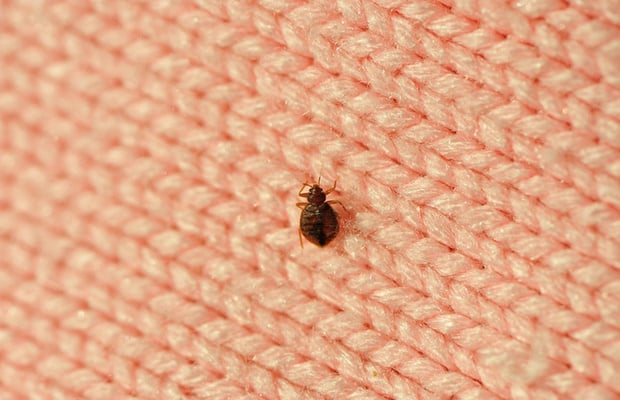
Health24.com | The dangers lurking in bedbug poo that can make you sick

Long after you’ve rid your home of unwelcome bedbugs, chemicals they leave behind in their droppings may continue to haunt you, a new study shows.

In people, the immune system releases histamines to protect the body. These chemicals help other immune system chemicals to repair damaged cells or fight off germs.

But histamines shed by bedbugs can cause rashes and trigger respiratory problems in humans, researchers from North Carolina State University found.

The findings were published online in the journal PLoS ONE.

High histamine levels

Bedbugs leave high levels of histamine in their droppings, the study authors explained. For these pests, histamines serve as a marker to help them congregate in places where they can find sleeping people or food.

“Histamine levels in bedbug-infested homes were at least 20 times higher than histamine levels in homes without bedbugs,” said study leader Zachary DeVries, a postdoctoral researcher at North Carolina State.

“And these levels didn’t decrease much three months after treating the infested homes with heat and insecticides,” DeVries added in a university news release.

What the study entailed

For the study, the scientists examined specific apartments in a complex located in Raleigh, North Carolina. They looked for signs of bedbugs and collected dust from both contaminated apartments and apartments with no evidence of infestation.

The investigators found the apartments with bedbugs had dust with much higher histamine levels than the dust from the apartments that didn’t have bedbugs.

After monitoring histamine levels over time, the apartments treated professionally for bedbug infestation still had persistently high histamine levels three months later.

bedbug

Ways to control histamine levels

The researchers plan to continue to explore the best ways to lower bedbug histamine levels.

“A combination of heat treatment to eradicate bedbugs and rigorous cleaning to eliminate some of the household dust could be a way to reduce these histamine levels; we’ll do future testing to bear that out,” DeVries said.

“We’ll also further investigate the effects of histamine in an indoor environment, including chronic exposure to histamine at low levels,” he added.

Rid your room of bedbugs

A previous article on Health24 gives the following tips on how to prevent bedbugs.

  • If you purchase second-hand clothing, keep it sealed in a plastic bag until you wash it in hot water. Then put it in the dryer at high heat.
  • If you acquire used furniture, paint or seal it before using it. The bugs are tiny enough to hide in screw holes.
  • If you discover bedbugs in your home, spray insecticide and vacuum bedding and furniture thoroughly and place the vacuum bag outside in the trash. Keep doing this daily and “check for tiny brown bugs or pieces that may be part of the bug,” he advised.
  • When you travel, check the mattress. “If you see tiny brown specks, move yourself and your clothing and luggage out immediately,” he stated. Inform the hotel manager or your hosts.
  • If you are bitten by bedbugs, wash the area with soap and water and dry thoroughly. Apply anti-itch cream to prevent irritation and limit scratching. See a doctor if a bite becomes warm to the touch, swells or hurts.

Image credit: iStock 

Share Button

Fish oil supplements in pregnancy ‘may reduce allergies’

The research adds to evidence that diet in pregnancy can have an impact on a child’s allergies.

Share Button

Brain mechanisms that give The Iceman unusual resistance to cold

Dutch adventurer Wim Hof is known as “The Iceman” for good reason. Hof established several world records for prolonged resistance to cold exposure, an ability he attributes to a self-developed set of techniques of breathing and meditation — known as the Wim Hof Method — that have been covered by the BBC, CNN, National Geographic and other global media outlets. Yet, how his brain responds during cold exposure and what brain mechanisms may endow him with this resistance have not been studied — until now.

Wayne State University School of Medicine professors Otto Muzik, Ph.D., and Vaibhav Diwadkar, Ph.D., changed that. Their publication, “Brain Over Body: A study on the willful regulation of autonomic function during cold exposure,” published in the journal NeuroImage, is the first to study how The Iceman’s brain responds during experimentally controlled whole-body cold exposure. These investigations are part of the scientists’ series of seminal studies launched in 2014 on how the human brain responds to thermoregulatory challenges. The results document compelling brain processes in The Iceman and present intriguing possibilities for how his techniques might exert positive effects related to disorders of the immune system and even psychiatry.

Over three days, Muzik and Diwadkar studied Hof’s brain and body functions using two distinct imaging techniques — including functional magnetic resonance imaging (fMRI) to study his brain and positron emission tomography (PET) to study his body. During the studies, Hof wore a specifically designed whole-body suit the researchers could infuse with temperature-controlled water while the imaging data were acquired in order to relate changes in his biology to cold exposure.

The Iceman’s results when compared to a group of healthy comparison participants were startling.

Practice of the Wim Hof Method made Hof’s skin temperature relatively invariant to cold exposure, a finding the researchers attributed to his increased sympathetic innervation and glucose consumption in intercostal muscle revealed by PET imaging. The method appeared to allow him to generate heat that dissipates to lung tissue and warms circulating blood in the pulmonary capillaries.

“The willful regulation of skin temperature — and, by implication, core body temperature, even when the body is being stressed with cold — is an unusual occurrence and may explain his resistance to frostbite,” said Muzik, professor of pediatrics, of neurology and of radiology.

“From our previous studies, we expected The Iceman to show significant brain activations in a region known as the anterior insula, where the brain’s higher thermoregulatory centers are located. However, we observed more substantial differences in an area called periaqueductal gray matter, located in the upper brainstem. This area is associated with brain mechanisms for the control of sensory pain and is thought to implement this control through the release of opioids and cannabinoids,” Muzik added.

These last set of results are striking — not only for what they reveal about The Iceman, but even more so for the implications of the relevance of the Wim Hof Method for behavioral and physical health. The researchers hypothesize that by generating a stress-induced analgesic response in periaqueductal gray matter, the Wim Hof Method may promote the spontaneous release of opioids and cannabinoids in the brain. This effect has the potential to create a feeling of well-being, mood control and reduced anxiety.

“The practice of the Wim Hof Method may lead to tonic changes in autonomous brain mechanisms, a speculation that has implications for managing medical conditions ranging from diseases of the immune system to more intriguingly psychiatric conditions such as mood and anxiety disorders,” said Diwadkar, professor of psychiatry and behavioral neurosciences. “We are in the process of implementing interventional studies that will evaluate these questions using behavioral and biological assessments. These possibilities are too intriguing to ignore.”

“It is not mysterious to imagine that what we practice can change our physiology. The goal of our research is to ascertain the mechanisms underlying these changes using objective and scientific analyses, and to evaluate their relevance for medicine,” Muzik added.

Share Button

The fine-tuning of two-dimensional materials

A new understanding of why synthetic 2-D materials often perform orders of magnitude worse than predicted was reached by teams of researchers led by Penn State. They searched for ways to improve these materials’ performance in future electronics, photonics, and memory storage applications.

Two-dimensional materials are films only an atom or two thick. Researchers make 2-D materials by the exfoliation method — peeling a slice of material off a larger bulk material — or by condensing a gas precursor onto a substrate. The former method provides higher quality materials, but is not useful for making devices. The second method is well established in industrial applications, but yields low performance 2-D films.

The researchers demonstrated, for the first time, why the quality of 2-D materials grown by the chemical vapor deposition method have poor performance compared to their theoretical predictions. They report their results in a recent issue of Scientific Reports.

“We grew molybdenum disulfide, a very promising 2-D material, on a sapphire substrate,” said Kehao Zhang, a doctoral candidate of Joshua Robinson, associate professor of materials science and engineering, Penn State. “Sapphire itself is aluminum oxide. When the aluminum is the top layer of the substrate, it likes to give up its electrons to the film. This heavy negative doping — electrons have negative charge — limits both the intensity and carrier lifetime for photoluminescence, two important properties for all optoelectronic applications, such as photovoltaics and photosensors.”

Once they determined that the aluminum was giving up electrons to the film, they used a sapphire substrate that was cut in such a way as to expose the oxygen rather than the aluminum on the surface. This enhanced the photoluminescence intensity and the carrier lifetime by 100 times.

In related work, a second team of researchers led by the same Penn State group used doping engineering that substitutes foreign atoms into the crystal lattice of the film in order to change or improve the properties of the material. They reported their work this week in Advanced Functional Materials.

“People have tried substitution doping before, but because the interaction of the sapphire substrate screened the effects of the doping, they couldn’t deconvolute the impact of the doping,” said Zhang, who was also the lead author on the second paper.

Using the oxygen-terminated substrate surface from the first paper, the team removed the screening effect from the substrate and doped the molybdenum disulfide 2-D film with rhenium atoms.

“We deconvoluted the rhenium doping effects on the material,” said Zhang. “With this substrate we can go as high as 1 atomic percent, the highest doping concentration ever reported. An unexpected benefit is that doping the rhenium into the lattice passivates 25 percent of the sulfur vacancies, and sulfur vacancies are a long-standing problem with 2-D materials.”

The doping solves two problems: It makes the material more conductive for applications like transistors and sensors, and at the same time improves the quality of the materials by passivating the defects called sulfur vacancies. The team predicts that higher rhenium doping could completely eliminate the effects of sulfur vacancies.

“The goal of my entire work is to push this material to technologically relevant levels, which means making it industrially applicable,” Zhang said.

Story Source:

Materials provided by Penn State. Original written by Walt Mills. Note: Content may be edited for style and length.

Share Button