Common heart drug taken by millions found useless, possibly risky

Beta blockers—drugs commonly prescribed for a range of cardiac conditions, including heart attacks—provide no clinical benefit for patients who have had an uncomplicated myocardial infarction with preserved heart function. Beta blockers have been the standard treatment for these patients for 40 years.

This is a breakthrough discovery from the “REBOOT Trial” with senior investigator Valentin Fuster, MD, PhD, President of Mount Sinai Fuster Heart Hospital and General Director of Spain’s Centro Nacional de Investigaciones Cardiovasculares (CNIC). The study results, which could overturn a standard treatment paradigm, were presented on Saturday, August 30, during a “Hot Line” session at the European Society of Cardiology Congress in Madrid, and simultaneously published in The New England Journal of Medicine.

Additionally, a REBOOT substudy, published on August 30 in the European Heart Journal, shows that women treated with beta blockers had a higher risk of death, heart attack, or hospitalization for heart failure compared to women not receiving the drug. Men did not have this increased risk.

“This trial will reshape all international clinical guidelines. It joins other previous landmark trials led by CNIC and Mount Sinai—such as SECURE with the polypill and DapaTAVI, with SLT2 inhibition associated to TAVI—that have already transformed some global approaches to cardiovascular disease,” says Dr. Fuster.

The SECURE trial showed a polypill, a single pill that that combines three medications – which contains aspirin, ramipril, and atorvastatin – reduces cardiovascular events by 33 percent in patients treated with this after a heart attack. The DapaTAVI trial showed both dapagliflozin and the related medication empagliflozin – drugs used to treat diabetes- improves the prognosis of patients with aortic stenosis treated by transcatheter aortic valve implantation.

“REBOOT will change clinical practice worldwide,” says Principal Investigator Borja Ibáñez, MD, CNIC’s Scientific Director, who presented the results. “Currently, more than 80 percent of patients with uncomplicated myocardial infarction are discharged on beta blockers. The REBOOT findings represent one of the most significant advances in heart attack treatment in decades.”

Although generally considered safe, beta blockers can cause side effects such as fatigue, bradycardia (low heart rate), and sexual dysfunction. For more than 40 years, beta blockers have been prescribed as a standard treatment after a heart attack, but their benefit in the context of modern treatments was unproven. The REBOOT trial, is the largest clinical trial on this subject. The international study was coordinated by CNIC in collaboration with the Mario Negri Institute for Pharmacological Research in Milan.

Researchers enrolled 8,505 patients across 109 hospitals in Spain and Italy. Participants were randomly assigned to receive or not receive beta blockers after hospital discharge. All patients otherwise received the current standard of care and were followed for a median of nearly four years. The results showed no significant differences between the two groups in rates of death, recurrent heart attack, or hospitalization for heart failure.

A REBOOT subgroup analysis found that women treated with beta blockers experienced more adverse events. Results show women treated with beta-blockers had a 2.7 percent higher absolute risk of mortality compared to those not treated with beta-blockers during the 3.7 years of follow-up of the study. The elevated risk when treated with beta-blockers was restricted to women with a complete normal cardiac function after a heart attack (left ventricular ejection fraction of 50 percent or higher). Those with a mild deterioration in cardiac function did not have an excess risk of adverse outcomes when treated with beta-blockers.

“After a heart attack, patients are typically prescribed multiple medications, which can make adherence difficult,” explains Dr. Ibáñez. “Beta blockers were added to standard treatment early on because they significantly reduced mortality at the time. Their benefits were linked to reduced cardiac oxygen demand and arrhythmia prevention. But therapies have evolved. Today, occluded coronary arteries are reopened rapidly and systematically, drastically lowering the risk of serious complications such as arrhythmias. In this new context—where the extent of heart damage is smaller—the need for beta blockers is unclear. While we often test new drugs, it’s much less common to rigorously question the continued need for older treatments.”

That was the motivation behind REBOOT.

“The trial was designed to optimize heart attack care based on solid scientific evidence and without commercial interests. These results will help streamline treatment, reduce side effects, and improve quality of life for thousands of patients every year,” Dr. Ibanez adds.

REBOOT was conducted without pharmaceutical industry funding.

Share Button

Vaccination plea after baby’s ‘terrifying’ measles

Eight areas in the North East and Cumbria have seen a slight or moderate increase in MMR jab rates.

Share Button

The trade in US body parts that’s completely legal – but ripe for exploitation

Human remains can mean profits. But there is an emotional debate about the ethics of the industry.

Share Button

AI stethoscope could detect major heart conditions in seconds

The new technology could be a “game-changer” resulting in patients being treated sooner, experts say.

Share Button

New AI model predicts which genetic mutations truly drive disease

When genetic testing reveals a rare DNA mutation, doctors and patients are frequently left in the dark about what it actually means. Now, researchers at the Icahn School of Medicine at Mount Sinai have developed a powerful new way to determine whether a patient with a mutation is likely to actually develop disease, a concept known in genetics as penetrance.

The team set out to solve this problem using artificial intelligence (AI) and routine lab tests like cholesterol, blood counts, and kidney function. Details of the findings were reported in the August 28 online issue of Science. Their new method combines machine learning with electronic health records to offer a more accurate, data-driven view of genetic risk.

Traditional genetic studies often rely on a simple yes/no diagnosis to classify patients. But many diseases, like high blood pressure, diabetes, or cancer, don’t fit neatly into binary categories. The Mount Sinai researchers trained AI models to quantify disease on a spectrum, offering more nuanced insight into how disease risk plays out in real life.

“We wanted to move beyond black-and-white answers that often leave patients and providers uncertain about what a genetic test result actually means,” says Ron Do, PhD, senior study author and the Charles Bronfman Professor in Personalized Medicine at the Icahn School of Medicine at Mount Sinai. “By using artificial intelligence and real-world lab data, such as cholesterol levels or blood counts that are already part of most medical records, we can now better estimate how likely disease will develop in an individual with a specific genetic variant. It’s a much more nuanced, scalable, and accessible way to support precision medicine, especially when dealing with rare or ambiguous findings.”

Using more than 1 million electronic health records, the researchers built AI models for 10 common diseases. They then applied these models to people known to have rare genetic variants, generating a score between 0 and 1 that reflects the likelihood of developing the disease.

A higher score, closer to 1, suggests a variant may be more likely to contribute to disease, while a lower score indicates minimal or no risk. The team calculated “ML penetrance” scores for more than 1,600 genetic variants.

Some of the results were surprising, say the investigators. Variants previously labeled as “uncertain” showed clear disease signals, while others thought to cause disease had little effect in real-world data.

“While our AI model is not meant to replace clinical judgment, it can potentially serve as an important guide, especially when test results are unclear. Doctors could in the future use the ML penetrance score to decide whether patients should receive earlier screenings or take preventive steps, or to avoid unnecessary worry or intervention if the variant is low-risk,” says lead study author Iain S. Forrest, MD, PhD, in the lab of Dr. Do at the Icahn School of Medicine at Mount Sinai. “If a patient has a rare variant associated with Lynch syndrome, for instance, and it scores high, that could trigger earlier cancer screening, but if the risk appears low, jumping to conclusions or overtreatment might be avoided.”

The team is now working to expand the model to include more diseases, a wider range of genetic changes, and more diverse populations. They also plan to track how well these predictions hold up over time, whether people with high-risk variants actually go on to develop disease, and whether early action can make a difference.

Ultimately, our study points to a potential future where AI and routine clinical data work hand in hand to provide more personalized, actionable insights for patients and families navigating genetic test results,” says Dr. Do. “Our hope is that this becomes a scalable way to support better decisions, clearer communication, and more confidence in what genetic information really means.”

The paper is titled “Machine learning-based penetrance of genetic variants.”

The study’s authors, as listed in the journal, are Iain S. Forrest, Ha My T. Vy, Ghislain Rocheleau, Daniel M. Jordan, Ben O. Petrazzini, Girish N. Nadkarni, Judy H. Cho, Mythily Ganapathi, Kuan-Lin Huang, Wendy K. Chung, and Ron Do.

This work was supported in part by the following grants: National Institute of General Medical Sciences of the National Institutes of Health (NIH) (T32-GM007280); the National Institute of General Medical Sciences of the NIH (R35-GM124836); the National Institute of Diabetes and Digestive and Kidney Diseases (U24-DK062429); the National Human Genome Research Institute of the NIH (R01-HG010365); the National Institute of General Medical Sciences of the NIH (R35-GM138113); and the National Institute of Diabetes and Digestive and Kidney Diseases (U24-DK062429).

* Mount Sinai Health System member hospitals: The Mount Sinai Hospital; Mount Sinai Brooklyn; Mount Sinai Morningside; Mount Sinai Queens; Mount Sinai South Nassau; Mount Sinai West; and New York Eye and Ear Infirmary of Mount Sinai

Share Button

Cells “vomit” waste in a hidden healing shortcut that could also fuel cancer

When injured, cells have well-regulated responses to promote healing. These include a long-studied self-destruction process that cleans up dead and damaged cells as well as a more recently identified phenomenon that helps older cells revert to what appears to be a younger state to help grow back healthy tissue.

Now, a new study in mice led by researchers at Washington University School of Medicine in St. Louis and the Baylor College of Medicine reveals a previously unknown cellular purging process that may help injured cells revert to a stem cell-like state more rapidly. The investigators dubbed this newly discovered response cathartocytosis, taking from Greek root words that mean cellular cleansing.

Published online in the journal Cell Reports, the study used a mouse model of stomach injury to provide new insights into how cells heal, or fail to heal, in response to damage, such as from an infection or inflammatory disease.

“After an injury, the cell’s job is to repair that injury. But the cell’s mature cellular machinery for doing its normal job gets in the way,” said first author Jeffrey W. Brown, MD, PhD, an assistant professor of medicine in the Division of Gastroenterology at WashU Medicine. “So, this cellular cleanse is a quick way of getting rid of that machinery so it can rapidly become a small, primitive cell capable of proliferating and repairing the injury. We identified this process in the GI tract, but we suspect it is relevant in other tissues as well.”

Brown likened the process to a “vomiting” or jettisoning of waste that essentially adds a shortcut, helping the cell declutter and focus on regrowing healthy tissues faster than it would be able to if it could only perform a gradual, controlled degradation of waste.

As with many shortcuts, this one has potential downsides: According to the investigators, cathartocytosis is fast but messy, which may help shed light on how injury responses can go wrong, especially in the setting of chronic injury. For example, ongoing cathartocytosis in response to an infection is a sign of chronic inflammation and recurring cell damage that is a breeding ground for cancer. In fact, the festering mess of ejected cellular waste that results from all that cathartocytosis may also be a way to identify or track cancer, according to the researchers.

A novel cellular process

The researchers identified cathartocytosis within an important regenerative injury response called paligenosis, which was first described in 2018 by the current study’s senior author, Jason C. Mills, MD, PhD. Now at the Baylor College of Medicine, Mills began this work while he was a faculty member in the Division of Gastroenterology at WashU Medicine and Brown was a postdoctoral researcher in his lab.

In paligenosis, injured cells shift away from their normal roles and undergo a reprogramming process to an immature state, behaving like rapidly dividing stem cells, as happens during development. Originally, the researchers assumed the decluttering of cellular machinery in preparation for this reprogramming happens entirely inside cellular compartments called lysosomes, where waste is digested in a slow and contained process.

From the start, though, the researchers noticed debris outside the cells. They initially dismissed this as unimportant, but the more external waste they saw in their early studies, the more Brown began to suspect that something deliberate was going on. He utilized a model of mouse stomach injury that triggered the reprogramming of mature cells to a stem cell state all at once, making it obvious that the “vomiting” response — now happening in all the stomach cells simultaneously — was a feature of paligenosis, not a bug. In other words, the vomiting process was not just an accidental spill here and there but a newly identified, standard way cells behaved in response to injury.

Although they discovered cathartocytosis happening during paligenosis, the researchers said cells could potentially use cathartocytosis to jettison waste in other, more worrisome situations, like giving mature cells that ability to start to act like cancer cells.

The downside to downsizing

While the newly discovered cathartocytosis process may help injured cells proceed through paligenosis and regenerate healthy tissue more rapidly, the tradeoff comes in the form of additional waste products that could fuel inflammatory states, making chronic injuries harder to resolve and correlating with increased risk of cancer development.

“In these gastric cells, paligenosis — reversion to a stem cell state for healing — is a risky process, especially now that we’ve identified the potentially inflammatory downsizing of cathartocytosis within it,” Mills said. “These cells in the stomach are long-lived, and aging cells acquire mutations. If many older mutated cells revert to stem cell states in an effort to repair an injury — and injuries also often fuel inflammation, such as during an infection — there’s an increased risk of acquiring, perpetuating and expanding harmful mutations that lead to cancer as those stem cells multiply.”

More research is needed, but the authors suspect that cathartocytosis could play a role in perpetuating injury and inflammation in Helicobacter pylori infections in the gut. H. pylori is a type of bacteria known to infect and damage the stomach, causing ulcers and increasing the risk of stomach cancer.

The findings also could point to new treatment strategies for stomach cancer and perhaps other GI cancers. Brown and WashU Medicine collaborator Koushik K. Das, MD, an associate professor of medicine, have developed an antibody that binds to parts of the cellular waste ejected during cathartocytosis, providing a way to detect when this process may be happening, especially in large quantities. In this way, cathartocytosis might be used as a marker of precancerous states that could allow for early detection and treatment.

“If we have a better understanding of this process, we could develop ways to help encourage the healing response and perhaps, in the context of chronic injury, block the damaged cells undergoing chronic cathartocytosis from contributing to cancer formation,” Brown said.

This work was supported by the National Institutes of Health (NIH), grant numbers K08DK132496, R21AI156236, P30DK052574, P30DK056338, R01DK105129, R01CA239645, F31DK136205, K99GM159354 and F31CA236506; the Department of Defense, grant number W81XWH-20-1-0630; the American Gastroenterological Association, grant numbers AGA2021-5101 and AGA2024-13-01; and a Philip and Sima Needleman Student Fellowship in Regenerative Medicine. The content is solely the responsibility of the authors and does not necessarily represent the official views of the NIH.

Share Button

Why ultra-processed diets make you gain fat even without extra calories

Over the past 50 years, rates of obesity and type-2 diabetes have soared, while sperm quality has plummeted. Driving these changes could be the increasing popularity of ultra-processed foods, which have been linked to a range of poor health outcomes. However, scientists still aren’t sure whether it’s the industrial nature of the ingredients themselves, the processing of the foods, or whether it’s because they lead people to eat more than they should.

An international team of scientists has now discovered that people gain more weight on an ultra-processed diet compared to a minimally processed diet, even when they eat the same number of calories. The study in humans also revealed a diet high in ultra-processed foods introduces higher levels of pollutants that are known to affect sperm quality. The findings were published in the journal Cell Metabolism.

“Our results prove that ultra-processed foods harm our reproductive and metabolic health, even if they’re not eaten in excess. This indicates that it is the processed nature of these foods that makes them harmful,” says Jessica Preston, lead author of the study, who carried out the research during her PhD at the University of Copenhagen’s NNF Center for Basic Metabolic Research (CBMR).

Same calories, different outcomes

To get the best possible data, the scientists compared the health impact of unprocessed and ultra-processed diets on the same person. They recruited 43 men aged 20 to 35, who spent three weeks on each of the two diets, with three months ‘washout’ in between. Half started on the ultra-processed and half started on the unprocessed diet. Half of the men also received a high-calorie diet with an extra 500 daily calories, while half received the normal amount of calories for their size, age and physical activity levels. They were not told which diet they were on. Both the unprocessed and ultra-processed diets had the same amount of calories, protein, carbs and fats.

Men gained around 1 kg more of fat mass while on the ultra-processed diet compared to the unprocessed diet, regardless of whether they were on the normal or excess calorie diet. Several other markers of cardiovascular health were also affected.

Ultra-processed foods polluted with endocrine disruptors

The scientists also discovered a worrying increase in the level of the hormone-disrupting phthalate cxMINP, a substance used in plastics, in men on the ultra-processed diet. Men on this diet also saw decreases in their levels of testosterone and follicle-stimulating hormone, which are crucial for sperm production.

“We were shocked by how many body functions were disrupted by ultra-processed foods, even in healthy young men. The long-term implications are alarming and highlight the need to revise nutritional guidelines to better protect against chronic disease.” says the study’s senior author Professor Romain Barrès from the University of Copenhagen’s NNF Center for Basic Metabolic Research, and the Université Côte d’Azur.

Share Button

‘Slimming jabs have changed the way we do things’

Angie Smith said she has asked brides if they are using slimming jabs after a trend emerged this year.

Share Button

Our solar system has a new interstellar visitor: Meet 3I/ATLAS

A team of international astronomers, including a University of Michigan doctoral student, were the first to publish the discovery of just the third known interstellar object to visit our solar system on July 3.

Now, two of the researchers involved — Aster Taylor of the U-M Department of Astronomy and Darryl Seligman of Michigan State University — have authored a new study starting to characterize this far-flung object, dubbed 3I/ATLAS.

Interstellar objects are born outside our solar system and cruise through it without falling into a stable orbit around the sun. 3I/ATLAS and its two predecessors have opened rare, invaluable opportunities for researchers to learn new things about distant parts of our galaxy.

“This is what we’re here for — finding objects like this, making the public aware of them and generating excitement,” said Aster Taylor, a Fannie and John Hertz Fellow in the U-M Department of Astronomy.

That public excitement, in turn, keeps momentum going for funding and the new tools to enable future discoveries. For example, the Vera C. Rubin Observatory, which is supported by the U.S. National Science Foundation and the U.S. Department of Energy, came online this summer. Although it did not discover 3I/ATLAS, it’s projected to find one or two new interstellar objects per year, Taylor said.

“It’s an auspicious time to find cool objects,” Taylor said. “We’re excited about three, but if we can get to 10 or more of these things, then we’ll have a reasonable sample and we’ll be really excited about that.”

Both reports are available as preprints on arXiv. Taylor and Seligman also authored an op-ed about the discovery for Space.com.

Tale of the tape

The discovery of 3I/ATLAS was made possible by NASA’s Asteroid Terrestrial-impact Last Alert System. ATLAS consists of four telescopes — two in Hawaii, one in Chile and one in South Africa — that automatically scan the whole sky several times every night looking for moving objects.

ATLAS’s name hints at one of the most pressing factoids about this object: It’s not going to make terrestrial impact. That is, it won’t crash into Earth. In fact, it won’t get any closer to us than we are to the sun.

Also, it’s likely a comet, Taylor said. It’s enveloped by what’s known as a coma, a fuzzy cloud of gas and dust around its rocky nucleus. As 3I/ATLAS nears the sun, that coma will likely evolve and reveal interesting clues about its composition.

“3I/ATLAS likely contains ices, especially below the surface, and those ices may start to activate as it nears the sun,” said Seligman, a postdoctoral fellow at MSU. “But until we detect specific gas emissions, like H2O, CO or CO2, we can’t say for sure what kinds of ice or how much there is.”

Over the coming months, space telescopes like Hubble and JWST will be able to zoom in on 3I/ATLAS to probe these and other questions about its size, spin and how it reacts to being heated.

“We have these images of 3I/ATLAS where it’s not entirely clear and it looks fuzzier than the other stars in the same image,” said James Wray, a professor at the Georgia Institute of Technology who was involved in the discovery. “The object is pretty far away and, so, we just don’t know.”

Still, the researchers were able to work out some important characteristics from their initial observations. Specifically, 3I/ATLAS is faster, larger and older than its predecessors, 1I/’Oumuamua and 2I/Borisov.

3I/ATLAS has a hyperbolic velocity of just under 60 kilometers per second — roughly 130,000 miles per hour — compared to 26 for ‘Oumuamua and 32 for Borisov. The diameter of 3I/ATLAS is currently estimated to be as much as 10 kilometers, or 6 miles, which would be 100 times that of ‘Oumuamua and 10 times that of Borisov.

But Taylor is confident those numbers will shrink as astronomers get better observations of 3I/ATLAS. Such a large size would imply galaxies are way more efficient at making these kinds of objects than is physically possible.

Finally, ‘Oumuamua and Borisov have ages measured in millions of years, while 3I/ATLAS appears to be between 3 billion and 11 billion years old.

“It’s a wide range,” Taylor said. “But 11 billion years is pretty old. It’s about as old as the galaxy.”

This is another number that Taylor suspects will ultimately turn out to be toward the smaller end of the range. But it will be interesting regardless because it can provide more clues about how our galaxy was forming stars, planets and other objects earlier in its history.

The discovery

Taylor was recruited for the project while traveling to help confirm 3I/ATLAS was an interstellar object and make early characterizations. And there was a time crunch. If the ATLAS team had noticed 3I, odds were other astronomers had, too, and the team wanted to confirm its suspicions and get the news out first.

“I was fully on vacation in Fiji with my family when this was announced. When I heard, I just thought, ‘All right. Well, that’s my next two days,'” Taylor said. “It’s very exciting, but it’s also more stressful than you might think.”

Seligman had a little bit more notice, but not much. News started to spread within the group on July 1.

“I heard something about the object before I went to bed, but we didn’t have a lot of information yet,” Seligman said. “By the time I woke up around 1 a.m., my colleagues, Marco Micheli from the European Southern Observatory and Davide Farnocchia from NASA’s Jet Propulsion Laboratory, were emailing me that this was likely for real. I started sending messages telling everyone to turn their telescopes to look at this object.”

Larry Denneau, a member of the ATLAS team, reviewed and submitted the discovery observations from the European Southern Observatory’s Very Large Telescope in Chile shortly after it was observed.

“We have had false alarms in the past about interesting objects, so we know not to get too excited on the first day,” Denneau said. “But the incoming observations were all consistent, and late that night it looked like we had the real thing.”

John Tonry, another member of ATLAS and professor at the University of Hawaii, was instrumental in the design and construction of ATLAS, the survey that discovered 3I.

“It’s really gratifying every time our hard work surveying the sky discovers something new, and this comet that has been traveling for millions of years from another star system is particularly interesting,” he said.

Once 3I/ATLAS was confirmed, Seligman and Karen Meech, faculty chair for the Institute for Astronomy at the University of Hawaii, both managed the communications flow and worked on getting the data pulled together for submitting the paper.

“Once 3I/ATLAS was identified as likely interstellar, we mobilized rapidly,” Meech said. “We activated observing time on major facilities like the Southern Astrophysical Research Telescope and the Gemini Observatory to capture early, high-quality data and build a foundation for detailed follow-up studies.”

Other contributors to this research include the European Space Agency Near-Earth Objects Coordination Centre in Italy, California Institute of Technology, Auburn University, Universidad de Alicante in Spain, Universitat de Barcelona in Spain, European Southern Observatory in Germany, Villanova University, Lowell Observatory, University of Maryland, Las Cumbres Observatory, University of Belgrade in Serbia, Politecnico di Milano in Italy, University of Western Ontario in Canada, Universidad Diego Portales, Santiago in Chile and Boston University.

Share Button

Scientists create scalable quantum node linking light and matter

Quantum networks are often described as the future of the internet — but instead of transmitting classical information in bits, they send quantum information carried by photons. These networks could enable ultra-secure communication, link together distant quantum computers into a single, vastly more powerful machine, and create precision sensing systems that can measure time or environmental conditions with unprecedented accuracy.

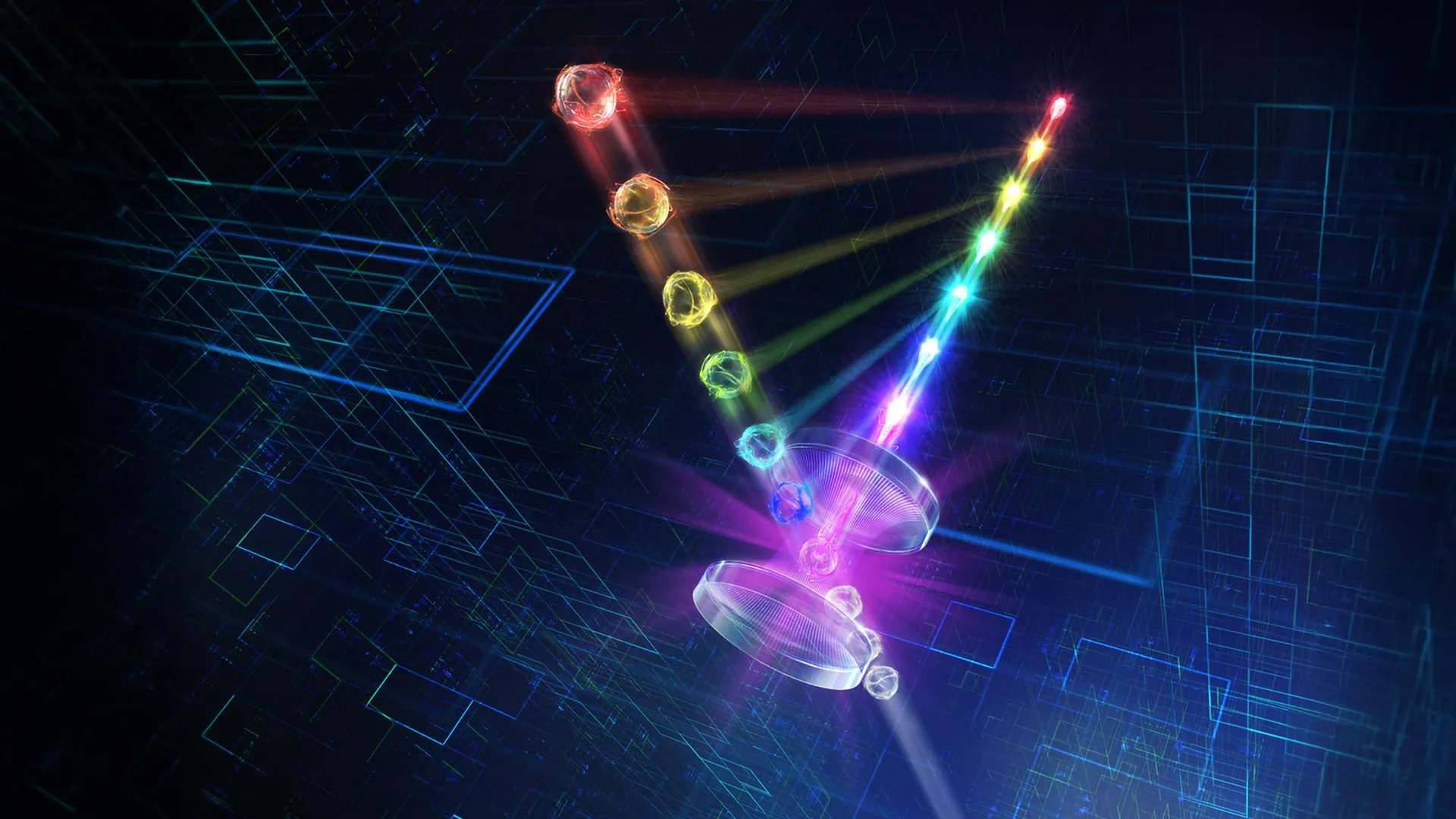
To make such a network possible, so-called quantum network nodes — that can store quantum information and share it via light particles – are needed. In their latest work, the Innsbruck team led by Ben Lanyon at the Department of Experimental Physics of the University of Innsbruck demonstrated such a node using a string of ten calcium ions in a prototype quantum computer. By carefully adjusting electric fields, the ions were moved one by one into an optical cavity. There, a finely tuned laser pulse triggered the emission of a single photon whose polarization was entangled with the ion’s state.

The process created a stream of photons; each tied to a different ion-qubit in the register. In future the photons could travel to distant nodes and be used to establish entanglement between separate quantum devices. The researchers achieved an average ion-photon entanglement fidelity of 92 percent, a level of precision that underscores the robustness of their method.

“One of the key strengths of this technique is its scalability,” says Ben Lanyon. “While earlier experiments managed to link only two or three ion-qubits to individual photons, the Innsbruck setup can be extended to much larger registers, potentially containing hundreds of ions and more.” This paves the way for connecting entire quantum processors across laboratories or even continents.

“Our method is a step towards building larger and more complex quantum networks,” says Marco Canteri, the first author of the study. “It brings us closer to practical applications such as quantum-secure communication, distributed quantum computing and large-scale distributed quantum sensing.”

Beyond networking, the technology could also advance optical atomic clocks, which keep time so precisely that they would lose less than a second over the age of the universe. Such clocks could be linked via quantum networks to form a worldwide timekeeping system of unmatched accuracy.

The work, now published in Physical Review Letters, was financially supported by the Austrian Science Fund FWF and the European Union, among others, and demonstrates not only a technical milestone but also a key building block for the next generation of quantum technologies.

Share Button