[unable to retrieve full-text content]



[unable to retrieve full-text content]
[unable to retrieve full-text content]

[unable to retrieve full-text content]

Two monkeys cloned using the ‘Dolly the sheep’ technique could bring the world a step closer to human cloning.
[unable to retrieve full-text content]
On 22 January 2018 there were reports that the music legend Neil Diamond had retired from touring after being diagnosed with Parkinson’s disease.
According to HealthDay News, the 76-year old singer apologised to fans who bought tickets for the last leg of his 50th anniversary tour.
“The onset of the disease has made it difficult to travel and perform on a large-scale basis,” he explained.
Parkinson’s disease is a progressive neurological disorder that affects movement and causes trembling in the arms, hands, legs and jaw. It is caused when certain nerve cells die or become impaired. It affects 1 in 100 people over sixty.
While the symptoms can be controlled, there is nothing that can stop the disease from progressing.
Although the symptoms can be dramatically reduced, Parkinson’s disease can be challenging to live with as it doesn’t only cause difficulty of movement and cognitive skills, but can lead to depression, sleep problems, speech problems and pain.
The singer of hits like Sweet Caroline and Cracklin’ Rosie is not the only celeb affected by the illness. Here are six other famous people who are or were affected by Parkinson’s.
1. George H.W. Bush
It was reported in early 2017 that the former president of the United States had been placed in intensive care at the age of 92. Bush’s illness isn’t exactly Parkinson’s disease, but vascular parkinsonism, a disease that exactly mimics the symptoms of Parkinson’s disease and causes the same devastating difficulties performing cognitive skills.

2. Michael J. Fox
The American-Canadian actor, famous for his roles in Back to the Future and Spin City, was diagnosed with Parkinson’s disease in 1991. He was only 29 – an unusually young age for the onset of the disease. In 2000 he formally retired from acting after his symptoms worsened. Since then he has become an activist for Parkinson’s and also created the Michael J. Fox Foundation to raise awareness of the disease.

3. Billy Connolly
This Scottish comedian announced in 2014 that he had been diagnosed with Parkinson’s disease and prostate cancer on the same day. Luckily, his sense of humour is helping him laugh about the situation and he often makes fun of his symptoms during shows.

4. Charles M. Schulz
The name might not ring a bell, but he is the creator of the beloved cartoon Snoopy. Parkinson’s disease severely affected the movement of his hands, making his passion for illustrating difficult. He tried to alleviate his trembles with beta-blockers. Schulz passed away in 2000.

5. Robin Williams
Shortly after his suicide in August 2014, Robin William’s widow Susan Williams disclosed that he’d had progressive Parkinson’s disease and only three years left to live. His condition became progressively worse before his death.

6. Muhammad Ali
This widely celebrated American boxer was diagnosed with Parkinson’s disease in 1984. It is said that blows to the head during his boxing career or a motorcycle injury could have led to the onset of the disease. In 1998 Ali became involved with Michael J. Fox’s foundation to create awareness for the illness. He passed way in 2016.
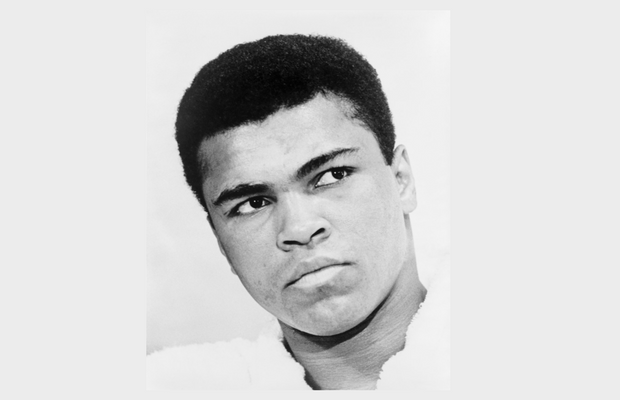
Image credits: Wikimedia Commons


Now that it’s 2018, most of us have learnt by now that our social media footprints are basically permanent, so we have to be ultra-selective about what we choose to post and what we don’t.
Yet some people have apparently not gotten this memo. Case in point: the fact that Instagram and Facebook are being used as surveillance tools by sneaky personal trainers who want to see how their clients are spending their off-hours.
According to the New York Post, your personal trainer is totally spying on you via social media – and let me tell you, they don’t like what they’re seeing.
Read more: Find the best personal trainer for you
According to personal trainer Joe Holder, who’s based in New York City, some fitness instructors have no compunction about poring over your social media presence to see if you’re sticking to your diet.
“If you catch them doing something [unhealthy], you can call them out. If they’re doing something dope, you want to show them a little love,” he says.
Much like Santa Claus, they see you when you’re sleeping and they know when you’re awake (and stuffing your face with a pizza).
Read more: Try the Men’s Health pizza egg recipe for a cheat meal without the guilt
While most fitness instructors said they will draw the line at explicitly shaming their clients or calling them out in the comments, they’re not above a passive-aggressive jibe or two.
“I’ll see [my trainer] for our Saturday-morning sessions, and if I’m a little sluggish, he’ll be like, ‘Well, that’s probably because you had all those margaritas and ate all those tacos,’” one woman told the Post.
The end result is a relationship that is much more intimate (and arguably much more creepy) than the standard trainer/client dynamic.
Read more: Learn some lessons from Cape Town’s celebrity personal trainer
To be fair, this is something of a first world problem; if you can’t afford to hire a personal trainer in the first place (which, let’s be real, a lot of us can’t), this is not a particularly salient concern.
Also, if you do have a trainer, it probably isn’t an awesome idea to follow them on Instagram in the first place. You’re their client, not their friend. It’s kind of like being in high school and sitting with your Grade 10 maths teacher at break time.
But if you absolutely must follow your trainer on Instagram, at the very least, put your settings on private during your cheat days – or, alternatively, just check out our Belly Off Eating Plan and stick to your diet in the first place.
This article was originally published on www.menshealth.com
Image credit: iStock

NEXT ON HEALTH24X

The former Labour minister on living with brain cancer and campaigning on treatment for others.
Humans and animals have been in contact with each other for years. Not only have people been using animals as livestock and for transport, but also as companions.
Animals play a big part in human lives – it is therefore no surprise that some infectious diseases are able to spread between animals and humans.
These diseases are known as zoonotic diseases. Yearly, thousands of people worldwide are infected by diseases spread by animals.
A study published in the Journal of the South African Veterinary Association mentioned that at least 63.6% of veterinarians taking part in the poll have suffered from a zoonotic disease, with those involved with farm animals even more likely to contract a disease from an animal.
But what about the flu?
But can you contract the flu virus from your cat or dog? Cats and dogs can suffer from colds and flu – just like humans; they experience sneezing, fatigue and a discharge from the nose and eyes.
According to the Berkeley Wellness Center, you cannot get the flu from your dog or cat. Flu is species-specific thanks to evolution, says Dr Shelley Rankin at the University of Pennsylvania School of Veterinary Medicine.
Although it’s unlikely that Fido or Fluffy will you sick, there are however animals that harbour flu strains that can end up making us sick.
According to the World Health Organisation (WHO) animal influenza is different from the seasonal influenza humans get so often – the viruses manifesting in your pets won’t transfer to humans in an unmutated form. But occasionally, there are strains of animal viruses that can affect humans through direct or indirect contact.
Flu from pigs
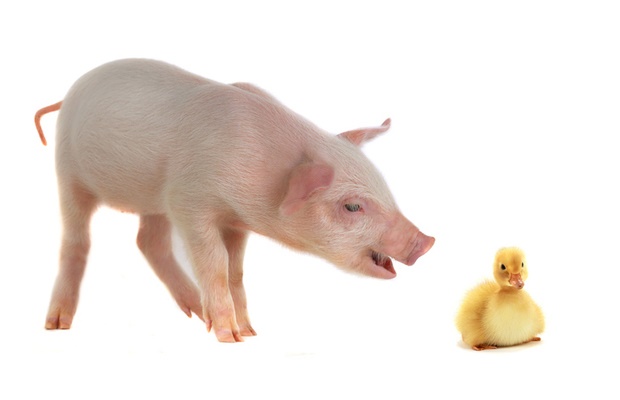
Swine influenza (swine flu) is a respiratory disease in pigs caused by type A influenza virus, which regularly causes outbreaks of influenza in pigs.
Influenza viruses have the capability to mutate swiftly, creating new flu strains. When influenza viruses from different species infect pigs, the viruses start to swap genes, and new viruses that are a mix of swine, human and/or avian influenza viruses can emerge. Over the years, different variations of swine flu viruses have emerged.
The WHO states that most swine flu strains rarely affect humans, but in the past decade there were some cases where humans were infected with a strain of swine flu.
Flu from birds
Avian influenza or bird flu is spread by birds – mostly poultry species such as ducks, geese and chickens. Bird flu is highly contagious and can cause respiratory problems, resulting in death.
WHO recorded an outbreak of the H5N1 virus in Hong Kong in 1997, and since since 2003 this avian and other influenza viruses have spread from Asia to Europe and Africa. In 2013, human infections with the influenza A(H7N9) virus were also reported in China.
Happy pets
Even though it is extremely unlikely that you will get infected when your dog or cat suffers from a bout of sniffles, you should still take measures to protect yourself from all kinds of germs:
Image credits: iStock


A review into the “growing problem” of prescription drug addiction in England is launched.
