[unable to retrieve full-text content]



[unable to retrieve full-text content]
[unable to retrieve full-text content]

The Church of England fears new pre-natal tests could lead to a rise in abortions of babies with Down’s.
[unable to retrieve full-text content]

[unable to retrieve full-text content]

[unable to retrieve full-text content]

[unable to retrieve full-text content]

A Swedish app developer has been reported to the Swedish Medical Product Agency following the report that over 35 women had fallen pregnant even though they had used the app.
The app, Natural Cycles, is the only certified contraception app in the world and was developed by Doctor in Particle Physics, Elina Berglund Scherwitzl.
No need for medication
The number came from the selection of women who requested abortions at a Swedish hospital from September to December 2017. These women cited Natural Cycles as their method of contraception.
Swedish publication, SVT Nyheter, reported that the Medical Product Agency has launched an investigation into Natural Cycles. They also state that the app has not been approved by the Agency, but received certification through the European Union’s regulatory framework for medical devices.
The app grew in popularity due to the fact that users don’t need to take any medication, like birth control tablets, altering the body’s hormone activity.
The company released a statement on their website addressing the media attention they’ve received following several Swedish hospitals reported the organisation.
In their statement, the company said that an unwanted pregnancy is unfortunate and they care deeply each time one of their users fall pregnant and it’s unplanned.
93% effective under typical use
“Unfortunately, no contraception is 100% effective and unplanned pregnancies are an unfortunate risk with any contraception.
“Natural Cycles is 93% effective under typical use, which means seven out of 100 women will get pregnant due to all possible reasons (e.g. having unprotected intercourse on red days, failure of the contraceptive method used on red days).
“Under perfect use, where women use protection on every fertile day, Natural Cycles is 99% effective,” the statement added.
Natural Cycles was created after Elina initially developed the application to monitor her own cycles.
[embedded content]
The app works by users taking their temperature in the morning with a basal thermometer, which is meant to be more sensitive than a regular fever thermometer because it shows two decimals.
Red and green days
They advise that users take their temperature before getting up or out of bed and then plug those readings into the application for it to analyse. They also advise that you not measure should feel sick, have a hangover or if you’ve slept less than usual.
Once you add your temperature, their “how to get started” video states that the app algorithm analyses it and will let you know whether you’re having a green or a red day. A green day means you’re not at risk of falling pregnant, but if you’re having a red day, you should make use of protection in order to prevent a pregnancy.
Are you using the Natural Cycles application as a form of contraception? Tell us about your experience by emailing healthnews@health24.com and we may share your story. Should you wish to remain anonymous, please let us know.

NEXT ON HEALTH24X

Day Zero. Two words that often come into conversations around Cape Town.
Cape Town is experiencing the worst drought in 100 years and with level 6B restrictions coming into effect from 1 February 2018, people are urged to use no more than 50 litres of water per person per day.
With limited water resources comes an increased risk of disease – often due to poor hygiene. According to Unicef, washing your hands with soap and water can cut diarrhoeal disease by one-third. This becomes less feasible, however, when less water is available.
With the recent Listeriosis outbreak, it is even more important to protect yourself against disease. Despite water being in short supply, make sure you only consume safe, clean water. Also remember that you can keep your hands clean with waterless hand sanitiser.
Here are five diseases that may present a higher risk during a drought.
1. Typhoid
Twenty-six cases of typhoid fever were reported in Cape Town in 2017. Typhoid is caused by Salmonella typhi, which is spread through contaminated food or drink. If water is exposed to sewerage contaminated with the bacteria, people who consume the water will get sick.
Symptoms: Fever, stomach aches and sometimes a rash.
Prevention: Practise good hygiene and safe food preparation.

2. Gastroenteritis
The virus or bacterium that causes gastroenteritis affects the stomach lining and intestines, and is usually transmitted through contaminated water or food.
Symptoms: Stomach cramps, watery stools and dehydration.
Prevention: Practise good hygiene and only drink safe, clean water.
3. Salmonella
Salmonella is one of the most common food-borne diseases and the bacteria are often found in food products – for example raw poultry, eggs, beef and sometimes raw fruit.
Symptoms: Diarrhoea, fever, abdominal cramps and headache.
Prevention: Don’t consume unpasteurised milk or raw eggs. Practise good hand hygiene and safe food preparation.

4. Cholera
If you ingest the cholera bacteria, you will get sick. It is transmitted through faeces – so if human faeces contaminate food or water that is consumed due to poor sanitation or hygiene, the bacteria will continue to breed.
Symptoms: Severe, watery diarrhoea, nausea and vomiting, dehydration, muscle cramps and shock.
Prevention: Practise good hygiene and only drink safe, clean water.
5. Mosquito-borne diseases
A severe drought can increase mosquito-borne diseases. Although droughts mean less water, stagnant water creates the perfect breeding ground for mosquitoes. As Capetonians are urged to reuse their water, buckets of water may result in an increased mosquitoe population.
Prevention: Avoid letting water stand for too long and use mosquito repellant.
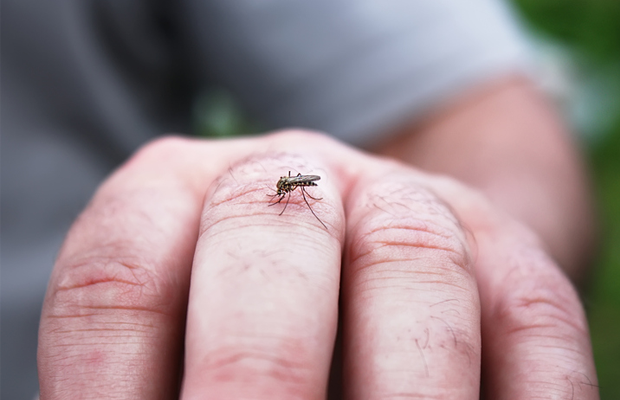
Image credits: iStock

NEXT ON HEALTH24X

Think of your cervix as the gatekeeper to your uterus.
Lots of things – like tampons, fingers, penises, sex toys and other germ-carrying items – can get to your cervix, but they aren’t getting past it.
Your cervix, in its 24/7 role of keeping your uterus happy and healthy, won’t let that happen,
Likewise, there are things – like mucus, menstrual blood and the occasional baby – that need to get out of your uterus. Your cervix is the bouncer, deciding what and when things go in and come out of your most vital piece of your reproductive system.
Yet, despite benefiting from its work, day in and day out, chances are you don’t know much about it.
Like, do you even know what it looks like?
Probably not. Well, your cervix is the “neck” of your uterus, positioned at the top of your vaginal canal. Because of its location, seeing your cervix isn’t as easy as squatting over a hand mirror, like you would if you were examining your other lady bits, but it is possible with the right tools.
All you need is a flashlight, a mirror, a retractable speculum and a little courage. If you don’t have a speculum just lying around your bathroom (and if you do, we want to hear that story!) you can buy a starter kit from the Beautiful Cervix Project.
It even comes with a handy map to guide you through your own nethers. Once there you can admire the beauty of your own, unique cervix and even snap some cervix pictures if you’re so inclined.
The Beautiful Cervix Project is a movement to better understand and appreciate the awesomeness of the underrated cervix. O’Nell Starkey started it as a project for midwifery school, with her husband taking snaps of her cervix throughout her cycle.
She quickly discovered, as she’s put it, “Cervices are amazing!” After sharing her images with the world, she found that other women also wanted to see their own cervices (that’s plural for cervix), leading her to start the Beautiful Cervix Project as well as live workshops dedicated to helping women learn about and appreciate their bodies.
Read more: This gynae wrote an epic takedown of every man who has ever criticised a woman’s vagina
“What I have learnt by creating this website is that people from all over the world are curious about their bodies, cervices and the menstrual cycle – everyone from newly menstruating teens, pregnant people, medical students, people with abnormal Paps, to people trying to conceive, artists, educators and the list goes on,” Starkey says.
“Cervical self-exam is about educating and empowering people by contradicting some of the shame and under-education we have about our bodies and menstrual cycles. The Beautiful Cervix Project is dedicated to people working to reclaim their entire bodies as beautiful and lovable. The more we know about ourselves, the more we feel confident to advocate and care for ourselves.”
While each cervix is slightly different (which is why we recommend checking out your own cervix), they all go through similar changes during your monthly cycle, when you’re pregnant, during labour and delivery, and after giving birth.
Curious? Starkey was kind enough to share some cervix pictures to help you see what your cervix is up to… right now.
1. During the follicular phase
When your cervix is just hanging out, the visible part of the cervix protrudes into the vaginal canal and is covered by smooth, pink, squamous epithelium, says Dr Kim Thornton, a reproductive endocrinologist at Boston IVF.
In this picture, the cervix is preparing for ovulation by preparing more fluid.

Read more: 10 things to know about your vagina that’ll change how sex feels
2. During ovulation
The cervix looks a little bit like a donut. When it’s closed, the hole looks like a dimple, but it opens during ovulation to let sperm in, explains Dr Ronald D Blatt, gynaecologist and chief surgeon and medical director of the Manhattan Center for Vaginal Surgery.

Read more: “Is it totally normal if my vagina is always wet or should I be worried?”
3. During the luteal phase
After ovulation, the cervix prepares for menstruation. In this picture the cervix is just doing its thing, waiting for either a pregnancy or shark week to happen. The average cervix measures 3 to 5cm in length and 2 to 3cm in diameter, Dr Thornton says.

Read more: 8 vagina changes that mean you’ve just caught an STD
4. During menstruation
When Aunt Flo comes to visit with her monthly gift of gore, you know the blood is coming from somewhere up in there, but this picture shows exactly how it comes out of your cervix. Again, the dimple in the centre – called the os – is in the open position to release menstrual fluids, Dr Blatt says.

Read more: 5 common reasons why your vagina hurts
5. During sex
This is a picture of the cervix just minutes after the woman had an orgasm during sex (you can even see the sperm pooled around the bottom).

Depending on the size of you and your partner’s anatomy, the penis can bump into the cervix during sex. Some women find the sensation enjoyable and may even orgasm from it, according to a study published in the journal Hormones and Behavior. Others find repeated thrusting into the cervix to be incredibly painful and it can cause bruising or even tearing of your cervical tissue.
This article was originally published on www.womenshealthmag.com
Image credits: Supplied by beautifulcervix.com,iStock

