[unable to retrieve full-text content]



[unable to retrieve full-text content]
[unable to retrieve full-text content]

[unable to retrieve full-text content]

[unable to retrieve full-text content]

Simon Bramhall is fined for branding his initials on two patients’ livers.
Liver transplant patient Ellie Lacey urges other UK nations to move to presumed consent organ donation.
Tributes are paid to an 18-year-old woman who died in hospital a week after becoming ill.
A group of researchers has developed an ingestible capsule which allows tracking and analysis of gut gases through a smartphone application.
The electronic pill is swallowed and travels through the gastrointestinal tract as food would, but picks up information about the various gases in the gut as it goes along.
Data can be collated in real time with a pocket monitor and the smartphone app.
Why would you want to track your farts?
In their paper, published on Nature.com, research leaders Kourosh Kalantar-Zadeh from ZMIT University and Peter Gibson from Monash University said that this technology could provide valuable information about the gut’s condition.
Information about the gut microbiome was not easily accessible in the past, because cumbersome equipment and tubes had to be used to collect information.
The capsule has a gas sensor built into it and senses gases like oxygen, hydrogen and carbon. The selectivity and sensitivity to different gases is controlled by adjusting the heating elements of the sensors.
Monitoring test subjects
When considering gut activity, researchers are aware of gases which are common in the human gastrointestinal tracts. Monitoring the different gases gives doctors, researchers and scientists insight into understanding disorders of the gut, which then allows them to research ways to rectify matters.
Reasons behind irritable bowel syndrome (IBS) are not entirely known. It is believed to be an over-reaction of the digestive system to emotional triggers, but studying the data collected from the device may help in making new discoveries about gut behaviours.
When test subjects ingested the device, which is roughly the size of a large vitamin tablet, they had eaten specific foods so researchers could monitor the gases, the temperature and time the device had spent in their systems.
One of the test subjects ingested the device twice. He had been eating food high in fibre before taking the first tablet, which resulted in the passing of the tablet a little too soon for his liking. He then had food lower in fibre and two weeks after taking his first tablet, he took another, which they hoped would be more effective.
A lot more insight
Researchers however ended up giving him a high dose of fibre to move the device along, because it was actually taking a little too long to exit his system.
Human bodies make use of two types of fibre – soluble and insoluble fibre. Soluble fibre is believed to help with lowering cholesterol and regulating blood sugar, whereas insoluble fibre creates bulk in our intestines and helps prevent constipation.
The data collected through the attempts are giving researchers a lot more insight into how the gut reacts to high- and low-fibre diets.
The team is now considering creating a company, so they can expand on their research and testing the device even further.
Image credit: iStock

NEXT ON HEALTH24X

You’ve heard about symmetry before: It’s a mathematical principle that denotes exact equality on two sides. A butterfly’s wings. A snowflake. Your face.
Some junior school teacher probably taught you about all of this years ago and you likely haven’t thought about symmetry since.
But you should, and especially when it comes to running, because an asymmetrical body could be the culprit behind a nagging injury, or what’s keeping you from finally nailing a new PB.
1. Single-leg tap
Works hamstrings, glutes and improves stability
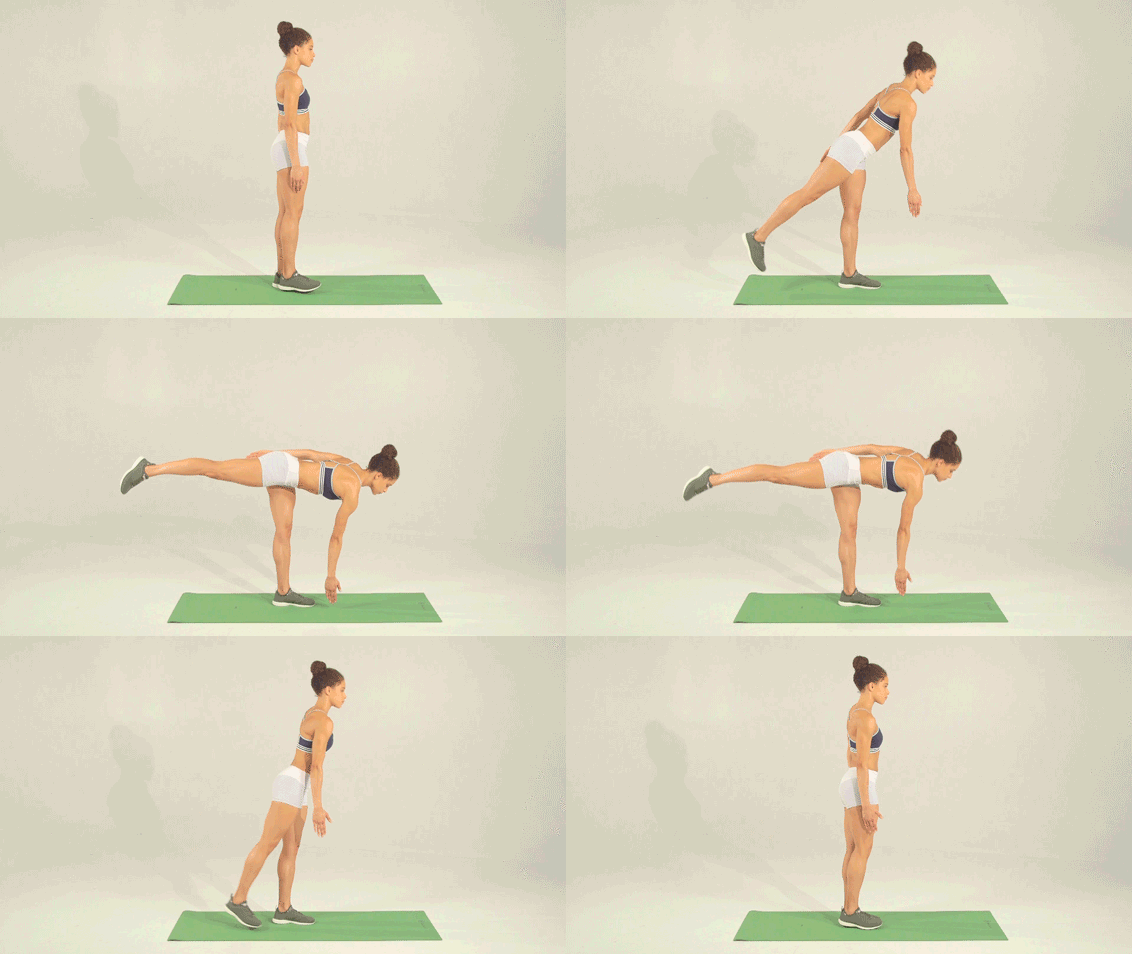
2. Single-leg squat
Works hips, quads, glutes and improves hip stability

3. Single-leg glute bridge
Works glutes and improves core control

4. Side-lying leg lifts
Works core, hips, glute medius and improves hip stability

5. Clamshell
Works hip abductors, glutes and improves hip rotation

6. Compound bird dog
Works core and improves stability

This article was originally featured on www.runnersworld.co.za
Image credits: Matt Rainey

NEXT ON HEALTH24X

Some of us might remember the 1991 movie My Own Private Idaho where the character Mike, played by the late River Phoenix, has unexpected attacks of deep sleep in the strangest places and situations.
No control
Most of us experience the odd daytime episode when we can hardly keep our eyes open. This may happen when we didn’t sleep well the night before or after a really big meal. In most cases, however, this isn’t a big issue and a cup of strong coffee or a walk around the block usually gets us going again.
But for some people, this isn’t so easy as they have no control over where and when they might lose consciousness.
The condition is called narcolepsy and affects an estimated 1 in every 2 000 people in the United States and approximately 3 million worldwide. It is however estimated that only 25% people who have narcolepsy have been diagnosed and are receiving treatment.
Narcolepsy has been described as: “It’s more like overwhelmingly bad jet lag. Like you can’t possibly stay awake, no matter how hard you try.”
Famous narcoleptics include Curt Cobain, Winston Churchill, Thomas Edison, Nastassja Kinski and Louis Braille.
What is narcolepsy?
According to NHS Choices narcolepsy is a rare long-term brain disorder that causes a person to suddenly fall asleep at inappropriate times. It doesn’t cause serious health problems, but can cause difficulties on a day-to-day basis.
A previous Health24 article lists four classic symptoms of the disorder:
Cause of narcolepsy
Narcolepsy can be caused by a lack of the brain chemical hypocretin which regulates wakefulness, but it doesn’t explain all cases.

Possible triggers may include hormonal changes during puberty or menopause, psychological stress and infections like swine flu.
Diagnosis
It’s not easy to diagnose narcolepsy because symptoms like fatigue are common to many conditions. The condition is diagnosed by means of a sleep study which requires an overnight stay in a sleep lab.
Misdiagnosis of narcolepsy is common and it may be mistaken for depression, insomnia and obstructive sleep apnoea.
Treating narcolepsy
Narcolepsy cannot be cured, but improving sleeping habits and taking the correct medication can help to lessen the impact of the condition on one’s daily life.
Frequent, brief naps throughout the day can help to manage excessive daytime drowsiness.
Going to bed at the same time each night can make a big difference.
There are medications that can help reduce daytime sleepiness, prevent cataplexy attacks and improve nighttime sleep.
Image credit: iStock