Health24.com | This rare treatment will cost you more than R10 million

Can you imagine a treatment so expensive that you couldn’t afford it, even if you sold everything you own?

A first-of-its kind genetic treatment for blindness will cost $850,000 (±R10.4 million) per patient, making it one of the most expensive medicines in the world and raising questions about the affordability of a coming wave of similar gene-targeting therapies.

The injectable treatment from Spark Therapeutics can improve the eyesight of patients with a rare genetic mutation that affects just a few thousand people in the US. Previously there has been no treatment for the condition, which eventually causes complete blindness by adulthood.

The drug, Luxturna, is intended for patients with retinal dystrophy due to a mutation of the RPE65 gene. This kind of retinal dystrophy is estimated to affect between 1 000 and 2 000 people in the USA.

According to a News24 article, a probable 150 000 South Africans suffer from retinal conditions such as macular degeneration and dystrophy, retinitis pigmentosa, and other rare conditions that cause loss of vision in over 40 million people worldwide. 

A one-time treatment

The exorbitant price of Luxturna is not an isolated problem as there is growing concern about huge price increases on older drugs, some of them generic, that have long been mainstays of treatment.

Pricing questions have swirled around the treatment due to a number of unusual factors – it is intended to be a one-time treatment, it treats a very small number of patients and represents a medical breakthrough.

Previously, Spark suggested Luxturna could be worth more than $1 million (±R12.3 million). But the company said it decided on the lower price after hearing concerns from health insurers about the affordability of the treatment.

Consternation over skyrocketing drug prices, especially in the US, has led to intense scrutiny from patients, politicians, insurers and hospitals.

“We wanted to balance the value and the affordability concerns with a responsible price that would ensure access to patients,” said CEO Jeffrey Marrazzo, in an interview with The Associated Press.

Luxturna is still significantly more expensive than nearly every other medicine on the global market, including two other gene therapies approved earlier last year in the US.

First gene therapy for an inherited disease

Pharmaceutical industry critics said the slightly lower cost is a distraction from the ongoing problem of unsustainable drug prices.

“The company very cleverly convinced everyone that they were going to charge a million dollars, so now they are being credited for being reasonable,” said Dr Peter Bach, director of a policy centre at Memorial Sloan Kettering Cancer Center in New York.

Approved last month, Luxturna, is the nation’s first gene therapy for an inherited disease. It requires a 45-minute operation in which a tiny needle delivers a replacement gene to the retina, tissue at the back of the eye that converts light into electric signals that produce vision. The therapy will cost $425 000 (±R5.2 million) per injection. The price does not include the cost of the operation, which Spark estimates will cost between $4 000 (±R40 000) and $5 000 (±R61 400).

The treatment is part of an emerging field of medicine that could produce dozens of new gene-targeting medications in the next few years.

Like Luxturna, these therapies are generally intended to be taken once, a fact which drug developers argue sets them apart from traditional drugs taken for months or years. Even compared to other one-time gene therapies Luxturna is still an outlier. Two customized gene therapies for blood cancer approved last year are priced at $373,000 (±R4.5 million) and $475,000 (±R5.8 million).

Drug prices not always regulated

Drug prices are not regulated in the US, as they are in many other countries, so drugmakers can price their goods like any other manufacturer. Drugmakers have historically offered little explanation for the prices they charge, other than to cite the high cost of developing a drug and the fact that so many drugs fail during trials and must be abandoned. However, some companies have begun to offer more detailed reasoning as the backlash against drug prices has grown more heated.

Fortunately medicine prices are regulated in South Africa, which means that you will be able to:

  • Know what to expect to pay when you get a prescription from your doctor.
  • Find possible generics for a branded medicine.
  • Ensure that you are not being overcharged for your medicine.

Spark Therapeutics, based in Philadelphia, has said that the cost for a lifetime of blindness – including lost earnings and caregiver wages – can easily exceed $1 million (±R12.3 million).

Even at $850,000 (±R10.4 million) a preliminary analysis by one group found that the drug would need to be priced significantly lower to be good value.

Image credit: iStock

Share Button

Middle-aged can reverse heart risk with exercise, study suggests

But there is a catch – it takes two years of aerobic exercise, four to five days a week, a study says.

Share Button

Health24.com | 7 of the most dangerous surgeries

Most people are a bit apprehensive about having even the smallest surgical procedure.

The following procedures, however, are deemed by experts as the riskiest surgeries – that can result in serious complications and even death.

Even though medical technology is advancing rapidly and the mortality rates of these procedures have improved, they are still extremely delicate and risky.

1. Craniectomy

A craniectomy involves removing a fraction of the skull to relieve pressure on the brain. In the past, this type of surgery was usually performed as a last resort, but with the progress of technology it is utilised more frequently nowadays. This surgery, however, remains risky, the major risks being infection, bleeding and further damage to the brain.

doctor holding brain MRI

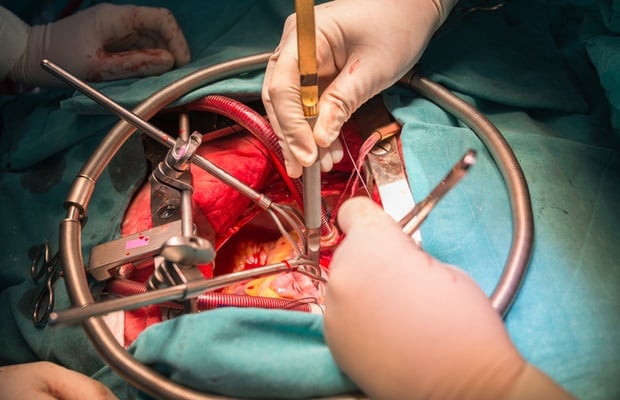
2. Thoracic aortic dissection repair

Like any form of open-heart surgery, this procedure is difficult and risky because of its delicate nature. An aortic dissection (a split or tear in your body’s main artery) is a life-threatening condition which requires thoracic aortic dissection repair, a risky emergency surgery. This operation is often associated with increased risk of stroke.

open heart surgery

3. Oesophagectomy

This is the procedure used to partially or completely remove the oesophagus (the tube that transports food from your throat to your stomach) because of cancer. An oesophagectomy is performed to avoid the cancer from spreading to the rest of the stomach or other organs. The procedure often involves the removal of the lymph nodes as well. The incisions are made according to the severity of the procedure and how much of the oesophagus needs to be removed. The most severe scenario is where the oesophagus, a part of the abdomen and the lymph nodes are removed via incisions in the chest, abdomen and throat. Because of the nature of the incisions, bleeding, leaking of fluids into the stomach clots and infection are the greatest risks. The lungs may also be affected.

doctor holding esophagus anatomy

4. Spinal osteomyelitis surgery

Spinal osteomyelitis is an infection of the vertebrae, which is a rare but dangerous cause of back pain. Surgery is often the last resort for treating this infection, but sometimes emergency surgery is needed, especially when sepsis occurs. Infections of the spine can be extremely dangerous and surgery to the area can be risky and may lead to paralysis or more infection.  

doctor looking at spinal x-rays

5. Bladder cystectomy

This procedure involves the partial or complete removal of the bladder in the case of bladder cancer. Not only is there the possibility that you might need an alternative way to empty your bladder such as a urostomy, but it can also have far-reaching effects on your sex life. After a partial cystectomy, you will be able to pass urine normally, but because of a smaller bladder, you will need to go more frequently. There is a high risk of infection during this surgery, affecting the membrane lining of the abdomen.

doctor explaining bladder anatomy

6. Gastric bypass

Gastric bypass is a surgical procedure performed to help you lose weight by changing the way your stomach and small intestine handle the food you eat. This surgery is extremely elective and risky because of the organs being so close together and the many layers of fat that the surgeon has to cut through. These days, laparoscopic surgery makes this procedure a bit easier and eliminates big incisions, but there is still increased risk involved, especially since there is increased difficulty inserting the tube into airways. More risks include excessive bleeding and infection.

gastric bypass surgery

7. Separation of conjoined twins

Conjoined twins are identical twins who are joined together in utero. This is an extremely rare phenomenon, with only one in 50 000 births to one in 200 000 resulting in conjoined twins. The risk and difficulty of the surgery depends on where the twins are joined, with twins being attached at the heads being the most common. Separation is possible, depending on how much of the brain is shared.

It goes without saying that the separation of conjoined twins is risky and delicate. According to the University of Maryland Medical Center, mortality rates depend on the type of connection and organs shared. The success rate of separating conjoined twins has increased over the years. 

x-ray of conjoined twins

Image credits: iStock and Wikimedia Commons 

NEXT ON HEALTH24X

Share Button

Saturn’s moon Titan sports Earth-like features

[unable to retrieve full-text content]

Share Button

Quantum ‘spooky action at a distance’ becoming practical

[unable to retrieve full-text content]

Share Button

In Antarctic dry valleys, early signs of climate change-induced shifts in soil

[unable to retrieve full-text content]

Share Button

Unusual gene evolution in bacteria

[unable to retrieve full-text content]

Share Button

Health24.com | 5 ways to stop smoking – and keep that New Year’s resolution

Quit smoking now, not tomorrow, because the longer you put it off, Sparky, the harder it’ll be. There are loads of ways to quit, but there are no magic bullets, says medical researcher Dr Michael Fiore. Here are five real-world bullets that can help you end the madness.

1. Don’t set yourself up for failure

It may be okay for sandwiches the day after Christmas, but cold turkey probably won’t get you anywhere when it comes to kicking your butts, says Fiore. Neither will hypnosis, acupuncture or aiming lasers at acupuncture points. “Those are probably the three worst ways to quit.”

Read more: How To Set Weight Loss Goals

2. Lay off the booze too

Don’t clear out just cigs, lighters and ashtrays. Toss as much booze as you’re willing to part with too. “Half the people who quit end up returning to their old habits with the first trace of alcohol in their bloodstream,” says Fiore. The only solid solution is to eliminate alcohol for the first couple of months after quitting. The other predictor of a relapse is living with a smoker, so if you can convince your wife or roomie to quit while you’re at it, you’ll both have a better chance.

Read more: This Is The Best Type Of Alcohol To Drink If You’re Trying To Lose Weight

3. Delay the game

When you get a craving you can’t seem to shake, promise yourself you won’t give in for 60 minutes. Almost every time, the urge will pass by the time the hour’s up. If you have to, spend the hour drinking water, walking around, doing deep breathing exercises or chewing something. “Try to chew something that won’t add a lot of extra kilojoules to your diet, since it’s common to gain a few kilograms when you quit,” says Fiore. Try carrots.

Read more: Yes, There’s a Way to Get Rid Of Junk Food Cravings—and Here’s How to Do It

4. Sweat

Whatever method you use to quit, combine it with exercise. A study by the American College of Chest Physicians shows that smokers who combine exercise with nicotine gum or patches are more likely to quit than those who don’t exercise.

Read more: How Eating Curry Could Undo The Effects Of Smoking

5. Go pharmacological

Prescription drugs to help you quit have improved in recent months. Last year, Pfizer’s Chantix (known as Champix in Europe) was approved for use in the US. This pill packs a one-two punch: it mimics the effects of nicotine while simultaneously blocking the reinforcing effects of the nicotine you take in from cigarettes.

Image credits: iStock

NEXT ON HEALTH24X

Share Button

Proton beam cancer treatment to start in Manchester in 2018

The first NHS-run unit of its kind in Manchester will improve treatment for cancer patients.

Share Button

Heart attack care dangerously unequal for women, study finds

Fewer women heart attack victims would die if they were given the same treatments as men, says a study.

Share Button