Adults in Wales are presumed to have consented to organ donation unless they have opted out.


Adults in Wales are presumed to have consented to organ donation unless they have opted out.
This can help to warm up winter air before it is breathed in and reduce the risk of an attack.
Your feet endure a lot each day: You wash them in a hot shower, squeeze them into stiff work shoes, where they stay tucked away for 10 hours, and then you lace up your sneakers for a run or training session.
By evening, they’re tired, sweaty and funky as hell.
Read more: 12 genius grooming hacks from the pros
This can lead to any number of issues. Blisters and calluses, cracked heels and fungal infections are just some of the joys that result from your active lifestyle.
And since there’s no way you’re going to stop moving, you need an ongoing plan instead.
We assembled a few remedies, thanks to expertise from Dr Ettore Vulcano, a foot and ankle surgeon at Mount Sinai in New York City, and Dr Michael Swann, MD and dermatologist in Springfield, MO.
How to prevent blisters and calluses
“Blisters and calluses are both caused by a combination of friction, moisture and rubbing,” Dr Swann says.
Blisters are the first sign of any such wear. The skin swells with fluid and causes discomfort, whereas calluses are indication of chronic injury.
Calluses protect the skin from further agony by creating a thick, defensive layer over the site.
However, while the body is adept in shielding itself from further strain, blisters and calluses are both preventable.
Read more: Grooming tips for nose and ear hair
Dr Swann says that two things must be targeted to prevent them: better shoe fit and avoiding moisture.
“Sweaty feet are more likely to get blisters because the moisture increases friction,” he says. And, if the shoe isn’t snug (or is too snug), this also increases friction on the foot.
As for moisture, switch out your socks immediately before and after a workout, or after being on your feet all day at work.
Spray or sprinkle drying powder on your feet before tucking them away. Try the Skin Republic Foot Active Treatment (R55, buy it here) if you’re an active person.
Dr Vulcano says to stick with high-end, well-engineered shoes that are designated for your task at hand. (Especially if you’re running, be sure to buy running shoes specifically.)
And in addition to blisters and calluses, he says “minimalist shoes transmit too much stress and can lead to foot fractures, ligament tears or tendon strain.”
However, because you’re switching shoes for different occasions throughout the day, the best solution is in the insoles, since they are often customised for the arch of your foot (or lack thereof).
Dr Vulcano’s patients with flat feet often benefit from Aetrex L420, whereas those with high arches prefer Arch Rivals Orthotics.
Read more: 5 body odours that you should never ignore
How to treat blisters and calluses
Dr Vulcano advises against draining your own blisters, as this can lead to infection.
“Pad the blister with thick band-aids, and let the blister pop on its own,” he says. “Use Betadine to disinfect it, then soak it in Epsom salts to help the blister dry.”
As for softening and eliminating calluses, Dr Swann prescribes acidic moisturisers like Am-Lactin, urea creams or Lac-Hydrin.
These help exfoliate the dead skin cells while nourishing and hydrating everything else.
But he urges that you should take it slow: “A good approach is to not try to do too much at one time,” he says. Try the Milk Solutions Garden Mint Refreshing Soak to rejuvenate tired feet and eliminate rough patches (R209, buy it here).
Dr Vulcano adds that for bigger calluses, you can also gently grind away on them with a pumice stone like the Titania Made For Men Pumice Sponge (R45, buy it here).
“Avoid excess scraping, which can lead to bleeding,” he says. And, before you scrape, Dr Vulcano says to soak the feet in warm water, which softens the callus and makes it easier to exfoliate the dead skin.
Read more: Add these oils to your daily grooming routine for healthy skin
Keep your feet healthy and fresh
Once your feet are free of blisters and calluses – or if you’re lucky enough to be at that starting block already – Dr Swann says it’s a good idea to deploy Am-Lactin routinely to maximise exfoliation on areas like feet that are prone to thickening.
Dr Vulcano says to use an organic moisturiser daily after soaking or showering to maximise absorption. He prefers organic products, like Dr Organic’s Manuka Honey Foot & Heel Cream (R215, buy it here) since they’re free of chemicals and gentle on the skin.
As an alternative, Dr Vulcano likes aloe vera gel like the Betta Way Aloe Vera Skin Gel (R104, buy it here) since it is “inexpensive, moisturising, elasticising and refreshing.”
But there’s more to it than just keeping the skin soft.
“Feet have a higher bacterial and fungal load than many other areas of the skin,” Dr Swann says. “Washing with soap and water, plus exfoliating outer layers and trimming toenails all help minimise areas for bacteria and fungi to flourish.”
To further avoid infection, you should never go barefoot in a public place, like the gym locker room or showers, and don’t share socks or shoes with anyone else.
Read more: 5nasty contagious skin conditions you can pick up at the gym
To keep the feet dry and fungus free, Dr Vulcano says most powders work well. But he says to not use anti-fungal powders routinely, since they are best when used to treat a condition, and can in turn have their own damaging effects on the skin when used in a prolonged manner.
Stick with a non-anti-fungal option or try the Milk Solutions Milk & Honey Refreshing Foot Spritz (R169, buy it here) if you’re looking for oil-free feet.
This article was originally published on www.menshealth.com
Image credit: iStock

It might seem harmless, but you could be missing some key components of a good workout and a proper recovery.
If you find yourself committing any of these post-ride faux pas, here’s how to clean up your habits and finish your ride right.
1. Stop short
If your final sprint finishes at your door, you’re missing a key component of your workout (and you run the risk of breaking your door).
“The role of the cool down is to let the muscles move without any resistance, which helps clear metabolic byproducts such as lactic acid from the muscles,” explains Philadelphia-based doctor Michael Ross.
If you skip that cooling process, not only do you let the lactic acid build up, but you risk blood pooling in your legs, which Ross says can make you dizzy or lightheaded.
2. Get too comfortable in your kit
It’s easy to come in from a ride and make a recovery smoothie, check your emails, return a call you missed or just lay down on the floor to enjoy those endorphins.
By the time you finally hit the shower, you might have marinated in your cycling kit – sweaty shorts included – for far too long, which can lead to saddle sores, infections and even illness if you’re in a hard training block and your immune system is already working hard.
Do yourself and your friends a favour; drop your shorts and jump in the shower as soon as possible post-ride.
3. Fill up on junk
If you fuel properly during your ride, holistic nutritionist Anne Guzman says that you shouldn’t be ravenous when you finish. It’s a problem she sees in a lot of cyclists: under-eating on the bike may seem like a good way to drop a few kilos, but that’s just not true…
And it usually leads to overeating anyway. If you’re worried about over-eating, Guzman suggests avoiding a meal with a lot of fat, and skipping that pastry in favour of a healthier option.
“Fat slows up your digestion and you want protein and carbs into your cells as fast as possible for recovery,” she says. “You’d be better to have potatoes and lean chicken – not a lot of fat or fibre so it’s easy to digest. A lot of people tend to think they should eat a sticky bun after the ride. And yes, that’s a good time for replacing glycogen, but you can’t forget about being healthy.”
4. Neglect your gear
Pro mechanic Taylor Near has seen a lot of bikes come through the Trek Bicycle Store in Toronto – and the ones that are in the worst shape are the ones that clearly haven’t been cleaned since the last time they came into the store.
After every ride, but especially after bad weather adventures, take a minute and assess your bike.
If it’s dusty, a quick wipe down still just takes 30 seconds. If it’s muddy, consider giving it some true TLC and a full clean so you’re ready to spin next time.
Once the bike – especially the chain – has dried, it becomes a lot harder to clean, so do it fast!
5. Skip stretching
Maintaining mobility is important for every athlete and as a cyclist you’re in a hunched position more than others. Skipping mobility work can hurt you in the long run, says Dr Ross.
He recommends spending some time before and after each ride (it doesn’t have to be a lot) just moving your shoulders – pinch your shoulder blades back, try to lift your arms over your head and windmill your arms a few times.
It’s also a good idea to make friends with your foam roller, which can help work out knotty muscles when a real massage isn’t in the cards.
This article was originally published on www.bicycling.co.za
Image credit: iStock
NEXT ON HEALTH24X

1. Men reach their sexual peak at 18, and women reach theirs at 28
True: With regard to their supply of sexual hormones, at least. Testosterone peaks at age 18 in men; women’s oestrogen hits its high point in their mid-20s. “But peak hormones don’t mean peak sexual performance,” says Marc Goldstein, MD, a professor of reproductive medicine and urology at Cornell University’s Weill Medical College. So feel free to try for a personal best – at any age.
Read more: 12 weird sex facts you won’t believe are true
2. Semen is low-carb
False: “Semen is mostly fruit sugar [fructose] and enzymes – not low-carb,” says Dr Goldstein. Which finally explains why there’s no oral sex diet.
3. Masturbation yields the strongest orgasm
True: But it’s not a hard-and-fast rule, as it were. “It depends on the individual,” says Jon l Pryor, MD, a professor of urologic surgery at the University of Minnesota. “For some it does, but for others, there’s nothing that beats good ol’ intercourse.”
Read more: 5 masturbation secrets you don’t know about
4. The average erection is 20cm
False: Relax, shorty. It’s closer to 15.
5. No penis is too large or too small for any vagina
True: But perception still wins the game in the end. “I was once at a dinner meeting with seven other sex doctors – six men and one woman,” says Dr Pryor. “The men all agreed that size doesn’t matter. The woman looked at us and said, ‘Think what you want. Size matters.’ We all left dejected.”
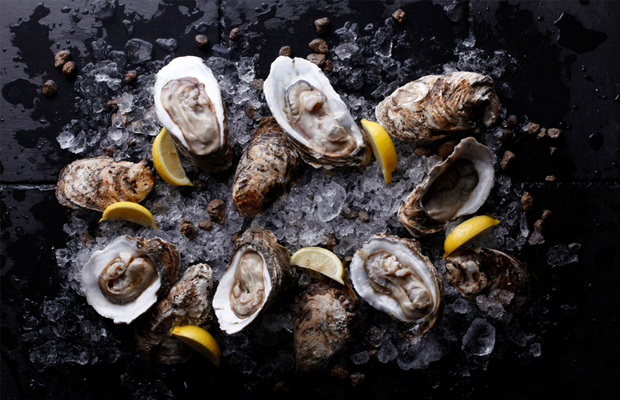
6. Oysters make you horny
False: You make you horny. “There is no scientific evidence that oysters increase libido,” says Dr Pryor. “But there may be a placebo effect, so if it works, great!”
Read more: 8 signs you have low testosterone levels
7. Green M&Ms make you horny
False: Unless they do. Then it’s true. Isn’t the mind wonderful?
8. Men think about sex every 7 seconds
False: That number is tossed around a lot, but the truth is that only 23% of men claim to fantasise frequently. But maybe the rest are just too distracted to check the clock.
9. Cutting out broccoli will make your semen taste better
True: Semen is naturally bitter, and eating broccoli and drinking coffee can make it worse. A ray of hope for the oral sex diet!

Read more: 7 signs your semen is healthy and strong
10. Having sex before an important event – the big game, the critical presentation – can ruin your performance in the event
False: Swiss researchers performed stress tests on people two and 10 hours after the subjects had had sex, and found that by 10 hours, the participants were fully recovered. There was only a small dip in performance two hours after sex.
11. Having sex in water (swimming pool, hot tub, shower) will kill sperm
True: Some of your swimmers may die, but it isn’t an effective method of birth control, according to Dr Pryor. Though a hot tub can overheat your testicles and kill sperm, there should be plenty left for the egg hunt.
Read more: Are you ‘pulling out’ as a form of contraception? Here’s why that might be a problem
12. You can be addicted to web porn
True: But the risk is low. Only 1% of all people who check out internet porn will become addicted. If you’re sporting a ring, be careful: 38% of addicts are married.
This article was originally published on www.menshealth.com
Image credits: iStock

NEXT ON HEALTH24X

The government promises to improve waiting times and bring in new mental health support teams.
[unable to retrieve full-text content]

Few things feel worse than having a yeast infection (a cursed health issue) when you’re on your period – that deep, invasive itch you can’t scratch is extra uncomfortable when it’s coupled with achey cramps and a whole lot of blood.
Even more annoying, the ways a person might typically manage menstruation – tampons, menstrual cups – might become untenably messy when you’re dealing with a yeast infection, too.
So what’s a person to do when a yeast infection strikes at exactly the same moment their period arrives?
Read more: Here’s exactly how to skip your period every month
“There are tons of options for treating yeast infections, regardless of where you are in your cycle,” says Dr Jennifer Conti, a clinical assistant professor in obstetrics and gynecology.
That’s good news, as infections are exceedingly common. Typically characterised by intense itching, soreness and/or clumpy white discharge resembling cottage cheese, yeast infections result when the vagina’s good bacteria – specifically, Lactobacillus acidophilus – are thrown out of whack, allowing the vagina’s natural yeast to flourish.
Factors that can tip that delicate flora balance in yeast’s favour include, according to the US Mayo Clinic, a compromised immune system; antibiotic use; uncontrolled diabetes; hormone therapy; and pregnancy, thanks to peaking oestrogen levels that can predispose people to yeast infections.
And while yeast infections are often attributed to menstruation shifting the vagina’s pH, according to Dr Conti, that’s a misconception.
In a healthy vagina, pH hovers between 3.5 and 4.5, fostering the growth of good bacteria and suppressing the overgrowth of infection-causing bad bacteria and yeast.
Blood, meanwhile, has a pH of around 7.3. While pH imbalance does contribute to bacterial vaginosis, which sometimes presents with a similar itch, Dr Conti explains that blood passing through the vagina once a month shouldn’t throw off vaginal pH enough to trigger an infection.
Indeed, she adds, oestrogen levels are low during menstruation and blood might actually help flush out some of that yeast, providing relief.
Read more: 5 period symptoms that might signal a serious health problem
What might also make an insufferably itchy vagina feel better? Diflucan (fluconazole), an oral medication that often treats a yeast infection in one dose. Because it’s a pill rather than a vaginal insert, Diflucan is likely the least messy and most convenient option for menstruating yeast infection sufferers, although it does require a doctor’s prescription.
Unfortunately, the remedies that are widely available at pharmacies – like anti-fungal creams – might be less effective during a period, Dr Conti explained, “because it’s hard to keep one fluid up there while another fluid’s trying to come out.”
And when it comes to containing menstrual blood, yeast infection sufferers can proceed as they normally would.
“It’s totally fine to use tampons or pads if you’re bleeding and also have a yeast infection,” Dr Conti said.
The one thing you absolutely shouldn’t do? Douche. Attempting to clean out the vagina with an over-the-counter hygienic product can imbalance pH such that an infection does develop. Plus, they’re a waste of money: As Dr Conti put it, “The vagina can clean itself, thank you.”
The bottom line: Yeast infections are super common and announce themselves with a few distinctive signs. But bacterial vaginosis could easily be mistaken for a yeast infection, as could trichomoniasis, symptoms of which include itching, irritation and white discharge.
If you have a vaginal complaint, it’s always better to check in with a doctor if you can, rather than seek an internet diagnosis. That’s true whether you’re menstruating or not.
This article was originally published on www.womenshealthmag.com
Image credit: iStock

Tackling the Old Mutual Two Oceans Ultra Marathon in 2018?
Arrive at the start line on Saturday, 31 March ready to conquer the race.
Following a structured training programme will allow you the best chance at achieving your goals.
Pick the programme best suited for you and click on the relevant link.
Happy training!
TRAINING PROGRAMMES:
SUB-4 (SILVER): Download
SUB-5 (SAINSBURY): Download
SUB-6 (BRONZE): Download
SUB-7 (BLUE MEDAL): Download
Sign up to the FREE Two Oceans training newsletter, here.
For Half Marathon training programmes, click here.
This article was originally published on www.runnersworld.co.za
Image credit: iStock

NEXT ON HEALTH24X

You brought your bike for Christmas lunch? My grandma asked, baffled as to why my plus-one had two wheels and a carbon seat post, not the strong jawline and rugged good looks she’d hoped for.
Don’t worry, we’ll sleep in separate beds while we’re here, I assured her.
While it’s dangerous to ask your aunt about her new, multi-level marketing scheme and downright scary to ask your cousin if his Richard Spencer-style haircut was an accident, lobbing so what’s with all that spandex anyway? at the cyclist in the room is pretty innocuous.
Which means that this Christmas you’ll probably be pinged with more than your fair share of probing about your beloved hobby.
In the interest of keeping family peace, diverting the “so, have you met any nice men?” questions away from your perpetually single aunt, and possibly even converting some of your loved ones to Team Bike – we urge you to happily answer all your family’s cycling-related queries.
Here’s how to do it both with grace and without. Choose your own adventure.
1. ‘Aren’t you scared of getting hit by a car?’
Answer: Absolutely. But cycling can lower my overall risk of dying from any number of health-related issues, like heart disease. And honestly, I’m sometimes afraid that I’ll go to sleep and never wake up the next morning, but that doesn’t keep me from tucking into bed each night.
If they still won’t drop it: Quote Plato: “We can easily forgive a child who is afraid of the dark; the real tragedy of life is when men are afraid of the light.” It won’t really answer their question but everyone will leave the pretentious guy (that’s you) alone for the rest of the night.
2. ‘But what about all that spandex? Are you all just really vain?’
Answer: We are vain. But skin-tight clothing also has a function. On a bike you travel faster than you can on foot, so drag from the wind becomes a real, er, drag. A streamlined profile (even if our midsections aren’t all that aero) makes a difference. Plus, stretchy clothes don’t bunch, chafe or get caught on your chainring. Finally, cycling has a way of making you feel pretty damn awesome about your body and its capabilities. You stop caring what you look like and start embracing the fact that on two wheels you are unstoppable.
If they still won’t drop it: Sing “I don’t think you’re ready for this jelly” while shaking your spandex-clad rear end. It won’t answer the question, but it will make everyone in the room feel awkward.
3. ‘So how do you feel about Lance?’
Answer: This question has evolved over the years, and honestly, it’s kind of nice to no longer have to answer, “So basically you want to be just like Lance, right?” The safest answer is to probably say “I’ve heard nice things about his bike shop.”
If they still won’t drop it: Embark on a 30-minute rant about how a patriarchal, capitalist system rewards win-at-all-cost behaviour, especially among successful white males. We promise, no one will ever ask you about Lance again.
4. ‘Doesn’t that seat make your butt hurt?’
Answer: Because many non-cyclists don’t realise you can change the seat on your bike, explaining the process of finding a seat that works for you can be illuminating. Explain that yes, to some degree you do have to accustom your backside to spending hours in one position, but that pain isn’t something cyclists must silently endure. Bonus points if you can convince someone to give their bike another try now that they know that saddle woes don’t have to be part of riding.
If they still won’t drop it: Introduce the words penile blood flow or “labial pressure”. Count the seconds until someone changes the subject.
5. ‘Why do your shoes lock to your bike?’
Answer: Mostly we just like attracting a ton of attention as we click and clack through the local coffee shop. While many cyclists say that clipless pedals increase efficiency, research is somewhat limited, though this paper seems to suggest that the claim might be true. When mountain biking, clip-in pedals do work to keep your feet from bouncing off the pedal on rough terrain, too.
If they still won’t drop it: Tell them that this is the first step to becoming one with your bike. Surgery to have your handlebars permanently implanted in your palms is set for next week.
6. ‘What is chamois cream?’
Answer: When a person and a bike love each other very much, sometimes that special relationship just needs a little lube to keep things running smoothly. Chamois cream relieves chafing and hot spots, especially on really long rides. You probably could use diaper rash cream, but cyclists would rather pay a small fortune for fancy butt salve than have their buddies catch them slathering on diaper rash cream.
If they still won’t drop it: It’s basically butt butter. I put some in the mashed potatoes, actually.
This article was originally published on www.bicycling.co.za
Image credit: iStock
NEXT ON HEALTH24X

