Concerns about the tactics used by some protesters prompted the Home Office review.


Concerns about the tactics used by some protesters prompted the Home Office review.
Cases of some sexually transmitted diseases (STDs) have reached an all-time high, according to a report from the Centers for Disease Control and Prevention (CDC).
From 2014 to 2015, there was a 6% increase in diagnosed cases of chlamydia and a 13% increase in gonorrhea.
The craziest part: The actual number of people with STDs is probably much higher than what the CDC is reporting, because many people have no clue they’re infected, the CDC says.
Read more: Thisguy discovered that too much drinking could give you an STD
That’s because STDs often show no noticeable symptoms.
“Sexually transmitted infections [STIs] are often called a ‘silent epidemic’ for the very reason that they don’t typically have outward signs,” says Debby Herbenick, PhD, MPH, a sex researcher at the University of Indiana.
This means that you could be infected and not even know it – and same goes for your partner.
These are four common STDs that might have already snuck up on you, and what you should do about it:
1. Sexually transmitted disease: gonorrhoea
This bacterial illness is spread through unprotected vaginal, oral or anal sex. As a result, it can cause infections in your genitals, rectum or throat.
Condoms are nearly 100% effective at preventing transmission of the disease, says Khalil Ghanem, MD, PhD, associate professor of medicine and infectious disease at Johns Hopkins University School of Medicine. (Dental dams can be protective if you’re giving oral sex to a woman.)
Read more: 9 problems with your crown jewels you can prevent
Signs of gonorrhoea: Women often don’t have any symptoms, says Herbenick. And when they do, the signs are usually mild and may mimic a bladder infection – meaning she may not know she’s infected, and there’s no way for you to tell during sex.
As for guys: If the infection is in your throat or rectum, you probably won’t have any symptoms, says Dr Ghanem.
If the bacteria is targeting your penis, you may see a greenish or yellowish penile discharge or a burning sensation when you pee, Dr Ghanem says.
Testicular pain is another possibility, although it’s rare. These problems usually creep up three to five days after an exposure.
Left untreated, gonorrhoea can cause something called epididymitis, an inflammation of your testicles that may lead to infertility.
Read more: Are STDs a deal breaker?
How to detect gonorrhoea: The CDC recommends routine annual screenings for men. But ask your doctor what’s right for you, since it may depend on risk factors like how often you have new partners, says Herbenick.
How to treat gonorrhoea: The good news is that gonorrhoea can usually be cured with antibiotics.
But some gonorrhoea strains are resistant to antibiotics, so make sure to follow up with your doctor to make sure all the bacteria has been killed, says Herbenick.
2. Sexually transmitted disease: chlamydia
Chlamydia, another bacterial infection, is spread through unprotected vaginal, oral or anal sex, says Dr Ghanem.
As with gonorrhoea, condoms are nearly 100% effective at preventing the spread. And if you’re giving oral sex to a woman, dental dams can reduce your risk.
Signs of chlamydia: Chlamydia rarely has noticeable symptoms in either women or men, says Herbenick.
On the off chance you do show signs of infection, the symptoms could include a penile discharge or burning when you pee, says Dr Ghanem. These problems usually creep up about a week after an exposure.
Severe infections in men that are not treated quickly can cause scarring in your urethra, making it more difficult to pee – and it may even require surgery.
Read more: The 10 worst things that could happen to your penis
How to detect chlamydia: The CDC recommends annual screening for gay or bisexual men. However, straight men should ask their doctors about testing as well.
How to treat chlamydia: Chlamydia can be cured with antibiotics.
3. Sexually transmitted disease: herpes
Genital herpes is caused by two viruses: Herpes simplex type 1 (HSV1), which usually affects your mouth as cold sores, and herpes simplex type 2 (HSV2), which mainly targets your genitals.
Sexual contact can spread your partner’s oral herpes to your genitals or her genital herpes to your mouth. The virus can be spread even if you – or your partner – don’t have any signs of it.
Wearing condoms can help protect you, but not completely: They’re only 80% effective for preventing herpes transmission, says Dr Ghanem. That’s partly because the virus can live on parts of your skin that aren’t covered by the condom.
Signs of herpes: Up to 70% of people infected with the virus don’t have symptoms, Dr Ghanem says.
If you do, you may notice blisters or ulcers on your genitals, or just feel some burning and itching.
When first infected, some patients will develop fevers, chills, swollen lymph nodes, headaches and fatigue.
Read more: Protect Your junk from catching herpes. It’s more common than most guys realise
How to detect herpes: Have your doctor take a look at any suspicious sores.
How to treat herpes: There’s no cure for genital herpes, but antiviral drugs can ease your symptoms, according to the CDC.
4. Sexually transmitted disease: human papilloma virus (HPV)
HPV, which comprises more than 150 related viruses, is the most common STD, according to the CDC.
There are two main types: low risk, which usually only cause genital warts, and high risk, which can lead to penile, anal and cancers. You can catch it via intercourse, oral sex or even skin-to-skin contact during sex.
Using condoms during sex can help reduce, but not eliminate, your chances of infection, says Michael Krychman, MD, executive director of the Southern California Center for Sexual Health.
Signs of HPV: “HPV almost never has visible symptoms,” says Herbenick.
Most strains don’t cause warts, and when they do, they’re often tiny – not like the “scare photos” from your high school’s health class
Read more: 5 nasty contagious skin conditions you can pick up at the gym
How to detect HPV: Unfortunately, there are no currently recommended tests to detect HPV in men, Dr Ghanem says.
How to treat HPV: While warts can be frozen off, removing the lesion doesn’t cure your infection. The warts can recur and the infection can still be spread, Dr Ghanem explains.
That’s why vaccination – which is recommended for straight men through age 21, or men who have sex with men through age 26 – and wearing condoms is especially important to help reduce your risk, says Dr Krychman.
This article was originally featured on www.mh.co.za
Image credit: iStock

NEXT ON HEALTH24X

Staff working for NHS watchdogs facing the axe say they have been told not to embarrass the Welsh Government.
Finding a lump down there is one of the most terrifying things a guy can experience. But if the lump really is testicular cancer, catching it early could save your life.
Testicular cancer is one of the most curable forms of cancer, but your chances of beating it drop if it spreads before it’s diagnosed.
Read more: 5 ways you can make your sperm stronger right now
For example, 99% of men with localised testicular cancer – meaning it hasn’t spread from the testis – survive more than five years.
But the rate drops to 74% once it spreads to distant organs, according to data from the National Cancer Institute’s Surveillance, Epidemiology and End Results Program (SEER).
Here’s how to be proactive about your own testicular health.
Should you perform regular testicular self-exams?
Currently, the US Preventive Task Force recommends against routine testicular self-exams.
A big part of that is because they believe that guys might be unnecessarily stressed out by finding things on the self-exam that they think are harmful – but aren’t, says Dr Tobias Kohler, a spokesperson for the American Urological Association and an associate professor of urology at Southern Illinois University School of Medicine.
It’s possible that parts of your testicular anatomy – say, your spermatic cord or epididymis, the tube that connects your testicle to your vas deferens – might feel bumpy enough to freak you out, but they are perfectly normal, says Dr Kohler.
Read more: 10 things you didn’t know about your penis (and balls)
At your next visit with your doctor, ask him or her to point them out to you so you know what they feel like.
Once you have these structures squared away, you should be able to pick up on any potentially problematic changes in your testicles, says Dr Kohler.
That’s why many urology experts still believe it’s smart to check your balls.
In fact, Dr Kohler and Men’s Health urology advisor Dr Larry Lipshultz, both recommend you examine your testicles once a month. Here’s how to get started.
How to perform a testicular self-exam
The best place to give your testicles a once-over is in the shower.
That’s because the warmth will relax your scrotum and make it easier for you to feel any abnormalities, says Dr Nicholas Cost, a urologist and assistant professor at the University of Colorado.
Start at the top of your left testicle. Hold it between your thumb and fingers of both hands and gently roll it between your fingers as you move down. Repeat on the right side.
Be on the lookout for any hard lumps, smooth or rounded bumps, or unusual changes in the size, shape and consistency of your testicle, Dr Cost says.
Read more: 8 signs you have low testosterone levels
You might not be able to feel a mass itself, but it could make your testicle feel very firm.
It can be scary to find something weird, but just know that not all irregularities you find on yourself exam point definitively to testicular cancer, says Dr Kohler.
For instance, if your testicles feel like what can only be described as a bag of worms, you might have varicoceles or enlarged veins in your testicles.
You may also find innocuous bumps that are just cysts or the result of a testicular torsion, which is a painful condition where your testicle gets twisted and swells up.
Only your doctor can know for sure, though. So if you notice a bump or lump that feels different, suddenly appears, or just worries you, schedule an appointment with your urologist right away.
This article was originally featured on www.mh.co.za
Image credits: iStock

We get it: You like to run, not spend hours in a gym. But strength training will help you run your best.
The following exercises will help you build strong, powerful and injury-resistant muscles that will help you power up hills, sprint across the finish and maintain good running form kilometre after kilometre.
Best part of all? These moves require no equipment, so you can do them anywhere.
Try to work them into your routine twice a week on easy run or rest days.
Squat
Stand as tall as you can with your feet spread shoulder-width apart. Lower your body as far as you can by pushing your hips back and bending your knees. Pause, then slowly push yourself back to the starting position. Do three sets of 10 reps.

Watch out for: Make sure your front knee doesn’t extend past your toes. Keep your upper body “tall” – don’t lean forward.
Make it harder: Turn it into a jump squat. Squat down and then explode up as high as you can and land softly.
Lunge
Stand with your feet staggered, your right foot forward. Squat down so that your left knee is lowered toward, but not touching, the floor. Lower down to a count of two, and rise back up to a count of two. Repeat on the other leg. Do three sets of 10 reps.

Watch out for: Make sure your front knee doesn’t extend past your toes. Keep your upper body “tall” – don’t lean forward.
Make it harder: Do jumping lunges. Step forward with your left foot and lower into a lunge. Jump straight up off the floor, swinging your arms forward and switching your legs in midair, like scissors. Land in a lunge with your right leg forward.
Bridge
Lie on your back with your knees bent, arms out and palms down. Draw your belly button in, and lift your hips up by pressing your feet into the ground. Contract your core, your glutes, and then your hamstrings in this position. Hold for three to five seconds. Do three sets of 10 reps.

Watch out for: Keep your hips level – don’t let one side dip – while raised.
Make it harder: Do a one-legged bridge. Raise one leg off the ground. While keeping that leg in the air, drive through the heel of your other foot, raising your hips and glutes off the ground. Return to the starting position and repeat. Do the same move on your other side.
Plank
Starting at the top of a pushup position, bend your elbows and lower yourself down until you can shift your weight from your hands to your forearms. Your body should form a straight line. Contract your abdominals and hold for 60 seconds. If you can’t make it to 60 seconds, hold for 5 to 10 seconds and rest for 5 seconds, continuing for 1 minute.

Watch out for: Don’t drop your hips or raise your butt.
Make it harder: Do a rolling plank. Begin in plank position. Then rotate to your left and do a side plank. Hold for 10 seconds, then rotate into a right-side plank and hold for another 10 seconds. Return to plank and repeat.
Mountain climbers
Get into a pushup position. Bring your right knee in, then extend it back. Bring your left knee in, then extend it back. Alternate legs and move as fast as you can while maintaining good form. Do three sets of 10 reps counting right and left as one left.

Watch out for: Your body should form a straight line from your head to your ankles. Don’t change your lower-back posture as you lift your knee.
Superman
Start face down on the floor, with your arms and legs extended out front. Raise your head, your left arm, and right leg about 12cm off the floor. Hold for three counts, then lower. Repeat with your right arm and left leg. Do up to 10 reps on each side.

Watch out for: Don’t raise your shoulders too much.
Make it harder: Lift both arms and legs at the same time.
This article was originally featured on www.runnersworld.co.za
Image credits: iStock

NEXT ON HEALTH24X

Services to diagnose, treat and provide on-going care are failing patients across the spectrum of neurological disorders, according to a latest report
When we watch a politician, actor or any other public figure fall from grace in the wake of a sex-centric scandal, it’s usually not long before someone throws the term “sex addiction” into the conversation.
But what separates sexual misconduct from actual addiction, and can you even really be addicted to sex in the first place?
According to the experts, that’s a complicated question.
For starters, sex addiction isn’t technically a real addiction – at least not according to the Diagnostic and Statistical Manual (DSM-5), which is the psychology diagnostic handbook.
Why? “According to research, sex ‘addiction’ doesn’t exist in brain chemistry the way that drugs and alcohol do,” says Dr Kat Van Kirk, a licensed marriage and sex therapist and author of The Married Sex Solution: A Realistic Guide to Saving Your Sex Life.
“However, it can create a behavioral compulsion that negatively affects a person’s life, much like gambling.”
Unlike the abuse of an unhealthy substance, sex is still considered a healthy part of life, she adds. For that reason, some therapists argue that “addiction” might not be the right word for sexual behaviour that gets out of control.
“I am not too keen on the sex-addiction diagnosis, since it is often moralistic and used to simplistically explain a variety of unconnected behaviours,” says Dr Michael Aaron, a licensed psychotherapist, sexologist and sex therapist in New York City.
“I like the term compulsive or out-of-control sexual behaviour much more than sex addiction.”
And compulsive behaviour, which is a characteristic of addiction, can still be seriously concerning and problematic.
“If someone has very negative consequences due to their sexual behaviour, such as job loss, health risks and legal ramifications, then more often than not that individual is struggling with compulsive sexual behaviour,” says Dr Aaron.
In other words, if your sex drive is spilling over into other aspects of your life (say, you cancel plans with friends because you want to masturbate all the time) that’s an issue –”addiction” or not.
Here, five more crucial things you need to know to better understand this complex issue.
1. It doesn’t always mean you’re having physical sex
When people talk about sex “addictions”, the implication is that the addict has lots and lots of sex with one or more people. But that’s not necessarily the case.
“The most common issue that I see is porn addiction or other technology-based sexual interactions such as web cams, chatting, or texting,” says Brandy Engler, author of The Men on My Couch and The Women on My Couch, a clinical psychologist who does believe in sex addictions.
“These guys” – most of these behaviours happen in men, according to the experts – “may do this while their wife or partner is in the house in another room, asleep or even at work.”
In fact, some people dealing with sex addictive behaviours aren’t actually having much sex at all, explains Dr Aaron.
“If your partner is not interested in intimacy anymore, there may be deeper relational issues at play, and he may be using porn as an escape,” he says. “That usually gets placed into the sex addiction silo.”
Read more: The truth about sex addiction
2. It’s not about bragging rights
Sex addictions have a tendency to be glamourised – who wouldn’t want to live like a rockstar and have Os all the time? But the reality is, “sex addicts often feel guilt and shame,” says Engler. “They are the opposite of proud womanisers.”
If your partner is compulsive about sex, chances are the behavior is actually about something deeper.
“[Sex addicts] often struggle with deeper psychological issues, and the ‘sex addiction’ label is just addressing symptoms,” says Dr Aaron. In fact, most “addicts” are co-diagnosed with other mental health issues like depression or bi-polar disorder, adds Dr Van Kirk.
Read more: 5 signs your relationship is dysfunctional
3. Spotting a sex addiction can be challenging
Along with the controversy around what to call a sex compulsion, shame makes sex addictions hard to catch – even in your own relationship.
“It can go unnoticed by a partner. Usually that is driven by some form of denial [on the part of the ‘addict’] which can be related to self-esteem issues, not wanting to hurt others, or not wanting to incur the judgement of others,” explains Dr Van Kirk.
That said, there are some signs that point to sex addiction.
“The subtle signs could be that the sex with the addicted partner feels disconnected,” says Engler. If your partner has trouble finishing or even starts avoiding sex with you – yes, seriously – those can also be early warning signs, she says.
“Sex addicts are not indiscriminately looking to have sex of any kind or with anyone. They are particular. For example, if a guy is into porn, he is looking for a personal experience without other people involved. If he is someone who acts out only with strangers, he may want to act out a very particular scenario, either a fetish or a trauma that he doesn’t want to involve his partner in.”
From there, just like official addictions, the signs start to get bigger, says Dr Aaron. Think STDs and even job and money trouble.
“I’ve seen people with a sex addiction blow hundreds of thousands of dollars on this,” says Engler.
But most of the time the way a sex addiction is uncovered is through infidelity – either a physical affair or evidence of online behaviours.
“If someone consistently has time unaccounted for, which they cannot explain, they may be more likely to be engaging in infidelity, which is often the pretense for sex-addiction treatment,” explains Dr Aaron.
Read more: These are the 4 most serious relationship red flags
4. Treating it is tricky
“Unfortunately, there is no approved practice for the treatment of ‘sex addiction’ as it is not a diagnosable mental disorder,” says Dr Van Kirk. “What unofficial treatments there are” – think rehab centres and programs – “came out of the Alcoholics Anonymous model, where full cessation of all behaviours are required. This has not been shown as an effective treatment,” she adds.
That’s why Dr Aaron advocates for a more mindful approach.
“I employ mindfulness exercises to become more aware of feelings and reduce anxiety, along with psychosexual education to help them understand their sexuality and align it more with their core values and desires. Instead of abstinence only, which is often counterproductive and shaming, I look to help my clients find alternative expressions for their sexuality which feel more safe and intentional,” he says.
Read more: “I cheated on my husband – and this is whyIdid it”
5. So what do you do if you think your partner might have a sex problem?
“If you approach the subject, it’s best to do so with curiosity and compassion instead of anger or shaming,” says Engler.
Given the fact that infidelity is so often involved with cases of sex addiction, that can be hard.
Instead of pushing your partner into a corner, remember “it is about his brain and his emotional regulation and he will need lots of help to recover,” she says.
This article was originally featured on www.womenshealthsa.co.za
Image credit: iStock

NEXT ON HEALTH24X

There are many ways to treat acne, including changes in lifestyle, the use of certain skincare products and medication. Anyone who’s ever experienced acne will be able to tell you that there are many misconceptions about and bogus treatments for this common ailment. Here are some of the biggest acne myths:
1. Acne only occurs in teenagers
While acne in teens is common, this doesn’t mean that adults can’t get acne. Many people who went through their high school years with clear skins can suddenly experience a change in their skin condition in their late 20s and 30s. Some people can even develop acne in their 40s and 50s. Adult acne is more common among women than men and is often caused by hormone imbalances.
2. Blackheads are caused by dirt in the pores
Those unsightly small bumps that appear when your pores become clogged are not filled with dirt, no matter what your parents tell you. Oil, dead skin cells and bacteria can block your pores, causing blackheads.
3. You shouldn’t use moisturiser
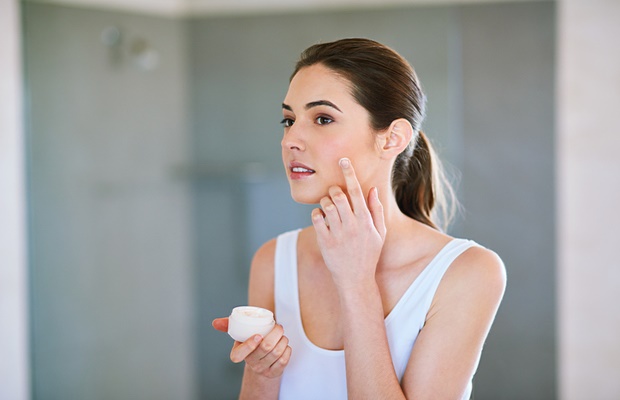
A common misconception is that you shouldn’t be using any form of moisturiser on your already oily skin, as this will aggravate your acne. Truth be told, skipping your moisturiser will not do your skin any favours. When your skin receives no moisture, it produces its own oil, causing your skin to become even oilier. Your dermatologist will include a specific moisturiser in your skincare routine, with the correct ingredients for your condition.
4. You should wash your face more often than those with regular skin
You may be tempted to wash your face as often as you can, but don’t do this. Washing your face too frequently can strip the skin’s natural moisture, which will lead to an overproduction of oil and, you guessed it, even more oily skin.
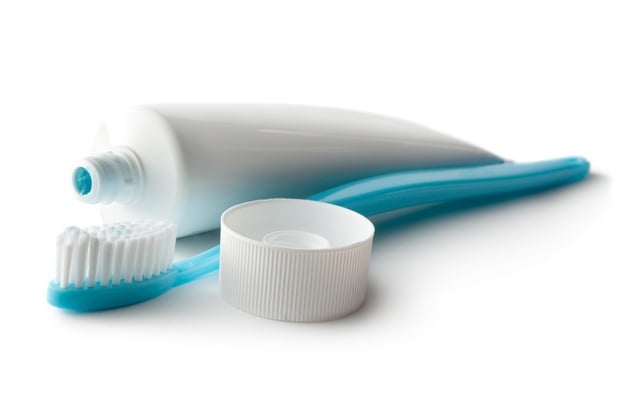
5. Toothpaste will dry acne out
This may seem like a quick go-to solution to dry out a stubborn pimple, but don’t do it, say the skin experts. Toothpastes contain harsh ingredients that may irritate the skin even more. However, the jury is still out on some aspects of this myth. Fact is that some toothpastes contain triclosan, an antimicrobial that kills bacteria – so while a dab of toothpaste may help, it should not be your go-to remedy.
6. Squeezing a pimple will provide relief
Extracting pimples is a job best left in the capable hands of your dermatologist, says the American Academy of Dermatology. They have the exact tools and sterile standards to ensure extraction without nasty side-effects. When you spread bacteria with dirty fingers, it can result in infection and even scarring.
7. Sunscreen will make your acne much worse
While the ingredients in some sunscreens might not always be suitable for all skin types, this doesn’t mean that you should go out in the sun without any protection. While a little bit of sunlight is beneficial for health, sun exposure for hours at a time is not healthy. If you are on oral medication such as Accutane, your skin is especially sensitive to the sun. Your dermatologist will be able to recommend a sunscreen suitable for you.
8. Exfoliate as much as possible
Exfoliation is an important step in any skin care regime, but it shouldn’t be overdone. Harsh abrasive products can cause dryness, redness and skin irritation – that may exacerbate existing acne.
9. You might have an underlying health issue
While some lifestyle factors such as diet and hormones do have an impact on your skin, acne doesn’t always have to have an underlying cause. Yes, acne can definitely be an unpleasant symptom of a condition like polycystic ovary syndrome (PCOS), but don’t immediately assume the worst. Monitor your acne for a couple of months and then seek further treatment for a possible underlying cause.
10. Medication is your only treatment option
Not true. Not all cases of acne are equally severe. Besides Accutane and other oral medications for acne, the oral contraception can also be prescribed in cases where hormonal fluctuation may cause acne. However, there is no one-size-fits-all treatment for acne, and if someone you know benefitted from medication it doesn’t mean you will too. Accutane can also have unpleasant side-effects such as depression. Consult your doctor or dermatologist for a personalised treatment plan.
Image credits: iStock


Women in England and Wales are having 1.9 children on average, fewer than their mothers who had 2.2 children.
[unable to retrieve full-text content]

