Health24.com | What drinking 8 or more beers a week does to your brain

Drinking just a couple beers throughout the week may be hurting your health more than you think: Even moderate drinking can damage your brain, new research from the University of Oxford in the UK suggests.

In the study, researchers recruited 550 people, tracked their weekly alcohol intake and measured their performance on brain tasks over a 30-year period.

Then, they performed MRIs on them to analyse their brain structure.

Read more: 8 surprising things that happen to your body when you stop drinking booze

They discovered that people who drank moderately – 14 to 21 units of alcohol per week – were three times as likely to have deterioration in the right side of their hippocampus than those who abstained from alcohol.

That’s important, since that area of the brain affects your memory and spatial navigational skills. Atrophy there is also a marker of Alzheimer’s disease, the researchers say.

Here’s what that means for your pub visits: Each unit contains 8g of alcohol, and a standard drink is roughly 14g of alcohol.

That’s 355ml of regular, 5% alcohol beer, or 148ml of 12% alcohol wine. So that means drinking between eight and 12 beers a week would put you in that risk category.

Read more: This is the best type of alcohol to drink if you’re trying to lose weight

People who drank more – at least 17 beers a week – showed even more deterioration in that brain region. They were nearly six times as likely to show atrophy in their hippocampus than those who didn’t drink at all.

Interestingly, there was no link between light drinkers and brain deterioration, showing that there doesn’t seem to be any brain benefit to drinking just a little bit.

Plus, the more alcohol people drank, the poorer their density of white matter – a part of the brain necessary for cognitive function – and the greater their decline in specific language skills.

Alcohol and its byproducts are toxic to nerve cells in your brain, and can cause structural damage in important areas of your brain like the hippocampus that are used in daily mental functions, the researchers say.

Read more: Here’s why booze can make your face red, flushed and swollen

This suggests that even drinking within the recommended alcohol guidelines – no more than two drinks a day for men – may still contribute to some brain problems.

This article was originally featured on www.mh.co.za

Image credit: iStock

Share Button

Health24.com | This rape victim is helping survivors worldwide

In 1999, Joburg-born Claire McFarlane was a 21-year-old working part-time in a bar to fund her entry into L’Ecole des Beaux Arts, where she hoped to study fine art.

One night, she left her workplace at 3am to take a taxi home – which was nothing out of the ordinary. Sadly, she never made it to the taxi. The man who grabbed and violently attacked her made sure of that.

“I knew what was going to happen. Stealing my bag wasn’t his intention,” McFarlane recalls. “I fought hard to get away, but it didn’t help, because the attack became more violent.”

Then, she remembered a self-defence course she’d attended at high school in Australia. A rape survivor had suggested other ways to escape a dangerous situation.

“I started talking to him instead. I lied: I told him I was terminally ill and I was dying. Not only did it change the dynamic… I think that’s what ultimately saved my life.”

Fast forward to 2014, and McFarlane finally shared the story of her brutal rape in a newspaper article. When she did, she realised she could have a positive impact on the lives of other survivors.

Rape isn’t often discussed, because it tends to make people feel uncomfortable. But the fact is, more and more women are travelling alone – and some of them are runners. It’s important they know how to stay safe, and where to go for help and what their rights are if something bad does happen.

Due to the severity of her injuries, McFarlane had to stay in Paris for a further three months, her dream of studying fine art shattered in the aftermath of her harrowing ordeal.

In an attempt to piece her life back together, she returned home to Australia, and filled every waking moment with something to do. She convinced herself everything was okay.

But in 2009 the past came back to haunt her. Her attacker had reoffended and a DNA match had been found. McFarlane was living in Europe at the time and was called upon to return to Paris and identify him in a police line-up.

Standing face-to-face with the man, she remembered him so clearly – and realised she hadn’t healed at all.

“France’s legal system isn’t the same as South Africa’s,” McFarlane explains. “The victim is a civil party in criminal proceedings, as opposed to a witness for the state. That means you have to find your own lawyer; and if you’re a foreigner, you have to pay for the lawyer.”

McFarlane’s legal battle cost her AU$50 000 (around R530 000) and was a long, drawn-out process. Her case dragged painfully through the French justice system for six years, culminating 16 years after the attack itself. And in the end, her attacker only served three and a half years of his sentence.

Sadly, she is now to afraid to return to the city where she came of age, where the artist in her blossomed.

Healing

During the legal process, McFarlane used running as a restorative and empowering tool – in particular, she found running on the beach a positive experience. And as she grew physically stronger, she felt safer.
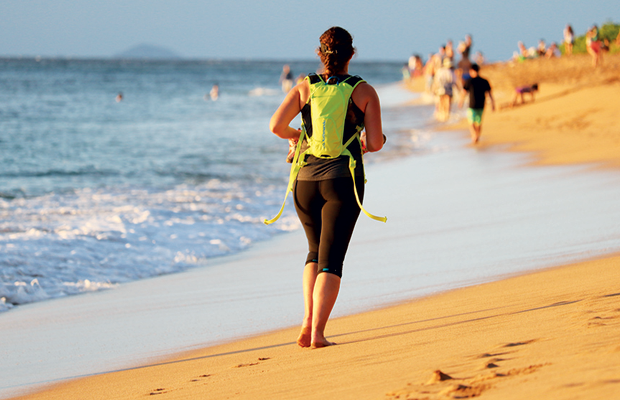
Claire McFarlane running along a beach

She also felt strong enough to share her story. “I wanted people to know what had happened to me in France, and how the justice system works there. The expectation is that France is a forward-thinking country, and that therefore, victims are treated well; but in my case, that couldn’t have been further from the truth.”

McFarlane’s story ran in an Australian newspaper in 2014, and then spread to Africa, the UK and the US. It gave other survivors the courage to break the silence. They reached out to her, eager to share their own stories of sexual violence, whether through rape, assault or child abuse.

McFarlane noticed that some of the taboos and shame that surround rape had shifted – and perhaps, she thought, these survivors would now be more likely to follow through with the criminal process. Inspired, she wondered how she might keep the conversation going.

“Sexual violence and rape is a subject that’s difficult both to talk about and to listen to; but it’s a huge, silent epidemic that affects one in four women, and one in six men. Just talking about it wasn’t going to work. I had to find another way…”

McFarlane thought about the role beach running had played in her own healing, and how she could use it as an example to others that there is life after trauma. In addition, sport has a way of uniting people – so why not use it to bring women together to talk about their experiences?

As part of her initiative, Footsteps to Inspire, McFarlane aims to run 16km of beach in every coastal country of the world, in support of rape survivors: that’s 3 500km, 230-plus beaches, barefoot where possible, in under four years. She will be the first person – and woman – to do it.

<br _moz_dirty=”” />

McFarlane began her journey in South Africa on 18 July 2016, and has so far run on 30 beaches in 29 countries, including New Zealand, India, Japan, Scotland Namibia and Kenya. She’s planning a symbolic end to her journey, in France, on 18 July 2020.

“I got food poisoning the night before I was supposed to run in Taiwan and I thought it would be the hardest of the bunch,” she recalls. “It was a surfer beach – if you can imagine a Chinese surf town! The sand was beautiful, warm, soft and black, and I was running with lovely people. And I ran 16km, as if charged with all the energy in the world.

“I’m a real example that it’s possible to run in remote areas alone, but safety is key. I make sure I know people on the ground, and ask questions about where is safe, and where isn’t – there are some places where you just can’t run alone,in which case I ask the locals to accompany me.”

A learning curve

Besides running in each country she visits and sharing her story with survivors, McFarlane connects with NGOs, services and community groups.

She aims to help governments to understand the issues faced by survivors all over the world.

“While there’s no doubt South Africa has one of the highest number of rape cases in the world, lots of other countries have the same rate of sexual violence, McFarlane has observed. “In the UK, half a million people are sexually violated every year; and in the US, someone is assaulted every 90 seconds.

“Rape culture perpetuates silence and shame: victims tend to blame themselves or feel guilty about what’s happened, and they don’t want to talk about it. In some countries, women are actually punished for opening up.”

Adding to that, from her own personal experience McFarlane knows all too well that sometimes the law fails victims completely. It’snot all bad. In some countries, McFarlane has observed positive steps being taken to ensure survivors are supported.

“Malaysia is a country that surprised me: they have one of the best one-stop crisis centres I have ever seen. Taiwan is equally progressive.

“Over the next 10 years, South Africa plans to roll out sexual violence courts across the country. Professionals will be trained to apply the law properly, so that victims will have a better outcome. I hope that society will stop blaming the victim, and instead ask why someone would decide to harm another person.”

McFarlane has been invited to speak at TEDx twice, and some of the countries and communities she has visited have pledged to hold an annual beach run to raise even more awareness about sexual violence.

“This journey is about acknowledging the issues,” McFarlane says. “Once we know what’s really happening, we can find a solution.”

This article was originally featured on www.runnersworld.co.za

Image credits: Supplied

NEXT ON HEALTH24X

Share Button

Health24.com | The 5 biggest mistakes made by weightlifters

Trainers like to say that the most important part of any training programme is consistency. If you don’t hit the gym regularly, you’ll never see results.

“But consistency can work both ways,” says BJ Gaddour, creator of Men’s Health StreamFIT.

“Science is finding habits that slow your gains or halt them altogether – from how you monitor your recovery, if at all, to which muscles you focus on or ignore.”

It doesn’t matter whether you’re a weightlifting neophyte or a seasoned ironworker; odds are your routine is peppered with missteps that are holding you back.

In fact, we’re willing to bet that the following five are among them. The more you stop, the faster your gains. Knowledge is more than power – it’s strength.

Read more: 5 secrets to increasing size strength with bodyweight exercises

1. You don’t listen to your heart before you workout  

Monitoring your HR during exercise is a smart way to gauge effort and optimise rest. But measuring your heart rate variability (HRV) between workouts can be even more effective for guiding training. 

“HRV is the fluctuation in time between heartbeats, and it indicates your level of recovery,” says strength and conditioning coach Bill Hartman.

Low variability means you’re still recovering. High variability means you’re primed for action.

“And you can use where you are in that spectrum to fine-tune each workout,” says Hartman.

Do this: If you don’t have an app or gadget that measures your HRV, there’s an old school way of monitoring your recovery. Take your HR every morning as soon as you wake up (you can use your finger on your neck). If it’s close to eight or more beats than the average, then it’s time to rest and recover.

Read more: 3 ways to beat a heart attack

2. You don’t eat enough

“Fitness-minded guys often undereat on purpose, thinking it will help uncover their abs,” says MH nutrition advisor Mike Roussell. “Or they unwittingly develop a kilojoule deficit while attempting to eat more healthily.”

Either way, the result is the same.

“Not eating enough slows your metabolism and makes it easier for you to overtrain because you don’t have enough to fuel recovery.”

Do this: “For two weeks, add 630 to 1 200kJ – the equivalent of a handful of almonds or a protein bar – to your daily diet,” says Roussell. “After two weeks, add another 630kJ a day, and stay there.”

The gradual increase will help you gain muscle, not fat – especially if the bulk of these additional kilojoules come from protein. Roussell also recommends buying a bathroom scale that measures body fat.

“If your body fat increases by a percentage point, calculate your current kilojoule intake and remain at that level – don’t add more kilojoules.”

Read more: 6 signs you’re not eating enough food – and it’s stalling your weight loss

3. You ignore your glutes

Strong glutes are useful for more than just filling out a pair of jeans; they’re the strongest link in your body’s posterior chain, the string of muscles running along your backside that drives acceleration and generates explosive power. 

“Deadlifts and squats activate them indirectly,” says Bret Contreras, author of Bodyweight Strength Training Anatomy. “But doing exercises that target those muscles directly will hit them more thoroughly, helping you crush more kilojoules and boost total-body power.”

All of which will translate to greater strength and performance.

Do this: The hip thrust. Recent research by Contreras found that this exercise activates the glute muscles to a greater degree than any other lower-body move. 

“You’re not limited by the strength of other muscles, like those in your back, as you are with squats and deadlifts, so you can use more weight,” says Contreras. “Plus, your glutes are under constant tension, maximising their growth stimulus.”

Read more: Build your glutes with the barbell hip thrust

4. You skip cardio

Hang around the barbells long enough and you’ll hear guys talking about the “interference effect” – a bro-science term referring to cardio’s supposed inhibitory influence on muscle building.

Ignore them; real science says otherwise. A recent study in the Journal of Applied Physiology found that cycling for 45 minutes, in addition to resistance training, resulted in a 14% increase in leg muscle volume. 

Strength training alone resulted in a 9% gain.

Do this: Follow those cyclists! Three or four times a week, either a few hours before a strength session or on a separate day, do at least 30 minutes of moderate- to high-intensity cardio on a track, treadmill, rower or Airdyne bike. 

“That’ll jack up your muscle-building hormones,” says Matt Harber, associate professor of kinesiology at Taylor University. “Aerobic exercise activates growth pathways in the muscle about as much as resistance exercise does, and doing both – separated by a few hours – appears to have an additive effect.”

Read more: Train your core and do cardio at the same time with these 6 moves

5. You improvise

Men who follow fitness programmes, whether with a trainer or from a book or magazine, often tinker with what’s being prescribed. 

“Guys just can’t seem to help themselves,” says Dan John, the author of Mass Made Simple. “They add more sets or exercises, they hop over to another programme when they don’t see results in a week or two, or they do additional workouts on days they should be resting.”

Trainers call it “exercise ADD”, and the result is often a training plateau.

“Improvising exercises or doing extra sets or workouts can leave you too exhausted to succeed with the programme at hand,” says John. “It’s the primary reason why so many guys never progress.”

Do this: Stay the course right until the end.

“Most programmes last about six weeks – and the key to success is making it all the way to that sixth week,” says John. 

Follow the programme with a friend, or make sure an incentive or goal is waiting for you at the end – even if that goal is little more than an “after” photo.

This article was originally featured on www.mh.co.za

Image credit: iStock

NEXT ON HEALTH24X

Share Button

Choice of tipple ‘determines different moods’

Spirits may make you angry or tearful, while red wine or beer may make you relax, research says.

Share Button

Specific tumor environment found that triggers cells to metastasize

[unable to retrieve full-text content]

Share Button

NHS overcharged by millions for key drug, says watchdog

A 6,000% price rise in an essential thyroid drug led the NHS to overpay, the UK competition body says.

Share Button

Nano-watch has steady hands

[unable to retrieve full-text content]

Share Button

Turtles and technology advance understanding of lung abnormality

[unable to retrieve full-text content]

Share Button

Minimum alcohol pricing in Scotland to start in May

The move will raise the cost of the strongest, cheapest alcohol by setting a minimum price of 50p-per-unit.

Share Button

Health24.com | 4 major signs you’re eating way too much salt

On pizza night, mac and cheese or burger night, you know you’re in for a serious dose of sodium.

But beyond those obviously salty foods, sodium has a way of sneaking on to your plate more often than you might realise.

It’s everywhere – starting with the fancy salt you pick up at the organic weekend market.

“All salt contains 40% sodium,” says Mandy Enright, a nutritionist and fitness trainer in New Jersey.

That means Kosher, pink Himalayan and even that fancy French sea salt are all just as bad as the stuff that comes in packets at fast-food restaurants.

Beyond the salt you know you’re adding, tons of sodium is still sneaking its way onto your plate.

“The general rule of thumb is that any processed or man-made food most likely contains sodium – and high levels of it,” says Enright. “If it comes in a can or is pre-made and frozen, there’s salt present.”

And although there remains debate over the more scary potential side effects of excess sodium (like its connection with blood pressure), too much of it can, at the very least, cause bloating and water retention.

According to the most recent dietary guidelines, capping your salt intake at 2 300mg of sodium (one teaspoon) per day is recommended, but most of us are soaring past their salty limit.

The average daily consumption is closer to 3 400mg of sodium per day (about one and one third teaspoons), she says. Next time you’re grabbing groceries, look at the nutrition label and peep at the sodium percentage.

“Anything with 5% or less per serving is considered a low-sodium source, while 20% or more is considered a high-sodium source,” Enright says.

Read more: 12 salt swaps so delicious you won’t notice the difference

Here are four signs you might be getting too much of the seasoning:

1. You’re seriously thirsty 

Sodium plays a starring role in helping our bodies balance fluid.

“We need some salt intake each day to help maintain water balance in the body,” says Enright. “The sodium found in salt helps to keep fluid inside our cells.”

When you’re thirsty, Enright says, your body is telling you that there’s not enough water to support how much sodium is in your system, so it sends a signal to your brain to drink up.

Read more: This latest news about sea salt is seriously scary

2. You’re battling a bad case of bloat

Salty meals tend to bring on the dreaded bloat.

“When there is too much sodium floating around the blood, water leaves the cells, causing swelling,” says Enright. “Extreme levels of sodium, followed by excess levels of fluid to balance it out can lead to bloating, particularly the belly area.”

You may also notice swelling in your fingers or toes after a particularly salty meal (we’re looking at you, ramen). Blame the bloat-inducing fluid imbalance.

Read more: 7 ways consuming too much salt can affect your body

3. You have a headache

Ever get a headache for seemingly no reason? Check your last meal.

“Too much sodium can cause blood vessels in the brain to expand, which can lead to painful headaches,” says Enright.

Read more: What’s actually worse for your body? Sugar or salt?

4. Your food tastes meh

On top of all the health risks, consuming loads of salt can actually tweak your taste buds so your food tastes less delicious over time, says Enright. The more salty seasoning you eat, the more you need to get that same mouthwatering response.

“Many people may not realise how much excess sodium they are taking in as a result of changing or dulling taste buds from excess salt exposure,” Enright says.

In other words, it’s a slippery, salty slope.

Read more: Can this de-bloating strategy actually make you gain weight?

How to slash your salt intake

If you are eating too much of the salty stuff, Enright has some easy salt-reducing strategies.

Stay away from the ‘salty six’

“The American Heart Association has dubbed the following foods the “Salty Six”: bread and rolls; cold cuts and cured meats; sandwiches and burgers (particularly those from fast food); pizza; canned soups; and cooked chicken (like those frozen chicken nuggets),” Enright says.

Call on your inner chef

Eating out or getting takeout is a speedy way to make your sodium levels skyrocket – the menu is packed with sneaky salt. “Aim to cook more meals at home, and bring your own food to work or school so you have more control over how much salt is being added to your food,” advises Enright.

Find new flavours 

When you cook, experiment with setting the shaker aside. “Aim to get flavours from herbs – both fresh and dried – spices, and acids like lemon juice and vinegar,” Enright says.

Rinse and repeat

When you can’t avoid canned goods, look for “low-sodium” or “no-salt-added” versions. “Rinsing off your beans and legumes can also help remove some of the excess sodium,” says Enright. “Or consider making large batches of dried beans than contain no salt and add your own seasoning.”

This article was originally featured on www.womenshealth.co.za

Image credit: iStock

NEXT ON HEALTH24X

Share Button