Diabetes patients should have better and more equal access to newer medicines, says official healthcare body.


Diabetes patients should have better and more equal access to newer medicines, says official healthcare body.
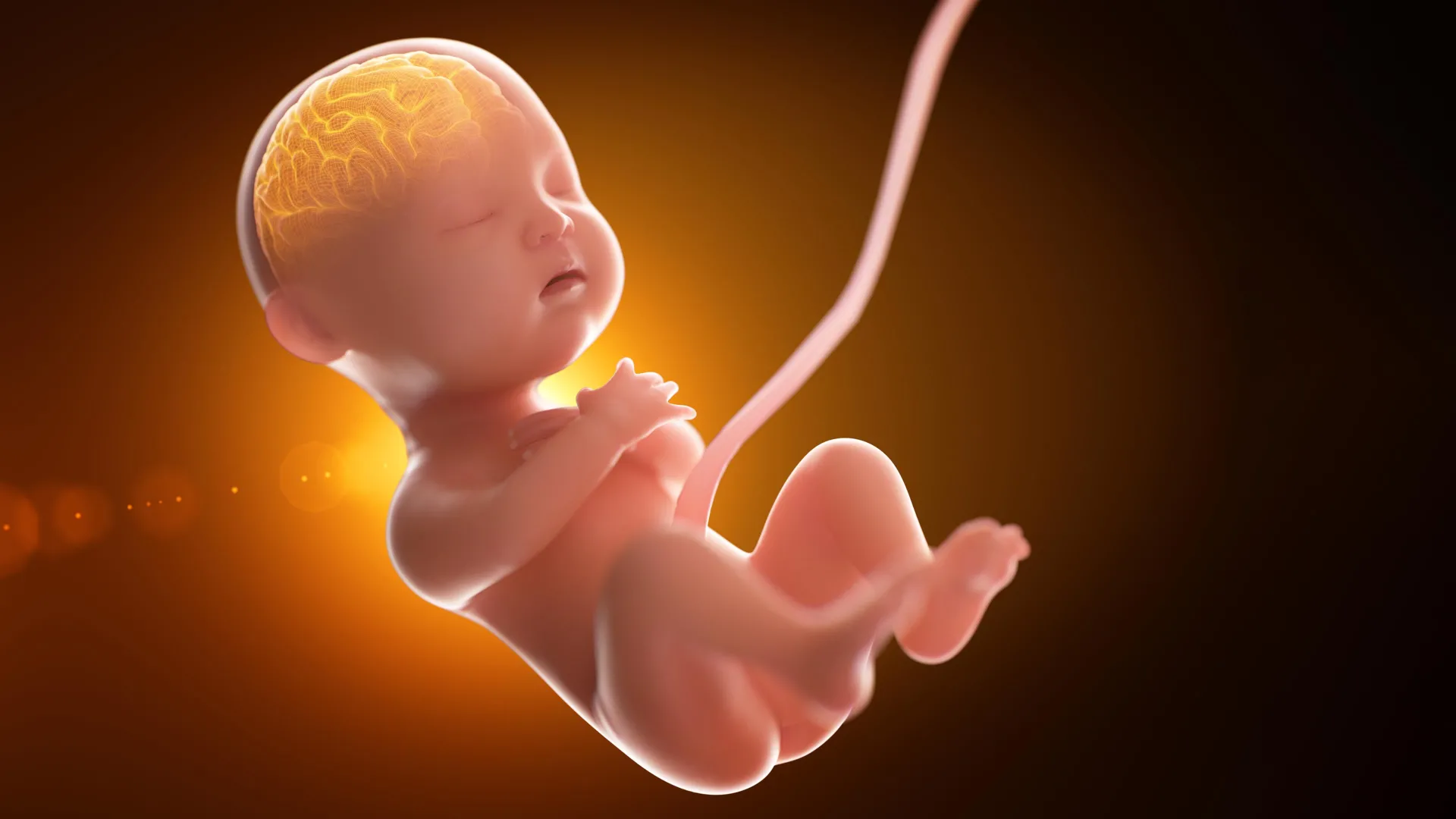
New research from Michigan State University finds that microbes play an important role in shaping early brain development, specifically in a key brain region that controls stress, social behavior, and vital body functions.
The study, published in Hormones and Behavior, used a mouse model to highlight how natural microbial exposure not only impacts brain structure immediately after birth but may even begin influencing development while still in the womb. A mouse model was chosen because mice share significant biological and behavioral similarities with humans and there are no other alternatives to study the role of microbes on brain development.
This work is of significance because modern obstetric practices, like peripartum antibiotic use and Cesarean delivery, disrupt maternal microbes. In the United States alone, 40% of women receive antibiotics around childbirth and one-third of all births occur via Cesarean section.
“At birth, a newborn body is colonized by microbes as it travels through the birth canal. Birth also coincides with important developmental events that shape the brain. We wanted to further explore how the arrival of these microbes may affect brain development,” said Alexandra Castillo Ruiz, lead author of the study and assistant professor in the MSU Department of Psychology.
The research team focused on a brain region called the paraventricular nucleus of the hypothalamus (PVN), which plays a central role in regulating stress, blood pressure, water balance, and even social behavior. Their previous work had shown that mice raised without microbes, or germ-free mice, had more dying neurons in the PVN during early development. The new study set out to determine whether this increased cell death translated to changes in neuron number in the long run, and if any effects could be caused by the arrival of microbes at birth or if they began in the womb via signals from maternal microbes.
To find out, the researchers used a cross-fostering approach. Germ-free newborn mice were placed with mothers that had microbes and compared them to control groups. When the brains of these mice were examined just three days after birth, results were striking: All mice gestated by germ-free mothers had fewer neurons in the PVN, regardless of whether they received microbes after birth. They also found that germ-free adult mice had fewer neurons in the PVN.
“Our study shows that microbes play an important role in sculpting a brain region that is paramount for body functions and social behavior. In addition, our study indicates that microbial effects start in the womb via signaling from maternal microbes,” said Dr. Castillo-Ruiz.
Rather than shunning our microbes, we should recognize them as partners in early life development,” said Dr. Castillo-Ruiz. “They’re helping build our brains from the very beginning.”
The illustrated walking maps guide people along four car-free routes in and around Tewkesbury.

For decades, astrochemists have been looking for sulfur atoms in space and finding surprisingly little of the element that is a key ingredient to life. A new study could point to where it has been hiding.
An international team of researchers including Ryan Fortenberry, an astrochemist at the University of Mississippi, and Ralf Kaiser, professor of chemistry at the University of Hawaii at Mānoa and Samer Gozem, computational chemist at Georgia State University, published their research in the journal Nature Communications.
“Hydrogen sulfide is everywhere: it’s a product of coal-fired power plants, it has an effect on acid rain, it changes the pH levels of oceans and it comes out of volcanoes,” Fortenberry said. “If we gain a better understanding of what the chemistry of sulfur can do, the technological commercialization that can come from that can only be realized with a foundation of fundamental knowledge.”
Sulfur is the 10th most abundant element in the universe and is considered a vital chemical element for planets, stars and life. The lack of molecular sulfur in space has been a mystery for years.
“The observed amount of sulfur in dense molecular clouds is less – compared to predicted gas-phase abundances- by three orders of magnitude,” Kaiser said.
The answer might lie in interstellar ice.
In cold regions of space, sulfur can form two distinct, stable configurations: octasulfur crowns, which are a group of eight sulfur atoms configured in ring-like crowns, and polysulfanes, chains of sulfur atoms that are bonded by hydrogen. These molecules can form on icy dust grains, locking sulfur into solid forms.
“If you use, for instance, the James Webb Space Telescope, you get a specific signature at specific wavelengths for oxygen and carbon and nitrogen and so forth,” Fortenberry said. “But when you do that for sulfur, it’s out of whack, and we don’t know why there isn’t enough molecular sulfur.
“What this work is showing is that the most common forms of sulfur that we already know about are probably where the sulfur is hiding.”
Kaiser and Fortenberry’s research showed that these sulfur-rich molecules may be abundant in icy regions of interstellar space, giving astronomers a potential road map to solving the sulfur puzzle.
“Laboratory simulations of interstellar conditions such as this study discover possible inventories of sulfur-containing molecules that can be formed on interstellar ices,” Kaiser said. “Astronomers can then utilize the results and look for these polysulfane molecules in the interstellar medium via radio telescopes once sublimed into the gas-phase in star forming regions.”
The reason sulfur has been so difficult to find is that the bonds it forms are always changing, going from crowns to chains and a variety of other formulations.
“It never maintains the same shape,” Fortenberry said. “It’s kind of like a virus – as it moves, it changes.”
The researchers’ work identifies possible stable configurations that astronomers can search for in the universe.
“The thing that I love about astrochemistry is that it forces you to ask hard questions, then forces you to come up with creative solutions,” Fortenberry said. “And those hard questions and creative solutions can have significant, unintended positive consequences.”
Charlotte Chapman-Hart tells of her experience of a lack of coordinated and informed care.
A chef with kidney failure calls for Pip assessments to change after he was refused the benefit twice.
Akram Mohammed died of various infections but his parents previously blamed their living conditions.
Art Shape works with the NHS to deliver creative courses as prescriptions.
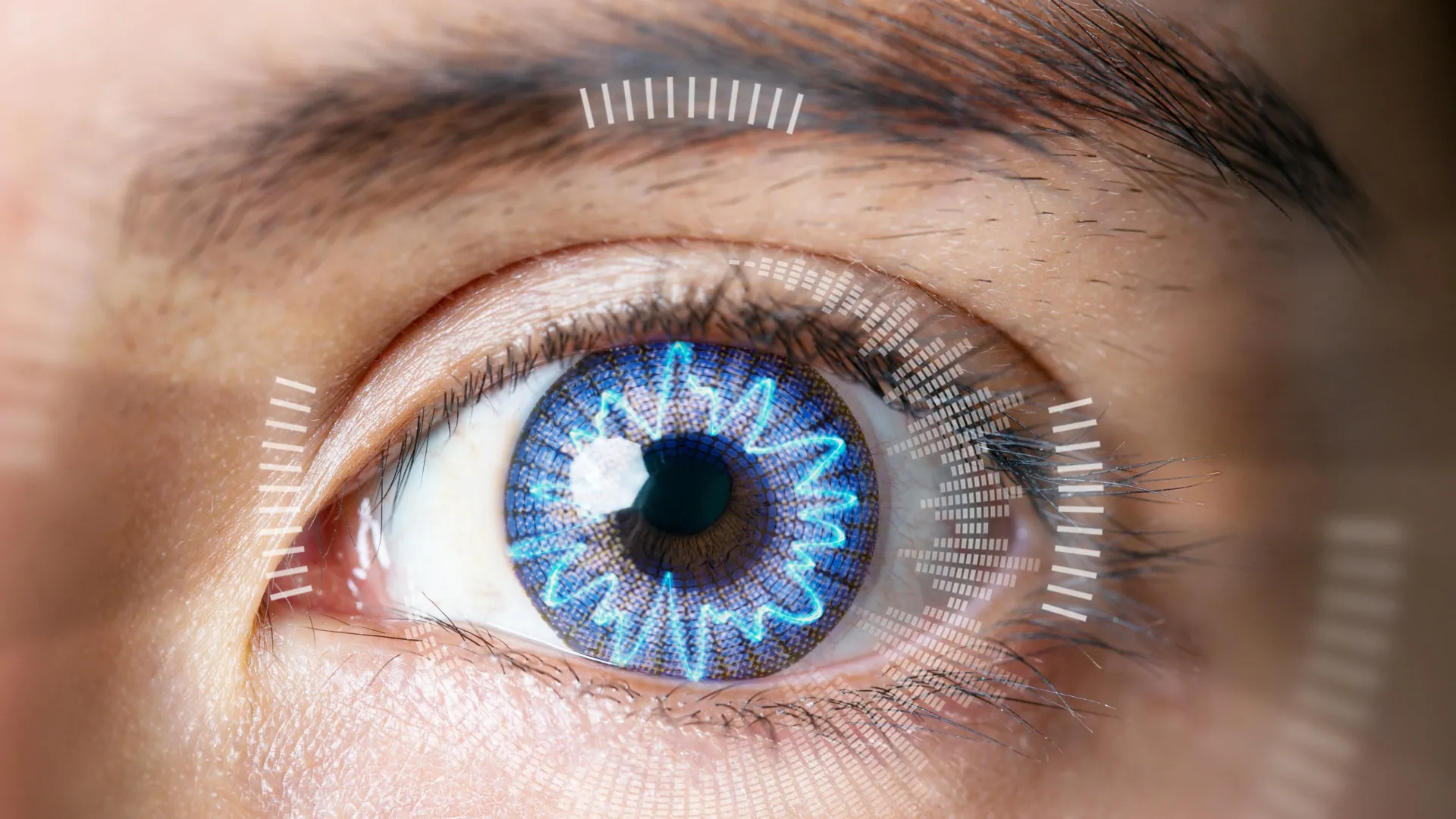
Millions of Americans have altered vision, ranging from blurriness to blindness. But not everyone wants to wear prescription glasses or contact lenses. Accordingly, hundreds of thousands of people undergo corrective eye surgery each year, including LASIK — a laser-assisted surgery that reshapes the cornea and corrects vision. The procedure can result in negative side effects, prompting researchers to take the laser out of LASIK by remodeling the cornea, rather than cutting it, in initial animal tissue tests.
Michael Hill, a professor of chemistry at Occidental College, will present his team’s results at the fall meeting of the American Chemical Society (ACS). ACS Fall 2025 is being held Aug. 17-21; it features about 9,000 presentations on a range of science topics.
Human corneas are dome-shaped, clear structures that sit at the front of the eye, bending light from surroundings and focusing it onto the retina, where it’s sent to the brain and interpreted as an image. But if the cornea is misshapen, it doesn’t focus light properly, resulting in a blurry image. With LASIK, specialized lasers reshape the cornea by removing precise sections of the tissue. This common procedure is considered safe, but it has some limitations and risks, and cutting the cornea compromises the structural integrity of the eye. Hill explains that “LASIK is just a fancy way of doing traditional surgery. It’s still carving tissue — it’s just carving with a laser.”
But what if the cornea could be reshaped without the need for any incisions?
This is what Hill and collaborator Brian Wong are exploring through a process known as electromechanical reshaping (EMR). “The whole effect was discovered by accident,” explains Wong, a professor and surgeon at the University of California, Irvine. “I was looking at living tissues as moldable materials and discovered this whole process of chemical modification.”
In the body, the shapes of many collagen-containing tissues, including corneas, are held in place by attractions of oppositely charged components. These tissues contain a lot of water, so applying an electric potential to them lowers the tissue’s pH, making it more acidic. By altering the pH, the rigid attractions within the tissue are loosened and make the shape malleable. When the original pH is restored, the tissue is locked into the new shape.
Previously, the researchers used EMR to reshape cartilage-rich rabbit ears, as well as alter scars and skin in pigs. But one collagen-rich tissue that they were eager to explore was the cornea.
In this work, the team constructed specialized, platinum “contact lenses” that provided a template for the corrected shape of the cornea, then placed each over a rabbit eyeball in a saline solution meant to mimic natural tears. The platinum lens acted as an electrode to generate a precise pH change when the researchers applied a small electric potential to the lens. After about a minute, the cornea’s curvature conformed to the shape of the lens — about the same amount of time LASIK takes, but with fewer steps, less expensive equipment and no incisions.
They repeated this setup on 12 separate rabbit eyeballs, 10 of which were treated as if they had myopia, or nearsightedness. In all the “myopic” eyeballs, the treatment dialed in the targeted focusing power of the eye, which would correspond to improved vision. The cells in the eyeball survived the treatment, because the researchers carefully controlled the pH gradient. Additionally, in other experiments, the team demonstrated that their technique might be able to reverse some chemical-caused cloudiness to the cornea — a condition that is currently only treatable through a complete corneal transplant.
Though this initial work is promising, the researchers emphasize that it is in its very early stages. Next up is what Wong describes as, “the long march through animal studies that are detailed and precise,” including tests on a living rabbit rather than just its eyeball. They also plan to determine the types of vision correction possible with EMR, such as near- and far-sightedness and astigmatism. Though the next steps are planned, uncertainties in the team’s scientific funding have put them on hold. “There’s a long road between what we’ve done and the clinic. But, if we get there, this technique is widely applicable, vastly cheaper and potentially even reversible,” concludes Hill.
Title Electrochemical corneal refraction
Abstract The cornea is a transparent, highly organized anatomical structure that is responsible for ~2/3 of the refractive power of the eye. The corneal stroma consists of orthogonally stacked collagen- fibril lamellae whose molecular composition and precise macromolecular geometry eliminate backscattered light and maintain the shape of the cornea. Anatomical variation, birth defects, trauma, and various pathologies can alter the shape, structural stability, and transparency of the cornea, thus affecting vision. Surgical interventions to treat myopia, hyperopia, and astigmatism include laser-assisted in situ keratomileusis (LASIK) and photorefractive keratectomy (PRK). Despite their popularity, these procedures are expensive and permanently lower the biomechanical strength of the cornea. Here we report our efforts to apply electromechanical reshaping (EMR) as a molecular- based, non-ablative/non-incisional alternative to laser vision refraction, using ex vivo rabbit globes. EMR relies on short electrochemical pulses to electrolyze interstitial water, with subsequent diffusion of protons into the extracellular matrix of collagenous tissues; protonation of immobilized anions within this matrix disrupts the ionic-bonding network that provides structural integrity. This leaves the tissue transiently responsive to mechanical remodeling; subsequent re-equilibration to physiological pH restores the ionic matrix, resulting in persistent shape change of the tissue. Optical coherence tomography (OCT), second-harmonic generation (SHG), and confocal microscopy suggest that EMR enables control over corneal contouring while maintaining the underlying macromolecular collagen structure and stromal cellular viability.
This research was funded by the National Eye Institute of the National Institutes of Health and the John Stauffer Charitable Trust.
Andrew had known since childhood that one day he would lose his sight. He donated his skin cells to researchers working on a treatment, hoping for a breakthrough not just for himself, but also for his daughter…
