Health24.com | Here’s how lymphedema can affect your life

While Mokgadi Magdeline Morekhure of Alexandra managed to survive breast cancer, she has been left battling with a heavy swollen arm as a result of the lymphedema she contracted because of the illness.

Lymphedema is the swelling in a limb caused by a blockage of the lymph glands that are left unable to drain lymph fluid from the arm or leg concerned. It can be painful or uncomfortable and is generally caused by lymph node removal or damage during cancer treatment.

Heavy, swollen arm

Morekhure’s story goes back to 1980 when she discovered a lump in her breast while pregnant with her fourth child. She was advised to consult doctors who conducted various tests and diagnosed her with breast cancer. She had surgery to remove her breast and to stop the cancer spreading.  

However, the removal of some of the nearby lymph glands left her with a heavy, swollen arm.

“At first it was difficult to admit but I’ve since accepted it. Occasionally I get stares from people who seem not to understand, otherwise I’m fine,” said the 66-year-old mother of four.

According to a local clinician, Dr Violet Setati, the removal of a breast goes together with removing the lymph nodes.

“These carry cancerous cells, and in the case of Morekhure they have blocked the lymphatic system causing heaviness and swelling of her arm. This is not common for most survivors. It depends on an individual,” Setati explained.

Lymphedema not painful

“Removing a breast is a very serious operation. You can’t do it without tampering with the lymphatic system, although generally most patients don’t experience lymphedema. They come out fine,” she said, and adds that Morekhure would have lost her life had she not had the surgery.

“She has survived a life-threatening disease, and although she now has lymphedema, it is something she can cope with,” Setati said.

While the lymphedema is not painful and Morekhure is able to do normal duties, she has other challenges. As part of her routine physiotherapy she has been told that she needs to wear a specialised double sleeve to help reduce the weight and flatten the limb.

“But my problem is that it is quite expensive. I cannot afford it,” Morekhure said. – Health-e News.

Image credit: iStock

Share Button

Health24.com | Here’s how having a doula by your side can ease your pregnancy

Childbirth can be a stressful time for many new moms. Preparing for the arrival of your baby while dealing with the physiological changes your body is going through can be a lot to handle.

Enlisting the help of a doula can help assuage your fears and manage your anxiety.

Mother of three, Tarryn Walton, gained invaluable knowledge about the aspects of pregnancy with the birth of each of her children. She became a doula to share this experience with soon-to-be moms to ensure they have the best possible experience.

“I believe parents should be well supported, prepared and informed of all their choices before their first pregnancy and birth so that they have the best chance of experiencing a birth that is positive and empowering,” she says.

Read more: This 31-week pregnant woman says no doctors will take her

Over the past two years, Walton, has helped more than 50 moms. Here she shares the key things you need to know if you’re considering making use of a doula’s services.

1. A doula is a walking talking mommy handbook

A doula is there to provide emotional, informational and physical support to parents during pregnancy, labour and birth.

“It is so important to understand your options and rights during childbirth and to have a team who understands and supports your wishes,” says Walton.

During pregnancy a doula will answer questions about what to expect during labour and what your options are. As well as helping you find relief from various symptoms such as leg cramps, insomnia and nausea.

“Often there are little questions that pop up and, if left unanswered, can niggle and create discomfort and anxiety,” explains Walton.

Read more: This pregnant woman’s Facebook post may have saved her baby’s life

You can book the services of a doula at any stage of your pregnancy. While some mothers prefer to just use their services for labour and birth, some women enlist a doula’s help early on.

“Pregnancy is a journey and having your doula join you early in the process, gives her time to get to know you and provides opportunity for her to give you information that may be helpful throughout the pregnancy. It also means you have someone to answer all the possible questions that arise at various stages of your pregnancy,” says Walton.

2. She’s your BFF in the delivery room

If you’ve ever had a baby before, you know there are a lot of people in the labour and delivery room. In fact, you get so used to being naked and having doctors check your dilated cervix that you probably wouldn’t care if an entire class of med students came in.

Thing is, as helpful and amazing as your medical team may be, they file in and out. Nurses change shifts regularly and the OB comes in to manage pushing and delivery, says doula Erica Chidi Cohen, co-founder of LOOM and author of Nurture: A Modern Guide to Pregnancy, Birth, Early Motherhood – and Trusting Your Body.

A doula will be by your side the whole time – even if you have one of those 72-hour labours. “I believe doulas do their best work in hospitals,” she says.

But, you may think, my partner will be by my side! We took those birthing classes! He or she is going to coach me through it.

The thing about labour is that it can be a lot for even the most supportive partner to handle.

“It’s hard for your partner to see you in pain. It sends them into a trauma response and for some, it incapacitates them,” says Cohen. So the extra calming support from a doula can be key to getting you through.

Read more: 7 common things that can cause premature birth

Walton also emphasises that a doula does not replace your partner’s role during labour and birth.

“A good doula knows how to involve the dad and will never undermine his role during the birth process,” she explains.

3. They stick around once your baby is born

A doula doesn’t just peace out once your bun is out of the oven. It would be an understatement to say that that post-birth, your body is a bit… off.

Your vagina is bleeding, your boobs are bursting with milk, you’re leaking pee and your uterus is cramping back into its original position. Luckily, a doula has your back through all of this.

“We help moms with breastfeeding, help them change clothes or pads, help get them comfortable and settled,” says Walton.

“At the post-natal visit, a doula provides the opportunity for the parents to talk about their perceptions and experiences during the birth and answers any questions pertaining to the birth experience or new baby. We also check for any signs of postpartum depression.”

Ready to make use of a doula’s services? You can find a list of certified doulas on the W.O.M.B.S website.

This article was originally published on www.womenshealthsa.co.za
Image credit: iStock

NEXT ON HEALTH24X

Share Button

Health24.com | Limpopo hospitals reportedly running out of HIV test kits

Treatment Action Campaign (TAC) in Limpopo is concerned about new infections in unborn babies as pregnant women are not being tested due to the shortage of HIV test kits.

Pregnant women not being tested

The local TAC branch has confirmed that several clinics in the Vhembe and Mopani districts are without HIV test kits, resulting in patients being sent back or referred to other institutions without being tested. Hospitals have also been impacted, with Elim Hospital – the oldest public health facility in the province among them. Here too patients are being sent away without being tested, despite their willingness to know their HIV status.

“We are worried about the shortage of HIV test kits in government medical centres, which include hospitals and clinics. It is negatively affecting our fight against HIV as pregnant women are not being tested, which might lead to babies being born HIV positive. And the worst part is that the Department of Health has kept quiet and they are not doing anything to address the situation,” said TAC Provincial Manager, Moses Makhomsani.

He said they have been trying to address the situation with the provincial department of health “for quite some time” without success, as no one from the department is willing to take responsibility.

‘I was so disappointed’

“We are also concerned about people who are being raped and sent home without being tested for HIV due to the shortage of kits at the clinics, as this might lead to new unnecessary infections. The department is failing the nation as they cannot encourage people to get tested and know their status, but then fail to supply test kits. This is a crisis we do not need as a country,” he said.

“I was so disappointed when I went to Elim Hospital hoping to get tested for HIV, only to be told to come back another day. I was told that the hospital was out of the testing kits, which left me asking myself how come a hospital as big as this one can run out of the kits. I am still shocked even now,” said Sylvester Mulaudzi.

Earlier this year Health-e reported on poor service and shocking conditions at Elim Hospital, and how this was negatively affecting thousands of residents who rely on the hospital for medical services as it’s one of the more easily accessible hospitals in the district.

Claims refuted

“How can a hospital be out of test kits, whereas they keep on encouraging people to get tested? How do they expect us to get tested when the hospital does not even have test kits?” said Mulaudzi. A spokesperson at the hospital said they did have a few test kits, but they were extremely limited and reserved for pregnant women only.

However, Limpopo Department of Health spokesperson Thabiso Teffo refuted the TAC’s allegations, saying that the institutions have enough stock.

“I can assure you that all these claims are not true. We have enough test kits at all those mentioned clinics and hospitals. It is just that we no longer do confirmatory tests if a person tests negative. We have never received any complaints from any of our institutions regarding stock shortages,” said Teffo. –  Health-e News.

Image credit: iStock

Share Button

NHS future precarious, says regulator

Staff shortages and rising demand means standards are likely to slip, says England’s regulator.

Share Button

Health24.com | Real-life ‘vampires’ allergic to the sun

Not all people who can only come out at night are vampires. Some people who are normal in every other respect really struggle with exposure to sunlight.

In July 2017 Daily Mail UK reported on 27-year old Sam Phelps, a marine engineer from Bristol, UK. For him, a trip to the beach involves wearing a mask, wetsuit, gloves and boots.

He has to cover up his face while running errands. Security guards think he is some kind of criminal.

For Sam, being exposed to sunlight results in a very painful rash. And there are many people just like him. His condition is called erythropoietic protoporphyria (EPP), an extreme allergic reaction to UV rays. He is allergic to sunlight and extremely sensitive to light (photosensitive).

‘Vampire disease’

EPP is only one form of several forms of severe sunlight allergies that people refer to as “vampire disease” – an inability to go out when the sun is shining.

However, not all cases of sun allergies are as severe as Sam’s, and it’s possible that you might have it if you are extremely sensitive to the sun. 

When the body ‘fights’ sunlight

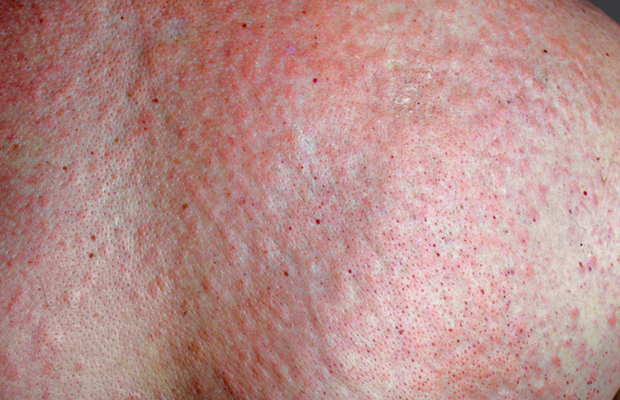
A sunlight allergy is very different from sunburn. It occurs when your immune system reacts to to UV ray exposure. This causes itching, burning and a severe rash.

According to research it’s not always clear exactly why the body has this reaction to the sun, but what happens is that the immune system recognises sunlight as something “foreign” and tries to fight it off.

Some studies have found that certain forms of sun allergies are inherited, while others occur in people who are just highly sensitive to sunlight.

There are four major types of sun allergies:

  • Erythropoietic protoporphyria (EPP). This variation is caused by abnormally high levels of protoporphyrin in red blood cells, causing the body to be extremely sensitive to visible light. Symptoms include pain, discomfort, itching and redness. 
  • Solar urticaria. Solar urticaria is believed to be caused by antibodies that fight the sun. The skin starts to swell and hives appear almost immediately after exposure to sunlight. 
  • Actinic prurigo (also referred to as hereditary PMLE). Researchers believe that a certain protein in the body gets triggered by sunlight. Severe itching and red, inflamed lumps appear almost immediately after sun exposure. This can also be accompanied by dry, cracked lips and tight skin. 
  • Polymorphous light eruption (PMLE). Medical professionals are not quite sure what causes PMLE. A red rash appears 30 minutes or several hours after sun exposure. The skin will also itch and burn.

                                                    A painful red rash caused by solar urticaria

                                                Raised hives like these could also be a symptom of sun allergy

                                        Symptoms can cover large areas of skin which has been exposed to sunlight

                                           Painful blisters can also be a symptom of sun allergy 

Could I have a sun allergy?

The severity and frequency of a sun allergy varies from person to person. The appearance and symptoms of a sun allergy can also vary according to the type of sun allergy you have. It’s possible for anyone to suffer from severe sunburn after prolonged exposure in the sun, but it’s more likely that you have a sun allergy when:

  • You suffer from redness, itchiness, blisters or hives after some time in the sun.
  • Your skin condition only appears on body parts that have been exposed to the sun and develops in minutes, or hours after sun exposure.
  • You experience small, raised bumps, scaly or cracked skin after sun exposure.

If these conditions reappear every time you are exposed to the sun, you might be suffering from a form of sun allergy. Visit your dermatologist or doctor for treatment and prevention options.

Sun sensitivity that’s not an allergy

There is a difference between a sun allergy and sun sensitivity.

It’s important to keep in mind that some medications (especially some oral treatments for acne) may significantly increase your sensitivity to the sun. This does not mean that your body is allergic to sunlight. It’s also possible in some cases to develop contact dermatitis from the sunscreen you are using. Certain medical conditions such as porphyria and lupus can also cause your skin to be more sensitive to the sun.

Managing a sun allergy

While some people are so severely affected that they are confined to their homes, this isn’t always the case. Here are a few simple ways to manage symptoms:

  • Work with your dermatologist or doctor to come up with a personalised treatment plan.
  • Avoid the sun when it is at its hottest, especially between 10:00 and 16:00.
  • Wear an effective sunscreen with the highest possible SPF. Discuss with your doctor or dermatologist which ingredients are right for you.
  • Wear protective clothing, a hat and sunglasses when outside.
  • Be mindful of medications and personal care products that may trigger photosensitivity.

Image credits: iStock and Wikipedia

Share Button

Does educating women boost vaccinations?

In poor countries, better education for women sees more children immunised but the trend reverses in rich countries.

Share Button

Both sexes ‘should be taught about periods together at school’ – charity

A charity says not talking about periods can be damaging and wants it to be discussed in class.

Share Button

Illegal tongue splitting procedures exposed

Body modification artists exposed carrying out illegal and dangerous tongue splitting procedures.

Share Button

Gene test ‘narrows down breast cancer risk’

It could reduce the number of mastectomies among high-risk women, researchers say.

Share Button

Health24.com | The sex position most likely to break your penis

Yes, you can actually break your penis – and some sex positions can put you at a greater risk for penile fracture than others, according to a recent study published in the International Journal of Impotence Research.

Read more: The 10 worst things that could happen to your penis

For the study, researchers looked at 90 patients aged 18 to 66 who had fractured their penises. They found that 77% of those cases were sexual-trauma related, so they took a closer look at the sex positions being performed during the time of their injuries.

The most dangerous sex position? A whopping 41% of men fractured their penis during doggy style, followed by missionary and woman-on-top.

The severity of the fracture was similar between doggy and missionary, but significantly worse when comparing doggy and woman-on-top, the study found.

Read more: The sex position 39% of women hate

Penile fractures occur when you put too much force on your erection. There are sponge-like tubes in the tissue of your penis that become rigid when filled with blood, urologist Tobias Köhler, MD, told us last year. Those tubes don’t bend when they’re hit with lots of force, which can cause them to “break”, leading to pain, swelling, blood blockages and, if it’s bad enough, a trip to the ER.

And yes, you may even hear a cracking or popping sound, the study’s authors note.

Recent Brazilian research concluded that woman-on-top is the riskiest sex position for your penis, since she’s in control of angle and speed.

If she accidentally slips out, your member can hit a bony area of her body, or she may sit back down on your penis (with her entire body weight) at a funny angle.

But what makes doggy style so severe in this case? The researchers speculate that when you’re entering her from behind, you may get overly excited and sex can become “extremely vigorous”.

If your penis slips out of her vagina and hits against her perineum or pubic symphysis – both of which are hard, bony surfaces – it can cause greater trauma to your rod.

Read more: 9 penis problems and how to deal with them

One way to reduce your risk? Opt for literally any other sex position, like one of these 12 hot sex positions.

And as hard as it may be sometimes, try not to overdo it in bed. When sex gets vigorous, you put your penis at risk.

Maintaining your cool will help you avoid any awkward slip ups or angles, says Dr Köhler.

If you do hear a cracking sound or experience pain during sex, here’s exactly what you should do if you think you fractured your penis.

This article was originally published on www.mh.co.za

Image credit: iStock

NEXT ON HEALTH24X

Share Button