The disappearing planet next door has astronomers intrigued

Found using the MIRI instrument on NASA’s Webb telescope, which was managed by JPL through launch, the possible planet would be easier to study than more far-flung worlds.

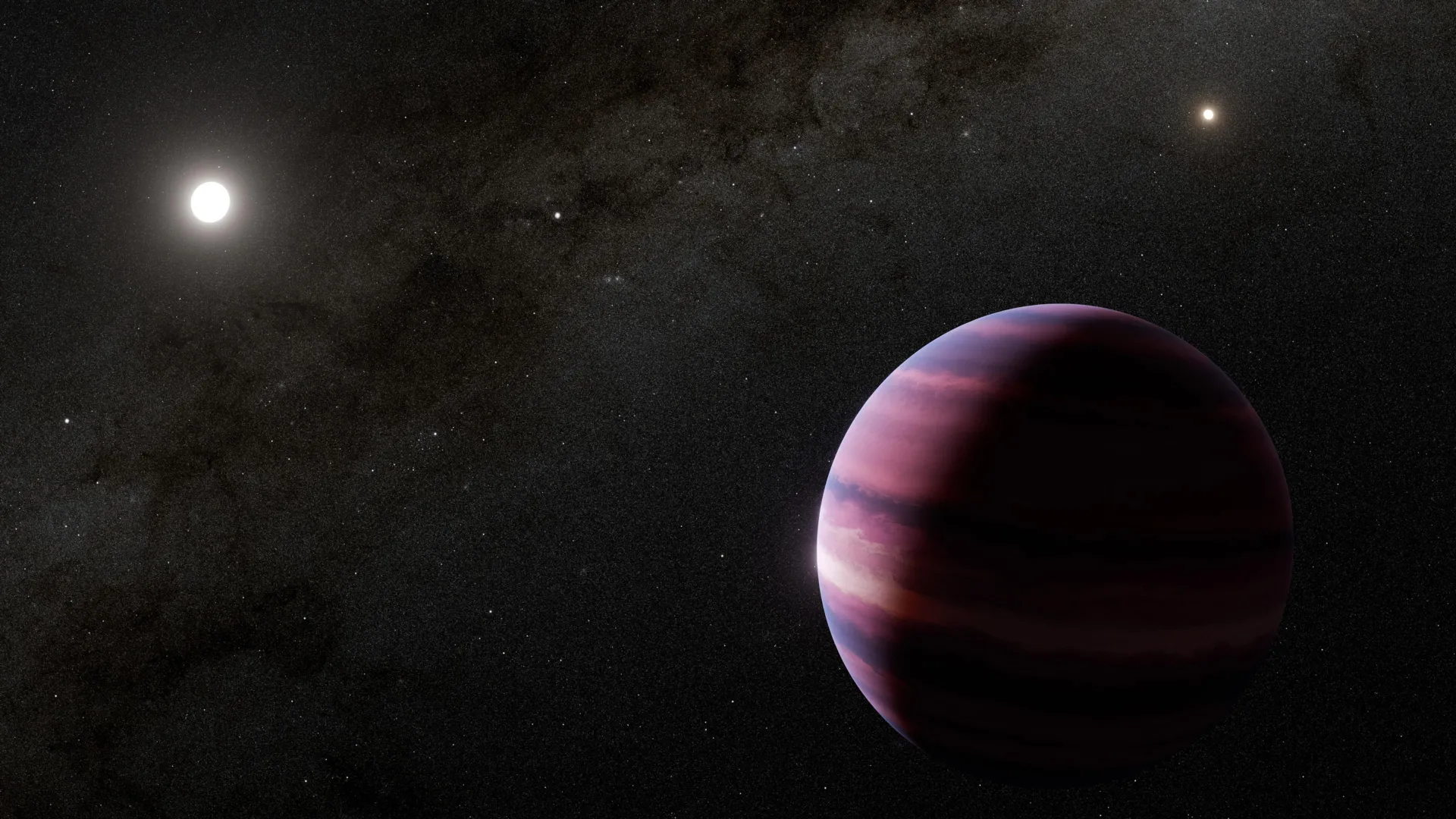
Astronomers using NASA’s James Webb Space Telescope have found strong evidence of a giant planet orbiting a star in the stellar system closest to our own Sun. At just 4 light-years away from Earth, the Alpha Centauri triple star system has long been a compelling target in the search for worlds beyond our solar system.

Visible only from Earth’s Southern Hemisphere, it’s made up of the binary Alpha Centauri A and Alpha Centauri B, both Sun-like stars, and the faint red dwarf star Proxima Centauri. Alpha Centauri A is the third brightest star in the night sky. While there are three confirmed planets orbiting Proxima Centauri, the presence of other worlds surrounding Alpha Centauri A and Alpha Centauri B has proved challenging to confirm.

Now, Webb’s observations from its Mid-Infrared Instrument (MIRI) are providing the strongest evidence to date of a gas giant orbiting Alpha Centauri A. The results have been accepted in a series of two papers in The Astrophysical Journal Letters.

If confirmed, the planet would be the closest to Earth that orbits in the habitable zone of a Sun-like star. However, because the planet candidate is a gas giant, scientists say it would not support life as we know it.

“With this system being so close to us, any exoplanets found would offer our best opportunity to collect data on planetary systems other than our own. Yet, these are incredibly challenging observations to make, even with the world’s most powerful space telescope, because these stars are so bright, close, and move across the sky quickly,” said Charles Beichman, NASA’s Jet Propulsion Laboratory and the NASA Exoplanet Science Institute at Caltech’s IPAC astronomy center, co-first author on the new papers. “Webb was designed and optimized to find the most distant galaxies in the universe. The operations team at the Space Telescope Science Institute had to come up with a custom observing sequence just for this target, and their extra effort paid off spectacularly.”

Several rounds of meticulously planned observations by Webb, careful analysis by the research team, and extensive computer modeling helped determine that the source seen in Webb’s image is likely to be a planet and not a background object (like a galaxy), foreground object (a passing asteroid), or other detector or image artifact.

The first observations of the system took place in August 2024, using the coronagraphic mask aboard MIRI to block Alpha Centauri A’s light. While extra brightness from the nearby companion star Alpha Centauri B complicated the analysis, the team was able to subtract out the light from both stars to reveal an object over 10,000 times fainter than Alpha Centauri A, separated from the star by about two times the distance between the Sun and Earth.

While the initial detection was exciting, the research team needed more data to come to a firm conclusion. However, additional observations of the system in February 2025 and April 2025 (using Director’s Discretionary Time) did not reveal any objects like the one identified in August 2024.

“We are faced with the case of a disappearing planet! To investigate this mystery, we used computer models to simulate millions of potential orbits, incorporating the knowledge gained when we saw the planet, as well as when we did not,” said Ph.D. student Aniket Sanghi of Caltech in Pasadena, California. Sanghi is a co-first author on the two papers covering the team’s research.

In these simulations, the team took into account both a 2019 sighting of the potential exoplanet candidate by the European Southern Observatory’s Very Large Telescope, the new data from Webb, and considered orbits that would be gravitationally stable in the presence of Alpha Centauri B, meaning the planet wouldn’t get flung out of the system.

Researchers say a non-detection in the second and third round of observations with Webb isn’t surprising.

“We found that in half of the possible orbits simulated, the planet moved too close to the star and wouldn’t have been visible to Webb in both February and April 2025,” said Sanghi.

Based on the brightness of the planet in the mid-infrared observations and the orbit simulations, researchers say it could be a gas giant approximately the mass of Saturn orbiting Alpha Centauri A in an elliptical path varying between one to two times the distance between the Sun and Earth.

“If confirmed, the potential planet seen in the Webb image of Alpha Centauri A would mark a new milestone for exoplanet imaging efforts,” Sanghi says. “Of all the directly imaged planets, this would be the closest to its star seen so far. It’s also the most similar in temperature and age to the giant planets in our solar system, and nearest to our home, Earth,” he says. “Its very existence in a system of two closely separated stars would challenge our understanding of how planets form, survive, and evolve in chaotic environments.”

If confirmed by additional observations, the team’s results could transform the future of exoplanet science.

“This would become a touchstone object for exoplanet science, with multiple opportunities for detailed characterization by Webb and other observatories,” said Beichman.

For example, NASA’s Nancy Grace Roman Space Telescope, set to launch by May 2027 and potentially as early as fall 2026, is equipped with dedicated hardware that will test new technologies to observe binary systems like Alpha Centauri in search of other worlds. Roman’s visible light data would complement Webb’s infrared observations, yielding unique insights on the size and reflectivity of the planet.

More About Webb and MIRI

The James Webb Space Telescope is the world’s premier space science observatory. Webb is solving mysteries in our solar system, looking beyond to distant worlds around other stars, and probing the mysterious structures and origins of our universe and our place in it. Webb is an international program led by NASA with its partners, ESA (European Space Agency) and CSA (Canadian Space Agency).

Webb’s MIRI was developed through a 50-50 partnership between NASA and ESA. A division of Caltech in Pasadena, California, JPL led the U.S. contribution to MIRI. JPL also led development of MIRI’s cryocooler, done in collaboration with Northrop Grumman in Redondo Beach, California, and NASA’s Goddard Space Flight Center in Greenbelt, Maryland.


Share Button

Mysterious Denisovan interbreeding shaped the humans we are today

Researchers think that members of the most recently identified “hominin” group (the Denisovans) mixed with early modern humans and passed along parts of their DNA. Evidence points to several separate interbreeding events, each leaving a genetic imprint that influenced the course of human history.

In 2010, scientists released the first draft of the Neanderthal genome. Comparing it with modern human DNA confirmed that Neanderthals and humans had interbred. Only months later, genetic analysis of a finger bone found in Denisova Cave in the Altai Mountains of Siberia revealed it came from a previously unknown hominin group. This group, now known as the Denisovans, also interbred with modern humans.

“This was one of the most exciting discoveries in human evolution in the last decade,” said Dr Linda Ongaro, Postdoctoral Research in Trinity College Dublin’s School of Genetics and Microbiology, and first author of a fascinating new review article published in leading international journal Nature Genetics.

“It’s a common misconception that humans evolved suddenly and neatly from one common ancestor, but the more we learn the more we realise interbreeding with different hominins occurred and helped to shape the people we are today.

“Unlike Neanderthal remains, the Denisovan fossil record consists of only that finger bone, a jawbone, teeth, and skull fragments. But by leveraging the surviving Denisovan segments in Modern Human genomes scientists have uncovered evidence of at least three past events whereby genes from distinct Denisovan populations made their way into the genetic signatures of modern humans.”

These events show varying degrees of genetic similarity to the Denisovan remains from the Altai region, hinting at a complex relationship among these closely related groups.

In their review, Dr Ongaro and Professor Emilia Huerta-Sanchez highlight evidence that Denisovans lived across a vast territory stretching from Siberia to Southeast Asia and from Oceania to South America. Different groups appear to have been adapted to their own specific environments.

They also detail several Denisovan-derived genes that gave humans survival advantages in different parts of the world.

Dr Ongaro noted: “Among these is a genetic locus that confers a tolerance to hypoxia, or low oxygen conditions, which makes a lot of sense as it is seen in Tibetan populations; multiple genes that confer heightened immunity; and one that impacts lipid metabolism, providing heat when stimulated by cold, which confers an advantage to Inuit populations in the Arctic.

“There are numerous future directions for research that will help us tell a more complete story of how the Denisovans impacted modern day humans, including more detailed genetic analyses in understudied populations, which could reveal currently hidden traces of Denisovan ancestry. Additionally, integrating more genetic data with archaeological information – if we can find more Denisovan fossils – would certainly fill in a few more gaps.”

Share Button

Families fear maternity review ‘doomed’ to fail as chair named

Families say they are “upset and angry at the way we have been treated as bereaved parents” by government

Share Button

Cornell researchers build first ‘microwave brain’ on a chip

Cornell University researchers have developed a low-power microchip they call a “microwave brain,” the first processor to compute on both ultrafast data signals and wireless communication signals by harnessing the physics of microwaves.

Detailed today in the journal Nature Electronics, the processor is the first, true microwave neural network and is fully integrated on a silicon microchip. It performs real-time frequency domain computation for tasks like radio signal decoding, radar target tracking and digital data processing, all while consuming less than 200 milliwatts of power.

“Because it’s able to distort in a programmable way across a wide band of frequencies instantaneously, it can be repurposed for several computing tasks,” said lead author Bal Govind, a doctoral student who conducted the research with Maxwell Anderson, also a doctoral student. “It bypasses a large number of signal processing steps that digital computers normally have to do.”

That capability is enabled by the chip’s design as a neural network, a computer system modeled on the brain, using interconnected modes produced in tunable waveguides. This allows it to recognize patterns and learn from data. But unlike traditional neural networks that rely on digital operations and step-by-step instructions timed by a clock, this network uses analog, nonlinear behavior in the microwave regime, allowing it to handle data streams in the tens of gigahertz – much faster than most digital chips.

“Bal threw away a lot of conventional circuit design to achieve this,” said Alyssa Apsel, professor of engineering, who was co-senior author with Peter McMahon, associate professor of applied and engineering physics. “Instead of trying to mimic the structure of digital neural networks exactly, he created something that looks more like a controlled mush of frequency behaviors that can ultimately give you high-performance computation.”

The chip can perform both low-level logic functions and complex tasks like identifying bit sequences or counting binary values in high-speed data. It achieved at or above 88% accuracy on multiple classification tasks involving wireless signal types, comparable to digital neural networks but with a fraction of the power and size.

“In traditional digital systems, as tasks get more complex, you need more circuitry, more power and more error correction to maintain accuracy,” Govind said. “But with our probabilistic approach, we’re able to maintain high accuracy on both simple and complex computations, without that added overhead.”

The chip’s extreme sensitivity to inputs makes it well-suited for hardware security applications like sensing anomalies in wireless communications across multiple bands of microwave frequencies, according to the researchers.

“We also think that if we reduce the power consumption more, we can deploy it to applications like edge computing,” Apsel said, “You could deploy it on a smartwatch or a cellphone and build native models on your smart device instead of having to depend on a cloud server for everything.”

Though the chip is still experimental, the researchers are optimistic about its scalability. They are experimenting with ways to improve its accuracy and integrate it into existing microwave and digital processing platforms.

The work emerged from an exploratory effort within a larger project supported by the Defense Advanced Research Projects Agency and the Cornell NanoScale Science and Technology Facility, which is funded in part by the National Science Foundation.

Share Button

Hospital treatments failing to meet demand, say experts

A small rise in the NHS backlog prompts questions about how well ministers are doing on improving waits.

Share Button

Sliced Bread

Is expensive salt better for your health?

Share Button

Expectant mothers encouraged to use vital service

Women across the East of England are now able to self-refer to local maternity services online.

Share Button

The surprising brain chemistry behind instant friendships

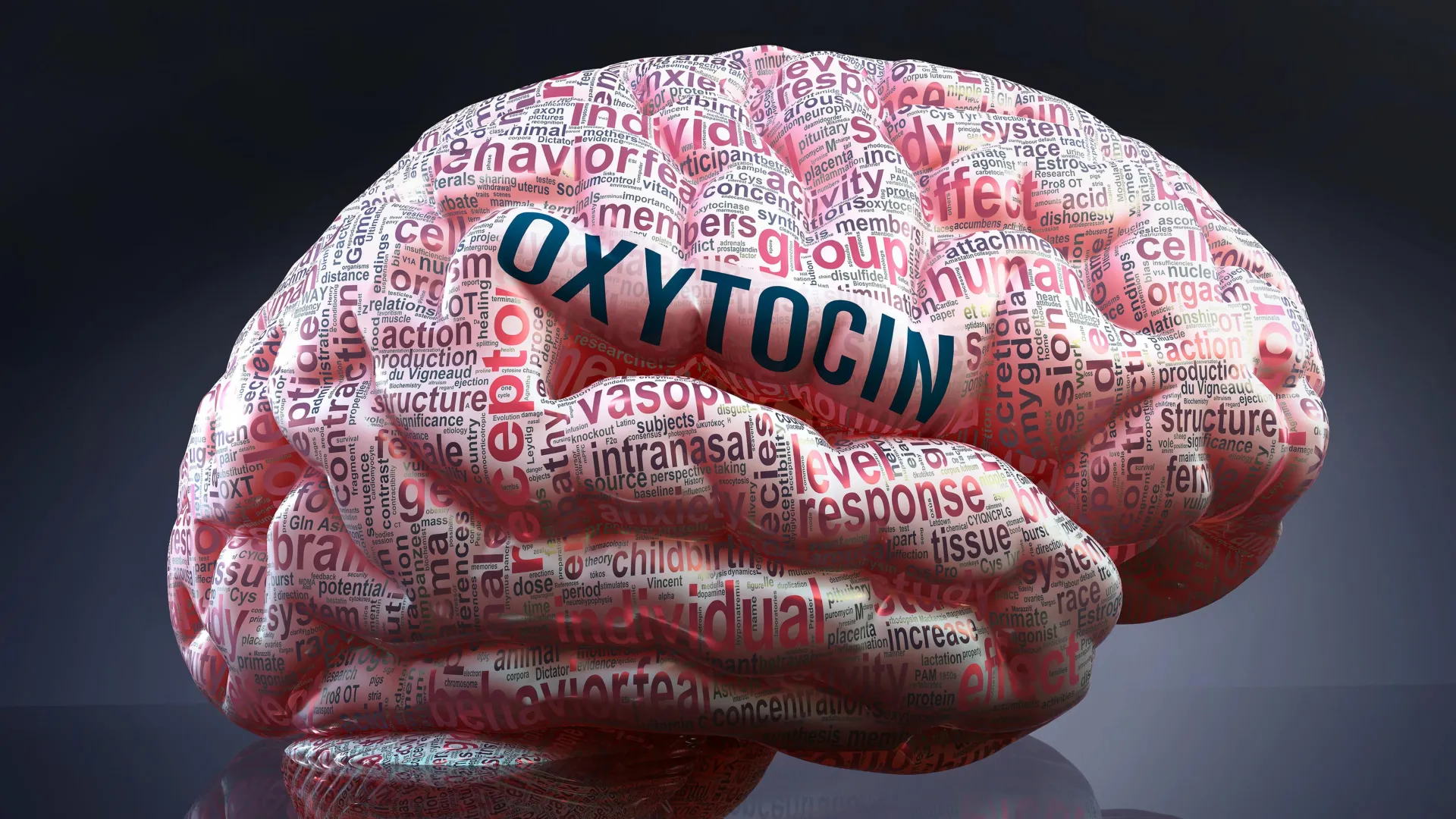
A new UC Berkeley study shows that the so-called love hormone, oxytocin, is also critical for the formation of friendships.

Oxytocin is released in the brain during sex, childbirth, breastfeeding and social interactions and contributes to feelings of attachment, closeness and trust. Never mind that it’s also associated with aggression; the hormone is commonly referred to as the “cuddle” or “happy” hormone, and people are encouraged to boost their oxytocin levels for better well-being by touching friends and loved ones, listening to music and exercising.

But recent studies involving the prairie vole have called this love association into question. They’ve shown that oxytocin, which in the brain acts as a neuromodulator, is not essential for long-term mate bonding, or “social monogamy,” or for parenting behavior, though without it, voles take longer to form such bonds.

Scientists focus on prairie voles because, like humans, they form stable and selective relationships. While most studies focus on mate bonds, the Beery lab at UC Berkeley is particularly interested in selective peer relationships, analogous to human friendships. Such studies could shed light on human psychiatric conditions, such as autism and schizophrenia, that interfere with a person’s ability to form or maintain social bonds.

“Prairie voles are special because they allow us to get at the neurobiology of friendship and how it’s similar to and different from other types of relationships,” said Annaliese Beery, a UC Berkeley associate professor of integrative biology and neuroscience and senior author of the study.

Beery and integrative biology graduate student Alexis Black, one of two first authors of the study, found that prairie voles that lack oxytocin receptors take longer than normal voles to form peer relationships. Prairie voles that are close friends typically huddle side by side, groom and even sit on one another.

“Oxytocin seems to be particularly important in the early formation phase of relationships and especially in the selectivity of those relationships: ‘I prefer you to this stranger,’ for example,” Beery said. “The animals that didn’t have intact oxytocin signaling took longer to form relationships. And then when we challenged those relationships by making new groups, they lost track of their original partners right away.”

The voles, genetically modified in the UC San Francisco laboratory of collaborator and co-author Dr. Devanand Manoli, also lacked the social rewards that normally come from selective attachments — they didn’t work very hard to snuggle up with their friends and were less avoidant of and less aggressive towards strangers.

“In other words, oxytocin is playing a crucial role not so much in how social they are, but more in who they are social with, their selectivity,” she said.

Lacking oxytocin receptors also changed the regulation of oxytocin availability and release in the brain, which the group documented using a novel oxytocin nanosensor in collaboration with postdoctoral fellow Natsumi Komatsu and Markita Landry, a UC Berkeley professor of chemical and biomolecular engineering.

“That helped us understand the feedback consequences of lacking this receptor, and how oxytocin signaling was altered in the brain,” said Beery.

The study was published Aug. 8 in the journal Current Biology.

What social voles tell us about social humans

Beery has long been interested in social relationships in rodents, focusing primarily on the animals’ seldom-studied peer or friendship relationships. While voles are her main focus, she believes studying similar behaviors across multiple species is key to determining what’s species-specific versus generalizable across species.

To complement her laboratory research, she has conducted field studies comparing social behavior and oxytocin receptor distribution in the brain within and across species in a group of South American rodents and North American Belding’s ground squirrels, which vary in whether or not they live in groups. She also recently began field tests of multiple vole species — there are about 50 worldwide — to compare their social behavior.

She suspects that in rodents such as voles, and perhaps in other mammals, the formation of peer relationships may have preceded the evolution of monogamous mating relationships.

“While most rodents prefer to interact with unfamiliar individuals, it turns out that the majority of vole species we’ve tested in our early trials form peer-partner preferences, which is what we call these selective friendships. So there seems to be this widespread tendency to bond,” Beery said. “But only a couple of those species are also monogamous. Someday, I hope to be able to tell you, ‘Do selective peer relationships precede the development of monogamy? Is that why monogamy has evolved so many times in this genus?’ I think this familiarity preference is deeply rooted.”

Beery was a co-author of a 2023 study led by Manoli that threw into question the association of oxytocin with sex and parenting. That study showed that prairie voles unable to respond to oxytocin exhibit the same monogamous mating, attachment and parenting behaviors as regular voles. Those voles had been genetically engineered to have no cellular receptors for oxytocin, and were the same voles used in the current study.

But while oxytocin isn’t essential for eventual bond formation, additional studies by the same group published in 2024 showed that these receptor-deficient (or “null mutant”) prairie voles took about twice as long as normal voles to establish a relationship with a potential mate.

Interested in how the lack of an oxytocin receptor affects voles’ friendship bonds, as opposed to mating bonds, Beery and Black conducted three sets of experiments. In one, they tested how long it took for voles to establish a preference for a partner. Whereas normal voles take about 24 hours of close proximity to form a relationship that makes them choose that partner over a stranger, oxytocin receptor-deficient voles showed no preference in that amount of time, and took up to a week to establish a peer preference.

“Wild-type animals form this incredibly robust preference within one day of co-housing, but the null mutants have no sign of a relationship after 24 hours. After a week, they mostly get there, and the lifetime partners look no different from each other,” Beery said. “Our conclusion from that experiment is that oxytocin isn’t required to have a relationship, but it’s really important in those early phases of a relationship to facilitate it happening quickly and efficiently.”

They then put long-term pair-bonded voles in a party-like, mixed-group situation: an enclosure with other voles and many rooms connected by tubes. In such a situation, normal voles would hang out with known friends until they eventually started to socialize with strangers.

“They can all separate, they can all come together, or they can hang out in any combinations that they want,” she said. “The wild-type animals keep track of who they know. It’s like if I went to a party with a friend, I would stand near that friend for the first part of the party and then I might start to mingle. The voles that lack oxytocin receptors just mixed. It was as if they didn’t even have a partner in there with them.”

In the third experiment, they tested the strength of both peer and mate bonding by having the voles press levers to get access to either a friend/mate or a stranger.

“Female wild-type voles typically press more to get their partner than to get a stranger, in both peer and mate relationships. The oxytocin receptor deficient mutants also press more to get to their mating partner, but not for peer relationships,” Beery said. “That makes sense at some level because we think mate relationships are more rewarding than peer relationships, or at least they depend more on reward-signaling pathways.”

Lack of oxytocin signaling thus not only delays the formation of relationships, but also creates deficits in long-term peer relationships.

On the flip side, voles lacking oxytocin receptors were also less aggressive toward strangers and less avoidant of them.

“You can see contributions of oxytocin signaling to both sides of selectivity,” Beery said. “On the prosocial side, it’s involved in wanting to be with a known friend or peer, while on the antisocial side, it’s aiding in rejecting an unfamiliar animal. We’ve seen effects of oxytocin on both affiliation and aggression in our other studies in prairie voles, and it parallels human findings on a role of oxytocin in in-group/out-group dynamics.”

Oxytocin nanosensors

The researchers used a new oxytocin sensor developed in Landry’s UC Berkeley lab to determine whether lack of an oxytocin receptor caused increases or decreases in oxytocin release. If oxytocin release increased in these voles, it could potentially interact with a receptor for a similar neuropeptide that is also involved in formation of social relationships, compensating for the absence of oxytocin receptors.

Landry, an associate professor in the departments of chemical and biomolecular engineering, neuroscience, and molecular and cell biology and a co-corresponding author of the paper, created these sensors from carbon nanotubes joined with specific single-stranded DNA sequences selected because they latch onto the oxytocin molecule and fluoresce. Komatsu and Landry found no excess of oxytocin in the voles’ brains. In fact, oxytocin was being released in lower amounts from fewer sites in the nucleus accumbens, a key brain region for social reward across species.

Co-authors with Black, Komatsu, Beery, Landry and Manoli are Jiaxuan Zhao, Scarlet Taskey and Nicole Serrano of UC Berkeley, and Ruchira Sharma of UCSF. Beery’s work was supported by the National Science Foundation (CAREER award 2239635) and the National Institutes of Health (R01MH132908). Komatsu is now an assistant professor at the University of Illinois.

Share Button

AI finds hidden safe zones inside a fusion reactor

A public-private partnership between Commonwealth Fusion Systems (CFS), the U.S. Department of Energy’s (DOE) Princeton Plasma Physics Laboratory (PPPL) and Oak Ridge National Laboratory has led to a new artificial intelligence (AI) approach that is faster at finding what’s known as “magnetic shadows” in a fusion vessel: safe havens protected from the intense heat of the plasma.

Known as HEAT-ML, the new AI could lay the foundation for software that significantly speeds up the design of future fusion systems. Such software could also enable good decision-making during fusion operations by adjusting the plasma so that potential problems are thwarted before they start.

“This research shows that you can take an existing code and create an AI surrogate that will speed up your ability to get useful answers, and it opens up interesting avenues in terms of control and scenario planning,” said Michael Churchill, co-author of a paper in Fusion Engineering and Design about HEAT-ML and head of digital engineering at PPPL.

Fusion, the reaction that fuels the sun and stars, could provide potentially limitless amounts of electricity on Earth. To harness it, researchers need to overcome key scientific and engineering challenges. One such challenge is handling the intense heat coming from the plasma, which reaches temperatures hotter than the sun’s core when confined using magnetic fields in a fusion vessel known as a tokamak. Speeding up the calculations that predict where this heat will hit and what parts of the tokamak will be safe in the shadows of other parts is key to bringing fusion power to the grid.

“The plasma-facing components of the tokamak might come in contact with the plasma, which is very hot and can melt or damage these elements,” said Doménica Corona Rivera, an associate research physicist at PPPL and first author on the paper on HEAT-ML. “The worst thing that can happen is that you would have to stop operations.”

PPPL amplifies its impact through public-private partnership

HEAT-ML was specifically made to simulate a small part of SPARC: a tokamak currently under construction by CFS. The Massachusetts company hopes to demonstrate net energy gain by 2027, meaning SPARC would generate more energy than it consumes.

Simulating how heat impacts SPARC’s interior is central to this goal and a big computing challenge. To break down the challenge into something manageable, the team focused on a section of SPARC where the most intense plasma heat exhaust intersects with the material wall. This particular part of the tokamak, representing 15 tiles near the bottom of the machine, is the part of the machine’s exhaust system that will be subjected to the most heat.

To create such a simulation, researchers generate what they call shadow masks. Shadow masks are 3D maps of magnetic shadows, which are specific areas on the surfaces of a fusion system’s internal components that are shielded from direct heat. The location of these shadows depends on the shape of the parts inside the tokamak and how they interact with the magnetic field lines that confine the plasma.

Creating simulations to optimize the way fusion systems operate

Originally, an open-source computer program called HEAT, or the Heat flux Engineering Analysis Toolkit, calculated these shadow masks. HEAT was created by CFS Manager Tom Looby during his doctoral work with Matt Reinke, now leader of the SPARC Diagnostic Team, and was first applied on the exhaust system for PPPL’s National Spherical Torus Experiment-Upgrade machine.

HEAT-ML traces magnetic field lines from the surface of a component to see if the line intersects other internal parts of the tokamak. If it does, that region is marked as “shadowed.” However, tracing these lines and finding where they intersect the detailed 3D machine geometry was a significant bottleneck in the process. It could take around 30 minutes for a single simulation and even longer for some complex geometries.

HEAT-ML overcomes this bottleneck, accelerating the calculations to a few milliseconds. It uses a deep neural network: a type of AI that has hidden layers of mathematical operations and parameters that it applies to the data to learn how to do a specific task by looking for patterns. HEAT-ML’s deep neural network was trained using a database of approximately 1,000 SPARC simulations from HEAT to learn how to calculate shadow masks.

HEAT-ML is currently tied to the specific design of SPARC’s exhaust system; it only works for that small part of that particular tokamak and is an optional setting in the HEAT code. However, the research team hopes to expand its capabilities to generalize the calculation of shadow masks for exhaust systems of any shape and size, as well as the rest of the plasma-facing components inside a tokamak.

DOE supported this work under contracts DE-AC02-09CH11466 and DE-AC05-00OR22725, and it also received support from CFS.

Share Button

UK cases of mosquito-borne virus more than double

More than 70 cases of the chikungunya virus were reported in the UK in the first six months of this year.

Share Button