Patients say they were left immobile or addicted to painkillers after receiving the NexGen implant.


Patients say they were left immobile or addicted to painkillers after receiving the NexGen implant.
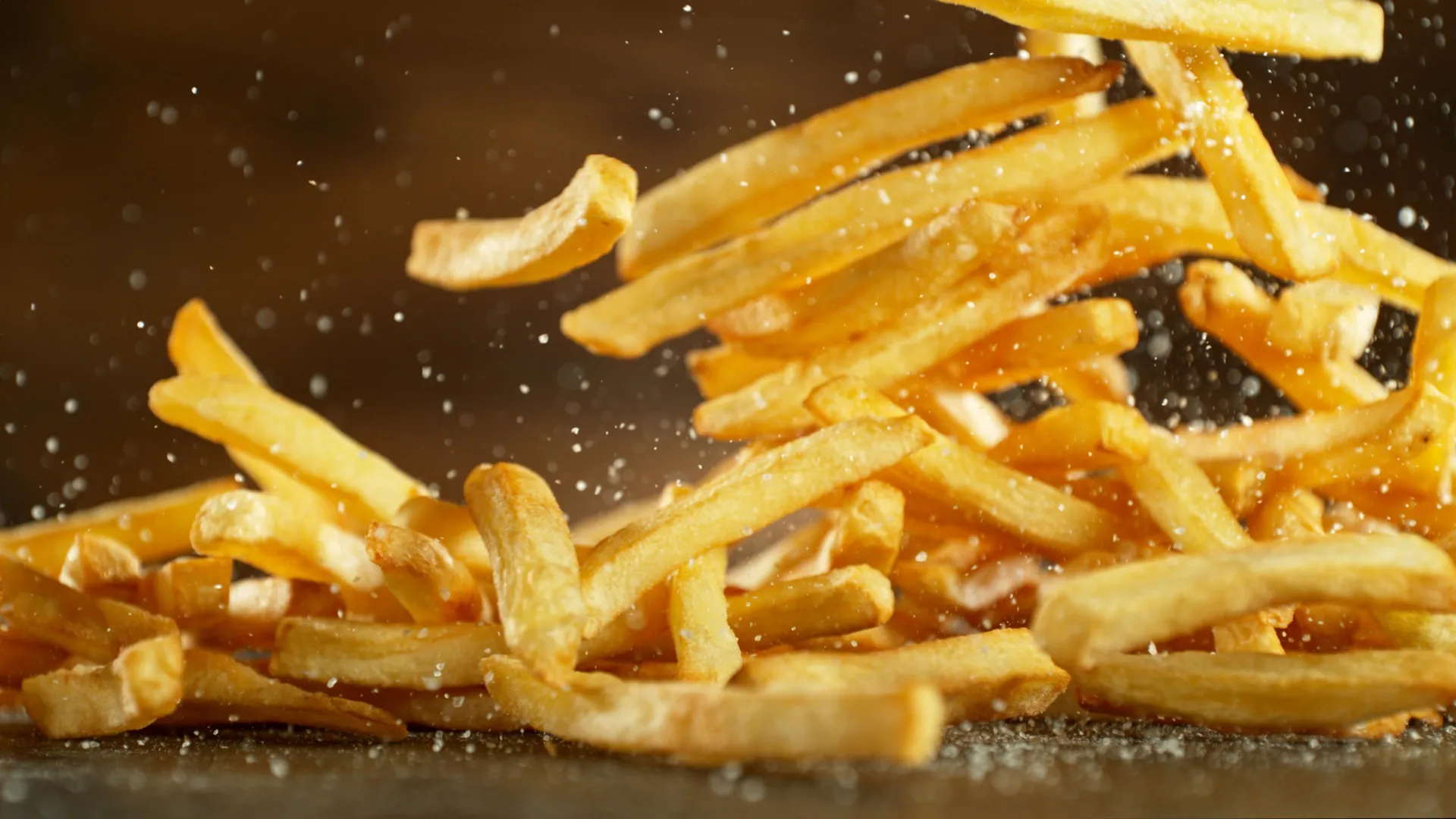
Eating three servings of French fries a week is associated with a 20% increased risk of developing type 2 diabetes, but eating similar amounts of potatoes cooked in other ways — boiled, baked or mashed — does not substantially increase the risk, finds a study published by The BMJ on August 6.
What’s more, replacing any form of potatoes with whole grains was associated with a lower type 2 diabetes risk, but swapping them for white rice was linked to an increased risk, the results show.
Potatoes contain several nutrients including fiber, vitamin C, and magnesium, but they also have a high starch content and therefore a high glycemic index, so have been linked to a higher risk of developing type 2 diabetes.
But neither the preparation method for potatoes nor specific foods that potatoes would replace have been considered, both of which are key to evaluating the overall health impact of potatoes.
To address this, researchers investigated the association between intake of potatoes prepared by different methods (boiled, baked, or mashed versus French fries) and risk of type 2 diabetes. They also looked at the impact on health of replacing potatoes with other major carbohydrates, such as whole grains and rice.
Their findings are based on more than 205,000 health professionals from three large US studies carried out between 1984 and 2021. Participants were free of diabetes, heart disease or cancer and completed detailed food questionnaires every four years.
During almost 40 years of follow up, 22,299 people were diagnosed with type 2 diabetes.
After adjusting for lifestyle and dietary factors related to diabetes risk, the researchers found that for every three weekly servings of total potato, the rate of type 2 diabetes increased by 5% and for every three weekly servings of French fries, the rate increased by 20%. However, similar intake of baked, boiled, or mashed potatoes was not associated with a significantly increased risk.
Replacing three weekly servings of total potato with whole grains lowered the type 2 diabetes rate by 8%. Substituting baked, boiled, or mashed potatoes with whole grains lowered the rate by 4%, and replacing French fries lowered the rate by 19%.
In contrast, replacing total potatoes or baked, boiled, or mashed potatoes with white rice was associated with an increased risk of type 2 diabetes.
This is an observational study so no firm conclusions can be drawn about cause and effect and the researchers can’t rule out the possibility that other unmeasured factors may have influenced their results. Most participants were also health professionals of European ancestry, so findings may not apply to other populations.
Nevertheless, they conclude: “Our findings underscore that the association between potato intake and type 2 diabetes risk depends on the specific foods used as replacement. The findings also align with current dietary recommendations that promote the inclusion of whole grains as part of a healthy diet for the prevention of type 2 diabetes.”
So, are potatoes back on the plate? Well, it depends, say researchers in a linked editorial, who note that it is important to consider preparation method and replacement food when guiding the public or informing policy.
They point out that with their relatively low environmental impact and their health impact, baked, boiled, or mashed potatoes can be part of a healthy and sustainable diet, though whole grains should remain a priority, but say future studies from more diverse populations that account for both preparation methods and substitution analysis are needed.
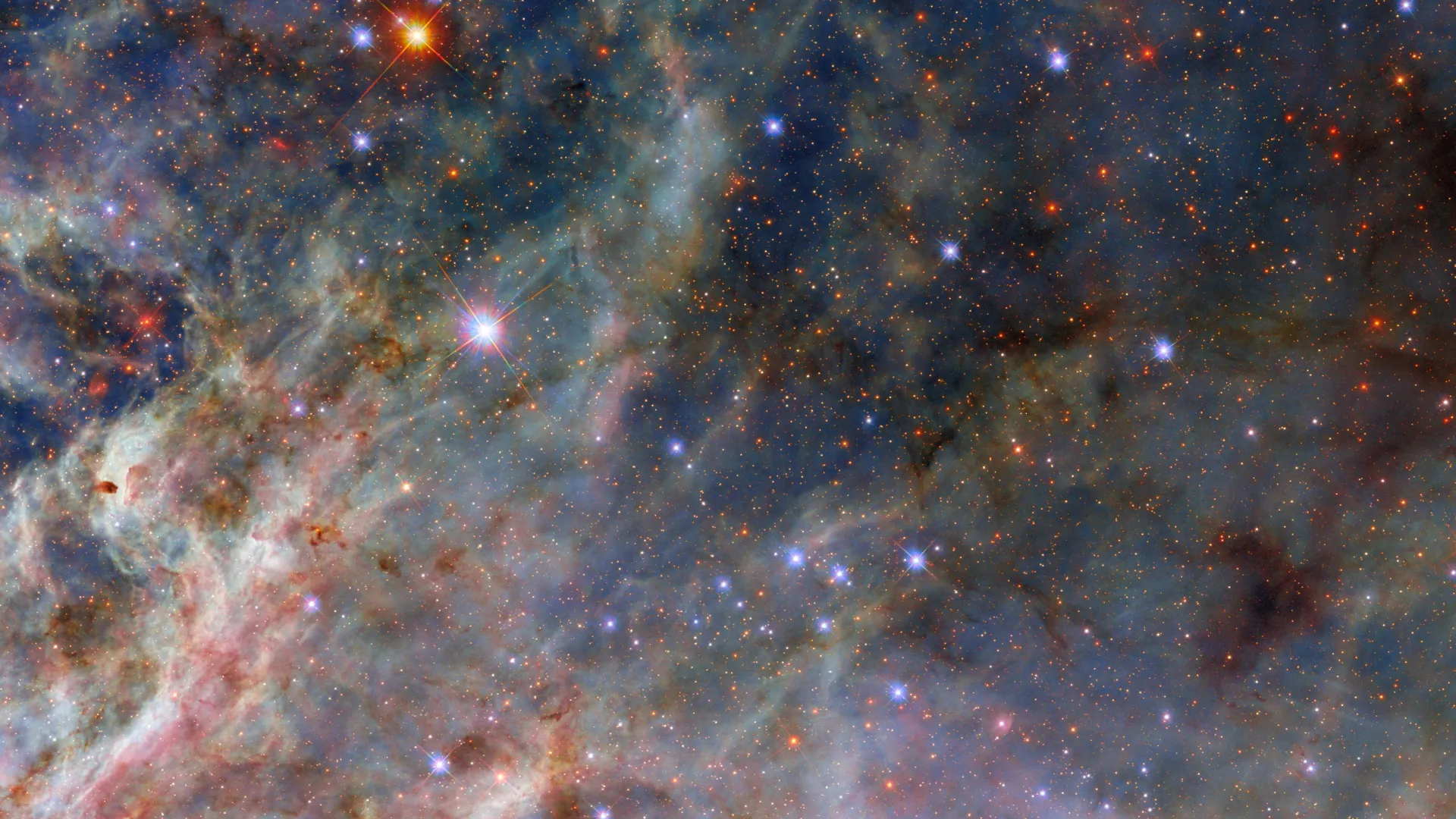
A scene from a star-forming factory shines in this NASA/ESA Hubble Space Telescope Picture of the Week. This Hubble picture captures incredible details in the dusty clouds in a star-forming region called the Tarantula Nebula. What’s possibly the most amazing aspect of this detailed image is that this nebula isn’t even in our galaxy. Instead, it’s in the Large Magellanic Cloud, a dwarf galaxy that is located about 160,000 light-years away in the constellations Dorado and Mensa.
The Large Magellanic Cloud is the largest of the dozens of small satellite galaxies that orbit the Milky Way. The Tarantula Nebula is the largest and brightest star-forming region not just in the Large Magellanic Cloud, but in the entire group of nearby galaxies to which the Milky Way belongs.
The Tarantula Nebula is home to the most massive stars known, some of which are roughly 200 times as massive as our Sun. The scene pictured here is located away from the centre of the nebula, where there is a super star cluster called R136, but very close to a rare type of star called a Wolf-Rayet star. Wolf-Rayet stars are massive stars that have lost their outer shell of hydrogen and are extremely hot and luminous, powering dense and furious stellar winds.
This nebula is a frequent target for Hubble, whose multiwavelength capabilities are critical for capturing sculptural details in the nebula’s dusty clouds. The data used to create this image come from an observing program called Scylla, named for a multi-headed sea monster from the Greek myth of Ulysses. The Scylla program was designed to complement another Hubble observing program called ULLYSSES (Ultraviolet Legacy Library of Young Stars as Essential Standards). ULLYSSES targets massive young stars in the Small and Large Magellanic Clouds, while Scylla investigates the structures of gas and dust that surround these stars.
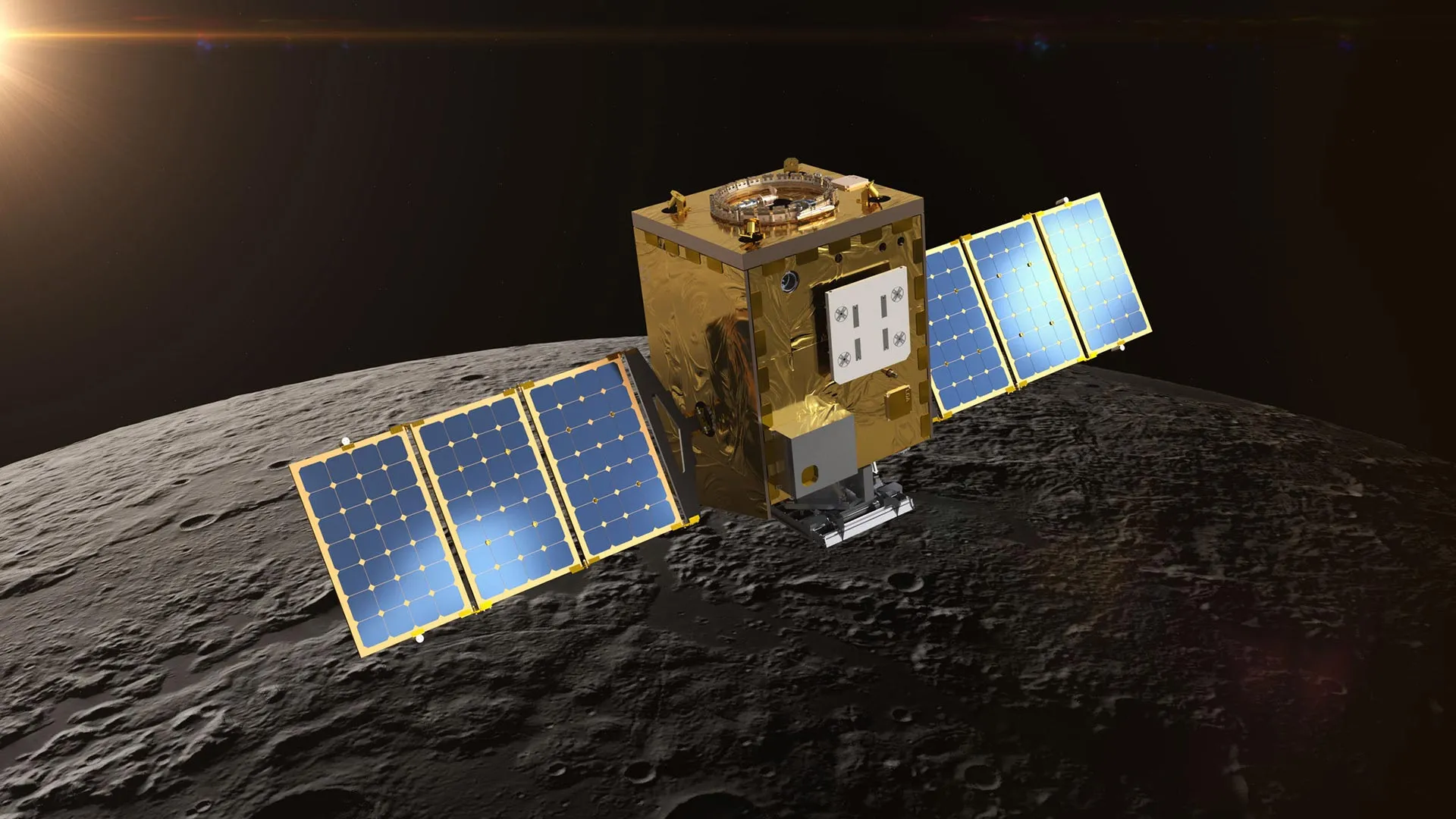
The small satellite was to map lunar water, but operators lost contact with the spacecraft the day after launch and were unable to recover the mission.
NASA’s Lunar Trailblazer ended its mission to the Moon on July 31. Despite extensive efforts, mission operators were unable to establish two-way communications after losing contact with the spacecraft the day following its Feb. 26 launch.
The mission aimed to produce high-resolution maps of water on the Moon’s surface and determine what form the water is in, how much is there, and how it changes over time. The maps would have supported future robotic and human exploration of the Moon as well as commercial interests while also contributing to the understanding of water cycles on airless bodies throughout the solar system.
Lunar Trailblazer shared a ride on the second Intuitive Machines robotic lunar lander mission, IM-2, which lifted off at 7:16 p.m. EST on Feb. 26 aboard a SpaceX Falcon 9 rocket from the agency’s Kennedy Space Center in Florida. The small satellite separated as planned from the rocket about 48 minutes after launch to begin its flight to the Moon. Mission operators at Caltech’s IPAC in Pasadena established communications with the small spacecraft at 8:13 p.m. EST. Contact was lost the next day.
Without two-way communications, the team was unable to fully diagnose the spacecraft or perform the thruster operations needed to keep Lunar Trailblazer on its flight path.
“At NASA, we undertake high-risk, high-reward missions like Lunar Trailblazer to find revolutionary ways of doing new science,” said Nicky Fox, associate administrator, Science Mission Directorate at NASA Headquarters in Washington. “While it was not the outcome we had hoped for, mission experiences like Lunar Trailblazer help us to learn and reduce the risk for future, low-cost small satellites to do innovative science as we prepare for a sustained human presence on the Moon. Thank you to the Lunar Trailblazer team for their dedication in working on and learning from this mission through to the end.”
The limited data the mission team had received from Lunar Trailblazer indicated that the spacecraft’s solar arrays were not properly oriented toward the Sun, which caused its batteries to become depleted.
For several months, collaborating organizations around the world — many of which volunteered their assistance — listened for the spacecraft’s radio signal and tracked its position. Ground radar and optical observations indicated that Lunar Trailblazer was in a slow spin as it headed farther into deep space.
“As Lunar Trailblazer drifted far beyond the Moon, our models showed that the solar panels might receive more sunlight, perhaps charging the spacecraft’s batteries to a point it could turn on its radio,” said Andrew Klesh, Lunar Trailblazer’s project systems engineer at NASA’s Jet Propulsion Laboratory in Southern California. “The global community’s support helped us better understand the spacecraft’s spin, pointing, and trajectory. In space exploration, collaboration is critical — this gave us the best chance to try to regain contact.”
However, as time passed, Lunar Trailblazer became too distant to recover as its telecommunications signals would have been too weak for the mission to receive telemetry and to command.
Technological Legacy
The small satellite’s High-resolution Volatiles and Minerals Moon Mapper (HVM3) imaging spectrometer was built by JPL to detect and map the locations of water and minerals. The mission’s Lunar Thermal Mapper (LTM) instrument was built by the University of Oxford in the United Kingdom and funded by the UK Space Agency to gather temperature data and determine the composition of silicate rocks and soils to improve understanding of why water content varies over time.
“We’re immensely disappointed that our spacecraft didn’t get to the Moon, but the two science instruments we developed, like the teams we brought together, are world class,” said Bethany Ehlmann, the mission’s principal investigator at Caltech. “This collective knowledge and the technology developed will cross-pollinate to other projects as the planetary science community continues work to better understand the Moon’s water.”
Some of that technology will live on in the JPL-built Ultra Compact Imaging Spectrometer for the Moon (UCIS-Moon) instrument that NASA recently selected for a future orbital flight opportunity. The instrument, which has has an identical spectrometer design as HVM3, will provide the Moon’s highest spatial resolution data of surface lunar water and minerals.
More About Lunar Trailblazer
Lunar Trailblazer was selected by NASA’s SIMPLEx (Small Innovative Missions for Planetary Exploration) competition, which provides opportunities for low-cost science spacecraft to ride-share with selected primary missions. To maintain the lower overall cost, SIMPLEx missions have a higher risk posture and less-stringent requirements for oversight and management. This higher risk acceptance bolsters NASA’s portfolio of targeted science missions designed to test pioneering mission approaches.
Caltech, which manages JPL for NASA, led Lunar Trailblazer’s science investigation, and Caltech’s IPAC led mission operations, which included planning, scheduling, and sequencing of all spacecraft activities. Along with managing Lunar Trailblazer, NASA JPL provided system engineering, mission assurance, the HVM3 instrument, and mission design and navigation. Lockheed Martin Space provided the spacecraft, integrated the flight system, and supported operations under contract with Caltech. The University of Oxford developed and provided the LTM instrument, funded by the UK Space Agency. Lunar Trailblazer, a project of NASA’s Lunar Discovery and Exploration Program, was managed by NASA’s Planetary Missions Program Office at Marshall Space Flight Center in Huntsville, Alabama, for the agency’s Science Mission Directorate in Washington.
Barrister Mark McDonald claims to have the backing of a panel of world class experts who say there is no evidence any babies were deliberately harmed
The move comes after warnings there are up to three times more graduates than vacancies in some areas of the health service.
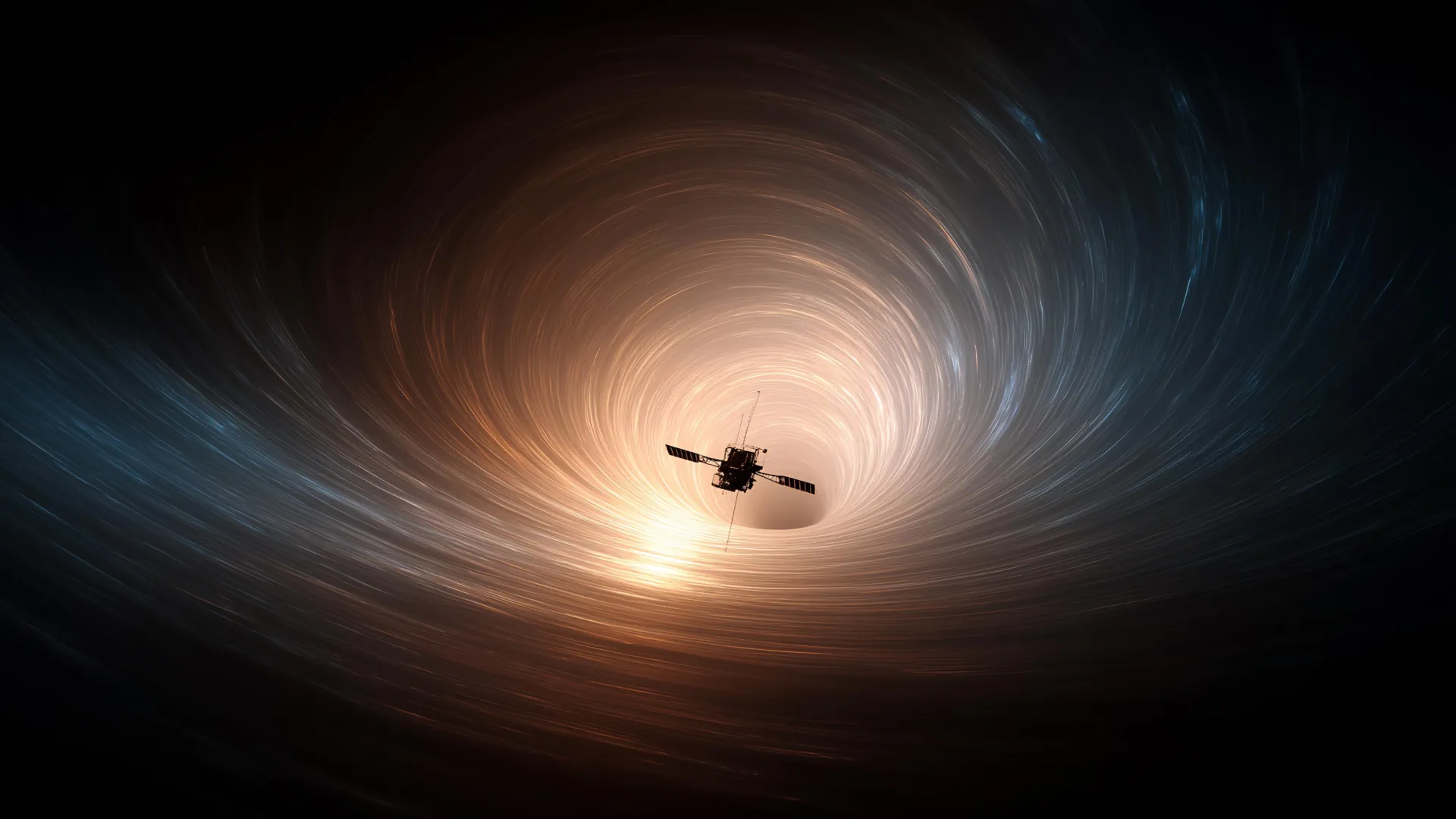
It sounds like science fiction: a spacecraft, no heavier than a paperclip, propelled by a laser beam and hurtling through space at the speed of light toward a black hole, on a mission to probe the very fabric of space and time and test the laws of physics. But to astrophysicist and black hole expert Cosimo Bambi, the idea is not so far-fetched.
Reporting in the Cell Press journal iScience, Bambi outlines the blueprint for turning this interstellar voyage to a black hole into a reality. If successful, this century-long mission could return data from nearby black holes that completely alter our understanding of general relativity and the rules of physics.
“We don’t have the technology now,” says author Cosimo Bambi of Fudan University in China. “But in 20 or 30 years, we might.”
The mission hinges on two key challenges — finding a black hole close enough to target and developing probes capable of withstanding the journey.
Previous knowledge on how stars evolve suggests that there could be a black hole lurking just 20 to 25 light-years from Earth, but finding it won’t be easy, says Bambi. Because black holes don’t emit or reflect light, they are virtually invisible to telescopes. Instead, scientists detect and study them based on how they influence nearby stars or distort light.
“There have been new techniques to discover black holes,” says Bambi. “I think it’s reasonable to expect we could find a nearby one within the next decade.”
Once the target is identified, the next hurdle is getting there. Traditional spacecrafts, powered by chemical fuel, are too clunky and slow to make the journey. Bambi points to nanocrafts — gram-scale probes consisting of a microchip and light sail — as a possible solution. Earth-based lasers would blast the sail with photons, accelerating the craft to a third of the speed of light.
At that pace, the craft could reach a black hole 20 to 25 light-years away in about 70 years. The data it gathers would take another two decades to get back to Earth, making the total mission duration around 80 to 100 years.
Once the craft is near the black hole, researchers could run experiments to answer some of the most pressing questions in physics. Does a black hole truly have an event horizon, the boundary beyond which not even light can escape its gravitational pull? Do the rules of physics change near a black hole? Does Einstein’s theory of general relativity hold under the universe’s most extreme conditions?
Bambi notes that the lasers alone would cost around one trillion euros today, and the technology to create a nanocraft does not yet exist. But in 30 years, he says that costs may fall and technology may catch up to these bold ideas.
“It may sound really crazy, and in a sense closer to science fiction,” says Bambi. “But people said we’d never detect gravitational waves because they’re too weak. We did — 100 years later. People thought we’d never observe the shadows of black holes. Now, 50 years later, we have images of two.”
This work was supported by funding from the National Natural Science Foundation of China.
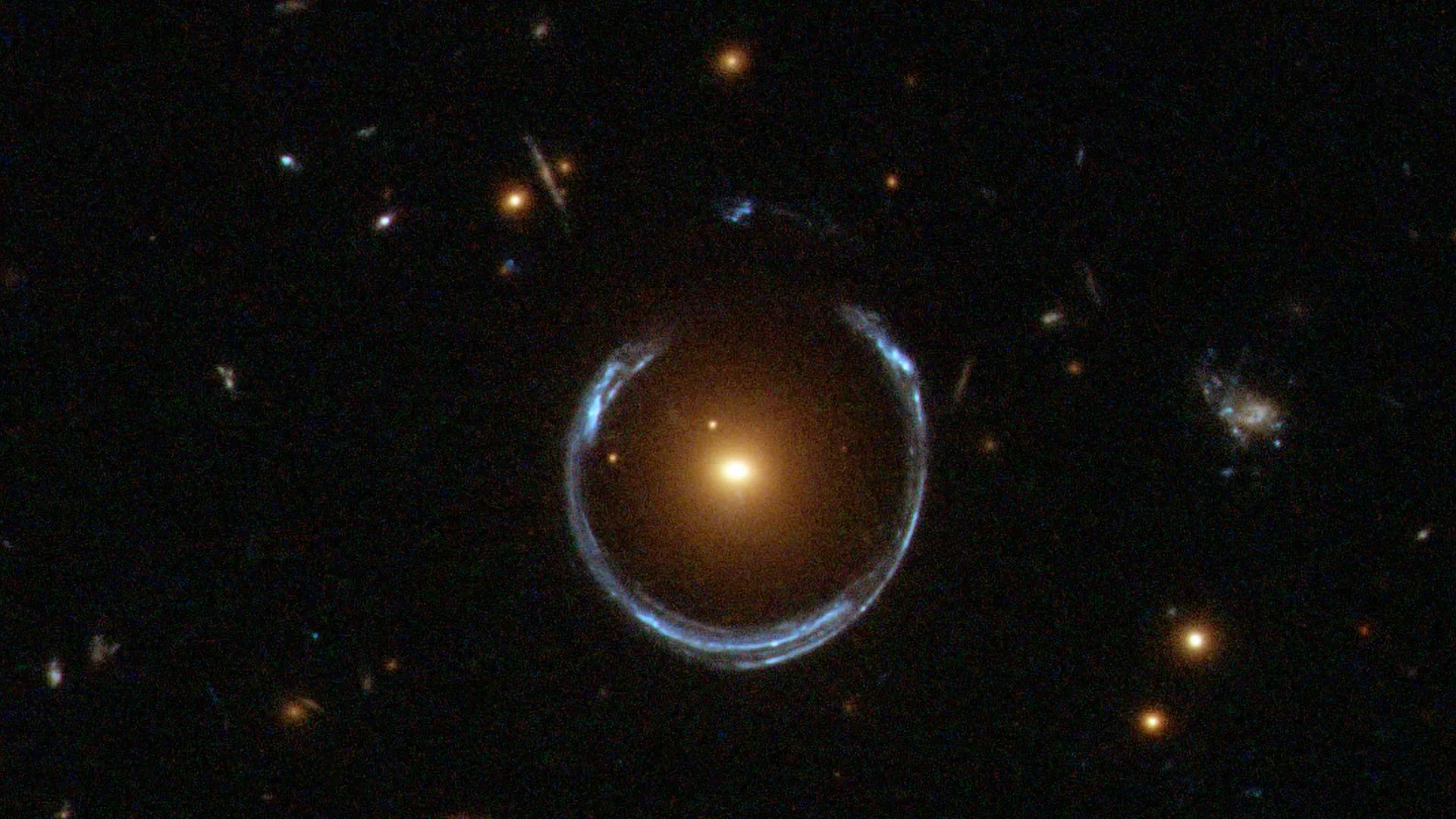
Astronomers have discovered potentially the most massive black hole ever detected.
The cosmic behemoth is close to the theoretical upper limit of what is possible in the universe and is 10,000 times heavier than the black hole at the center of our own Milky Way galaxy.
It exists in one of the most massive galaxies ever observed – the Cosmic Horseshoe – which is so big it distorts spacetime and warps the passing light of a background galaxy into a giant horseshoe-shaped Einstein ring.
Such is the enormousness of the ultramassive black hole’s size, it equates to 36 billion solar masses, according to a new paper published on August 7 in Monthly Notices of the Royal Astronomical Society.
It is thought that every galaxy in the universe has a supermassive black hole at its center and that bigger galaxies host bigger ones, known as ultramassive black holes.
“This is amongst the top 10 most massive black holes ever discovered, and quite possibly the most massive,” said researcher Professor Thomas Collett, of the University of Portsmouth.
“Most of the other black hole mass measurements are indirect and have quite large uncertainties, so we really don’t know for sure which is biggest. However, we’ve got much more certainty about the mass of this black hole thanks to our new method.”
Researchers detected the Cosmic Horseshoe black hole using a combination of gravitational lensing and stellar kinematics (the study of the motion of stars within galaxies and the speed and way they move around black holes).
The latter is seen as the gold standard for measuring black hole masses, but doesn’t really work outside of the very nearby universe because galaxies appear too small on the sky to resolve the region where a supermassive or ultramassive black hole lies.
Adding in gravitational lensing helped the team “push much further out into the universe,” Professor Collett said.
“We detected the effect of the black hole in two ways – it is altering the path that light takes as it travels past the black hole and it is causing the stars in the inner regions of its host galaxy to move extremely quickly (almost 400 km/s).
“By combining these two measurements we can be completely confident that the black hole is real.”
Lead researcher, PhD candidate Carlos Melo, of the Universidade Federal do Rio Grande do Sul (UFRGS) in Brazil, added: “This discovery was made for a ‘dormant’ black hole – one that isn’t actively accreting material at the time of observation.
“Its detection relied purely on its immense gravitational pull and the effect it has on its surroundings.
“What is particularly exciting is that this method allows us to detect and measure the mass of these hidden ultramassive black holes across the universe, even when they are completely silent.”
The Cosmic Horseshoe black hole is located a long way away from Earth, at a distance of some 5 billion light-years.
“Typically, for such remote systems, black hole mass measurements are only possible when the black hole is active,” Melo said. “But those accretion-based estimates often come with significant uncertainties.
“Our approach, combining strong lensing with stellar dynamics, offers a more direct and robust measurement, even for these distant systems.”
The discovery is significant because it will help astronomers understand the connection between supermassive black holes and their host galaxies.
“We think the size of both is intimately linked,” Professor Collett added, “because when galaxies grow they can funnel matter down onto the central black hole.
“Some of this matter grows the black hole but lots of it shines away in an incredibly bright source called a quasar. These quasars dump huge amounts of energy into their host galaxies, which stops gas clouds condensing into new stars.”
Our own galaxy, the Milky Way, hosts a 4 million solar mass black hole. Currently it’s not growing fast enough to blast out energy as a quasar but we know it has done in the past, and it may will do again in the future.
The Andromeda Galaxy and our Milky Way are moving together and are expected to merge in about 4.5 billion years, which is the most likely time for our supermassive black hole to become a quasar once again, the researchers say.
An interesting feature of the Cosmic Horseshoe system is that the host galaxy is a so-called fossil group.
Fossil groups are the end state of the most massive gravitationally bound structures in the universe, arising when they have collapsed down to a single extremely massive galaxy, with no bright companions.
“It is likely that all of the supermassive black holes that were originally in the companion galaxies have also now merged to form the ultramassive black hole that we have detected,” said Professor Collett.
“So we’re seeing the end state of galaxy formation and the end state of black hole formation.”
The discovery of the Cosmic Horseshoe black hole was somewhat of a serendipitous discovery. It came about as the researchers were studying the galaxy’s dark matter distribution in an attempt to learn more about the mysterious hypothetical substance.
Now that they’ve realized their new method works for black holes, they hope to use data from the European Space Agency’s Euclid space telescope to detect more supermassive black holes and their hosts to help understand how black holes stop galaxies forming stars.

It all started when she was in lower secondary school.
Her thighs, calves and upper arms suddenly began to grow, and she could not understand why it was so painful. It was not until she was over 40 years old that Sunniva Kwapeng was diagnosed with lipoedema.
However, before a correct diagnosis was made, she tried all sorts of diets — with little success.
A recent NTNU study shows that her experience is quite typical. It is unlikely that the body fat associated with lipoedema can be lost through dieting.
Limited knowledge
“Despite this being a disease that affects many women, little is known about it, which is rather thought-provoking,” said Julianne Lundanes, a former PhD candidate at NTNU.
Lipoedema is a poorly understood disease that primarily affects women.
The disease is characterized by disproportionate and excess fatty tissue on the thighs and calves, and sometimes on the arms, while the hands and feet remain unaffected.
Lundanes recently submitted her doctoral thesis at NTNU on the relationship between two different diets and their effects on pain, quality of life, body weight and composition, appetite and inflammation.
Some people also become obese
Lipoedema is painful. It can be painful to move, and it is easy for people with the disease to get caught up in a vicious cycle of inactivity and reduced quality of life. Lipoedema is often mistaken for obesity, but they are two distinct conditions.
If a person with lipoedema loses weight, it is common to see normal fat disappear, such as on the stomach, while the calves and thighs remain the same size. When a person is obese, fat can be stored all over the body, both under the skin and around the internal organs.
In lipoedema, the accumulation of fatty tissue occurs mainly under the skin on the hips, thighs, calves and arms.
The pain associated with the disease can have a significant impact on quality of life, making movement difficult.
“We don’t know why the disease is so painful. We believe it involves an inflammatory condition in the fat, and that this is what causes the pain,” said Lundanes.
Lipoedema is often hereditary
There are currently no Norwegian national guidelines for the treatment or follow-up of women with lipoedema.
“We also don’t know much about why some women develop lipoedema, except that it appears to be hereditary. It is often the case that several people in the same family are affected by it. The disease often manifests during hormonal changes such as puberty, pregnancy and menopause,” Lundanes said.
The aim of Lundanes’s study was to determine whether a low-carbohydrate diet could serve as an alternative form of treatment for patients with the disease.
She had a sample of 70 women with lipoedema aged 19-73 years old, which was divided into two groups.
One group followed a low-carb diet, while the other followed a low-fat diet. Both groups ate the same number of calories each day, but the amount of carbohydrates and fat varied.
The participants received weekly follow-up for eight weeks and were tested at the beginning and end of the study. Pain and quality of life were measured through a questionnaire.
The results showed clear differences between the two groups.
Similar degrees of inflammation
“The women in the low-carb group had less pain. The participants in the other group did not experience any change in pain, but both groups reported better quality of life,” said Lundanes.
Tests were also carried out to see if the reduction in pain was due to the low-carb diet leading to less inflammation in the body. This turned out not to be the case.
“There was no difference in changes in inflammation between the two groups. We also measured inflammation through blood tests, so inflammation in the fatty tissue itself still needs to be investigated in order to draw any conclusions,” Lundanes said.
Greater weight loss on the low-carb diet
The women who followed the low-carb diet lost more weight than those who followed the low-fat diet.
“At the end of the study, we found that the women who ate fewer carbohydrates were less hungry than the other group. The feeling of being less hungry is a well-known benefit of low-carb diets once ketosis is achieved. This may have helped these women lose more weight than the other group,” Lundanes said.
There is no treatment that can eliminate the causes of or cure lipoedema. There’s only treatment that can alleviate some of the symptoms.
Liposuction is one option, but it is currently only offered as part of a research study at Haraldsplass Hospital in Bergen. The only other alternative is to pay for private surgery, and that can cost hundreds of thousands of Norwegian kroner.
“The long-term effects of lipoedema liposuction have still not been fully investigated. There is a lack of research in this area too,” Lundanes said.
Compression reduces pain
Most people currently receive help in the form of physical therapy and compression garments that squeeze and support the fatty tissue.
“Compression garments give many people relief,” says Lundanes.
For Kwapeng, compression garments have been a great help in managing the pain.
“I’ve also lost many centimeters on my legs because of the compression garments. My expenses for compression are covered, but in other parts of the country, they’re not. It’s completely random what kind of help you get,” says Kwapeng.
At home, she has a machine that’s also used by patients with other conditions. The machine is called a pulsator and is a vacuum treatment for the lymphatic vessels designed to activate the lymphatic system. Lymphatic drainage initiates several cleansing processes in the body and can help improve blood circulation.
The machine is like a giant pair of pants used while lying down.
“It works really well for me. It takes away the pain. I also get more energy. If I have low energy and lie down in it, it’s like my body wakes up,” says Kwapeng.
Over time, she has learned to live with the disease.
“It’s frustrating to have a condition that is so poorly understood. A doctor once told me that at least I won’t die from having lipoedema — but I die a little every time I can’t sit on the floor with my daughter. I die a little every time I can’t go on a hike I want to take because of the pain. And I die a little every time people think I’m just fat and lazy,” Kwapeng said.
The wellness drinks industry is booming – but the big benefits they promise might be too good to be true.
