Health24.com | 5 diseases you can pick up at the office

The workplace is an easy place for germs to spread, and the smaller and more overcrowded the premises, the easier it is to get sick. 

“The size of an office space in addition to the number of employees plays a role in the spread of illnesses in the workplace,” says independent registered practitioner, Dr Aaseema Mugjenkar. “The more confined and crowded the work place is, the easier the spread of infection.”

“Ventilation also plays a role – having enough open windows helps maintain a good airflow generated through a specific area, so that the clean air may replace the ‘virus-containing’ air,” Dr Mugjenkar adds.

Here are five common illnesses and conditions you can pick up at the office:

1. Backache

Your bones, muscles, nerves, tendons and ligaments work together to carry your body weight, as well as any extra load that you may add. Many things can cause backache, such as poor posture at your desk, a pinched nerve, bending awkwardly, or lifting a heavy object without the proper support.

Slouching at your work desk without taking enough breaks, lifting an object that is more than 20% your body weight, or bending incorrectly (bending at your waist and not using your legs) could result in back pain.

Back pain can occur at any point along the spine. According to a Health24 article strains, sprains, and minor injuries generally don’t involve any serious or permanent damage to the back. The pain mostly goes away after a few days. If the problem persists or if the pain becomes unbearable, expert medical attention is needed.

Regular exercise, a healthy and balanced diet and maintaining a good body weight may lower your risk of developing back pain. The pain can also be managed with anti-inflammatory medication and physical therapy.

workplace health

2. Headaches

Tension headaches are the most common headache among teens and adults. Such headaches can be a result of eye strain – especially when sitting for an extended period of time in front of a computer screen.

Headaches are also associated with tension build-up or muscle spasms in the neck, jaw, face, and head. 

Fortunately headaches are manageable with over-the-counter painkillers, but if they persist, it’s advisable to see a doctor.

workplace health

3. Stress-related conditions

For many people, stress is a built-in part of their workday. High levels of job stress may increase the amount of sick leave taken, a study suggests. Demanding and high-stress jobs can put your mental health at risk.

Stress can have physical effects on the body, such as backache, headaches, heart disease, and gastrointestinal problems. Stress can also be linked to psychological problems such as depression, anxiety, poor concentration and poor decision-making.

“Stress causes many health conditions, such as hypertensive disease (high blood pressure) which can lead to heart disease,” says Dr Mugjenkar.

“Bad habits caused by stress, such as constant eating, can lead to obesity and diabetes.”

workplace health

4. Viral influenza

Closed environments are a breeding ground for the flu virus. Air-conditioned office spaces are prone to outbreaks of flu that run their course over a number of weeks.

But even though you may not come into direct contact with someone who has the flu, indirect contact such as touching office equipment or doorknobs and then touching your mouth or your nose increases your chances of contracting this viral illness, says Dr Mugjenkar.

According to the Centers for Disease Control and Prevention, there is an incubation period before symptoms of common illnesses such as the flu appear, during which time people can already be contagious.

“Sometimes people can infect others even before they are present with symptoms,” adds Dr Mugjenkar.

It is recommended that you only return to the office 24 hours after your symptoms clear to ensure that you are no longer contagious.

workplace health

5. Gastroenteritis

Also known as the stomach flu, gastroenteritis can spread very quickly from one person to the next, especially if good hand hygiene is not practised.

The stomach flu can be contracted by breathing in contaminated air or drinking contaminated water. It can also be spread through contact with contaminated surfaces and objects, especially if an infected person does not wash their hands.

“In the work place, hand washing is extremely important,” Dr Mugjenkar explains.

“If proper hand washing is not executed after using the toilet and before eating, or if you buy food which has not been prepared properly, it is easy to contract the virus.”

workplace health

Images provided by iStock.

Share Button

Health24.com | Private wards in public hospitals a ‘mad scheme that must stop’

Despite making a loss of R12. 6 million last year alone, and R51.3 million in outstanding patient fees, the Folateng private wards at the Charlotte Maxeke Johannesburg Hospital (CMJH) are to be extended to offer new services.

A huge loss

The wards were built to take private, paying patients with the intention of using the income to subsidise the medical costs of state patients. But instead of making money, Gauteng Health MEC Gwen Ramokgopa has told the provincial legislature that the wards are running at a massive loss and efforts to collect on debt owed by private patients have been unsuccessful.

Ramokgopa said that although Health Minister Aaron Motsoaledi had complained about the Folateng wards, they continued to operate because the Gauteng Health Department had not received any formal communications instructing them to shut the wards down.

“The statement made was that we need to utilize the available beds whenever there is an overflow of state patients, which is currently happening,” said Ramokgopa, explaining why the Folateng wards were operating at capacity.

Addressing the Gauteng Legislature, Ramokgopa said that 2 721 private patients were treated at the CMJH Folateng unit last year, generating income of R20 043 680. However, the running costs for Folateng were R32 677 528, amounting to a R12 633 884 loss. On top of this, R51 681 703 was outstanding in patient and other fees.

Uncollected patient fees

Jack Bloom, DA spokesman on health, said, “I suspect that this money will have to be written off, as has happened with uncollected fees for the entire Folateng operation which started in 2002 and expanded to four hospitals.”

Ramokgopa said that R569 million in outstanding money owed to the Folateng units had already been written off.

According to Bloom this is a colossal amount, showing that these private wards were a huge mistake, inefficient, poorly managed and generating huge losses in uncollected patient fees.

New efficiency strategies

“Incredibly, Ramokgopa now wants to expand the services instead of shutting the whole thing down,” said Bloom.

“This mad scheme should stop. The Department should stop losing money with the private wards, and instead use them to provide a better service to state patients.”

The Gauteng Department of Health spokesperson Prince Hamnca there were no plans to expand the Folateng unit, but to rather increase the services they offer in order to increase the bed occupancy rate of medical aid and private paying patients.

“By introducing the new services and admitting only private patients, we have improved efficiency in terms of the cost per-patient-day equivalent,” said Hamnca, adding that the department was also “developing efficiency strategies to turnaround the current net losses”. – Health-e News.

NEXT ON HEALTH24X

Share Button

Health24.com | 6 skin conditions that can benefit from exfoliation

In partnership with SA’s top medical aesthetic companies

A common thread in women of all cultures is a desire for skin that is healthy and beautiful. This goes beyond vanity, as the face we present to the world is our silent ambassador.

Blemishes are very distressing. Fortunately advances in the understanding of skin function and technology mean that help is available to improve our most common and often most difficult skin concerns.

Exfoliation is an integral part of your skin’s renewal process and a key component in gaining and maintaining flawless skin. Many South African woman experience skin conditions because of environmental factors like the harsh African sun and pollution.

The medical and professional skin-care therapist team at Skin Renewal bring over a decade’s worth of in-the-field experience to assist South African women with their skin concerns.

Here is a list of skin conditions that can benefit from exfoliation:

Adult acne – a growing concern due to hormones and our stressful, often unhealthy lifestyle. Exfoliation helps unclog blocked pores that can become blackheads or acne.

 Adult acne on the face and across the chest, shoulders and back.

Scarring – most common is post-acne, and also keloid scarring on darker complexions. With deep peels administered by a medical doctor, scarring can be effectively treated.

Damage from the sun – in our sun-drenched climate, damage from UV and infrared rays affects most South African skins. Exfoliation can assist in dealing with the effects of extensive exposure to the sun.

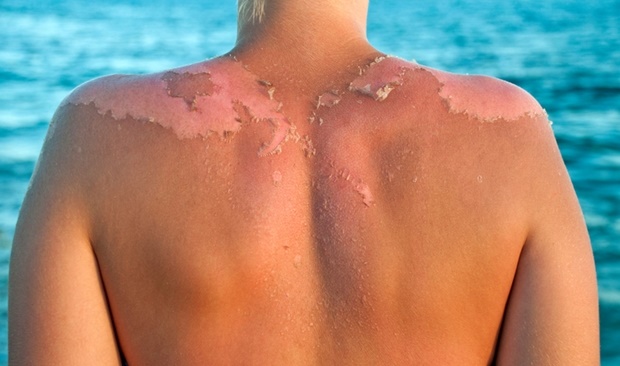
Peeling skin caused by severe sunburn. 

Ingrown hairs – can cause pigmentation and scarring especially on darker complexions. Regular home exfoliation as well as professional exfoliation treatment can assist in preventing and treating ingrown hairs.

Wrinkles – 80% of what we see is the result of sun damage. Certain deep treatments can also target skin texture and improve deep lines.

Face and neck wrinkles. 

Keratosis pilaris – this condition is caused by an overproduction of keratin and is notoriously difficult to treat. 3D peels can however assist in alleviating the condition.

Helping SA women

Our skin reflects our overall health. The skin is the body’s largest organ, and it makes sense to adopt an approach to anti-ageing that treats underlying causes.

Skin Renewal’s mission is to help South African women address their skin concerns with the most effective skin-care, treatment, technological and medical solutions available, supported by continuous healthy lifestyle advice.

To find out more about the conditions that mostly affect women, the recommended treatment options, as well as the four pillars of addressing ageing skin, visit Skin Renewal at www.skinrenewal.co.za.

Take the quick Beyond Beauty Survey and you could win a R2000 Skin Renewal voucher to spend in our online store, with free delivery within South Africa. T&Cs apply.

Images sourced from iStock.

Share Button

Health24.com | The battle is never over for many young cancer survivors

Surviving cancer is a great thing, but it’s only half the battle. We need to bear in mind that, especially in younger survivors, many challenges remain after the completion of treatment.

The struggle to get ‘back to normal’

Many young cancer survivors have trouble resuming their social lives, research has found.

Researchers studied 215 cancer survivors between 14 and 39 years of age who completed questionnaires about their social functioning at four, 12 and 24 months after cancer diagnosis. About one in three reported low social functioning throughout the study period.

The researchers said the difficulties might stem from the transition from treatment to “off-treatment survivorship, a time fraught with challenges”. Those challenges include the negative impact of their disease and treatment on finances, body image, work plans, relationships with a spouse or significant other and plans for having children.

Survivors with low scores on social functioning also had high levels of distress. The study “highlights the need to screen, identify and respond to the needs of high-risk adult-young adolescent patients at the time of diagnosis and then monitor them over time,” said study co-author Brad Zebrack, a professor of social work at the University of Michigan.

How to resume a normal life

“They are likely the ones most in need of help in managing work, school and potentially problematic relationships with family members and friends,” he said in a university news release. Research suggests young adult cancer patients benefit from support programmes that include similar-age survivors, the study authors said.

“They do not find being in a support group with ‘people my grandma’s age’ to be all that helpful,” lead author Olga Husson said in the news release. Husson is a researcher at Radboud University Medical Center in the Netherlands. The study was published online recently in the journal Cancer.

child with doctor

                                       Adequate, age-related support is crucial for young cancer survivors.

Importance of the right support system

The Cancer Association of South Africa (Cansa) explains that a good support network is as important for survival as the treatment itself. Cansa also provides support structures especially designed for children and teenagers as they firmly believe that young people should not be facing cancer on their own. 

While emotional support is key, it is also crucial for parents of young cancer survivors to encourage a healthy and active lifestyle as soon as treatment is over and the child is starting to recover.

All images provided by iStock

Share Button

All Hampshire schools to offer Men ACWY meningitis vaccine

NHS England says it hopes to improve meningitis vaccination rates in southern areas of Hampshire.

Share Button

Men’s sexist attitudes ‘shaped by first exposure to pornography’

Study finds the younger a man was on first viewing, the more likely he is to want power over women.

Share Button

First hints Parkinson’s can be stopped

The researchers say they are cautiously excited by the potential.

Share Button

Twilight observations reveal huge storm on Neptune

[unable to retrieve full-text content]

Share Button

Believing the future will be favorable may prevent action

[unable to retrieve full-text content]

Share Button

Lizard blizzard survivors tell story of natural selection

[unable to retrieve full-text content]

Share Button