Ian Paterson’s crimes were so serious that a jail term of more than 15 years was needed, judges rule.


Ian Paterson’s crimes were so serious that a jail term of more than 15 years was needed, judges rule.
A charity says it will no longer endorse baby boxes, as there is “no evidence” they reduce cot death.
The drug – called Prep – cuts the risk of infection by up to 86%.
The actress says moisturisers probably don’t work – but what do the experts say?
In partnership with SA’s top medical aesthetic companies
A common thread that runs through women of all cultures since throughout history is a desire for skin that is healthy and beautiful. This goes beyond vanity, because the face we present to the world is our silent ambassador.
For many of us, blemishes are very distressing, but advances in understanding skin function and technology, means that hope is available to improve our most common (and often difficult to treat) skin concerns.
Exfoliation is an integral part of your skins renewal process and a key component in gaining and maintaining flawless skin. Many South African woman experience similar skin conditions because of the environmental factors we face daily. Environmental factors such as the harsh African sun and pollution, to name a few.
The medical and professional skin-care therapist team at Skin Renewal bring over a decade’s worth of in-the-field experience to determine what concerns SA women most about their skin. This is a list of these skin conditions that can benefit from exfoliation:
Adult acne – a growing concern due to hormones and our stressful, often unhealthy lifestyle. Exfoliation helps unclog blocked pores that can become blackheads or acne.

Adult acne on the face and across the chest, shoulders and back.
Scarring – most common is post-acne and also keloid scarring on darker complexions. With deep peels administered by a medical doctor your scarring could be treated quite effectively.
Damage from the sun – with our sun-drenched climate, damage from UV rays and Infra Red affects most South African skins. Exfoliation can assist in dealing with the conditions seen on the skin caused by extensive exposure to the sun.
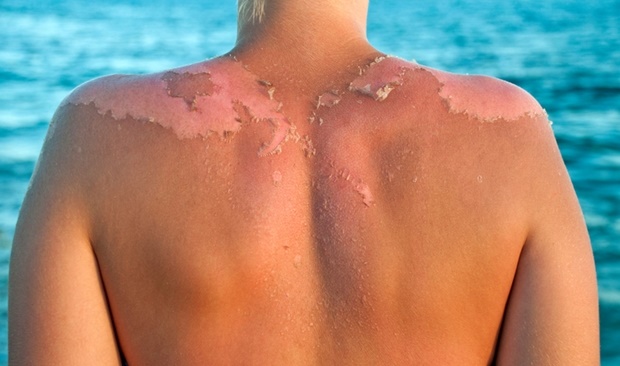
Peeling skin caused by severe sunburn.
Ingrown hairs – also better treated sooner rather than later, as it can cause pigmentation and scarring especially on darker complexions. Regular home exfoliation as well as professional exfoliation treatment can assist in preventing ingrown hairs as well as treating ingrown hairs.
Wrinkles – beyond vanity, 80% of what we see are signs of sun damage. Certain deep treatments can also target skin texture and improve deep lines.

Face and neck wrinkles.
Keratosis pillaris – this condition is caused by an overproduction of keratin and is notoriously difficult to treat, 3D peels can however assist in treating the condition.
A healthy skin is a key part of our overall health – after all, the skin is the body’s largest organ, and it makes sense that Skin Renewal’s philosophy is to adopt a holistic approach to anti-ageing that investigates the possibility of underlying causes to the problem at hand.
Their mission is to help South African women address their skin concerns with the most effective skin-care, treatment, technological and medical solutions available, supported by continuous healthy lifestyle advice.
To find out more about the conditions that mostly affect women, the recommended treatment options, as well as the four pillars to addressing ageing skin, visit Skin Renewal at www.skinrenewal.co.za.
Take the quick Beyond Beauty Survey and you could win a R2000 Skin Renewal voucher to spend in our online store, with free delivery within South Africa. T&Cs apply.
Images sourced from iStock.

WannaCry hit organisations worldwide – including the NHS – and now the funds are moving.
Yes, it’s true. As bizarre as it sounds, there is a town that hasn’t used its cemetery in over 70 years. And the reason is not that the residents live such healthy lives that they become immortal. Nor is there some mysterious force at work that keeps all residents alive.
All burials outlawed
Svalbard, a Norwegian town that sits between mainland Norway and the North Pole, has just under 3 000 residents, and has outlawed all burials.
An article by the BBC highlighted the town of Svalbard as one of the few places in the world where it is illegal to be buried. The bodies, once buried do not decompose because of the extreme temperatures common to that region.
According to the Norwegian Centre for International Cooperation in Education, the town is made up of 60% glaciers and the rest is permafrost.

National Geographic explains that permafrost is a permanent frozen layer of soil, gravel and sand commonly bonded together by ice. Its permanency is determined by the duration of the ice (longer than two years) and the temperature remaining below 0 degrees Celsius (32F).
Nowhere to rest in peace
When the cemetery was in use it was found that the bodies weren’t decomposing because of the extremely low temperature and permafrost.

A Health24 article explains that once someone has died, their body cools down to room temperature, known as algor mortis. Within minutes of death, the next process called putrefaction starts, which is when the body starts to rot and decay – and after the process of decomposition is completed, all that is left is the skeleton.
In Svalbard, however, putrefaction stops once the body is buried because technically it is buried in ice. This creates a further problem for the town residents because frozen bodies draw wild animals that dig up and eat the buried corpses.
The general understanding today is that residents of the town who are very old or terminally ill are vacated to another town to prepare for death.

*Images sourced from Wikipedia and iStock.

NEXT ON HEALTH24X

While the benefits of breastfeeding can’t be disputed, South Africa has the lowest rate of exclusive breastfeeding in the world, according to the United Nations Children’s Fund (UNICEF) and the World Health Organisation (WHO).
One reason why South African mothers should breastfeed is that it helps protect women against breast cancer.
Of 18 studies analysed by the American Institute for Cancer Research (AICR), 13 found the risk of breast cancer dropped 2% for every five months a woman breastfed.
The report, updating global science on breast cancer, also found that breastfed babies are less likely to gain excess weight as they grow, which could reduce their cancer risk later in life. In adults, being overweight or obese increases the risk for 11 common cancers, according to the AICR.
Benefits of breastfeeding
Breastfeeding is protective in several ways, according to the report. It may delay return of a new mother’s menstrual periods, reducing lifetime exposure to hormones like oestrogen, which are linked to breast cancer risk. In addition, the shedding of breast tissue after lactation may help get rid of cells with DNA damage.
The report added that maintaining a healthy weight, avoiding alcohol and being physically active also reduce breast cancer risk.
“With the many benefits of breastfeeding, it’s important that new moms get support to successfully breastfeed for longer than a few days or weeks,” Bender said in an institute news release. “It’s also critical to know there are steps all women can take to lower the risk of this cancer.”
Breast feeding good for mother and baby
And not only does breastfeeding have benefits for the mother, but also for the baby. Breast milk is essential for the development of a newborn baby by providing adequate nutrition, and can help protect against infection as well chronic health conditions, such as diabetes, obesity and asthma. AICR recommends new mothers breastfeed exclusively for up to six months and then add other liquids and foods to the baby’s diet.
According to a Health24 article breast milk contains the proteins, fats, vitamins and carbohydrates a baby needs. In order to stimulate milk production it is recommended that mothers eat foods like garlic, oats, carrots, fennel, spinach, nuts, sesame seeds and ginger.
Low rate of breastfeeding in South Africa
The low rate of breastfeeding in South Africa can be ascribed to the lack of understanding of the critical benefits of breastfeeding, as well as the fear of HIV transmission.
UNICEF has put measures in place to raise awareness of the benefits of breast cancer. While it isn’t always possible for a mother to breastfeed, the WHO still recommends breastfeeding as it is beneficial for both mother and baby.


Talking to yourself in the third person can help control your emotions when you’re upset, new research suggests.
The findings are based on experiments in which volunteers underwent brain scans while confronted with upsetting situations.
Psychological distance
For example, a man named Fred is upset about a recent romantic breakup. By reflecting on his feelings in the third person (“Why is Fred upset?”), he is better able to keep his emotions in check than if he uses the first person (“Why am I upset?”), according to the study authors.
“Essentially, we think referring to yourself in the third person leads people to think about themselves more similar to how they think about others, and you can see evidence for this in the brain,” said Jason Moser, an associate professor of psychology at Michigan State University.
“That helps people gain a tiny bit of psychological distance from their experiences, which can often be useful for regulating emotions,” he explained in a university news release.
Brain scans show the benefits
For the study, volunteers went through two experiments. In one, they underwent brain scans while reacting to images in both the first person and third person. When reacting to a disturbing image such as a man holding a gun to their heads, their emotional brain activity decreased within a second when they referred to themselves in the third person.
In the second experiment, participants reflected on painful personal experiences using first- and third-person language. When they used “third-person self-talk”, there was less activity in a brain area involved in painful reflections, suggesting the language helped keep emotions in check.
The brain data suggest third-person self-talk may be a relatively “effortless form of emotion regulation”, said study co-author Ethan Kross.
“If this ends up being true – we won’t know until more research is done – there are lots of important implications these findings have for our basic understanding of how self-control works, and for how to help people control their emotions in daily life,” said Kross, a psychology professor at the University of Michigan who directs the university’s Emotion and Self-Control Lab. The study was published online recently in the journal Scientific Reports.
The effect of self-talk
Talking to yourself can also be a good method to combat negative self-image. As mentioned in a Health24 article, negative self-esteem can also have a negative impact on your physical health. But by talking to yourself in an objective manner, you can break the cycle of crippling self-image.

NEXT ON HEALTH24X

More funding is needed to cope with rising visits to clinics, English councils warn.
