The government plans to crack down on dodgy cosmetic practitioners in England who exploit people and cause harm.


The government plans to crack down on dodgy cosmetic practitioners in England who exploit people and cause harm.

Dramatic CCTV video of fault slip during a recent large earthquake in Myanmar thrilled both scientists and casual observers when it was posted to YouTube. But it was on his fifth or sixth viewing, said geophysicist Jesse Kearse, that he spotted something even more exciting.
When Kearse and his colleague Yoshihiro Kaneko at Kyoto University analyzed the video more carefully, they concluded that it had captured the first direct visual evidence of curved fault slip.
Earthquake geologists often observe curved slickenlines, the scrape marks created by blocks of rock moving past each other during faulting. But until now there has been no visual proof of the curved slip that might create these slickenlines.
The video confirmation of curved fault slip can help researchers create better dynamic models of how faults rupture, Kearse and Kaneko conclude in their paper published in The Seismic Record. (See video below.)
The video comes from a CCTV security camera recording along the trace of Myanmar’s Sagaing Fault, which ruptured 28 March in a magnitude 7.7 earthquake. The camera was placed about 20 meters to the east of the fault and was 120 kilometers away from the earthquake’s hypocenter.
The resulting video is astonishing. A fault in motion as never seen before — shaking followed by a visible northward slide of the land on the western side of the fault.
“I saw this on YouTube an hour or two after it was uploaded, and it sent chills down my spine straight away,” Kearse recalled. “It shows something that I think every earthquake scientist has been desperate to see, and it was just right there, so very exciting.”
Watching it over and over again, he noticed something else.
“Instead of things moving straight across the video screen, they moved along a curved path that has a convexity downwards, which instantly started bells ringing in my head,” Kearse said, “because some of my previous research has been specifically on curvature of fault slip, but from the geological record.”
Kearse had studied curved slickenlines associated with other earthquakes, such as the 2016 magnitude 7.8 Kaikoura earthquake in New Zealand, and their implications for understanding how faults rupture.
With the Myanmar video, “we set about to quantify the movement a bit more carefully, to extract objective quantitative information from the video rather than just pointing at it to say, look, it’s curved,” he said.
The researchers decided to track the movement of objects in the video by pixel cross correlation, frame by frame. The analysis helped them measure the rate and direction of fault motion during the earthquake.
They conclude that the fault slipped 2.5 meters for roughly 1.3 seconds, at a peak velocity of about 3.2 meters per second. This shows that the earthquake was pulse-like, which is a major discovery and confirms previous inferences made from seismic waveforms of other earthquakes. In addition, most of the fault motion is strike-slip, with a brief dip-slip component.
The slip curves rapidly at first, as it accelerates to top velocity, then remains linear as the slip slows down, the researchers found.
The pattern fits with what earthquake scientists had previously proposed about slip curvature, that it might occur in part because stresses on the fault near the ground surface are relatively low. “The dynamic stresses of the earthquake as it’s approaching and begins to rupture the fault near the ground surface are able to induce an obliquity to the fault movement,” said Kearse.
“These transient stresses push the fault off its intended course initially, and then it catches itself and does what it’s supposed to do, after that.”
The researchers previously concluded that the type of slip curvature — whether it curves in one direction, or in the other — is dependent on the direction that the rupture travels, and is consistent with the north to south rupture of the Myanmar earthquake. This means that slickenlines can record the dynamics of past earthquakes, which can be useful for understanding future seismic risks.
The US is withdrawing $500m for vaccines for diseases like flu and Covid. Health correspondent James Gallagher asks if it’s the right call.

Researchers have for the first time isolated a compound that could open new doors in understanding the chemistry that supports life in space.
Ryan Fortenberry, an astrochemist at the University of Mississippi, Ralf Kaiser, professor of chemistry at the University of Hawaii at Mānoa, and Alexander M. Mebel, computational chemist at Florida International University, are part of an international team that synthesized methanetetrol for the first time. They published their research on the elusive compound in the journal Nature Communications.
“This is essentially a prebiotic concentrate — a seed of life molecule,” Fortenberry said. “It’s something that can lead to more complex chemistry if given the opportunity. Think of it like an acorn that will grow into a tree in the Grove.
“The acorn alone cannot make a tree; it requires sunlight and water and lots of other things. But it can be what starts the process.”
Methanetetrol is an ortho acid – an elusive class of compounds that are particularly difficult to isolate and study but are thought to play a key role in early life chemistry.
To mimic how methanetetrol might form in space, the researchers froze water and carbon dioxide ices to near absolute zero and exposed them to cosmic ray-like radiation. This process allowed them to release the molecule into gas form and identify it using powerful ultraviolet light.
“The detection of the only alcohol with four hydroxyl groups at the same carbon atom pushes the experimental and detection capabilities to the ‘final frontier,’ the next level beyond what could be accomplished before due to the lack of experimental and computational approaches,” said Kaiser, whose lab has been trying to isolate methanetetrol for more than five years.
Since methanetetrol has so many oxygen bonds – and because oxygen does not like to bond close to other oxygens – the compound is very unstable, meaning it is likely to break down if it is not kept in the right conditions.
“You have this compact, carbon-oxygen molecule that just really wants to go ‘boom,'” Fortenberry said. “And when it does, when you give it any kind of energy, you’ll have water, hydrogen peroxide and a number of other potential compounds that are important for life.
“It’s a like a prebiotic bomb.”
If the molecule can form in the lab, it can also form in space, the authors said. This makes the compound particularly interesting to astrochemists who are looking for potential life-supporting regions.
“While carbon is the building block of life, oxygen is what makes up nearly everything else,” Fortenberry said. “Oxygen is everywhere and is essential for life as we know it.
“So, if we can find places where methanetetrol forms naturally, we know that it is a place that has the potential building blocks to support life.”
This material is based on work supported by the National Science Foundation grants AST-2403867.

Using one of the most detailed sets of observations ever of a galaxy cluster 700 million light-years from Earth, astronomers have captured the faint glow of stray stars in the process of being ripped from their home galaxy and absorbed into another. The ‘bridge’ of diffuse light — spanning roughly a million light years between two galaxies in the cluster Abell 3667 — is the first direct evidence that the two brightest galaxies in the cluster are actively merging.
The findings also imply, the researchers say, that Abell 3667 formed from two smaller clusters, which had themselves merged around a billion years ago.
“This is the first time a feature of this scale and size has been found in a local galaxy cluster,” said Anthony Englert, a Ph.D. candidate at Brown University and lead author of a study describing the findings. “We knew that it was possible for a bridge like this to form between two galaxies, but it hadn’t been documented anywhere before now. It was a huge surprise that we were able to image such a faint feature.”
The new images of Abell 3667 were made using the Dark Energy Camera (DECam) mounted on the Víctor M. Blanco Telescope at Cerro Tololo Inter-American Observatory in Chile. Englert and two colleagues — Ian Dell’Antonio, a professor of physics at Brown, and Mireia Montes, a research fellow at the Institute of Space Sciences in Barcelona, Spain — stitched together a record-breaking 28 hours of observations taken over a span of years by DECam. The findings are published in The Astrophysical Journal.
“Because Blanco has been imaging with DECam for the past decade, there is a ton of archival data available,” Englert said. “It was just a happy coincidence that so many people had imaged Abell 3667 over the years, and we were able to stack all of those observations together.”
That extensive observation time is what made it possible to image the dim light of stray stars within the cluster. This type of diffuse light, known as intracluster light or ICL, offers a treasure trove of information about the history of Abell 3667 and the gravitational dance of the galaxies within it.
The ICL imaged by Englert and his colleagues revealed a special type of galactic merger happening in Abell 3667. Normally, Englert says, mergers that involve the largest galaxy in a cluster, called the brightest cluster galaxy or BCG, occur gradually as it steals stars from many smaller galaxies that surround it. But this new research shows something different happening in this case. Abell 3667 is actually made of two galaxy clusters, each with its own BCG, that are now merging together. The ICL bridge discovered by the researchers suggests that the larger BCG is stealing stars from the smaller one — an event known as a rapid or aggressive merger. As the two BCGs merge, so too do the smaller galaxies that surround them, making Abell 3667 the product of two merging clusters. Data from X-ray and radio frequency observations had suggested a rapid merger in Abell 3667, but this is the first optical evidence to back it up.
The appearance of intracluster light in these new images offers a tantalizing preview of what’s to come when the Vera C. Rubin Observatory becomes fully operational later this year or early next. Using a telescope twice the size of Blanco and the largest camera ever built, the Rubin telescope will perform a 10-year scan deep into the entire southern sky, a project called the Legacy Survey of Space and Time.
“Rubin is going to be able to image ICL in much the same way as we did here, but it’s going to do it for every single local galaxy cluster in the southern sky,” Englert said. “What we did is just a small sliver of what Rubin is going to be able to do. It’s really going to blow the study of the ICL wide open.”
That will be a scientific bonanza for astronomers and astrophysicists. In addition to revealing the history of galaxy clusters, the ICL holds clues to some of the most fundamental mysteries of the universe, particularly dark matter — the mysterious, invisible stuff thought to account for most of the universe’s mass.
“ICL is quite important for cosmology,” Dell’Antonio said. “The distribution of this light should mirror the distribution of dark matter, so it provides an indirect way to ‘see’ the dark matter.”
Seeing the unseeable — that’s a powerful telescope.
The Victor M. Blanco Telescope and the Vera C. Rubin Observatory are operated by NOIRLab, the U.S. national center for ground-based, nighttime optical astronomy operated by the National Science Foundation. The research was funded by NSF (AST-2108287), the U.S. Department of Energy (DE-SC-0010010) and the NASA Rhode Island Space Grant Consortium.
Image Details
BMA says there is window of opportunity in coming weeks to reach a settlement after 12 strikes.
Since taking office, the vaccine sceptic has made a number of changes to how vaccines are regulated.

When given nutritionally matched diets, participants lost twice as much weight eating minimally processed foods compared to ultra-processed foods, suggesting that cutting down on processing could help to sustain a healthy weight long term, finds a new clinical trial led by researchers at UCL and UCLH.
The study, published in Nature Medicine, is the first interventional study comparing ultra-processed food (UPF) and minimally processed food (MPF) diets in ‘real world’ conditions, as well as being the longest experimental study of a UPF diet to date1.
The trial split 55 adults into two groups. One group started with an eight-week diet of MPF, such as overnight oats or homemade spaghetti Bolognese. After a four-week ‘washout’ period during which participants went back to their normal diet, they switched to a diet of UPF, such as breakfast oat bars or a lasagna ready meal. The other group completed the diets in the opposite order. In total, 50 participants completed at least one diet.
The provided diets were nutritionally matched in accordance with the Eatwell Guide, the UK’s official government advice on how to eat a healthy, balanced diet. This included levels of fat, saturated fat, protein, carbohydrate, salt and fiber, as well as providing recommended intakes of fruits and vegetables. Participants had plenty of food (i.e. more calories than they needed) delivered to their home and were told to eat as much or as little as they wanted, as they would normally. They were not told to limit their intake.
After eight weeks on each diet, both groups lost weight, likely as a result of the improved nutritional profile of what they were eating compared to their normal diet. However, this effect was higher (2.06% reduction) on the MPF diet compared to the UPF diet (1.05% reduction)2.
These changes corresponded to an estimated calorie deficit of 290 kilocalories (kcal) per day on the MPF diet, compared to 120 kcal per day on the UPF diet. To put this in context, the Eatwell Guide recommends a daily energy intake of 2,000 kcal for women and 2,500 kcal for men.
The greater weight loss experienced on the MPF diet came from reductions in fat mass and total body water, with no change in muscle or fat-free mass, indicating a healthier body composition overall.
The findings suggest that, when observing recommended dietary guidelines, choosing minimally processed foods may be more effective for losing weight.
Dr Samuel Dicken, first author of the study from the UCL Centre for Obesity Research and UCL Department of Behavioural Science & Health, said: “Previous research has linked ultra-processed foods with poor health outcomes. But not all ultra-processed foods are inherently unhealthy based on their nutritional profile. The main aim of this trial was to fill crucial gaps in our knowledge about the role of food processing in the context of existing dietary guidance, and how it affects health outcomes such as weight, blood pressure and body composition, as well as experiential factors like food cravings.
“The primary outcome of the trial was to assess percentage changes in weight and on both diets we saw a significant reduction, but the effect was nearly double on the minimally processed diet. Though a 2% reduction may not seem very big, that is only over eight weeks and without people trying to actively reduce their intake. If we scaled these results up over the course of a year, we’d expect to see a 13% weight reduction in men and a 9% reduction in women on the minimally processed diet, but only a 4% weight reduction in men and 5% in women after the ultra-processed diet. Over time this would start to become a big difference.”
Participants completed several questionnaires to assess their food cravings before starting the diets, and at weeks four and eight during the diets3.
There were significantly greater improvements in the number of cravings and ability to resist them (craving control) on the MPF diet compared to the UPF diet, despite greater weight loss on the MPF diet that might ordinarily be expected to lead to stronger cravings.
On the MPF diet compared to the UPF diet, participants reported a two-fold greater improvement in overall craving control, a four-fold greater improvement in craving control for savoury food, and an almost two-fold greater improvement in resisting whichever food they most craved.
Professor Chris van Tulleken, an author of the study from UCL Division of Infection & Immunity and UCLH, said: “The global food system at the moment drives diet-related poor health and obesity, particularly because of the wide availability of cheap, unhealthy food. This study highlights the importance of ultra-processing in driving health outcomes in addition to the role of nutrients like fat, salt and sugar. It underlines the need to shift the policy focus away from individual responsibility and on to the environmental drivers of obesity, such as the influence of multinational food companies in shaping unhealthy food environments.
“Stakeholders across disciplines and organisations must work together and focus on wider policy actions that improve our food environment, such as warning labels, marketing restrictions, progressive taxation and subsidies, to ensure that healthy diets are affordable, available and desirable for all.”
The trial also measured secondary health markers, such as blood pressure and heart rate, as well as blood markers such as liver function, glucose, cholesterol and inflammation. Across these markers, there were no significant negative impacts of the UPF diet, with either no change, or a significant improvement from baseline.
Generally, there weren’t significant differences in these markers between the diets, and the researchers caution that longer studies would be needed to investigate these measures properly in relation to the changes in weight and fat mass.
Professor Rachel Batterham, senior author of the study from the UCL Centre for Obesity Research, said: “Despite being widely promoted, less than 1% of the UK population follows all of the recommendations in the Eatwell Guide, and most people stick to fewer than half.
“The normal diets of the trial participants tended to be outside national nutritional guidelines and included an above average proportion of UPF, which may help to explain why switching to a trial diet consisting entirely of UPF, but that was nutritionally balanced, resulted in neutral or slightly favourable changes to some secondary health markers.
“The best advice to people would be to stick as closely to nutritional guidelines as they can by moderating overall energy intake, limiting intake of salt, sugar and saturated fat, and prioritizing high-fiber foods such as fruits, vegetables, pulses and nuts. Choosing less processed options such as whole foods and cooking from scratch, rather than ultra-processed, packaged foods or ready meals, is likely to offer additional benefits in terms of body weight, body composition and overall health.”
This research was supported by the National Institute for Health and Care Research UCLH Biomedical Research Centre and the Rosetrees Trust.
Notes
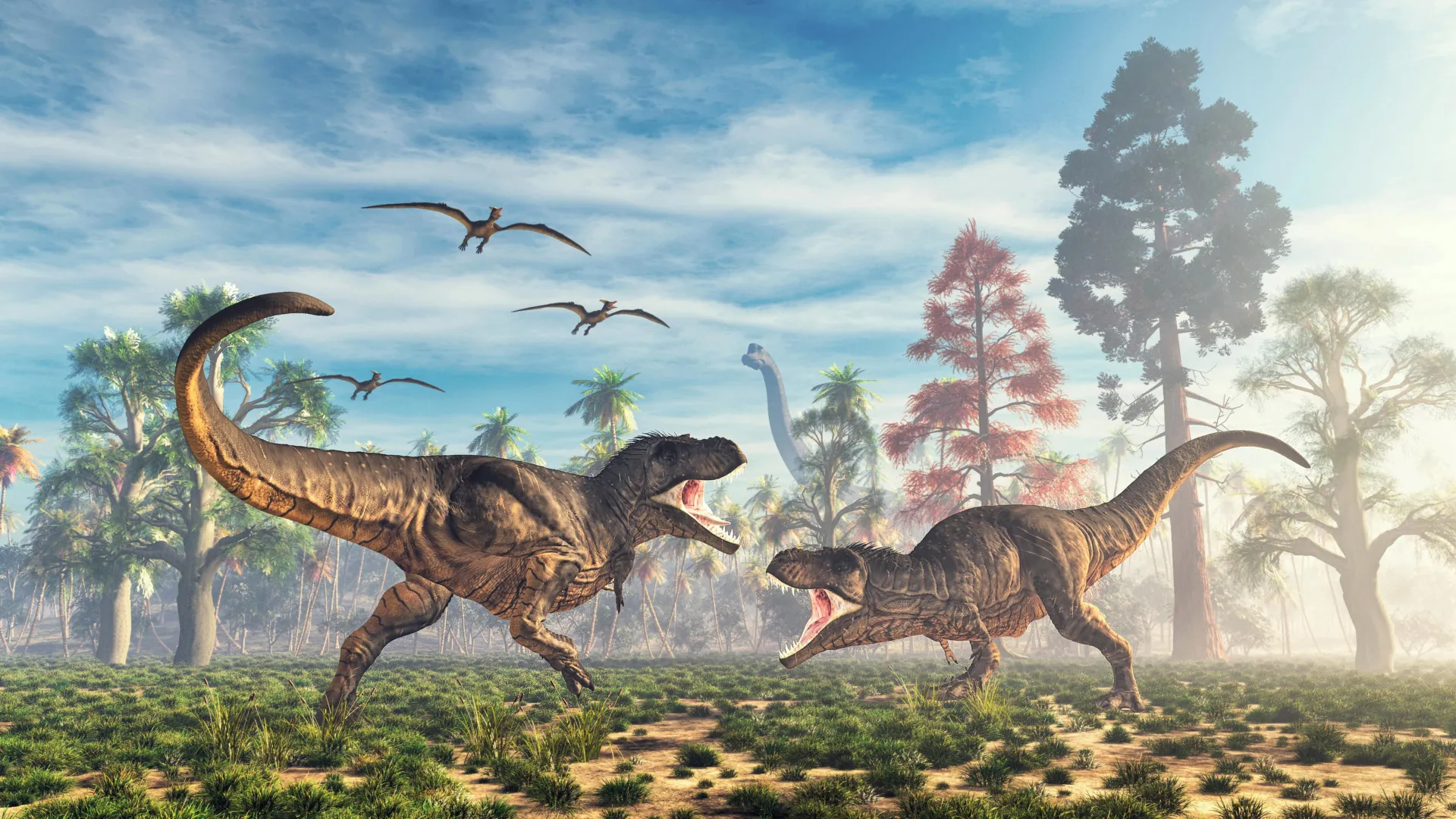
A new analysis of the bite strength of 18 species of carnivorous dinosaurs shows that while the Tyrannasaurus rex skull was optimized for quick, strong bites like a crocodile, other giant, predatory dinosaurs that walked on two legs — including spinosaurs and allosaurs — had much weaker bites and instead specialized in slashing and ripping flesh. Reported in the Cell Press journal Current Biology on August 4, these findings demonstrate that meat-eating dinosaurs followed different evolutionary paths in terms of skull design and feeding style despite their similarly gigantic sizes.
“Carnivorous dinosaurs took very different paths as they evolved into giants in terms of feeding biomechanics and possible behaviors,” said Andrew Rowe of the University of Bristol, UK.
“Tyrannosaurs evolved skulls built for strength and crushing bites, while other lineages had comparatively weaker but more specialized skulls, suggesting a diversity of feeding strategies even at massive sizes. In other words, there wasn’t one ‘best’ skull design for being a predatory giant; several designs functioned perfectly well.”
Rowe has always been fascinated by big carnivorous dinosaurs, and he considers them interesting subjects for exploring basic questions in organismal biology. In this study, he and co-author Emily Rayfield wanted to know how bipedalism — or walking on two legs — influenced skull biomechanics and feeding techniques.
It was previously known that despite reaching similar sizes, predatory dinosaurs evolved in very different parts of the world at different times and had very different skull shapes. For Rowe and Rayfield, those facts raised questions about whether their skulls were functionally similar under the surface or if there were notable differences in their predatory lifestyles. As there are no massive, bipedal carnivores alive today — ever since the end-Cretaceous mass extinction event — the authors note that studying these animals offers intriguing insights into a way of life which has since disappeared.
To examine the relationship between body size and skull biomechanics, the authors used 3D technologies including CT scans and surface scans analyze the skull mechanics, quantify the feeding performance, and measure the bite strength across 18 species of therapod, a group of carnivorous dinosaurs ranging from small to giant. While they expected some differences between species, they were surprised when their analyses showed clear biomechanical divergence.
“Tyrannosaurids like T. rex had skulls that were optimized for high bite forces at the cost of higher skull stress,” Rowe says. “But in some other giants, like Giganotosaurus, we calculated stress patterns suggesting a relatively lighter bite. It drove home how evolution can produce multiple ‘solutions’ to life as a large, carnivorous biped.”
Skull stress didn’t show a pattern of increase with size. Some smaller therapods experienced greater stress than some larger species due to increased muscle volume and bite forces. The findings show that being a predatory biped didn’t always equate to being a bone-crushing giant. Unlike T. rex, some dinosaurs, including the spinosaurs and allosaurs, became giants while maintaining weaker bites more suited for slashing at prey and stripping flesh.
“I tend to compare Allosaurus to a modern Komodo dragon in terms of feeding style,” Rowe says. “Large tyrannosaur skulls were instead optimized like modern crocodiles with high bite forces that crushed prey. This biomechanical diversity suggests that dinosaur ecosystems supported a wider range of giant carnivore ecologies than we often assume, with less competition and more specialization.”
This research was supported by funding from the Biotechnology and Biological Sciences Research Council.
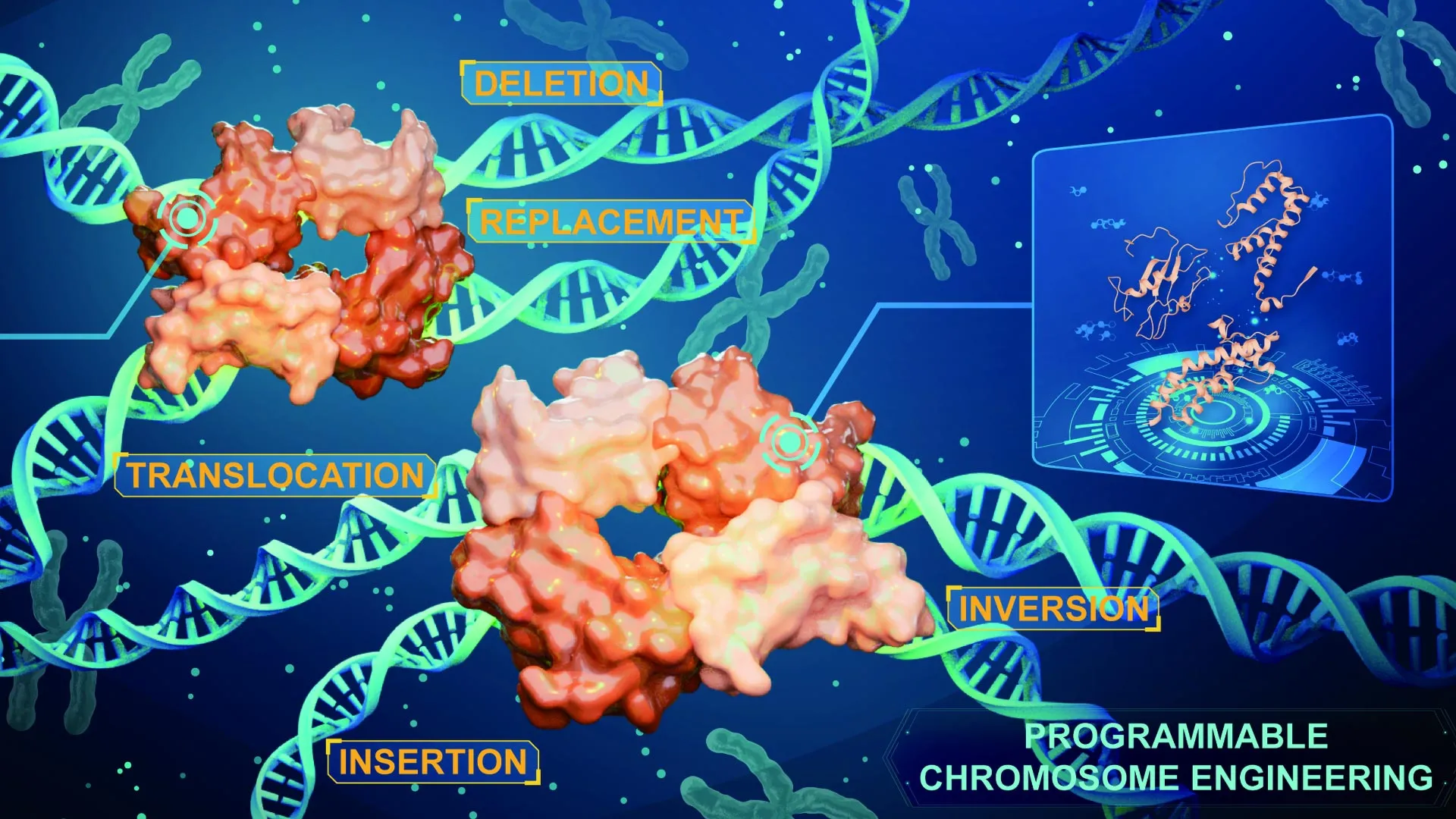
A team of Chinese researchers led by Prof. GAO Caixia from the Institute of Genetics and Developmental Biology of the Chinese Academy of Sciences has developed two new genome editing technologies, known collectively as Programmable Chromosome Engineering (PCE) systems.
The study, published online in Cell on August 4, achieves multiple types of precise DNA manipulations ranging from kilobase to megabase scale in higher organisms, especially plants.
Extensive research has demonstrated the immense potential of the site-specific recombinase Cre-Lox system for precise chromosomal manipulation. However, its broader application has been hindered by three critical limitations:
The research team addressed each of these challenges and developed novel methods to advance the state of this technology. First, they built a high-throughput platform for rapid recombination site modification and proposed an asymmetric Lox site design. This led to the development of novel Lox variants that reduce reversible recombination activity by over 10-fold (approaching the background level of negative controls) while retaining high-efficiency forward recombination.
They then leveraged their recently developed AiCE (AI-informed Constraints for protein Engineering), model — a protein-directed evolution system integrating general inverse folding models with structural and evolutionary constraints — to develop AiCErec, a recombinase engineering method. This approach enabled precise optimization of Cre’s multimerization interface, yielding an engineered variant with a recombination efficiency 3.5 times that of wild-type Cre.
Lastly, they designed and refined a scarless editing strategy for recombinases. By harnessing the high editing efficiency of prime editors, they developed Re-pegRNA, a method that uses specifically designed pegRNAs to perform re-prime editing on residual Lox sites, precisely replacing them with the original genomic sequence, thereby ensuring seamless genome modifications.
The integration of these three innovations led to the creation of two programmable platforms, PCE and RePCE. These platforms allow flexible programming of insertion positions and orientations for different Lox sites, enabling precise, scarless manipulation of DNA fragments ranging from kilobase to megabase scale in both plant and animal cells. Key achievements include: targeted integration of large DNA fragments up to 18.8 kb, complete replacement of 5-kb DNA sequences, chromosomal inversions spanning 12 Mb, chromosomal deletions of 4 Mb, and whole-chromosome translocations.
As a proof of concept, the researchers used this technology to create herbicide-resistant rice germplasm with a 315-kb precise inversion, showcasing its transformative potential for genetic engineering and crop improvement.
This pioneering work not only overcomes the historical limitations of the Cre-Lox system but also opens new avenues for precise genome engineering in a variety of organisms.
